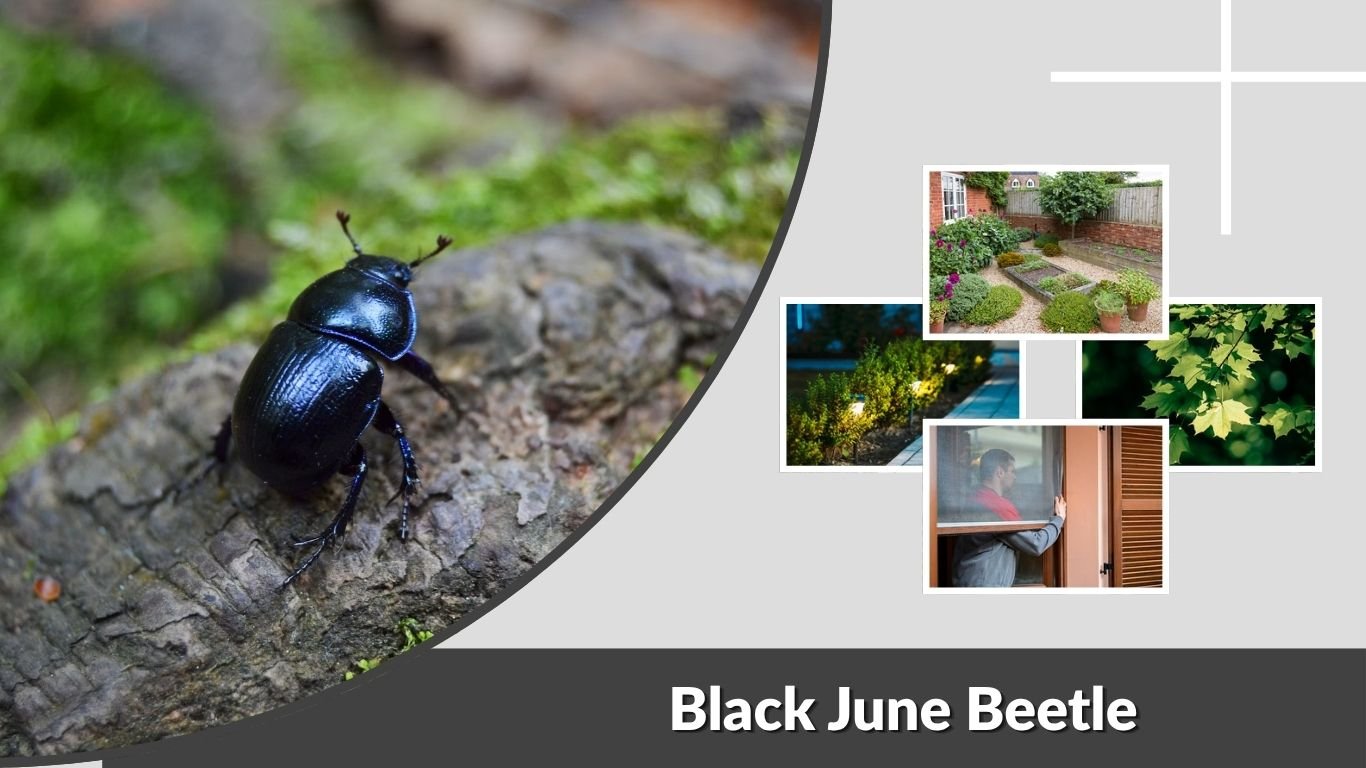
Black June beetles are dark-colored scarab beetles commonly seen flying around porch lights, gardens, and lawns during late spring and summer. These insects have sturdy bodies, hard wing covers, and strong legs adapted for digging. Although their clumsy flying behavior may seem intimidating, black June beetles are generally harmless to humans. However, their underground larvae can damage grass roots and other plants when populations become excessive. Understanding their appearance, habitat, diet, and life cycle makes identification easier. This guide explains how to recognize black June beetles, distinguish them from similar insects, and manage them around your home.
What Is a Black June Beetle?
A black June beetle generally refers to a dark-colored May or June beetle belonging to the scarab beetle family, Scarabaeidae. The name describes several beetles with dark brown or nearly black bodies rather than one universally recognized species. These beetles are especially common in North America.
Black June Beetle Scientific Name
Many beetles described as black June beetles belong to the genus Phyllophaga. This group contains numerous species commonly known as May beetles, June beetles, or June bugs.
The genus belongs to the family Scarabaeidae and order Coleoptera. Because several species have similar dark appearances, accurate species identification may require examining specialized physical characteristics.
Black June Beetle Appearance and Size
Black June beetles generally have robust, oval-shaped bodies with glossy or slightly textured wing covers.
Common identification features include:
- Body color: Dark brown, reddish black, or nearly black.
- Body length: Approximately 12–25 millimeters.
- Body shape: Broad, oval, and slightly convex.
- Wings: Hard outer wing covers protecting functional flight wings.
- Legs: Six sturdy legs with spines adapted for digging.
- Antennae: Short, clubbed antennae with movable leaflike segments.
- Surface texture: Smooth, shiny, or finely punctured, depending on species.
Their dark coloration sometimes makes them difficult to distinguish from other black scarab beetles.
Why Do Black June Beetles Fly Around Lights?
Black June beetles are primarily nocturnal insects that become active during warm evenings. Adults emerge from underground development sites to feed, mate, and reproduce. Their flight activity is especially noticeable during late spring and early summer, although emergence times vary by region and species.
Black June Beetle Flying Behavior
Adult black June beetles have functional wings and can fly between gardens, trees, lawns, and other habitats.
However, their flight often appears slow and uncoordinated. They may bump into windows, walls, or other objects while flying.
This behavior is normal and does not indicate aggression toward humans.
Why Are Black June Beetles Attracted to Light?
Many June beetles are attracted to artificial lighting at night. Porch lights, illuminated windows, and outdoor lamps can draw flying adults toward houses.
This explains why homeowners frequently discover dark June beetles near entrances during summer evenings.
Reducing unnecessary outdoor lighting may help decrease the number gathering around buildings.
Black June Beetle vs. Other Similar Beetles
Several beetles resemble black June beetles because they share similar body shapes and flight behavior. However, their colors, patterns, feeding habits, and activity periods may differ. Comparing these features helps distinguish dark June beetles from other common scarab insects.
Black June Beetle vs. Green June Beetle
Black June beetles in the genus Phyllophaga generally have dark brown or black bodies.
Green June beetles (Cotinis nitida) have metallic green bodies, often with yellowish or bronze margins along the wing covers.
Another important difference is activity. Green June beetles frequently fly during daylight, while typical Phyllophaga adults are primarily active at night.
Black June Beetle vs. Ten-Lined June Beetle
The ten-lined June beetle (Polyphylla decemlineata) is usually larger and has distinctive pale longitudinal stripes across its wing covers.
Its striped appearance contrasts with the relatively uniform coloration of many black June beetles.
Male ten-lined June beetles also have especially prominent, fan-shaped antennae that help distinguish them from other species.
Orange June Beetle With Black Spots
A large orange or tan beetle with black spots may be a grapevine beetle (Pelidnota punctata), another member of the scarab beetle family.
Unlike uniformly dark June beetles, grapevine beetles have pale orange-brown wing covers marked with dark spots.
Their similar size and general appearance sometimes cause identification confusion.
Where Do Black June Beetles Live?
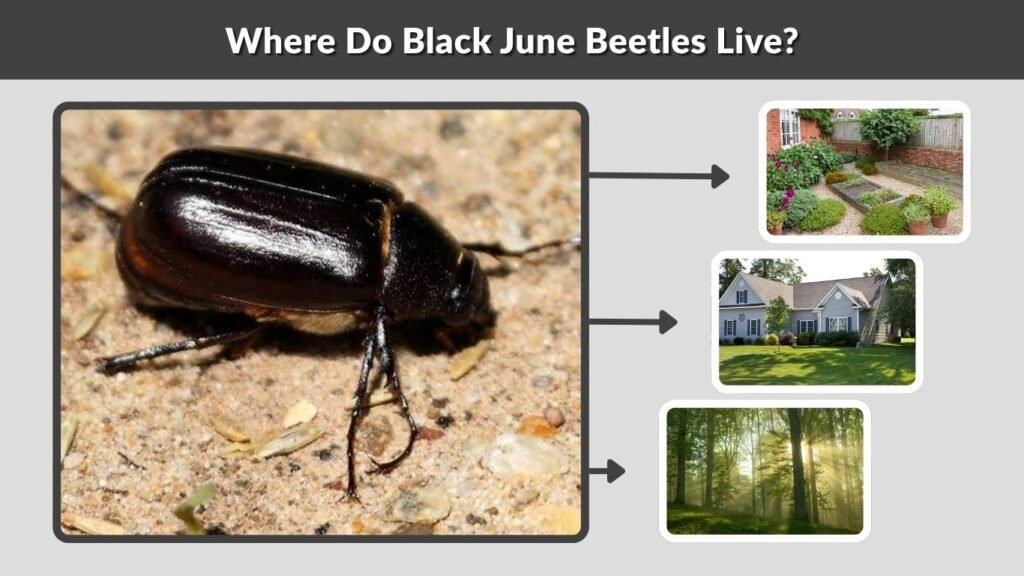
Black June beetles occur in environments containing suitable vegetation and soil for larval development. Adults are commonly associated with lawns, gardens, wooded areas, and agricultural landscapes. Their larvae remain underground, often going unnoticed until they cause damage to grass or plant roots.
Common Black June Beetle Habitats
Black June beetles may be found around:
- Lawns: Soil provides suitable locations for egg laying.
- Gardens: Vegetation supplies food for adult beetles.
- Woodlands: Trees and shrubs provide feeding opportunities.
- Agricultural fields: Grasses and crops can support developing grubs.
- Residential areas: Outdoor lighting attracts adults during warm evenings.
During daylight, adults may shelter among vegetation or remain relatively inactive.
Black June Beetle Larvae Habitat
Black June beetle larvae live beneath the soil surface. They are creamy-white grubs with brown heads and curved, C-shaped bodies.
Most feed on grass roots and other underground plant materials.
Depending on the species, their larval development may last two to three years, with grubs moving deeper into the soil during colder periods.
What Do Black June Beetles Eat?
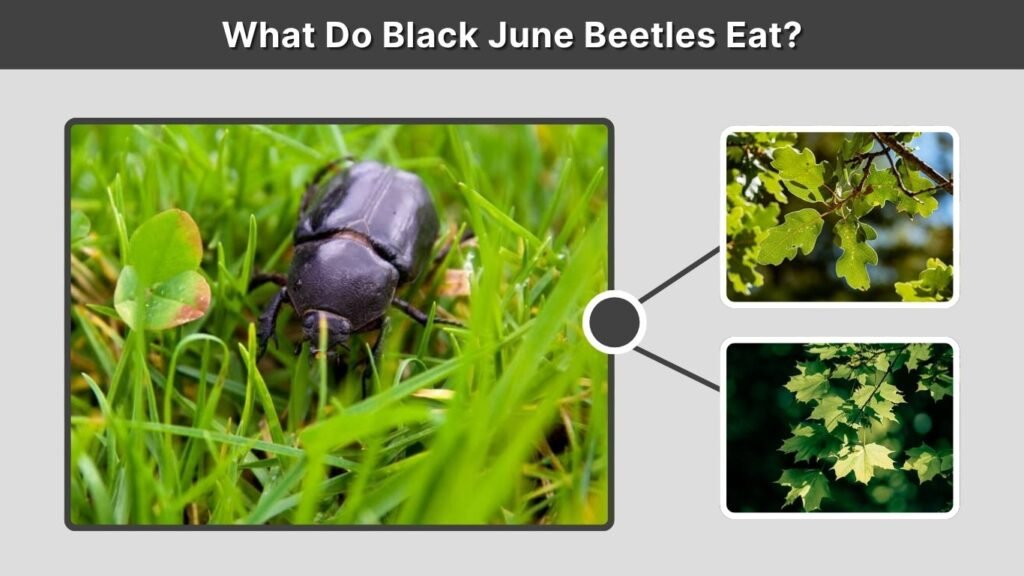
Black June beetles have different feeding habits during adulthood and larval development. Adults primarily feed on aboveground vegetation, while larvae consume underground plant roots and some organic matter. Understanding these feeding differences helps identify which stage may damage gardens or lawns.
Adult Black June Beetle Diet
Adult June beetles commonly feed on leaves of trees and shrubs.
Their preferred plants vary by species, but some feed on oak, maple, and other broadleaf trees.
Adult feeding may leave small, irregular holes in foliage. However, damage is usually minor and rarely requires treatment.
Black June Beetle Larvae Diet
The larvae, commonly called white grubs, feed mainly on roots of grasses and other plants.
Large populations can weaken root systems, preventing plants from absorbing sufficient water and nutrients.
Grass may turn yellow or brown, particularly during dry conditions when root damage becomes more noticeable.
Are Black June Beetles Dangerous?
Black June beetles may appear intimidating because of their dark bodies and relatively large size. However, they are not considered dangerous household insects. Their main potential impact involves feeding damage to plants rather than direct harm to people.
Do Black June Beetles Bite or Sting?
Black June beetles do not sting and are not venomous.
Although they possess chewing mouthparts, they are not aggressive toward people and rarely cause injury through handling.
Their spiny legs may feel slightly scratchy when they crawl across bare skin.
Can Black June Beetles Damage Your Lawn?
Adult black June beetles generally cause little damage to established lawns.
However, their larvae can become significant lawn pests when large populations feed on grass roots.
Warning signs include yellow patches, loose turf, weakened grass, and increased digging activity by animals searching for grubs.
How to Get Rid of Black June Beetles
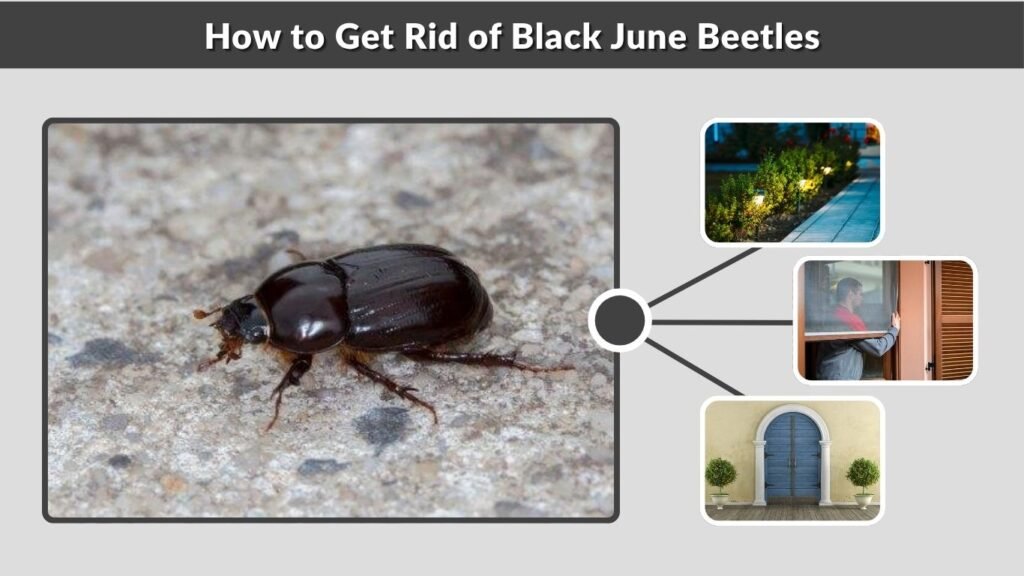
Black June beetle control depends on whether the problem involves flying adults or root-feeding larvae. Occasional adult sightings rarely require chemical treatment, while established grub infestations may need closer inspection and targeted management.
Removing Black June Beetles From Your House
If black June beetles enter your home, follow these steps:
- Remove visible beetles: Capture them using a container and release them outdoors.
- Reduce outdoor lighting: Switch off unnecessary porch lights during peak activity.
- Repair window screens: Seal damaged openings that allow beetles indoors.
- Close doors properly: Avoid leaving entrances open during warm evenings.
- Inspect entry points: Check gaps around windows and door frames.
Indoor pesticide applications are generally unnecessary for occasional adult June beetles.
Controlling Black June Beetle Larvae
For grub infestations, inspect the soil beneath damaged grass before applying treatment.
Maintain healthy turf through appropriate watering and mowing practices. Beneficial nematodes may help suppress certain grub species when applied under suitable conditions.
If severe root damage occurs, consult a local extension specialist or pest control professional for species identification and treatment recommendations.
How to Prevent Black June Beetles Around Your Home
Preventing black June beetles involves reducing indoor entry opportunities and maintaining healthy outdoor environments. Since adults naturally occur in surrounding landscapes, completely eliminating them is neither practical nor usually necessary.
Effective Black June Beetle Prevention Tips
- Replace bright outdoor lighting with less attractive warm-colored lighting where practical.
- Repair damaged door and window screens.
- Keep exterior doors closed during evening beetle activity.
- Maintain healthy lawns to improve resistance to grub damage.
- Avoid unnecessary pesticide applications.
- Inspect turfgrass roots when unexplained brown patches appear.
- Monitor seasonal beetle activity before deciding whether control is needed.
These measures can reduce household encounters while protecting lawns from potentially damaging grub populations.
FAQs
1. Are Black June Beetles Rare?
Black June beetles are not necessarily rare. Several dark-colored Phyllophaga species occur throughout North America. Their abundance varies by location, habitat, and season. Adults are often most noticeable during late spring and early summer when they fly around outdoor lights.
2. Why Did I Find a Black June Beetle in My Bed?
A black June beetle may accidentally enter a bedroom through an open window, damaged screen, or nearby doorway. Finding one in your bed does not indicate a bedding infestation because June beetles normally develop outdoors in soil.
3. Can Black June Beetles Fly?
Yes. Adult black June beetles have functional wings and can fly considerable distances between feeding and breeding locations. Their flight is often clumsy, causing them to collide with walls, windows, or outdoor lights. They are primarily active during warm evenings.
4. Are Black June Beetles the Same as Green June Beetles?
No. Black June beetles commonly belong to the genus Phyllophaga, while green June beetles belong to Cotinis nitida. They differ in coloration, feeding behavior, and daily activity. Both belong to the scarab beetle family and develop through underground grub stages.
5. What Does a Black June Beetle Symbolize?
Some cultural traditions associate beetles with transformation, renewal, or persistence. However, black June beetles do not have a universal symbolic meaning. Scientifically, encountering one generally reflects normal seasonal activity, particularly during warm evenings when adults emerge and search for mates.