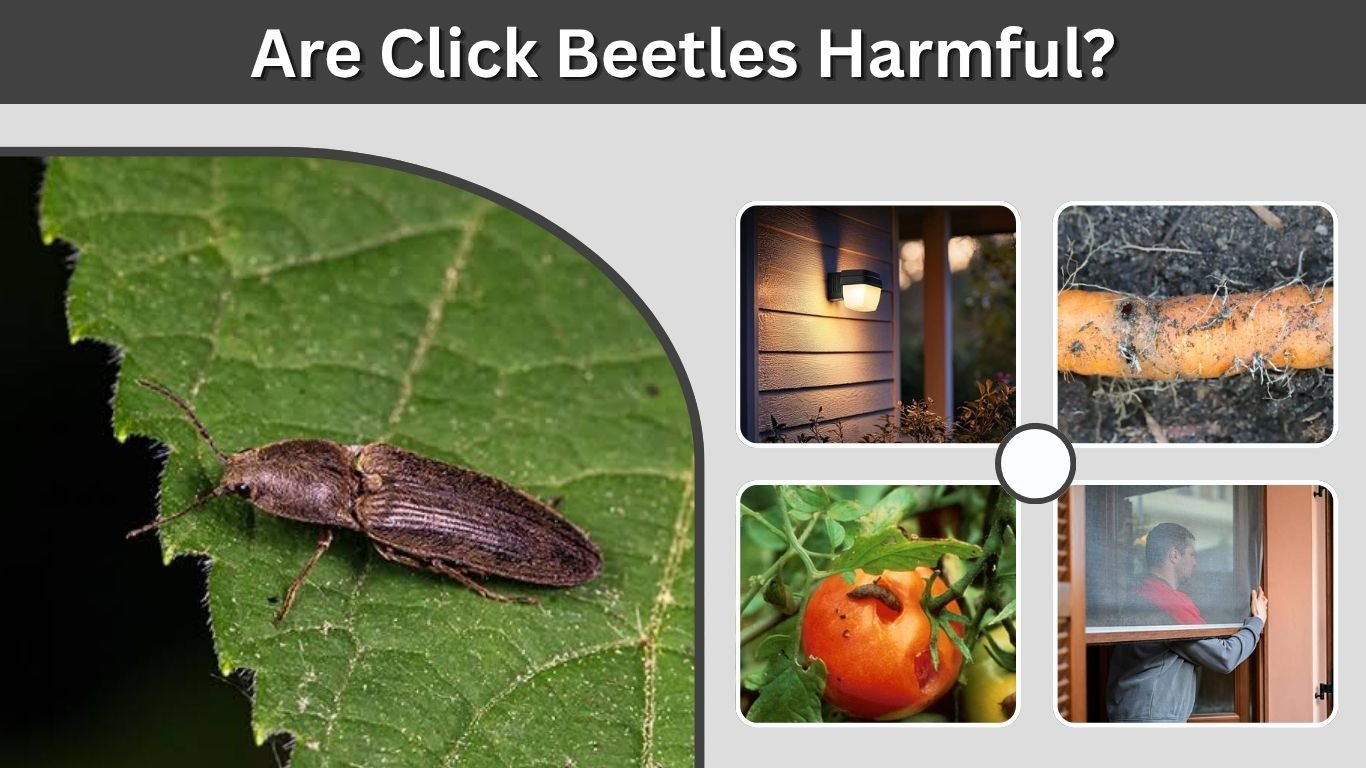
Click beetles are fascinating insects known for their unusual clicking sounds and sudden jumping movements. Although their appearance can seem alarming, most click beetles are harmless to humans and household pets. However, certain species can cause problems for garden plants, especially during their larval stage. Understanding their behavior, feeding habits, and potential risks can help you decide whether these insects need attention. This guide explains whether click beetles are harmful to humans, cats, dogs, and plants, including eastern eyed and glowing click beetles.
Are Click Beetles Harmful?
Click beetles belong to the family Elateridae, which contains thousands of species worldwide. Most adult click beetles are harmless insects found in gardens, forests, grasslands, and agricultural areas. They rarely bite and do not sting or inject venom.
Their distinctive clicking sound comes from a specialized mechanism beneath the thorax. When threatened or overturned, the beetle snaps its body and launches itself into the air.
This defensive movement helps it escape predators. Although adult click beetles generally cause little damage, the larvae of certain species, known as wireworms, can harm agricultural crops and garden plants.
Are Click Beetles Harmful to Humans?
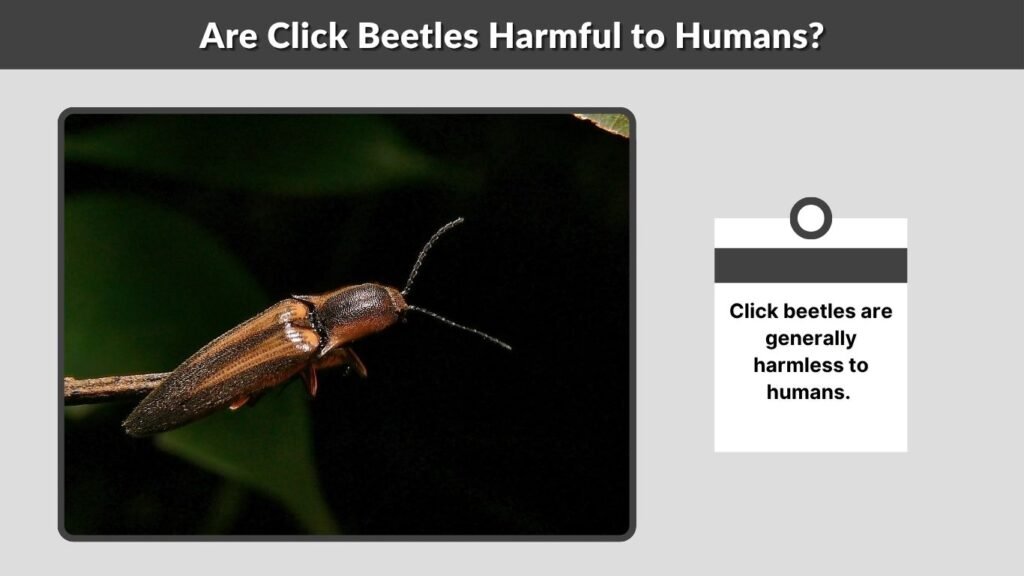
Click beetles are generally harmless to humans. They do not actively attack people and usually escape when disturbed. Their clicking movements may be surprising, but they are not dangerous.
Do Click Beetles Bite Humans?
Most click beetles do not bite humans. However, some larger species may pinch or bite if handled roughly.
A click beetle bite is uncommon and usually causes only minor discomfort. These insects do not possess stingers or venom-injecting structures.
Are Click Beetles Poisonous?
Click beetles are not generally considered poisonous or venomous to humans. Their clicking mechanism is purely mechanical and does not release venom.
They are also not recognized as significant transmitters of human diseases. Therefore, finding one inside your home is usually not a health concern.
Are Click Beetles Harmful to Cats?
Click beetles are generally harmless to cats. Curious cats may chase, paw at, or attempt to eat these insects because of their sudden jumping movements.
Although click beetles are not normally toxic to cats, swallowing an insect can occasionally cause mild digestive irritation.
What Happens If a Cat Eats a Click Beetle?
Most cats experience no serious problems after accidentally eating an ordinary click beetle. However, possible reactions include:
- Mild vomiting: The insect’s hard body may irritate the stomach.
- Temporary gagging: Larger beetles can be difficult to swallow.
- Digestive discomfort: Some cats may experience temporary stomach upset.
- Unusual reactions: Persistent vomiting, drooling, or breathing difficulties require veterinary attention.
Prevent cats from eating unidentified insects, particularly in areas treated with pesticides.
Are Click Beetles Harmful to Dogs?
Click beetles are not normally dangerous to dogs. They do not sting or inject venom, and most species attempt to escape rather than defend themselves aggressively.
Dogs may encounter these beetles while exploring gardens, lawns, or outdoor lighting areas.
Can Dogs Eat Click Beetles Safely?
Accidentally swallowing a click beetle is unlikely to cause serious poisoning in a healthy dog. However, eating unfamiliar insects is not recommended.
A beetle’s hard exoskeleton may cause temporary stomach irritation, gagging, or vomiting.
Dogs that develop persistent vomiting, excessive drooling, or unusual behavior after eating an insect should receive veterinary advice.
Are Click Beetles Harmful to Plants?
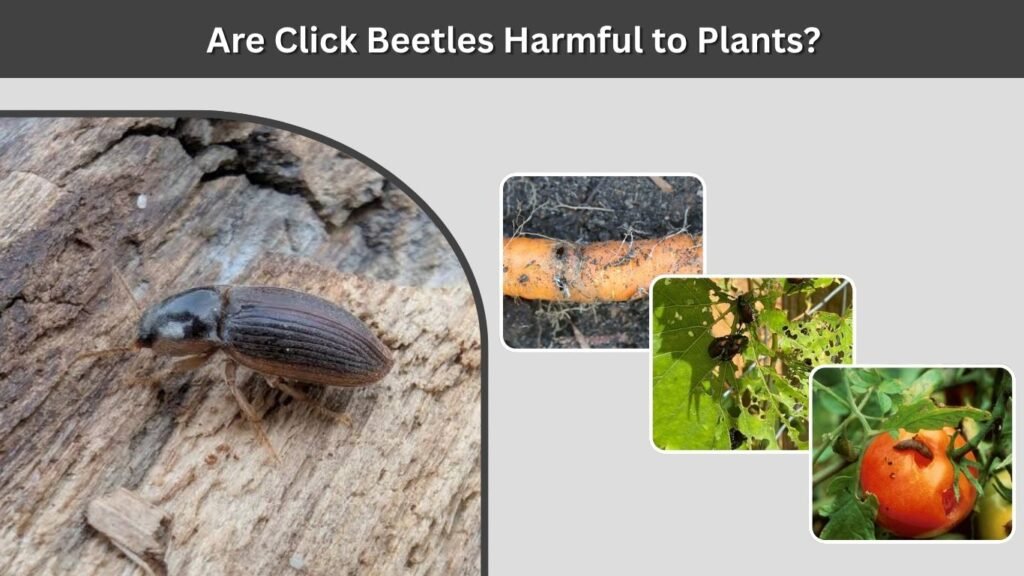
Click beetles can affect plants, but their potential damage depends on the species and life stage. Most adults cause little noticeable harm, while some larvae are important agricultural pests.
Do Adult Click Beetles Damage Plants?
Adult click beetles generally cause minimal damage to garden plants. Depending on the species, they may consume nectar, pollen, or plant material.
Finding an adult beetle on a leaf does not necessarily indicate an infestation.
How Do Click Beetle Larvae Damage Plants?
Some click beetle larvae, called wireworms, live underground and feed on seeds, roots, and young stems.
Common signs of wireworm damage include:
- Damaged roots: Feeding injuries reduce a plant’s ability to absorb nutrients.
- Wilting seedlings: Young plants may weaken or die after underground feeding.
- Holes in vegetables: Wireworms can tunnel into potatoes and other root crops.
- Poor germination: Feeding on planted seeds may prevent healthy growth.
- Uneven plant growth: Affected garden areas may develop scattered weak plants.
Not all wireworms are plant pests. Some click beetle larvae feed on other insects.
Are Eastern Eyed Click Beetles Harmful?
Eastern eyed click beetles (Alaus oculatus) are large North American insects recognized by two prominent black eyespots on their upper body.
Despite their intimidating appearance, they are harmless to humans and household pets.
Do Eastern Eyed Click Beetles Damage Plants?
Eastern eyed click beetles are not considered important garden pests. Their larvae develop in decaying wood and feed on other insects, including wood-boring beetle larvae.
Their false eyespots help discourage predators, while their clicking mechanism provides an additional escape strategy.
These beetles generally do not require pest control.
Are Glowing Click Beetles Harmful?
Glowing click beetles are fascinating insects capable of producing natural light through bioluminescence. Certain tropical species, including members of the genus Pyrophorus, have specialized light-producing organs.
Their glowing appearance may seem unusual, but it does not make them dangerous.
Can Glowing Click Beetles Hurt Humans?
Glowing click beetles are generally harmless to people. Their light-producing organs do not deliver electric shocks, venom, or harmful radiation.
Their glow may help with communication and defense. Like other click beetles, they should be observed without unnecessary handling.
How to Keep Click Beetles Away From Your Home
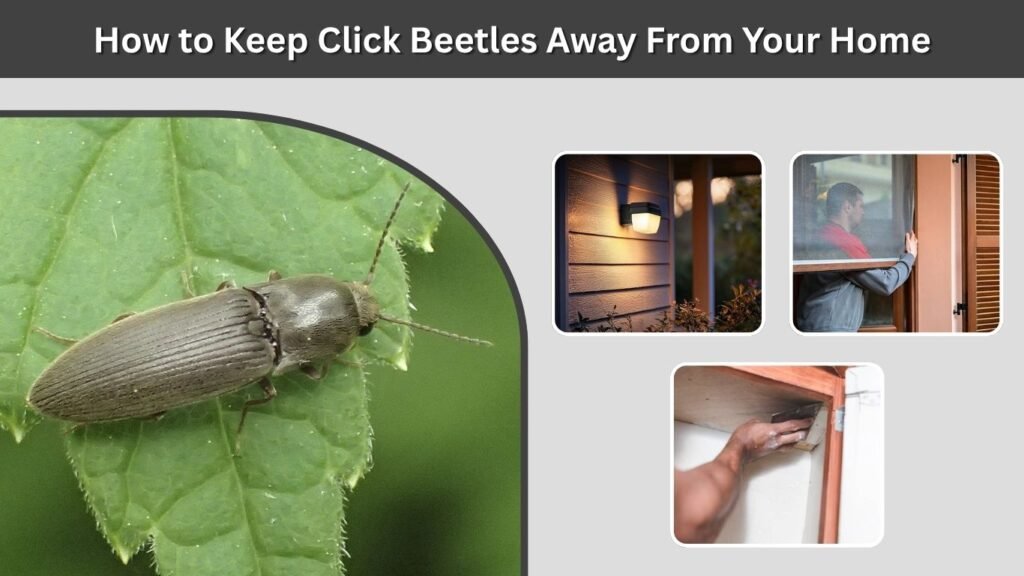
Click beetles occasionally enter homes through open doors, windows, or damaged screens. Many species are attracted to artificial lighting at night.
Although indoor encounters are usually harmless, preventive measures can reduce their presence.
Effective Click Beetle Prevention Methods
- Reduce outdoor lighting: Turn off unnecessary porch lights during nighttime.
- Repair window screens: Close openings that allow beetles to enter.
- Seal small gaps: Inspect doors, windows, and exterior openings.
- Remove beetles gently: Collect individual beetles and release them outdoors.
- Inspect garden soil: Investigate suspected wireworm damage before applying treatments.
Chemical treatment is generally unnecessary for occasional adult click beetles indoors.
FAQs
1. Are Click Beetles Dangerous in the House?
Click beetles are generally harmless inside homes. They do not sting, rarely bite, and do not normally damage furniture or household materials. Most enter accidentally through open windows or doors, especially at night when attracted to artificial lighting.
2. Can Click Beetles Hurt You?
Click beetles rarely hurt humans because they are not aggressive. Some larger species may deliver a minor pinch or bite when handled roughly. However, they do not inject venom, and their clicking movements are defensive rather than dangerous to people.
3. Are Eyed Click Beetles Harmful?
Eyed click beetles are generally harmless to humans, cats, and dogs. Their large black eyespots help discourage predators rather than indicate danger. Their larvae often feed on other insects inside decaying wood, making them beneficial in natural environments.
4. Should You Kill Click Beetles?
Killing adult click beetles is usually unnecessary because most species are harmless. Instead, gently collect and release them outdoors. However, if wireworm larvae are damaging garden crops, appropriate pest management methods may be needed to protect affected plants.
5. Do Click Beetles Carry Diseases?
Click beetles are not recognized as significant carriers of diseases affecting humans or household pets. Unlike mosquitoes or ticks, they do not feed on blood. Their presence indoors generally creates a minor nuisance rather than a serious health concern.