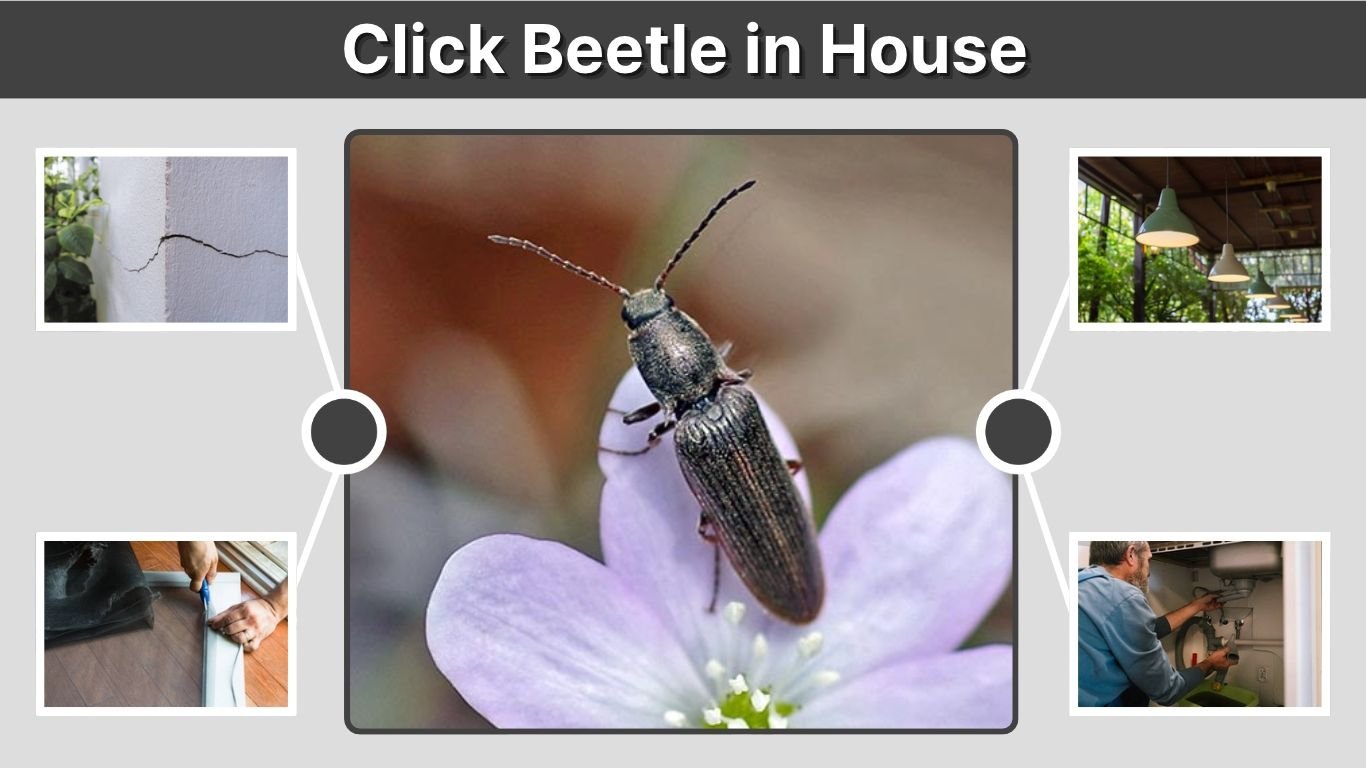
Finding a click beetle in the house can be surprising, especially when it suddenly jumps or makes a clicking sound. These small, elongated beetles often enter homes through open windows, doors, or tiny cracks while searching for light or shelter. Although their appearance may cause concern, most click beetles are harmless and do not damage household structures. However, repeated sightings can become annoying. Understanding why click beetles enter your home, how to identify them, and which removal methods work best can help prevent future encounters.
What Is a Click Beetle?
Click beetles are insects belonging to the family Elateridae, which includes thousands of species worldwide. They are known for their narrow bodies and their ability to produce a clicking sound when disturbed or overturned.
Most household click beetles are brown, dark brown, or black. They have hard wing covers, segmented antennae, and elongated bodies.
Their most unusual feature is a specialized clicking mechanism beneath the thorax. When a beetle becomes trapped on its back, it can snap its body and launch itself into the air.
Although click beetles occasionally enter houses, they primarily live outdoors in gardens, forests, agricultural fields, and grassy environments.
Why Are Click Beetles in My House?
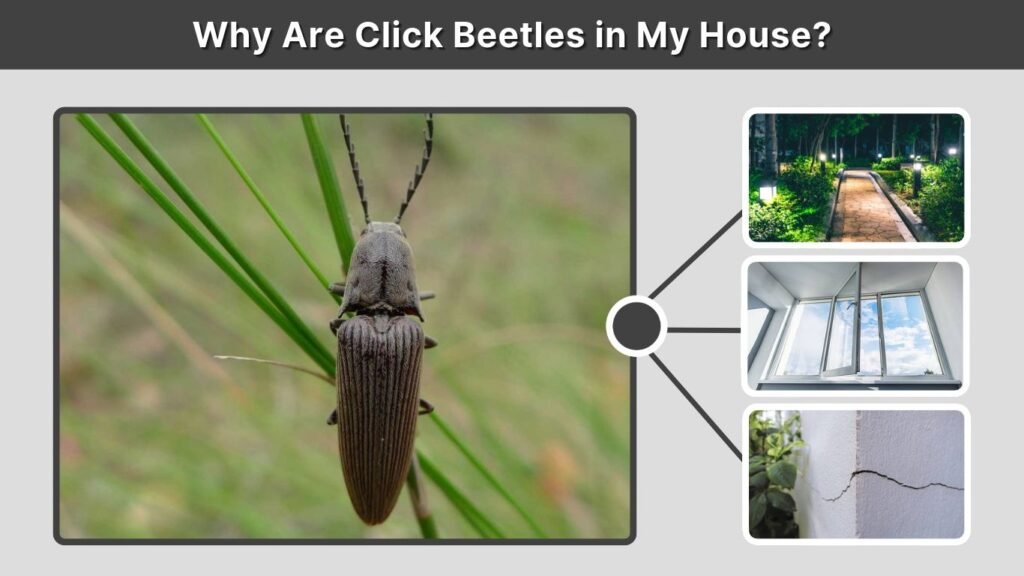
Click beetles usually enter homes accidentally rather than deliberately seeking indoor living spaces. Several environmental factors can attract them toward residential buildings.
Understanding these conditions helps explain why you might suddenly discover several beetles around your home.
Common Reasons Click Beetles Enter Houses
- Attraction to lights: Outdoor lights, illuminated windows, and porch lamps attract many adult click beetles at night.
- Open doors and windows: Beetles can fly directly inside when windows or doors remain open.
- Cracks and gaps: Small openings around foundations, window frames, and door seals provide entry points.
- Moisture: Some beetles may be attracted to damp conditions around bathrooms, basements, or exterior walls.
- Seasonal activity: Click beetles are particularly noticeable during warmer months when adults become active.
- Nearby vegetation: Gardens, lawns, and wooded areas naturally support click beetle populations.
Finding several click beetles indoors does not necessarily mean they are breeding inside. Often, the insects are entering independently from the surrounding environment.
How to Identify Click Beetles in Your House
Correct identification is important because several household beetles resemble click beetles. Their sizes and colors vary depending on the species.
Brown Click Beetle in House
Brown click beetles are commonly encountered indoors. They usually have elongated, flattened bodies with reddish-brown or dark brown wing covers.
Many common species measure approximately ¼–¾ inch long. They may appear near windows, walls, or outdoor lighting fixtures.
Black Click Beetle in House
Black click beetles have dark, sometimes glossy bodies with narrow shapes and pointed rear ends.
Some species are considerably larger than ordinary brown click beetles. The eastern eyed click beetle, for example, features two distinctive black eyespots behind its head.
Tiny Click Beetle in House
Tiny click beetles may be only a few millimeters long, making them difficult to identify.
Their small size can lead to confusion with pantry beetles, carpet beetles, or other household insects.
One useful identification clue is the clicking movement. True click beetles can suddenly snap their bodies and flip upward when overturned. However, this behavior should not be used as the only identification method.
Are Click Beetles in the House Dangerous?
Click beetles are generally harmless to people and pets. They do not possess stingers, and adult click beetles are not known to bite people.
They also do not normally damage furniture, clothing, carpets, or wooden structures.
Their sudden jumping movement can be startling, but it is a defensive response rather than an attack.
Unlike termites or wood-boring household pests, click beetles do not typically establish damaging colonies inside buildings.
The main concern is inconvenience when many adults enter through windows, doors, or exterior gaps.
How to Get Rid of Click Beetles in House
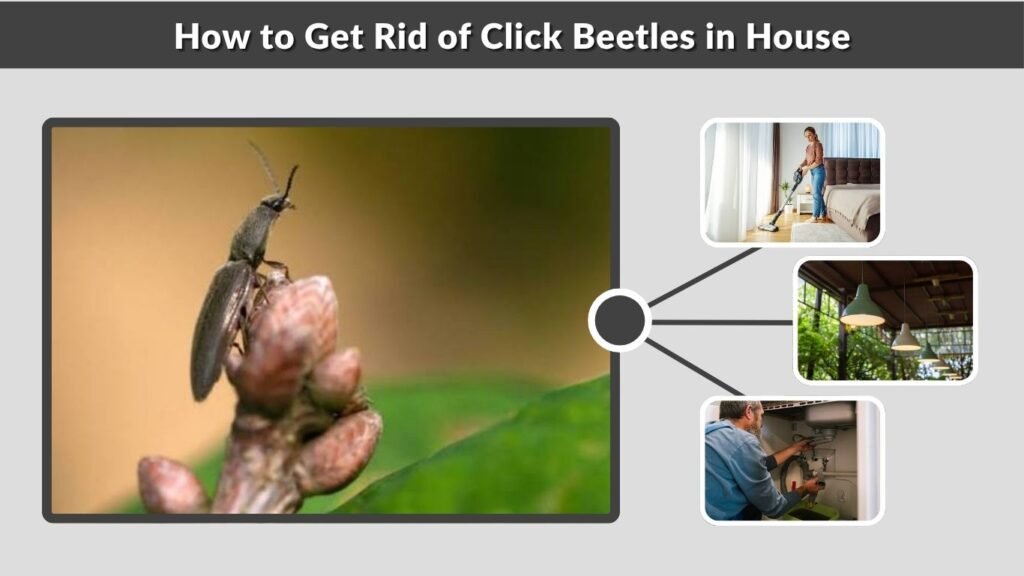
Getting rid of click beetles usually does not require strong chemical treatments. Simple removal methods and improvements around entry points are often enough.
1. Remove Beetles Using a Vacuum
Vacuuming is one of the easiest methods for removing multiple click beetles from floors, windowsills, or wall corners.
Use a handheld vacuum or narrow attachment to collect them. Empty the vacuum contents promptly to prevent surviving insects from escaping.
2. Capture and Release Individual Beetles
If you find only one or two click beetles, place a cup over each insect and slide a piece of paper underneath.
Carry the container outside and release the beetle away from your home’s entrances.
3. Reduce Indoor and Outdoor Lighting
Turn off unnecessary porch lights and close curtains at night.
Bright exterior lighting attracts flying beetles toward residential buildings, increasing the chances of accidental entry.
4. Clean Potential Hiding Areas
Vacuum along baseboards, beneath furniture, and near doors.
Although click beetles do not normally establish indoor colonies, cleaning helps remove insects that have wandered inside.
5. Check for Moisture Problems
Inspect damp basements, bathrooms, and poorly ventilated areas.
Fix leaking pipes, improve ventilation, and address excessive moisture around foundations.
6. Avoid Unnecessary Pesticides
Routine indoor insecticide applications are usually unnecessary.
University extension guidance recommends reducing outdoor lighting, sealing entry points, and physically removing occasional beetles as primary management measures.
Can Click Beetles Infest Your House?
Click beetles rarely establish true indoor infestations. Adult beetles typically enter buildings accidentally and do not find suitable breeding conditions inside ordinary living spaces.
However, large numbers may gather around illuminated buildings during periods of high outdoor activity.
An apparent click beetle infestation often represents repeated entry from outside rather than reproduction indoors.
If you continuously discover beetles, inspect exterior openings and confirm the identification. Other beetle species that look similar may have different habits and control requirements.
Persistent indoor populations warrant further investigation, especially if insects appear to be emerging from stored products, wood, or potting soil.
Do Click Beetles Damage Houseplants?
Adult click beetles generally do not cause significant damage to established houseplants.
However, the larvae of certain click beetle species, commonly called wireworms, feed on roots, germinating seeds, and underground plant tissues.
Wireworms usually develop in outdoor soil, gardens, and agricultural environments.
Although larvae could occasionally occur in contaminated potting soil, they are not common indoor houseplant pests.
If houseplants develop unexplained root damage, inspect their soil and roots before assuming click beetle larvae are responsible.
Other problems, including overwatering, root rot, and different soil-dwelling pests, can produce similar symptoms.
How to Prevent Click Beetles From Entering Your House
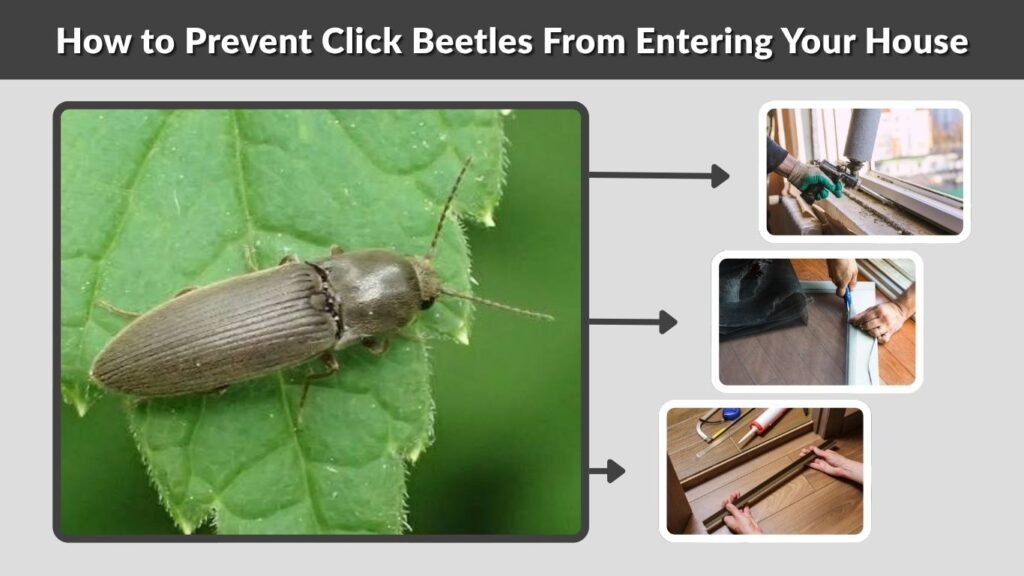
Preventing click beetles is usually easier than dealing with repeated indoor sightings. Most preventive measures involve reducing the conditions that attract adult beetles toward a building.
Effective Prevention Tips
- Seal exterior cracks: Fill openings around foundations, siding, pipes, and utility connections.
- Repair window screens: Replace torn screens and ensure frames fit tightly.
- Install door sweeps: Prevent beetles from crawling underneath exterior doors.
- Use motion-activated lighting: Reduce continuous nighttime illumination near entrances.
- Maintain gutters: Remove debris and correct drainage problems that contribute to damp conditions.
- Manage nearby vegetation: Trim plants that obstruct entrances and inspect areas where insects gather.
These measures can also help reduce entry by other occasional household insects.
Consistent maintenance is generally more effective than repeatedly spraying indoor surfaces.
How Long Do Click Beetles Live in a House?
How long a click beetle survives indoors depends on its species, age, access to moisture, and environmental conditions.
Adult click beetles are primarily outdoor insects. Most houses do not provide the food sources and breeding environments they normally require.
A beetle trapped indoors may survive temporarily, but it usually cannot establish a continuing population under ordinary household conditions.
Some individuals may eventually die from unfavorable conditions or remain near windows while attempting to escape.
Because survival varies considerably among species, there is no reliable single lifespan for all click beetles found indoors.
What Does a Click Beetle in the House Mean Spiritually?
Some people associate finding a click beetle indoors with resilience, adaptability, personal transformation, or overcoming obstacles.
These symbolic interpretations often relate to the beetle’s ability to flip itself upright after becoming overturned.
However, spiritual meanings are based on personal beliefs and cultural interpretations rather than scientific evidence.
From a biological perspective, finding a click beetle inside usually means the insect was attracted to light or entered through an available opening.
FAQs
1. Why Do I Keep Finding Click Beetles in My House?
Repeated sightings usually occur because outdoor lights attract click beetles or because small openings allow them to enter. Seasonal increases in outdoor beetle activity can also cause more frequent encounters.
2. Do Click Beetles Bite Humans in the House?
No. Adult click beetles are not known to bite or sting humans. Their clicking movement is a defense mechanism used to escape danger rather than attack people.
3. Can Click Beetles Fly Inside a House?
Yes. Most adult click beetles have functional wings and can fly indoors. They may move toward windows and artificial lights while attempting to navigate their surroundings.
4. Are Baby Click Beetles Found Inside Houses?
Click beetle larvae are called wireworms. They generally develop in soil or decaying wood, depending on the species. Finding true click beetle larvae inside ordinary living areas is uncommon.
5. Should I Worry About Finding Multiple Click Beetles Indoors?
Usually not. Multiple beetles often indicate repeated entry from outdoors rather than an infestation. Focus on sealing openings and reducing outdoor lighting. If sightings continue, obtain a reliable insect identification.