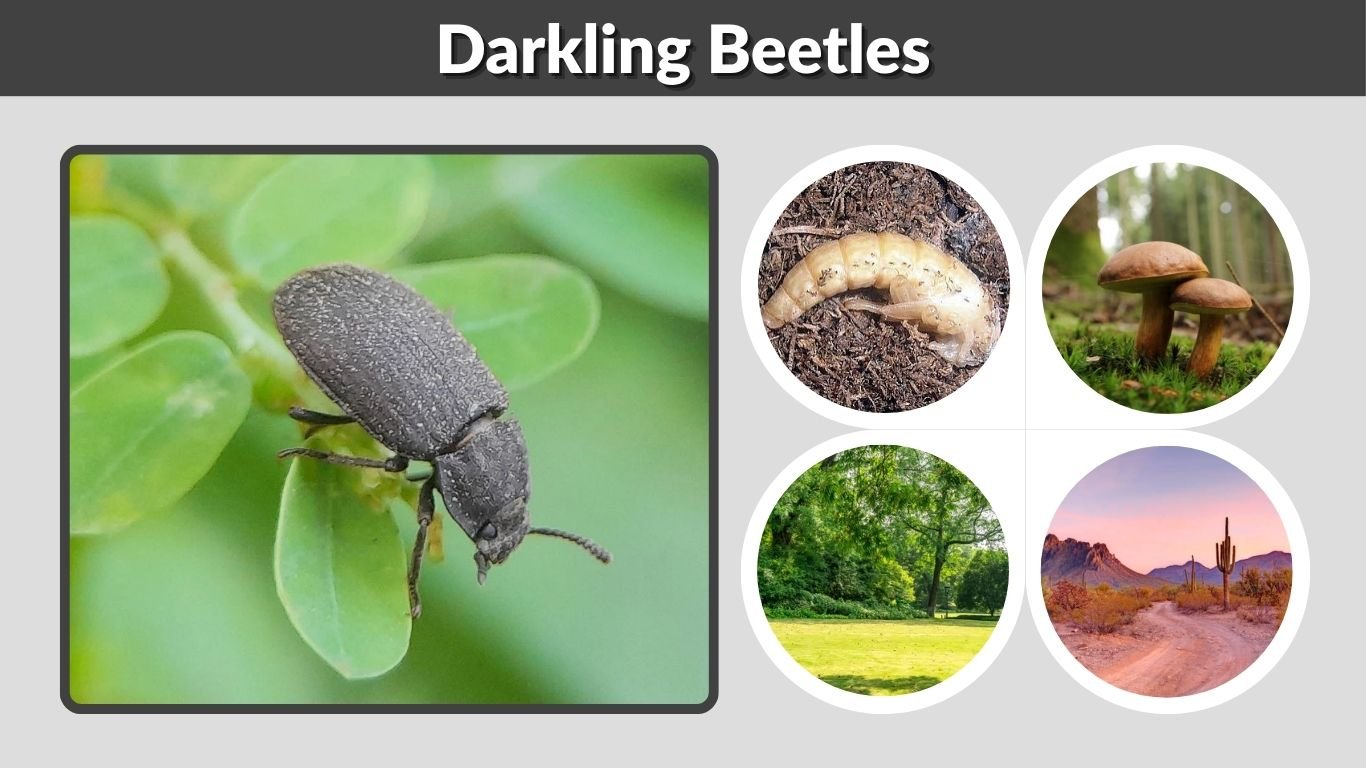
Darkling beetles are fascinating insects belonging to the family Tenebrionidae, which includes thousands of species found worldwide. These beetles are commonly recognized by their dark bodies, hard wing covers, and preference for sheltered environments. They play an important role in breaking down organic materials, although some species become pests in homes and agricultural buildings. Understanding darkling beetles, their life cycle, diet, habitat, and behavior can help you identify them correctly. This guide also explains whether darkling beetles bite, fly, or pose any danger to humans.
What Are Darkling Beetles?
Darkling beetles are insects belonging to the family Tenebrionidae within the order Coleoptera. This diverse family contains more than 20,000 species worldwide. Although many are black or dark brown, their appearance, size, and behavior vary considerably.
Many darkling beetles are scavengers that feed on dead plant material, fungi, and other organic substances. Others live in stored grain products, while numerous desert species have special adaptations for surviving dry conditions.
Darkling Beetle Scientific Classification
- Common Name: Darkling Beetle
- Family: Tenebrionidae
- Order: Coleoptera
- Class: Insecta
- Phylum: Arthropoda
- Kingdom: Animalia
The common mealworm beetle (Tenebrio molitor) is one of the best-known members of this family.
What Do Darkling Beetles Look Like?
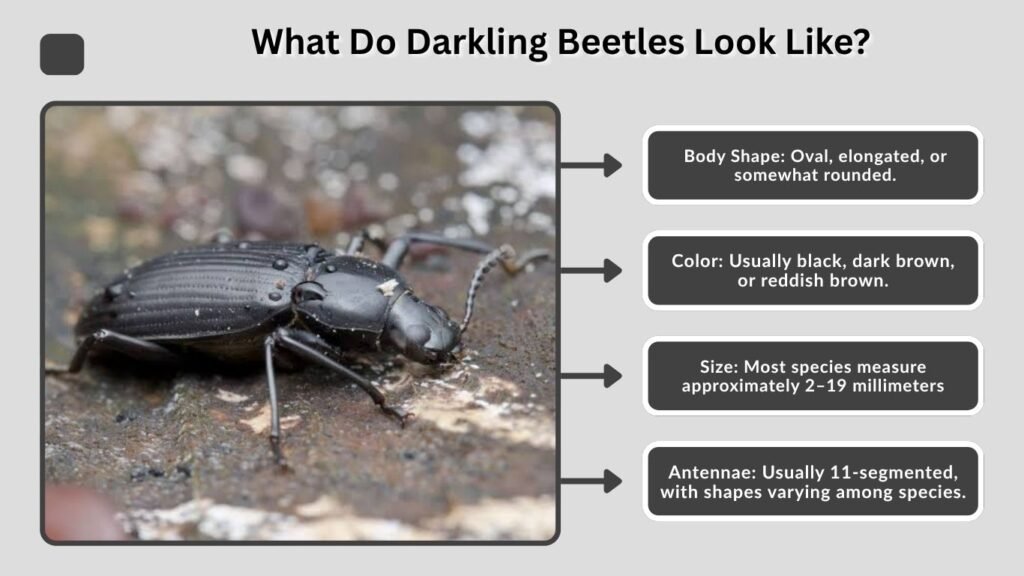
Darkling beetles have distinctive body structures, but their appearance differs among species. Most adults have elongated or oval bodies with hard outer coverings that protect their delicate wings and internal organs.
Their coloration generally ranges from reddish brown to black, although some species display unusual patterns or metallic colors.
Darkling Beetle Identification
Common identifying characteristics include:
- Body Shape: Oval, elongated, or somewhat rounded.
- Color: Usually black, dark brown, or reddish brown.
- Size: Most species measure approximately 2–19 millimeters, although some are considerably larger.
- Antennae: Usually 11-segmented, with shapes varying among species.
- Wing Covers: Hard protective structures that may appear smooth, ridged, or textured.
- Legs: Six jointed legs adapted for crawling.
Darkling Beetle Larvae
Darkling beetle larvae are commonly called mealworms or false wireworms. They have elongated, segmented bodies with tough outer coverings.
Their colors range from pale yellow to golden brown or darker brown. Most larvae live within soil, grain, decaying vegetation, or similar materials where food is available.
Darkling Beetle Life Cycle
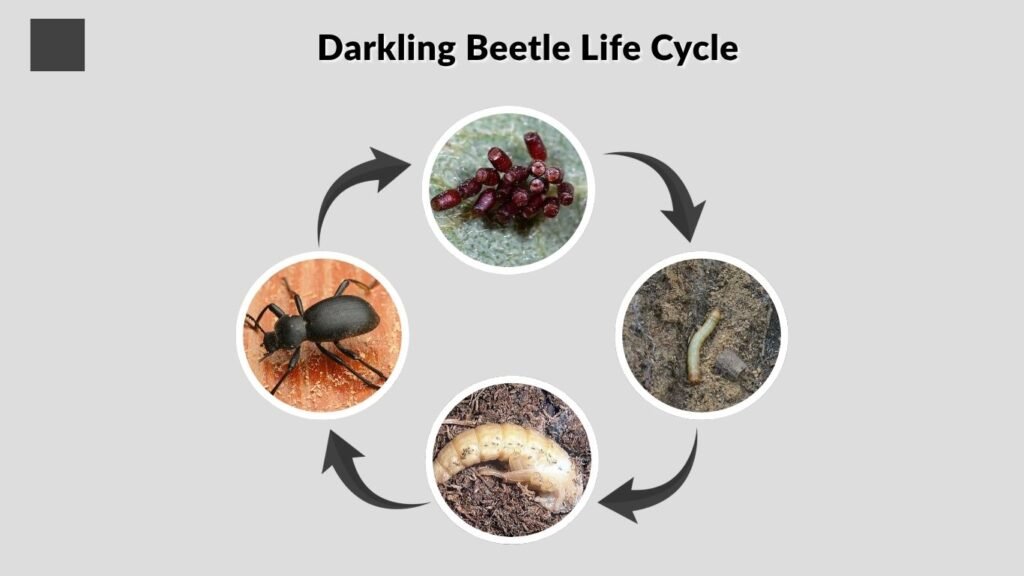
The darkling beetle life cycle includes four developmental stages: egg, larva, pupa, and adult. This process is called complete metamorphosis because the insect undergoes significant physical changes before reaching maturity.
Development time depends on the species, temperature, moisture, and food supply. Some stored-product species complete development relatively quickly, while others require several months or longer.
1. Egg Stage
Female darkling beetles lay small eggs in suitable environments containing food and shelter. Depending on the species, eggs may be deposited in soil, grain products, or decaying organic matter.
The eggs are often pale and difficult to notice without close examination.
2. Larval Stage
After hatching, larvae begin feeding and growing. They repeatedly shed their outer coverings through a process called molting.
This stage is particularly important because larvae accumulate nutrients needed for later development.
3. Pupal Stage
Once fully grown, the larvae transform into pupae. During this stage, their internal structures reorganize into those of adult beetles.
Pupae are generally pale when newly formed and gradually darken as development progresses.
4. Adult Stage
The adult beetle emerges after pupation. Its outer covering initially remains soft before gradually hardening and darkening.
Mature beetles feed, reproduce, and continue the life cycle by producing another generation.
What Do Darkling Beetles Eat?
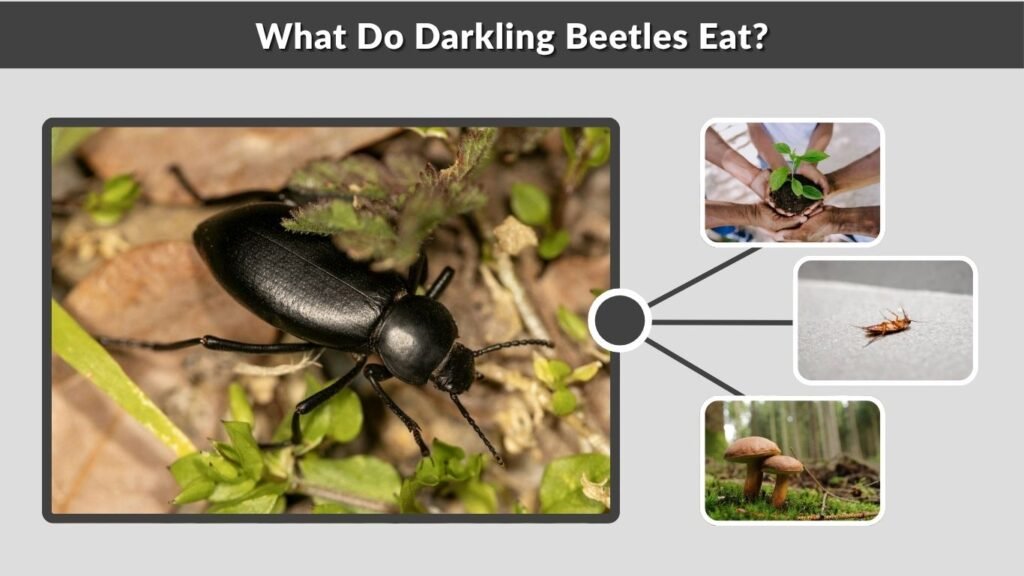
Darkling beetles have varied diets depending on their species and environment. Many are scavengers, consuming organic materials that would otherwise accumulate in natural ecosystems.
Both adults and larvae may feed on plant debris, fungi, or stored food products. Some species also consume dead insects and other animal remains.
Common Darkling Beetle Foods
- Decaying leaves and vegetation
- Dead insects and organic debris
- Fungi and decomposing wood
- Grains, bran, and cereal products
- Seeds and other plant materials
Certain agricultural species also feed on seedlings and growing plants, occasionally causing crop damage.
What to Feed Darkling Beetles in Captivity
For commonly kept mealworm beetles, wheat bran or rolled oats can provide a suitable food substrate.
Small pieces of carrot or potato may supply moisture. Replace fresh vegetables regularly to prevent mold growth and keep the enclosure clean.
Where Do Darkling Beetles Live?
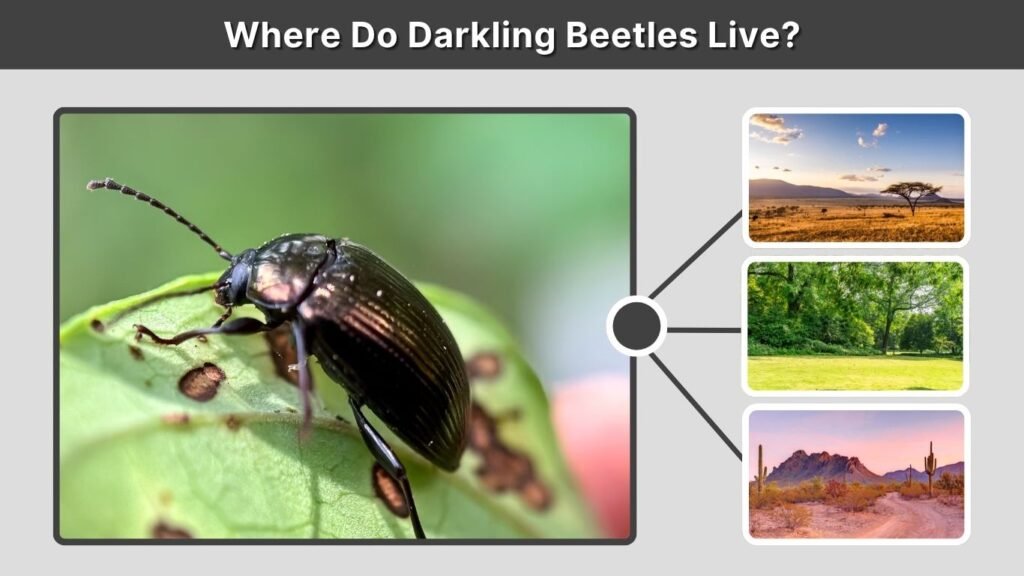
Darkling beetles inhabit many environments, including forests, grasslands, deserts, agricultural areas, and human buildings.
Outdoors, they frequently hide beneath stones, fallen logs, bark, or leaf litter. These locations provide protection from predators and extreme environmental conditions.
Desert darkling beetles are especially interesting because some species have adaptations that reduce water loss.
Other species inhabit grain storage facilities, poultry houses, and food-processing buildings where they find abundant food and shelter.
Most species prefer protected locations and become particularly active during nighttime, although some are active during the day.
Can Darkling Beetles Fly?
Yes, some darkling beetles can fly, but many species are flightless.
Their flight ability depends on the development of their hind wings and wing covers. Some species have functional wings but rarely use them, preferring to travel by crawling.
For example, many desert darkling beetles in the genus Eleodes have fused wing covers that prevent flight.
In contrast, the lesser mealworm beetle (Alphitobius diaperinus) can fly and may disperse between poultry facilities and nearby environments.
Therefore, whether a darkling beetle flies depends on the particular species.
Are Darkling Beetles Dangerous?
Most darkling beetles are not considered dangerous to humans. They do not possess stingers, and they generally avoid direct contact with people.
However, certain species produce defensive chemicals, while others can become troublesome pests when their populations increase.
Do Darkling Beetles Bite?
Darkling beetles have chewing mouthparts, but they rarely bite humans. Most species use their jaws primarily for feeding on organic materials.
A beetle handled roughly may occasionally attempt to pinch, but biting is not a typical defensive behavior.
Are Darkling Beetles Poisonous?
Some darkling beetles release unpleasant-smelling defensive secretions when threatened.
These substances discourage predators, and secretions from certain species can irritate human skin or cause blistering.
Avoid crushing unfamiliar beetles with bare hands. If contact occurs, wash the affected skin with soap and water.
How Long Do Darkling Beetles Live?
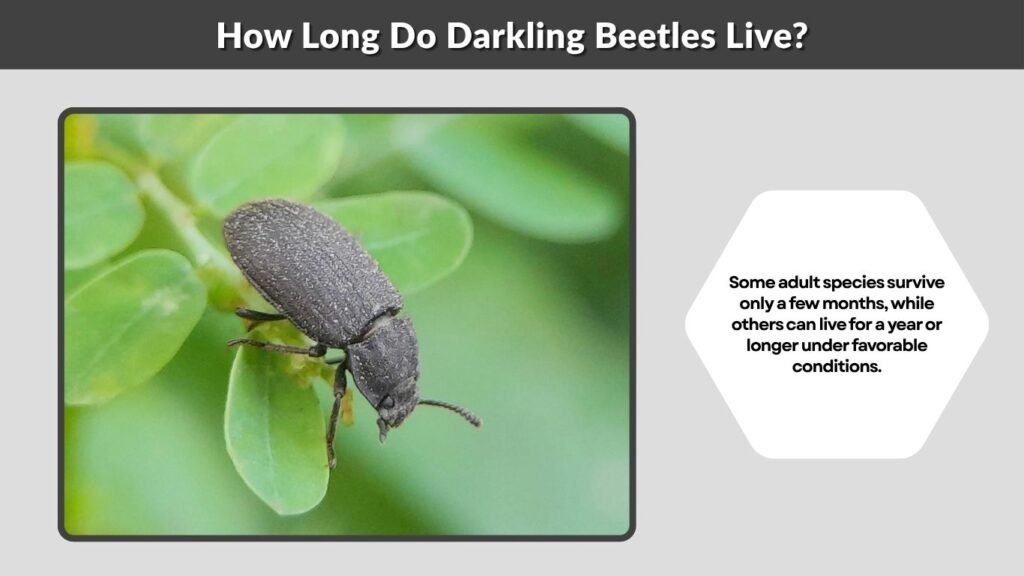
The darkling beetle lifespan varies considerably by species and environmental conditions.
Some adult species survive only a few months, while others can live for a year or longer under favorable conditions.
For example, adult lesser mealworm beetles may survive approximately three months to a year.
Food availability, temperature, humidity, and predator exposure influence longevity. Their total lifespan also includes the time spent developing eggs, larvae, and pupae.
How to Get Rid of Darkling Beetles in Your House
Finding an occasional darkling beetle indoors does not necessarily indicate an infestation. However, repeated sightings may suggest nearby breeding sites or contaminated stored foods.
Effective control begins with identifying where the beetles originate.
Darkling Beetle Control Methods
- Inspect Stored Foods: Check flour, grains, cereals, dried pet food, and birdseed for beetles or larvae.
- Remove Infested Products: Discard heavily contaminated food and clean the surrounding storage area.
- Seal Food Containers: Store dry foods in tightly closed, pest-resistant containers.
- Clean Hidden Areas: Vacuum cracks, corners, shelves, and locations where organic debris accumulates.
- Seal Entry Points: Repair gaps around windows, doors, and foundations to reduce beetle entry.
If beetles originate from a poultry building, proper litter management and approved pest-control methods may be necessary.
Can You Keep Darkling Beetles as Pets?
Yes, certain darkling beetles can be kept in captivity for observation, education, or breeding.
Mealworm beetles are particularly popular because their development is relatively easy to observe.
A suitable enclosure should provide ventilation, an appropriate substrate, food, and hiding places.
Keep the enclosure clean, remove spoiled food, and avoid excessive moisture. Different darkling beetle species have different requirements, especially desert species adapted to dry habitats.
FAQs
1. Are Darkling Beetles Nocturnal?
Many darkling beetles are primarily nocturnal. They remain sheltered during daylight and become active at night to search for food. However, some species are also active during daytime.
2. Are Darkling Beetles Harmful to Humans?
Most darkling beetles are harmless to humans. Nevertheless, defensive secretions from certain species can irritate skin, and some stored-product species contaminate food.
3. Can Bearded Dragons Eat Darkling Beetles?
Bearded dragons can eat some captive-raised darkling beetles occasionally. However, adult beetles have hard exoskeletons and should not replace a balanced diet of suitable feeder insects and vegetables.
4. Can Leopard Geckos Eat Darkling Beetles?
Healthy adult leopard geckos may consume appropriately sized captive-raised mealworm beetles occasionally. Their hard outer coverings make them less suitable for small or young geckos.
5. What Eats Darkling Beetles?
Darkling beetles are eaten by various predators, including birds, lizards, rodents, spiders, and other insect-eating animals. Some species use unpleasant chemical secretions to discourage predators.