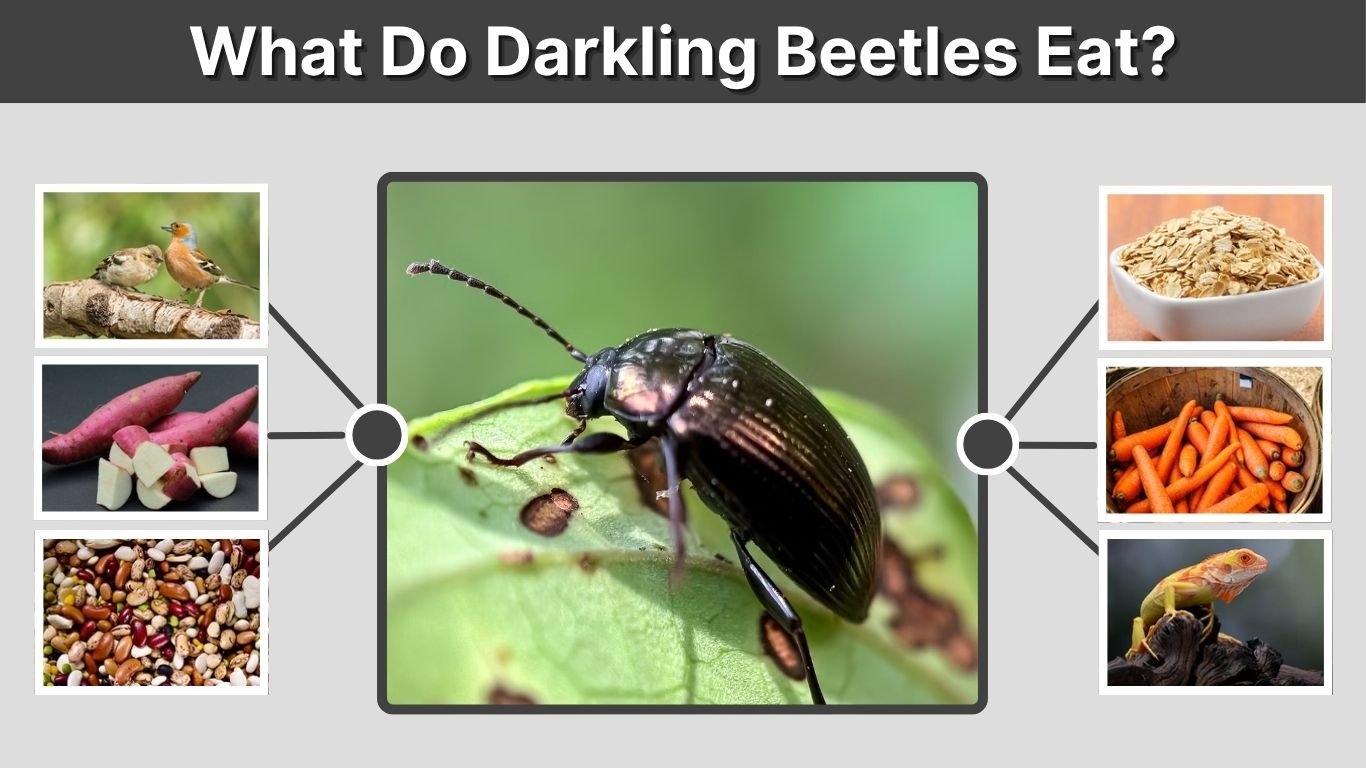
Darkling beetles are fascinating insects with surprisingly varied feeding habits. But what do darkling beetles eat in the wild and captivity? These beetles consume grains, vegetables, fruits, fungi, and decaying organic matter, depending on their species. Many are omnivorous scavengers that help recycle nutrients in natural ecosystems. When kept as pets or raised for breeding, they need appropriate foods to support their growth and reproduction. This guide explores 10 of the best foods for darkling beetles, their natural diet, feeding habits, and common questions about what eats them.
What Do Darkling Beetles Eat?
Darkling beetles belong to the family Tenebrionidae, which contains thousands of species with different dietary preferences. Most feed on plant materials, fungi, grains, or decomposing organic substances.
In captivity, commonly raised mealworm beetles (Tenebrio molitor) thrive on grain-based substrates supplemented with fresh vegetables for moisture.
Their diet generally includes both dry foods and moisture-rich plant materials. However, foods suitable for mealworm beetles may not meet the needs of every wild darkling beetle species.
10 Best Foods for Darkling Beetles
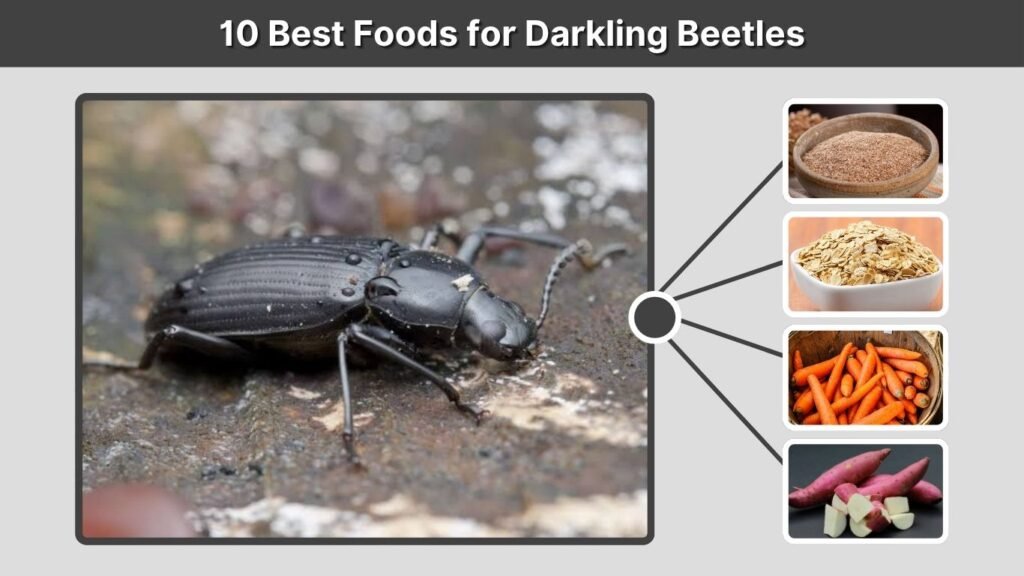
Choosing appropriate food helps keep captive darkling beetles active and supports successful breeding. The following foods are particularly useful for commonly raised mealworm beetles. Dry grain products provide a feeding substrate, while fresh vegetables supply additional nutrients and moisture.
1. Wheat Bran
Wheat bran is one of the most commonly used foods for captive darkling beetles. It provides carbohydrates, some protein, and fiber while serving as a comfortable substrate.
Mealworm beetles and their larvae can move through loose bran easily, allowing them to feed and reproduce.
Use plain, dry wheat bran without added salt, sugar, or flavorings. Keep it free from moisture buildup and replace it when contaminated.
2. Rolled Oats
Rolled oats are another excellent food for mealworm beetles. They contain carbohydrates, protein, and fiber that help support their nutritional requirements.
Plain oatmeal can also function as bedding because the beetles can crawl through it and feed directly on the flakes.
Avoid flavored instant oatmeal containing sweeteners or artificial ingredients. Dry, unseasoned rolled oats are a convenient option for home breeding colonies.
3. Carrots
Carrots are particularly useful because they provide moisture along with plant nutrients. Many captive darkling beetles readily feed on fresh carrot slices.
Unlike dry grains, carrots help supply water through food, reducing the need for exposed water containers.
Cut carrots into manageable pieces and place them on the substrate. Remove leftovers before they become moldy or excessively soft.
4. Potatoes
Raw potatoes are widely used as a moisture source for mealworm colonies. Their high water content helps beetles obtain moisture without requiring large quantities of wet food.
Potato slices can be placed directly on a clean feeding surface inside the enclosure.
Use fresh, unspoiled potatoes, avoiding green or heavily sprouted portions. Replace leftover pieces regularly to discourage mold and bacterial growth.
5. Sweet Potatoes
Sweet potatoes provide carbohydrates and moisture, making them another useful supplemental food for captive darkling beetles.
Their firm texture allows beetles to nibble at the surface while obtaining small quantities of water and nutrients.
Offer thin pieces of fresh, washed sweet potato alongside a dry grain-based diet. Because sweet potatoes contain considerable moisture, remove uneaten portions before they spoil.
6. Pumpkin and Squash
Pumpkin and squash are suitable supplemental vegetables for commonly raised mealworm beetles. Their soft flesh provides moisture and a variety of plant nutrients.
Small pieces of plain pumpkin or squash can be offered occasionally to introduce variety into the feeding routine.
Remove seeds if they interfere with cleaning, and avoid seasoned or cooked preparations containing salt, oil, or spices.
Replace leftovers promptly to prevent excessive moisture.
7. Apples
Small pieces of fresh apple can be offered occasionally as a moisture-rich supplement. Apples contain natural sugars and water, making them different from dry grain-based foods.
However, their sugar content and tendency to spoil mean they should not become the primary food source.
Offer small, washed apple slices without seeds. Remove leftovers quickly, particularly in warm enclosures where fruit may attract unwanted insects.
8. Leafy Greens
Leafy vegetables, including romaine lettuce and suitable pesticide-free greens, can provide additional moisture and dietary variety.
Common mealworm beetles may nibble on soft leaves when they are available.
Wash the vegetables thoroughly and offer only small quantities. Leafy greens wilt quickly, so they require frequent replacement.
They are best used as supplements rather than substitutes for the beetles’ normal dry feeding substrate.
9. Cornmeal
Plain cornmeal can provide another grain-based food for mealworm beetles. It supplies carbohydrates and can be mixed with wheat bran or oats.
Finely ground corn products are also consumed by several stored-product darkling beetle species.
Choose unseasoned cornmeal without preservatives or unnecessary additives. Avoid allowing it to become damp or compacted, because moist grain substrates can develop mold.
10. Commercial Mealworm Feed
Commercial diets formulated for raising mealworms can provide a convenient alternative to basic grain mixtures.
Some formulations combine grain products with additional protein sources and other ingredients intended to support insect growth and reproduction.
Choose a product specifically labeled for mealworm cultivation and follow its feeding instructions.
Even when using prepared diets, provide an appropriate moisture source and maintain a clean enclosure.
What Do Darkling Beetles Eat in the Wild?
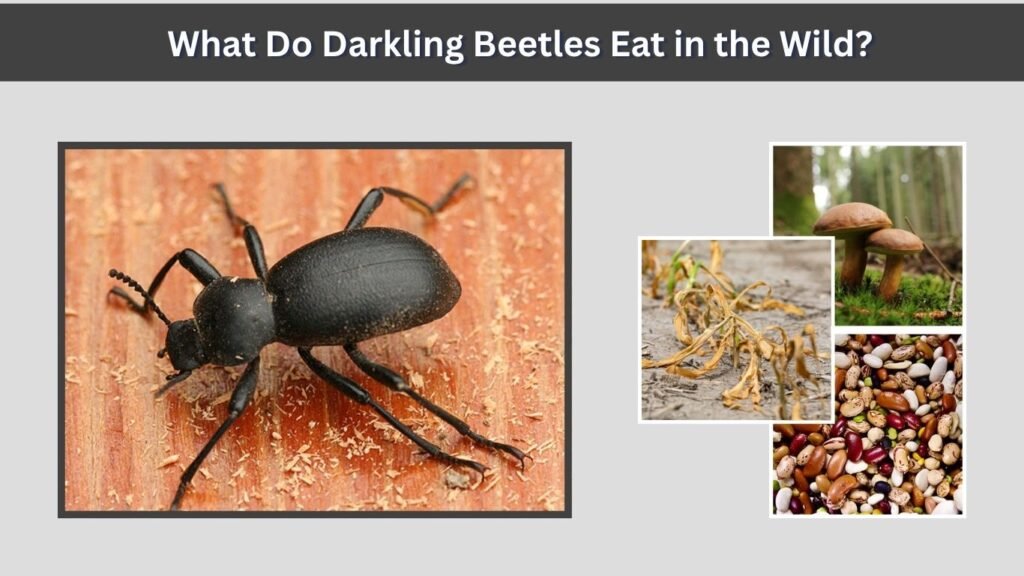
Wild darkling beetles consume different foods depending on their habitat and species. Many live beneath rocks, fallen leaves, decaying wood, or plant debris.
Their natural diets may include dead vegetation, seeds, fungi, decomposing organic material, and occasional dead insects.
Some desert species feed on living plants, while others are associated with dead plant matter. Agricultural species may feed on seedlings or stored grain products.
By consuming organic materials, many darkling beetles contribute to decomposition and nutrient cycling.
What Do Darkling Beetles Eat and Drink?
Captive mealworm beetles obtain much of their moisture from fresh vegetables such as carrots, potatoes, and leafy greens.
They also consume dry foods, including wheat bran and oats, which provide most of their feeding substrate.
Offer fresh food in small quantities and replace it before spoilage occurs.
Avoid deep, open water dishes because small beetles or larvae may become trapped. Moisture-rich vegetables are often a more practical option for mealworm breeding containers.
Do Darkling Beetles Eat Each Other?
Yes, cannibalism can occur in some darkling beetle species, particularly in crowded mealworm breeding colonies.
Adult beetles may consume eggs or vulnerable pupae. Larvae can also damage or eat other life stages under unfavorable conditions.
Limited food, inadequate moisture, and overcrowding may contribute to this behavior.
Separating pupae from larvae and regularly moving breeding adults to fresh containers can help protect developing insects.
What Eats Darkling Beetles?
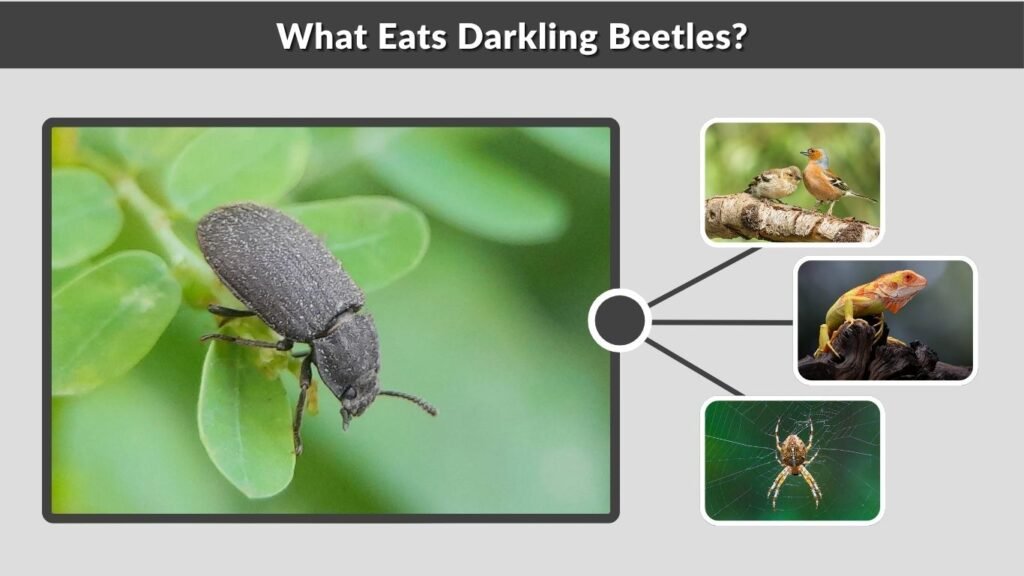
Darkling beetles are part of the food chain and provide food for numerous insect-eating animals.
Potential predators include birds, lizards, rodents, spiders, and other invertebrate hunters.
However, some species release unpleasant chemical secretions when threatened. These defenses can discourage predators from eating them.
The number and type of predators vary according to habitat, beetle size, and defensive adaptations.
Can Bearded Dragons Eat Darkling Beetles?
Bearded dragons can consume certain captive-raised darkling beetles, including mealworm beetles, but adults are not ideal staple feeder insects.
Their hard exoskeletons can make them more difficult to chew and digest than softer feeder insects.
Healthy adult bearded dragons may occasionally eat an appropriately sized beetle, but crickets, suitable roaches, and other recommended feeders are generally better routine choices.
Avoid wild-caught beetles because of possible pesticide exposure and uncertain species identification.
Can Leopard Geckos Eat Darkling Beetles?
Leopard geckos may eat captive-raised mealworm beetles, although some refuse them because of their hard bodies or defensive secretions.
Adult beetles are generally less suitable than softer feeder insects, especially for young or small geckos.
Offer only appropriately sized insects from reliable breeding sources. Mealworms, crickets, and suitable captive-bred roaches are more conventional feeding choices.
A reptile veterinarian can help determine whether adult beetles are appropriate for an individual gecko.
FAQs
1. Can Darkling Beetles Eat Bananas?
Captive mealworm beetles may nibble on small pieces of ripe banana. However, bananas spoil quickly, so offer them sparingly and remove uneaten portions.
2. Do Darkling Beetles Eat Their Eggs?
Yes, adult mealworm beetles can eat their eggs. Moving breeding adults into a fresh container periodically can reduce egg losses and improve breeding success.
3. What Do Darkling Beetle Larvae Eat?
Darkling beetle larvae commonly feed on grains, plant debris, and other organic materials. Captive mealworms are typically raised on wheat bran or oats with fresh vegetables.
4. Can Chickens Eat Darkling Beetles?
Chickens may eat darkling beetles and their larvae. However, beetles from contaminated environments or insecticide-treated poultry buildings should not be deliberately offered as feed.
5. Do Darkling Beetles Eat Meat?
Some darkling beetles scavenge dead insects and other animal remains. However, meat is not a recommended routine food for captive mealworm beetles because it spoils easily and may contaminate their enclosure.