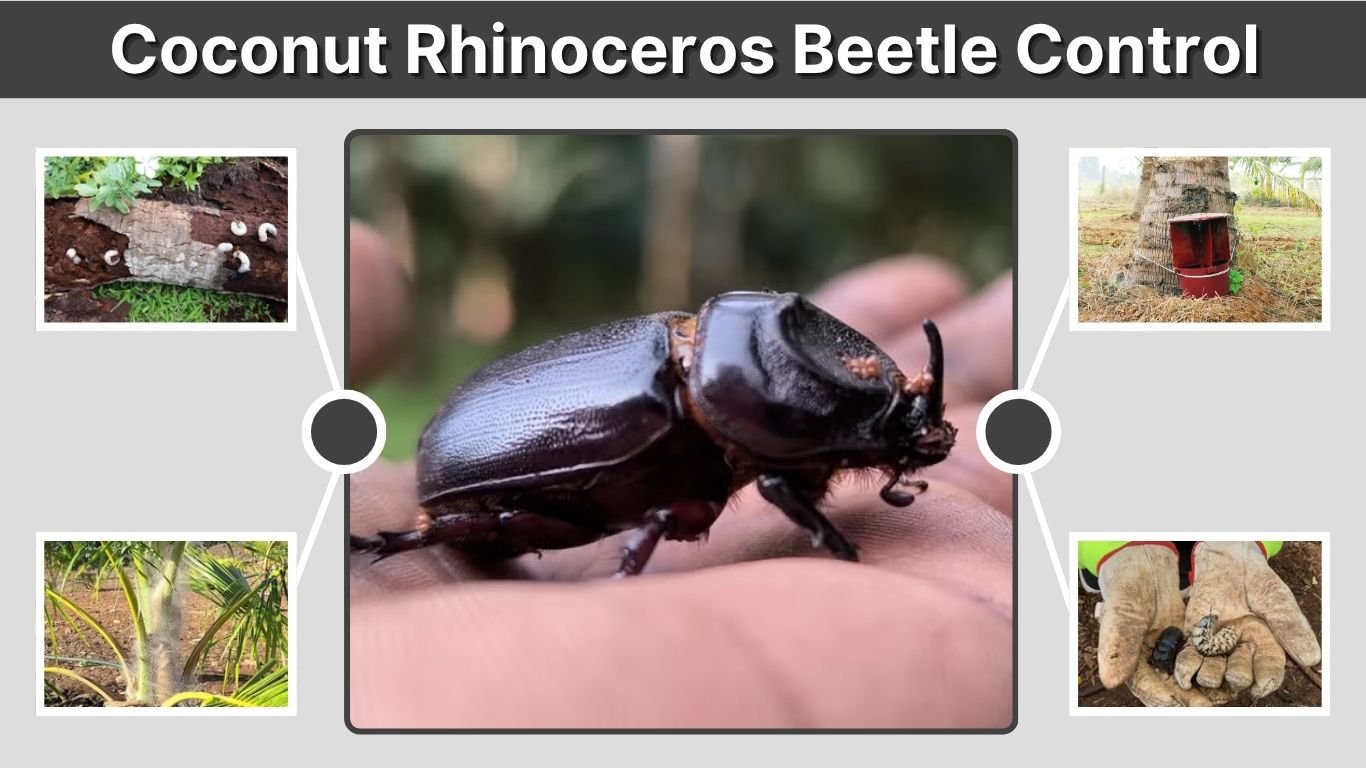
Coconut rhinoceros beetle control is essential for protecting coconut palms and other tropical trees from serious damage. These large beetles bore into palm crowns, damage developing leaves, and weaken young trees. Without proper management, repeated infestations may reduce coconut production or even kill affected palms. Fortunately, several effective control methods are available, including removing breeding sites, using pheromone traps, protecting palm crowns, and applying biological or chemical treatments. Understanding how to control coconut rhinoceros beetles can help homeowners and farmers prevent costly infestations.
Why Is Coconut Rhinoceros Beetle Control Important?
The coconut rhinoceros beetle (Oryctes rhinoceros) is a destructive pest that feeds on tender tissues inside palm crowns. Adult beetles create tunnels and damage developing leaves before they fully emerge.
Affected palms often develop V-shaped cuts, holes, and distorted fronds. Repeated attacks can reduce growth and weaken the central growing point.
Early control is important because adult beetles can move between trees, while their larvae develop in decomposing vegetation. Eliminating only the visible adults is rarely enough to control an established population.
7 Effective Coconut Rhinoceros Beetle Control Methods
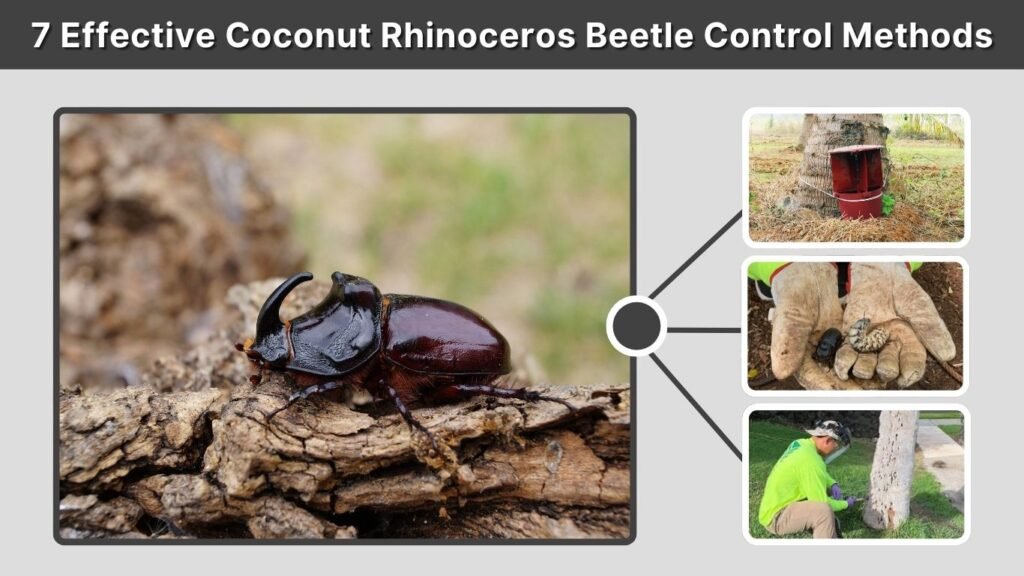
Successful coconut rhinoceros beetle management combines several techniques rather than depending on one treatment. Removing breeding sites is especially important, while traps, physical barriers, and targeted treatments provide additional protection. The following seven methods can help reduce beetle populations and prevent further palm damage.
1. Remove and Destroy Breeding Sites
Removing breeding materials is one of the most effective ways to control coconut rhinoceros beetles.
Female beetles lay eggs in decomposing plant matter, where larvae develop before becoming adults. Removing suitable breeding sites interrupts this cycle.
Common breeding materials include:
- Rotting coconut trunks and old stumps.
- Decomposing palm leaves and branches.
- Large compost piles and organic waste.
- Moist mulch and decaying wood.
- Accumulated plant debris around plantations.
Inspect these materials for white, C-shaped grubs. If an infestation is confirmed, arrange appropriate treatment before moving or disposing of the material.
Avoid transporting infested compost or mulch to another location because this can spread the beetles.
2. Treat Infested Organic Materials
Treating breeding sites can help prevent rhinoceros beetle larvae from reaching adulthood.
Depending on local regulations and available facilities, infested material may be processed through approved heat treatment, controlled composting, or other validated methods.
Fine grinding and spreading material thinly may make breeding conditions less favorable, but these approaches are not guaranteed to kill every beetle.
Simply covering infested waste with a tarp is unreliable because beetles can sometimes burrow underneath it.
Contact local agricultural authorities for appropriate treatment and disposal methods, especially in regions with movement restrictions.
3. Remove Adult Beetles Manually
Manual removal can help protect individual coconut trees when beetle populations are relatively low.
Adult beetles sometimes remain inside the crown or near leaf bases after feeding. Inspect accessible palms for fresh holes, damaged fibers, and adult insects.
Use gloves and carefully collect any beetles that can be reached safely without damaging the growing point.
Avoid climbing tall palms or inserting sharp tools deeply into their crowns. Professional assistance is safer for large trees.
Manual removal is most effective when combined with regular inspections and breeding-site management.
4. Install Coconut Rhinoceros Beetle Pheromone Traps
Pheromone traps use chemical attractants to lure adult coconut rhinoceros beetles into specially designed containers.
These traps help identify beetle activity and may capture some adults before they reproduce.
Place traps according to local extension recommendations, away from vulnerable palm crowns when advised. Inspect them periodically and replace lures according to the manufacturer’s instructions.
However, traps cannot capture every beetle. Hawaii’s agricultural authorities emphasize that pheromone traps are primarily monitoring tools and are not effective as a stand-alone eradication method.
5. Protect Coconut Palm Crowns
Physical barriers can prevent adult beetles from reaching the vulnerable growing points of young coconut palms.
Specialized netting installed around the crown may reduce beetle entry when fitted correctly.
The protective material should allow healthy leaf growth and should not trap moisture or damage developing fronds.
Regular inspections are necessary because beetles may occasionally penetrate or bypass the barrier.
Crown protection is particularly valuable for newly planted or short palms. Larger trees may require treatment by trained palm-care professionals.
6. Use Biological Control Methods
Biological control of coconut rhinoceros beetles involves natural enemies and disease-causing organisms that suppress beetle populations.
Two important biological control agents are:
Metarhizium fungi: Certain species, including Metarhizium anisopliae, can infect beetle larvae and adults. Suitable formulations may help manage populations in breeding materials where registered.
Oryctes rhinoceros nudivirus (OrNV): This virus has been used in parts of Asia and the Pacific to suppress coconut rhinoceros beetle populations.
Biological control programs require appropriate expertise, locally approved products, and suitable environmental conditions.
As of the Hawaii Invasive Species Council’s published guidance, relevant fungal products were not registered for coconut rhinoceros beetle control in Hawaii, and OrNV introduction was undergoing permitting.
7. Apply Approved Chemical Control Treatments
Chemical control may be necessary when infestations are severe or valuable palm trees face repeated attacks.
Some insecticides can protect palm crowns or target beetles through systemic treatment.
Research and management programs have evaluated pyrethroid insecticides and systemic products containing active ingredients such as imidacloprid and acephate.
However, product suitability varies by location, target plant, registration, and application method.
Use only pesticides approved and labeled for the intended application. Professional treatment is often the safest option for tall palms and systemic applications.
Avoid applying household chemicals, concentrated salt solutions, or unregistered pesticide mixtures because they may harm the trees, people, or surrounding environment.
Coconut Rhinoceros Beetle Control in Hawaii
Coconut rhinoceros beetles are invasive pests in Hawaii, threatening coconut palms and other valuable tropical plants.
Control efforts involve monitoring, sanitation, palm protection, and reducing the movement of infested organic materials.
Residents should avoid transporting untreated mulch, compost, and other potentially infested materials between locations.
Hawaii’s CRB Response program emphasizes green-waste management as a particularly important way to reduce beetle populations.
Suspected beetles or damage outside Oahu should be reported through the official Coconut Rhinoceros Beetle Response reporting system. Established Oahu detections generally do not require routine reporting through that program.
Natural vs. Chemical Coconut Rhinoceros Beetle Control
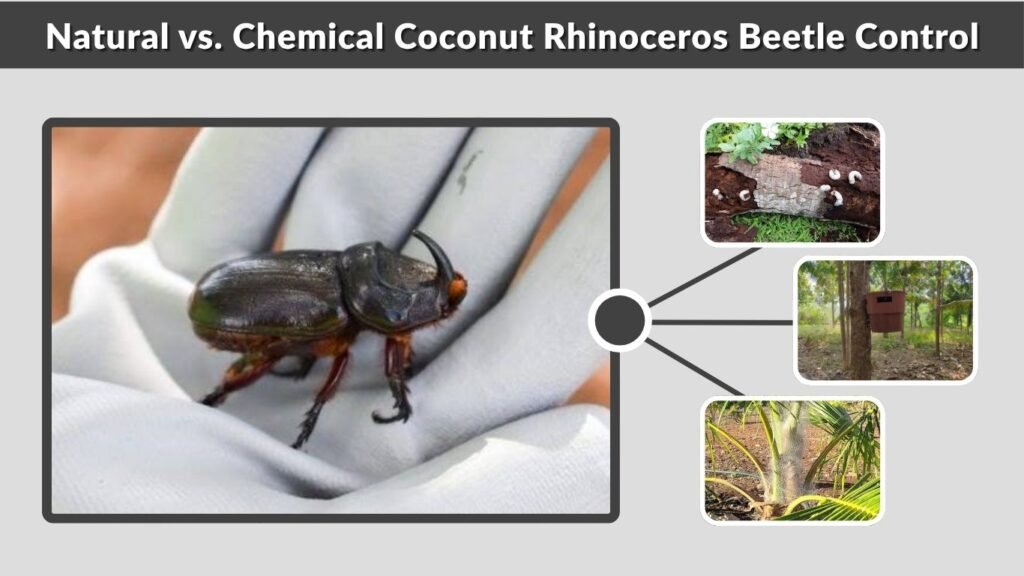
Both nonchemical and chemical methods can contribute to successful pest management. The best approach depends on infestation severity, tree age, local regulations, and available resources.
| Control method | Main purpose |
| Breeding-site sanitation | Reduces larval development |
| Manual beetle removal | Removes accessible adults |
| Pheromone traps | Monitors beetle activity |
| Crown netting | Protects young palms |
| Biological agents | Suppresses susceptible populations |
| Chemical treatments | Protects or treats affected palms |
Natural methods are particularly useful for prevention and long-term management. Chemical treatments may provide additional protection but should not replace proper sanitation.
FAQs
1. How do you control rhinoceros beetles in coconut trees?
Remove breeding materials, inspect palm crowns, collect accessible adults, and protect young trees with suitable netting. Use monitoring traps and approved treatments when needed.
2. What is the best biological control for coconut rhinoceros beetles?
Metarhizium fungi and Oryctes rhinoceros nudivirus are important biological control agents. Their effectiveness and legal availability depend on local conditions and regulations.
3. Can neem oil control coconut rhinoceros beetles?
Neem-based treatments have been investigated, but ordinary neem oil should not be relied upon as a proven control. University of Hawaii testing reported that neem oil was ineffective against this pest.
4. Do pheromone traps eliminate coconut rhinoceros beetles?
No. Pheromone traps can capture some adults and help monitor infestations, but they do not reliably eliminate established populations.
5. How can farmers prevent coconut rhinoceros beetle infestations?
Farmers should regularly inspect palms, manage decomposing vegetation, prevent movement of infested materials, and follow local integrated pest-management recommendations.