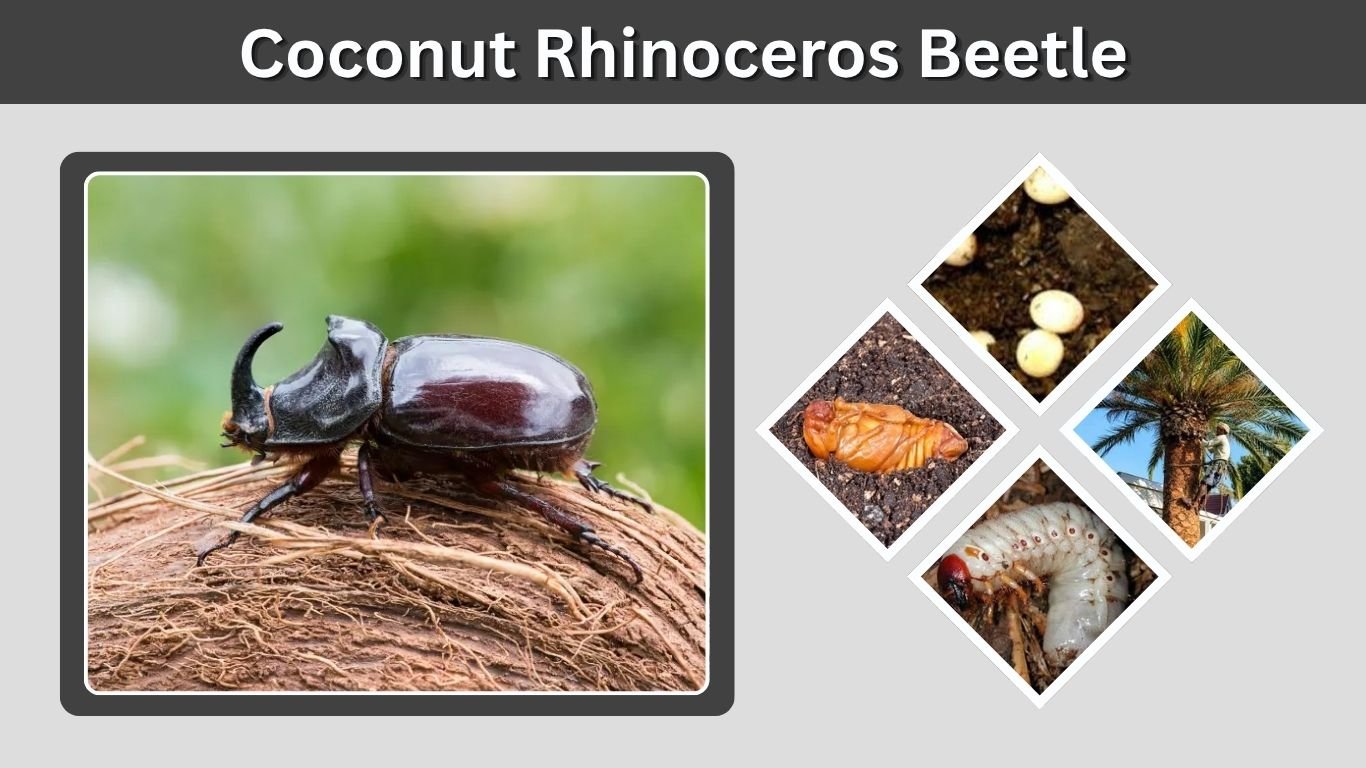
The coconut rhinoceros beetle (Oryctes rhinoceros) is a destructive insect pest that attacks coconut palms and other tropical palm species. Recognized by its large, dark body and distinctive horn, this beetle causes serious damage by boring into growing palm crowns and feeding on developing tissues. Infestations can weaken trees, reduce coconut production, and sometimes kill young palms. Understanding coconut rhinoceros beetle identification, larvae, life cycle, damage symptoms, and control methods is essential for protecting healthy palm trees.
What Is a Coconut Rhinoceros Beetle?
The coconut rhinoceros beetle is a large scarab beetle belonging to the family Scarabaeidae. It is native to tropical Asia but has spread to several Pacific islands and other tropical regions.
Unlike many beetles that feed primarily on leaves, adult coconut rhinoceros beetles burrow into palm crowns to reach tender developing tissues. Their feeding can permanently damage new fronds and growing points.
These beetles are particularly problematic in coconut plantations, tropical gardens, and landscapes where palm trees are common.
Coconut Rhinoceros Beetle Facts
| Characteristic | Description |
| Scientific name | Oryctes rhinoceros |
| Common name | Coconut rhinoceros beetle |
| Family | Scarabaeidae |
| Adult size | Approximately 3–6 cm |
| Color | Dark brown to black |
| Diet | Tender palm tissues and sap |
| Habitat | Tropical palm-growing regions |
| Activity | Primarily nocturnal |
| Life cycle | Egg, larva, pupa, adult |
Coconut Rhinoceros Beetle Identification
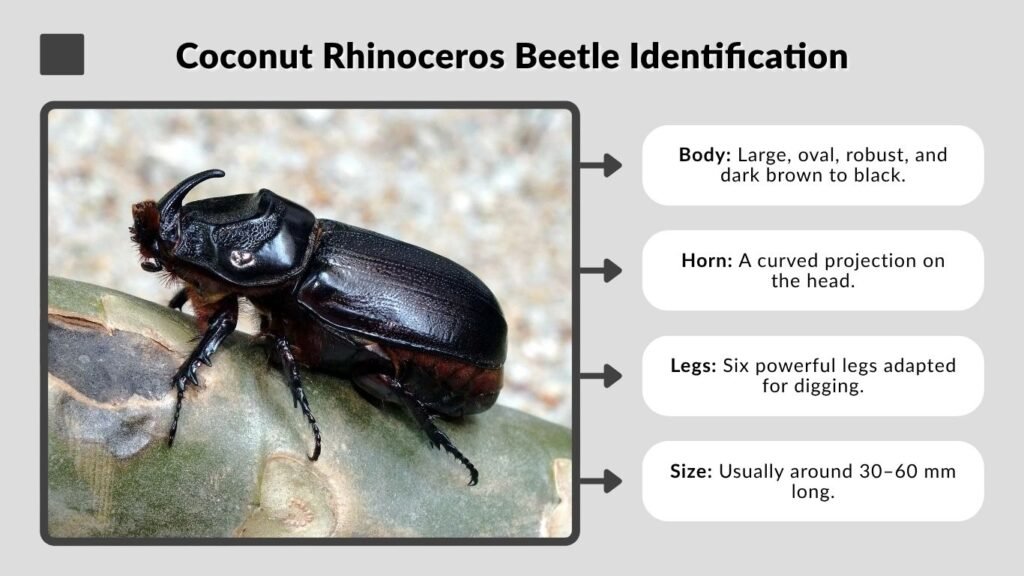
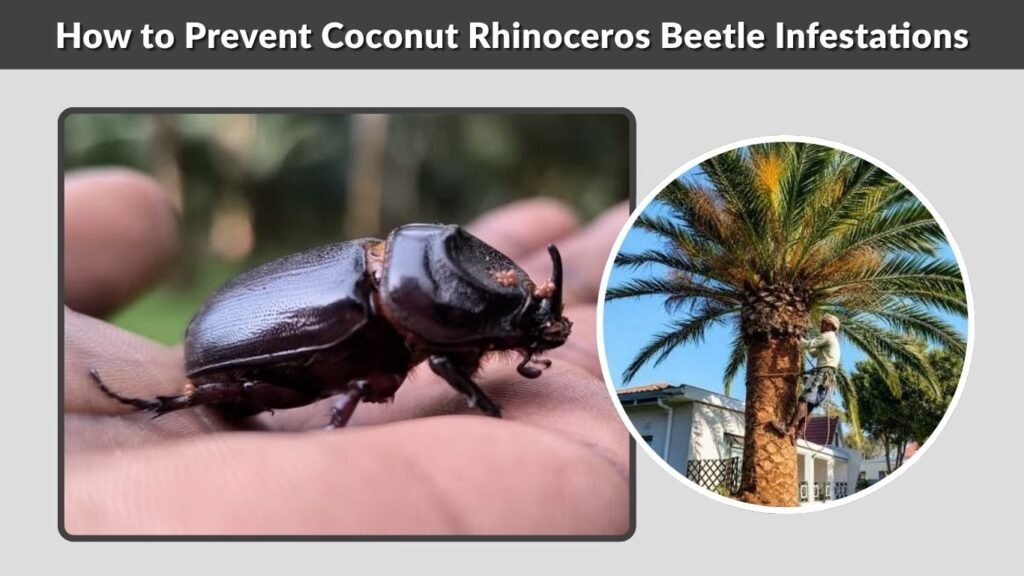
Adult coconut rhinoceros beetles have strong, oval bodies with glossy dark exoskeletons. Their most recognizable feature is the curved horn extending from the head.
Both males and females possess horns, although male horns are generally longer and more prominent.
Physical Appearance
- Body: Large, oval, robust, and dark brown to black.
- Horn: A curved projection on the head.
- Legs: Six powerful legs adapted for digging.
- Wings: Hardened forewings covering functional flight wings.
- Size: Usually around 30–60 mm long.
Adults are strong fliers and are most active after sunset. They may be found around palm crowns, fallen coconut trunks, and decomposing vegetation.
The oriental flower beetle is one common look-alike in Hawaii, but it is generally smaller and lacks the same prominent head horn.
Coconut Rhinoceros Beetle Life Cycle
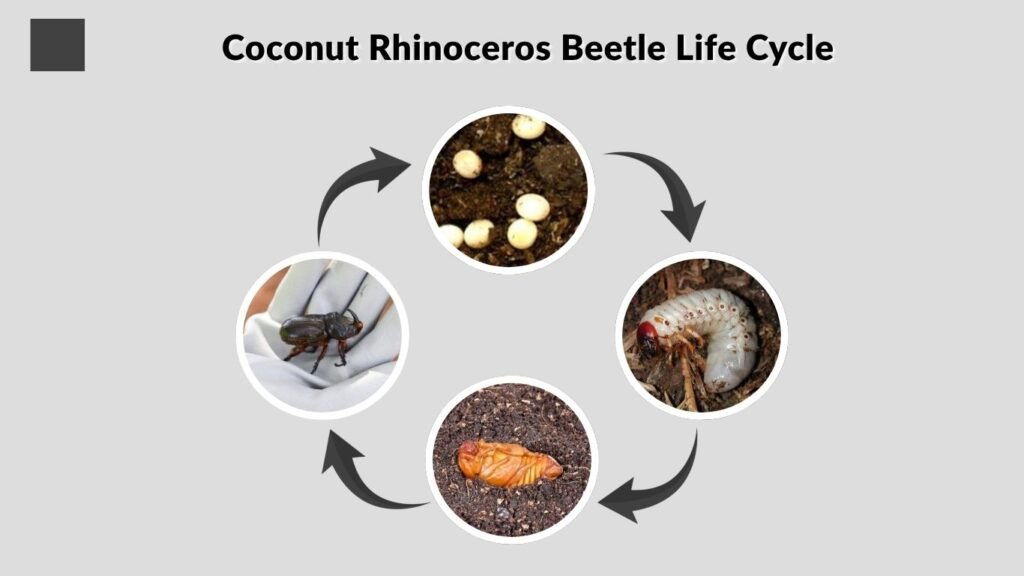
Coconut rhinoceros beetles undergo complete metamorphosis through four developmental stages. Their immature stages develop in decomposing organic material rather than healthy palm crowns.
1. Egg Stage
Female beetles lay small, pale eggs inside rotting coconut logs, compost, mulch, and decaying vegetation.
The eggs generally hatch after approximately 8–12 days, depending on environmental conditions.
2. Larval Stage
Coconut rhinoceros beetle larvae are thick, creamy-white grubs with brown heads and curved bodies.
They feed on decomposing organic matter, gradually increasing in size through three larval stages. Development often takes several months.
Mature larvae may reach approximately 7–10 cm in length.
3. Pupal Stage
Fully developed larvae form pupal chambers inside decomposing material or nearby soil.
During pupation, their bodies transform into adult beetles. This stage commonly lasts about two to three weeks.
4. Adult Stage
Adult beetles emerge from breeding sites and fly toward suitable palm trees.
They feed, mate, and reproduce, continuing the infestation cycle. Development time varies with temperature and other environmental conditions.
Coconut Rhinoceros Beetle Damage and Symptoms
Coconut rhinoceros beetle damage primarily occurs when adult beetles bore into the crown of a palm tree.
They injure developing fronds and may damage the palm’s central growing point. Severe infestations can affect overall tree growth and coconut production.
Common Signs of Infestation
- V-shaped cuts: Newly opened palm fronds develop distinctive triangular notches.
- Boreholes: Round openings appear near the crown or leaf bases.
- Damaged fronds: Leaves become torn, distorted, or irregular.
- Reduced growth: Attacked palms may produce fewer healthy leaves.
- Crown deterioration: Severe feeding can damage or destroy the growing point.
Young palms are especially vulnerable because damage to their single growing point can be fatal.
However, V-shaped cuts alone do not prove an active infestation. Inspect the crown and surrounding breeding material for additional evidence.
How to Control Coconut Rhinoceros Beetles
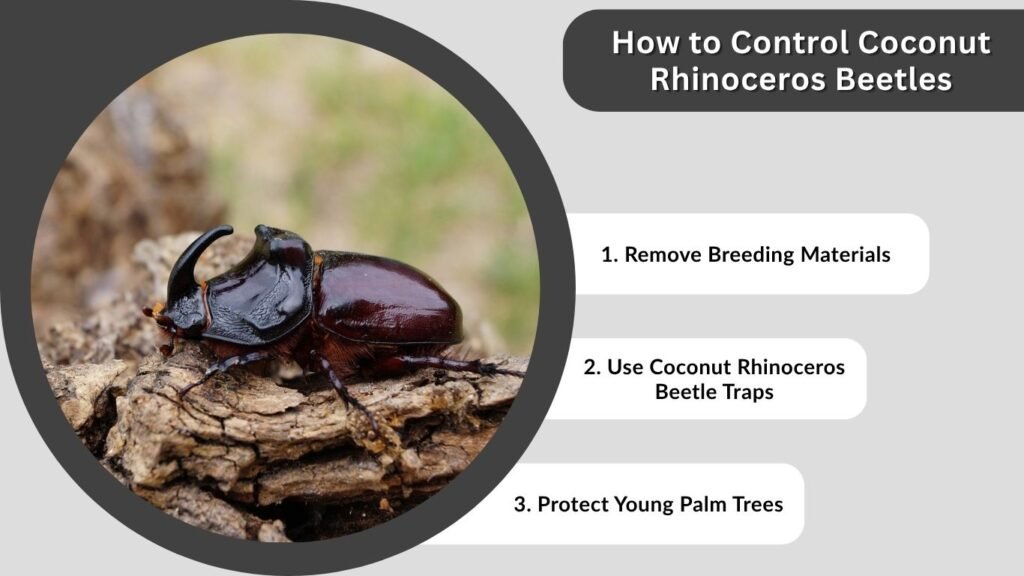
Effective coconut rhinoceros beetle control requires an integrated approach combining sanitation, monitoring, physical protection, and appropriate treatment.
Eliminating breeding sites is particularly important because larvae develop inside decaying organic materials.
1. Remove Breeding Materials
Inspect areas containing decomposing palm trunks, old stumps, compost, and large mulch piles.
Remove or properly process suitable breeding materials according to local biosecurity guidance. Suspected infested material should not be transported untreated.
2. Use Coconut Rhinoceros Beetle Traps
Pheromone traps attract adult beetles using synthetic chemical lures.
These traps are particularly useful for monitoring populations, detecting new infestations, and identifying areas requiring management.
However, traps alone rarely eliminate an established population.
3. Protect Young Palm Trees
Physical barriers, including appropriately installed crown netting, may help protect accessible young palms.
Inspect susceptible trees regularly and remove adult beetles when practical and safe.
4. Consider Biological Control
Biological management may involve specialized pathogens, including Oryctes rhinoceros nudivirus and beneficial fungi such as Metarhizium species.
These methods require suitable conditions and professional or agricultural guidance. Their effectiveness varies between locations and beetle populations.
5. Apply Approved Treatments
Where appropriate, registered insecticide treatments may protect vulnerable palms.
Choose only products labeled for the specific use and location. Follow label instructions and consult local agricultural specialists rather than applying unapproved pesticides.
No single treatment reliably removes an entire established infestation. Combining sanitation and palm protection offers better results.
Coconut Rhinoceros Beetles in Hawaii and Kauai
Coconut rhinoceros beetles are invasive pests in Hawaii. They were first detected on Oahu in December 2013 and subsequently spread to additional islands.
Populations have been documented on Kauai, while detections have also occurred on Hawaii Island and Maui. Their distribution continues to be monitored through surveillance and trapping programs.
Controlling movement of potentially infested mulch, compost, and palm waste is essential for reducing human-assisted spread.
Hawaii introduced additional restrictions on movement of certain host materials in 2026, including measures affecting West Hawaii Island and shipments to Maui and Lanai.
Residents can check the CRB Response reporting guidance and report suspected detections as directed. Routine reports of established infestations on Oahu are generally not required by the CRB Response program, but reporting guidance differs elsewhere.
How to Prevent Coconut Rhinoceros Beetle Infestations
Preventing infestations is generally easier than managing established beetle populations.
Palm owners should regularly inspect trees and surrounding landscapes, especially where decomposing vegetation accumulates.
Important preventive practices include:
- Keep unnecessary piles of decaying palm waste away from trees.
- Inspect imported mulch, compost, and landscaping materials.
- Monitor young palms for fresh boreholes and damaged fronds.
- Avoid transporting potentially infested organic material.
- Follow local agricultural and biosecurity recommendations.
Regular inspections can reveal beetle activity before extensive damage develops.
FAQs
1. Are coconut rhinoceros beetles dangerous to humans?
Coconut rhinoceros beetles are not poisonous and are not generally considered dangerous to humans. They do not normally bite, but handling them with gloves is advisable.
2. What do coconut rhinoceros beetles eat?
Adult beetles feed on tender palm tissues and sap inside developing crowns. Their larvae consume decomposing plant material, including rotting wood and compost.
3. Can coconut rhinoceros beetles fly?
Yes. Adult coconut rhinoceros beetles have functional wings and can fly between palm trees and breeding sites, particularly at night.
4. Can coconut rhinoceros beetles kill coconut trees?
Yes. Repeated attacks can severely weaken coconut palms. Damage to the central growing point may kill the tree, particularly when the palm is young.
5. What is the best way to get rid of coconut rhinoceros beetles?
The most effective approach combines proper breeding-site management, regular monitoring, palm protection, and locally approved treatments. Pheromone traps help detect beetles but are not sufficient alone.