
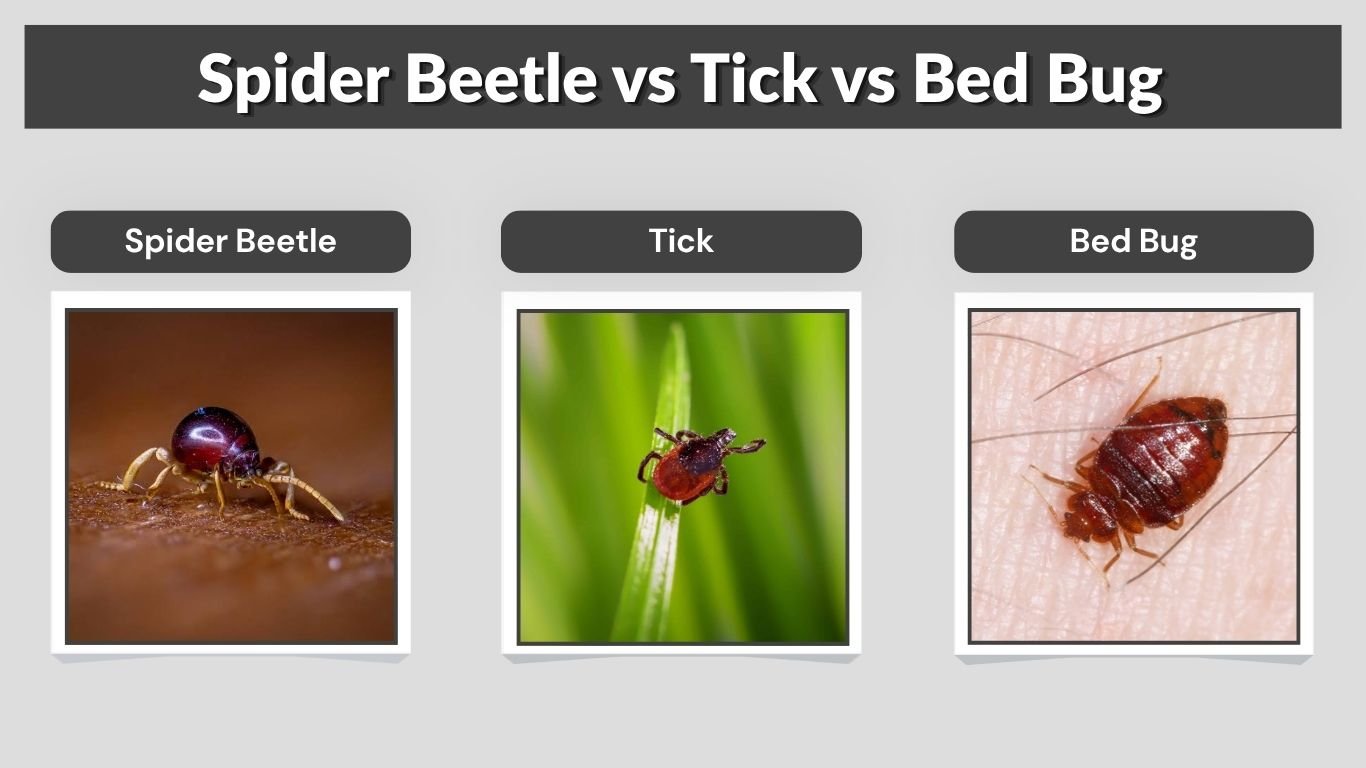
Spider beetles, ticks, and bed bugs are small pests that often look surprisingly similar, making identification confusing for homeowners. Their reddish-brown coloring, tiny bodies, and visible legs can make it difficult to distinguish one from another. However, these creatures have different physical characteristics, feeding habits, habitats, and effects on humans. Spider beetles primarily feed on stored organic materials, while ticks and bed bugs consume blood. Understanding these differences helps you identify the correct pest and avoid unnecessary treatments. This guide compares their appearance, behavior, bites, and infestation signs.
Spider Beetle vs Tick vs Bed Bug: Comparison Table
Spider beetles, ticks, and bed bugs differ in several important ways, particularly their body shapes, leg counts, and feeding behavior. While all three may appear inside homes, their presence does not indicate the same type of infestation. The following comparison highlights their most recognizable characteristics.
| Features | Spider Beetle | Tick | Bed Bug |
| Body shape | Rounded, globular | Oval, often flattened when unfed | Broad, flat, oval when unfed |
| Size | Usually 1.5–5 mm | Varies by species and feeding stage | Adults 5–7 mm |
| Legs | 6 | 8 in nymphs and adults; 6 in larvae | 6 |
| Antennae | Yes | No | Yes |
| Color | Brown to black | Brown, reddish, or grayish | Brown to reddish-brown |
| Food | Stored organic materials | Animal and human blood | Human and animal blood |
| Human bites | Not normally | Yes | Yes |
| Common habitat | Pantries, attics, storage areas | Vegetation, animals, and sheltered areas | Beds, furniture, and nearby crevices |
| Main concern | Stored-product contamination | Potential disease transmission | Bites and household infestations |
What Is a Spider Beetle?
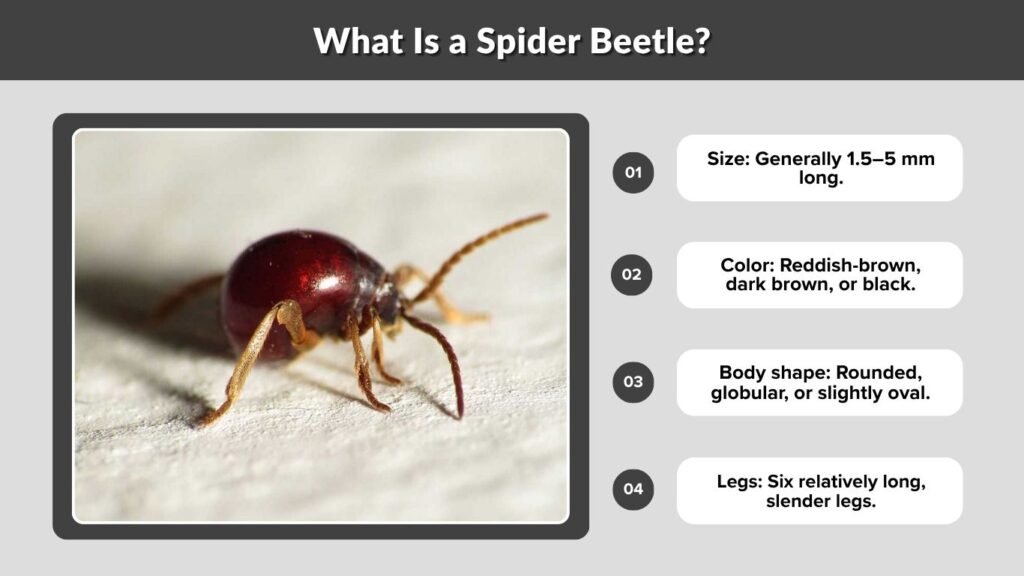
Spider beetles are small insects belonging to the family Ptinidae. Their rounded bodies and unusually long legs give them a spider-like appearance, despite being true beetles. Several species occur worldwide, including smooth spider beetles and American spider beetles. They commonly inhabit stored food, old buildings, and locations containing accumulated organic materials.
Spider Beetle Identification
Spider beetles have compact bodies, prominent legs, and long antennae. Their appearance varies depending on the species.
Key identification features:
- Size: Generally 1.5–5 mm long.
- Color: Reddish-brown, dark brown, or black.
- Body shape: Rounded, globular, or slightly oval.
- Legs: Six relatively long, slender legs.
- Antennae: Two visible antennae that resemble additional legs.
- Body surface: Smooth and shiny in some species, while others have fine hairs.
Smooth spider beetles are particularly likely to be mistaken for ticks because their shiny, rounded bodies resemble tiny seeds.
Where Do Spider Beetles Live?
Spider beetles typically inhabit pantries, cupboards, attics, basements, and storage areas.
They feed on dried organic materials, including grains, flour, dried pet food, feathers, and dead insects.
Some infestations originate from abandoned bird nests or rodent nesting materials inside buildings. Unlike bed bugs, spider beetles do not depend on human blood to survive.
Spider Beetle vs Tick: Identification Differences
Spider beetles and ticks may appear similar because both have small bodies and relatively noticeable legs. However, spider beetles are insects, while ticks are arachnids related to spiders and mites. Their antennae, body structure, and feeding habits provide useful identification clues.
Body Shape and Leg Differences
Spider beetles have six legs and two visible antennae. Their rounded bodies are covered by hardened wing cases, a characteristic feature of beetles.
Tick nymphs and adults have eight legs and no antennae. Their bodies are generally oval and can expand considerably after consuming blood.
However, tick larvae have six legs, so leg count alone is not always sufficient for identification.
Smooth Spider Beetle vs Tick
Smooth spider beetles have glossy, reddish-brown bodies that closely resemble small ticks.
A smooth spider beetle has a rounded abdomen, long antennae, and six slender legs. Its hardened wing covers create a distinctive beetle-like appearance.
Ticks lack antennae and have specialized mouthparts designed to attach to hosts and feed on blood.
Using a magnifying glass can make these physical differences easier to recognize.
Do Spider Beetles Bite Like Ticks?
Spider beetles do not normally bite humans. Their mouthparts are adapted for consuming organic materials rather than blood.
Ticks, however, attach to people and animals to feed. Some species can transmit disease-causing organisms through their bites.
If a tick is attached to your skin, remove it promptly using fine-tipped tweezers and monitor for concerning symptoms.
Spider Beetle vs Bed Bug: Identification Differences
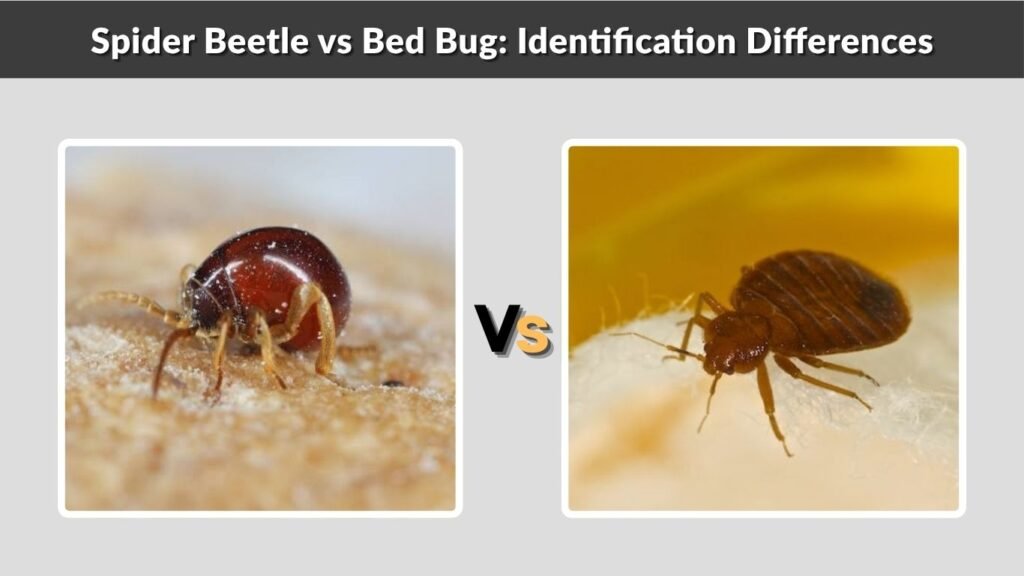
Spider beetles and bed bugs are frequently confused because both may appear in bedrooms and living spaces. Their reddish-brown coloring can make identification difficult without close examination. However, the insects differ significantly in body shape, feeding behavior, and preferred hiding locations.
Spider Beetle vs Bed Bug Appearance
Spider beetles usually have rounded, hump-backed bodies with long, slender legs.
Unfed bed bugs have broad, flattened, oval bodies that resemble apple seeds. Adult bed bugs typically measure approximately 5–7 mm long.
Both insects have six legs and antennae, but spider beetles possess hardened wing covers.
After feeding, bed bugs become swollen and more elongated, which can make their appearance less distinctive.
Spider Beetle Bites vs Bed Bug Bites
Bed bugs feed on blood and may leave itchy skin reactions after feeding.
Spider beetles do not normally bite people because they consume dry organic materials.
However, bite appearance alone cannot reliably confirm a bed bug infestation. Different insects and skin conditions can produce similar reactions.
Finding live bed bugs, shed skins, or characteristic fecal spots provides stronger identification evidence.
Where Do Spider Beetles and Bed Bugs Hide?
Spider beetles often hide around stored food products, wall voids, cupboards, and accumulated debris.
Bed bugs prefer locations near sleeping or resting people, including mattress seams, bed frames, headboards, and furniture crevices.
Finding a spider beetle on a bed does not necessarily indicate that it is breeding inside the mattress.
How to Identify These Pests in Your Home
Correct identification requires examining physical characteristics alongside the location where the pest was discovered. Small insects can be difficult to distinguish without magnification, particularly when they are immature or recently fed. Checking several features together is more reliable than relying on appearance alone.
Quick Pest Identification Checklist
- Examine the legs: Adult ticks have eight, while spider beetles and bed bugs have six.
- Check antennae: Spider beetles have prominent antennae; ticks have none.
- Observe body shape: Spider beetles are rounded, while unfed bed bugs are flattened.
- Inspect the location: Food storage areas suggest spider beetles; bedding evidence may indicate bed bugs.
- Look for feeding signs: Attached ticks and bed bug fecal spots provide important clues.
- Use magnification: Close-up photographs or a magnifying glass help reveal distinctive structures.
Understanding Infestation Signs
Spider beetle infestations may involve contaminated stored food, damaged packaging, or insects appearing around cupboards.
Bed bug infestations may produce dark fecal spots, shed skins, eggs, and live insects near sleeping areas.
Ticks are often discovered attached to people or pets, although some species can also establish themselves indoors.
Preserving a specimen can help professionals identify uncertain pests.
How to Get Rid of Spider Beetles
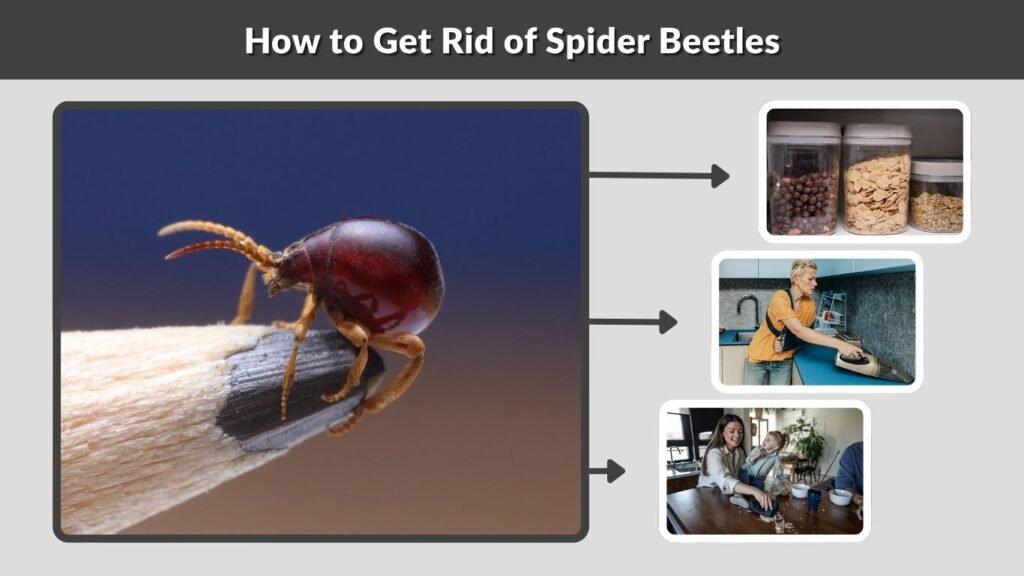
Spider beetle control involves locating their food source, removing contaminated materials, and cleaning affected spaces. Unlike bed bugs, spider beetles usually do not require extensive bedroom treatments. Eliminating breeding materials is often the most effective approach to preventing continued infestations.
Remove Infested Materials
Inspect grains, flour, dried pet food, birdseed, and other stored products for insect activity.
Discard heavily infested materials and thoroughly clean nearby shelves and cupboards.
If beetles continue appearing, investigate hidden sources such as abandoned nests, rodent debris, or accumulated organic matter.
Prevent Future Spider Beetle Infestations
Several practical measures can reduce the likelihood of another infestation.
- Store dry food in tightly sealed containers.
- Vacuum cupboards, corners, and storage spaces.
- Remove spilled food and accumulated organic debris.
- Inspect older food packages regularly.
- Seal appropriate gaps and entry points.
- Investigate persistent beetle activity in attics or wall voids.
What If You Find Ticks or Bed Bugs Instead?
Tick control focuses on preventing exposure, checking pets and clothing, and removing attached ticks promptly.
Bed bug control requires careful inspection, laundering and heat-drying suitable items, vacuuming, and sometimes professional pest management.
Because these pests behave differently, correctly identifying the insect before treatment is essential.
FAQs
1. Can Spider Beetles Be Mistaken for Ticks?
Yes. Smooth spider beetles have shiny, rounded bodies that resemble ticks. However, spider beetles possess antennae and hardened wing covers, while ticks do not.
2. Do Spider Beetles Look Like Bed Bugs?
Yes. Both are small, brownish insects, but spider beetles typically have rounded bodies, while unfed bed bugs are flat and oval.
3. Are Spider Beetles Dangerous to Humans?
Spider beetles are generally harmless to people. They do not normally bite or feed on blood, although they may contaminate stored food.
4. Can Spider Beetles Live in Beds?
Spider beetles occasionally wander onto beds, but they do not typically establish mattress infestations like bed bugs.
5. How Can You Tell a Fed Bed Bug from a Spider Beetle?
A recently fed bed bug may appear swollen and reddish. Spider beetles have hardened wing covers, a rounded beetle-like body, and generally longer antennae.
