
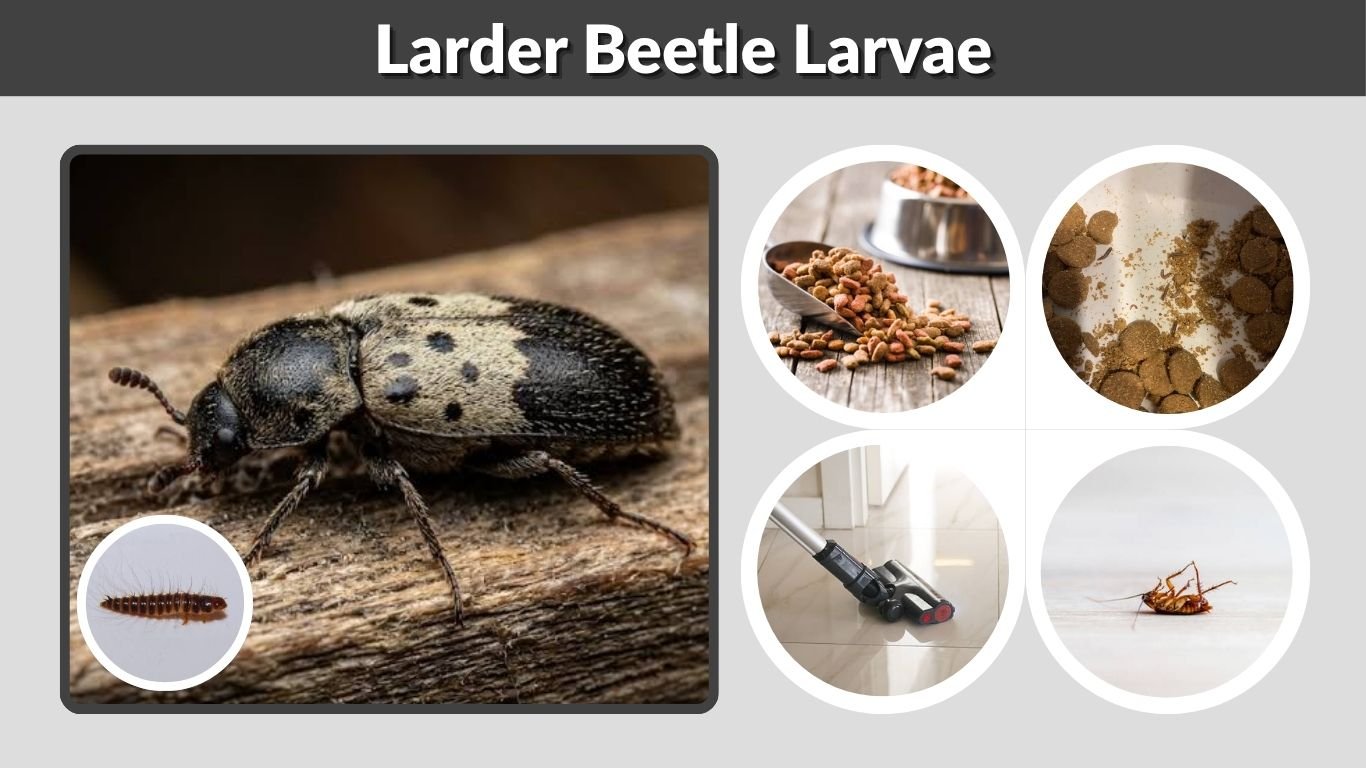
Finding larder beetle larvae crawling across your floor, inside a pantry, or near your bedroom can be unsettling. These small, hairy insects often appear when animal-based food materials or hidden organic debris provide suitable breeding conditions. Although larder beetle larvae rarely pose a direct threat to humans, they can contaminate stored food and damage certain household materials. Knowing how to identify them, understand their behavior, and locate their food sources makes removal easier. This guide explains their appearance, size, feeding habits, infestation signs, and effective control methods.
What Are Larder Beetle Larvae?
Larder beetle larvae are the immature stage of the larder beetle (Dermestes lardarius), a scavenging insect belonging to the Dermestidae family. These larvae primarily feed on dried animal materials, including dead insects, meat products, and pet food. They commonly develop in protected locations where suitable food remains available.
How Larder Beetle Larvae Develop
Female larder beetles deposit eggs on or near suitable food sources. After hatching, the young larvae begin feeding and gradually increase in size through several molts.
As larvae mature, they become more active and may wander away from their feeding sites. They eventually find protected locations where they transform into pupae before emerging as adult beetles.
Development time varies depending on temperature, food availability, and environmental conditions.
Larder Beetle Larvae Identification: What Do They Look Like?
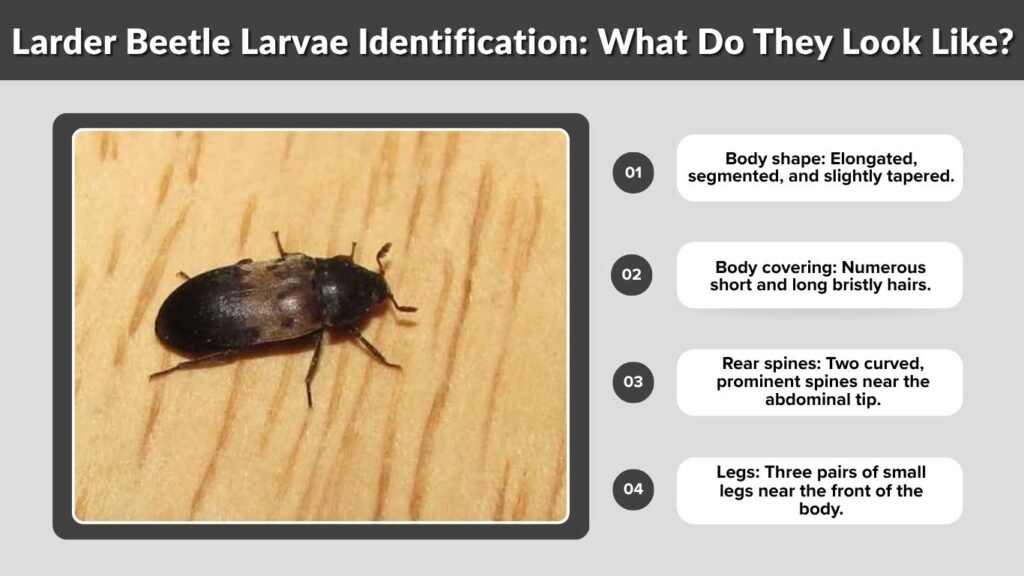
Identifying larder beetle larvae requires examining their body shape, color, hairs, and distinctive rear spines. Unlike adult larder beetles, which have hardened wing covers, larvae possess elongated, segmented bodies. Their bristly appearance sometimes causes homeowners to confuse them with carpet beetle larvae or small caterpillars.
Physical Characteristics of Larder Beetle Larvae
Larder beetle larvae have several distinguishing features:
- Body shape: Elongated, segmented, and slightly tapered.
- Color: Reddish-brown to dark brown, sometimes appearing nearly black.
- Body covering: Numerous short and long bristly hairs.
- Rear spines: Two curved, prominent spines near the abdominal tip.
- Legs: Three pairs of small legs near the front of the body.
- Movement: Crawling behavior, especially when searching for feeding or pupation sites.
Their two curved rear spines are particularly helpful when distinguishing them from other common household beetle larvae.
How Big Are Larder Beetle Larvae?
Mature larder beetle larvae generally measure approximately 1/2 inch (13 mm) long. Younger larvae are considerably smaller and gradually increase in length as they develop.
Their size may vary with developmental stage and environmental conditions. Although they resemble tiny hairy worms, their segmented bodies and six legs distinguish them from true worms.
Larder Beetle Larvae vs. Carpet Beetle Larvae
Larder beetle larvae and carpet beetle larvae belong to the same insect family, making them easy to confuse. Both are hairy scavengers, but they differ in their physical appearance, preferred food sources, and typical household habitats.
Key Identification Differences
Larder beetle larvae usually have an elongated body with distinctive curved spines near the rear. Their coloration ranges from reddish-brown to dark brown.
Many carpet beetle larvae are smaller and have a more oval, carrot-shaped, or tapered appearance. Depending on the species, they may display dense terminal hair tufts rather than prominent curved spines.
Carpet beetle larvae frequently feed on wool, fur, feathers, and other animal-derived fibers. Larder beetle larvae are more commonly associated with dried animal remains, dead insects, and protein-rich stored products.
Why Are Larder Beetle Larvae in My House?
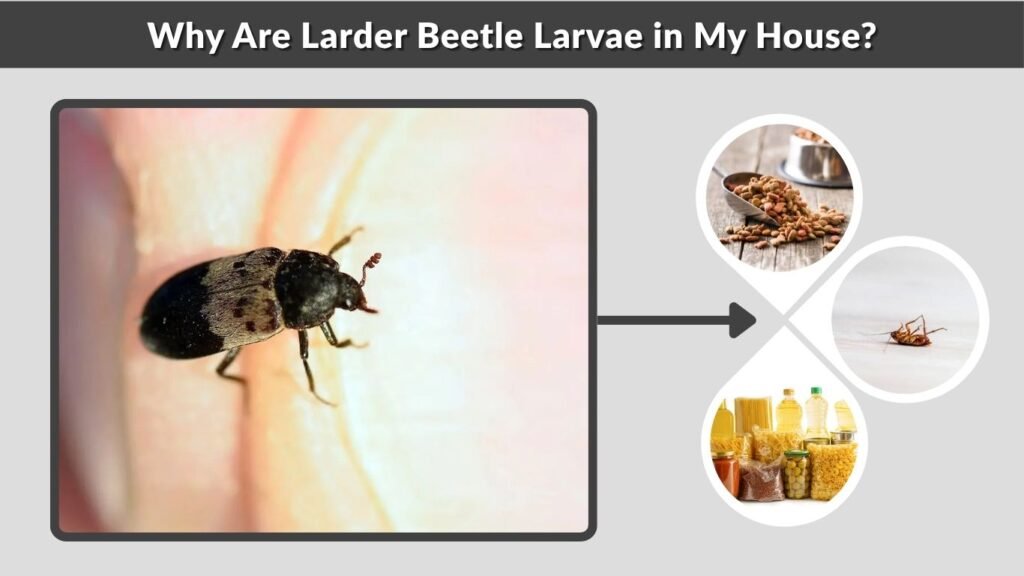
Finding larder beetle larvae indoors usually suggests that suitable food materials are available somewhere in or around the building. While adult beetles may enter through windows or structural openings, the larvae generally develop close to food sources before moving into other areas.
Common Causes of Indoor Infestations
Several conditions may encourage larder beetle larvae to develop indoors:
- Dry pet food: Improperly stored dog or cat food can support larval development.
- Dead animals: Rodents or birds remain hidden in walls and attics provide food.
- Dead insects: Accumulated flies, beetles, and other insects attract scavenging larvae.
- Animal materials: Feathers, hides, fur, and preserved specimens may become infested.
- Stored products: Some dried meats, cheeses, and animal-based foods are vulnerable.
Finding several larvae or repeated signs of activity may indicate a hidden breeding source.
How Do Larvae Spread Around the House?
Mature larvae commonly leave their feeding locations to find places to pupate. During this movement, they may appear on floors, walls, furniture, or window frames.
Consequently, the room where you discover larvae may not contain their original food source.
Larder Beetle Larvae in Bedroom, Bed, and Carpet
Discovering hairy larvae near your sleeping area can be concerning. However, their presence does not automatically indicate a mattress infestation. Larder beetle larvae may simply be traveling through the room after developing somewhere else.
Larder Beetle Larvae in Bedroom or Bed
Larvae occasionally appear around baseboards, under furniture, or near beds.
Inspect stored animal-derived materials, carpet edges, and nearby gaps. If you repeatedly discover larvae, investigate adjoining rooms, accessible attic areas, and possible dead insect accumulations.
Unlike bed bugs, larder beetles do not rely on human blood for food.
Larder Beetle Larvae in Carpet
Larvae may crawl across carpets while searching for shelter or pupation sites. They can also be associated with debris or animal-derived materials trapped around carpeting.
Vacuum affected areas thoroughly and examine nearby storage spaces. Repeated sightings suggest that a more substantial food source may exist elsewhere.
Larder Beetle Larvae in Dog Food
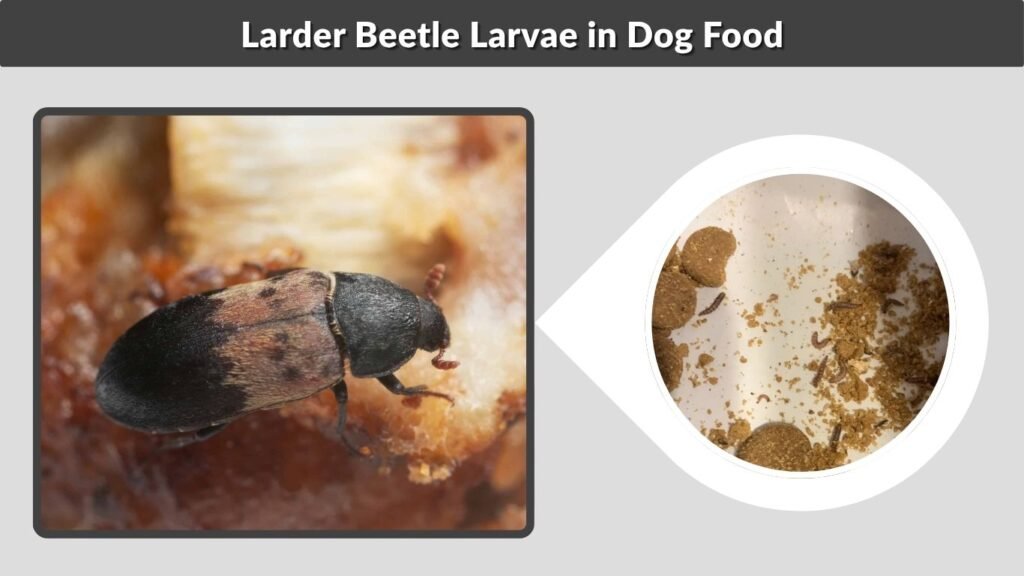
Dry pet food is a potential breeding source for larder beetles, especially when containers remain open or food accumulates in neglected storage areas.
How to Handle Infested Pet Food
Inspect food packages for larvae, adult beetles, shed skins, and contamination.
Discard visibly infested pet food rather than serving it to animals. Clean the storage container thoroughly before refilling it.
Store replacement food in tightly sealed, pest-resistant containers and regularly clean feeding areas.
If your pet has eaten visibly infested food and develops vomiting, diarrhea, or unusual symptoms, contact a veterinarian.
Do Larder Beetle Larvae Bite Humans?
Larder beetle larvae are not blood-feeding parasites and do not normally bite humans. However, direct contact with the bristly hairs of some dermestid larvae can cause skin irritation in sensitive individuals.
Can Larder Beetle Larvae Cause Rashes?
Contact with dermestid larval hairs can occasionally trigger an itchy, allergic-type skin reaction. These reactions may resemble insect bites despite not being caused by biting.
Avoid handling larvae with bare hands. If unexplained skin irritation persists, seek medical advice rather than assuming larder beetles are responsible.
How to Get Rid of Larder Beetle Larvae
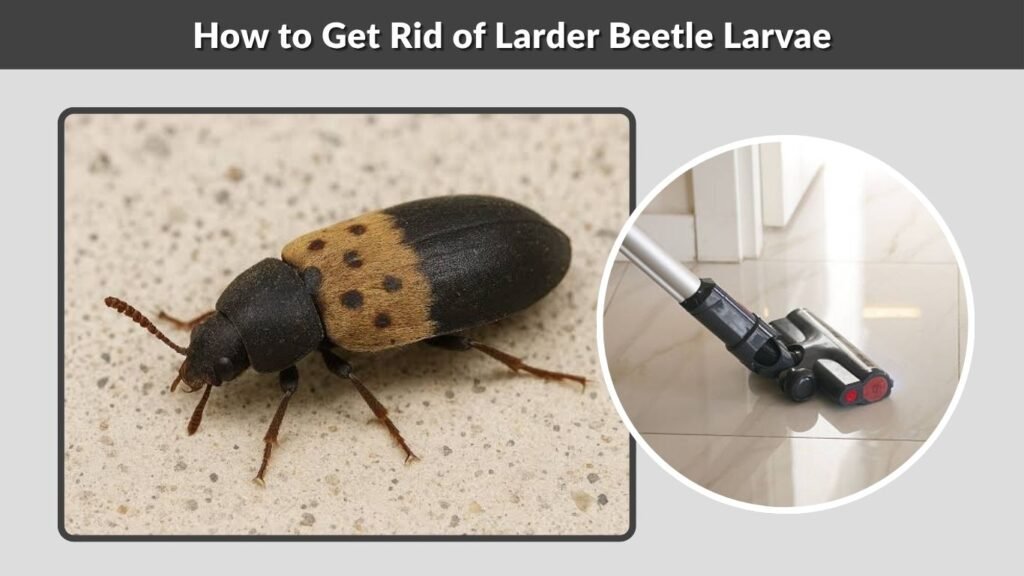
Effective larder beetle larvae removal begins by locating and eliminating their food source. Simply killing visible larvae may not resolve the infestation because eggs, younger larvae, and adult beetles can remain hidden nearby.
Step-by-Step Larder Beetle Larvae Removal
- Locate the infestation: Inspect pantries, pet food containers, accessible attics, and areas where larvae repeatedly appear.
- Remove contaminated materials: Dispose of infested food, animal products, and accessible breeding materials.
- Vacuum thoroughly: Clean floors, cracks, shelves, and baseboards to remove larvae and debris.
- Clean storage spaces: Eliminate food residue and accumulated dead insects.
- Store food securely: Use tightly sealed containers for susceptible dry foods and pet food.
- Monitor activity: Watch for new larvae and adults to determine whether hidden breeding sources remain.
Removing the food source is generally the most important control measure.
Do You Need Insecticides?
Chemical treatments are not always necessary. Thorough sanitation and removal of breeding materials can eliminate many accessible infestations.
If the problem continues, use only pesticides labeled for the intended pest and treatment location, following all safety directions.
Persistent infestations originating inside walls or ceilings may require professional pest control.
How to Prevent Larder Beetle Larvae Infestations
Preventing another infestation involves protecting stored food, reducing organic debris, and keeping entry points sealed. Consistent inspection is particularly important in homes with pets or stored animal-derived materials.
Long-Term Prevention Practices
Regularly inspect pet food containers, clean storage shelves, and remove dead insects from accessible spaces.
Seal gaps around windows and doors, and address rodent or bird activity that could create hidden breeding sources.
These measures reduce the materials needed for larvae to survive and develop.
FAQs
1. Are larder beetle larvae dangerous?
Larder beetle larvae are generally not dangerous to humans. However, they may contaminate stored food, damage susceptible materials, and occasionally cause skin irritation through contact with their hairs.
2. Can larder beetle larvae climb walls?
Yes. Mature larvae can crawl on walls and other surfaces while searching for protected locations to pupate.
3. Why do I keep finding larder beetle larvae?
Repeated sightings often indicate an accessible or hidden food source. Check pet food, stored animal materials, and places containing accumulated dead insects.
4. Do larder beetle larvae eat clothes?
They primarily prefer animal-based food materials. However, certain animal-derived fabrics, especially when contaminated with food or body oils, may become vulnerable.
5. How do you kill larder beetle larvae naturally?
Remove their food source, vacuum exposed larvae, discard contaminated materials, and clean affected areas. These physical control methods are often effective without chemical treatment.
