
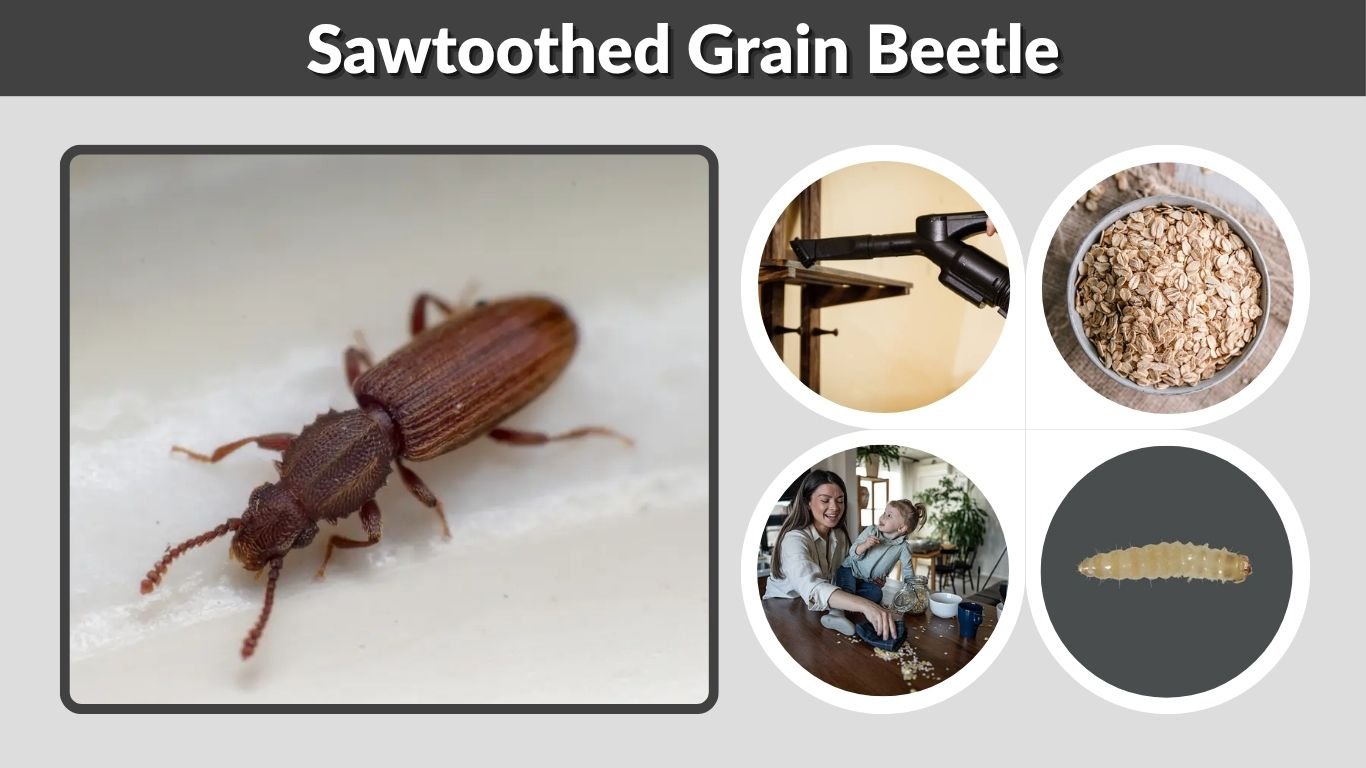
Have you noticed tiny brown beetles crawling inside your cereal boxes, flour containers, or kitchen cabinets? You might be dealing with a sawtoothed grain beetle, a common pantry pest that feeds on stored food products. These small insects can multiply quickly and contaminate grains, cereals, and packaged foods. Understanding their appearance, life cycle, feeding habits, and effective control methods will help you identify an infestation and keep your pantry free from these unwanted pests.
What Is a Sawtoothed Grain Beetle?
The sawtoothed grain beetle (Oryzaephilus surinamensis) is a small, flattened insect belonging to the family Silvanidae. It is widely distributed around the world and commonly found in kitchens, warehouses, grocery stores, and grain storage facilities. Its name comes from the distinctive toothlike projections along the sides of its thorax, which make it recognizable under magnification.
Sawtoothed Grain Beetle Identification
Adult sawtoothed grain beetles have narrow bodies that allow them to hide inside small cracks and food packaging.
Key identification features include:
- Size: Approximately 2.5–3 mm long.
- Color: Reddish-brown to dark brown.
- Body shape: Long, narrow, and flattened.
- Thorax: Six sawlike projections on each side.
- Antennae: Long and segmented.
- Wings: Present but not used for flight.
Their small size makes them difficult to notice until several beetles appear around stored food.
Sawtoothed Grain Beetle vs. Merchant Grain Beetle
Sawtoothed grain beetles and merchant grain beetles look extremely similar. Both have flattened bodies and six toothlike projections on each side of the thorax.
However, sawtoothed grain beetles have a broader temple region behind their eyes, while merchant grain beetles have a narrower one. Merchant grain beetles can also fly, unlike sawtoothed grain beetles.
Both species infest stored foods, and their household control methods are nearly identical.
Where Do Sawtoothed Grain Beetles Live?
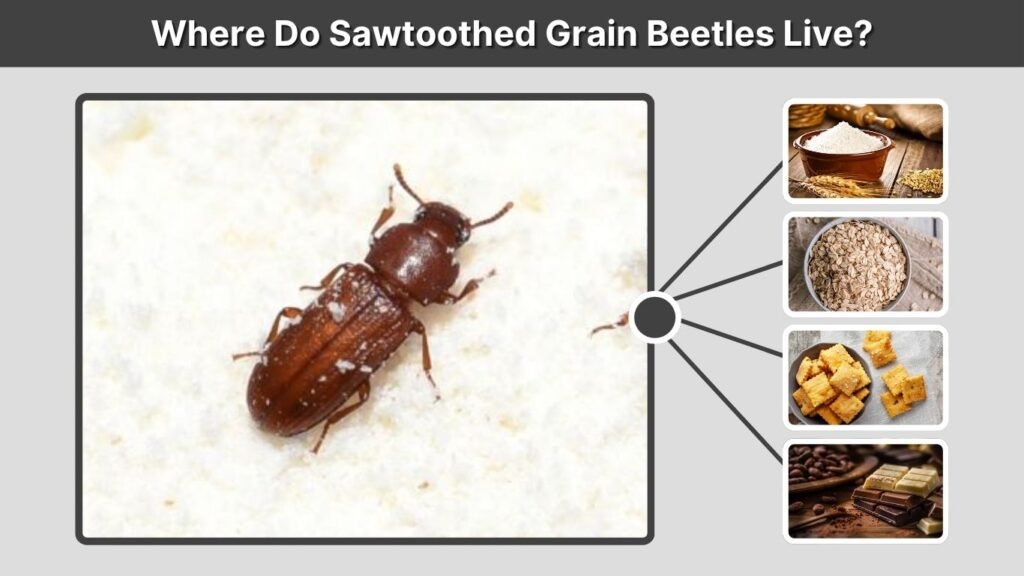
Sawtoothed grain beetles prefer environments containing dry, stored food. They frequently enter homes through contaminated grocery products and spread into nearby packages. Their flattened bodies allow them to squeeze through small openings and hide between food particles. Although kitchens are their primary habitat, adults sometimes wander into other parts of a building.
Common Food Sources
Sawtoothed grain beetles commonly infest:
- Flour, rice, and cereal products
- Oatmeal, bran, and pasta
- Nuts, seeds, and dried fruits
- Crackers, biscuits, and baking mixes
- Chocolate and other packaged foods
- Dry dog food, cat food, and birdseed
They primarily feed on processed foods, broken grains, and grain dust rather than completely intact grain kernels.
Sawtoothed Grain Beetles in the House
Finding a sawtoothed grain beetle in your bedroom, bathroom, or living room usually indicates that an adult has wandered away from a food source.
These beetles may travel through cabinets, along walls, or underneath furniture while searching for food. Inspect nearby storage areas, forgotten snacks, and pet food containers to locate the source.
Sawtoothed Grain Beetle Life Cycle
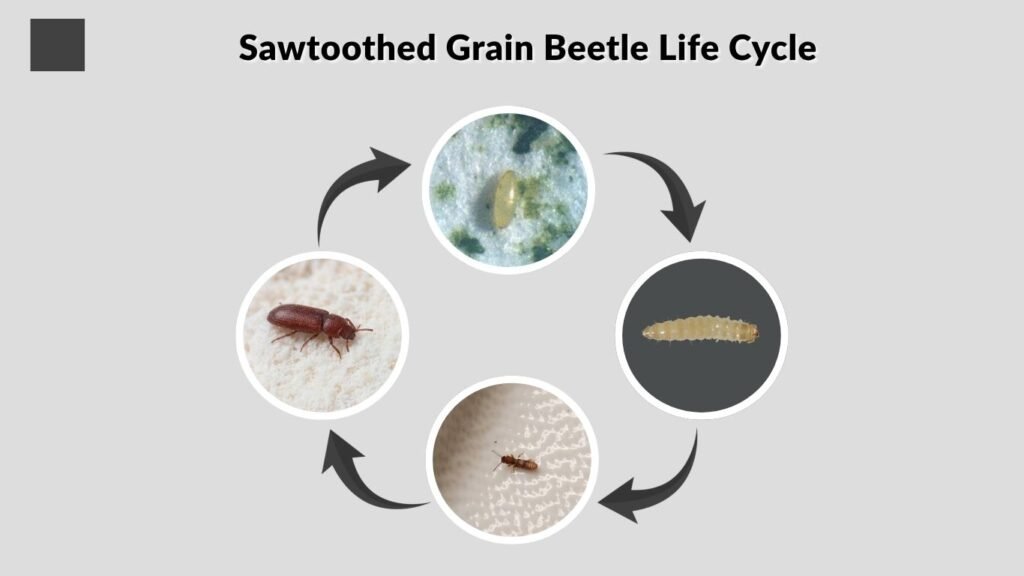
The sawtoothed grain beetle undergoes complete metamorphosis, passing through egg, larva, pupa, and adult stages. Warm conditions and accessible food allow populations to grow rapidly. Under favorable temperatures, development from egg to adult can take approximately three to four weeks, although cooler environments slow the process considerably.
Eggs and Larvae
Females lay tiny eggs directly among stored food particles or inside small crevices. Under favorable conditions, eggs may hatch within three to five days.
Sawtoothed grain beetle larvae are pale yellow to creamy white, with brown heads. They feed on food particles while growing through several developmental stages.
Because larvae remain hidden inside contaminated products, infestations can develop before homeowners notice adult beetles.
Pupae and Adults
After completing their larval development, the insects enter the pupal stage, sometimes within a small cell formed from food particles.
Adult beetles emerge and begin feeding and reproducing. They may survive for several months, depending on environmental conditions.
Their ability to reproduce inside stored products makes early detection important.
Are Sawtoothed Grain Beetles Harmful?
Sawtoothed grain beetles are primarily food-storage pests rather than insects that directly threaten human health. Although their presence can be unpleasant, they are not known for attacking people or damaging buildings. Their greatest impact comes from contaminating packaged foods and reducing the quality of stored grains and other edible products.
Do Sawtoothed Grain Beetles Bite?
No, sawtoothed grain beetles do not normally bite or sting humans. Their mouthparts are adapted for feeding on stored food materials rather than piercing human skin.
They are also not known to transmit diseases directly to people. However, food containing beetles, larvae, or insect waste should be discarded.
Sawtoothed Grain Beetle Damage
Both adults and larvae feed on stored products, causing contamination and food losses.
Common infestation signs include visible beetles, tiny larvae, shed skins, and insect debris inside packages.
Large infestations may affect multiple containers or boxes, especially when food remains stored for long periods.
How to Get Rid of Sawtoothed Grain Beetles
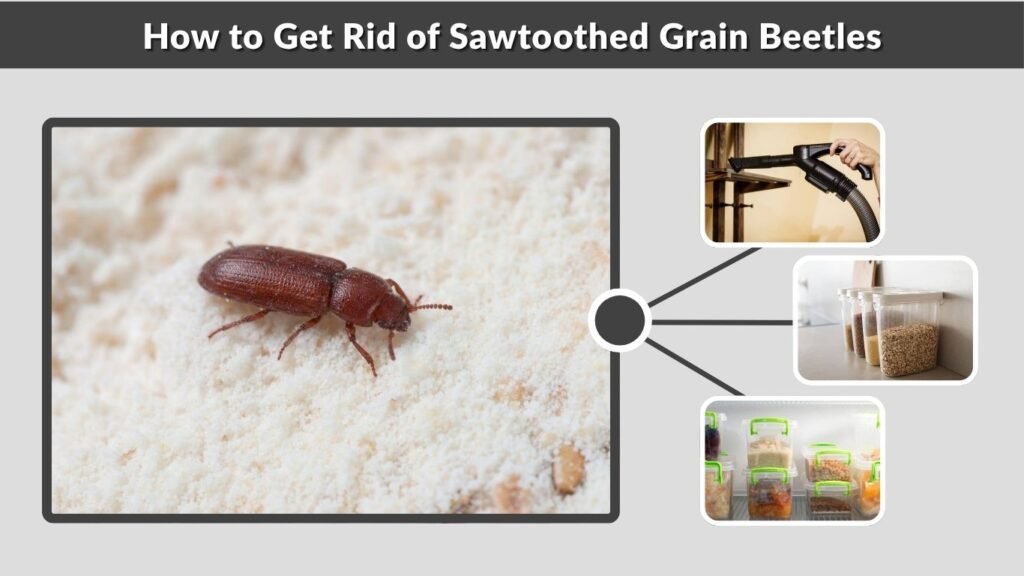
Getting rid of sawtoothed grain beetles requires eliminating contaminated food and removing insects hiding in storage areas. Spraying visible beetles without locating the infestation source rarely solves the problem. A combination of food inspection, disposal, vacuuming, temperature treatment, and proper storage provides the most effective approach for controlling household infestations.
1. Inspect Your Pantry
Remove all food packages from your pantry and carefully examine each one.
Check cereal boxes, flour bags, rice containers, baking ingredients, nuts, and pet food. Look for adult beetles, pale larvae, and insect debris.
Remember that unopened packages may also contain insects.
2. Remove Infested Products
Place heavily infested food inside a sealed plastic bag and dispose of it in an outdoor trash container.
Avoid transferring contaminated products into clean containers because hidden eggs or larvae could spread the infestation.
3. Vacuum Cabinets Thoroughly
Use a vacuum cleaner to remove crumbs, grain dust, and insects from pantry shelves.
Pay special attention to:
- Cabinet corners and shelf joints
- Cracks around hinges
- Gaps behind kitchen appliances
- Food-storage drawers
- Baseboards near pantry cabinets
Empty the vacuum immediately after cleaning.
4. Freeze Suitable Dry Foods
Freezing can eliminate sawtoothed grain beetles inside suitable dry foods.
Place potentially infested products in sealed, freezer-safe containers and freeze them at 0°F (-18°C) for approximately one week.
Discard visibly or heavily contaminated foods rather than attempting to salvage them.
5. Use Airtight Food Containers
Store uncontaminated flour, cereal, grains, and pasta in tightly sealed glass, metal, or sturdy plastic containers.
Proper storage prevents beetles from moving between food products and makes future infestations easier to detect.
6. Monitor Your Pantry
Continue inspecting storage areas for several weeks after cleaning.
If beetles keep appearing, investigate hidden sources such as birdseed, pet food, forgotten baking ingredients, or spills behind appliances.
Persistent infestations may require professional pest-control assistance.
Natural Remedies and Sawtoothed Grain Beetle Traps
Nonchemical control methods are especially useful in kitchens because they avoid unnecessary pesticide exposure around food. Freezing, proper sanitation, food disposal, and secure storage are dependable household strategies. Other popular home remedies may help with cleaning or monitoring, but they should not be considered substitutes for removing infested food.
Do Vinegar and Natural Repellents Work?
Vinegar can help remove food residue from empty pantry shelves, but it is not a reliable treatment for hidden beetle eggs or larvae.
Bay leaves and essential oils are sometimes recommended as repellents, although evidence for dependable household control is limited.
Thorough vacuuming and removing contaminated food remain more important.
Do Sawtoothed Grain Beetle Traps Work?
Sticky monitoring traps and certain species-targeted attractant traps can help detect adult beetles.
However, traps cannot eliminate eggs and larvae inside food packages. They work best as monitoring tools after sanitation.
Avoid spraying insecticides inside food cupboards or directly onto food. If chemical treatment is necessary, consult a licensed professional and follow the product label.
How to Prevent Sawtoothed Grain Beetle Infestations
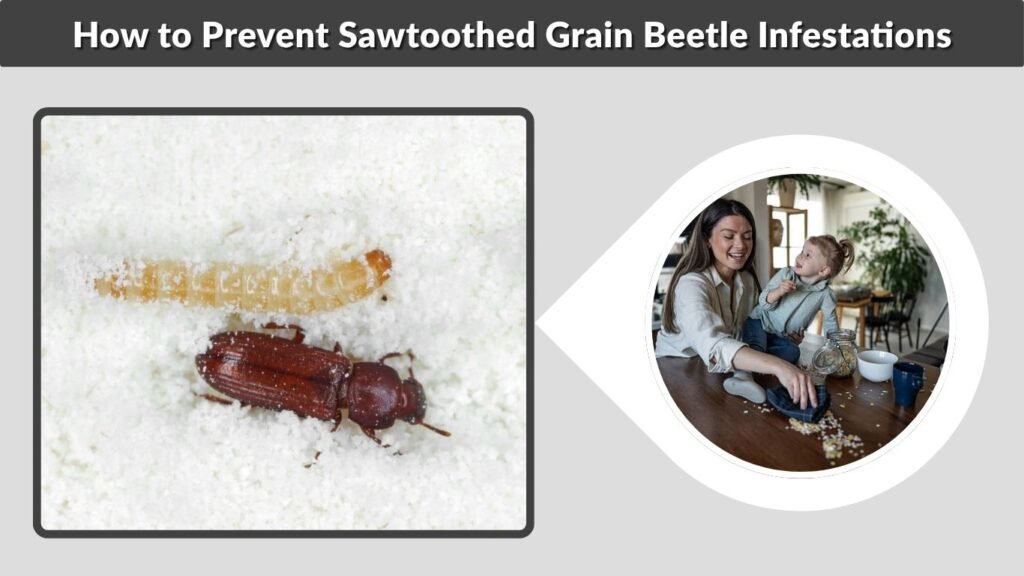
Preventing sawtoothed grain beetles from returning involves keeping dry foods properly sealed and maintaining clean storage spaces. These pests often arrive inside contaminated packages, so checking newly purchased products is equally important. Regular pantry inspections and good food rotation habits can reduce the risk of another infestation.
Essential Prevention Tips
- Inspect food packages: Avoid buying damaged or visibly contaminated products.
- Store food securely: Use airtight containers for vulnerable dry foods.
- Clean spills promptly: Remove crumbs and grain dust from cabinets.
- Rotate stored products: Use older food before newer purchases.
- Limit excess storage: Avoid keeping large amounts of dry food unnecessarily.
- Check pet food: Inspect animal feed and birdseed regularly.
Consistent cleaning and careful storage make it more difficult for beetles to establish breeding populations.
FAQs
1. Can sawtoothed grain beetles fly?
No. Sawtoothed grain beetles have developed wings but are not known to fly. They spread mainly by crawling or through the movement of infested food products.
2. Are sawtoothed grain beetles dangerous?
They are not considered dangerous to humans because they do not normally bite, sting, or transmit diseases. However, they contaminate stored food, making infested products unsuitable for consumption.
3. How long do sawtoothed grain beetles live?
Adults can survive for several months, depending on temperature, food availability, and other environmental conditions. Their complete development from egg to adult may take only a few weeks in favorable conditions.
4. Can sawtoothed grain beetles infest dog food?
Yes. Dry dog food and other animal feeds can become infested, especially when stored in poorly sealed packaging. Discard contaminated feed and clean the storage container thoroughly.
5. What is the fastest way to get rid of sawtoothed grain beetles?
The fastest practical approach is to identify and discard infested food, vacuum pantry cracks, and secure remaining products in airtight containers. Continue monitoring to ensure hidden infestations have been eliminated.
