
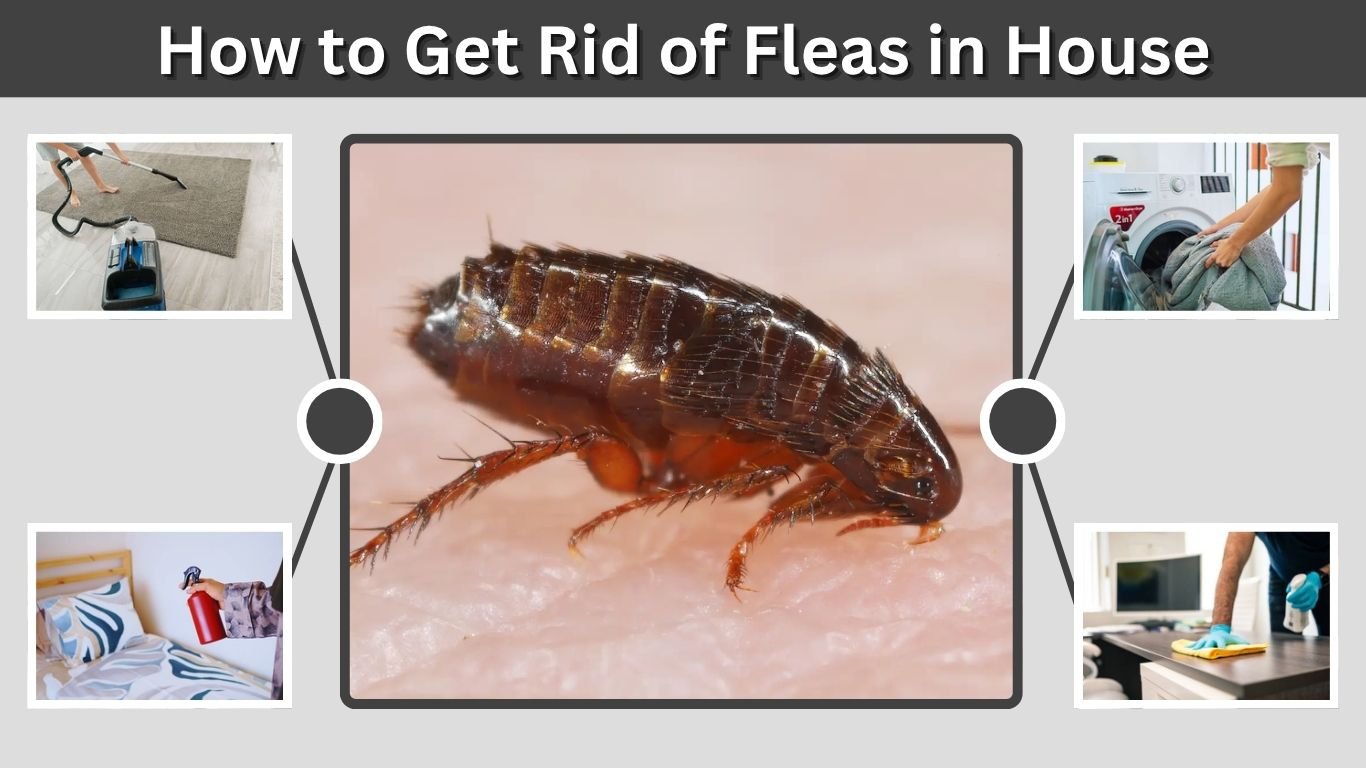
Learning how to get rid of fleas in house requires treating more than the adult insects you can see. Fleas lay eggs that fall into carpets, furniture, pet bedding, cracks, and other protected areas, allowing an infestation to continue even after adult fleas are killed. The most effective approach combines vacuuming, washing, pet treatment, environmental control, and repeated follow-up. Whether fleas came from a dog, cat, previous occupant, or wildlife, removing every life stage is the key to lasting control.
Why Are Fleas in Your House?
Fleas usually enter homes on pets, wildlife, clothing, or previously infested belongings. Once inside, adult fleas feed on animals and lay eggs that drop into the surrounding environment. Carpets, upholstery, bedding, floor cracks, and shaded areas can then support immature stages, making the infestation much larger than the number of adult fleas you initially notice.
Common Sources of Indoor Fleas
Fleas may enter or remain indoors because of:
- Dogs or cats carrying adult fleas
- Wildlife around the property
- Flea eggs already present in carpets
- Infested pet bedding
- Previous pets in a rental home
- Rodents under or inside the house
- Untreated outdoor resting areas
- Secondhand upholstered furniture
Can You Have Fleas Without Pets?
Yes. A house can have fleas even when no dog or cat currently lives there.
Flea pupae may remain protected in the environment and emerge when vibrations, warmth, or carbon dioxide signal that a possible host is nearby. This is why people sometimes notice fleas after moving into an apparently empty home.
Rodents or wildlife can also introduce fleas without household pets being present.
How to Get Rid of Fleas in House Fast
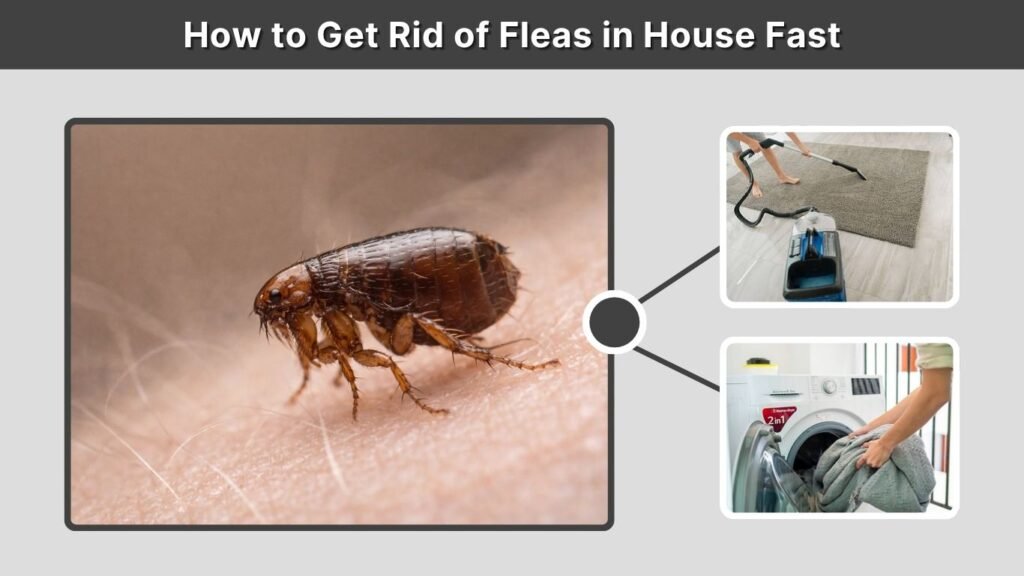
Fast flea control requires attacking several stages of the flea life cycle at the same time. Vacuuming removes eggs and larvae, washing eliminates fleas from suitable fabrics, and appropriate environmental treatments can target insects hiding where cleaning cannot reach. If pets are present, they must be treated simultaneously or the infestation can quickly restart.
Start With a Deep Vacuum
Vacuum:
- Carpets and rugs
- Upholstered furniture
- Under beds and sofas
- Baseboard edges
- Pet sleeping areas
- Floor cracks
- Stairs
- Vehicle upholstery if pets travel there
Vacuum slowly and repeatedly, especially where pets spend the most time.
Empty the vacuum contents into a sealed bag and dispose of it outside. Continue frequent vacuuming during the treatment period because newly emerged fleas may still appear.
Wash Bedding and Fabrics
Wash pet bedding, blankets, washable rugs, and other suitable fabrics.
Use the warmest washing and drying settings considered safe for the material. Drying thoroughly is particularly helpful because heat can kill flea life stages present in fabrics.
Keep cleaned items away from untreated areas until the infestation is under control.
Treat Pets at the Same Time
If you have cats or dogs, environmental cleaning alone will usually fail unless the animals are also protected.
Use flea treatments recommended for the specific pet species, age, size, and health condition. A veterinarian can help choose an appropriate product.
Never use a dog flea product on a cat unless the label specifically states that it is safe for cats.
How to Get Rid of Fleas and Eggs in the House
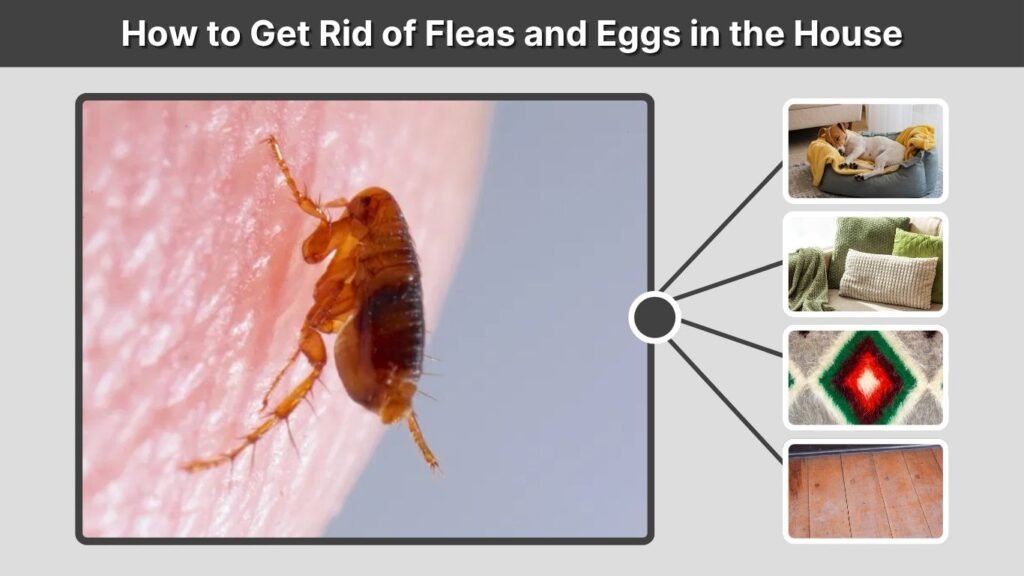
Adult fleas represent only part of an infestation. Eggs, larvae, and pupae may remain hidden throughout the home. Flea eggs fall from the host and collect in carpeting, bedding, furniture, and cracks, while larvae develop in protected areas containing organic debris.
Focus on Flea Hot Spots
Pay extra attention to:
- Pet beds
- Sofa cushions
- Carpet edges
- Under furniture
- Bedroom floors
- Cracks between floorboards
- Kennels
- Cat resting areas
- Dark corners
The highest flea concentrations are often located where pets sleep rather than throughout every part of the home equally.
Why Fleas Keep Coming Back
Flea pupae develop inside protective cocoons and can be difficult to eliminate immediately.
Even after adult fleas and larvae are controlled, additional adults may emerge later. This does not necessarily mean treatment has completely failed.
Continue vacuuming and monitoring for several weeks so emerging adults are removed before they can restart the reproductive cycle.
How to Get Rid of Fleas in Carpet
Carpets provide an ideal environment for flea eggs and larvae because fibers protect them from disturbance. An infestation can remain concentrated deep in carpeting even when very few adult fleas are visible during the day.
Flea Removal From Carpet
A practical approach includes:
- Vacuum the entire carpet slowly.
- Concentrate on pet resting areas.
- Vacuum underneath furniture.
- Clean carpet edges and baseboards.
- Wash nearby pet bedding.
- Apply an appropriate flea-control product if needed.
- Repeat vacuuming frequently.
- Monitor for new adult fleas.
Flea Sprays for Carpets
Some household flea products contain adulticides and insect growth regulators. Growth regulators help interrupt development of immature fleas.
Use only products labeled for indoor flea treatment and follow all directions concerning pets, children, ventilation, treated surfaces, and re-entry times.
Applying more than the label recommends does not improve safety or effectiveness.
How to Get Rid of Fleas Naturally
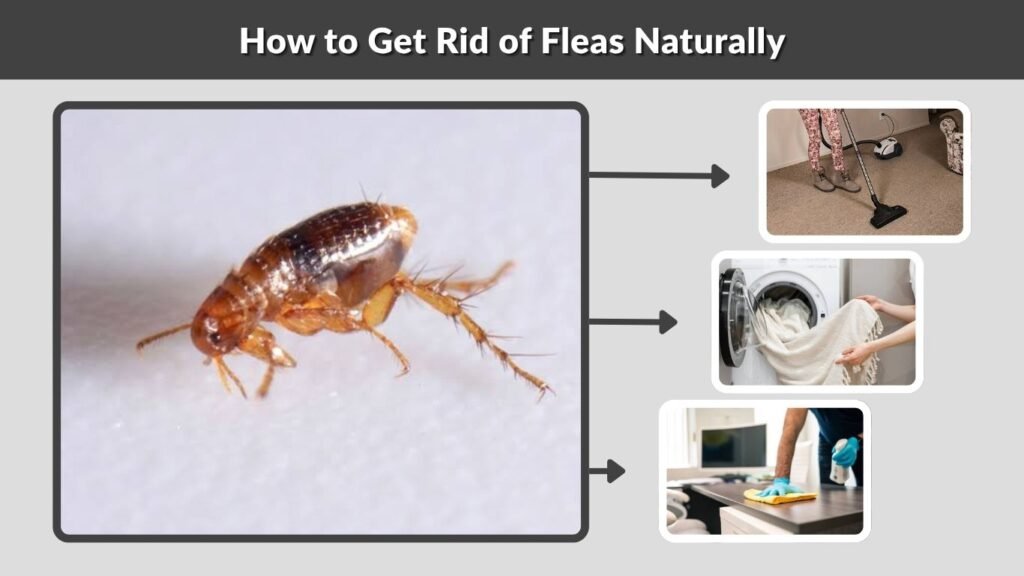
People often look for natural flea control because they want to minimize pesticide use around children or pets. Physical methods such as vacuuming, washing, heat drying, clutter reduction, and pet grooming can significantly reduce flea populations. However, severe infestations may require additional treatment.
Natural Control Methods That Help
Useful nonchemical measures include:
- Frequent vacuuming
- Washing pet bedding
- High-heat drying where safe
- Flea combing pets
- Cleaning furniture
- Removing clutter
- Washing washable rugs
- Maintaining clean pet sleeping areas
These methods work by physically removing fleas and disrupting their habitat.
What About Vinegar, Salt, and Baking Soda?
Vinegar, salt, and baking soda are frequently recommended online, but they should not be considered reliable replacements for proven flea-control methods.
They may provide limited cleaning benefits but do not consistently eliminate all flea life stages throughout an infested home.
Avoid relying on homemade mixtures if fleas continue reproducing.
Be Careful With Essential Oils
Natural does not always mean safe.
Some essential oils can irritate or poison pets, especially cats. Do not apply essential oils to animals, bedding, or indoor surfaces unless the specific product is clearly labeled for that use and considered safe for the animals in the home.
How to Get Rid of Dog and Cat Fleas in the House
When fleas originate from a pet, the house and animal should be treated as one connected problem. Adult fleas spend much of their time feeding on the host, while eggs fall into the environment. Treating only the pet leaves immature fleas indoors, while treating only the house allows the pet to reintroduce adults.
For Homes With Dogs
Treat the dog using an appropriate flea preventive and thoroughly clean areas where the dog:
sleeps, rests, plays, and enters the house.
Wash dog bedding and vacuum couches, rugs, vehicle seats, and other locations the dog regularly uses.
For Homes With Cats
Cats require particular caution because some insecticides that are tolerated by dogs can be dangerous to cats.
Use only cat-specific flea products appropriate for the animal’s age and weight. Ask a veterinarian if you are uncertain about compatibility.
Vacuum cat trees, sleeping locations, carpets, and furniture regularly.
How to Get Rid of Fleas Without Bombing the House
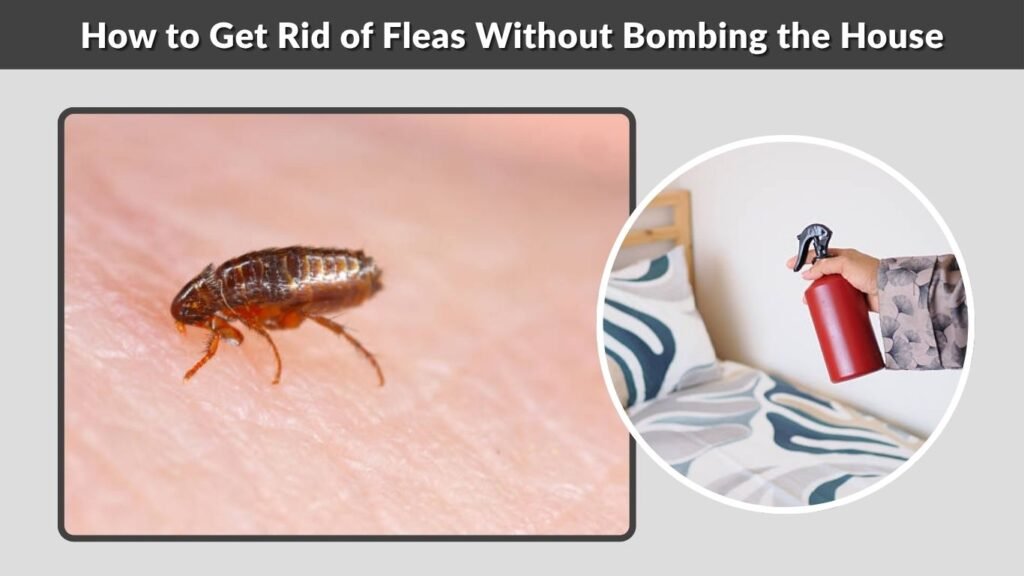
Flea bombs or total-release foggers are not always necessary. They may also fail to reach flea larvae deep under furniture, inside carpeting, or in cracks.
Targeted treatment combined with detailed cleaning can often provide better coverage of the actual flea habitat.
Targeted Flea Control
Instead of relying solely on foggers:
- Vacuum thoroughly.
- Wash bedding.
- Treat pets appropriately.
- Identify high-activity areas.
- Apply labeled products only where needed.
- Use insect growth regulators when appropriate.
- Repeat inspections and cleaning.
This approach allows greater focus on locations where fleas actually develop.
How Long Does It Take to Get Rid of Fleas?
Complete flea elimination rarely happens overnight. Adult fleas may die quickly after effective treatment, but pupae can continue producing new adults for some time.
What to Expect After Treatment
You may still notice fleas during the first days or weeks.
Continued emergence can happen because:
pupae survived the initial cleaning, untreated areas remain, pets are still carrying fleas, or flea eggs were present in hidden locations.
Consistent follow-up is therefore more important than expecting an instant result.
When Professional Treatment Is Needed
Consider professional pest control when:
- Fleas remain after repeated treatment.
- Several rooms are heavily infested.
- Fleas persist despite pet treatment.
- An empty house has a severe infestation.
- Wildlife or rodents are contributing.
- The infestation keeps returning.
A professional can identify flea hot spots and recommend an integrated control program.
How to Prevent Fleas From Returning
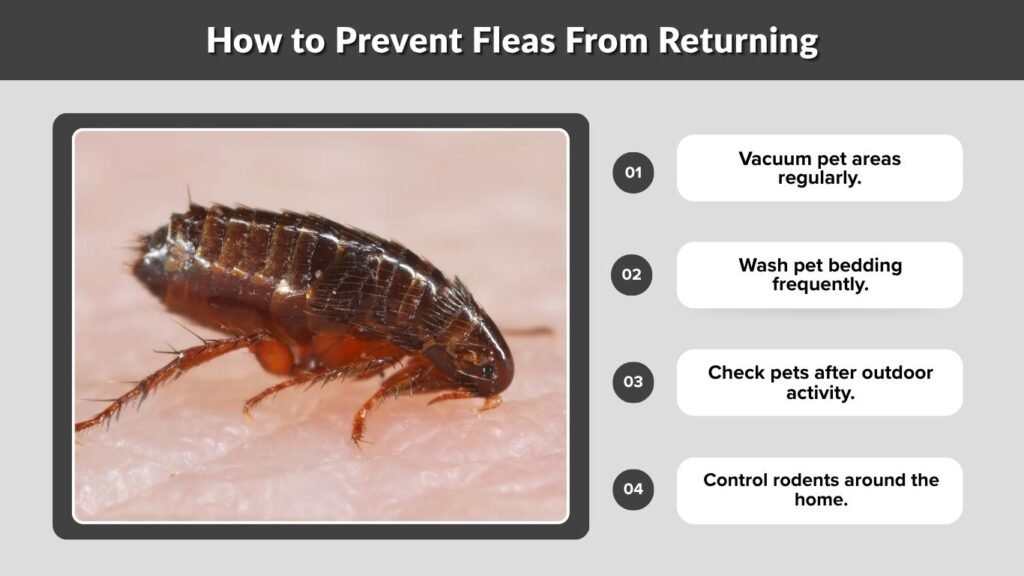
Long-term prevention means stopping fleas from becoming established again after the existing population is removed. Homes with pets need particular attention because animals can pick up new fleas outdoors and bring them back inside.
Flea Prevention Tips
To reduce future infestations:
- Keep pets on an appropriate flea-prevention program.
- Vacuum pet areas regularly.
- Wash pet bedding frequently.
- Check pets after outdoor activity.
- Control rodents around the home.
- Discourage wildlife from nesting near the building.
- Keep outdoor resting areas maintained.
- Inspect secondhand upholstered furniture.
- Respond quickly when the first flea is noticed.
Fleas in an Empty House
Fleas can remain a problem after pets and occupants leave. Pupae can stay protected in carpets or cracks until movement and warmth stimulate adults to emerge.
Why Fleas Appear After Moving In
Walking through an empty home creates vibration and body heat, potentially encouraging adult fleas to emerge from their cocoons.
This can make the infestation seem as though it suddenly appeared when it had actually been present for weeks.
Thorough vacuuming, cleaning, and appropriate treatment should therefore be completed before introducing pets into a previously infested property.
FAQs
1. What is the fastest way to get rid of fleas in a house?
Treat pets appropriately, vacuum thoroughly, wash bedding and fabrics, and use suitable environmental flea-control products when necessary. Continue treatment because pupae may produce new adults after the first cleaning.
2. Can fleas be completely removed from a house?
Yes, but complete removal requires controlling adults, eggs, larvae, and emerging fleas. Consistent follow-up is usually necessary because the flea life cycle cannot always be eliminated in one treatment.
3. Can you get rid of fleas naturally?
Vacuuming, washing, heat drying, flea combing, and cleaning pet areas can greatly reduce fleas without extensive pesticide use. Heavy infestations may still require additional control.
4. Why do I still see fleas after treating my house?
New adult fleas may be emerging from pupae that survived the initial treatment. Continue vacuuming, monitoring, and treating pets appropriately until activity stops.
5. How do you get rid of fleas permanently?
There is no permanent one-time treatment that prevents all future introductions. Long-term control requires eliminating the current infestation and maintaining pet flea prevention, routine cleaning, and monitoring for new activity.
