
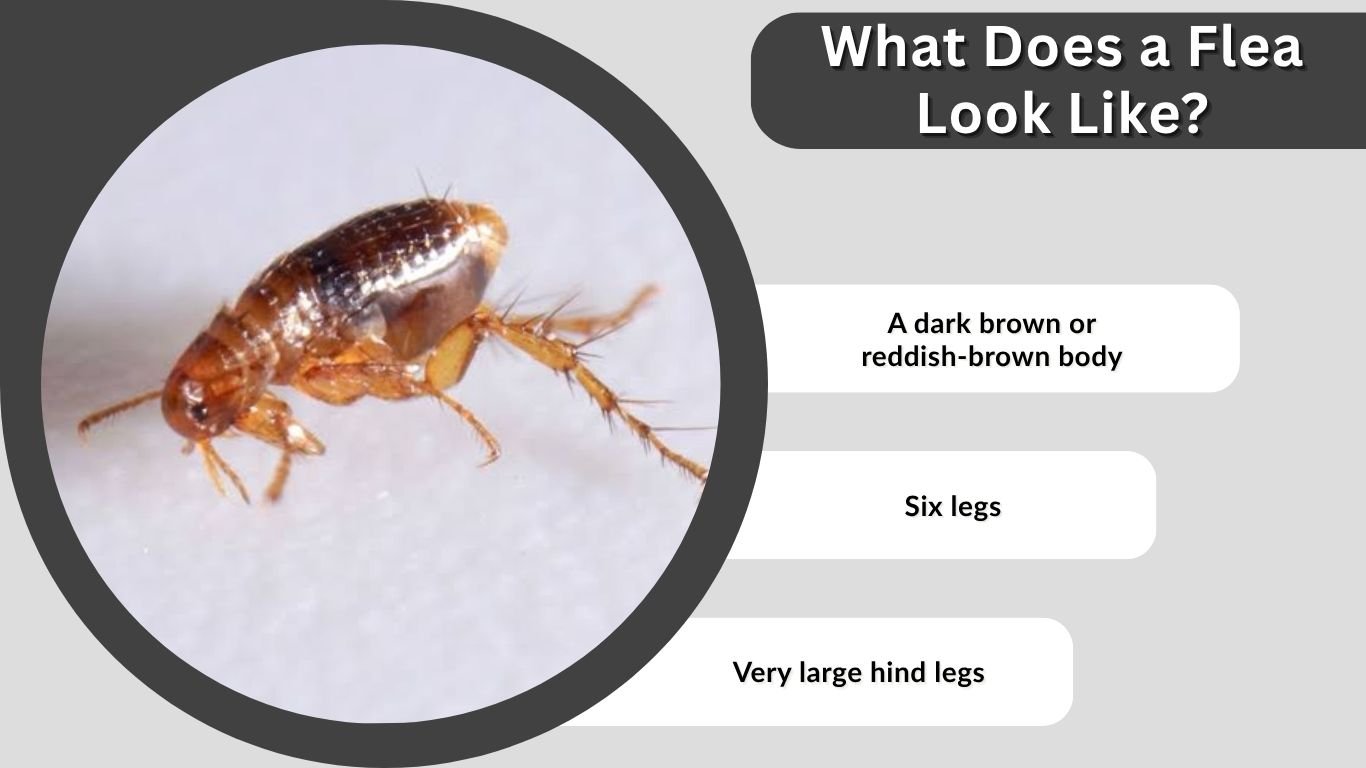
What does a flea look like? An adult flea is a tiny, wingless insect with a narrow, flattened body, six legs, and unusually powerful hind legs built for jumping. Most fleas look dark brown or reddish-brown and measure only a few millimeters long, making them difficult—but not impossible—to see without magnification. Their appearance can change slightly after feeding. Knowing what fleas look like on pets, human skin, beds, and around the house can help you distinguish them from ticks, lice, and bed bugs.
What Does a Flea Look Like to the Human Eye?
Fleas are small enough to be overlooked easily, but adults are visible to the naked eye. Rather than looking like miniature flies, they resemble tiny dark specks that move quickly and suddenly disappear by jumping. Their laterally flattened bodies help them move efficiently through animal fur, while their long hind legs allow impressive jumps compared with their body size.
Main Flea Identification Features
An adult flea typically has:
- A dark brown or reddish-brown body
- Six legs
- Very large hind legs
- No wings
- A narrow, flattened body
- A small head
- Short antennae
- A hard outer covering
- Quick jumping movements
How Big Is a Flea?
Most adult fleas are approximately 1.5 to 3 millimeters long, although size varies by species and feeding status.
That means a flea is usually comparable to a tiny seed or dark speck. You generally cannot see fine anatomical details with your eyes alone, but you can often notice its elongated body and jumping behavior when it moves across a light surface.
What Color Is a Flea?
Adult fleas are usually brown to dark reddish-brown.
A flea that has recently taken a blood meal may look darker or more reddish than one that has not fed. Against light-colored fur, bedding, or skin, adults may appear almost black at first glance.
What Does a Flea Look Like Up Close?
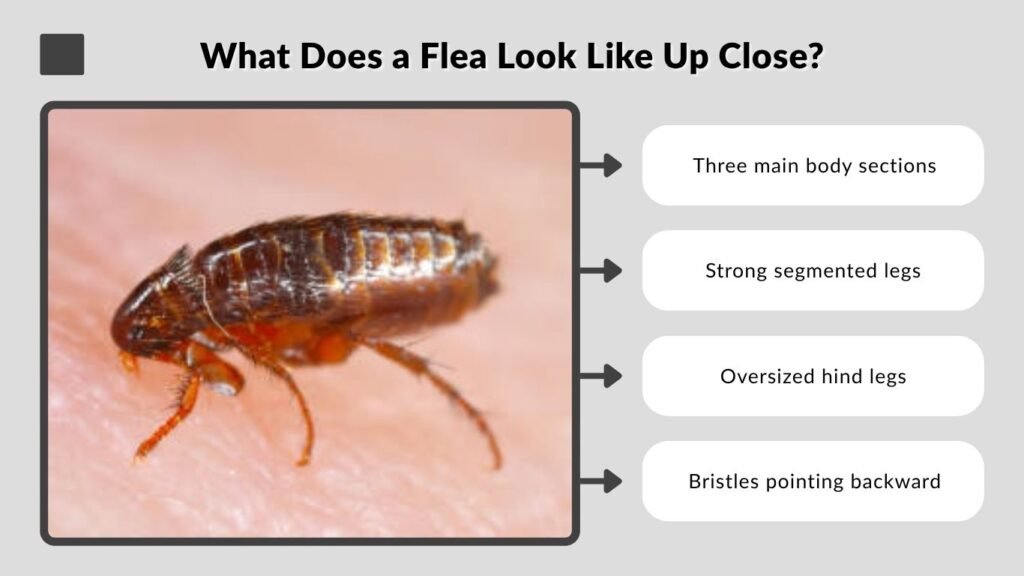
Under magnification, a flea looks dramatically different from the simple dark speck visible with the naked eye. Its body is compressed from side to side rather than flattened from top to bottom. It has a tough external skeleton, backward-pointing bristles, specialized mouthparts, and enlarged hind legs that make it extremely well adapted for living on animal hosts.
Flea Body Structure
Up close, you may notice:
- Three main body sections
- Strong segmented legs
- Oversized hind legs
- Bristles pointing backward
- Piercing and sucking mouthparts
- Small eyes in some species
- A hard, shiny-looking body surface
The body shape allows fleas to move between hairs while making them difficult for an animal to remove through grooming.
What Does a Flea Look Like Under a Microscope?
Under a microscope, fleas can look almost armored. Their bodies contain plates, hairs, spines, and structures that are impossible to appreciate with normal vision.
Their hind legs are especially noticeable because they are disproportionately large compared with the front legs. These powerful limbs store and release energy rapidly, enabling the flea’s characteristic jumping movement.
What Does a Flea Look Like on a Dog?
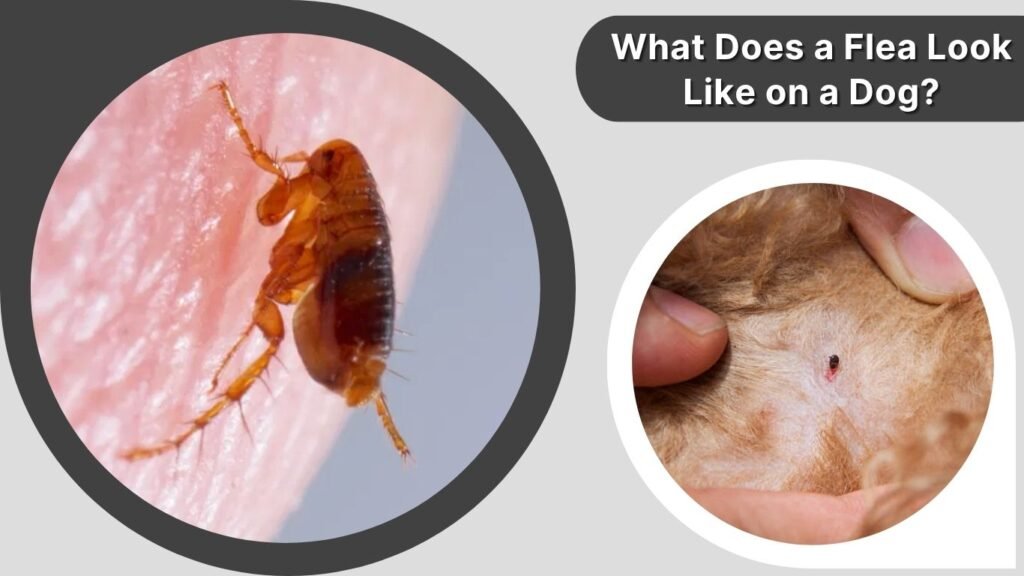
Fleas on dogs usually appear as tiny, rapidly moving dark insects close to the skin. They often disappear into the coat as soon as the hair is separated. Heavy infestations may also produce flea dirt—small black particles consisting largely of digested blood—which can sometimes be easier to locate than the adult fleas themselves.
Where to Look for Fleas on Dogs
Check areas such as:
- Base of the tail
- Lower back
- Belly
- Groin
- Inner thighs
- Around the neck
- Behind the ears
- Beneath the front legs
Part the fur gradually and look close to the skin.
Fleas vs Flea Dirt
Flea dirt looks like tiny black or brown flakes and can resemble ground pepper.
Unlike an adult flea, flea dirt does not jump or crawl. If suspicious dark particles are placed on a damp white paper towel, flea dirt may release a reddish-brown color because it contains digested blood.
Finding flea dirt is often an important clue that adult fleas are or recently were present.
What Does a Flea Look Like on a Cat?
A flea on a cat looks much the same as one on a dog: tiny, brown, flattened, and extremely fast. Cats can make fleas harder to detect because frequent grooming may remove some adults while leaving flea dirt and bites behind. Dark-coated cats can also make adult fleas especially difficult to see.
Signs of Fleas on Cats
Besides seeing adult fleas, you may notice:
- Flea dirt in the fur
- Frequent scratching
- Excessive grooming
- Small skin scabs
- Hair thinning
- Restlessness
- Irritated skin
How to Check a Cat for Fleas
Use a fine-toothed flea comb, concentrating around the neck, back, and base of the tail.
Comb over a white surface so dark fleas or flea dirt are easier to notice. If you suspect an infestation, use only flea-control products specifically considered appropriate for cats, because some dog flea products can be dangerous to them.
What Does a Flea Look Like on Human Skin?
Fleas do not normally live permanently on humans in the same way they may remain on furry hosts. However, they can jump onto people and bite exposed skin. An adult flea on human skin usually appears as a tiny dark brown moving speck that may suddenly jump away before you can examine it closely.
Fleas on Human Skin
A flea may:
- Look like a black or brown speck
- Move rapidly across the skin
- Jump suddenly
- Appear around ankles or lower legs
- Be difficult to catch with fingers
Because fleas are so small, people sometimes notice the bite before they actually see the insect.
What Do Flea Bites Look Like?
Flea bites often appear as small itchy bumps and may occur in clusters.
They commonly develop around ankles and lower legs, although other exposed areas can be affected. Bite appearance varies among individuals, and skin marks alone cannot confirm that fleas are responsible because mosquito bites, bed bug bites, dermatitis, and other conditions may look similar.
What Does a Flea Look Like in the House?
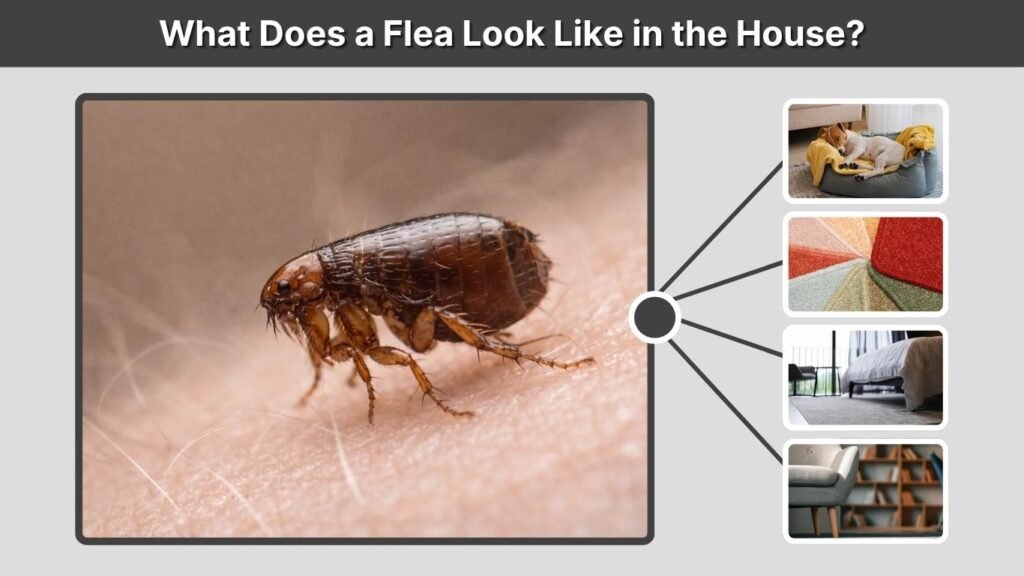
An adult flea indoors can be difficult to spot because it spends much of its time on a host or hidden among carpeting, furniture, bedding, and cracks. Flea eggs, larvae, and pupae are even easier to overlook because they occupy protected environmental areas rather than moving visibly around a room.
Where You May Find Fleas
Look around:
- Pet bedding
- Carpets
- Rugs
- Upholstered furniture
- Floor cracks
- Baseboards
- Under beds
- Under sofas
- Pet resting areas
What Does a Flea Look Like on a Bed?
An adult flea on white bedding may look like a small dark dot that suddenly moves or jumps.
Fleas generally do not establish themselves in mattresses in the same way bed bugs do, but eggs and immature stages can occur around bedding when pets regularly sleep there.
If insects remain hidden in mattress seams and crawl rather than jump, consider whether bed bugs or another pest might be involved.
Flea vs Bed Bug vs Louse
Fleas can be confused with several other tiny household pests. Movement, shape, and preferred habitat are often more useful than color alone. Fleas are particularly distinctive because of their strong jumping ability and narrow side-to-side body shape.
Quick Identification Differences
- Flea: Tiny, narrow, dark, and jumps strongly.
- Bed bug: Broader, flatter, reddish-brown, and crawls rather than jumps.
- Head louse: Small, grayish or tan, crawls through human hair, and does not jump.
- Tick: Usually rounder with eight legs as an adult and attaches firmly to skin.
- Fungus gnat: Has wings and flies rather than jumps.
Flea vs Bed Bug
Adult bed bugs are generally broader and more oval when viewed from above.
Fleas look narrower and taller from the side. The easiest behavioral difference is that fleas can jump impressive distances, while bed bugs crawl.
Bed bugs are also more strongly associated with mattress seams, bed frames, and cracks around sleeping areas.
What Do Flea Eggs and Larvae Look Like?
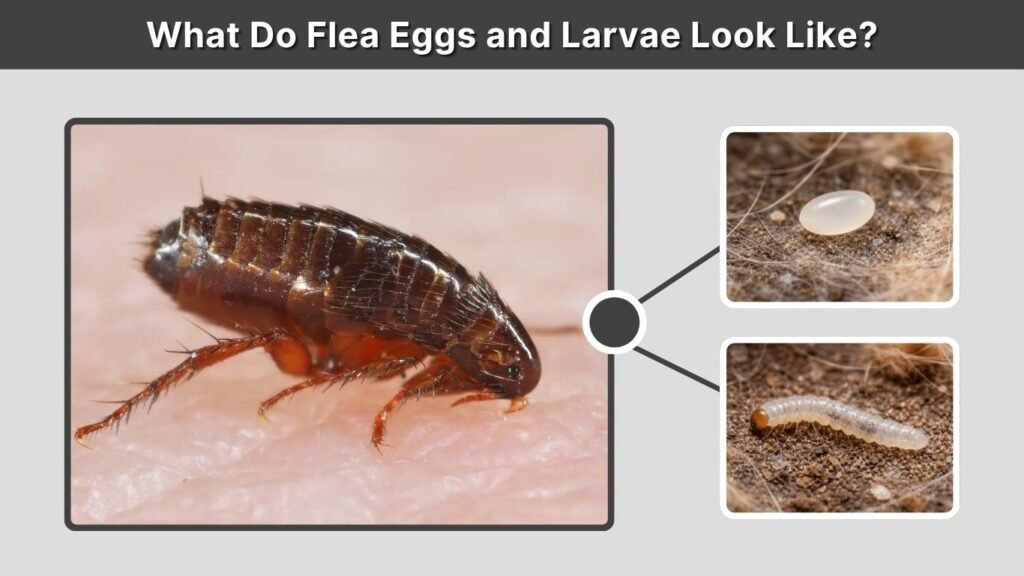
Identifying adult fleas is only part of recognizing an infestation. Fleas pass through egg, larval, pupal, and adult stages. The immature forms look completely different from adults and are generally found in the environment rather than attached to animals.
Flea Eggs
Flea eggs are:
- Extremely small
- Whitish or translucent
- Oval-shaped
- Smooth
- Difficult to see individually
They can fall from animals into carpeting, bedding, furniture, and floor cracks.
Flea Larvae
Flea larvae do not look like small adult fleas. They are slender, pale, worm-like organisms without legs.
They usually remain hidden in dark, protected areas where they feed on organic debris, including flea dirt produced by adults.
Later, the larvae form cocoons and develop into pupae before emerging as adult fleas.
How to Tell If You Found a Flea
Finding a tiny dark insect does not automatically mean it is a flea. Try to observe its movement and shape before identification. Fleas are especially recognizable when they suddenly jump rather than fly or simply crawl away.
Signs That Suggest a Flea
The insect is more likely to be a flea if it:
- Is only a few millimeters long
- Has no visible wings
- Looks brown or reddish-brown
- Has prominent hind legs
- Jumps rapidly
- Was found near a pet
- Is accompanied by flea dirt
- Appears around pet bedding or carpeting
If identification remains uncertain, capturing the insect in a clear container or taking a close photograph can make examination easier.
FAQs
1. Can you see a flea with the human eye?
Yes. Adult fleas are visible without a microscope, although they are extremely small. They usually look like tiny brown or dark moving specks.
2. What does a flea look like up close?
A flea has a narrow, side-flattened body, six legs, large hind legs, small antennae, and a hard external covering. Magnification reveals numerous hairs and spines.
3. What does a flea look like on a dog?
It usually looks like a small, dark brown insect moving rapidly through the fur close to the skin. Flea dirt may appear as tiny black flakes.
4. What does a flea look like on human skin?
A flea on skin resembles a tiny brown or black speck that crawls quickly and may suddenly jump away. Fleas usually bite people rather than remain on them permanently.
5. What is the easiest way to tell a flea from a bed bug?
Movement is a major clue. Fleas have powerful hind legs and jump, whereas bed bugs cannot jump and instead crawl. Bed bugs also have broader, more oval bodies.
