
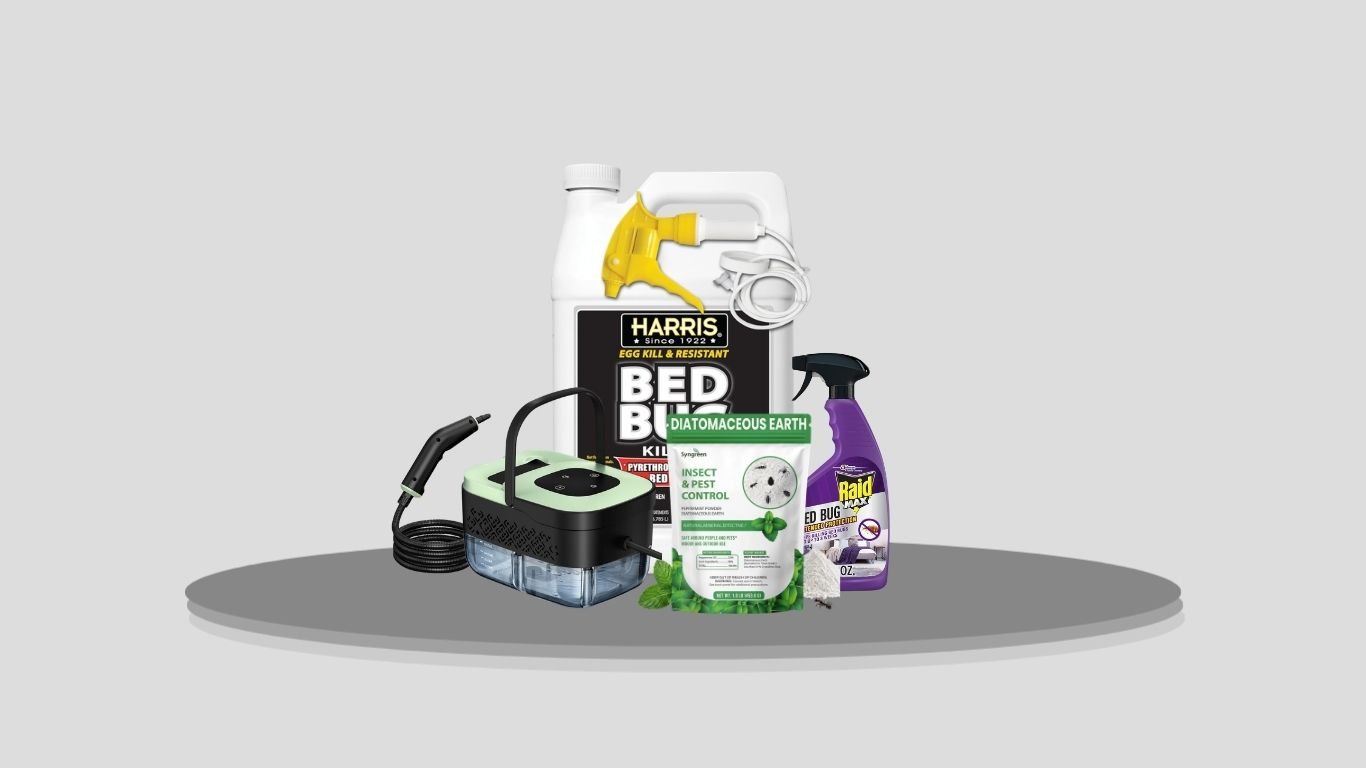
Bed bugs can be difficult to eliminate because they hide in mattresses, furniture seams, cracks, and other tight spaces. The most effective approach often combines several tools, including residual sprays, interceptor traps, mattress encasements, steam, heat treatment, dusts, and monitoring devices. Choosing the right product depends on whether you need to kill active bugs, protect a bed, treat hidden areas, or monitor for remaining activity. In this guide, we review 9 of the best bed bug extermination products for practical home treatment and ongoing control.
1. Harris Toughest Bed Bug Killer
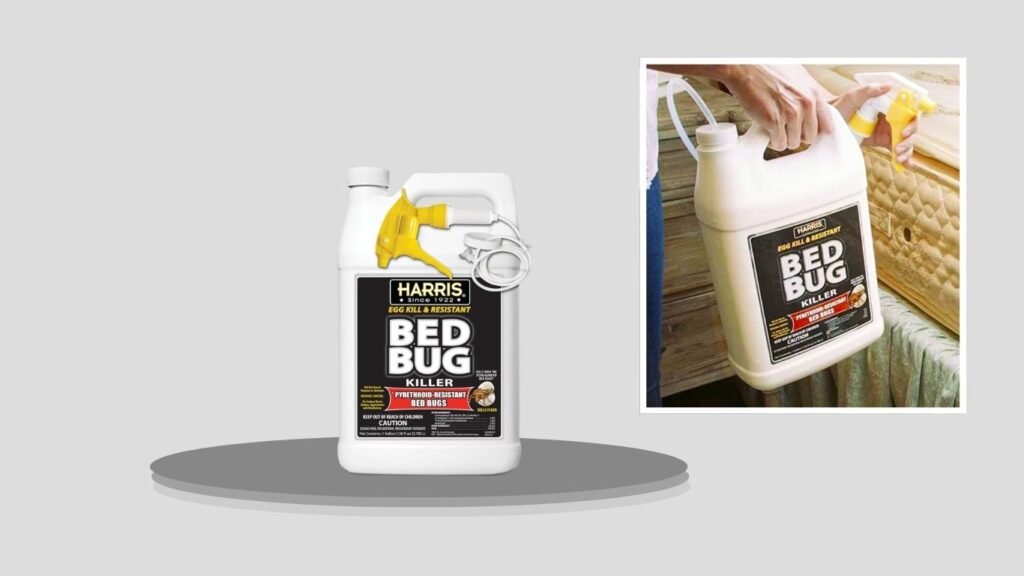
Harris Toughest Bed Bug Killer is a gallon-size liquid treatment designed for challenging bed bug infestations, including pyrethroid-resistant populations and eggs. Its ready-to-use formula combines direct-contact killing with extended residual protection, making it suitable for treating cracks, crevices, furniture areas, and other labeled locations where bed bugs hide or travel. The odorless, non-staining formula is particularly convenient for indoor residential treatment when used exactly according to label directions.
Key Features
- 128-fluid-ounce gallon container
- Targets bed bugs and their eggs
- Designed to kill pyrethroid-resistant bed bugs
- Fast knockdown when sprayed directly
- Residual activity for up to 16 weeks
- Odorless formula
- Non-staining when used as directed
- Leaves no visible residue
- EPA-registered bed bug treatment
- Ready-to-use liquid formulation
Why It’s Best for Resistant Bed Bug Infestations
One of this product’s biggest advantages is its focus on resistant bed bug populations. Some bed bugs have developed resistance to traditional pyrethroid treatments, which can make ordinary sprays less dependable. Harris specifically markets this Black Label formula for resistant bed bugs as well as their eggs.
That makes it particularly appealing when a homeowner wants something more specialized than a basic contact spray. The gallon volume also provides enough product for repeated, label-directed treatment of multiple problem areas.
Performance & Long-Lasting Residual Control
Directly contacted bed bugs can be knocked down quickly, while treated surfaces continue providing residual control. Harris states that the formula can remain effective for up to 16 weeks after application, giving it a major advantage over products that work only while wet.
The odorless and non-staining formulation is also useful around indoor living spaces because it avoids the strong chemical smell associated with some pest-control sprays.
Application, Practical Value & Overall Verdict
This spray works best as part of a complete bed bug strategy rather than as the only tool. Target labeled cracks, crevices, bed-frame areas, and other hiding or travel locations, while combining treatment with inspection, laundering, encasements, and monitoring when necessary. Always follow the pesticide label, and never apply it directly to people or pets.
Overall Verdict: The Harris Toughest Bed Bug Killer earns the #1 position for its large treatment volume, resistant-bed-bug formula, egg control, and extended residual performance. For homeowners dealing with persistent activity and wanting a treatment that continues working after application, its technical feature set makes it one of the strongest options in this roundup.
2. Bed Bug Blocker Pro Interceptor Traps
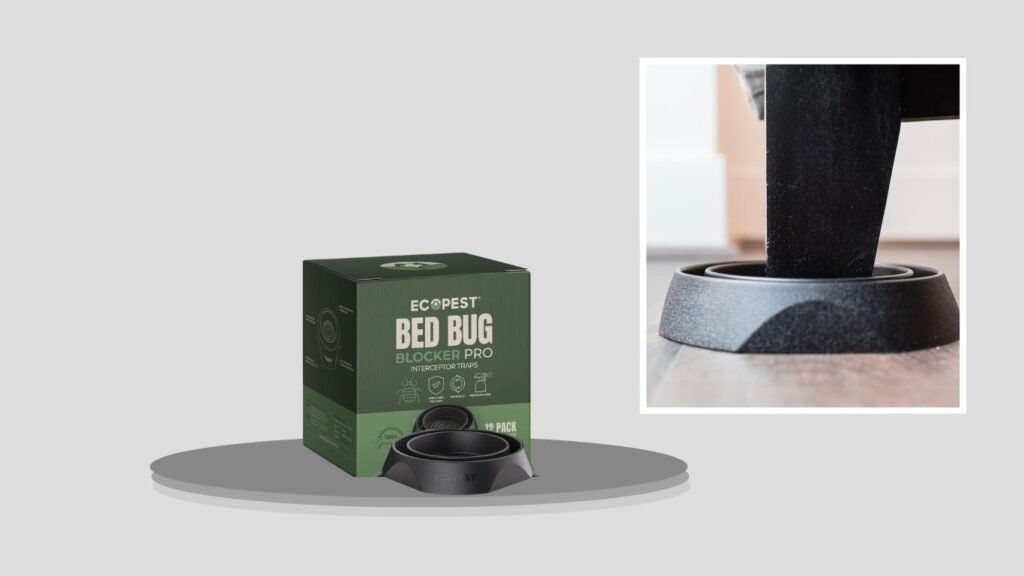
The Bed Bug Blocker Pro Interceptors provide a chemical-free way to monitor bed bug activity around beds, sofas, and other furniture. This 12-pack sits beneath furniture legs and uses a smooth trapping channel to catch bed bugs attempting to climb toward or away from the furniture. They are especially useful alongside sprays, encasements, heat, and other treatment methods because they provide ongoing evidence of remaining activity.
Key Features
- 12 interceptor traps
- Designed specifically for bed bugs
- Fits beneath bed and furniture legs
- No pesticides or chemical bait required
- Passive 24/7 monitoring
- Reusable construction
- Helps isolate beds from floor-level activity
- Useful during and after treatment
- Easy visual inspection
- Suitable for beds, couches, and chairs
Why It’s Best for Monitoring Treatment Progress
One of the biggest challenges with bed bugs is knowing whether treatment actually worked. These interceptors remain beneath the furniture and can reveal bugs that continue moving around the room.
A 12-piece package also provides considerably more coverage than a standard four-pack. You can monitor a bed, couch, and additional furniture simultaneously rather than concentrating all the traps in one place.
The EPA specifically recommends furniture-leg interceptors as part of an integrated bed bug management strategy and for post-treatment monitoring.
Detection Performance & Practical Use
For best results, the bed should be separated from walls and bedding should not touch the floor. Otherwise, bed bugs can bypass the interceptor by using another route.
Interceptors do not depend on electricity or disposable adhesive, making them convenient for long-term use. Regular inspection can also help identify whether activity is decreasing after other treatments.
Pros, Cons & Overall Verdict
The main advantages are the generous 12-pack quantity, reusable design, pesticide-free operation, and strong usefulness for monitoring. Their limitation is equally important: they do not eliminate bed bugs already living inside mattresses, frames, or surrounding cracks.
Overall Verdict: The Bed Bug Blocker Pro ranks #2 as an excellent supporting tool for isolating furniture and verifying whether a broader extermination program is succeeding.
3. SureGuard Queen Mattress Encasement
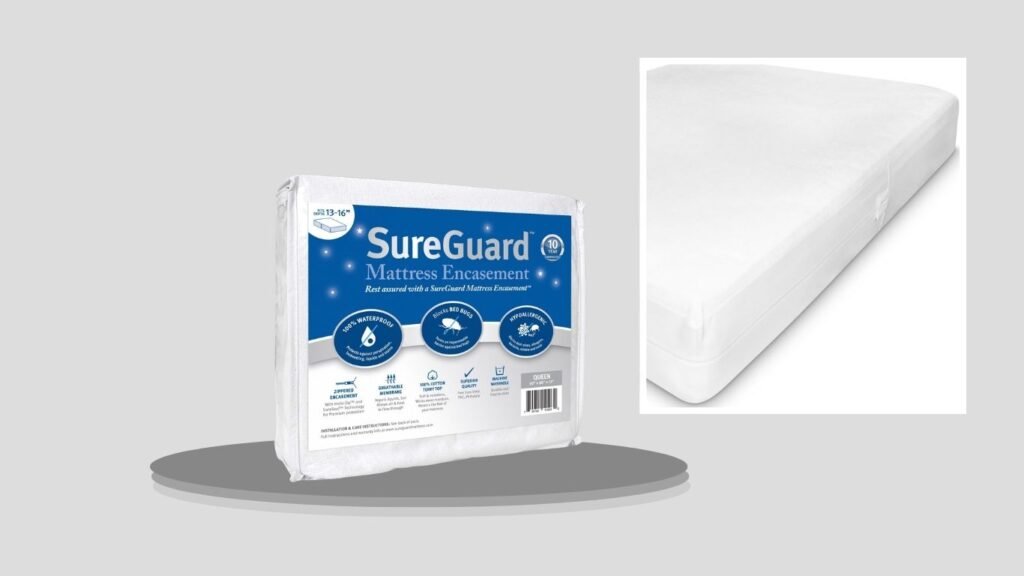
The SureGuard Mattress Encasement is a six-sided zippered cover designed to completely surround a mattress rather than simply covering its top. This Queen version fits mattresses approximately 13–16 inches deep and combines waterproof protection with a bed-bug-resistant enclosure. Its cotton-terry top, polyester side material, and polyurethane backing make it suitable for continuous bedroom use while reducing accessible hiding areas around the mattress.
Key Features
- Six-sided mattress encasement
- Queen size
- Fits approximately 13–16-inch-deep mattresses
- Zippered closure
- Waterproof construction
- Cotton-terry top surface
- Polyester side panels
- Polyurethane backing
- Machine washable
- Designed for bed bug protection
- Hypoallergenic design
Why It’s Best for Isolating the Mattress
Mattress encasements play a very different role from sprays. Instead of killing insects moving around the room, they seal the mattress, limiting hiding areas and containing bed bugs already trapped inside when properly installed and maintained.
That makes an encasement particularly useful when the mattress itself is expensive and replacing it would be unnecessary. The light exterior also makes newly introduced bugs easier to spot during inspection.
EPA bed bug guidance recommends high-quality mattress and box-spring encasements as part of an integrated treatment strategy.
Comfort, Protection & Everyday Performance
SureGuard combines pest protection with ordinary mattress protection. The waterproof polyurethane backing can guard against spills, while the cotton-terry sleeping surface offers a more fabric-like feel than exposed plastic.
Correct sizing is important because an overly tight encasement places extra stress on seams and the zipper.
Pros, Cons & Overall Verdict
The strongest benefits are complete six-sided coverage, waterproofing, washability, and the ability to keep an existing mattress in service during treatment. However, an encasement does not eliminate bugs elsewhere in the room and must remain intact to work properly.
Overall Verdict: The SureGuard Mattress Encasement ranks #3 for protecting and isolating one of the most important bed bug harborages while supporting a complete treatment plan.
4. WSRYYCC Portable High-Pressure Steam Cleaner
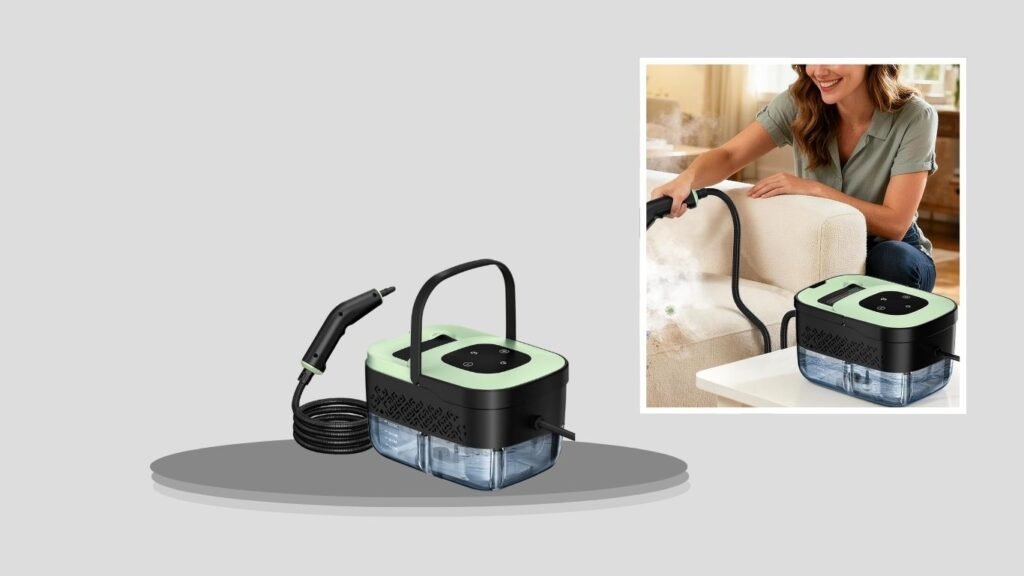
The WSRYYCC Portable Steam Cleaner offers a nonchemical treatment option for seams, fabric surfaces, bed frames, baseboards, and other suitable locations. The unit is rated at 1,500 watts, heats in approximately 15 seconds, offers six steam levels, and produces steam up to about 221°F. It also includes multiple accessories for directing steam into different surfaces and hard-to-reach areas.
Key Features
- 1,500-watt heating system
- Steam temperature up to approximately 221°F
- Around 15-second heat-up
- Six adjustable steam levels
- Approximately 3-bar pressure
- 1.25-liter water tank
- Multiple cleaning accessories
- Suitable for upholstery and mattresses
- Useful on baseboards and crevices
- No insecticide residue
Why It’s Best for Targeted Nonchemical Treatment
Steam is valuable because sufficiently hot steam can kill bed bugs and eggs it directly reaches. It can also penetrate fabric seams and small spaces that are difficult to treat with ordinary cleaning methods.
The EPA specifically recognizes steam cleaners as a useful nonchemical bed bug control option for carpets, baseboards, bed frames, and furniture when used properly.
Heat Performance & Correct Application
The machine’s advertised 221°F output is well above the EPA’s minimum recommended steam temperature of 130°F, although the temperature actually reaching the treated surface matters.
Steam should be applied slowly enough for heat to penetrate, and airflow should not be so forceful that it scatters bed bugs. A diffuser-style attachment can be helpful on appropriate surfaces. Always confirm that the material being treated can tolerate heat and moisture.
Pros, Cons & Overall Verdict
The major advantages are high-temperature output, adjustable steam, fast heating, and usefulness beyond pest treatment. Steam also leaves no pesticide residue.
Its weakness is that it only kills bugs and eggs reached by sufficient heat and offers no residual protection afterward.
Overall Verdict: The WSRYYCC Steam Cleaner ranks #4 for targeted nonchemical bed bug treatment, especially around seams, furniture, and other accessible hiding areas.
5. FEPPO Mattress Vacuum Cleaner
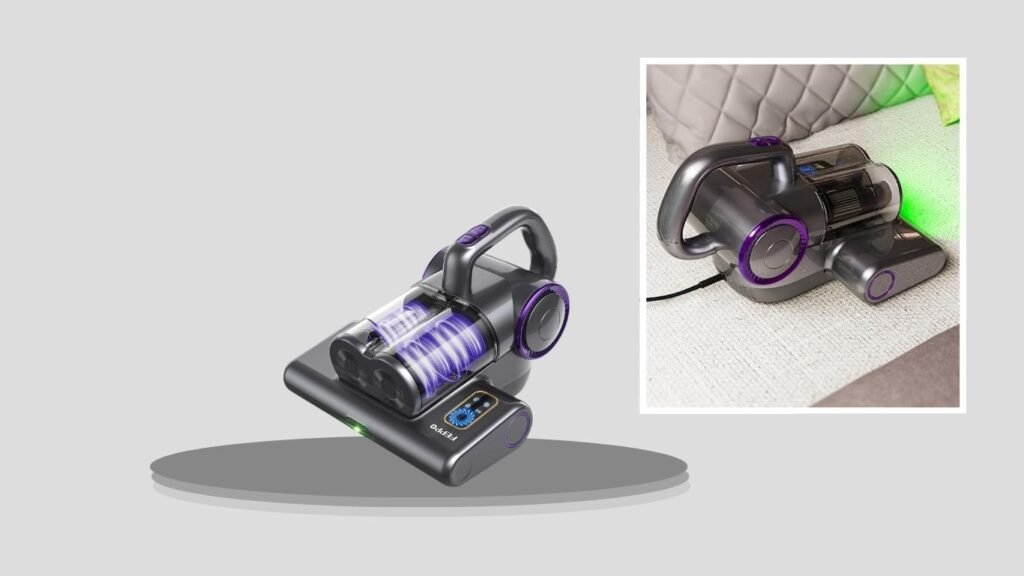
The FEPPO Mattress Vacuum is a specialized fabric-cleaning machine designed for mattresses, sofas, pillows, and other upholstered surfaces. It combines suction with heat, UV-C, and ultrasonic features in a corded handheld format. While useful for removing debris, dust, shed skins, and potentially some exposed insects from fabric surfaces, it should be viewed as a cleaning and population-reduction tool rather than a stand-alone bed bug exterminator.
Key Features
- Purpose-built mattress vacuum
- Strong suction for fabric surfaces
- Corded operation
- Heated cleaning function
- UV-C feature
- Ultrasonic function
- Wide cleaning head
- Suitable for mattresses and sofas
- Captures debris in a removable collection system
- Designed for repeated upholstery cleaning
Why It’s Best for Mattress Surface Cleaning
Vacuuming is useful during bed bug control because it can physically remove exposed insects, shed skins, eggs, and debris from accessible areas.
A purpose-built mattress head is easier to maneuver across mattress seams and upholstered furniture than many full-size floor vacuums. The corded design also avoids battery-runtime concerns during extended cleaning.
However, claims surrounding UV-C or ultrasonic features should not be confused with proven whole-room bed bug elimination.
Cleaning Performance & Realistic Expectations
The EPA includes frequent vacuuming among physical methods that can reduce bed bug populations. Vacuum contents should be contained and disposed of carefully after cleaning so captured bugs cannot escape.
The FEPPO works best before or alongside encasements, steam, interceptors, and appropriately labeled treatments. It cannot reliably reach bugs hidden deep inside frames, walls, or inaccessible cracks.
Pros, Cons & Overall Verdict
The dedicated fabric design and combination of suction and cleaning features make repeated mattress maintenance convenient. The main limitation is that vacuuming does not provide residual killing action.
Overall Verdict: The FEPPO Mattress Vacuum ranks #5 as a practical supporting tool for physically cleaning mattresses and upholstery during an integrated bed bug treatment program.
6. Diatomaceous Earth Powder with Peppermint
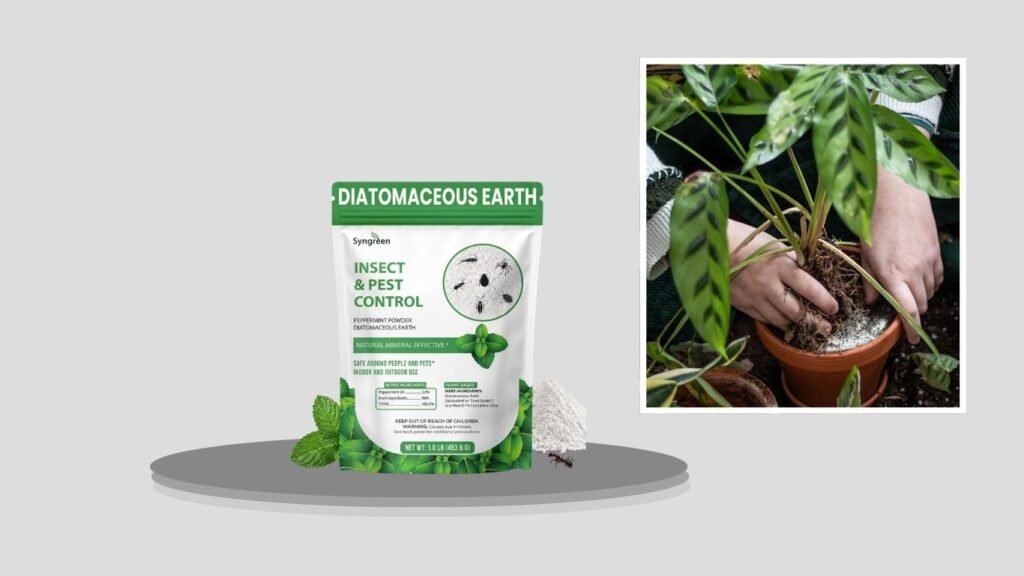
This diatomaceous earth and peppermint powder is marketed for crawling insects, including bed bugs, ants, fleas, and cockroaches. Diatomaceous earth works as a desiccant, damaging the protective outer layer of insects so they gradually lose moisture. However, this particular listing describes the product as food-grade diatomaceous earth, which creates an important limitation for bed bug treatment.
Key Features
- Diatomaceous earth powder
- Peppermint oil included
- One-pound package
- Dry powder application
- Intended for crawling insects
- No electrical equipment required
- Long-lasting physical desiccant action
- Suitable for targeted crack-and-crevice-style use only when label permits
- Requires careful dust control
- Product labeling should be checked before bed bug use
Why Product Labeling Matters Most
Diatomaceous earth itself can be a useful bed bug desiccant because its physical mechanism means bed bugs cannot develop resistance to it in the same way they can to some conventional insecticides.
However, the EPA specifically warns that food-grade or pool-grade diatomaceous earth should not be used for bed bug control. For bed bugs, consumers should use only a pesticide product that is EPA-registered and specifically labeled for bed bugs.
Performance & Safety Considerations
Desiccants act more slowly than contact sprays. Their strength is long-lasting action in appropriately treated cracks and crevices, not instant knockdown.
Dust should not be broadly spread over sleeping or living surfaces, because airborne particles can create an inhalation hazard. Always follow the registered pesticide label for the exact product being used.
Pros, Cons & Overall Verdict
The general desiccant mechanism is valuable for resistance management, but this listing’s food-grade description prevents it from being recommended as a primary bed bug pesticide without an appropriate EPA bed bug label.
Overall Verdict: The Diatomaceous Earth Powder ranks #6 only as a conditional option. For actual bed bug treatment, choose an EPA-registered desiccant explicitly labeled for bed bugs rather than relying simply on the words “food grade.”
7. ThermalStrike Ranger Bed Bug Heat Treatment System
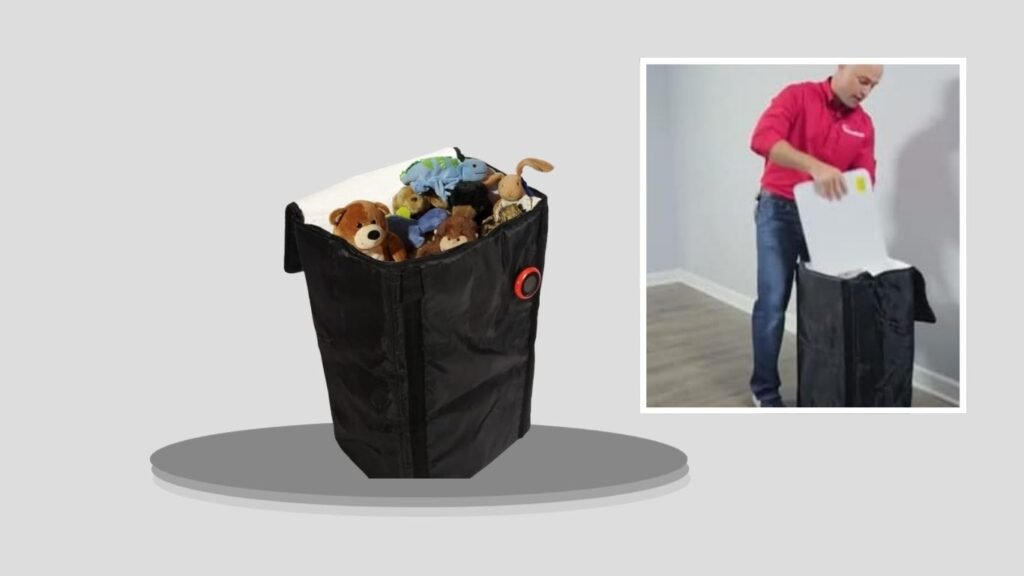
The ThermalStrike Ranger is a portable heating chamber designed to treat items such as luggage, bedding, clothes, books, bags, and other household possessions using controlled heat. Instead of spraying chemicals onto belongings, the chamber heats loaded items until their internal temperature reaches a level lethal to bed bugs and eggs. A thermometer and timer help users confirm and maintain the required treatment conditions.
Key Features
- Portable enclosed heat chamber
- Designed for bed bugs and eggs
- Digital temperature monitoring
- Built-in timer
- Collapsible design
- Fits luggage, clothing, bedding, books, and other items
- Heats from multiple sides
- Reusable chemical-free treatment
- Folds for storage
- Useful for travel-related belongings
Why It’s Best for Treating Personal Belongings
The Ranger targets one of the most frustrating bed bug problems: belongings that cannot simply be sprayed or thrown away.
Suitcases, backpacks, bedding, books, and selected household items can be placed inside the chamber so heat reaches insects hidden within folds or seams. That makes it especially useful after travel or when an infestation involves many portable possessions.
Heat Performance & Treatment Reliability
The Ranger manual recommends verifying that the core of treated items reaches approximately 120°F for at least 30 minutes. Dense belongings may need more time for heat to penetrate fully.
EPA guidance likewise recognizes portable heating chambers as one option for treating infested items and notes that heat must penetrate deeply enough to reach lethal temperatures throughout the material.
Pros, Cons & Overall Verdict
Chemical-free operation, reusable treatment, and the ability to handle luggage and household possessions are major advantages. The limitation is that this is an item-treatment chamber, not a whole-room heater.
Overall Verdict: The ThermalStrike Ranger ranks #7 for safely treating portable belongings where sprays are undesirable and controlled heat offers a more practical solution.
8. Raid Max Bed Bug Extended Protection Foaming Spray
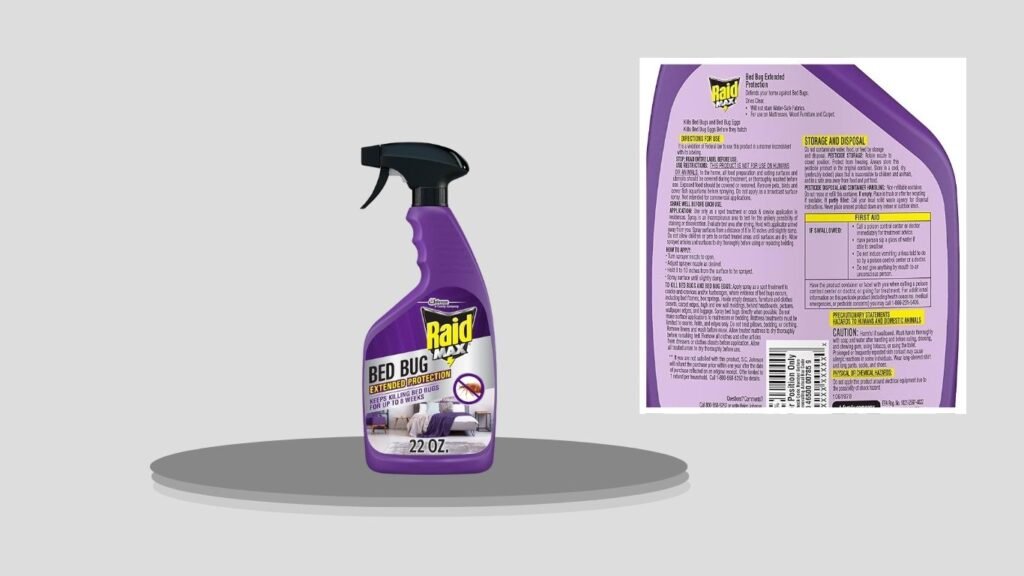
Raid Max Bed Bug Crack & Crevice Extended Protection Foaming Spray is designed specifically for bed bugs and their eggs. The expanding foam makes treated areas visible and helps deliver insecticide into cracks and crevices where bugs hide. Raid states that the formula works against pyrethroid-resistant bed bugs and can continue killing for up to eight weeks on laminated wood surfaces when used according to the label.
Key Features
- Specifically formulated for bed bugs
- Kills bed bugs and eggs before hatching
- Expanding foam application
- Targets cracks and crevices
- Effective against pyrethroid-resistant bed bugs
- Residual control up to eight weeks on laminated wood
- Suitable for labeled mattress applications
- Can be used on wood furniture and carpet as directed
- Will not stain water-safe surfaces when used correctly
- Ready-to-use application
Why It’s Best for Cracks and Hidden Areas
Bed bugs frequently shelter in narrow joints around furniture, baseboards, frames, and other difficult locations. The foam formulation expands after application, making it easier to see where treatment has been placed and helping the product reach tight spaces.
That targeted delivery is more useful than broadly spraying an entire room, particularly because pesticide applications should follow the product label closely.
Killing Performance & Residual Protection
Raid states that this formulation kills bed bugs and their eggs and works against pyrethroid-resistant strains. Residual performance can continue for up to eight weeks on laminated wood surfaces.
Residual activity is valuable because newly moving bugs can contact treated areas after the original application has dried.
Pros, Cons & Overall Verdict
The combination of expanding foam, resistant-bed-bug efficacy, egg control, and residual performance makes this one of the more treatment-focused products on the list.
As with every pesticide, it must be used exactly according to label directions and should not be applied to people or animals.
Overall Verdict: The Raid Max Foaming Spray ranks #8 as a strong targeted option for cracks, furniture, and other labeled hiding areas where visible foam and residual activity are useful.
9. Micnaron Indoor Light Trap with Replacement Sticky Pads
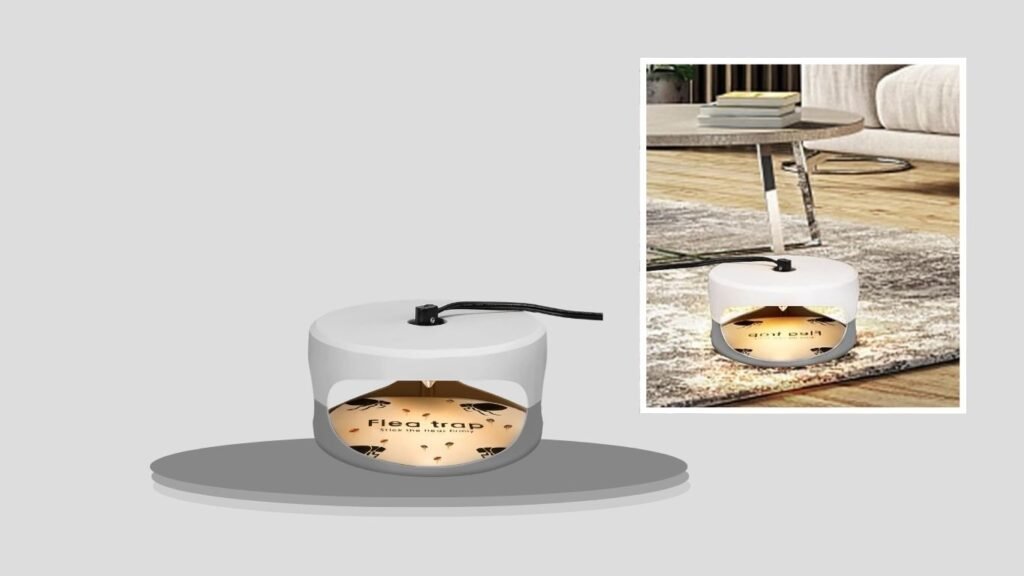
The Micnaron Indoor Light Trap uses a reusable illuminated housing with replaceable adhesive pads to capture insects attracted toward the unit. An important distinction is that this product is marketed mainly as a flea light trap, not as a dedicated bed bug exterminator. Its design can contribute to general insect monitoring, but it should not be expected to replace bed bug interceptors, heat, steam, encasements, or labeled pesticides.
Key Features
- Indoor plug-in light trap
- Replaceable sticky pads
- Reusable housing
- Passive nighttime operation
- Designed primarily for fleas
- No pesticide spray
- Easy visual inspection of captured insects
- Suitable for general indoor insect monitoring
- Replaceable adhesive surfaces
- Simple plug-in operation
Why It’s Better for Monitoring Than Extermination
Light-based traps work well for some insects, particularly fleas, because attraction toward light and heat can bring them into contact with the sticky surface.
Bed bugs locate hosts primarily through cues such as carbon dioxide, heat, and other host-related signals rather than relying on a basic light trap. For that reason, furniture-leg interceptors are a much more established bed bug monitoring method.
Practical Performance & Limitations
The replaceable sticky pad makes the unit convenient for checking what types of insects are active in a room. It can remain plugged in overnight and requires little maintenance beyond replacing contaminated pads.
However, EPA guidance notes that ordinary sticky traps are not considered effective bed bug control tools; interceptors are the preferred trap style for bed bug monitoring.
Pros, Cons & Overall Verdict
Reusable construction and pesticide-free operation make it useful for general indoor pest monitoring. Its biggest drawback is fundamental: it is not purpose-built for bed bugs.
Overall Verdict: The Micnaron Indoor Light Trap ranks #9 as a supplementary monitoring device. For confirmed bed bug infestations, the dedicated treatments and interceptor systems higher in this roundup are technically stronger choices.
FAQs
1. What is the most effective way to eliminate bed bugs?
The most reliable approach is usually integrated pest management, which combines inspection, high-heat laundering, vacuuming, steam or other heat treatment where appropriate, mattress and box-spring encasements, interceptors, and properly labeled pesticides when needed. Severe or persistent infestations may require a professional pest management company.
2. Can one bed bug spray completely eliminate an infestation?
Usually not. Sprays may kill exposed bugs and provide residual control on labeled surfaces, but bed bugs can remain hidden in cracks, furniture, walls, and other protected areas. Eggs can also make control more difficult. Combining chemical and nonchemical methods generally provides a more complete strategy.
3. Does steam kill bed bugs and their eggs?
Yes, sufficiently hot steam can kill bed bugs and eggs it directly reaches. The EPA recommends steam of at least 130°F, applied without overly forceful airflow that could scatter insects. Slow, careful treatment of seams, bed frames, baseboards, and suitable furniture can make steam a useful nonchemical component of control.
4. Should I use food-grade diatomaceous earth for bed bugs?
No. The EPA specifically advises using only EPA-registered pesticide desiccants labeled for bed bug control. Food-grade and pool-grade diatomaceous earth are not appropriate substitutes and may present greater inhalation concerns.
5. When should I call a professional bed bug exterminator?
Professional help is worth considering when infestations involve multiple rooms, continue despite careful treatment, occur in multi-unit housing, or are difficult to locate and monitor. Bed bugs reproduce quickly and are challenging to eliminate, so professional inspection and follow-up treatment can be more effective than repeatedly applying different DIY products without a coordinated plan.
