
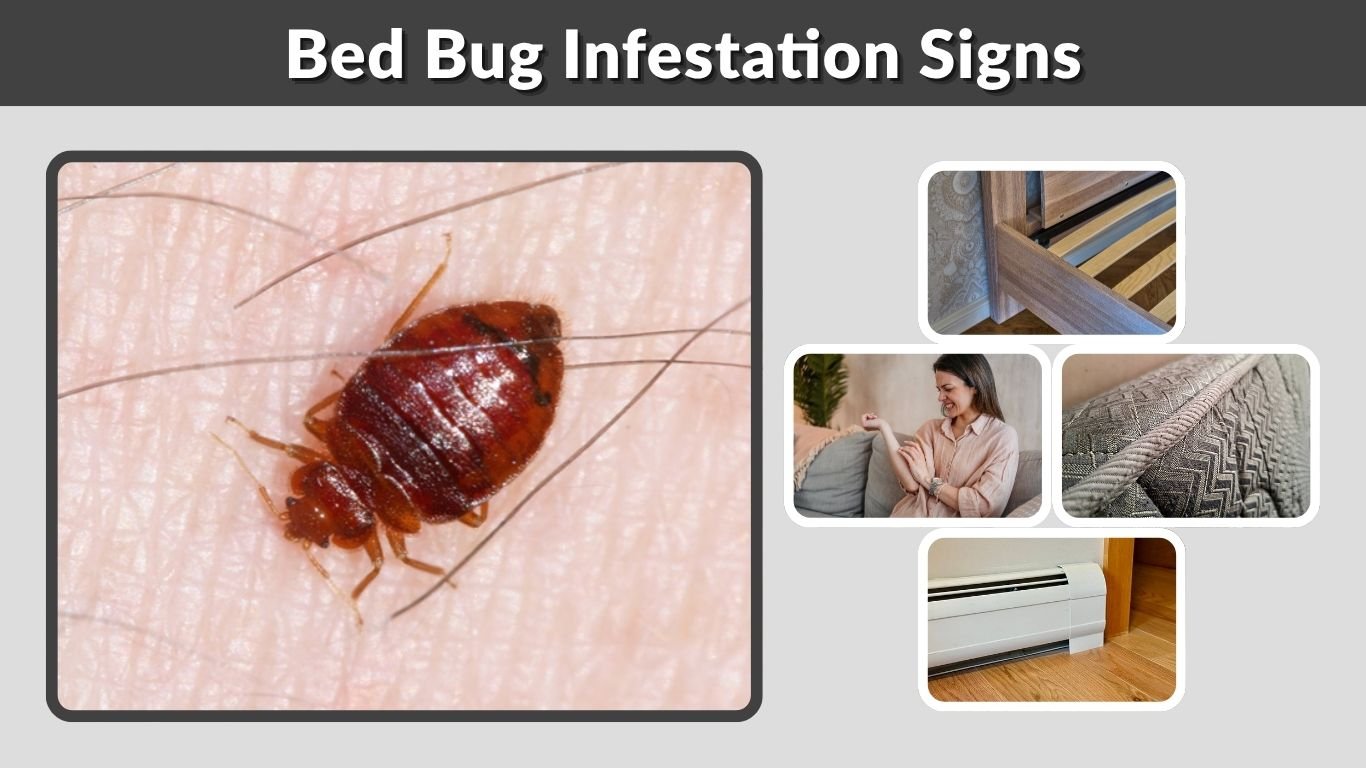
Recognizing bed bug infestation signs early can make a major difference in how difficult the problem becomes to control. Bed bugs are small, secretive insects that hide in mattresses, bed frames, furniture, cracks, and other protected areas near where people sleep. Early signs may include unexplained bites, dark spotting, shed skins, eggs, or live insects. However, bites alone cannot confirm an infestation. This guide explains the most common signs of bed bugs, where to inspect, and how early and severe infestations differ.
What Are the Main Signs of a Bed Bug Infestation?
Bed bugs often remain hidden during the day, so infestations are not always obvious. Instead of relying on one clue, look for several physical signs around sleeping and resting areas. Evidence may appear on mattresses, bedding, furniture, or nearby cracks. Finding actual bugs, eggs, shed skins, or characteristic fecal spotting provides stronger evidence than skin reactions alone.
Common Bed Bug Infestation Signs
Look for these warning signs:
- Live reddish-brown bed bugs
- Small dark or black fecal spots
- Tiny pale eggs or eggshells
- Shed insect skins
- Small blood stains on sheets
- Bed bugs hiding in mattress seams
- Unexplained bites after sleeping
- A noticeable sweet or musty odor in heavy infestations
One sign by itself may have another explanation, so a careful inspection is important.
What Do Bed Bugs Look Like?
Adult bed bugs are small, flat, oval insects with six legs and no functional wings. Adults are typically reddish-brown, while younger bed bugs, called nymphs, are smaller and lighter.
After feeding, the body may become more swollen, elongated, and darker.
Their small size allows them to hide in extremely narrow spaces, including mattress seams, bed-frame joints, screw holes, furniture cracks, and behind loose materials close to a bed.
Early Signs of Bed Bug Infestation
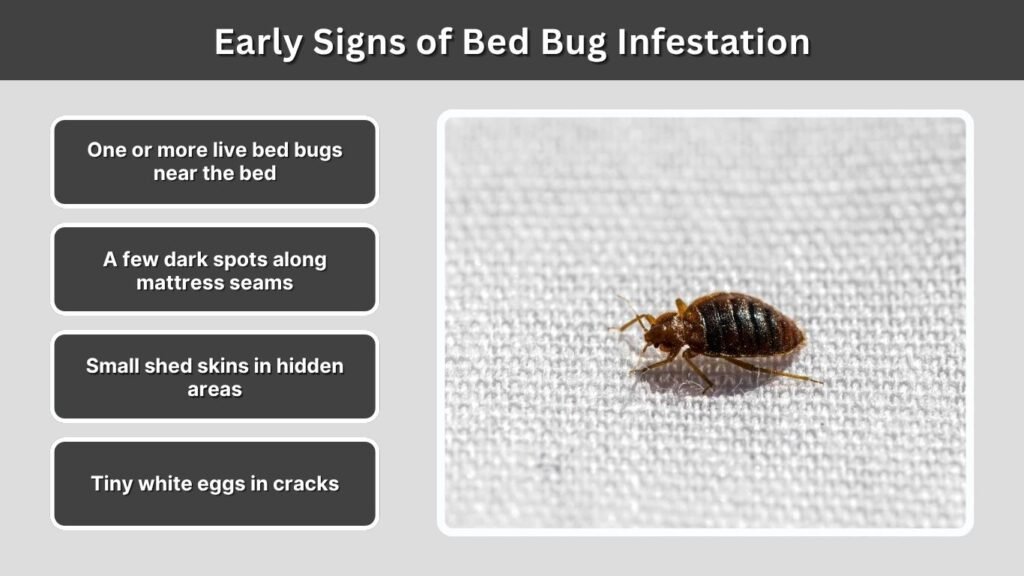
An early infestation can be difficult to detect because only a small number of bed bugs may be present. They may leave very little visible evidence and can remain hidden for long periods between meals. Checking carefully after travel, buying secondhand furniture, or noticing unexplained nighttime bites may help detect bed bugs before their numbers increase.
First Warning Signs to Check
Possible early signs include:
- One or more live bed bugs near the bed
- A few dark spots along mattress seams
- Small shed skins in hidden areas
- Tiny white eggs in cracks
- New blood spots on bedding
- Repeated unexplained bites after sleeping
Early infestations may not produce all of these signs at once.
Can One Bed Bug Mean an Infestation?
Finding one bed bug does not automatically prove that a large infestation exists, but it should never be ignored.
The insect could be a single hitchhiker brought in on luggage, clothing, furniture, or another object. However, it could also indicate that additional bugs are hiding nearby.
A thorough inspection of the mattress, box spring, headboard, bed frame, and nearby furniture is the next step. Continued monitoring is also important if no additional evidence is found immediately.
Bed Bug Infestation Signs on a Mattress
The mattress is one of the first places many people inspect because bed bugs commonly remain close to sleeping hosts. However, they do not necessarily live inside the mattress itself. They often hide along seams, piping, labels, folds, and areas where the mattress rests against the bed frame or box spring.
Signs Along Mattress Seams
Pay particular attention to:
- Dark fecal spotting along seams
- Shed skins trapped in folds
- Tiny white eggs attached to surfaces
- Live bugs beneath mattress piping
- Rust-colored or reddish stains
- Groups of bugs in protected crevices
Use a flashlight and inspect slowly rather than simply looking across the top surface.
Bed Bugs on Bedding
Blood stains on sheets or pillowcases can occur when a recently fed bed bug is crushed, but stains are not proof of bed bugs by themselves.
Similarly, dark spots on bedding may come from several sources.
The most convincing evidence is finding physical bed bug material, such as live insects, eggs, shed skins, or repeated fecal spotting concentrated around typical hiding places.
Bed Bug Bites and Skin Symptoms
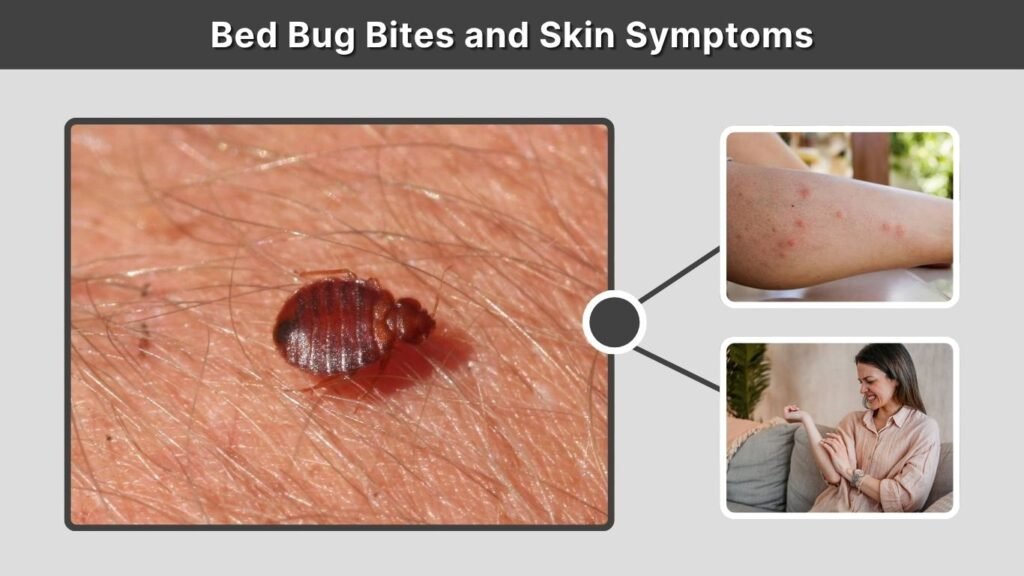
Bed bug bites are often the first reason people suspect an infestation, but bite appearance is unreliable for identification. Different people react differently, and some develop no visible reaction at all. Bites from mosquitoes, fleas, mites, and other causes can also resemble bed bug bites, so skin symptoms should be considered alongside physical evidence.
What Bed Bug Bites May Look Like
Possible characteristics include:
- Small red or raised bumps
- Itching or irritation
- Several bites close together
- Bites appearing in a line or cluster
- Marks on exposed skin
- Reactions noticed after sleeping
These patterns can suggest bed bug exposure, but they cannot confirm it.
Can You Have Bed Bug Bites With No Sign of Infestation?
Yes. You may notice suspicious skin reactions before finding any physical evidence, especially when only a few bed bugs are present.
However, bites without visible infestation signs can also have many other explanations.
Rather than assuming bed bugs are responsible, inspect sleeping areas thoroughly and consider professional identification if the problem continues.
Signs of a Severe Bed Bug Infestation
As a bed bug population grows, evidence generally becomes easier to detect. Bugs may spread farther from the bed and hide in furniture, walls, baseboards, or nearby belongings. Large infestations can contain different life stages at the same time, including eggs, nymphs, and adults.
Warning Signs of Heavy Infestation
A severe infestation may involve:
- Numerous live bugs
- Heavy fecal staining
- Large numbers of shed skins
- Eggs in multiple locations
- Bugs visible outside typical hiding places
- Activity in couches or nearby furniture
- Bed bugs spreading to wall cracks or baseboards
- A stronger musty odor
Heavy infestations usually require a systematic treatment plan rather than isolated spot treatments.
How Infestations Spread Through a Room
Bed bugs usually start near areas where people sleep or rest because they depend on blood meals.
As numbers increase, competition for hiding spaces can cause them to move farther away. They may spread into nightstands, couches, upholstered furniture, wall gaps, electrical areas, or personal belongings.
Moving infested furniture without precautions can also spread bugs to other rooms.
Bed Bug Inspection Checklist
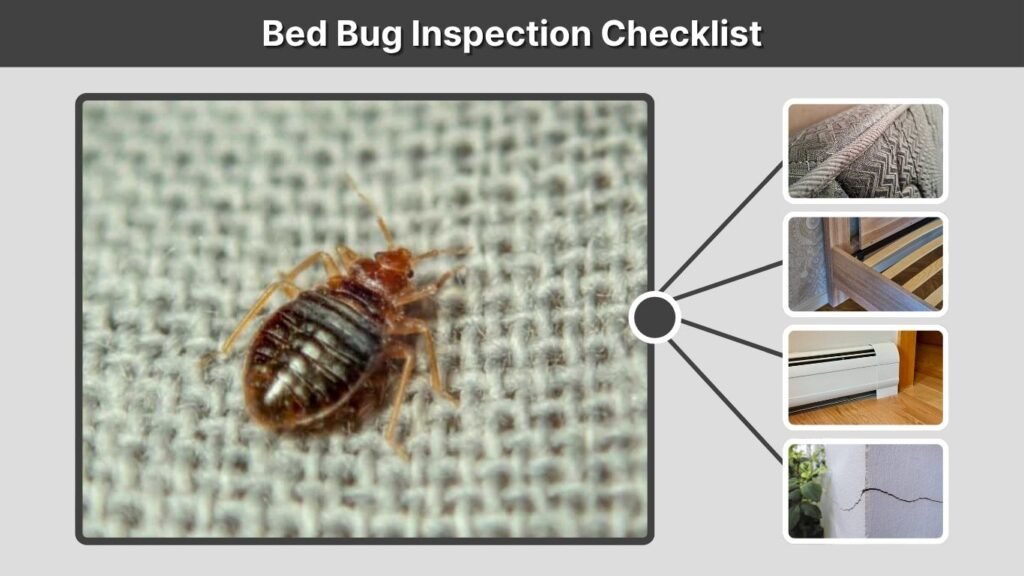
A structured inspection is more effective than checking random places. Begin with the bed and gradually expand outward. Bed bugs prefer tight, dark hiding places where surfaces meet, particularly areas close to sleeping people. Use a flashlight and examine seams and joints carefully.
Where to Inspect for Bed Bugs
Check these locations:
- Mattress seams and piping
- Box spring edges and underside
- Bed-frame joints
- Headboard cracks
- Nightstands and drawers
- Upholstered furniture
- Baseboards
- Wall cracks
- Behind loose wallpaper
- Luggage and travel bags
Avoid immediately moving suspected infested items to another room because this may spread bed bugs.
What to Do if You Find Bed Bugs
If you find a suspected bed bug, preserve it for identification when possible.
Avoid relying solely on foggers or randomly spraying household insecticides. Bed bugs hide deeply, and improper pesticide use can fail to reach them or cause unnecessary exposure.
Vacuuming, laundering appropriate fabrics with heat, reducing clutter, using bed encasements, monitoring, and targeted treatment can all play roles in control. Significant infestations are often easier to manage with professional pest-control assistance.
Bed Bugs but No Other Signs of Infestation
Sometimes a person finds one suspicious insect but cannot locate fecal stains, eggs, shed skins, or additional bugs. This situation does not always mean there is a hidden severe infestation. The insect may have recently arrived, or the population may still be very small.
Monitoring After Finding One Bug
Continue checking the bed and surrounding furniture carefully over the following days or weeks. Bed bug interceptor traps under bed legs can help detect activity in some situations.
Avoid moving sleeping locations unnecessarily, because changing rooms can encourage hungry bugs to spread while searching for a host.
If additional bugs, eggs, spotting, or shed skins appear, the evidence for an established infestation becomes much stronger.
FAQs
Bed bugs are difficult to identify because they hide well and many of their suspected symptoms overlap with other pests. Looking for several forms of evidence is usually the best way to determine whether an infestation is present. These common questions address early signs, mattresses, bites, and infestation severity.
What are the three main signs of a bed bug infestation?
Three especially important signs are live bed bugs, dark fecal spotting, and shed skins or eggs around typical hiding places. Bites can raise suspicion but are not enough to confirm bed bugs by themselves.
What are the first signs of bed bugs?
Early signs may include a live bug, a few dark spots along mattress seams, shed skins, eggs, or unexplained nighttime bites. Small infestations can be difficult to detect.
Is one bed bug a sign of infestation?
One bed bug could be a single hitchhiker, but it may also indicate more bugs nearby. Treat the finding seriously and inspect the surrounding sleeping area thoroughly.
What are signs of bed bugs on a mattress?
Look for live bugs, eggs, shed skins, dark fecal spots, and small reddish stains, especially along seams, piping, labels, and folds.
Can you have bed bug bites with no visible infestation?
Yes. Small infestations may be difficult to find, and some people notice skin reactions before discovering physical evidence. However, many other conditions can resemble bed bug bites, so bites alone do not confirm an infestation.
