
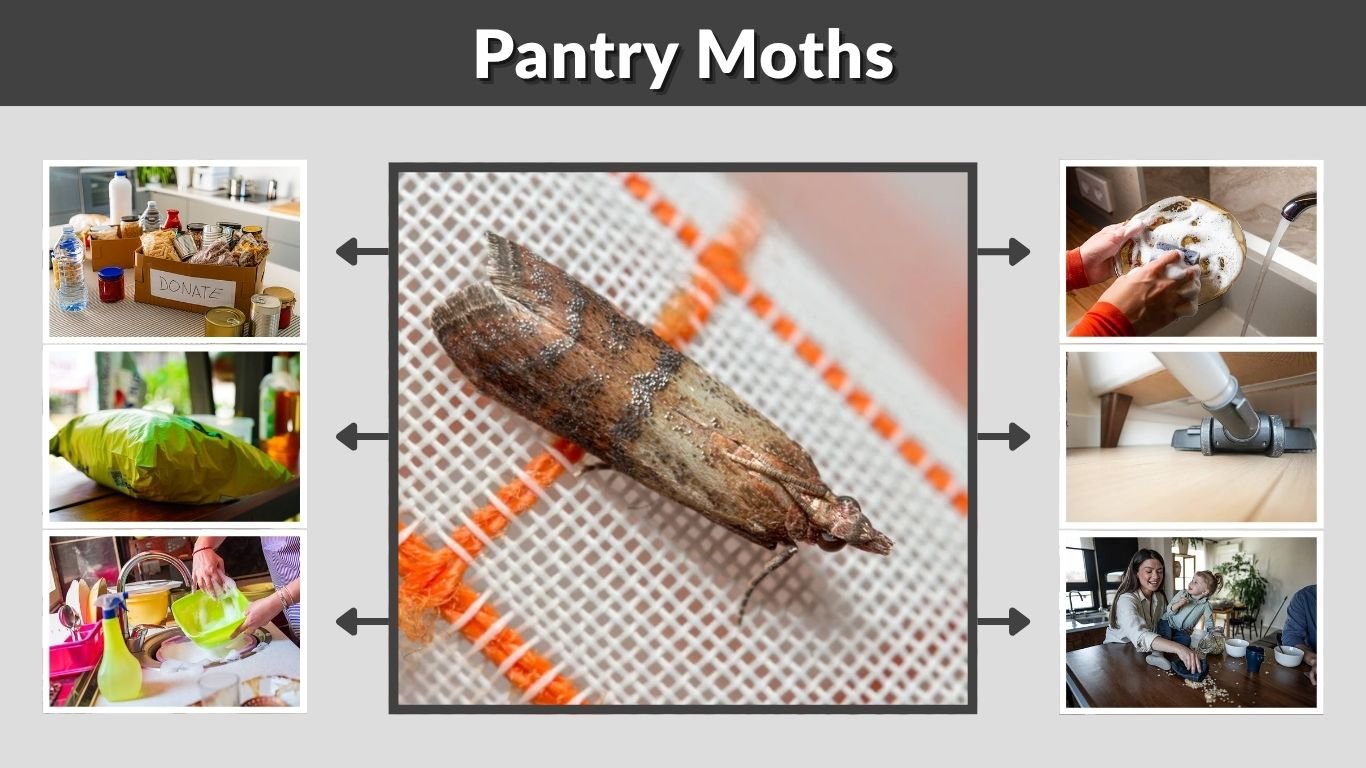
Finding a pantry moth near your cereal cupboard can be the first sign of insects hiding in stored food. Their larvae feed on dry groceries, leaving silk, droppings, and damaged products behind. Fortunately, most household infestations can be managed by locating contaminated food, cleaning thoroughly, and improving storage. Understanding what the eggs, larvae, and adults look like helps you target the problem. This guide explains pantry moth identification, their life cycle, effective removal methods, and how to keep them from returning to your kitchen.
Pantry Moth Identification
“Pantry moth” describes moths associated with stored food, especially the Indianmeal moth, Plodia interpunctella. Spotting a small moth indoors does not automatically confirm an infestation. Check its appearance alongside evidence in groceries. Adults are easier to notice than eggs, while larvae and their silk often reveal exactly which products need attention during a careful inspection of your kitchen storage cupboards.
What Do Pantry Moths, Larvae, and Eggs Look Like?
- Adults: Indianmeal moths have pale gray or tan wing bases and coppery reddish brown outer wings. Their wingspan is roughly ½–¾ inch.
- Larvae: Creamy caterpillars with brown heads grow to about ½ inch. Some appear slightly pink or green.
- Eggs: Tiny, pale eggs are difficult to distinguish against flour or grain without magnification.
- Cocoons: Fine silk shelters protect developing pupae, often in cracks or corners away from food.
Pantry Moth vs. Clothes Moth
Indianmeal moth larvae feed on stored food. Common clothes moth larvae attack materials such as wool and fur. Finding a moth in a bedroom alone does not identify it: pantry moths can travel beyond kitchens.
Signs of a Pantry Moth Infestation
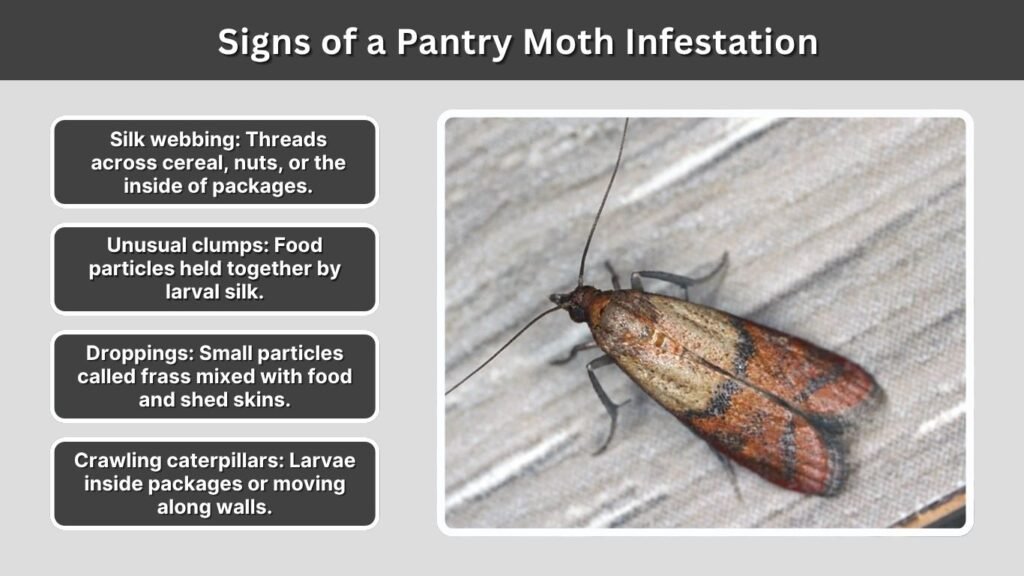
An infestation may begin inside one food package before spreading to nearby products. Check more than the cupboard where you first noticed an adult. Forgotten groceries, pet supplies, and decorative plant materials can hide the source. The most useful clues combine insect activity with changes in food, packaging, or the corners where larvae shelter before they become adult moths themselves.
Evidence to Look For
- Silk webbing: Threads across cereal, nuts, or the inside of packages.
- Unusual clumps: Food particles held together by larval silk.
- Droppings: Small particles called frass mixed with food and shed skins.
- Crawling caterpillars: Larvae inside packages or moving along walls.
- Repeated sightings: Adult moths appearing around cupboards or nearby rooms.
Inspect flour, rice, cereal, nuts, dried fruit, spices, birdseed, and dry pet food. Check unopened packages too; their appearance does not guarantee they are insect free.
Pantry Moth Life Cycle
Pantry moths develop through four stages: egg, larva, pupa, and adult. Understanding this sequence explains why removing flying moths alone rarely solves the problem. Hidden caterpillars may still be feeding, while pupae elsewhere can produce more adults. Development depends on temperature and food, so a household infestation does not follow one fixed calendar or disappear immediately after the first cleanup.
Eggs and Feeding Larvae
Females lay eggs on or near suitable food. Hatching can take only a few days in warm conditions. Larvae then feed and leave silk behind. This feeding stage causes damage to groceries.
Pupae and Emerging Adults
Mature larvae often leave food to pupate in sheltered places. Adults emerge, mate, and begin another generation. Development from egg to adult can take roughly six to eight weeks in warm conditions, but colder conditions can extend it considerably.
How to Get Rid of Pantry Moths
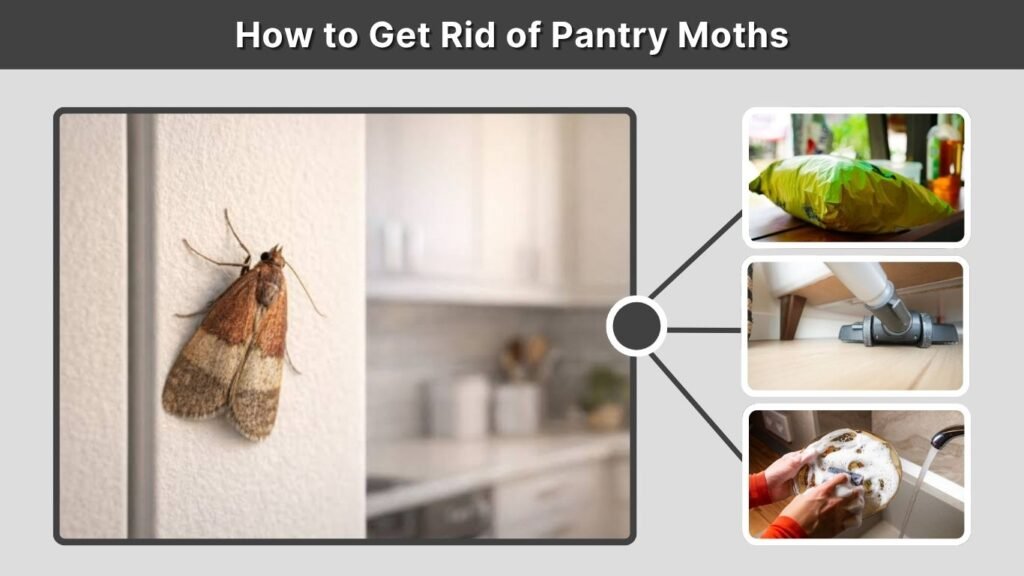
Effective pantry moth control starts with finding every infested food source. Cleaning exposed shelves will accomplish little if caterpillars remain inside a forgotten package. Work through the storage area systematically, separating affected products from apparently clean ones. Include nearby drawers and ceiling corners in your inspection, because wandering larvae can hide beyond the shelf where the original infestation first began.
Follow These Removal Steps
- Empty the cupboards. Inspect susceptible foods, including pet food and birdseed.
- Discard infested products. Seal affected packages in a bag and remove them from the home.
- Vacuum thoroughly. Clean shelf joints, cracks, corners, and visible cocoons. Empty the vacuum afterward.
- Wash and dry shelves. Use soapy water to remove food residue, then dry surfaces before restocking.
- Protect retained food. Transfer apparently unaffected products into sturdy containers with tight lids.
- Monitor afterward. Recheck groceries and watch for fresh larvae or webbing.
Avoid Spraying Food Storage Areas
Insecticides are not recommended for routine pantry pest control. They do not solve infestations inside packages and can contaminate food. Never use mothballs around groceries or food preparation surfaces.
Do Pantry Moth Traps Work?
Pantry moth traps can help you detect activity and assess whether your cleanup is working. However, catching adults does not remove insects already developing inside food. Treat traps as one part of an inspection and sanitation routine. Choosing the correct lure matters, and a trap marketed for another moth species may not attract the insects currently infesting your kitchen cupboards.
What Pheromone Traps Can Catch
Common pantry moth pheromone traps attract adult males onto adhesive surfaces. They do not capture eggs or feed larvae. Follow the product’s placement and replacement instructions, and continue checking food even when catches decline.
Can They Catch Clothes Moths?
Do not assume a pantry moth trap works for clothes moths. Select a product labeled for the identified pest. A trap without catches does not prove your home is free of insects.
How to Prevent Pantry Moths
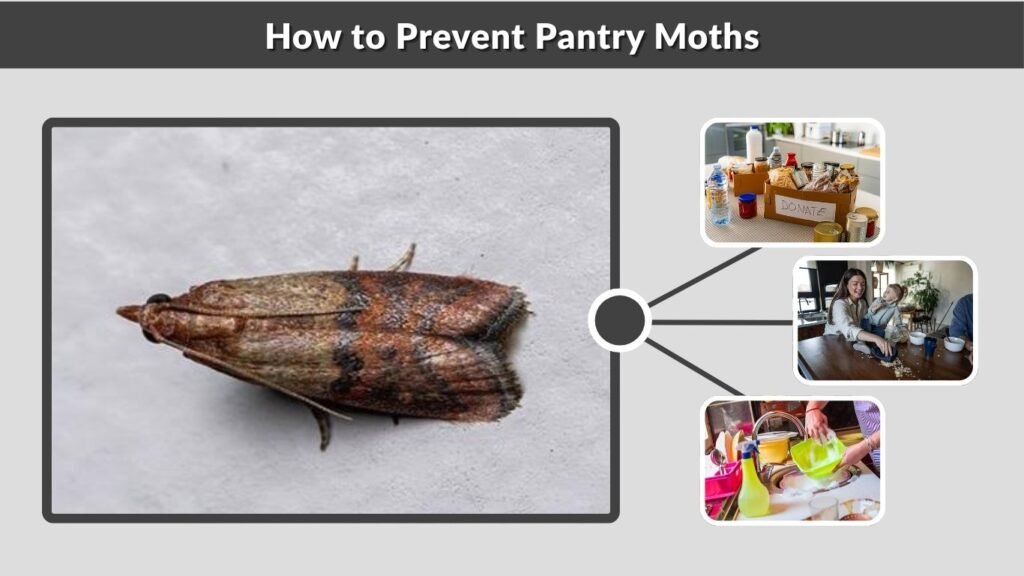
Prevention combines careful shopping with storage that limits access to food. A clean kitchen can still receive an infested product, so cleanliness alone is not a guarantee. Inspect groceries before putting them away and avoid leaving forgotten packages untouched for months. Small, consistent checks make it easier to find a problem before insects spread through several cupboards in your home.
Practical Storage Habits
- Store dry groceries in glass, metal, or thick plastic containers with tight lids.
- Use older products before newly purchased supplies.
- Buy quantities you can finish without prolonged storage.
- Remove spills and crumbs promptly, including beneath shelves.
- Inspect pet food and birdseed as carefully as human food.
- Wash and dry containers before refilling them.
Bay leaves are not a proven solution for preventing or eliminating pantry pests. Reliable storage and inspection deserve priority.
FAQs
Discovering insects in groceries often raises questions about where they came from and whether treatment has worked. The answers depend partly on correct identification and whether all affected food has been located. These common questions clarify several confusing signs, including larvae on ceilings and adults appearing after cleanup, so you can decide what to inspect next without repeating unnecessary treatments.
1. Why Are Pantry Moth Larvae on the Ceiling?
Mature larvae often crawl away from food to find a sheltered pupation site. Ceiling caterpillars or cocoons do not necessarily mean eggs were laid there.
2. Do Pantry Moths Bite People?
No. Pantry moths do not bite or sting. Their main household impact is contamination of stored food.
3. Are Pantry Moth Larvae Maggots?
No. They are caterpillars with a distinct head and legs. Maggots are fly larvae and lack legs.
4. How Do Pantry Moths Get Into Sealed Packages?
Food may already contain insects when purchased. Larvae can also penetrate thin packaging or enter through gaps and seams.
5. Why Do Moths Keep Appearing After Cleaning?
Hidden pupae can produce adults for several weeks. If moths continue appearing beyond about three weeks, inspect again for an overlooked food source.
