
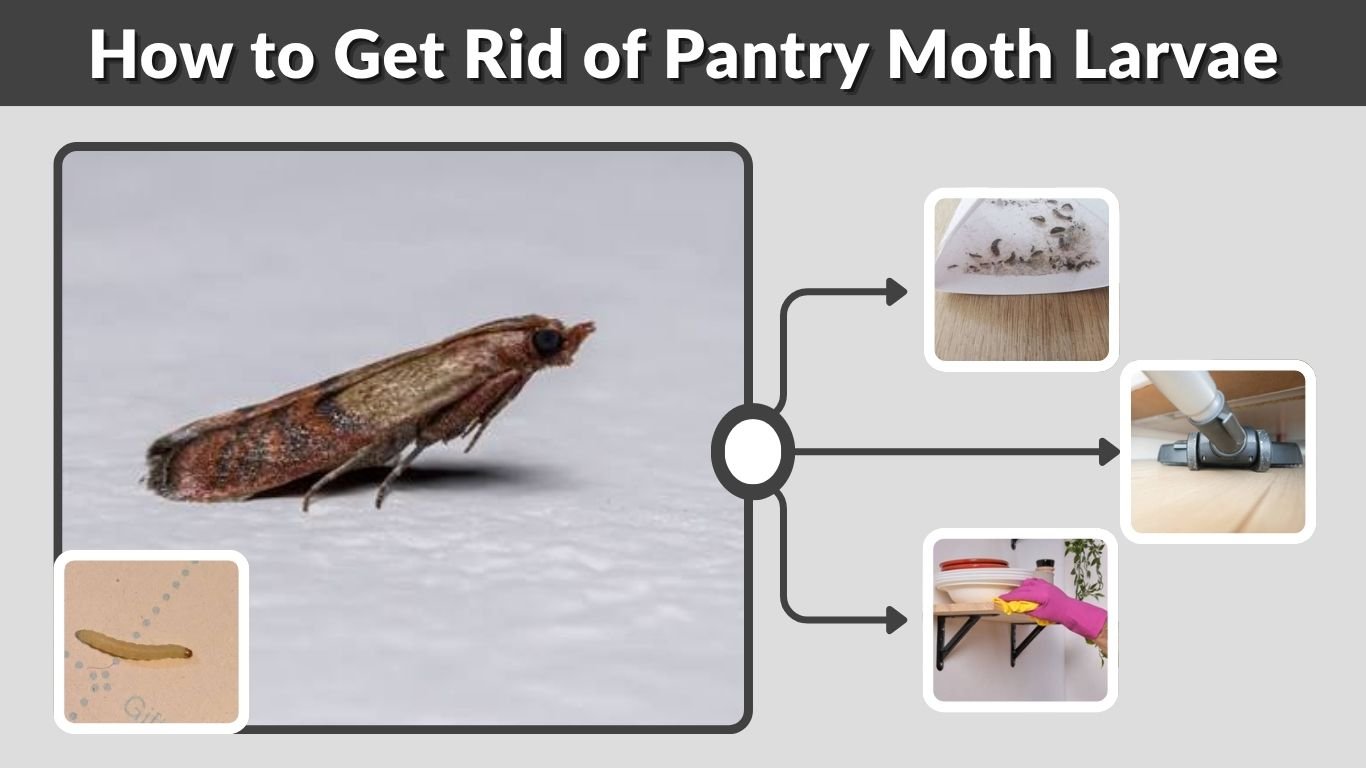
To get rid of pantry moth larvae, discard infested food, vacuum cupboard cracks, remove visible caterpillars and cocoons, and store unaffected groceries in sturdy sealed containers. Traps alone cannot eliminate larvae hiding inside packages. These small caterpillars often arrive with dry foods and may crawl onto walls or ceilings before becoming moths. Finding their food source is essential to stopping the infestation. This guide explains how to clean affected areas, deal with hidden eggs, protect remaining supplies, and prevent another generation from developing in your kitchen.
Identify Pantry Moth Larvae Before Treatment
Not every small worm in a kitchen is a pantry moth larva. Indianmeal moth caterpillars are common pests of stored foods, but beetle larvae and fly maggots require different investigations. Look at the insect alongside its surroundings. Caterpillars associated with silk and dry groceries are stronger evidence than an unidentified crawling insect found alone on a wall beside your cupboards.
Identification Clues
- Appearance: Usually creamy white, sometimes pinkish or greenish, with a brown head.
- Size: Mature Indianmeal moth larvae reach approximately ½ inch.
- Movement: Caterpillars have legs, unlike fly maggots.
- Food damage: Silk threads, clumped food, shed skins, and droppings.
- Location: Inside dry food packages or wandering toward sheltered pupation sites.
Check the Food, Not Just the Insect
Examine flour, cereal, rice, nuts, dried fruit, chocolate, spices, birdseed, and dry pet food. A forgotten package may contain the breeding population even when most visible larvae are elsewhere.
Remove Larvae and Clean the Pantry
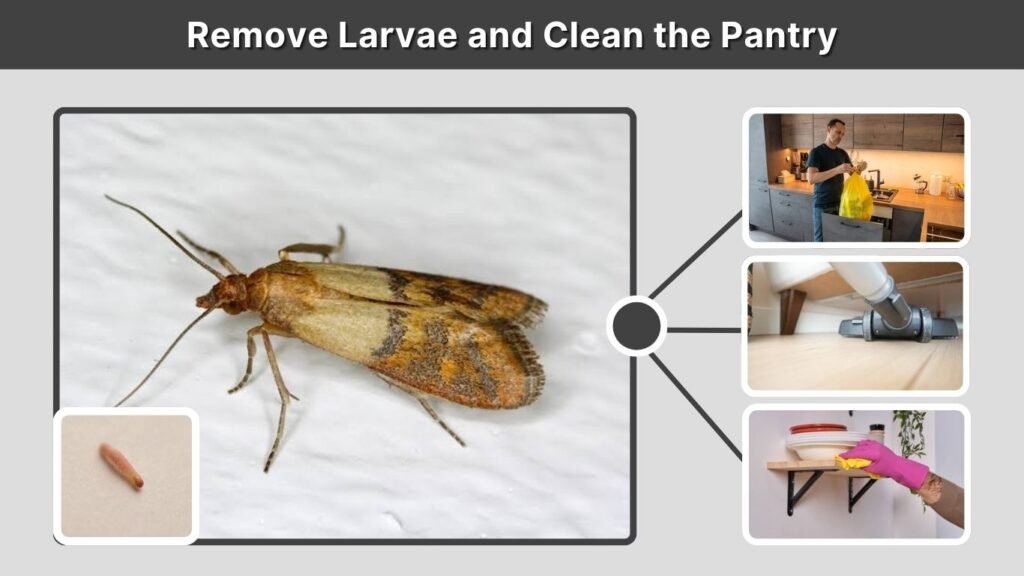
The most effective cleanup removes both insects and the food supporting them. Start with a complete inspection rather than treating only the shelf where larvae appeared. Keep suspect packages separate from supplies that look unaffected. Work from one cupboard to the next, checking containers individually, so you do not accidentally return an infested item to a freshly cleaned storage area.
Follow These Cleanup Steps
- Empty affected cupboards. Remove food, shelf liners, and loose packaging so corners are accessible.
- Inspect every susceptible product. Look inside boxes and around bag folds, including unopened packages.
- Discard infested food. Bag products containing larvae or webbing and take the rubbish outside.
- Vacuum cracks and joints. Target shelf supports, corners, and visible silk shelters. Empty the vacuum promptly.
- Wash shelves with soapy water. Remove food residue and dry surfaces before restocking.
- Secure retained groceries. Use clean, rigid containers with tight lids.
Freeze Suspect Food That Appears Unaffected
For small packages without visible infestation, freezing provides an additional precaution. Keep them at 0°F (−18°C) for at least one week; divide bulky quantities into smaller portions so they cool thoroughly. Freezing kills insects but does not remove droppings, silk, or existing spoilage. Discard visibly contaminated products.
Remove Larvae on Ceilings, Eggs, and Cocoons
Pantry moth larvae often leave food when they are ready to pupate. This explains why caterpillars appear above cupboards, along walls, or in ceiling corners. Removing those insects helps, but the original food source still needs attention. Treat the pantry and nearby hiding places as connected parts of the same inspection, rather than assuming each location represents a separate infestation.
Clean Walls and Ceiling Corners
Use a vacuum extension to collect reachable larvae and cocoons. Wipe accessible surfaces afterward. Check cupboard tops, shelf undersides, nearby drawers, and folds in stored paper products. Avoid balancing on chairs to reach high corners.
Deal With Hidden Eggs
Eggs are tiny and easily missed. Removing affected food, vacuuming crevices, and cleaning surfaces is more practical than trying to spot every egg. What looks like a pantry moth “nest” is usually webbed food or a silken cocoon.
Understand Traps, Sprays, and Home Remedies
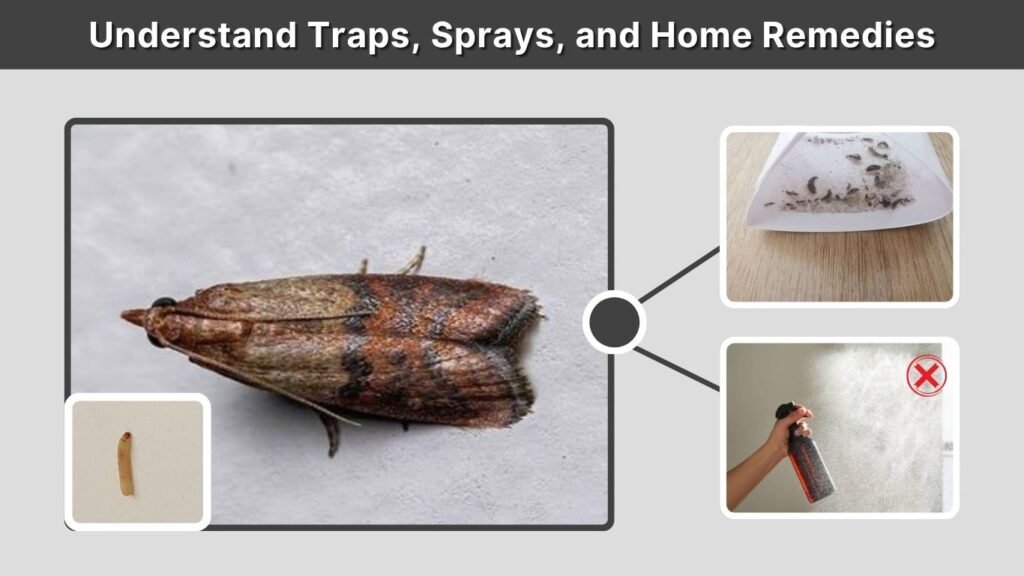
Products advertised for moth control do not all target the same insect or life stage. Some capture flying adults, while others are intended for clothing pests. Before buying anything, identify what remains after your cleanup. Continued larvae inside food call for another inspection. A scented cupboard or a crowded sticky trap does not demonstrate that the breeding source is gone.
Will Pantry Moth Traps Remove Larvae?
Common pheromone traps attract adult male moths, not eggs or caterpillars. Use traps labeled for pantry moths to monitor activity, following placement and replacement instructions. They supplement food removal and cleaning; they cannot substitute for them.
Should You Use Sprays or Mothballs?
Routine insecticide spraying is not recommended in food cupboards. It cannot reliably reach insects inside packages and risks contaminating groceries. Never use mothballs around food. Bay leaves are not a proven solution, either.
Prevent Another Pantry Moth Infestation
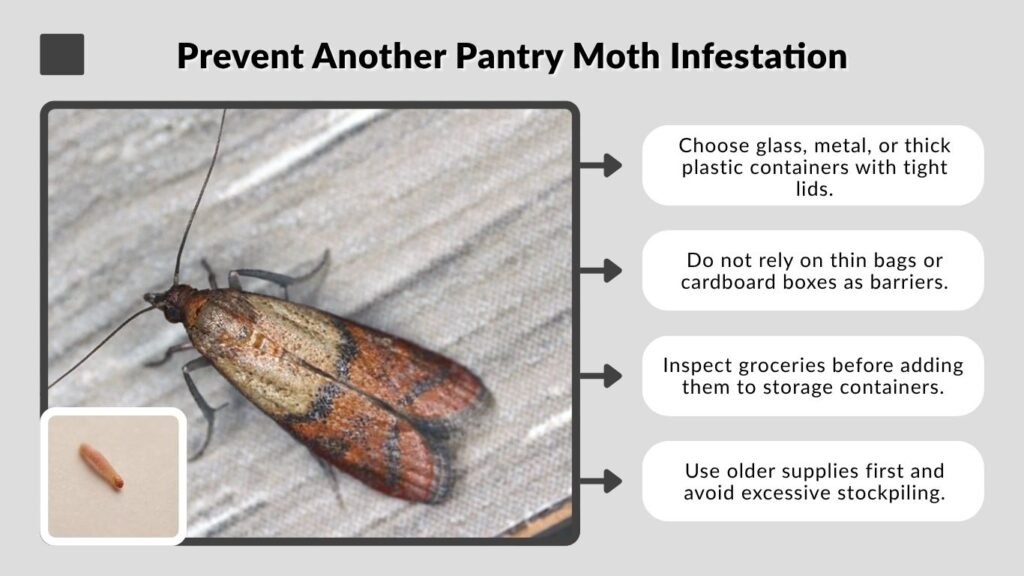
Once affected food is gone, storage habits determine how easily surviving or newly introduced insects can reach fresh supplies. Cleanliness helps, but an infested purchase can enter even a carefully maintained kitchen. Build prevention around inspecting new groceries, limiting long storage periods, and using containers that close securely. Include pet supplies in this routine because they are easy to overlook.
Habits That Protect Stored Food
- Choose glass, metal, or thick plastic containers with tight lids.
- Do not rely on thin bags or cardboard boxes as barriers.
- Inspect groceries before adding them to storage containers.
- Use older supplies first and avoid excessive stockpiling.
- Clean spilled flour, cereal, and pet food promptly.
- Wash and dry empty containers before refilling them.
Keep infrequently used, suitable dry products in the freezer when practical.
Check Whether the Treatment Is Working
A clean pantry may still produce an occasional adult moth because hidden pupae can finish developing after food removal. This does not automatically mean your entire cleanup failed. Watch for fresh evidence rather than relying on one sighting. New webbing or larvae inside groceries deserves immediate attention, while trap records can help you judge whether adult activity is gradually declining.
When to Inspect Again
Adult Indianmeal moths may appear for up to about three weeks after affected food is discarded. Continued sightings beyond that point warrant another search for missed sources. If repeated inspections fail, a pest professional can help locate concealed activity.
FAQs
Pantry moth problems can be confusing because eggs, feeding larvae, cocoons, and flying adults occur in different places. Successful removal depends on addressing these stages together. The following answers cover common concerns about contaminated food, unopened packages, and insects that seem to return. Use them alongside a thorough inspection, not as a reason to skip checking the remaining stored groceries.
1. What Is the Fastest Way to Remove Pantry Moth Larvae?
Discard the infested food and vacuum visible larvae, cocoons, and cupboard crevices. Removing their food source is more effective than repeatedly killing isolated caterpillars.
2. Can You Get Sick From Eating Pantry Moth Larvae?
Accidentally swallowing small insects often causes no symptoms, but allergic reactions can occur, particularly with shellfish allergies. Discard contaminated food. Seek urgent help for breathing difficulty or throat swelling, and medical advice for persistent symptoms.
3. Must You Throw Away Everything in the Pantry?
No. Discard infested products and inspect the rest carefully. Clean, unaffected food can be retained in secure containers; unopened packaging alone does not prove it is unaffected.
4. How Do Larvae Get Into Unopened Packages?
Products may arrive already infested. Larvae can also enter through packaging seams or chew through thin plastic and cardboard.
5. Will Pantry Moth Larvae Disappear Without Treatment?
Do not rely on it. If suitable food remains accessible, surviving insects can continue developing and reproducing. Locate the source, remove contamination, and protect fresh supplies.
