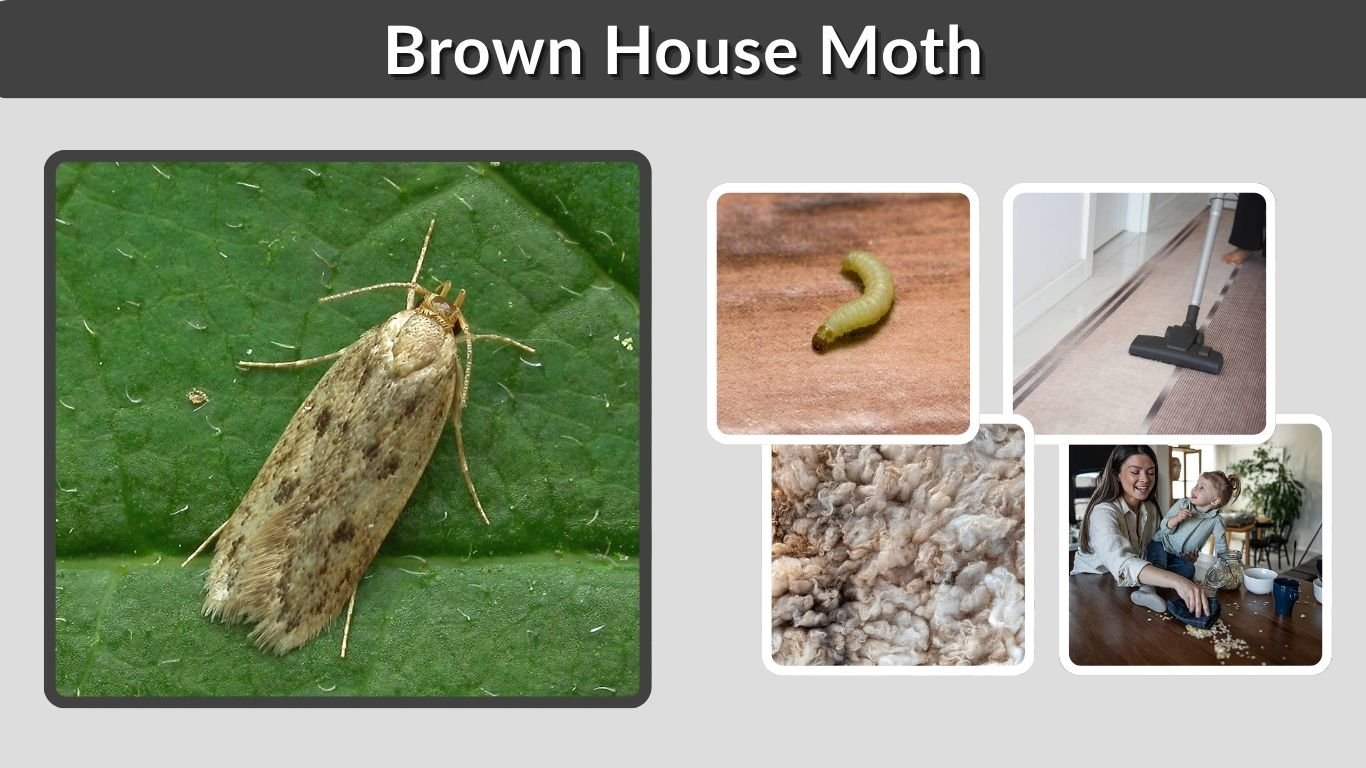
The brown house moth is a small, brown insect that may appear on indoor walls, around stored belongings, or near neglected corners. Although adults attract attention, their caterpillars cause any feeding damage. These larvae scavenge on various materials, including food residues and animal fibers, especially where conditions are damp. However, not every small brown moth indoors belongs to this species. This guide explains brown house moth identification, larvae, life cycle, clothing damage, traps, and practical ways to remove an infestation and prevent its return.
What Is a Brown House Moth?
The brown house moth’s scientific name is Hofmannophila pseudospretella. It is widespread in Britain and has been introduced to many other parts of the world.
Brown House Moth Identification
Look for these characteristics:
- Scientific name: Hofmannophila pseudospretella
- Wingspan: Approximately 15–26 mm
- Wing color: Brown or bronze-brown with darker spots
- Resting position: Wings folded along the body
- Larvae: Creamy-white caterpillars with brown heads
- Season: Adults can occur year-round, especially in summer
The wingspan is measured across the spread wings, not along the body. Adults are often noticed on indoor walls around dusk.
Brown House Moth vs. Clothes Moth
The common webbing clothes moth is generally smaller and more uniformly golden. Brown house moths have darker, more noticeably mottled wings.
White-shouldered house moths have a contrasting white head and shoulders. Pantry moths can also appear brown, so color alone cannot identify the insect or reveal what its larvae are eating.
Photograph the moth and examine nearby materials before choosing treatment.
Brown House Moth Larvae and Life Cycle
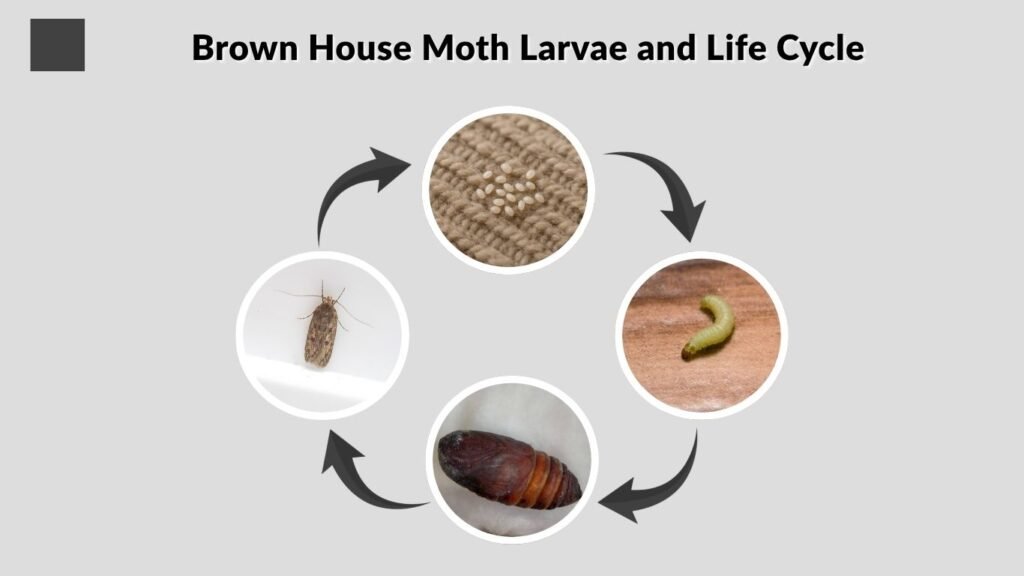
Brown house moths develop through four stages: egg, larva, pupa, and adult. The entire process takes several months, with development influenced by environmental conditions.
Eggs and Caterpillars
Females place eggs on or near material suitable for their offspring. The newly hatched caterpillars feed and grow in concealed locations.
Brown house moth larvae are pale, with brown head capsules and small dark speckles. Their appearance differs from the adult’s brown wings. A “baby moth” is a caterpillar, not a miniature flying moth.
Cocoons and Adult Moths
When development is complete, the caterpillar spins a silken cocoon and pupates. An adult moth eventually emerges to reproduce.
The cocoon is the protective silk covering; the pupa is the developing insect inside it. Removing adult moths alone does not address eggs, feeding larvae, or pupae concealed elsewhere.
What Do Brown House Moths Eat?
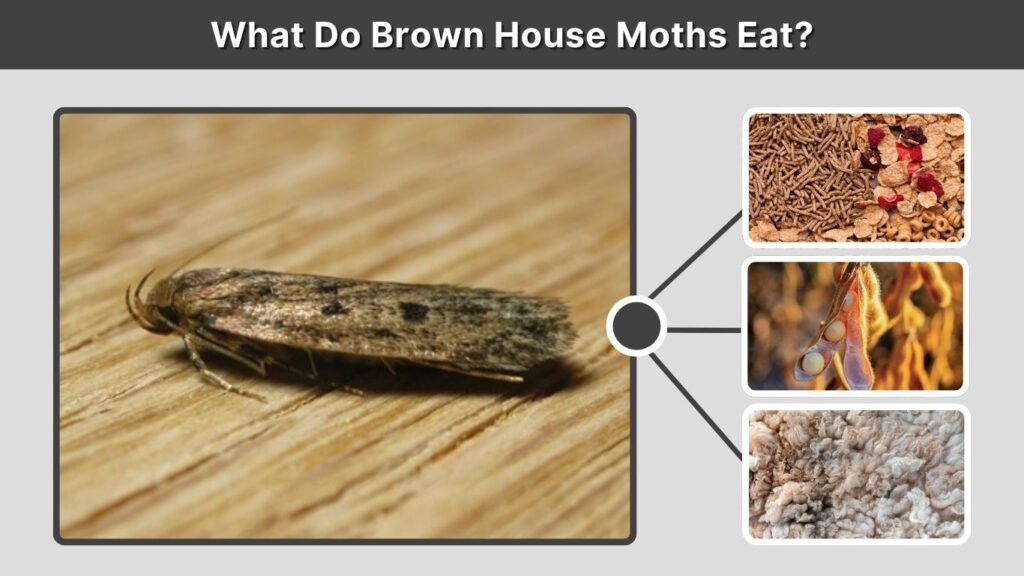
Brown house moth larvae are scavengers rather than exclusive clothing feeders. Their varied diet means an infestation can originate somewhere other than a wardrobe.
Common Food Sources
Potential larval food includes:
- Cereal and dried-food residues
- Seeds and other plant debris
- Wool, hair, fur, and feathers
- Animal remains and nesting debris
- Some animal-based upholstery materials
Their broad feeding habits explain why checking both stored belongings and accumulated household debris is important.
Do Brown House Moths Eat Clothes?
Yes, larvae can damage animal-based textiles, but damage is particularly associated with damp, dirty storage conditions. Clean, dry clothing is not automatically at risk simply because an adult moth appears nearby.
Inspect neglected woolens, stored blankets, and furnishings for feeding damage. Brown house moths should not be confused with the principal clothes-moth species, which are more specialized textile pests.
Where Do Brown House Moths Come From?
These moths occur both indoors and outdoors. Inside buildings, larvae can exploit debris in places that receive little cleaning or disturbance.
Why Are There Small Brown Moths in My House?
A moth may enter from outside, while repeated sightings can indicate development within the building. Brown house moth larvae feed on material accumulating behind skirting boards and in similar concealed locations.
Check seldom-used cupboards, carpet edges, and stored belongings. Finding moths does not mean the entire home is dirty; a small, hidden source may be enough.
Signs of a Brown House Moth Infestation
Possible warning signs include:
- Repeated sightings of similar adult moths
- Pale caterpillars near stored materials
- Silken cocoons or webbing
- Fresh damage to susceptible textiles
- Larvae or debris in stored food
These signs are not exclusive to brown house moths. Identification matters because several household pests produce similar evidence.
How to Get Rid of Brown House Moths
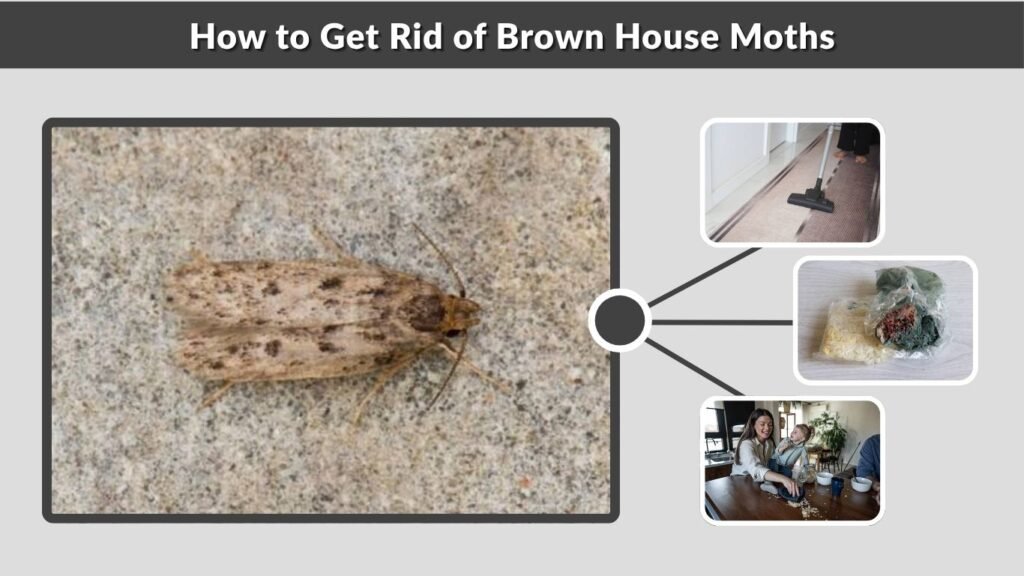
Effective brown house moth control combines identification, source removal, cleaning, and monitoring. Killing visible adults is only one small part of the process.
Find and Remove the Feeding Source
Inspect the room where moths appear, then check adjoining storage areas. Examine food residues, textiles, accumulated hair, feathers, and old nesting debris.
If moth activity seems connected to a chimney or roof space, arrange an appropriate inspection. Do not disturb active bird nests or bat roosts.
Vacuum Thoroughly and Clean Textiles
Vacuum along skirting boards, beneath furniture, around carpet edges, and inside emptied cupboards. Dispose of the collected material promptly in a sealed waste bag.
Bag suspect textiles separately until assessed. Clean them according to their care labels, and tell a professional cleaner about the infestation when seeking treatment for delicate items.
Deal With Contaminated Food
Discard infested food in sealed packaging. Inspect adjacent products, including pet food and birdseed, and vacuum cupboard cracks.
Store unaffected supplies in tightly closed glass, metal, or sturdy plastic containers. Spraying around packages will not eliminate insects protected inside them.
Reduce Moisture and Improve Storage
Repair leaks, improve ventilation, and dry damp storage areas. Store susceptible textiles only when clean, dry, and free from insects.
Long-term prevention includes:
- Cleaning concealed corners regularly
- Inspecting stored woolens and blankets
- Removing food spills promptly
- Keeping storage containers securely closed
Use Brown House Moth Traps Carefully
Pheromone traps are species-specific. A trap designed for webbing clothes moths or pantry moths should not automatically be expected to attract brown house moths.
Check whether the manufacturer explicitly lists Hofmannophila pseudospretella. Unbaited sticky monitors may catch passing insects, but traps do not remove hidden food sources or reliably eliminate every life stage.
Know When to Get Professional Help
Seek help if moth activity continues after thorough cleaning, the source is inaccessible, or valuable textiles are affected.
Ask for species identification before chemical treatment. Use pesticides only as their labels permit, and do not scatter mothballs around occupied rooms or spray food and clothing indiscriminately.
Brown Moth in the House Meaning
A moth sighting can invite both practical questions and personal interpretations. These are different ways of understanding the same encounter.
Spiritual Meaning and Symbolism
There is no single, universally accepted spiritual meaning for a brown moth entering a house. Individuals may attach personal significance to the event, but its appearance is not scientific evidence of an omen or prediction.
Practically, inspect the insect and its surroundings. One moth may be an accidental visitor; repeated activity warrants checking for a breeding source.
FAQs
These answers address common concerns about moth sightings and household damage.
Are Brown House Moths Dangerous?
They do not bite or sting people. The main concerns are larval damage and contamination of materials they infest.
How Long Do Brown House Moths Live?
The complete life cycle takes several months. That includes the immature stages and should not be confused with the lifespan of a winged adult.
Are All Tiny Brown Moths Brown House Moths?
No. Clothing moths, pantry moths, and outdoor species can also look brown. Wing markings, size, and evidence around the insect help distinguish them.
Can You Get Rid of Brown House Moths Naturally?
Source removal, thorough vacuuming, suitable textile cleaning, and moisture correction can resolve accessible infestations without routine insecticide use. Scented repellents alone are not a dependable solution.
Why Do Brown House Moths Keep Returning?
A feeding source may remain hidden, or adults may be emerging from existing pupae. Reinspect affected areas and obtain professional identification if sightings continue.