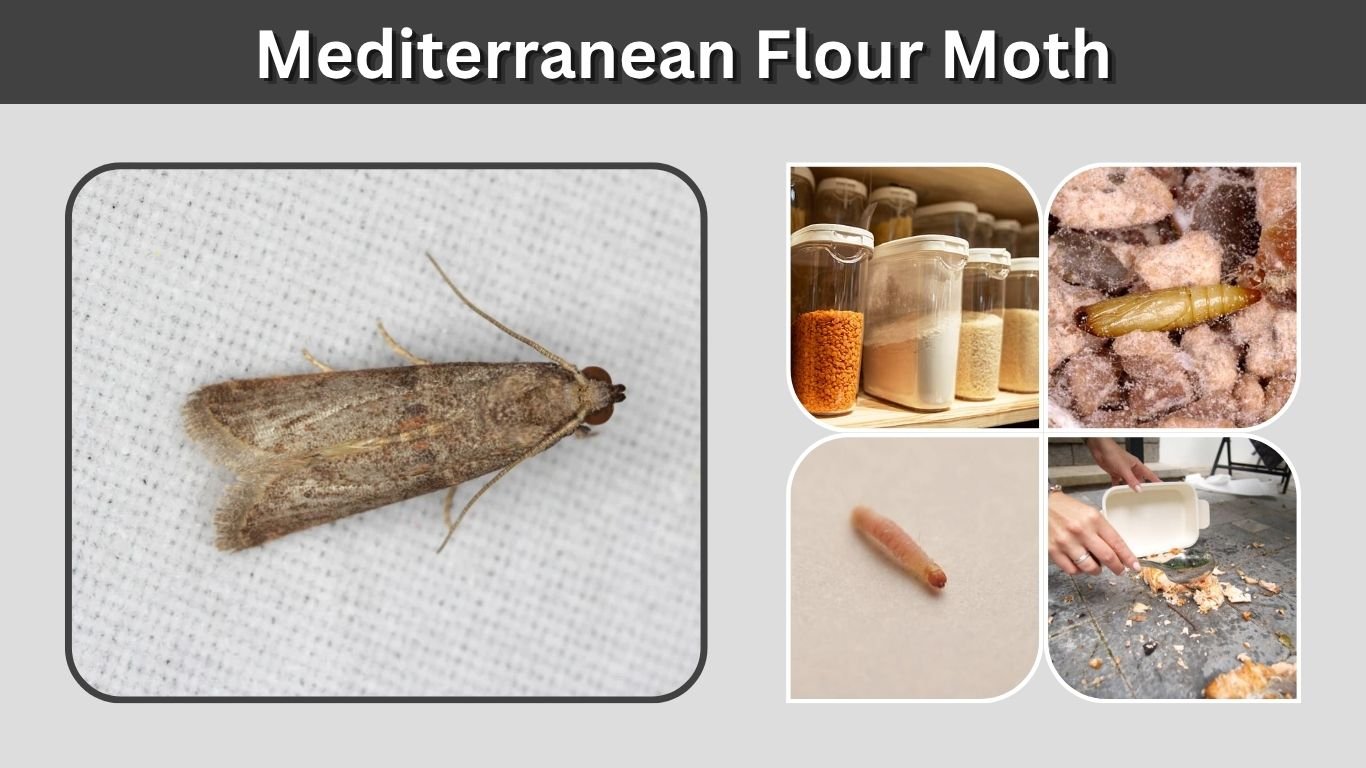
The Mediterranean flour moth is a worldwide stored-food pest commonly found in flour mills, bakeries, warehouses, and household pantries. Its larvae infest flour, cereal, bran, grains, nuts, seeds, chocolate, and pet food, binding products together with dense silk. Adult moths do not damage food, but their presence indicates that larvae may be developing nearby. Successful control requires finding and discarding infested products, vacuuming hidden food debris, removing cocoons, and storing vulnerable foods in strong, airtight containers.
What Is a Mediterranean Flour Moth?
The Mediterranean flour moth is a pantry moth in the family Pyralidae. Despite its name, it is no longer restricted to the Mediterranean region. International trade in flour and grain has carried it worldwide, and heated buildings allow populations to survive in areas with cold winters.
Scientific Classification
The Mediterranean flour moth is classified as:
- Scientific name: Ephestia kuehniella
- Alternative name: Anagasta kuehniella
- Family: Pyralidae
- Order: Lepidoptera
- Other common name: Mill moth
- Norwegian name: Melmøll
It is particularly important in flour-processing facilities because larval silk can clog machinery, contaminate products, and interrupt production.
What Does It Look Like?
Adult Mediterranean flour moths have:
- A body approximately 3/8 to 1/2 inch long
- A wingspan commonly approaching one inch
- Pale gray or grayish-brown forewings
- Dark, wavy or zigzag lines across the wings
- Dirty-white hindwings with fringed edges
- A raised head and thorax when resting
- An abdomen that slopes downward at rest
Adults are attracted to light and may be found around windows or lamps. Their distinctive resting posture can help separate them from other pantry moths. NC State Extension describes them as gray moths with black zigzag markings across the forewings.
Mediterranean Flour Moth Larvae
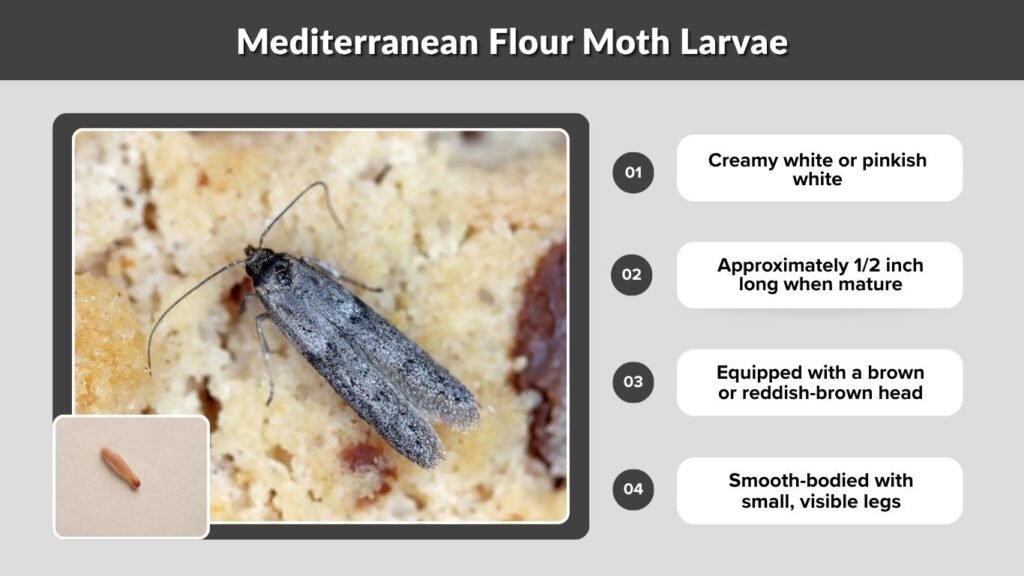
The larvae cause all meaningful food damage. Newly hatched caterpillars enter loose food materials and begin feeding while producing silken threads. As an infestation grows, flour and other fine products may become sticky, lumpy, and difficult to pour.
Larvae Identification
Mediterranean flour moth larvae are:
- Creamy white or pinkish white
- Approximately 1/2 inch long when mature
- Equipped with a brown or reddish-brown head
- Smooth-bodied with small, visible legs
- Sometimes tinted by the food they consume
- Commonly surrounded by silk and food particles
The larvae may be mistaken for Indian meal moth caterpillars. Finding adults, examining wing patterns, and considering the primary infested food can help confirm the species.
Signs of Larval Activity
Inspect stored food for:
- Silken threads across the surface
- Flour bound into sticky clumps
- Webbing inside package seams
- Caterpillars moving through food
- Cast skins and dark fecal particles
- Holes in thin plastic or cardboard
- Cocoons beneath shelves or in corners
- Adult gray moths flying nearby
Larvae can leave food packages when ready to pupate. Cocoons may therefore appear in wall-ceiling junctions, cupboard corners, drawer tracks, packaging folds, or underneath shelf liners.
Foods Mediterranean Flour Moths Infest
Flour and meal are their preferred foods, but larvae can survive in numerous dry plant-based products. Infestations often begin in a product that was already contaminated before purchase and then spread to other packages.
Commonly Infested Products
Check all of the following:
- Wheat flour and cornmeal
- Bran and breakfast cereal
- Cake and baking mixes
- Rice, oats, and processed grains
- Pasta and crackers
- Beans and dried peas
- Nuts and seeds
- Chocolate and cocoa
- Dried fruits
- Spices and tea
- Birdseed
- Dry dog and cat food
- Rodent and livestock feed
Even unopened packages require inspection. Pantry moth larvae can enter through imperfect seams and may chew through thin plastic bags or cardboard. The National Pesticide Information Center recommends transferring bulk foods into thick-walled glass or plastic containers.
Mediterranean Flour Moth Life Cycle
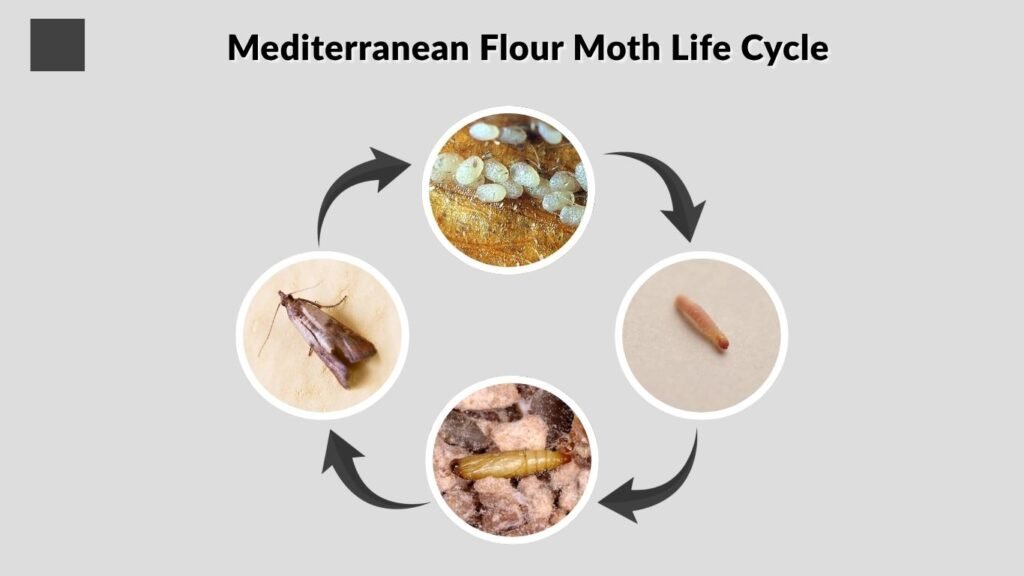
This moth undergoes complete metamorphosis through egg, larval, pupal, and adult stages. Temperature and food quality strongly influence development. Warm storage areas allow the moths to reproduce more rapidly and may support several overlapping generations annually.
Egg Stage
Females place hundreds of tiny eggs directly on or close to suitable food. Because the eggs are extremely small and pale, they are difficult to notice during a normal pantry inspection.
Under warm conditions, eggs can hatch within three to five days. The young larvae then spread into the food and begin producing silk.
Larval Stage
The larval stage causes contamination and economic damage. Caterpillars pass through several growth stages while feeding on flour, grain products, and other dry foods.
Their webbing collects food particles, cast skins, and waste. In mills, heavy webbing can obstruct screens and transport equipment. Household infestations produce clumped food and silk-covered package surfaces.
Pupal and Adult Stages
Mature larvae frequently leave the food to find a protected pupation site. They spin silken cocoons inside cracks, beneath shelves, behind equipment, or around packaging.
Adults emerge, mate, and begin another generation. Development commonly takes around eight to ten weeks, although favorable warmth can shorten it. Adults do not cause food damage, but they disperse and reproduce.
Mediterranean Flour Moth vs. Indian Meal Moth
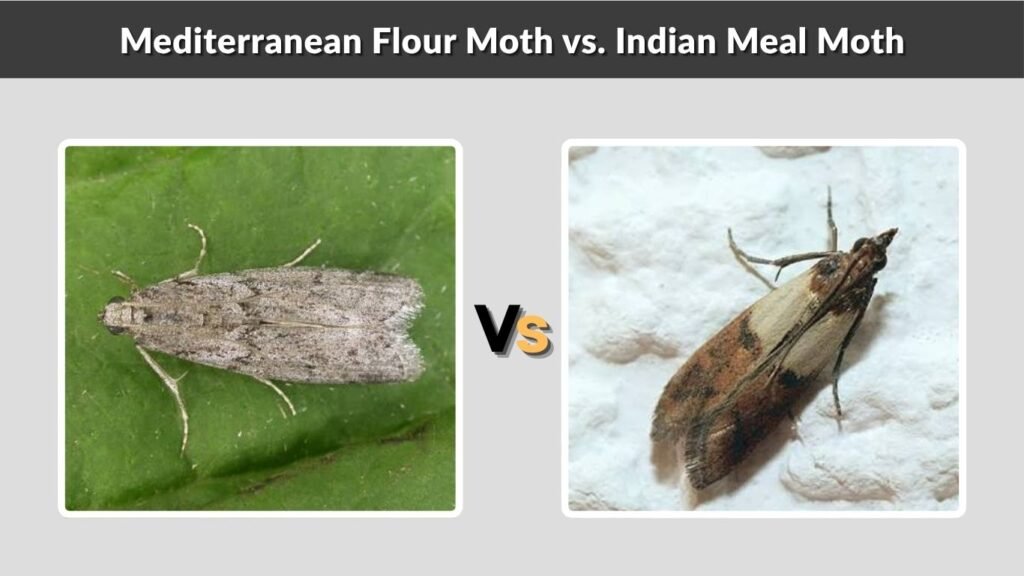
Both species infest stored foods and produce silk, but their adult wing patterns differ noticeably. The Indian meal moth is more common in household pantries, while the Mediterranean flour moth has a particularly strong association with flour and milling facilities.
| Feature | Mediterranean Flour Moth | Indian Meal Moth |
| Scientific name | Ephestia kuehniella | Plodia interpunctella |
| Adult color | Pale gray with dark wavy lines | Pale near the head and coppery toward the wing tips |
| Wingspan | Commonly close to one inch | Usually about 5/8 to 3/4 inch |
| Resting position | Front raised and abdomen sloping | Wings held closely over the body |
| Preferred foods | Flour, meal, bran, and cereals | Grains, nuts, dried fruit, seeds, and pet food |
| Larval damage | Heavy webbing and clumped flour | Webbing throughout many pantry products |
Control methods are broadly similar. In both cases, the infested product must be located and removed.
Do Mediterranean Flour Moths Bite?
Mediterranean flour moths do not bite or sting people or pets. Adult moths are harmless, and the larvae are not parasites of humans. They are food-contamination pests rather than biting insects.
Are They Dangerous?
The moths are not poisonous, but infested food should be discarded because it may contain:
- Larvae and eggs
- Silk and cocoons
- Shed skins
- Fecal material
- Dead insects
- Mold or other secondary contamination
Accidentally consuming a small amount of infested food is unlikely to cause serious poisoning. However, people with insect or dust sensitivities may react to scales, fragments, or contaminated flour. Seek medical advice for persistent or severe symptoms.
How to Get Rid of Mediterranean Flour Moths
Spraying adult moths will not eliminate an infestation hidden inside food. Control must focus on locating every contaminated product and removing eggs, larvae, pupae, and food debris from storage areas.
Step-by-Step Control
- Empty the entire pantry or affected cupboard.
- Inspect every dry food package under bright light.
- Look closely at folds, seams, corners, and lids.
- Discard products containing larvae, webbing, or clumps.
- Seal infested food in a bag before taking it outside.
- Vacuum shelves, cracks, screw holes, and drawer tracks.
- Remove cocoons from walls and ceiling edges.
- Wash surfaces with warm water and dish soap.
- Allow the area to dry completely.
- Place safe foods in airtight glass or heavy plastic containers.
- Monitor the area for several weeks.
Check unusual materials such as birdseed, pet treats, decorative corn, dried flowers, and grain-filled heating pads. One forgotten package can maintain the infestation.
Can Infested Food Be Saved?
Discard any food with visible larvae, silk, unusual odors, mold, or extensive contamination. A slightly suspicious but otherwise intact product may be frozen for at least one week to kill hidden stages, but this does not remove insect remains or waste.
For most low-cost foods, disposal is the safer and more practical choice.
Do Pheromone Traps Work?
Pheromone traps attract and capture male moths. They are useful for:
- Confirming moth activity
- Locating the most affected area
- Monitoring after cleaning
- Detecting a recurring infestation
Traps cannot remove eggs or larvae and should not replace food inspection and sanitation. Use a lure labeled for the target pantry moth, since not every moth responds equally to the same pheromone.
Should You Use Insecticide?
Household insecticides are rarely necessary inside a pantry. Never spray food, dishes, preparation surfaces, or package interiors. Mothballs should not be used openly around food because their vapors can expose people and pets.
Commercial mills or warehouses may require professional monitoring, sanitation, heat treatment, targeted insecticides, or other integrated pest-management measures.
How to Prevent Mediterranean Flour Moths
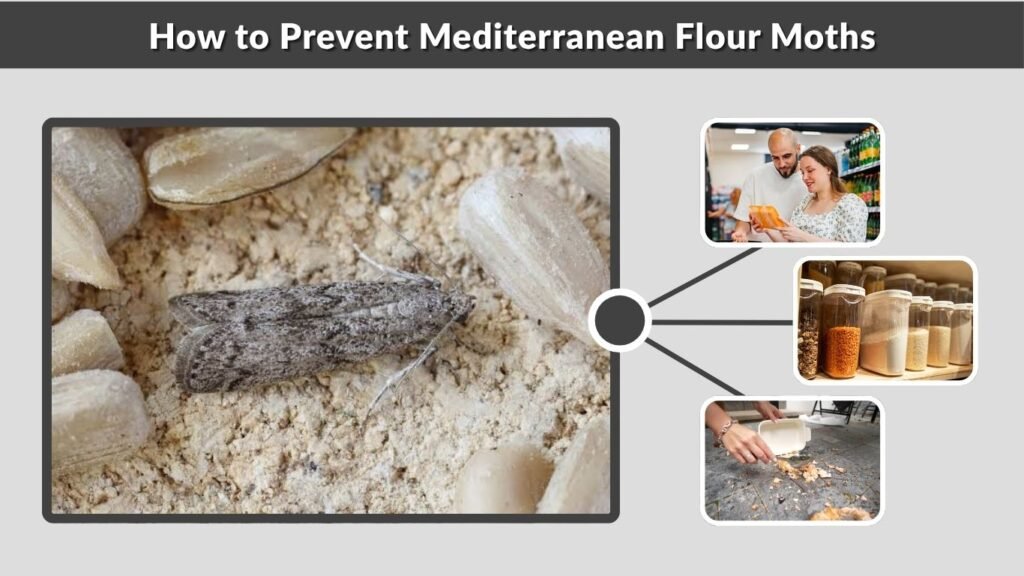
Prevention limits the opportunity for larvae to enter food and move between packages. Routine inspection is particularly important when buying bulk flour, grain, birdseed, or animal feed.
Prevention Tips
- Inspect packages before purchase.
- Avoid products with damaged seals or webbing.
- Buy only the quantity you can use promptly.
- Store flour and grains in airtight containers.
- Refrigerate or freeze infrequently used flour.
- Clean food spills immediately.
- Rotate older products to the front.
- Wash containers before refilling them.
- Keep pet food and birdseed away from the pantry.
- Vacuum cupboard cracks periodically.
FAQs
Where do Mediterranean flour moths come from?
They usually enter homes inside contaminated flour, grain, cereal, pet food, or another packaged product. Adults may then spread to nearby foods.
How long does their life cycle take?
Development commonly requires about eight to ten weeks, but warm temperatures and favorable food can shorten the cycle.
Can Mediterranean flour moths infest unopened food?
Yes. Larvae may enter through small packaging gaps or chew through thin plastic and cardboard. Airtight glass or sturdy plastic containers offer better protection.
Why are moths still appearing after cleaning?
Hidden cocoons may continue producing adults, or one infested package may have been overlooked. Continue inspecting and monitoring for several weeks.
When should I call pest control?
Professional assistance may be necessary when moths persist despite complete food removal and cleaning, or when the infestation involves a bakery, mill, warehouse, or inaccessible structural area.