
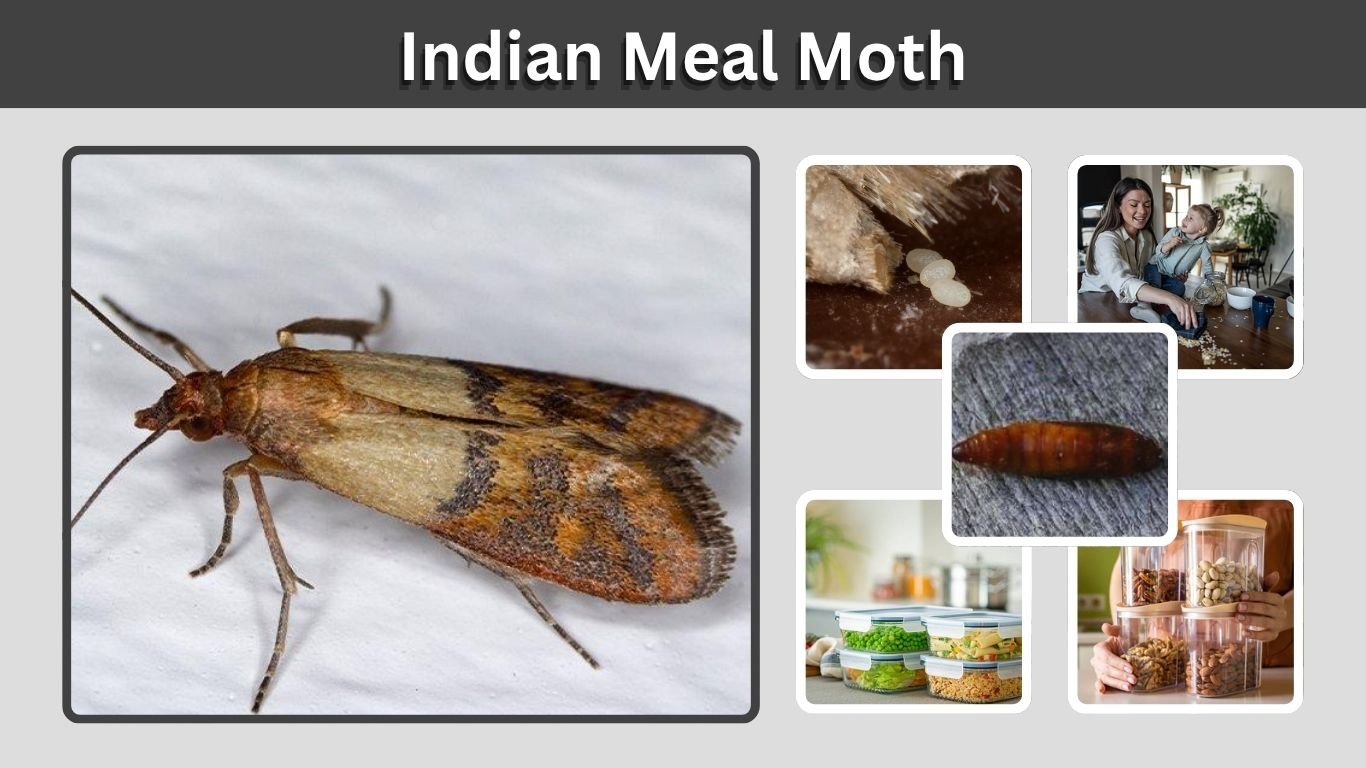
The Indian meal moth (Plodia interpunctella) is one of the most common pantry pests worldwide. Its larvae infest rice, flour, cereal, nuts, spices, dried fruit, chocolate, birdseed, and dry pet food, contaminating products with silk, waste, and shed skins. Adult moths are harmless, but their presence usually indicates that larvae are developing in a hidden food source. Successful control depends on finding and removing every infested package, cleaning cracks where caterpillars pupate, and storing replacement food in tightly sealed containers.
What Is an Indian Meal Moth?
The Indian meal moth belongs to the family Pyralidae. It is commonly called a pantry moth, grain moth, or meal moth. Its name does not refer to India; it originated from the moth’s historical association with a meal made from “Indian corn,” meaning maize.
Adult Identification
Adult Indian meal moths have:
- A body approximately 8–12 mm long
- A wingspan of about 16–20 mm
- Grey or tan coloring on the inner third of each forewing
- Coppery-red or reddish-brown outer wing sections
- Wings held roof-like over the body while resting
- A grey head and thorax
- Weak, zigzagging flight around kitchens and pantries
The sharply divided two-tone forewings are the most useful identifying feature. Adults often rest on walls, cabinet doors, or ceilings during the day and become more active after dark.
Indian Meal Moth Larvae
The larva is the damaging stage. A mature caterpillar is approximately 12–13 mm long and usually cream or off-white with a distinct brown head. Its body can appear pink, green, or yellow depending on the food it has consumed.
Larvae have three pairs of small legs near the head and additional fleshy prolegs along the abdomen. As they crawl and feed, they produce silken threads that collect food particles, waste, and shed skins.
Larva vs. Maggot
Indian meal moth larvae are frequently called worms or maggots, but they are caterpillars.
| Feature | Meal Moth Larva | Fly Maggot |
| Head | Distinct brown head capsule | No obvious hardened head |
| Legs | Small legs and abdominal prolegs | Legless |
| Body | Cream, pink, green, or yellow | Usually white or cream |
| Silk | Produces webbing | Does not produce silk |
| Food | Dry stored products | Often moist or decaying material |
| Movement | Crawls across walls and ceilings | Writhes without visible legs |
Finding silk webbing in dry food strongly suggests a pantry moth rather than a fly maggot.
Signs of an Indian Meal Moth Infestation
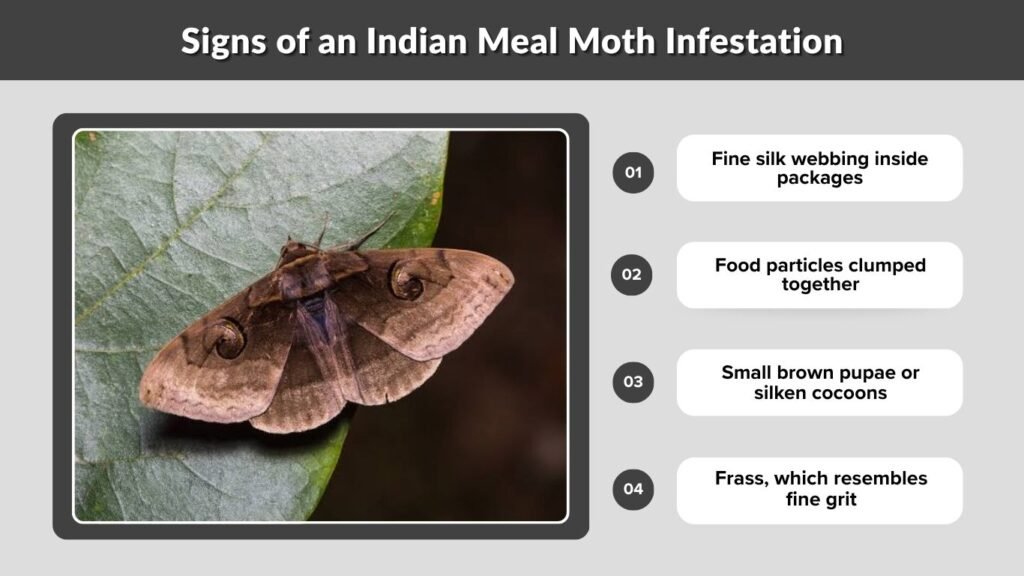
Adult moths may be the first sign, but the source is always food that supports larval development. A single forgotten package can sustain moths for months and spread them throughout nearby cupboards.
Common Infestation Signs
Look for:
- Fine silk webbing inside packages
- Food particles clumped together
- Cream-colored caterpillars with brown heads
- Small brown pupae or silken cocoons
- Cast larval skins
- Frass, which resembles fine grit
- Holes in paper, cardboard, or thin plastic packaging
- Moths flying around the pantry
- Larvae crawling on walls or ceilings
Inspect products even when their packages appear unopened. Tiny larvae can enter through seams, folds, damaged seals, and extremely small gaps.
Food Sources
Indian meal moth larvae can infest:
- Rice and other grains
- Flour, cornmeal, and baking mixes
- Breakfast cereal
- Pasta and dried noodles
- Nuts and seeds
- Dried fruit and vegetables
- Chocolate and cocoa
- Cookies and crackers
- Spices and dried herbs
- Powdered milk
- Tea and herbal products
- Dry dog and cat food
- Birdseed and livestock feed
- Dried decorative plants
- Rodent and other small-animal food
Older products stored at the back of a cabinet are common sources. Birdseed, bulk nuts, pet treats, and partially used bags of dry pet food are frequently overlooked.
Why Are Larvae on the Ceiling?
Mature larvae leave the infested food and travel in search of protected places to pupate. They may crawl considerable distances and appear in bedrooms, bathrooms, hallways, or rooms far from the pantry.
Cocoons may be hidden:
- Along ceiling edges
- Behind cabinets
- Under shelf liners
- Inside shelf-support holes
- Beneath can rims
- Around door hinges
- Behind wall decorations
- In folded cardboard
- Between walls and cabinets
A ceiling larva does not mean it has been feeding on paint or plaster. It almost certainly developed in a dry food product elsewhere.
Indian Meal Moth Eggs, Cocoons and Life Cycle
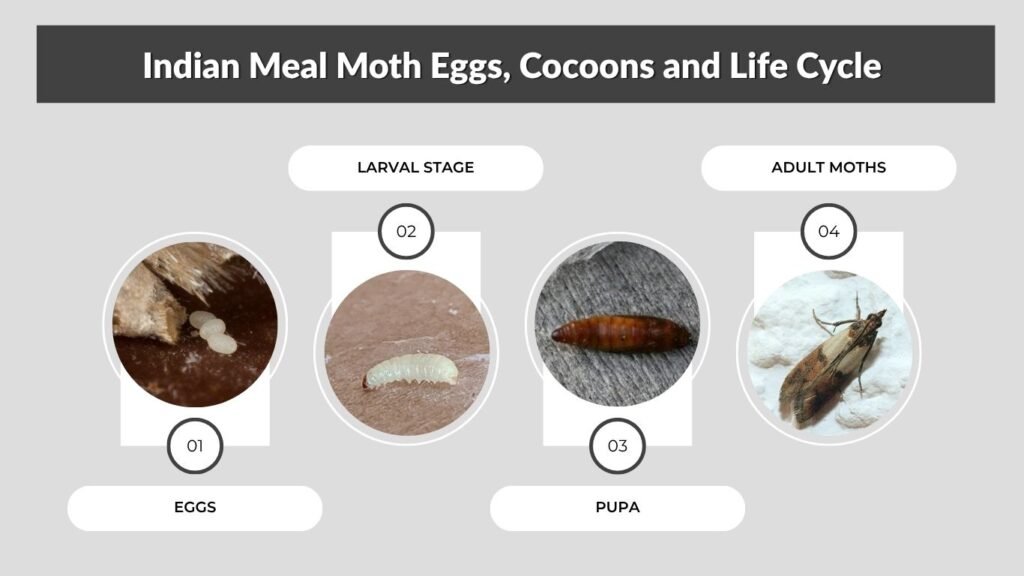
Indian meal moths undergo complete metamorphosis through egg, larva, pupa, and adult stages. Warm indoor conditions allow them to reproduce throughout the year.
Eggs
A female may lay approximately 100–300 tiny grey-white eggs directly on or near suitable food. Each egg is less than half a millimetre long and difficult to see without magnification.
Eggs may hatch within several days under warm conditions. Newly hatched larvae are small enough to enter packages through gaps that an adult moth could not access.
Larval Stage
Larvae feed for several weeks and pass through multiple growth stages. They contaminate more food than they consume because their silk binds together food particles, frass, and shed skins.
Development slows significantly in cool conditions. This is one reason an apparently inactive infestation can become noticeable when temperatures rise.
Cocoon and Pupa
A mature larva may pupate inside a thin silk cocoon or remain partly exposed in a sheltered crack. The pupa is approximately 6–11 mm long and changes from pale tan to darker brown as the adult develops.
Pupation commonly occurs away from food. Removing the original package may therefore fail to eliminate caterpillars and pupae already hidden around the room.
Adult and Total Lifespan
Adults generally live for one to two weeks and do not feed. Their primary activities are mating and laying eggs.
The complete life cycle may be finished in approximately four to eight weeks under favorable warm conditions. Cooler temperatures or poor food can extend development for several months.
Are Indian Meal Moths Dangerous?
Indian meal moths do not bite, sting, or attack people. They are not considered a major disease-carrying pest. However, food containing larvae, webbing, insect waste, or shed skins should not be eaten.
What If Larvae Are Accidentally Eaten?
Accidentally swallowing a small larva is unlikely to cause serious harm in most healthy people. Nevertheless, contaminated food may be stale, spoiled, or affected by other microorganisms. Insect material may also trigger symptoms in someone with a relevant allergy.
Discard the product. Contact a medical professional if ingestion is followed by persistent vomiting, breathing difficulty, facial swelling, or another concerning reaction.
Are Larvae Harmful to Dogs?
Indian meal moth larvae are not generally considered directly poisonous to dogs. However, infested dog food should still be discarded because its freshness, nutritional quality, and microbial safety can no longer be guaranteed.
If a dog develops vomiting, diarrhea, lethargy, appetite loss, or abdominal discomfort after eating contaminated food, contact a veterinarian.
How to Get Rid of Indian Meal Moths
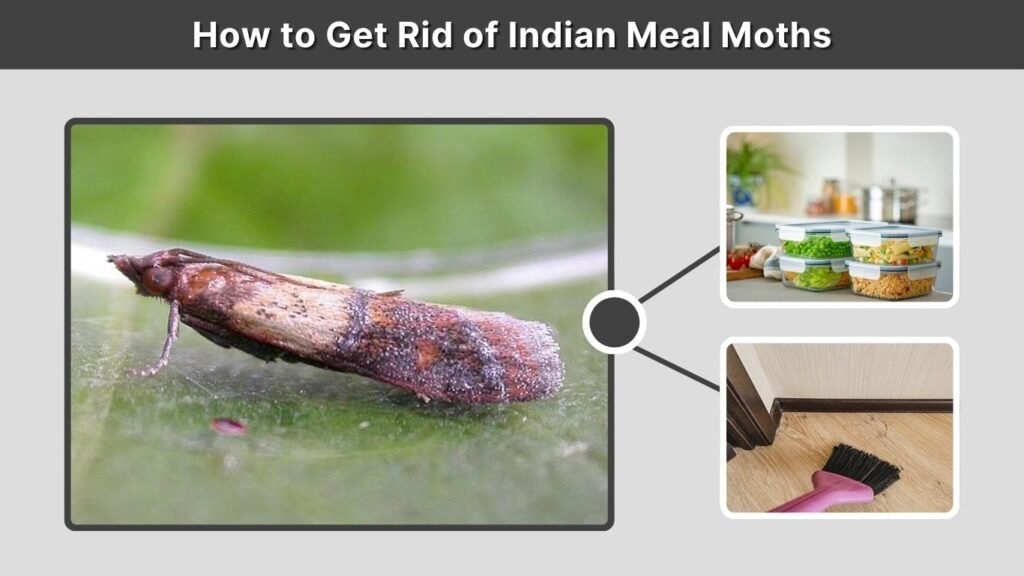
Eliminating the infestation requires removing its food source. Killing visible adults alone will not affect eggs and larvae hidden inside packages.
Step 1: Inspect Every Dry Product
Remove everything from the pantry and inspect each package under bright light. Check folds, seams, lids, cardboard edges, and the food itself for webbing, larvae, holes, or clumping.
Do not overlook unopened products, spices, pet food, birdseed, decorative seed arrangements, or food stored in other rooms.
Step 2: Discard Infested Food
Seal affected packages inside a strong plastic bag and place them in an outdoor rubbish container. Do not leave the bag in an indoor bin, garage, or utility room where adults could emerge.
When infestation is extensive, discarding all vulnerable opened packages may be faster and more reliable than inspecting them individually.
Step 3: Treat Questionable Products
Food without visible infestation can be placed in a freezer for several days to kill hidden eggs and larvae. Colorado State University Extension recommends freezing vulnerable packages for several days or applying carefully controlled heat where suitable.
Freezing is generally safer for grains, nuts, spices, and pet food than attempting to heat them. Do not keep a product that smells stale, shows moisture damage, or contains mold.
Step 4: Clean the Pantry Thoroughly
Vacuum:
- Shelf corners and seams
- Screw and shelf-support holes
- Door hinges
- The undersides of shelves
- Cabinet edges
- Baseboards
- Wall and ceiling corners
- Gaps around nearby appliances
Immediately seal and discard the vacuum contents outdoors. Wash hard surfaces with warm, soapy water after vacuuming. Cleaning removes food dust and webbing, but it cannot replace removal of the infested products.
Step 5: Use Airtight Containers
Store vulnerable food in glass, metal, or thick plastic containers with tightly fitting lids. Paper bags, cardboard boxes, and thin plastic packaging are not reliable barriers.
Keep large bags of birdseed and pet food away from the main pantry when possible. Wash and dry storage bins before pouring in a new bag; repeatedly topping up an old container can leave eggs and larvae at the bottom.
Indian Meal Moth Pheromone Traps
Pheromone traps release a chemical that imitates the scent of a female moth. Male moths fly toward the lure and become stuck on the adhesive surface.
What Traps Can and Cannot Do
Pheromone traps can:
- Confirm the presence of pantry moths
- Capture adult males
- Help identify active areas
- Monitor progress after cleaning
- Reveal whether moth activity continues
They do not capture eggs, larvae, pupae, or most females. Therefore, traps cannot eliminate an infestation without food inspection and sanitation. The National Pesticide Information Center describes pheromone traps primarily as monitoring tools.
Place traps near the suspected area but away from open windows and outside doors. Follow the product’s placement and replacement instructions, and avoid using excessive numbers of lures.
Sprays, Foggers and Home Remedies
Insecticide sprays are rarely necessary for a household Indian meal moth problem. They cannot penetrate sealed food packages, and applying pesticides near food creates an unnecessary contamination risk.
Should You Use a Moth Spray?
Do not spray:
- Food or pet food
- Cooking utensils
- Shelves holding exposed food
- Inside food containers
- Countertops used for preparation
- Children’s or pets’ feeding items
Never use a product unless its label specifically permits the intended location and application. Colorado State University Extension advises that household control is normally achieved without insecticides because removing food sources is more effective.
Do Foggers Work?
Foggers or bug bombs are poor choices for pantry moths. The aerosol may not reach larvae inside packages or pupae hidden in cracks. Foggers can also expose food-contact surfaces to pesticides and create fire, explosion, or inhalation hazards if misused.
Natural Repellents
Bay leaves, vinegar, peppermint, cedar, and essential oils are not reliable treatments for an established infestation. Vinegar or soap can help clean shelves, but neither will remove insects developing inside food.
The most effective pesticide-free approach is inspection, disposal, freezing, vacuuming, and airtight storage.
Indian Meal Moth vs. Other Moths
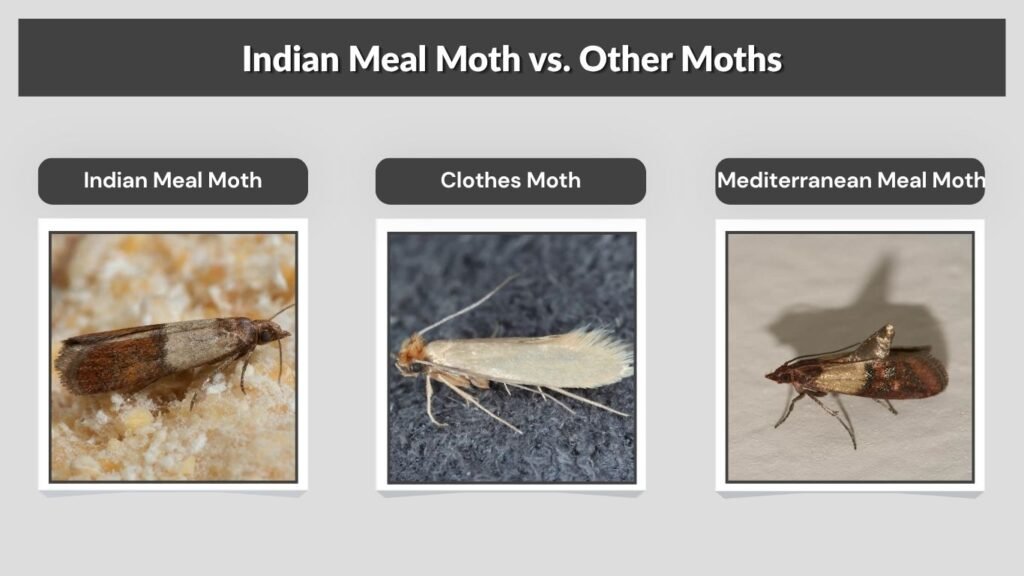
Correct identification prevents unnecessary treatment of clothing or furniture.
Indian Meal Moth vs. Clothes Moth
Clothes moths are usually uniform golden, cream, or buff-colored. Their larvae feed on animal-based fibers such as wool, fur, feathers, and silk.
Indian meal moths have two-tone grey and copper wings. Their larvae feed on dry foods and do not normally damage clean clothing. A pantry larva found in a bedroom has probably wandered there to pupate.
Indian Meal Moth vs. Mediterranean Meal Moth
Mediterranean meal moth adults are greyer and have dark wavy lines across their wings. Indian meal moths have clearly divided grey and copper-colored forewings.
Both infest stored grain products and create webbing, so the same basic sanitation and food-storage measures are useful.
Preventing Another Infestation
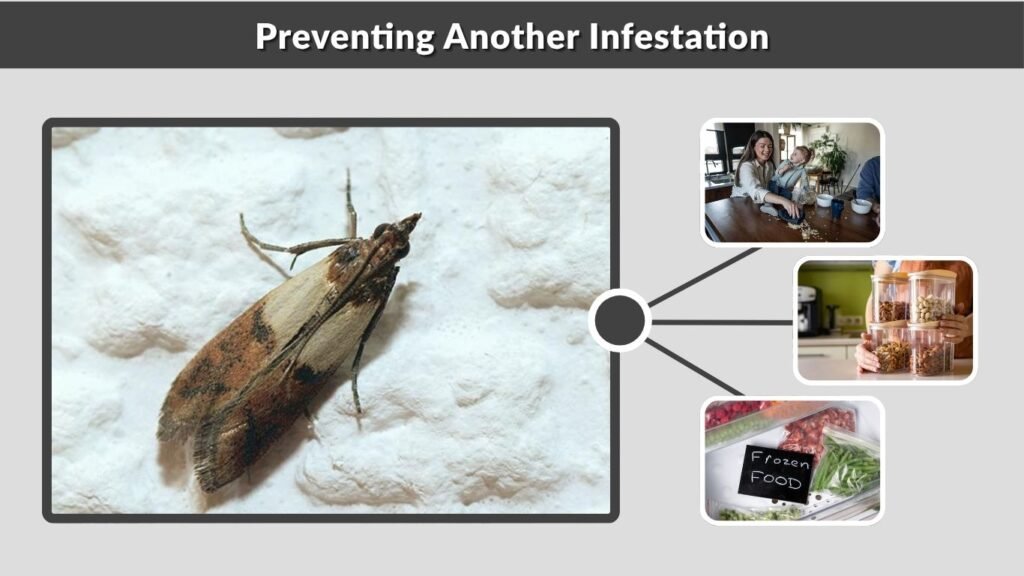
Prevention focuses on detecting contaminated products early and denying larvae access to stored food.
Prevention Checklist
- Inspect packages before buying them.
- Avoid products with holes, webbing, or damaged seals.
- Buy only quantities that will be used promptly.
- Rotate older products to the front.
- Clean food spills immediately.
- Store grains, nuts, and pet food in sealed containers.
- Keep pantry shelves dry.
- Freeze high-risk bulk products after purchase when practical.
- Monitor with a pheromone trap after a previous infestation.
- Inspect rarely used food every few weeks.
Continue monitoring for at least several weeks after cleanup. New adults may emerge from overlooked pupae, but moths appearing beyond three or four weeks usually indicate that a hidden food source remains.
FAQs
Do Indian meal moths eat clothes?
No. Their larvae feed on stored foods rather than wool or fabric. Mature larvae may crawl into closets or clothing folds only to find a protected pupation site.
Can Indian meal moths infest sealed packages?
They can enter packages through tiny seams, folds, punctures, or poorly fitted lids. They may also have been present before the package was purchased.
Do pheromone traps eliminate pantry moths?
No. They mainly capture males and are best used for detection and monitoring. Food-source removal is essential.
Why do Indian meal moths keep returning?
A forgotten source such as birdseed, spices, nuts, dry pet food, or a decorative seed item is usually responsible. Hidden pupae may also produce adults for several weeks after cleaning.
When should an exterminator be called?
Contact a licensed pest professional when moths continue appearing despite a complete inspection, disposal, cleaning, and storage program. This may indicate an inaccessible source in a wall void, commercial food area, neighboring unit, or another part of the building.
