
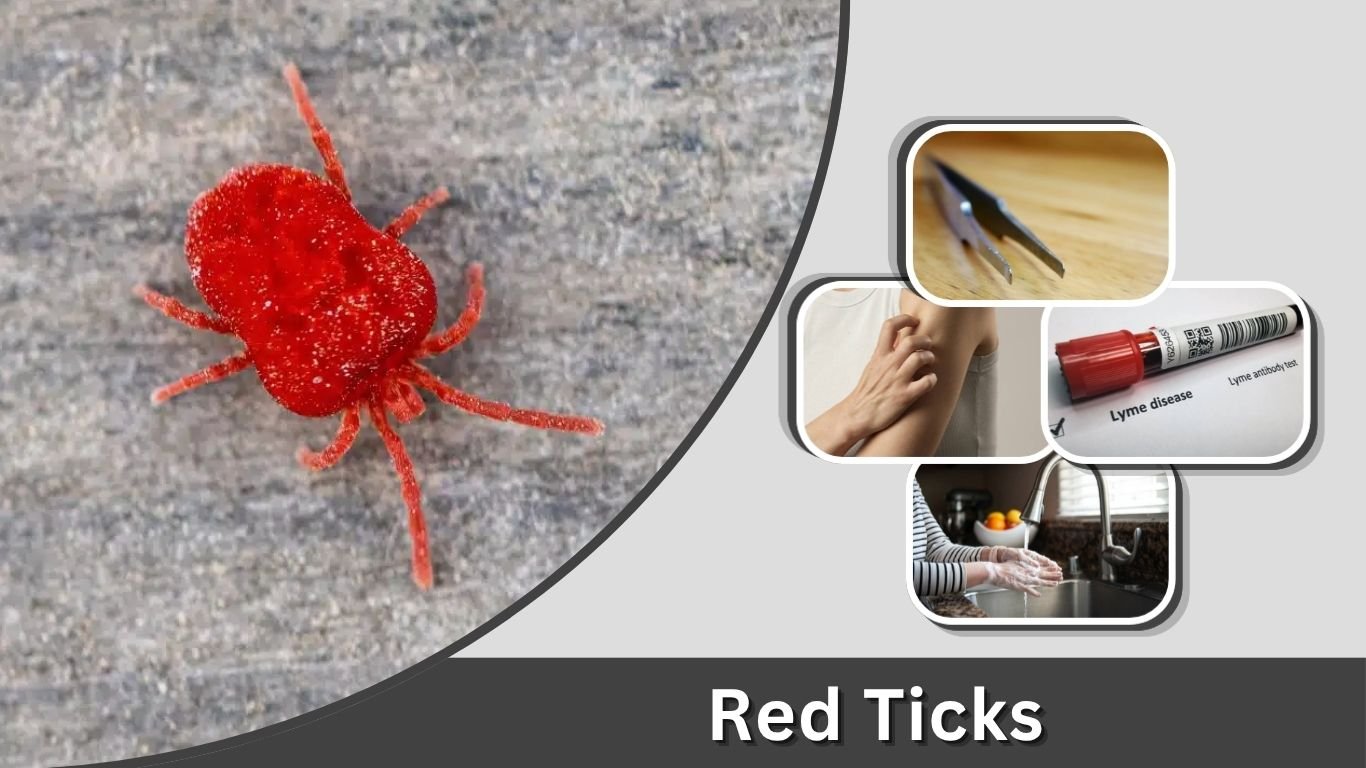
Red ticks are not one single tick species. Several ticks can look reddish, reddish-brown, orange-red, or red-and-black depending on their species, sex, life stage, and whether they have recently fed. Adult female blacklegged ticks can have a reddish-orange body, while American dog ticks are often reddish-brown with pale markings. Tiny bright-red creatures that look like ticks may actually be mites rather than ticks. This guide explains how to identify red-colored ticks, whether they are dangerous, what to do if one bites you or your dog, and how some tick bites are connected with red-meat allergy.
What Are Red Ticks?
The term “red tick” is usually a description of color rather than an official species name.
Several common ticks can show reddish coloration, so color alone is not enough for accurate identification.
Ticks That May Look Red or Reddish
Examples include:
- Adult female blacklegged ticks
- American dog ticks
- Brown dog ticks
- Some lone star ticks
- Recently fed or partially engorged ticks
- Certain immature tick stages
An adult female blacklegged tick can be recognized partly by reddish-orange coloration on the body combined with dark legs and a dark shield behind the head.
What Do Red Ticks Look Like?
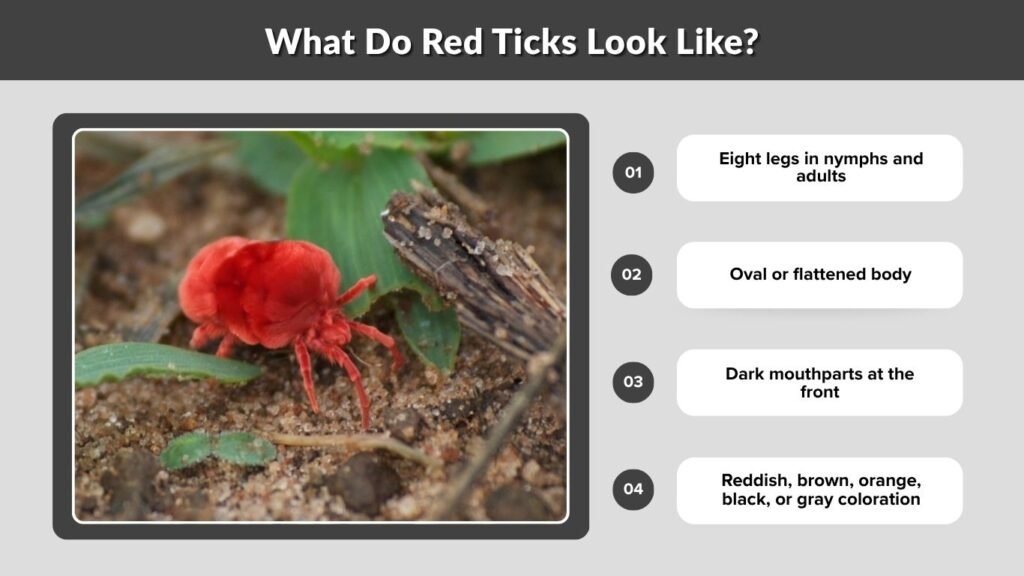
Ticks are arachnids and have oval bodies that become larger after taking a blood meal.
Adult and nymphal ticks have eight legs, while newly hatched larvae have six.
Common Identification Features
Look for:
- Eight legs in nymphs and adults
- Oval or flattened body
- No antennae
- Dark mouthparts at the front
- Reddish, brown, orange, black, or gray coloration
- Increasing body size after feeding
- Firm attachment to the skin when feeding
Ticks do not have one universal color, and appearance can change significantly after they become engorged.
Are Ticks Red?
Yes, some ticks can appear red or reddish.
For example, female blacklegged ticks often have a reddish-orange abdomen with a dark shield and black legs. American dog ticks are generally reddish-brown and have pale or silvery markings.
However, a bright-red speck is not automatically a tick.
Very small bright-red arthropods seen crawling rapidly across walls, concrete, or windowsills are commonly mites.
Little Red Bugs That Look Like Ticks
If you see dozens of extremely tiny red bugs around windows, siding, patios, or walls, they may be clover mites rather than ticks.
Clover mites are reddish or reddish-brown, have eight legs, and are smaller than the head of a pin. They commonly appear around buildings, especially on sunny surfaces.
Clover Mites vs Red Ticks
Clover mites:
- Are extremely tiny
- Often appear in large numbers
- Crawl on walls and windows
- Feed on plants and grasses
- Do not bite humans or animals
- May leave red stains when crushed
Ticks:
- Usually occur individually or in smaller numbers
- Seek animal hosts
- Feed on blood
- Attach firmly to skin
- Can transmit certain diseases
Another bright-red look-alike is the velvet mite. These tiny red mites live outdoors and are generally harmless to people and plants.
Are Red Ticks Dangerous?
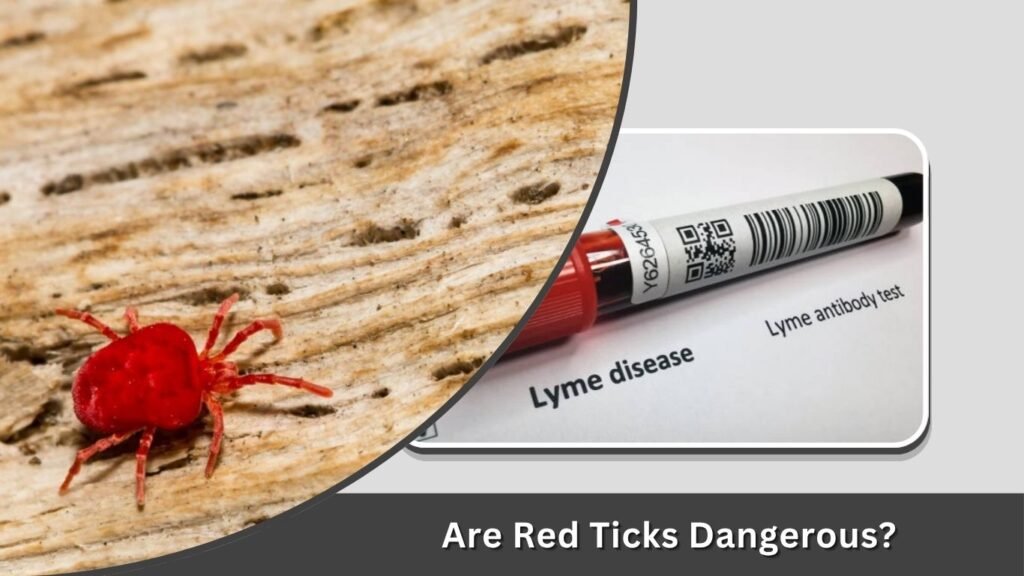
Potentially, yes—but the danger depends on the tick species, not its red color.
Ticks can transmit bacteria, viruses, or parasites while feeding.
Possible Tick-Borne Risks
Depending on species and location, ticks may be associated with illnesses such as:
- Lyme disease
- Ehrlichiosis
- Rocky Mountain spotted fever
- Anaplasmosis
- Babesiosis
- Tularemia
- Powassan virus disease
For example, blacklegged ticks can transmit Lyme disease and several other pathogens, while lone star ticks can transmit ehrlichiosis and other infections.
You cannot determine whether a tick carries disease simply by looking at its color.
Red Ticks and Lyme Disease
Some reddish ticks can transmit Lyme disease, but being red does not make a tick a Lyme disease carrier.
The most important Lyme disease vector in much of the eastern United States is the blacklegged tick, also called the deer tick.
Adult females can have a reddish-orange abdomen while their legs and shield are dark.
After a blacklegged tick bite, monitor for:
- Expanding rash
- Fever
- Headache
- Fatigue
- Muscle aches
- Joint pain
Not every bite results in infection.
Red Ticks With a White Dot
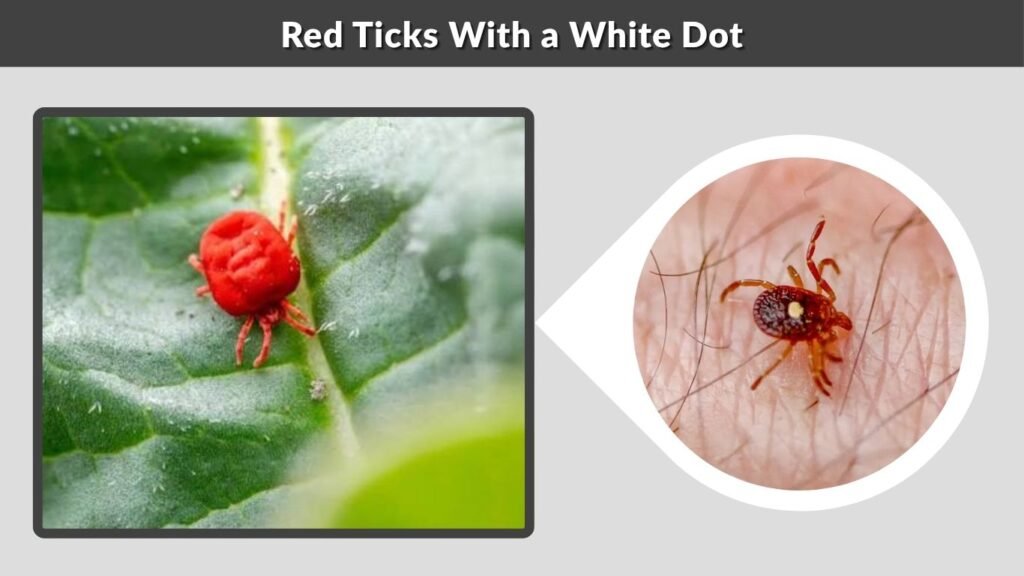
A reddish or brown tick with a distinct white dot in the middle of its back may be an adult female lone star tick.
The female lone star tick is specifically recognized by this single pale “lone star” marking.
Lone star ticks are aggressive human-biting ticks and are widely distributed across much of the Northeast, South, and Midwest United States.
They are associated with several health concerns, including ehrlichiosis, STARI, and alpha-gal syndrome.
Ticks That Cause Red Meat Allergy
The tick most strongly associated with red-meat allergy in the United States is the lone star tick.
The condition is called alpha-gal syndrome, or AGS.
Alpha-gal syndrome is a potentially serious allergy to a carbohydrate called alpha-gal that occurs in most mammals. Tick bites, particularly lone star tick bites in the United States, can cause some people’s immune systems to become sensitized to alpha-gal.
Foods That May Trigger Alpha-Gal Reactions
Depending on the individual, reactions may occur after consuming products such as:
- Beef
- Pork
- Lamb or mutton
- Venison
- Other mammalian meats
- Gelatin
- Some dairy products
Fish and poultry do not naturally contain alpha-gal in the same way mammalian meat does.
Do All Lone Star Tick Bites Cause Red Meat Allergy?
No.
Most people bitten by a lone star tick do not automatically develop alpha-gal syndrome.
CDC notes that not every person bitten develops AGS, and symptoms may first appear weeks or months after the triggering tick bite.
Repeated tick bites may increase sensitization risk, so preventing future tick bites is particularly important for people diagnosed with AGS.
Symptoms of Red Meat Allergy From Tick Bites
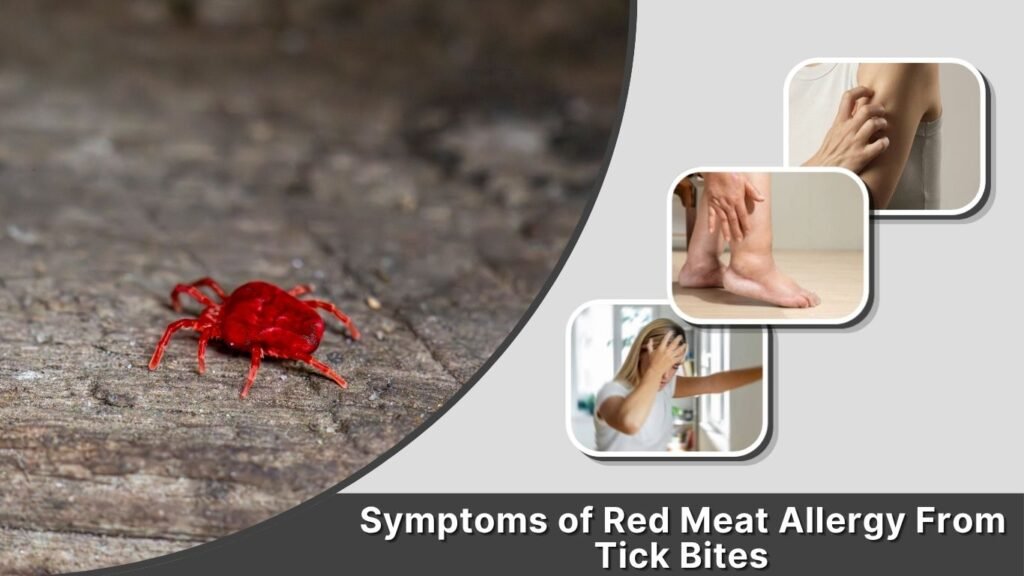
Unlike many traditional food allergies, alpha-gal reactions are frequently delayed.
Symptoms commonly appear around 2 to 6 hours after exposure to foods or products containing alpha-gal.
Possible Symptoms
They may include:
- Hives
- Itching
- Swelling
- Stomach pain
- Nausea
- Diarrhea
- Wheezing
- Difficulty breathing
- Dizziness
- Fainting
- Anaphylaxis
Some people primarily experience gastrointestinal symptoms.
Difficulty breathing, fainting, throat swelling, or other signs of anaphylaxis require emergency medical care.
Red Ticks on Dogs
Dogs frequently encounter ticks while walking through grass, brush, parks, forests, or yards.
A reddish-brown tick attached to a dog could be an American dog tick, brown dog tick, or another species depending on location.
Brown dog ticks are particularly notable because they can infest homes and kennels as well as feed on dogs.
Where to Check Your Dog
Inspect:
- Around the ears
- Eyelids
- Neck and collar
- Under the front legs
- Between the toes
- Groin
- Around the tail
CDC recommends checking pets daily for ticks after outdoor exposure.
What to Do If You Find a Red Tick Attached
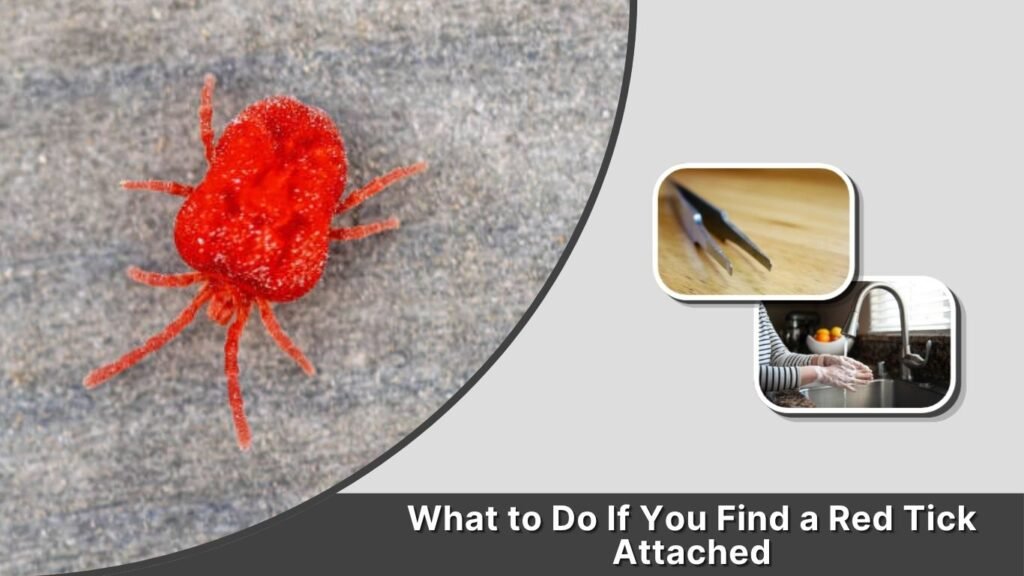
Do not rely on color to determine whether the tick is dangerous.
Remove any attached tick promptly.
Safe Tick Removal
- Use fine-tipped tweezers.
- Grasp the tick close to the skin.
- Pull upward steadily.
- Avoid twisting or crushing the tick.
- Clean the bite area afterward.
- Wash your hands thoroughly.
- Monitor the bite and your health.
If you develop fever, an expanding rash, severe headache, unusual fatigue, muscle pain, or other illness following a tick bite, contact a healthcare professional.
Do Ticks Turn Red After Feeding?
Ticks can change significantly in appearance after taking a blood meal.
As they feed, the abdomen expands and may become lighter, darker, grayish, brown, or differently colored depending on the species.
Therefore, an engorged tick may look very different from photographs of an unfed specimen.
Color alone should never be used to identify a tick.
FAQs
Are there really red ticks?
Yes. Several tick species can appear reddish, reddish-brown, or reddish-orange, including adult female blacklegged ticks and American dog ticks.
What are tiny bright-red ticks?
They may not be ticks at all. Tiny bright-red arthropods crawling around windows, walls, or patios are often clover mites or velvet mites.
Are red ticks poisonous?
Ticks are not considered poisonous. The main concern is their bite and the possibility that some species may transmit disease-causing organisms.
Which tick can cause red-meat allergy?
In the United States, alpha-gal syndrome is most strongly associated with bites from the lone star tick. Not everyone bitten develops the allergy.
Are red ticks on dogs dangerous?
Some ticks found on dogs can transmit disease to animals or humans. Remove attached ticks promptly and use veterinarian-recommended tick prevention for your pet.
