
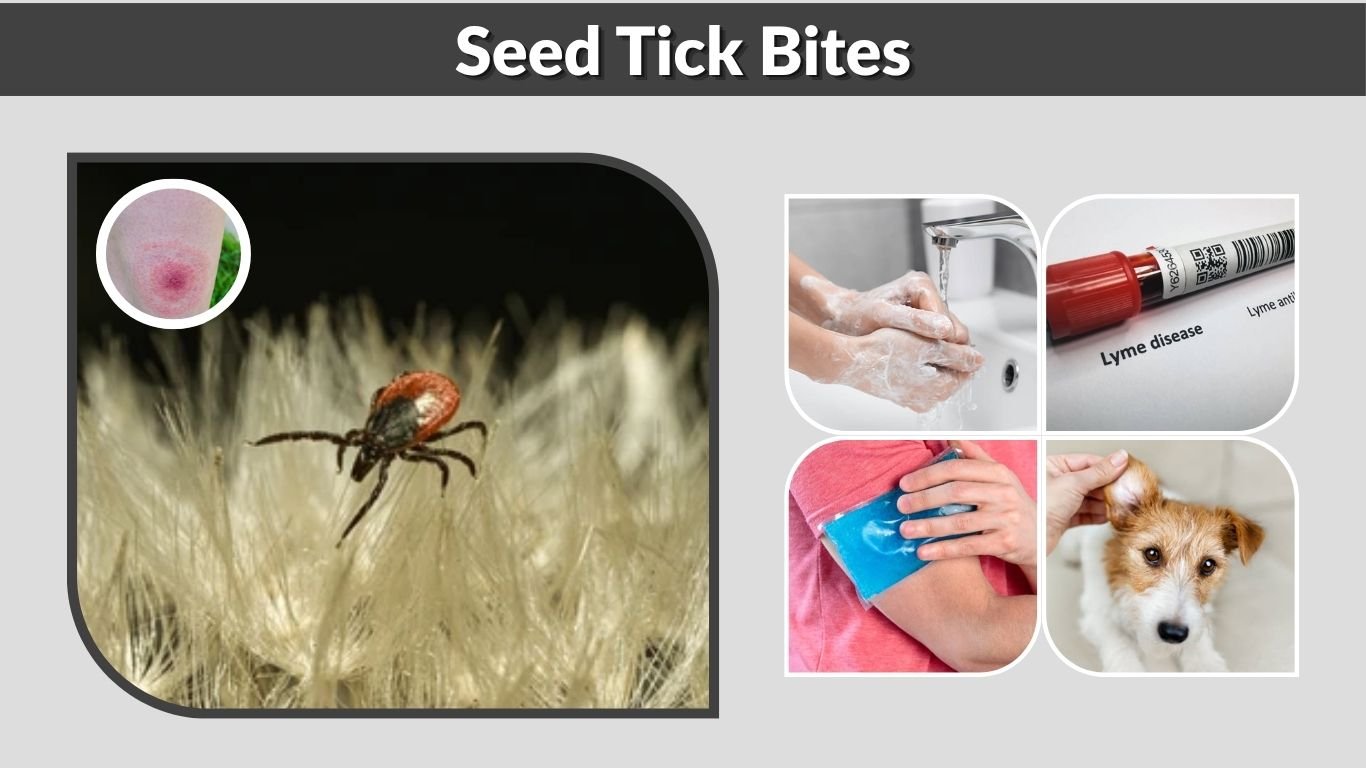
Seed tick bites often appear as clusters of tiny red, itchy bumps after a person brushes against grass, leaf litter, or low vegetation containing newly hatched ticks. “Seed tick” is a common name for the six-legged larval stage of a tick, and these larvae can be extremely small and difficult to notice on skin. Because many may attach at once, dozens of bites can appear together. This guide explains what seed tick bites look like, how long they itch, treatment options, chigger differences, and when medical care is necessary.
What Are Seed Ticks?
Seed ticks are newly hatched tick larvae. Unlike nymph and adult ticks, which have eight legs, larvae have six. They hatch from egg masses that can contain thousands of eggs, so people may encounter many larvae at once after walking through vegetation where an egg mass hatched.
Seed Tick Identification
Seed ticks typically:
- Have six legs
- Are extremely small
- Look like tiny brown, reddish, or tan specks
- May resemble pepper or dirt on the skin
- Frequently occur in groups
- Crawl rather than fly or jump
Their tiny size is why people sometimes notice an itchy rash before realizing that ticks are still attached.
What Do Seed Tick Bites Look Like?
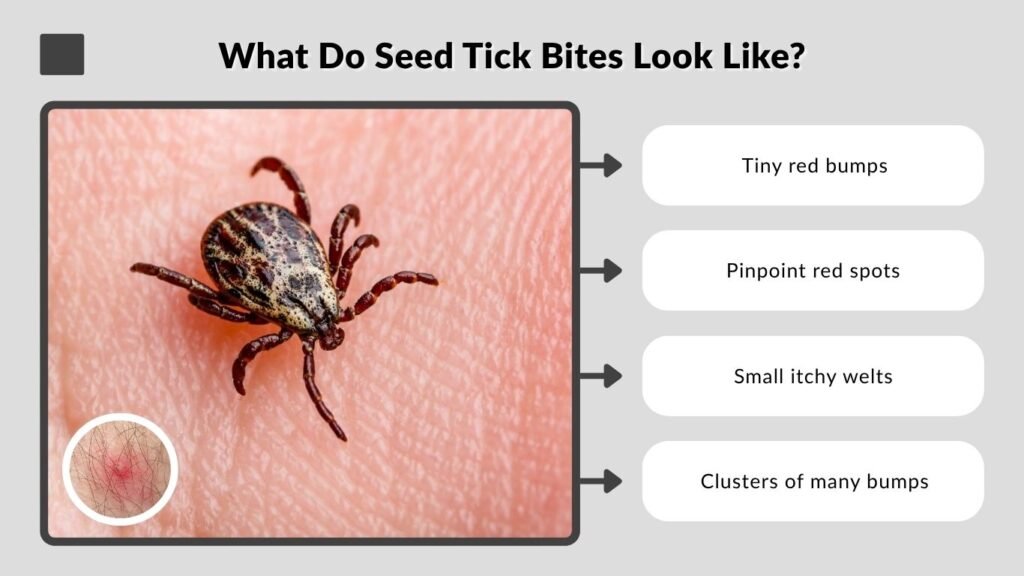
Seed tick bites can produce small red spots, raised bumps, or itchy welts. Because numerous larvae may attach simultaneously, the bites can appear in dense clusters rather than as one isolated mark.
Research involving lone star tick larvae found that attachment could produce itchy red papules and, in some cases, small blister-like lesions within about 48 hours.
Common Appearance
Seed tick bites may look like:
- Tiny red bumps
- Pinpoint red spots
- Small itchy welts
- Clusters of many bumps
- Mild surrounding redness
- Small blisters in some reactions
- Dark specks if larvae are still attached
The appearance alone cannot reliably identify the species of tick or determine whether disease was transmitted.
Why Do Seed Tick Bites Itch So Badly?
The itching is caused primarily by your immune system reacting to substances in tick saliva.
Ticks release saliva while feeding, and the body’s inflammatory response can produce redness, itching, swelling, and irritation.
Symptoms May Include
- Intense itching
- Red bumps
- Mild swelling
- Tenderness
- Burning or irritation
- Small blisters
- Localized rash
Not everyone reacts equally. Some people develop only minor marks, while others experience substantial itching and inflammation.
Scratching should be minimized because broken skin increases the risk of secondary bacterial infection.
How to Treat Seed Tick Bites
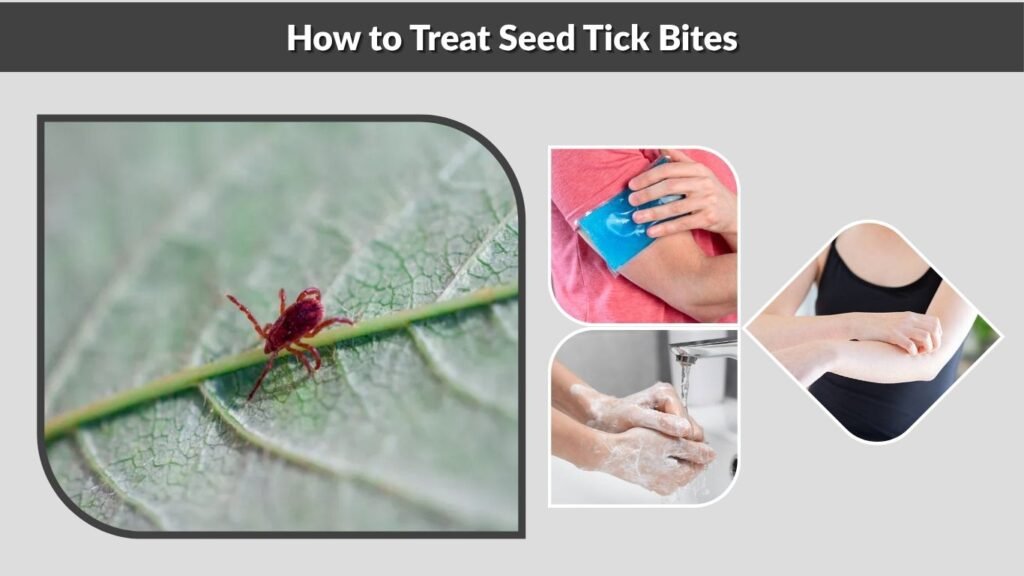
Treatment begins by making sure that all attached larvae are removed. Because seed ticks can occur in large numbers, inspect the entire body carefully rather than concentrating only on the first affected area.
1. Remove Attached Seed Ticks
For an attached tick, CDC recommends grasping it close to the skin with clean, fine-tipped tweezers and pulling upward using steady, even pressure. Do not twist or jerk the tick.
When numerous tiny larvae are crawling but have not yet attached, carefully removing them from skin and clothing before they bite is important.
2. Wash the Skin
After removal, wash the affected skin and your hands thoroughly with soap and water.
CDC also lists rubbing alcohol or hand sanitizer as options for cleaning after tick removal.
3. Apply a Cold Compress
A cold compress wrapped in cloth may help reduce:
- Itching
- Swelling
- Redness
- Soreness
Avoid placing ice directly against the skin for extended periods.
4. Control the Itching
An over-the-counter hydrocortisone product or an appropriate antihistamine may reduce itching for some people. General bite-care guidance also recommends avoiding scratching because damaged skin is more susceptible to infection.
Follow medication labels and check with a healthcare professional or pharmacist if you have medical conditions, take other medications, are pregnant, or are treating a child.
How Long Do Seed Tick Bites Last?
Mild skin reactions generally begin improving within several days.
However, itchiness or visible bumps can sometimes persist for a week or two, depending on the person’s reaction and how many larvae attached. General insect and tick bite reactions can take one to two weeks to resolve completely.
Healing Signs
A healing bite should generally show:
- Less itching
- Fading redness
- Reduced swelling
- Smaller bumps
- No new lesions
- No spreading redness
Persistent or worsening symptoms deserve closer attention.
How to Stop Seed Tick Bites From Itching
The most important step is making sure no larvae remain attached.
For continued itching, try keeping the area cool and avoiding scratching.
Itch Relief Options
You may use:
- Cold compresses
- Appropriate hydrocortisone cream
- An appropriate oral antihistamine
- Loose clothing over affected skin
- Gentle washing
- Fragrance-free moisturizer if skin becomes dry
Avoid repeatedly applying harsh chemicals, essential oils, bleach, or other irritating home remedies.
If itching is severe enough to interfere with sleep or lasts much longer than expected, contact a healthcare professional.
Seed Tick Bites vs Chigger Bites
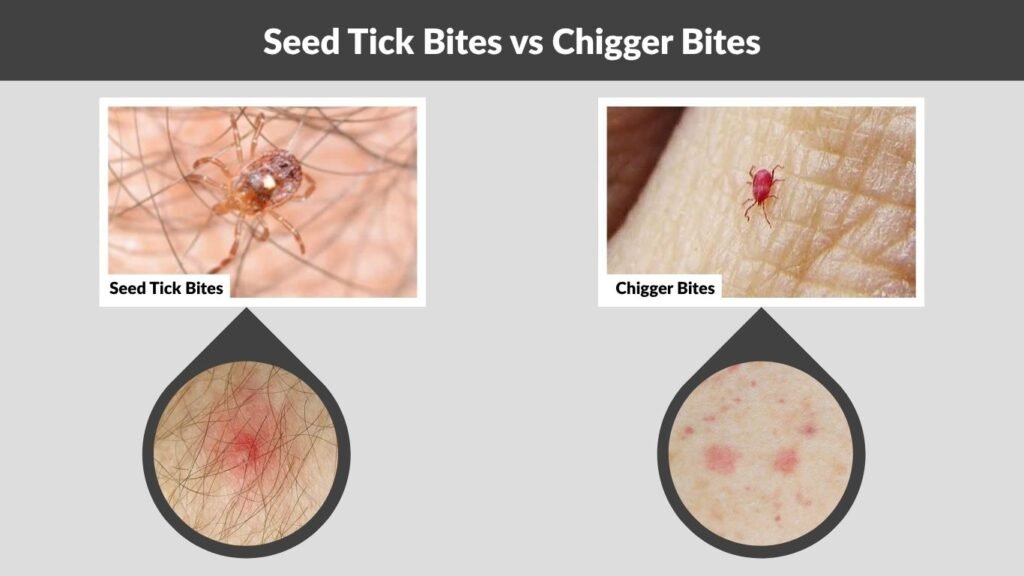
Seed tick and chigger bites are frequently confused because both can occur after walking through grassy or wooded environments and both can cause groups of very itchy red bumps.
However, they come from completely different arachnids.
Seed Tick Bites
Seed ticks are actual tick larvae. They attach their mouthparts to the skin and consume blood.
You may sometimes see tiny ticks still physically attached.
Chigger Bites
Chiggers are mite larvae. They feed on skin tissue rather than remaining attached for a prolonged blood meal like ticks.
Chigger bites frequently occur where clothing fits tightly, including:
- Ankles
- Waistline
- Behind knees
- Groin
- Sock lines
Finding a tiny attached tick strongly favors seed ticks rather than chiggers.
Do Seed Tick Bites Blister?
They can.
Although many people develop only red papules, blister-like lesions have been documented after larval lone star tick attachment.
A few small blisters can result from a strong inflammatory reaction.
However, seek medical advice if blistering is extensive, very painful, rapidly worsening, or associated with fever or other systemic symptoms.
Are Seed Tick Bites Dangerous?
Most bites mainly cause temporary skin irritation, but seed ticks should not automatically be considered harmless.
Ticks can transmit infectious organisms, although the exact risk varies dramatically with:
- Tick species
- Geographic location
- Life stage
- Attachment duration
- Pathogen involved
Any attached tick should therefore be removed promptly.
CDC recommends watching for symptoms after a tick bite and seeking medical care if a rash or fever develops in the following weeks.
Can Seed Tick Bites Cause Lyme Disease?
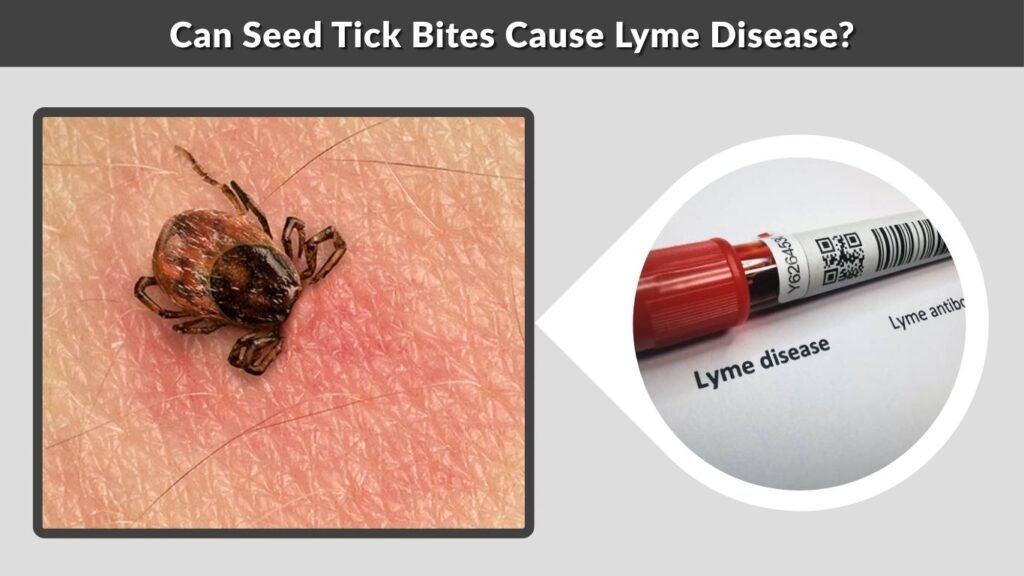
Lyme disease in the United States is primarily transmitted by infected blacklegged ticks.
The risk from a particular tick bite depends on the species, whether the tick carried Borrelia bacteria, geographic location, and feeding circumstances.
Do not try to determine disease risk simply by the size of the tick or appearance of the bite.
Watch for Possible Lyme Symptoms
Contact a healthcare professional if you develop:
- An expanding rash
- Fever
- Chills
- Headache
- Fatigue
- Muscle aches
- Joint pain or swelling
CDC advises watching for symptoms for weeks following tick exposure.
Multiple or Hundreds of Seed Tick Bites
Because larval ticks hatch in groups, a person can encounter dozens or even hundreds during a single outdoor exposure.
If this happens, check the entire body carefully, including:
- Ankles
- Legs
- Waist
- Groin
- Armpits
- Behind knees
- Neck
- Scalp
Clothing should also be checked because tiny larvae can remain on fabric and later reach the skin.
Showering soon after returning from tick habitat and performing a complete tick check can help identify ticks before they remain attached for long periods.
Seed Tick Bites on Dogs
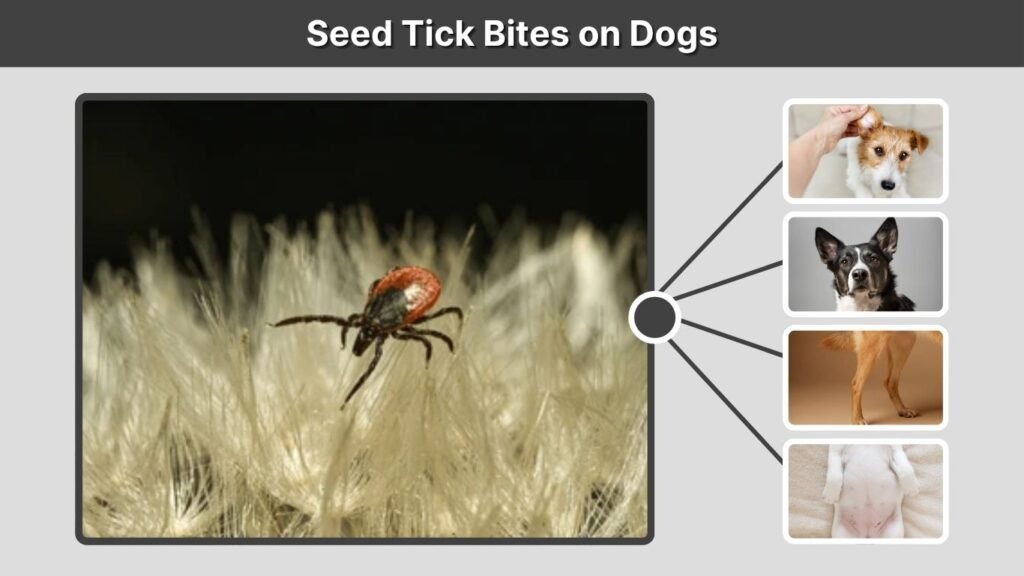
Dogs can also pick up large numbers of larval ticks while moving through grass, brush, or wooded environments.
You may notice tiny dark specks attached to the skin, particularly around:
- Ears
- Face
- Neck
- Between toes
- Legs
- Belly
Veterinary-approved tick prevention is important.
Do not apply human medications, essential oils, or insecticides to your dog without veterinary guidance. If your dog has a heavy infestation, unusual weakness, fever, loss of appetite, or other signs of illness, contact a veterinarian.
Allergic Reaction to Seed Tick Bites
Some people can develop stronger allergic reactions to tick saliva.
Seek urgent medical care for symptoms such as:
- Trouble breathing
- Facial or throat swelling
- Widespread hives
- Severe dizziness
- Fainting
Lone star tick bites have also been associated with alpha-gal syndrome, an allergy that can cause reactions to mammalian meat and certain mammal-derived products. This is different from the immediate itchy reaction at the bite site.
When to See a Doctor
Most uncomplicated bites can be managed with removal, cleaning, and symptom relief.
Medical evaluation is appropriate if you develop:
- Fever
- Expanding rash
- Severe headache
- Muscle or joint pain
- Increasing redness or swelling
- Pus or drainage
- Persistent blistering
- Unusual fatigue
- Neurologic symptoms
CDC recommends contacting a healthcare provider if rash or fever develops within the weeks following a tick bite and telling them when and where the exposure occurred.
FAQs
What do seed tick bites look like?
They commonly appear as clusters of tiny red or itchy bumps. You may also see very small dark ticks still attached to the skin.
How long do seed tick bites itch?
Itching often improves within several days, although some reactions can take a week or two to completely resolve.
What is the best treatment for seed tick bites?
Remove all attached ticks, wash the area, apply a cold compress, and use an appropriate anti-itch treatment if necessary. Continue monitoring for symptoms of tick-borne illness.
Do seed tick bites spread?
The individual bites do not spread across the skin like an infection. New bumps may appear if additional tiny larvae remain attached or if the skin reaction becomes more noticeable over time.
When should I worry about seed tick bites?
Seek medical advice if you develop fever, an expanding rash, severe headache, increasing pain or swelling, pus, widespread blistering, muscle or joint symptoms, or other unexplained illness after tick exposure.
