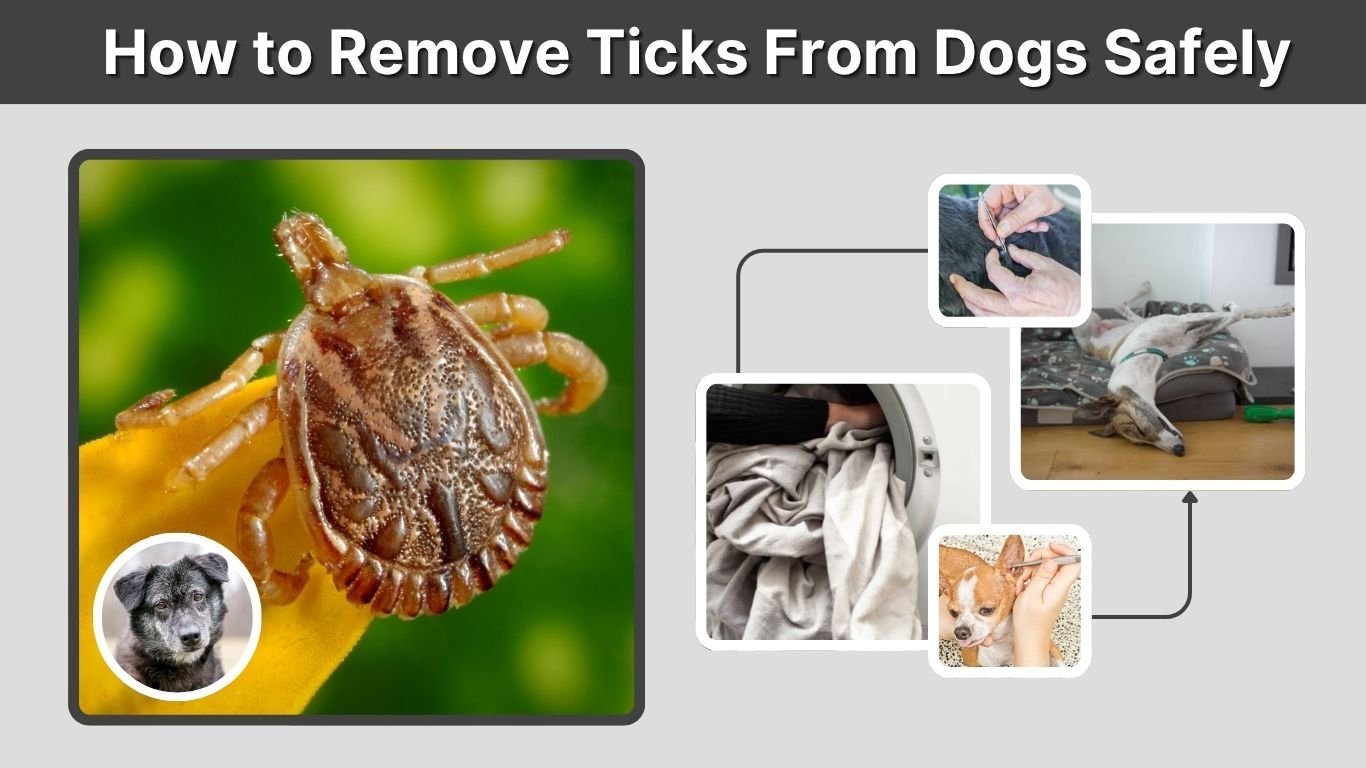
Ticks are more than an unpleasant pest on dogs. They attach to the skin, feed on blood, and may transmit infections if they remain attached long enough. Knowing how to remove ticks from dogs safely is important because squeezing, twisting, burning, or covering the tick with household products can increase irritation or leave mouthparts behind. The safest approach is to use fine-tipped tweezers or a proper tick-removal tool, remove the tick steadily, clean the area, and monitor your dog afterward.
How to Remove Ticks From Dogs Safely
Removing a tick is usually straightforward when you have the right equipment. The goal is to grasp the tick as close to the dog’s skin as possible without crushing its swollen body.
What You Need
- Fine-tipped tweezers or a tick-removal tool
- Disposable gloves
- Antiseptic suitable for pets
- A small sealed container or plastic bag
- Good lighting
- A comb for separating long fur
- Soap and water for washing your hands afterward
Avoid grabbing ticks with bare fingers whenever possible.
Step-by-Step Tick Removal
First, keep your dog calm and position them where you can clearly see the tick.
Separate the fur surrounding the parasite. Using fine-tipped tweezers, grasp the tick as close to the skin as possible, near its mouthparts rather than around its swollen abdomen.
Pull upward using slow, steady pressure. Do not jerk, violently twist, squeeze, or crush the tick.
Once removed, check the skin and place the tick in a sealed container for disposal or possible identification.
Clean the bite area and wash your hands thoroughly.
What Not to Do
Do not try to force a tick off using:
- Petroleum jelly
- Nail polish
- Gasoline
- Alcohol poured directly over the attached tick
- Matches or heat
- Essential oils
- Vinegar
- Harsh chemicals
These methods may irritate the dog and do not provide a safer removal than mechanical extraction.
How to Remove Ticks From Dogs With Tweezers
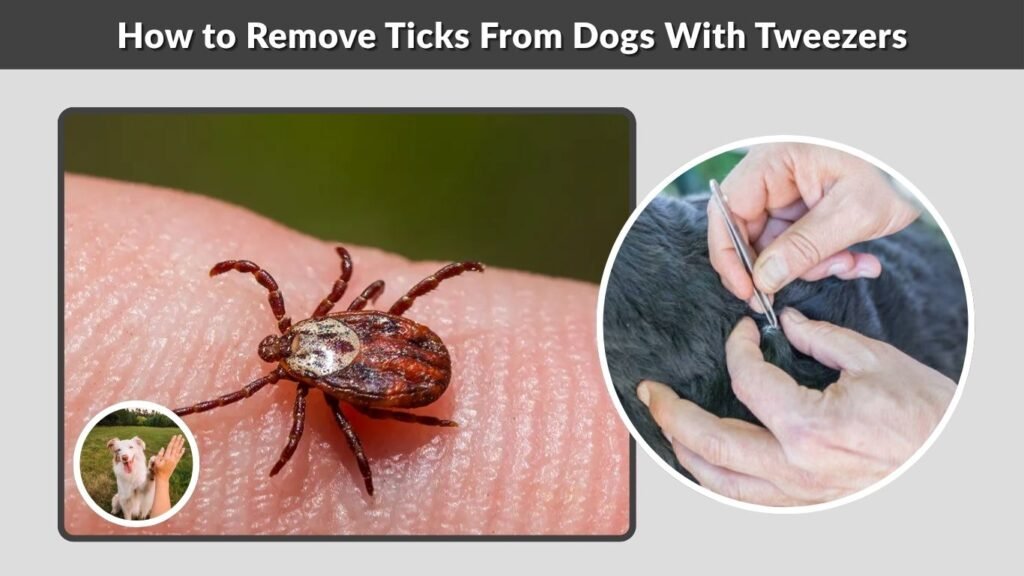
Fine-tipped tweezers are one of the most practical tools for removing an attached tick.
The key is correct placement.
Proper Tweezer Technique
Part the dog’s fur until the tick and attachment point are clearly visible.
Place the tweezer tips around the tick’s head or mouthparts immediately above the skin.
Pull steadily upward.
Try not to grab the tick around its swollen abdomen because squeezing its body may rupture it and make removal more difficult.
Afterward, disinfect the tweezers and wash your hands.
What If Part of the Tick Stays Behind?
Sometimes small mouthparts remain embedded after the body has been removed.
Do not aggressively dig into your dog’s skin with needles or sharp objects.
If you can easily grasp the remaining material with clean tweezers, carefully remove it. Otherwise, keep the area clean and contact your veterinarian if redness, swelling, discharge, pain, or other irritation develops.
How to Remove Embedded or Engorged Ticks
An engorged tick has been feeding for some time and may look round, gray, brown, or swollen.
Large ticks should still be removed using the same careful technique.
Removing a Large Tick
Do not pull on the enlarged abdomen.
Grip the tick directly where it enters the skin and apply steady upward pressure.
An engorged tick may be easier to see, but its swollen body can rupture if squeezed.
After removal, inspect the surrounding skin for irritation.
Removing Small or Baby Ticks
Tiny ticks, including immature stages, can be much harder to grasp.
Bright lighting and fine-pointed tweezers are especially helpful.
If your dog has many tiny ticks clustered together, professional veterinary treatment may be more appropriate than attempting to remove every one individually.
How to Remove Ticks From a Dog’s Ears
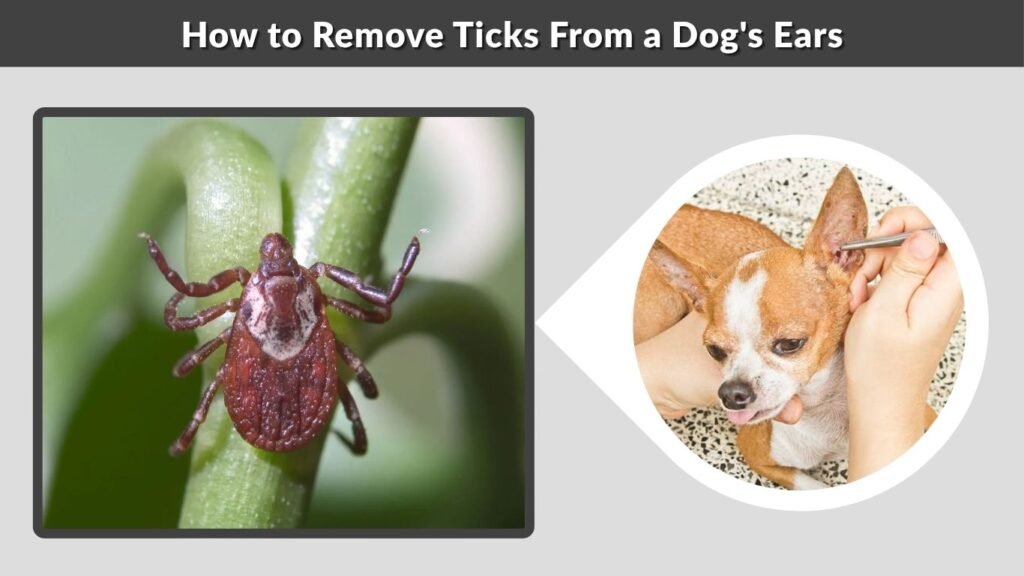
Ears are common hiding places because ticks prefer protected areas with relatively thin skin.
Inspect both the outer ear and the skin around its base.
Ticks on the Outer Ear
If the tick is attached to the visible outer surface of the ear flap, carefully separate the fur and remove it with tweezers or a tick tool.
The ear can be sensitive, so keep your dog still and pull slowly.
Clean the surrounding area afterward.
Ticks Inside the Ear Canal
Do not insert tweezers deep into your dog’s ear canal.
A dog may suddenly move its head, increasing the risk of damaging sensitive ear structures.
If the tick is located deep inside the ear, have a veterinarian remove it safely.
How to Remove Ticks Near a Dog’s Eyes or Face
Ticks frequently attach around the face, eyelids, lips, and muzzle because the skin may be thin and accessible.
These locations require additional care.
Tick Near the Eye
If the tick is attached very close to the eyelid or eye surface, veterinary removal is usually the safest choice.
Using pointed tweezers close to the eye can cause injury if your dog suddenly moves.
Ticks on the cheeks or other easily accessible facial areas may be removed using the standard technique if you can safely control your dog.
Ticks Around the Mouth
Be cautious around the lips and mouth because frightened or uncomfortable dogs may bite unintentionally.
Professional help may be preferable if the dog is resisting handling.
How to Find Ticks on Dogs
Ticks can hide beneath thick fur and may be difficult to notice until they become enlarged.
Regular checks are particularly important after walks through grass, brush, woodland, or areas with known tick activity.
Areas to Check Carefully
Run your hands over your dog’s entire body and inspect:
- Around the ears
- Behind the ears
- Around the eyes
- Under the collar
- Neck and shoulders
- Armpits
- Groin
- Between the toes
- Around the tail
- Under the legs
- Belly
Ticks may feel like small bumps beneath the fur.
Checking Long-Haired Dogs
Use your fingers and a comb to separate the coat gradually.
Move against the natural direction of the fur so you can inspect the skin underneath.
Pay extra attention to warm, hidden areas that are difficult for the dog to groom.
Can You Remove Ticks From Dogs Naturally?
Physical removal is the safest immediate solution for an attached tick.
Many so-called natural home remedies are unreliable and may cause irritation.
Should You Use Vinegar?
Applying vinegar to an attached tick is not a recommended substitute for proper removal.
It may irritate the dog’s skin without causing the tick to detach safely.
Use tweezers or a tick-removal device instead.
Does Soap Remove Ticks?
Soap can be used to clean the skin after removal, but it should not replace proper extraction.
Trying to smother an attached tick with soap may delay removal unnecessarily.
Remove the tick mechanically first.
How to Remove a Lot of Ticks From a Dog
Finding one tick is different from discovering dozens.
A heavy infestation may require veterinary treatment and a broader parasite-control plan.
What to Do With Many Ticks
Remove easily accessible attached ticks when it is safe to do so, but contact a veterinarian if the dog has a significant infestation.
Young puppies, small dogs, elderly animals, or dogs with many blood-feeding ticks may be at greater risk of complications.
Veterinarians can recommend appropriate tick-control medications based on the dog’s age, weight, health, and location.
How to Remove Ticks From Dogs Permanently
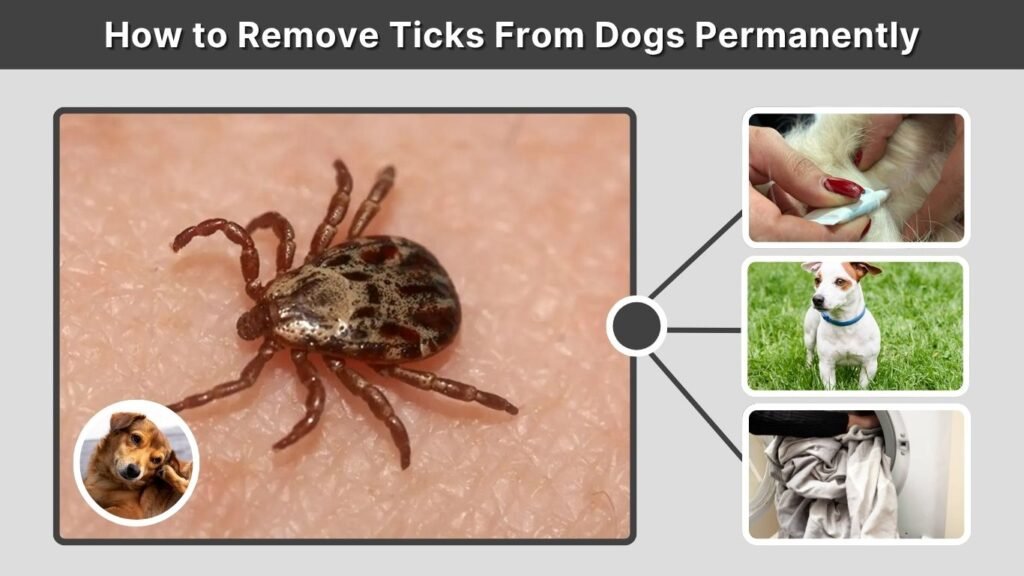
No method can guarantee that a dog will never encounter another tick. Long-term control depends on prevention rather than simply removing attached parasites.
Long-Term Tick Prevention
Depending on veterinary guidance, prevention may include:
- Oral tick preventives
- Topical treatments
- Tick collars
- Regular grooming
- Frequent tick checks
- Keeping grass trimmed
- Removing brush and leaf litter
- Washing pet bedding
- Treating environmental infestations when necessary
Never give your dog a flea or tick medication intended for another species unless a veterinarian confirms it is safe.
What to Do After Removing a Tick
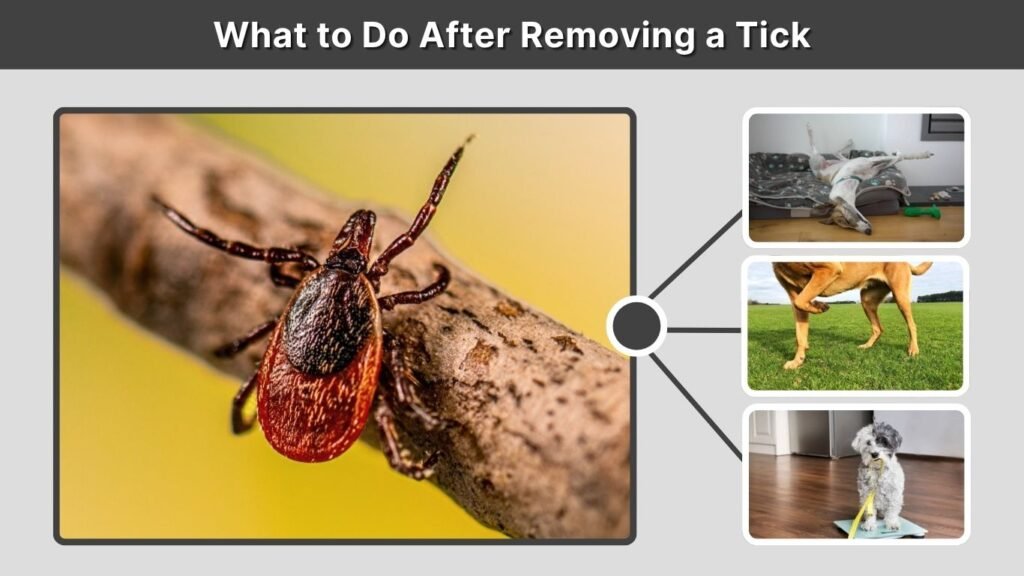
Removing the parasite is only the first step.
Monitor both the bite site and your dog’s general health during the following days and weeks.
Watch for Problems
Contact your veterinarian if your dog develops:
- Fever
- Unusual tiredness
- Loss of appetite
- Limping or stiffness
- Swollen joints
- Weakness
- Pale gums
- Persistent redness or swelling
- Pus or discharge around the bite
- Neurological symptoms
Tick-borne illnesses do not always cause symptoms immediately.
FAQs
1. What is the safest way to remove a tick from a dog?
Use fine-tipped tweezers or a tick-removal tool. Grasp the tick close to the skin and pull upward with slow, steady pressure without squeezing its body.
2. Can I remove a tick from my dog without tweezers?
A commercial tick-removal hook or tool can be used instead. Avoid removing an attached tick with your bare fingers whenever possible.
3. Can Vaseline remove ticks from dogs?
Petroleum jelly is not recommended as the primary removal method. It may delay proper removal and does not reliably make an attached tick detach safely.
4. Should I take my dog to the vet after removing a tick?
Not every tick requires a veterinary visit. However, contact your veterinarian if removal is difficult, part of the tick remains, the bite becomes infected, your dog has many ticks, or your dog develops illness afterward.
5. How do I stop ticks from coming back?
Use a veterinarian-recommended tick preventive, check your dog regularly after outdoor activity, maintain the yard, and remove ticks promptly whenever you find them.