
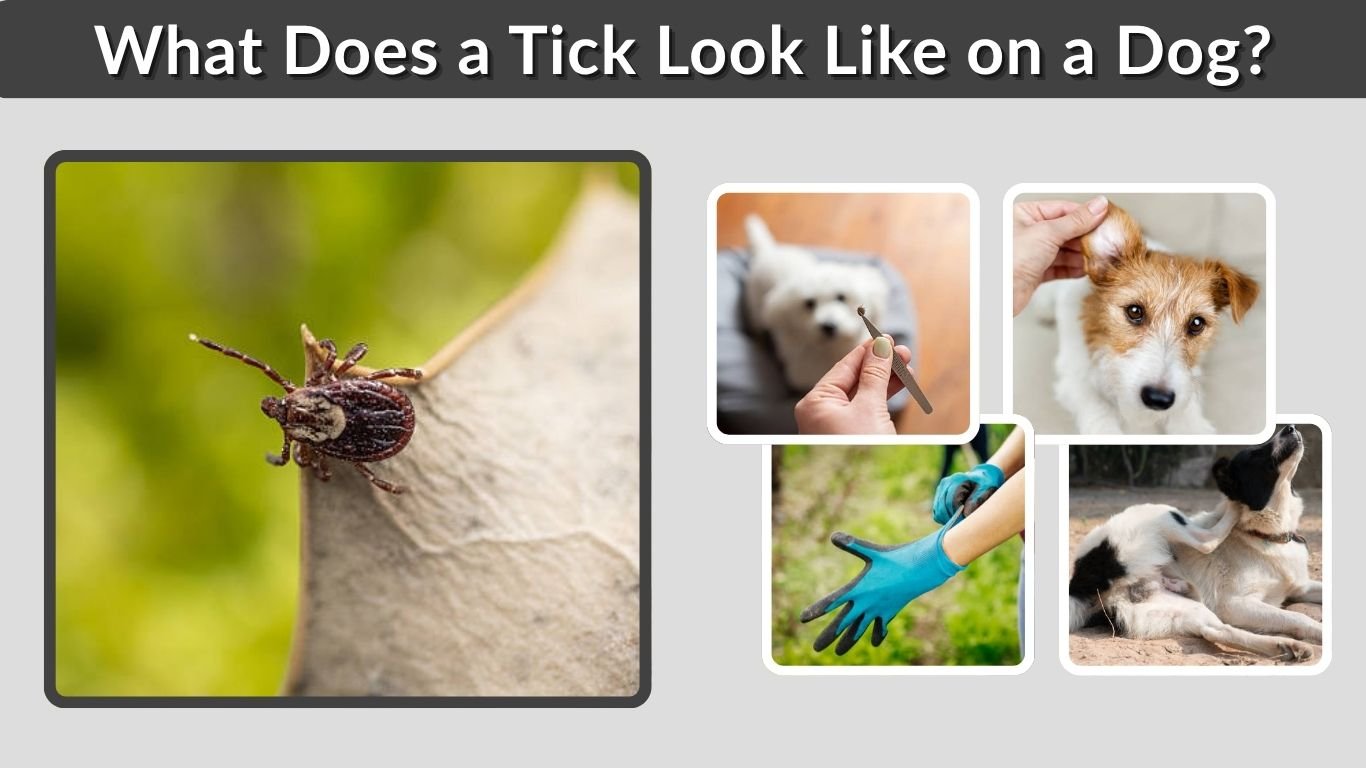
A tick on a dog often looks like a small brown, black, gray, or reddish bump attached tightly to the skin. Before feeding, ticks are relatively flat and may be difficult to spot through fur. After taking a blood meal, females can swell dramatically and resemble a smooth bean or small grape. Their legs are usually clustered near the front of the body. Ticks can be especially difficult to find on long-haired or dark-colored dogs, making regular hands-on checks important.
What Does a Tick Look Like on a Dog?
Ticks are arachnids rather than insects. Adult and nymphal ticks have eight legs, while larvae have six. An attached hard tick typically has an oval body with its mouthparts anchored into the dog’s skin. Its appearance changes dramatically depending on species, sex, developmental stage, and how long it has been feeding.
Common Signs of an Attached Tick
Look for these features:
- A brown, black, reddish, gray, or tan body
- Oval or rounded shape
- Eight visible legs in adults and nymphs
- Legs concentrated toward the front
- A body that remains firmly attached when the fur moves
- Flat appearance before feeding
- Swollen appearance after feeding
- Mild redness around the attachment point
A tick can initially be so small that it resembles a freckle, seed, or piece of debris. Daily checks are especially helpful because crawling and newly attached ticks can be hard to see.
What Does an Embedded Tick Look Like on a Dog?
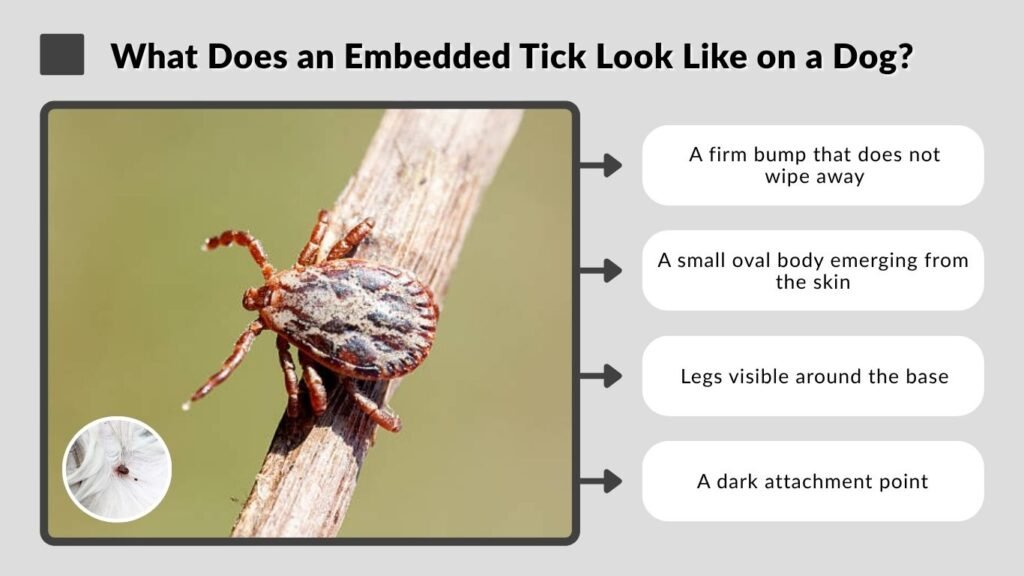
People often describe an attached tick as “embedded” or “buried.” However, the tick’s entire body is normally not underneath the dog’s skin. Its mouthparts penetrate and anchor into the skin while most of the tick remains visible above the surface.
Signs of an Embedded Tick
An attached or embedded tick may look like:
- A firm bump that does not wipe away
- A small oval body emerging from the skin
- Legs visible around the base
- A dark attachment point
- Red or mildly swollen skin around it
- A rounded body if it has been feeding
Part the dog’s hair carefully and examine the bump under bright light. If you can see several small legs near the skin, it is much more likely to be a tick than a skin tag or scab.
Does a Tick Burrow Completely Under a Dog’s Skin?
Normally, no. Hard ticks attach by inserting specialized mouthparts into the skin rather than tunneling their entire bodies underneath it.
This distinction is important because owners sometimes mistake skin lumps for “buried ticks.” If no legs or recognizable tick body are visible, do not cut or dig into the skin. A veterinarian can examine an uncertain lump safely.
What Does an Engorged Tick Look Like on a Dog?
An engorged female tick can look dramatically different from the same tick before feeding. As it consumes blood, its abdomen expands and becomes much larger and rounder. Fully engorged hard-tick females eventually detach from the host and lay eggs in the environment.
Engorged Tick Identification
A full or engorged tick may have:
- A swollen oval or bean-shaped body
- Gray, tan, olive, brown, or bluish-gray coloration
- A smooth-looking enlarged abdomen
- Tiny legs clustered toward one end
- A dark head area attached to the skin
- Considerable size compared with an unfed tick
The swollen body may initially resemble a wart, skin tag, or small grape.
Do not squeeze an engorged tick. CAPC recommends removing attached ticks with forceps or a suitable tick-removal device while avoiding contact with the tick’s contents.
What Does a Small Tick Look Like on a Dog?
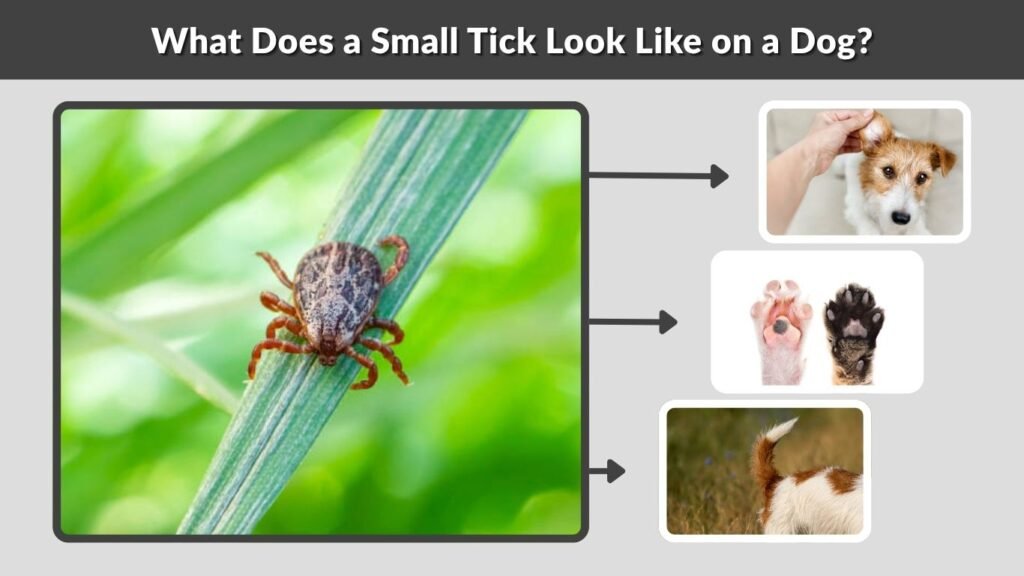
Small ticks are much harder to notice than engorged adults. Nymphs can resemble tiny dark specks among the dog’s hair, while larvae are even smaller.
Running your fingers slowly over the dog’s body can sometimes reveal a small attached bump before you can clearly see it.
Places to Check Carefully
The CDC recommends checking dogs particularly:
- In and around the ears
- Around the eyelids
- Under the collar
- Under the front legs
- Between the back legs
- Between the toes
- Around the tail
Long or dark coats make visual identification especially difficult, so combine visual inspection with gently feeling the skin.
What Does a Deer Tick Look Like on a Dog?
The blacklegged tick, commonly called a deer tick, belongs to the genus Ixodes. These ticks can be particularly important because blacklegged ticks transmit the bacteria responsible for Lyme disease.
Deer Tick Identification
Typical Ixodes identification features include:
- Dark brown to black shield
- No pale or white ornamentation on the shield
- Relatively long mouthparts
- Dark legs
- Small overall size
Adult females commonly have a darker shield contrasting with the rest of the body.
After feeding, however, deer ticks become swollen and much harder to identify solely from their color and shape.
What Does a Tick Bite Look Like on a Dog?
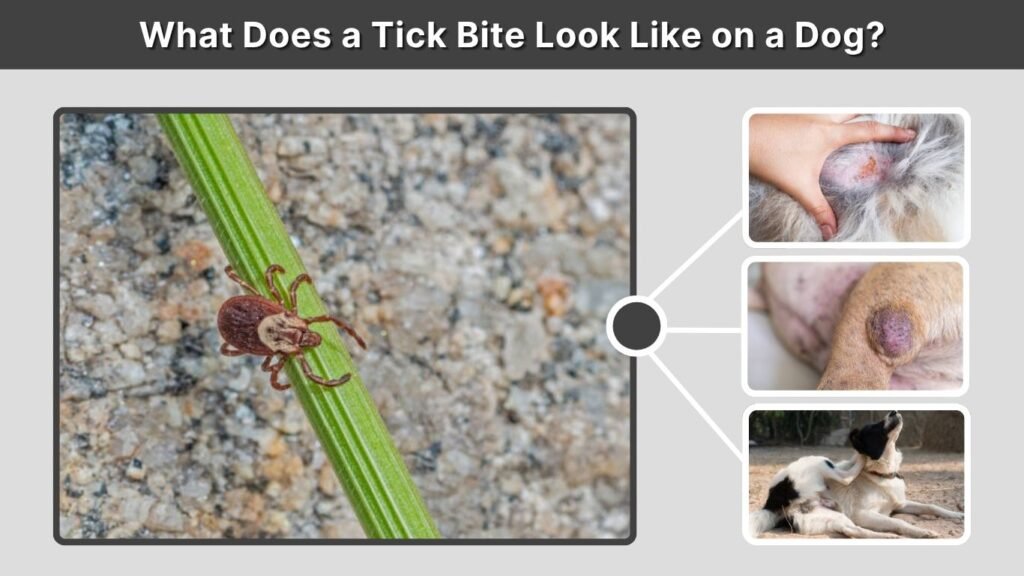
After a tick is removed, its attachment point may remain visible. A simple bite site often looks like a small irritated spot rather than a dramatic wound.
Tick bite marks can vary depending on how long the tick remained attached and the dog’s individual skin reaction.
Common Tick Bite Appearance
You may notice:
- A small red bump
- Slight swelling
- A tiny central puncture
- A small scab
- Mild inflammation
- Local tenderness
- Temporary irritation
The skin may remain slightly raised for a while after removal.
A bite mark alone cannot tell you whether a dog has acquired a tick-borne disease. Veterinarians evaluate the dog’s exposure history, clinical signs, examination findings, and appropriate testing instead.
What Does a Tick Scab Look Like on a Dog?
After removal, a small scab may develop where the tick was attached. A healing site should generally become less inflamed rather than increasingly red, swollen, painful, or wet.
Normal Healing vs Possible Problem
A simple healing site may have:
- A small dry scab
- Mild localized redness
- A tiny firm bump
- Gradual improvement
Contact a veterinarian if you notice increasing swelling, discharge, significant pain, spreading redness, or persistent irritation.
If tick mouthparts break off during removal, they may cause a localized foreign-body reaction. Proper removal involves grasping an attached tick close to the skin and applying steady traction rather than twisting or crushing it.
What Does a Dead Tick Look Like on a Dog?
A tick killed by an effective parasite-control product may sometimes remain attached for a period before falling off or being removed. A nonmoving tick can appear dry, dark, or shriveled, but appearance alone is not always enough to confirm that it is dead.
Should You Remove a Dead Attached Tick?
Yes, an attached tick should still be removed rather than deliberately left in place.
Veterinary guidance recommends promptly removing ticks found attached to domestic animals.
Use a tick-removal device or fine-tipped tweezers, grip close to the skin, and avoid squeezing the body.
What Do Tick Eggs Look Like on a Dog?
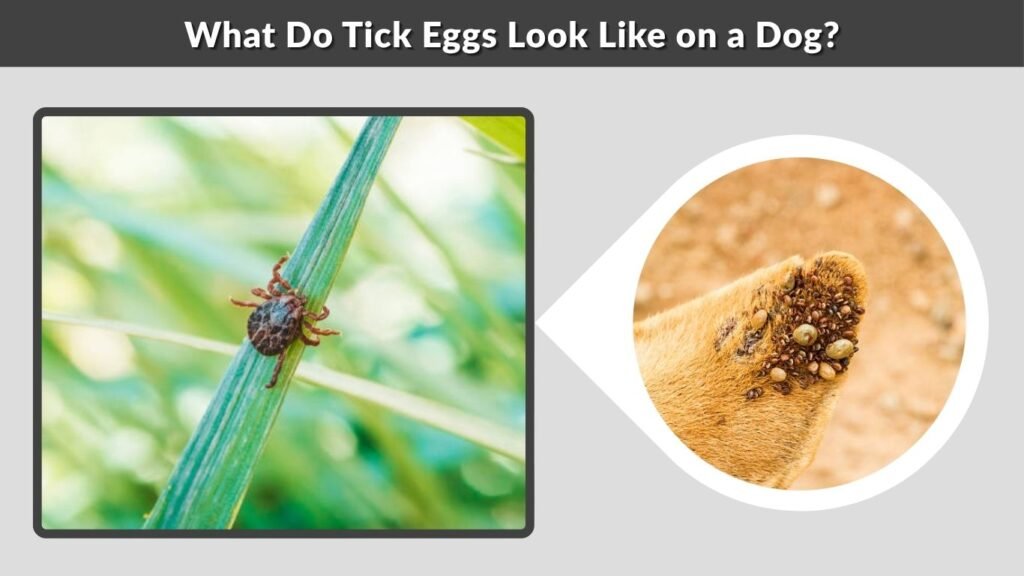
Finding clusters of “tick eggs” attached to a dog’s coat would be unusual for common hard ticks. An engorged female generally leaves its host before depositing thousands of eggs in a protected location in the environment.
Are Small Specks on Fur Tick Eggs?
Specks found on a dog’s coat could instead be:
- Dirt
- Dried blood
- Flea debris
- Skin flakes
- Plant material
- Other parasites or eggs
If unusual material remains attached to the fur or skin, a veterinarian can identify it rather than relying only on appearance.
Tick vs Skin Tag, Wart, or Scab
Ticks are sometimes mistaken for normal skin growths, particularly when they are fully engorged.
The easiest clue is to look closely at where the suspicious bump meets the dog’s skin.
How to Tell the Difference
A tick usually has:
- Visible legs
- A separate oval body
- A distinct attachment point
- Smooth or patterned external surface
A skin growth usually:
- Is continuous with the dog’s skin
- Has no legs
- May contain hair
- Does not have a separate head or mouthpart region
Never pull on a suspicious bump until you are confident it is a tick.
What to Do When You Find a Tick
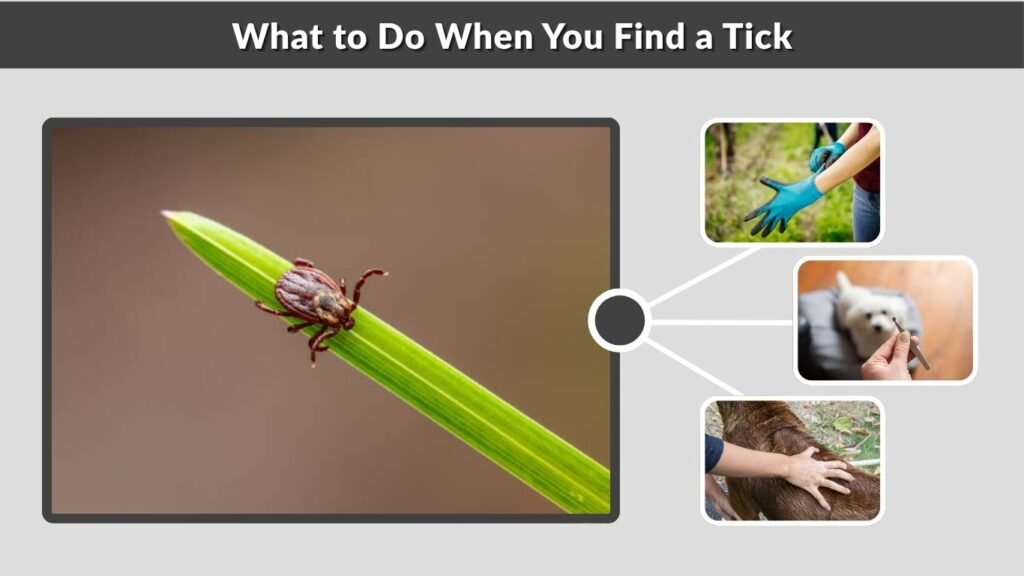
An attached tick should be removed promptly. Continued attachment can allow transmission of some tick-borne pathogens, although the timing varies among diseases.
Safe Removal Steps
- Put on gloves.
- Part the fur completely.
- Use fine-tipped tweezers or a tick-removal tool.
- Grasp close to the dog’s skin.
- Pull steadily outward.
- Avoid squeezing or crushing the tick.
- Clean the bite area.
- Check the rest of the dog’s body.
- Monitor your dog afterward.
Discuss appropriate tick prevention with your veterinarian, particularly if your dog regularly spends time outdoors. The CDC recommends daily tick checks for pets that go outside.
When Should You Worry After Finding a Tick?
Finding a tick does not automatically mean your dog will become sick. However, tick-borne infections can cause illness, and symptoms may develop after the tick itself is gone.
Contact Your Veterinarian If Your Dog Develops:
- Fever
- Unusual tiredness
- Reduced appetite
- Limping or joint pain
- Swollen joints
- Weakness
- Vomiting or diarrhea
- Neurologic problems
For canine Lyme disease, commonly reported clinical signs include fever, polyarthritis, enlarged lymph nodes, and decreased appetite rather than relying on a characteristic human-style “bull’s-eye” rash for diagnosis.
FAQs
1. What does a tick look like when attached to a dog?
It usually looks like a small brown, black, reddish, gray, or tan oval attached firmly to the skin. Adults and nymphs have eight legs, usually visible near the front of the body.
2. What does an engorged tick look like?
An engorged female becomes large, smooth, swollen, and oval or bean-shaped. Its color may change to gray, tan, olive, or dull brown as it fills with blood.
3. What does an embedded tick look like?
The visible body sits above the skin while the mouthparts are anchored into it. You may see a small oval body, tiny legs, and redness around the attachment point.
4. What does a tick bite look like after the tick is removed?
A bite commonly leaves a small red bump, minor swelling, irritation, or a tiny scab. Increasing swelling, discharge, pain, or other worsening changes should be checked by a veterinarian.
5. How can I tell if a bump on my dog is a tick?
Part the fur and look closely for legs and a distinct tick body. If the bump is continuous with the dog’s skin and has no visible legs, it may be a wart, skin tag, or another skin lesion rather than a tick.
