
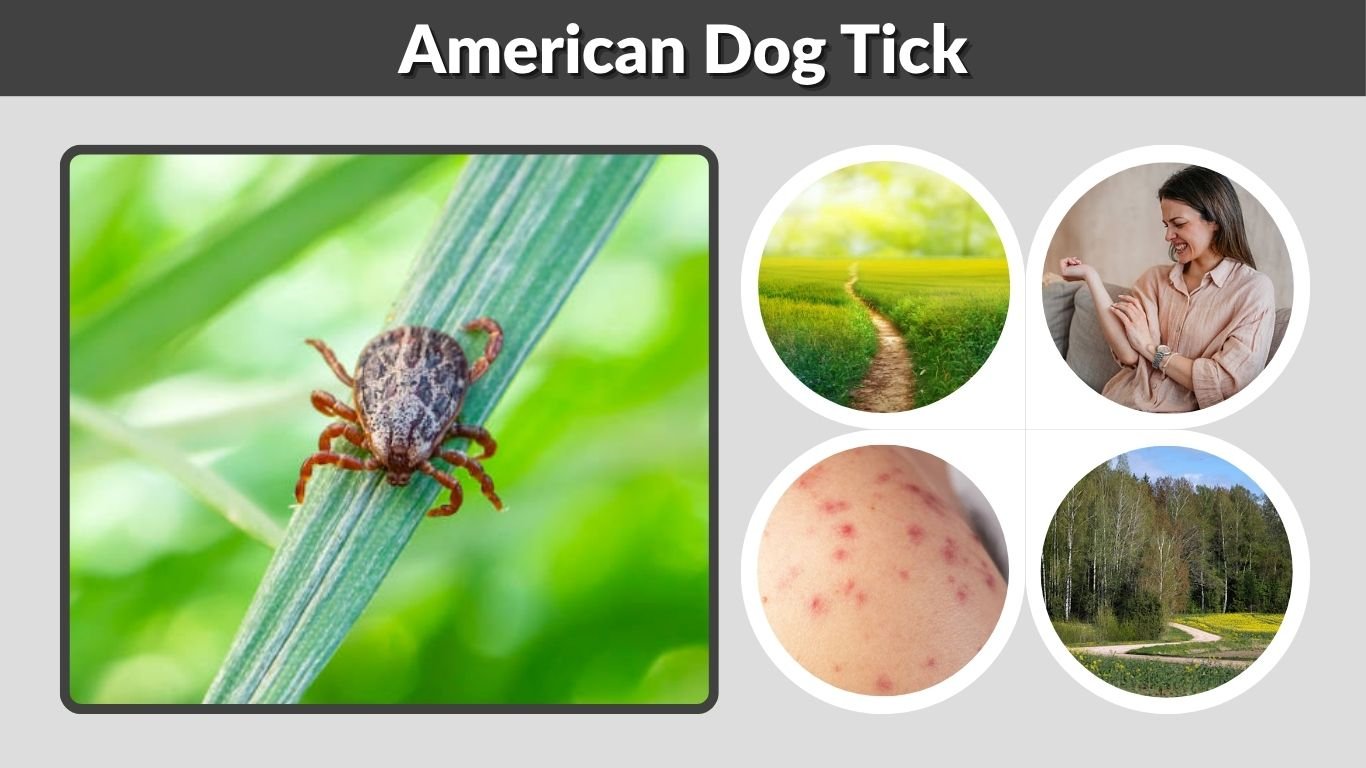
The American dog tick (Dermacentor variabilis) is a common hard tick found across much of the United States, especially east of the Rocky Mountains. Adults frequently feed on dogs and other medium-to-large mammals, but they can also bite humans. This tick is important because it can transmit pathogens responsible for Rocky Mountain spotted fever and tularemia. It does not transmit Lyme disease. Learning its appearance, male and female differences, bite risks, life cycle, and habitat can help you identify and remove it safely.
What Is an American Dog Tick?
The American dog tick is a hard-bodied tick in the family Ixodidae. Its scientific name is Dermacentor variabilis. Adults commonly seek larger hosts, including dogs and people, while immature stages usually feed on smaller animals. Adult females are especially likely to bite people, with human bite risk generally highest during spring and summer.
American Dog Tick Identification
Important identification features include:
- Scientific name: Dermacentor variabilis
- Body color: Reddish-brown to dark brown
- Markings: Cream, gray, or whitish markings on the dorsal shield
- Legs: Eight legs in nymph and adult stages
- Body: Flattened before feeding and rounded when engorged
- Female: Pale-patterned shield mainly over the front of the body
- Male: Pale mottling extends across much of the back
- Type: Hard tick
The patterned dorsal surface is one of the easiest ways to distinguish adults from the more uniformly brown brown dog tick.
American Dog Tick Size
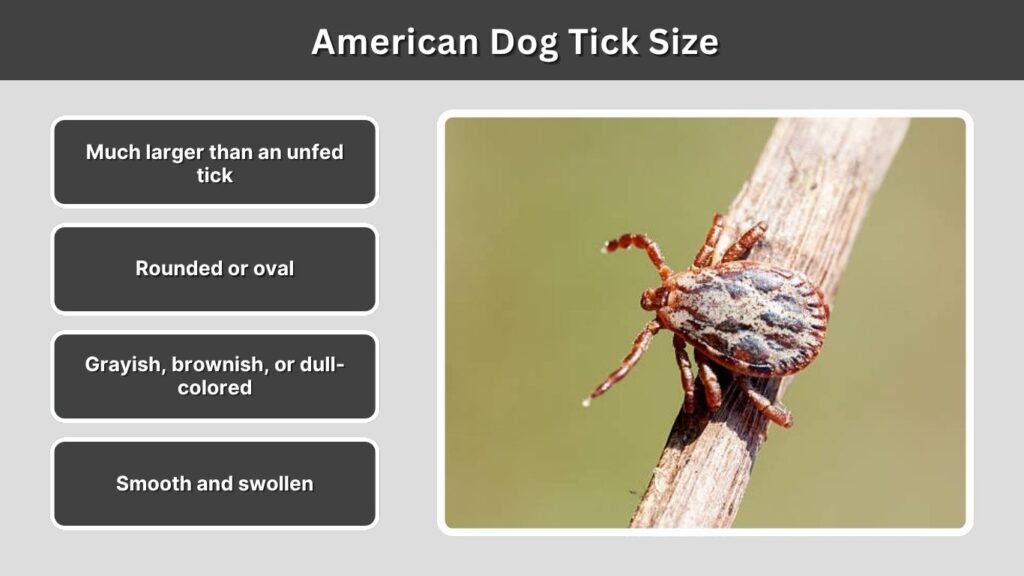
An unfed American dog tick is relatively small and flat, but a female can expand dramatically while taking a blood meal. Size therefore varies with sex, developmental stage, and whether the tick has recently fed.
What Does an Engorged American Dog Tick Look Like?
After feeding, a female’s abdomen expands considerably while the hard shield at the front remains relatively unchanged.
An engorged female may appear:
- Much larger than an unfed tick
- Rounded or oval
- Grayish, brownish, or dull-colored
- Smooth and swollen
- Attached firmly by the mouthparts
- Similar to a small bean or swollen bump from a distance
Always look for legs near the front before assuming a lump on a dog is a tick.
Male vs Female American Dog Tick
Adult males and females are fairly easy to distinguish when viewed from above. The biggest difference is the size of the hard dorsal shield, or scutum. This distinction also explains why females can become much more visibly engorged.
Female American Dog Tick
A female typically has:
- A reddish-brown abdomen
- A cream or whitish patterned shield near the head
- A scutum covering only the front portion
- A body capable of expanding greatly during feeding
- A noticeably swollen appearance after a full blood meal
CDC notes that adult females are the American dog ticks most likely to bite humans.
Male American Dog Tick
A male usually has:
- Cream-and-brown markings over much of the back
- A hard shield covering nearly the entire dorsal surface
- Less dramatic expansion while feeding
- A more consistently patterned appearance
Because the male’s scutum covers most of its body, it cannot expand in the same way as an engorging female.
American Dog Tick Habitat and Range
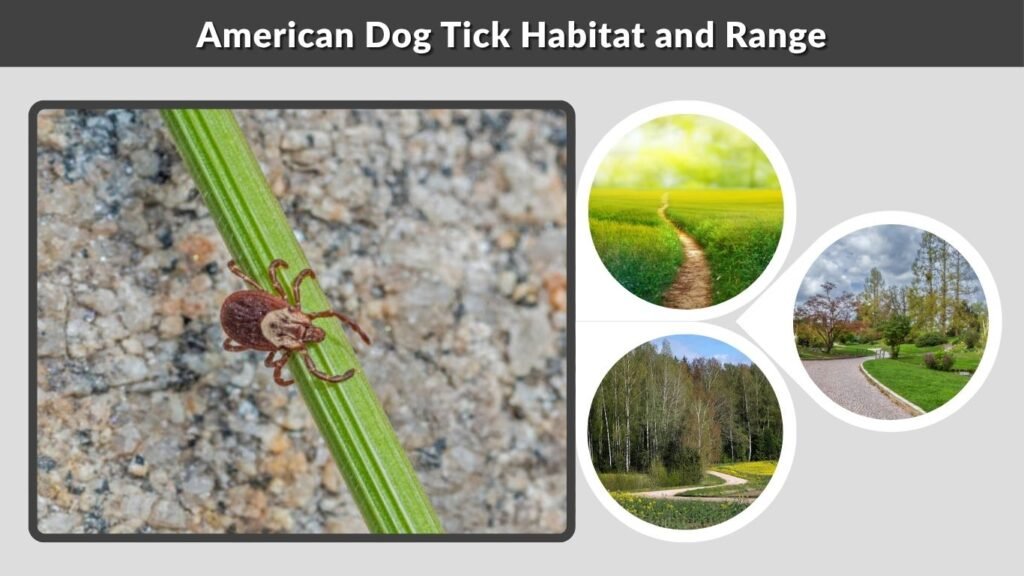
American dog ticks are associated with grassy, brushy, and edge habitats where they can encounter passing hosts. They do not jump or fly; instead, ticks typically position themselves on vegetation and wait for a host to brush past.
Where Are American Dog Ticks Found?
CDC currently describes D. variabilis as widely distributed east of the Rocky Mountains, with more limited areas west of the Rockies. Importantly, some western ticks once classified as D. variabilis are now recognized as the closely related species Dermacentor similis.
Potential encounter areas include:
- Grassy trails
- Fields
- Brushy vegetation
- Woodland edges
- Parks
- Yards
- Areas frequently used by dogs and wildlife
Spring and summer generally bring the highest risk of adult bites.
American Dog Tick Life Cycle
Like other hard ticks, the American dog tick develops through several distinct stages and requires blood meals for development and reproduction. Different stages may use different hosts, which helps the species move between wildlife, pets, and the surrounding environment.
American Dog Tick Stages
The life cycle consists of:
- Egg – Females lay eggs after obtaining a blood meal.
- Larva – The six-legged larva seeks a small host.
- Nymph – The eight-legged nymph feeds before developing into an adult.
- Adult – Adults commonly seek larger mammals such as dogs and may also bite humans.
This multi-host life cycle is one reason tick control requires attention both to pets and outdoor exposure.
American Dog Tick Bite on Humans
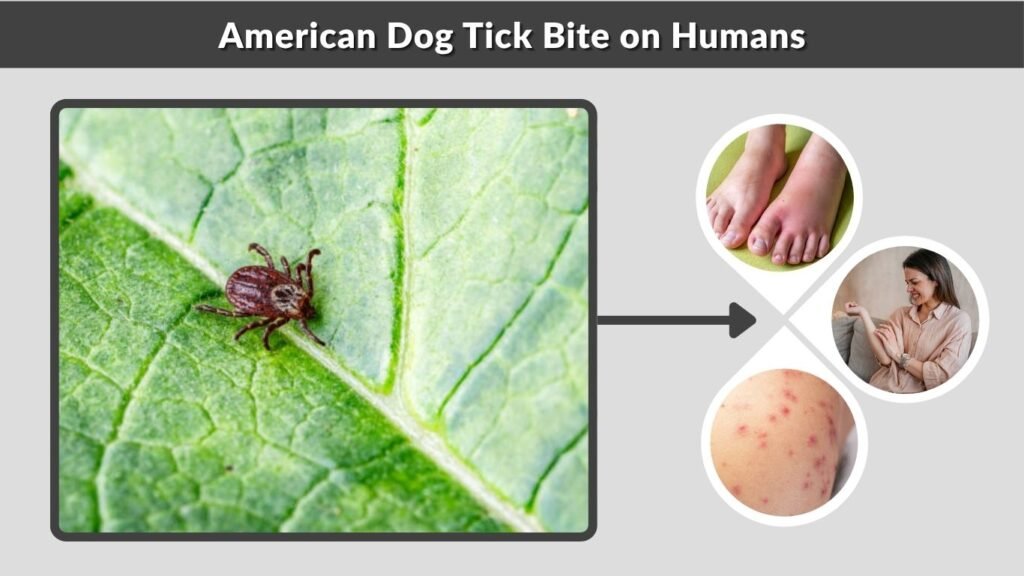
American dog ticks readily bite humans when they encounter a suitable host. The tick embeds its mouthparts into the skin and remains attached while feeding. A bite itself may initially go unnoticed, making routine tick checks particularly important after outdoor activities.
What Does an American Dog Tick Bite Look Like?
After removal, the attachment site may show:
- A small red spot
- Mild swelling
- Local tenderness
- Itching
- A tiny scab
- Minor inflammation
The bite mark itself cannot reliably tell you whether disease transmission occurred.
If illness develops after a tick bite—particularly fever, rash, severe headache, or significant muscle aches—seek medical care promptly and mention the tick exposure. Rocky Mountain spotted fever can become serious if treatment is delayed.
What Diseases Does the American Dog Tick Carry?
The American dog tick is medically important because it can transmit certain disease-causing organisms. However, merely finding an attached tick does not mean that infection has occurred.
Diseases Associated With American Dog Ticks
Two particularly important human diseases are:
- Rocky Mountain spotted fever (RMSF) – Caused by Rickettsia rickettsii
- Tularemia – Caused by Francisella tularensis
CDC identifies the American dog tick as one of the tick species capable of transmitting RMSF in the United States and as a vector of tularemia.
American dog ticks have also been associated with tick paralysis, an uncommon condition caused by toxins released by certain feeding ticks.
Does the American Dog Tick Carry Lyme Disease?
No. This is an important distinction because American dog ticks are sometimes confused with blacklegged ticks, also called deer ticks.
CDC states that Dermacentor variabilis is not able to transmit the bacteria that cause Lyme disease.
American Dog Tick vs Deer Tick
The easiest differences include:
American dog tick:
- Generally larger as an adult
- Reddish-brown
- Pale decorative markings
- Dermacentor variabilis
- Can transmit RMSF and tularemia
- Does not transmit Lyme disease
Blacklegged/deer tick:
- Usually smaller
- Dark legs
- Adult female commonly has a reddish-orange abdomen with a dark shield
- Belongs to Ixodes
- Can transmit Lyme disease
So, identifying the tick species matters when evaluating potential disease exposure.
American Dog Tick vs Brown Dog Tick
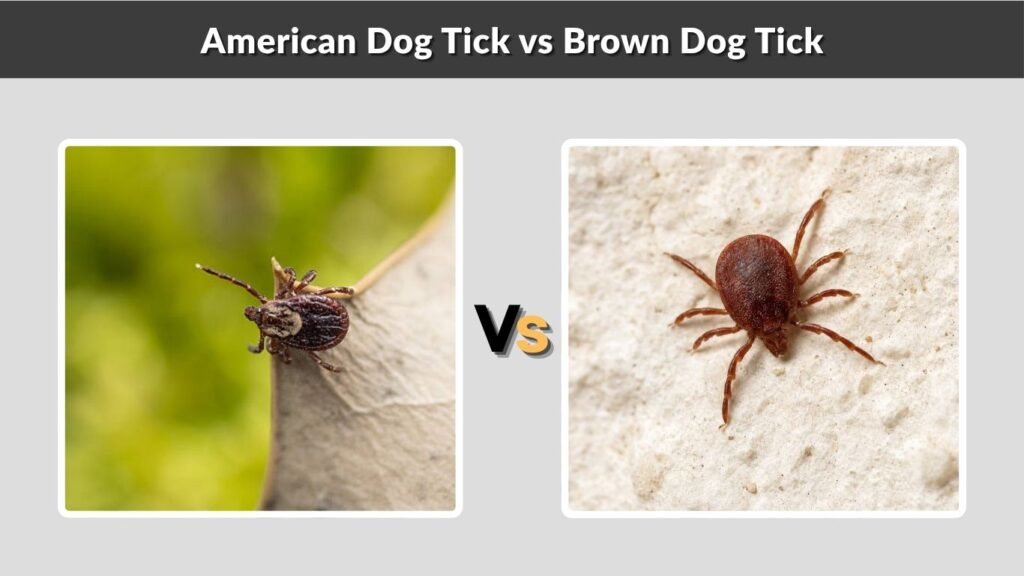
The brown dog tick (Rhipicephalus sanguineus) is another species commonly associated with dogs, but it looks and behaves differently from the American dog tick.
Key Differences
American dog tick:
- Has pale patterned markings
- Often encountered outdoors
- Adults readily feed on dogs and humans
- Associated with grassy and brushy environments
Brown dog tick:
- More uniformly reddish-brown
- Lacks prominent cream ornamentation
- Strongly associated with dogs
- Can establish infestations inside homes and kennels
Both can transmit pathogens, so either species found attached to a dog should be taken seriously.
What to Do If You Find an American Dog Tick
Prompt removal reduces continued exposure and allows you to monitor the bite site afterward. Do not burn the tick, smother it with petroleum jelly, or apply other substances intended to make it detach.
Safe Tick Removal
Use these steps:
- Use clean, fine-tipped tweezers.
- Grasp the tick as close to the skin as possible.
- Pull upward with steady, even pressure.
- Do not twist or jerk the tick.
- Wash the bite area and your hands afterward.
- Monitor yourself or your dog for signs of illness.
CDC recommends mechanical removal with tweezers rather than attempting to detach ticks using heat or substances applied to the tick.
How to Prevent American Dog Ticks
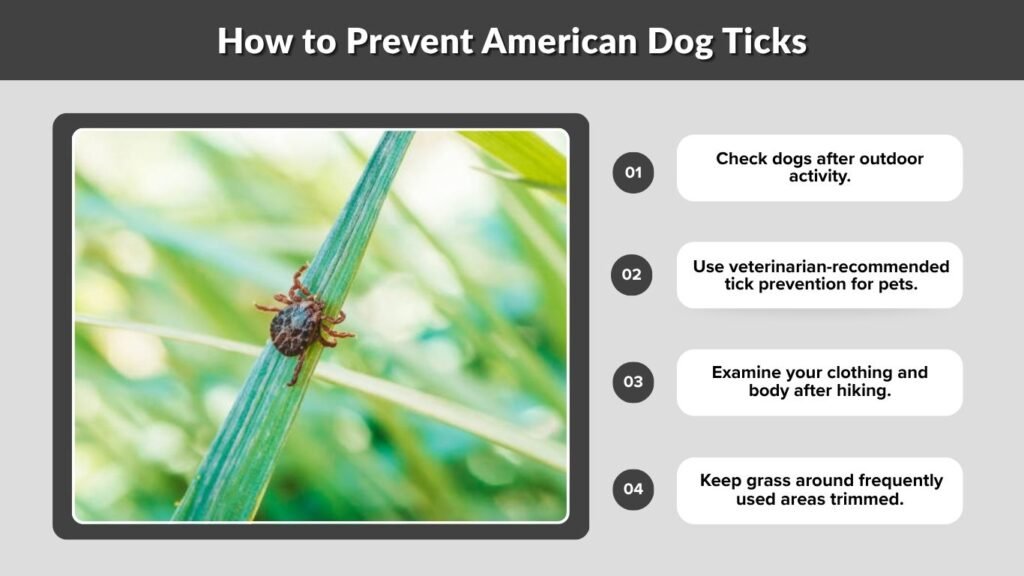
Prevention is especially useful during warmer months and when spending time in grassy or brushy areas. Dogs can also carry ticks into areas where people later encounter them.
Prevention Tips
- Check dogs after outdoor activity.
- Use veterinarian-recommended tick prevention for pets.
- Examine your clothing and body after hiking.
- Check behind knees, around the waist, scalp, armpits, and other hidden areas.
- Keep grass around frequently used areas trimmed.
- Avoid brushing directly against tall vegetation when possible.
- Remove attached ticks promptly.
Consistent tick checks are particularly valuable during spring and summer when adult American dog tick activity and human bite risk are highest.
FAQs
1. Is the American dog tick dangerous?
It can be medically important because it is capable of transmitting pathogens responsible for Rocky Mountain spotted fever and tularemia. However, not every tick is infected and not every bite results in disease.
2. Does an American dog tick transmit Lyme disease?
No. CDC states that American dog ticks do not transmit the bacteria that cause Lyme disease. Blacklegged ticks are responsible for Lyme disease transmission in the United States.
3. What does a female American dog tick look like?
An adult female typically has a reddish-brown body with a distinctive cream or gray patterned shield covering the front portion of her back. She can become greatly enlarged after feeding.
4. What does an engorged American dog tick look like?
A fully fed female becomes swollen and rounded, often turning grayish or dull brown. Her body can become several times more noticeable than when she was unfed.
5. Can American dog ticks bite humans?
Yes. Adult American dog ticks can feed on humans, and adult females are particularly likely to bite people. Human bite risk is generally highest during spring and summer.
