
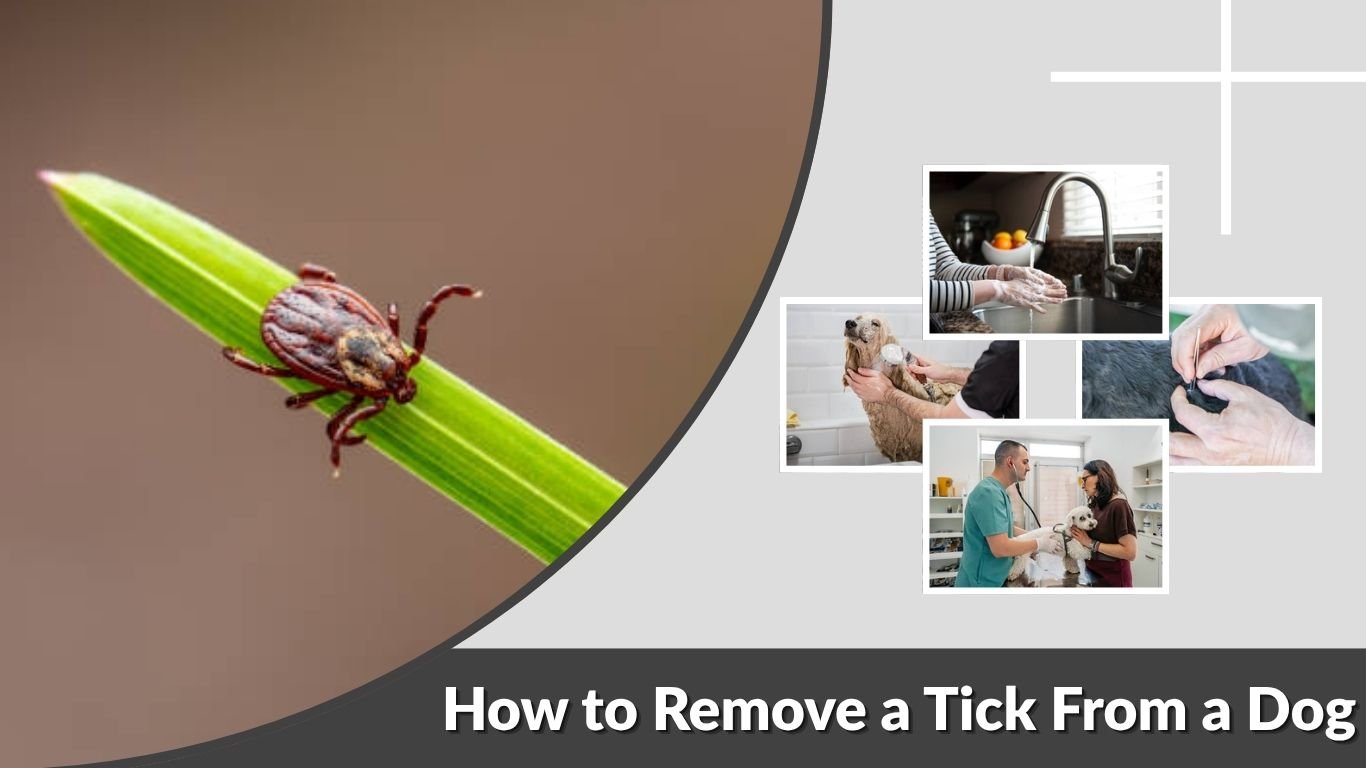
Finding a tick attached to your dog can be alarming, but removing it correctly is usually straightforward. The safest approach is to remove the tick promptly with fine-tipped tweezers, gripping it close to the skin and pulling steadily without twisting or squeezing its swollen body. Avoid popular home remedies such as Vaseline, alcohol, oil, or heat while the tick is attached because they can delay safe removal. This guide explains how to remove normal, embedded, engorged, and broken ticks and what to do afterward.
How to Remove a Tick From a Dog Safely
Ticks should be removed as soon as they are discovered. Veterinary guidance recommends grasping the tick very close to the dog’s skin and pulling it out using steady, controlled pressure. Crushing, twisting, burning, or irritating the attached tick should be avoided. Wearing gloves is also recommended to reduce contact with tick fluids.
What You Need
Prepare these items before beginning:
- Fine-tipped tweezers or a suitable tick-removal tool
- Disposable gloves
- Soap and water
- Rubbing alcohol or another appropriate cleaning agent
- Small sealed container or tape for disposing of the tick
- Good lighting
- Someone to help hold the dog if necessary
Fine-tipped tweezers are particularly effective because they allow you to grasp the tick near its mouthparts rather than squeezing its abdomen.
Step-by-Step Tick Removal
- Keep your dog calm. Have someone gently hold the dog if needed.
- Put on gloves. Avoid direct contact with the tick or its fluids.
- Part the fur. Expose the tick and its attachment point clearly.
- Position the tweezers close to the skin. Grasp the tick near its head or mouthparts rather than its swollen body.
- Pull straight outward. Use slow, steady, even pressure.
- Do not twist or jerk. Doing so may break the mouthparts.
- Check the bite site. Make sure the main body of the tick has been removed.
- Clean the area. Wash the bite site and your hands afterward.
- Dispose of the tick safely. Place it in a sealed container, wrap it tightly in tape, or put it in alcohol.
Merck Veterinary Manual specifically recommends steady upward traction without twisting and warns against crushing the tick.
How to Remove an Embedded Tick From a Dog
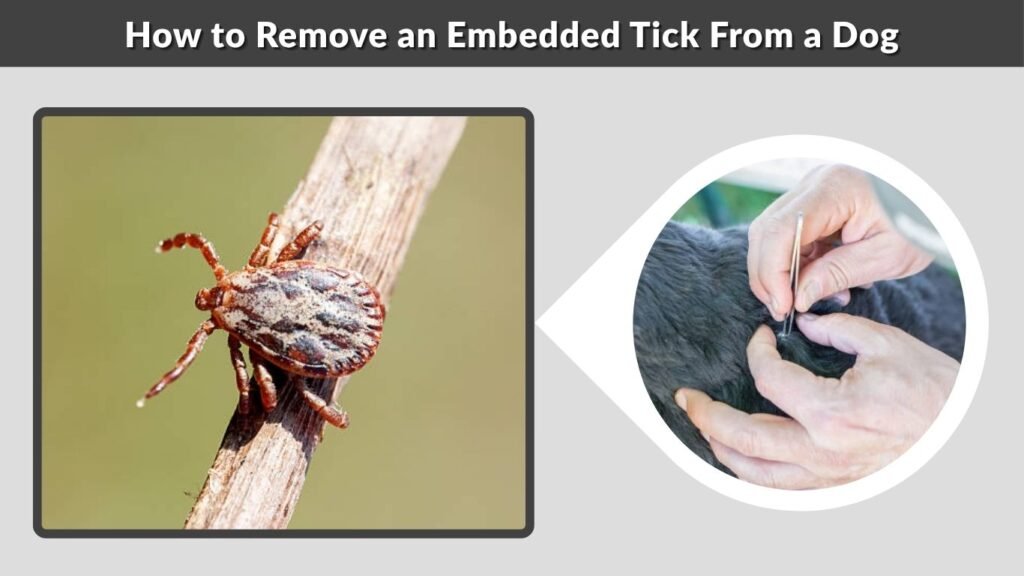
An attached tick may look deeply embedded because its mouthparts are anchored inside the skin. However, the entire body is not actually buried beneath the dog’s skin. The removal technique remains essentially the same: get as close to the attachment point as possible and apply steady pressure instead of pulling on the abdomen.
Removing a Deeply Attached Tick
For an embedded tick:
- Separate the surrounding fur completely.
- Use bright lighting so you can see the tick’s head area.
- Position fine tweezers immediately above the dog’s skin.
- Avoid gripping the enlarged abdomen.
- Pull outward slowly and steadily.
- Stop if the dog is struggling enough to make safe removal difficult.
If the tick is located close to the eye, deep within the ear, or in another difficult location, having a veterinarian remove it may be safer.
What About an Engorged or Huge Tick?
A fully fed tick may look gray, brown, swollen, or bean-like. Do not squeeze the enlarged abdomen.
The larger the tick becomes, the easier it can be to accidentally grab its body rather than its attachment point. Slide the tweezers underneath the swollen portion and grip as close to the skin as possible before pulling steadily outward.
The basic technique does not change because the tick is engorged.
What If the Tick Head Is Stuck in Your Dog?
Sometimes a tick’s mouthparts break off and remain in the skin. This is more likely when the tick is twisted or jerked during removal. It does not mean the entire tick is still alive under the skin. Remaining mouthparts act more like a small foreign object and may cause localized irritation.
How to Remove Remaining Mouthparts
If you can clearly see and easily grasp the remaining material with clean fine-tipped tweezers, carefully remove it.
If it cannot be removed easily, avoid repeatedly digging into your dog’s skin. Merck Veterinary Manual advises that retained mouthparts that cannot be easily removed can generally be left while the skin heals.
Contact your veterinarian if the site develops increasing redness, swelling, discharge, pain, or other concerning changes.
Can You Remove a Tick Without Tweezers?
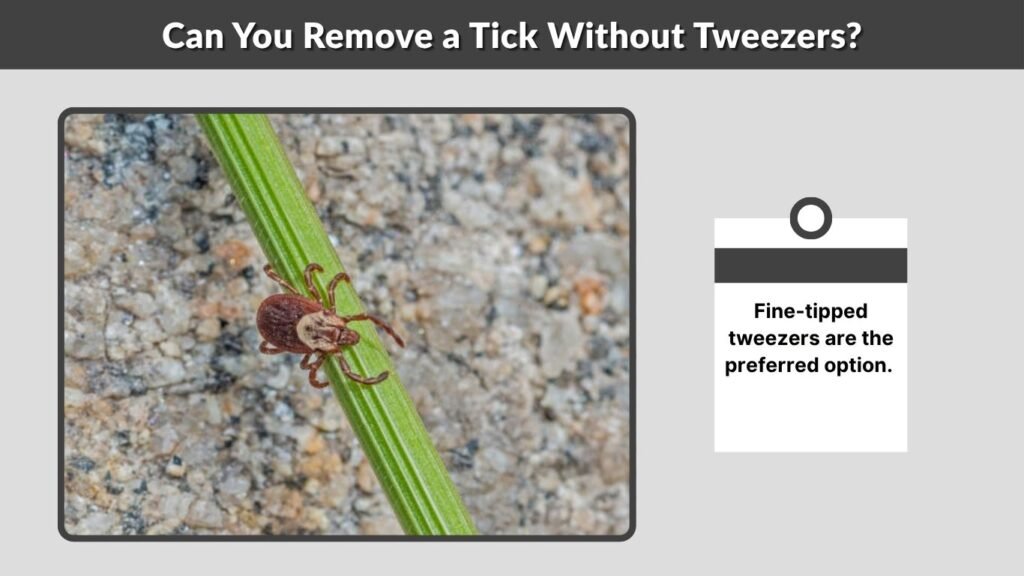
Fine-tipped tweezers are the preferred option. A commercially designed tick-removal device can also be useful when used according to its instructions. CAPC recommends forceps or an appropriate removal device and advises wearing gloves to avoid contact with tick contents.
If You Don’t Have Fine-Tipped Tweezers
Consider these options:
- Use regular tweezers if they can grip close to the skin.
- Use a purpose-built tick-removal tool.
- Ask a veterinarian to remove the tick if you cannot get a secure grip.
- Avoid crushing the tick between your fingers.
CDC’s current guidance states that regular tweezers can be used when fine-tipped tweezers are unavailable.
For dogs, using a tool rather than bare fingers is preferable because veterinary parasite guidance recommends avoiding direct contact with tick contents.
Should You Use Vaseline, Alcohol, Oil, Soap, or Vinegar?
Many home remedies claim to make ticks release themselves. These methods are not recommended as a substitute for prompt mechanical removal.
The goal is to get the attached tick off quickly rather than irritating it and waiting for it to detach.
Methods to Avoid
Do not rely on:
- Vaseline or petroleum jelly
- Rubbing alcohol on the attached tick
- Cooking or essential oils
- Nail polish
- Heat or burning matches
- Vinegar
- Soap mixtures intended to suffocate the tick
Merck Veterinary Manual warns that petroleum jelly, heat, and alcohol do not reliably cause ticks to back out and may irritate them, potentially increasing saliva deposition into the wound.
Alcohol is useful after removal for cleaning or disposing of a tick, but it should not be used as a method to force an attached tick to release.
What to Do After Removing a Tick
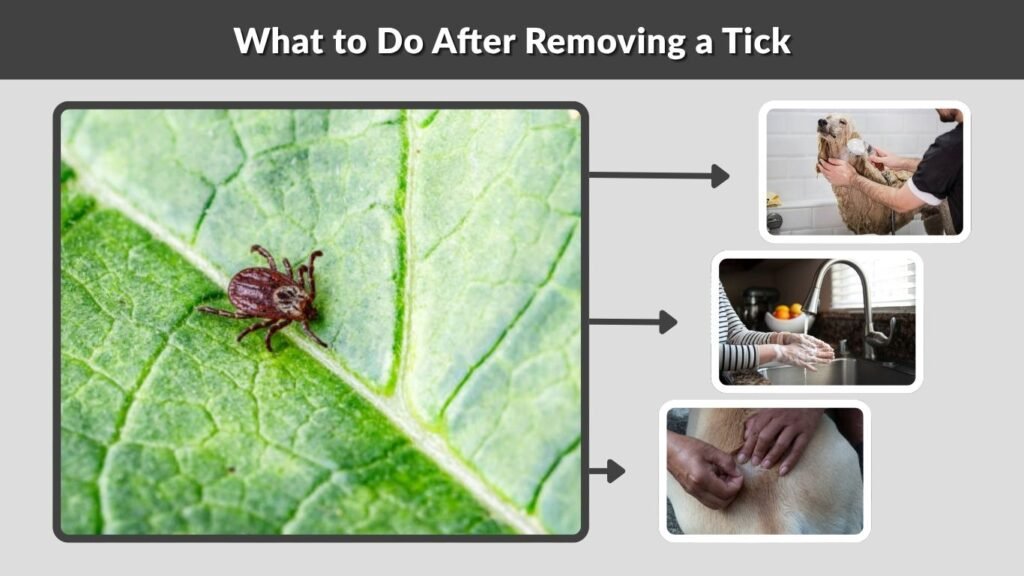
Removal is only the first step. Clean the area, check the rest of your dog’s body, and monitor your pet afterward. Dogs can have multiple ticks attached at the same time, especially after walking through tick-heavy vegetation.
Aftercare Checklist
After removal:
- Clean the bite area with soap and water or an appropriate antiseptic.
- Wash your hands thoroughly.
- Check the entire dog for additional ticks.
- Pay special attention around ears, neck, paws, legs, and under the collar.
- Monitor the bite site for irritation.
- Watch your dog’s general health over the following days and weeks.
- Discuss appropriate tick prevention with your veterinarian.
Tick preventives are an important part of reducing future exposure, and CAPC recommends consistent parasite control rather than relying only on removing ticks after they attach.
When Should You Call a Veterinarian?

Most single attached ticks can be removed at home, but some situations are better handled professionally. Dogs that become sick after tick exposure may need testing and treatment for a tick-borne illness rather than treatment of the bite site alone.
Contact Your Vet If:
- You cannot remove the tick safely.
- Several ticks are attached.
- A tick is attached near the eye or deep inside the ear.
- Your dog becomes unusually tired or weak.
- Your dog develops fever, loss of appetite, lameness, or other illness.
- The bite area becomes increasingly swollen or painful.
- Your dog is extremely anxious or aggressive during removal.
- You are unsure which tick-prevention product is appropriate.
Merck specifically notes that veterinary removal can be safer when several ticks are present.
FAQs
1. What is the easiest way to remove a tick from a dog?
Use fine-tipped tweezers to grip the tick as close to the dog’s skin as possible, then pull straight outward using steady, even pressure. Do not twist or squeeze the tick.
2. Can I use Vaseline to remove a tick from my dog?
No. Petroleum jelly is not recommended for removing attached ticks. Prompt mechanical removal with tweezers is safer and faster.
3. What happens if the tick’s head stays in my dog?
If remaining mouthparts can be easily removed with clean tweezers, remove them. If not, avoid digging deeply into the skin; the site can generally heal while the retained material is expelled.
4. How do you remove a large engorged tick?
Part the fur, grip the tick close to the skin rather than around its swollen abdomen, and pull steadily outward. Avoid crushing the engorged body.
5. Should I take my dog to the vet after removing a tick?
Not every tick requires a veterinary visit. However, contact your veterinarian if removal was incomplete or difficult, numerous ticks are present, the bite worsens, or your dog develops signs of illness afterward.
