
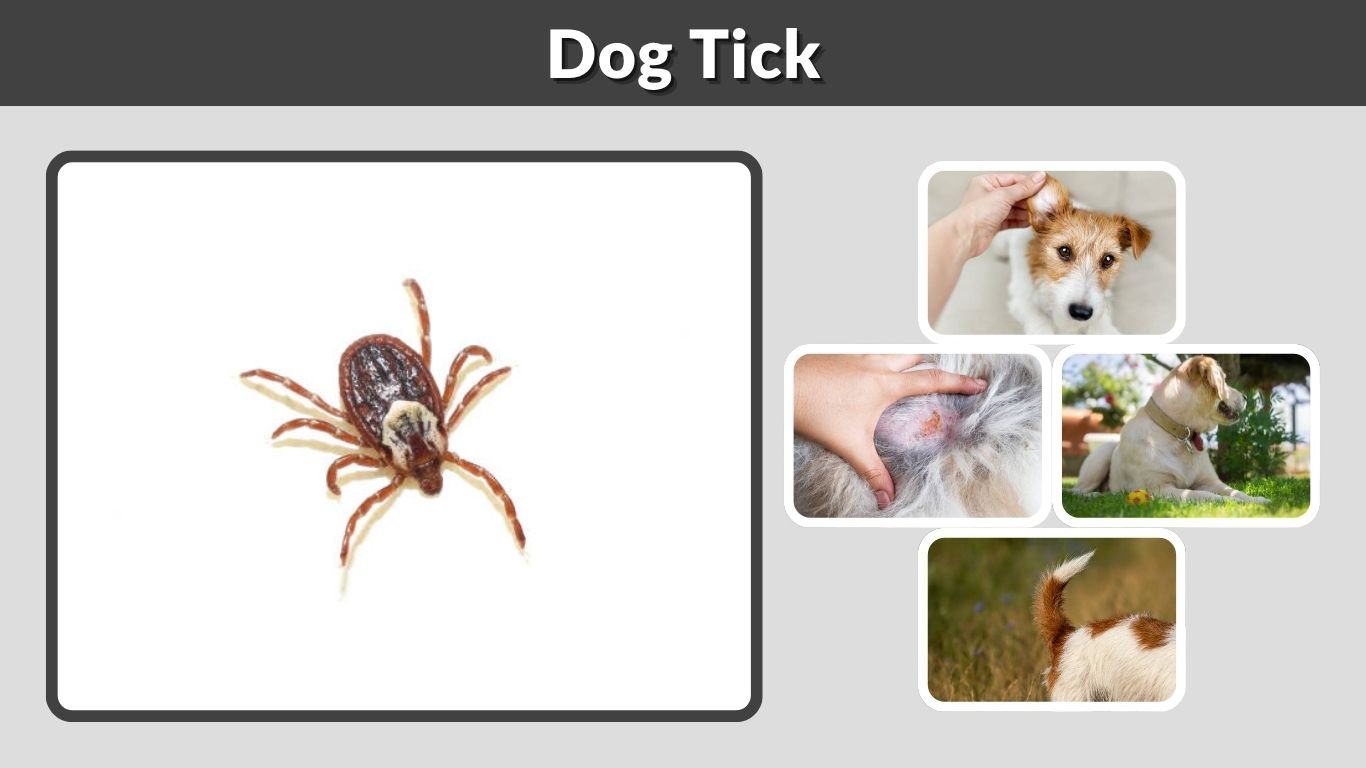
Dog ticks are blood-feeding parasites that can attach to dogs after they walk through grass, brush, wooded areas, yards, or other tick habitat. “Dog tick” may refer specifically to species such as the American dog tick or brown dog tick, but owners also commonly use the term for any tick found on a dog. Because ticks can transmit disease and sometimes enter homes on pets, finding and removing them promptly is important. This guide explains identification, bite appearance, safe removal, diseases, symptoms, and prevention.
What Does a Tick Look Like on a Dog?
Ticks are arachnids rather than insects. Adults have eight legs and attach their mouthparts to the skin to obtain blood. An unfed tick can look flat and relatively small, while a feeding female may become noticeably swollen or engorged. Thick or dark fur can make attached ticks difficult to notice.
Signs You May Be Looking at a Tick
An attached tick may appear as:
- A small brown, reddish, gray, or dark bump
- An oval or rounded body attached firmly to the skin
- Eight legs clustered around the front portion
- A flat body when recently attached
- A larger, swollen body after feeding
- A bump that does not brush away like dirt
- Mild redness around the attachment site
When checking a suspicious lump, part the fur carefully and look for legs before pulling at it.
Common Dog Tick Species
Several tick species can feed on dogs. Two names dog owners frequently encounter are the American dog tick (Dermacentor variabilis) and the brown dog tick (Rhipicephalus sanguineus). Dogs can also acquire blacklegged or “deer” ticks and other species depending on geographic location and habitat.
American Dog Tick
The American dog tick is a relatively large hard tick with reddish-brown coloring and pale or whitish markings on its back. In the United States, D. variabilis occurs widely east of the Rocky Mountains and in some western areas; risk of bites is especially associated with spring and summer.
Brown Dog Tick
Brown dog ticks are generally reddish-brown and lack the decorative pale markings typical of American dog ticks. They are especially important for dog owners because they can establish populations inside homes and kennels rather than depending entirely on outdoor environments.
American Dog Tick vs Deer Tick
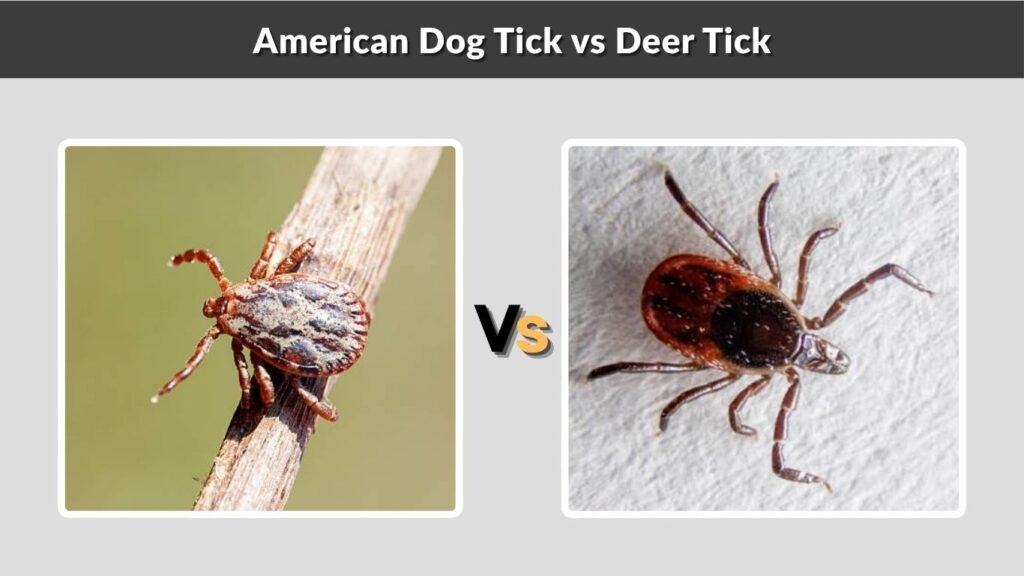
American dog ticks and blacklegged ticks—often called deer ticks—can both attach to dogs, but they are different species and can transmit different pathogens. Accurate identification can be difficult once a tick becomes engorged, so appearance should not be the only factor considered when assessing disease risk.
Quick Differences
American dog tick:
- Usually larger as an adult
- Brown or reddish-brown
- Pale patterned markings
- Belongs to Dermacentor
- Associated with diseases including Rocky Mountain spotted fever
Blacklegged/deer tick:
- Typically smaller
- Dark legs
- Adult females commonly have a dark shield with a reddish-orange abdomen
- Belongs to Ixodes
- Important vector of Lyme disease
Dogs living in or traveling through areas where Ixodes ticks occur may need specific year-round preventive protection and, in Lyme-endemic areas, a veterinarian may also discuss vaccination.
Where Do Ticks Hide on Dogs?
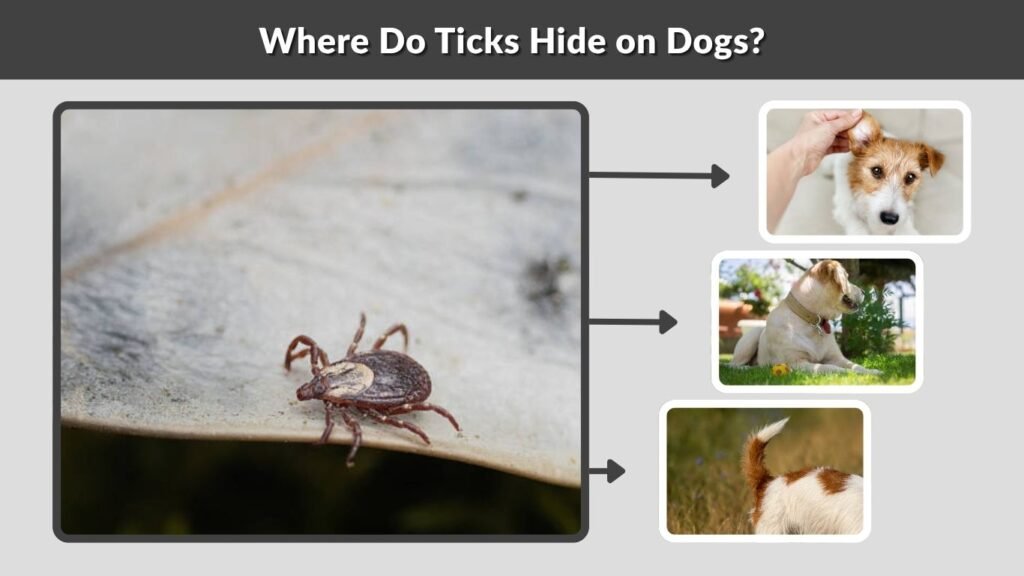
Ticks often attach where the skin is relatively protected and where dogs may have difficulty grooming themselves. A thorough inspection is particularly important after hiking, hunting, camping, or walking through grassy and brushy areas.
Check These Areas Carefully
The CDC recommends checking:
- In and around the ears
- Around the eyelids
- Under the collar
- Under the front legs
- Between the toes
- Between the back legs
- Around the tail
Daily tick checks are recommended for pets that spend time outdoors.
How to Remove a Tick From a Dog
Removing an attached tick promptly is important. The safest basic technique uses fine-tipped tweezers or another veterinary-approved tick-removal tool. Avoid crushing or squeezing the tick’s swollen body while it is attached.
Step-by-Step Tick Removal
- Part the dog’s fur until you can clearly see the attachment point.
- Use clean fine-tipped tweezers to grasp the tick as close to the dog’s skin as possible.
- Grasp near the mouthparts, rather than squeezing the swollen abdomen.
- Pull steadily outward with even pressure.
- Do not twist or jerk the tick.
- Clean the bite area and your hands after removal.
- Dispose of the tick safely in a sealed container, alcohol, or tightly wrapped tape.
- Check the rest of the dog because more than one tick may be present.
The same general fine-tipped-tweezer method is recommended for tick removal, and Merck specifically advises grasping close to the skin and pulling straight out without squeezing the tick’s body.
What Not to Put on an Attached Tick
Do not try to make an attached tick release by coating it with petroleum jelly, nail polish, or other substances, and do not use heat. CDC guidance warns that such methods can agitate the tick rather than providing safe mechanical removal.
What If the Tick Head Is Stuck in the Dog?
Sometimes the mouthparts can remain in the skin if a tick is twisted or pulled incorrectly. Avoid repeatedly digging deeply into the dog’s skin, which can create additional tissue damage.
What Should You Do?
If visible mouthparts can be easily grasped with clean tweezers, they may be removed carefully. If they cannot be removed easily, contact your veterinarian for advice—especially if the area becomes increasingly swollen, painful, red, or produces discharge.
The general principle during removal is to pull steadily rather than twist or jerk, which lowers the chance of breaking the mouthparts.
What Does a Tick Bite Look Like on a Dog?
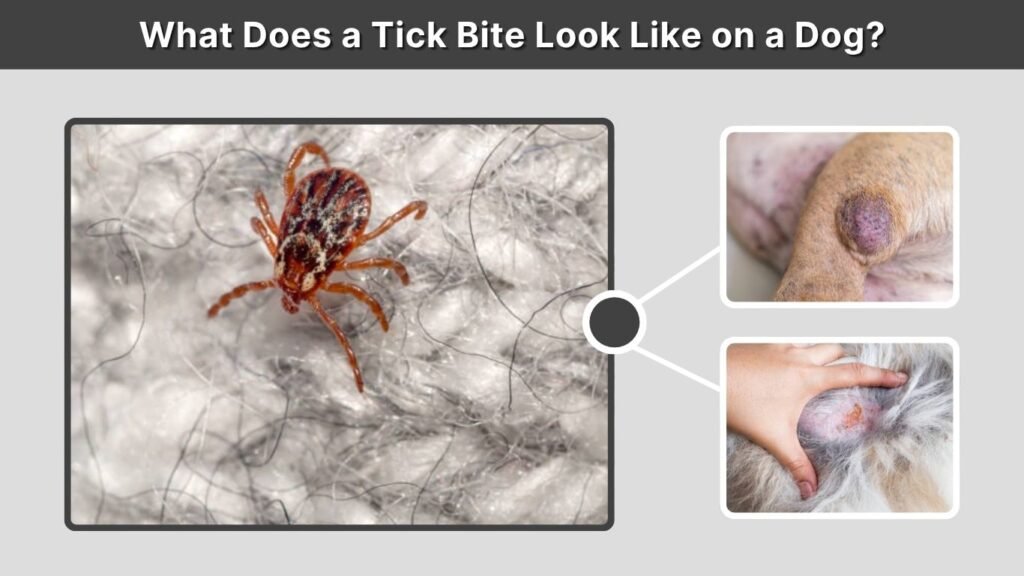
After the tick is removed, you may notice a small irritated area where its mouthparts entered the skin. The exact appearance varies depending on how long the tick fed and how strongly the dog’s skin reacts.
Possible Bite-Site Changes
You may notice:
- A small red bump
- Mild swelling
- A tiny scab
- Localized tenderness
- Minor irritation
- Temporary hair disturbance around the attachment point
Tick wounds can occasionally develop secondary bacterial infection, so worsening inflammation rather than gradual improvement deserves veterinary attention.
Can Dog Ticks Cause Disease?
Yes. Ticks can transmit pathogens while feeding, although finding a tick does not automatically mean the dog has been infected. Diseases associated with ticks in dogs include Lyme disease, ehrlichiosis, Rocky Mountain spotted fever, and other infections that vary by tick species and geographic region.
Symptoms to Watch For
Contact your veterinarian if a dog develops concerning changes after tick exposure, including:
- Reduced appetite
- Unusual tiredness
- Fever
- Lameness or stiffness
- Swollen joints
- Weakness
- Neurologic problems
- Significant behavioral changes
CDC notes that signs of tickborne disease in pets may not appear until 7–21 days or longer after a bite, so continued observation after tick removal is worthwhile.
How to Prevent Ticks on Dogs
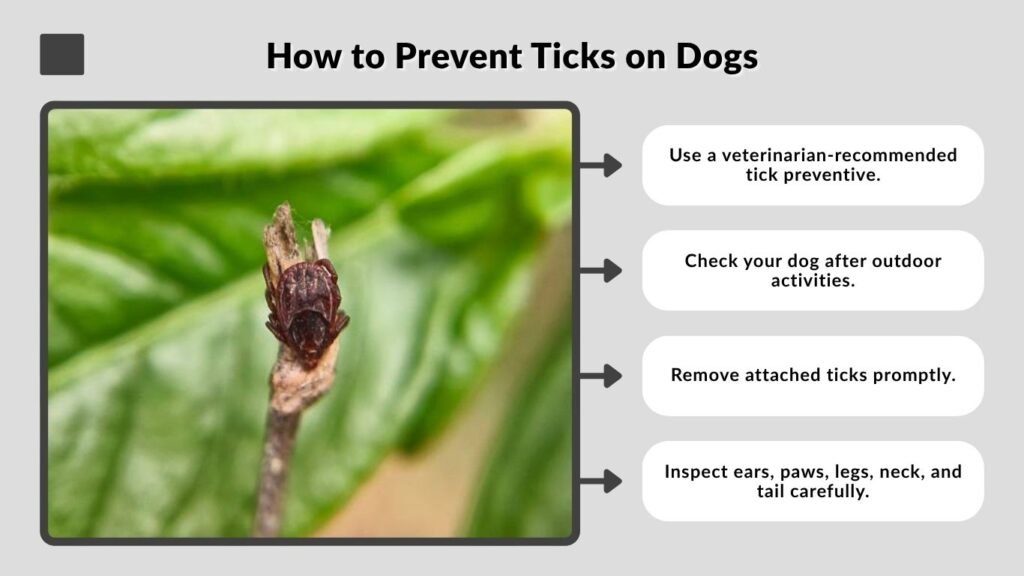
Prevention is more effective than waiting until a large infestation develops. Your veterinarian can recommend an appropriate preventive based on your dog’s weight, age, health, lifestyle, location, and the tick species found in your region.
Tick Prevention Tips
- Use a veterinarian-recommended tick preventive.
- Maintain protection throughout the year when recommended for your area.
- Check your dog after outdoor activities.
- Remove attached ticks promptly.
- Inspect ears, paws, legs, neck, and tail carefully.
- Reduce tick-friendly habitat around the yard.
- Check bedding and kennels if brown dog ticks are suspected.
CDC recommends daily tick checks and discussing the best preventive product with your veterinarian, while CAPC recommends year-round tick control for dogs.
When Should You Take Your Dog to a Veterinarian?
A single tick can often be removed at home, but veterinary care becomes more important when numerous ticks are present or the dog begins showing signs of illness.
Contact a Vet If:
- You cannot safely remove the tick.
- Many ticks are attached.
- The bite becomes increasingly inflamed.
- Your dog develops fever or lethargy.
- Appetite suddenly decreases.
- Your dog develops lameness or weakness.
- Neurologic symptoms appear.
- You are unsure which prevention product is safe.
Severe infestations can be medically significant, and some tickborne illnesses require prompt veterinary diagnosis and treatment.
FAQs
1. What is the best way to remove a tick from a dog?
Use clean fine-tipped tweezers, grasp the tick close to the dog’s skin, and pull outward with steady, even pressure without twisting or squeezing its body.
2. What does an engorged tick look like on a dog?
An engorged tick becomes much larger and more rounded as it feeds. Its swollen body may resemble a smooth gray, brown, or olive-colored bump attached firmly to the skin.
3. Should I take my dog to the vet after finding a tick?
Not every tick requires an immediate veterinary visit, but you should monitor your dog and contact your veterinarian if illness develops, multiple ticks are present, removal is difficult, or you are concerned about tickborne diseases in your area.
4. Can dogs bring ticks into the house?
Yes. Dogs can carry ticks indoors, and brown dog ticks are particularly notable because they can infest indoor environments such as homes and kennels.
5. How often should I check my dog for ticks?
Check dogs that go outdoors daily, particularly after time in grassy, wooded, or brushy areas. Promptly remove any attached tick you find.
