
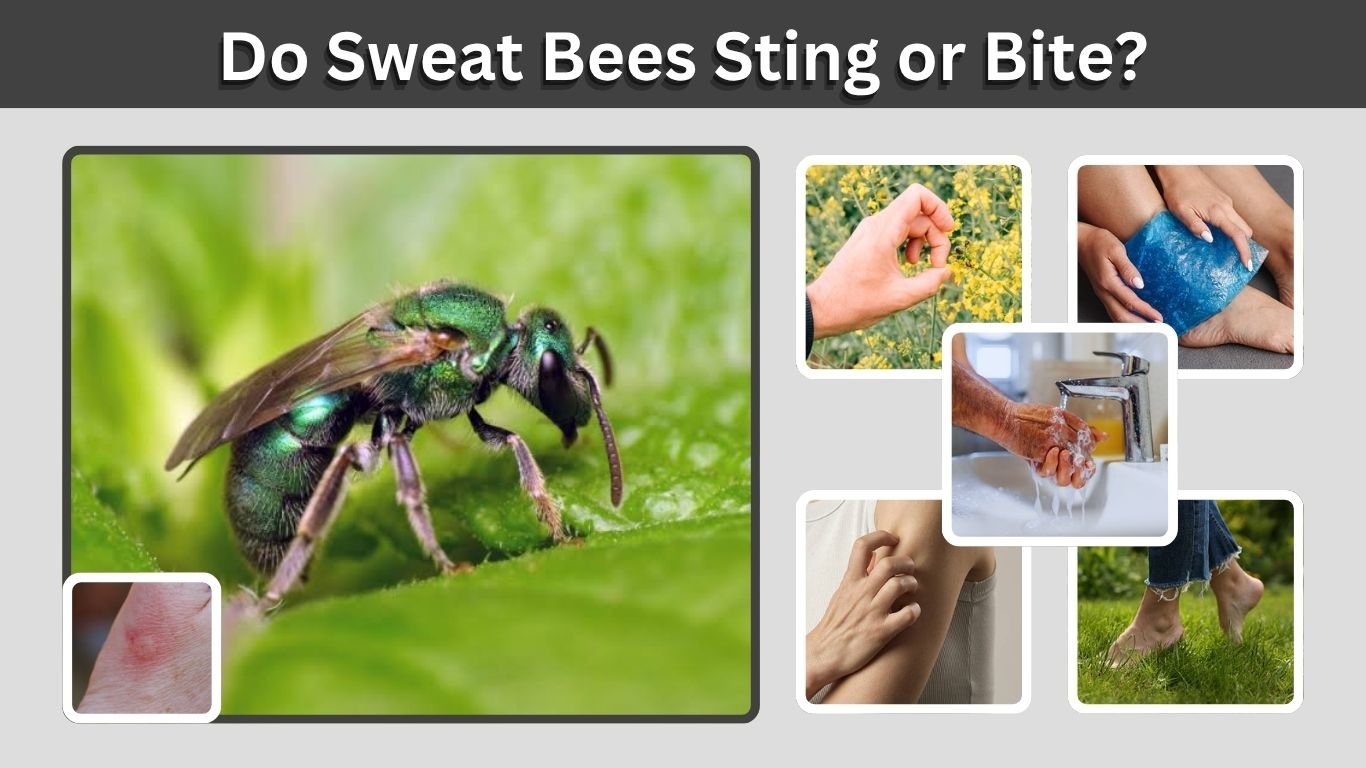
Yes, sweat bees can sting, but they rarely sting people without a reason. Only female sweat bees have stingers, and they typically use them when trapped, squeezed, stepped on, or threatened. Males cannot sting. A sweat bee sting is generally mild, causing brief pain, redness, itching, or localized swelling. Unlike honeybees, sweat bees usually retain their stingers and can sting more than once. Although serious reactions are uncommon, any bee sting can cause a dangerous allergic reaction in a sensitive person.
What Are Sweat Bees?
Sweat bees are small bees belonging to the Halictidae family. More than a single species is called a sweat bee, so their appearance and behavior can vary considerably.
Some species are dull black or brown, while others have brilliant metallic green, blue, bronze, or purple bodies. Most are considerably smaller than honeybees. They are valuable pollinators that visit wildflowers, garden plants, fruits, and vegetables.
Why Are They Called Sweat Bees?
Some sweat bees land on people to consume moisture and dissolved salts from perspiration. They are especially noticeable during hot weather, when people are sweating outdoors.
A bee crawling on your arm is normally looking for salt rather than preparing to attack. However, swatting or pressing it against your skin may cause a defensive sting.
Are Sweat Bees Aggressive?
Sweat bees are not considered aggressive. Most are solitary or live in relatively small social groups, and they do not defend large, resource-rich colonies in the same way honeybees and some social wasps do.
They normally fly away when disturbed. Stings usually occur when a bee becomes trapped under clothing, gets tangled in hair, is stepped on, or is swatted while drinking perspiration.
Do Sweat Bees Sting or Bite?
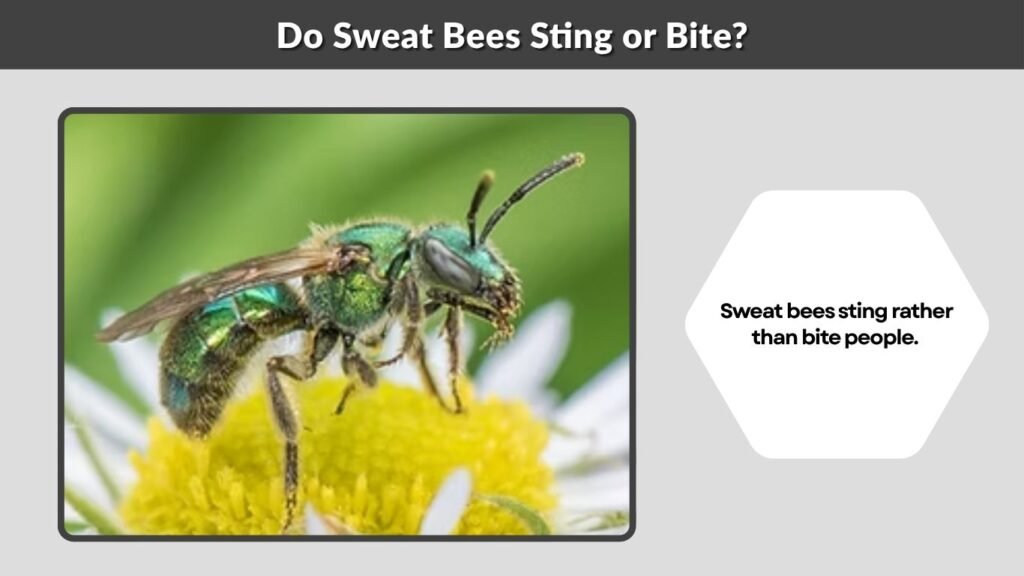
Sweat bees sting rather than bite people. They possess mandibles for handling nesting materials and food, but these mouthparts are not normally used to bite human skin.
The sensation people describe as a sweat bee bite is generally a sting. Because the bee is tiny, the person may not see it clearly and may assume the sudden pinching sensation came from a bite.
Do Female Sweat Bees Sting?
Adult female sweat bees can sting. A bee’s stinger developed from an egg-laying structure, which is why it occurs only in females.
Female sweat bees may sting while protecting themselves or, in some species, their nesting area. However, even a female usually needs to be trapped or physically threatened before she stings.
Do Male Sweat Bees Sting?
Male sweat bees do not have stingers and cannot sting. They may fly around people, flowers, or nesting sites, but they present no stinging risk.
Determining the sex of a tiny, fast-moving bee is difficult without close examination. Therefore, it is safest to avoid handling any unidentified bee.
Do Baby Sweat Bees Sting?
Immature sweat bees cannot sting people. The eggs, larvae, and pupae remain inside protected nest cells until they develop into adults. They do not fly around or interact with people.
Once an adult female emerges, however, she possesses a functional stinger and may use it defensively.
Why Do Sweat Bees Sting People?
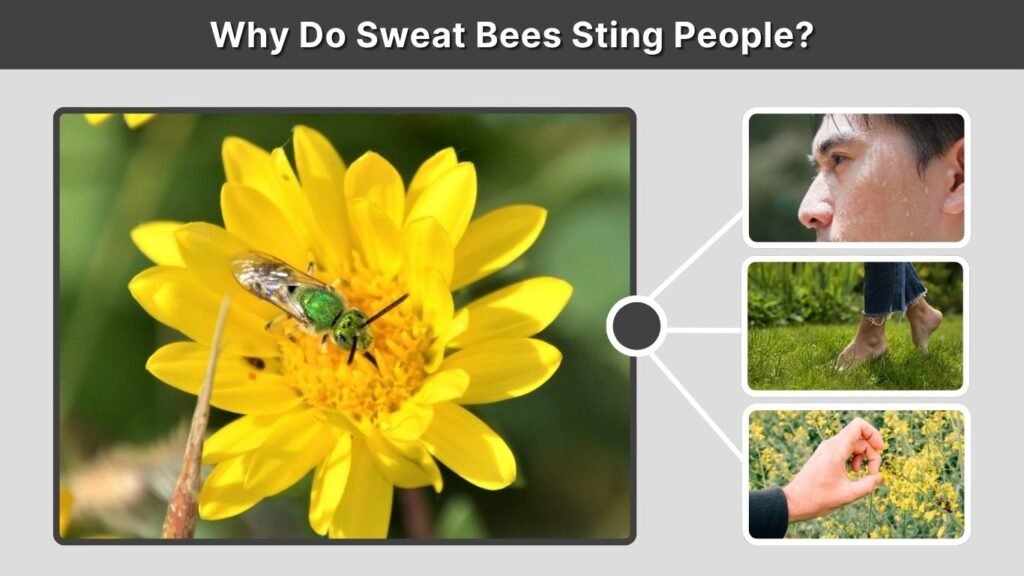
Sweat bees do not normally sting without a reason. They are more likely to sting when they perceive immediate physical danger.
Common situations that may result in a sting include:
- Swatting a sweat bee while it is on your skin
- Pressing the bee between your body and clothing
- Walking barefoot over a nesting area
- Grabbing flowers while a bee is feeding
- Digging into an underground nest
- Trapping a bee in your hand, hair, or towel
- Disturbing exposed soil containing multiple nests
A sweat bee visiting perspiration is not attempting to feed on blood. Remaining still or gently brushing it away is less likely to provoke a sting than slapping it.
Do Green Sweat Bees Sting?
Female green sweat bees can sting, although they are generally reluctant to do so. “Green sweat bee” can refer to several metallic species in genera such as Agapostemon and Augochlora.
Their shimmering green or blue-green appearance can make them look unusual, but their behavior is usually peaceful. They spend most of their time gathering pollen and nectar. A sting is most likely when a female is trapped, handled, or accidentally pressed against the skin.
What Does a Sweat Bee Sting Feel Like?
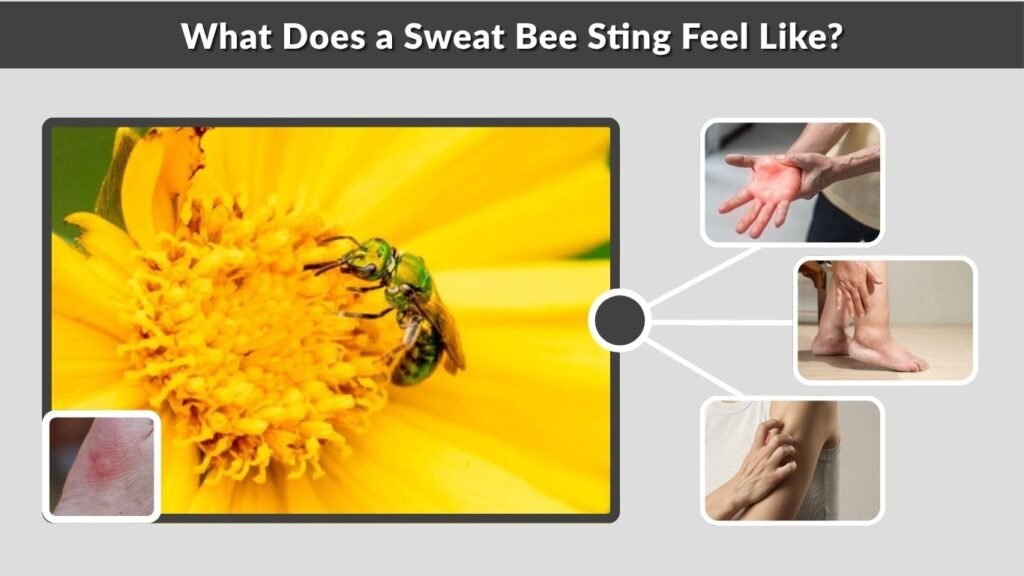
A sweat bee sting may feel like a quick pinprick, tiny spark, or brief burning sensation. Because these bees are small, their stings are usually less painful than those of honeybees, yellowjackets, or hornets.
Pain varies according to the species, sting location, amount of venom delivered, and individual sensitivity. Thin-skinned areas such as the face, fingers, lips, and feet may hurt more.
Common Sweat Bee Sting Symptoms
A normal localized reaction may include:
- Immediate sharp or burning pain
- A small red or raised spot
- Mild swelling around the sting
- Itching or tenderness
- Warmth at the affected area
These symptoms often begin improving within several hours, although itching or swelling may persist for a few days. Avoid scratching, as broken skin can become infected.
Do Sweat Bee Stings Hurt?
Yes, but the pain is generally mild and temporary. Sweat bee stings are placed near the mild end of the Schmidt Sting Pain Index, while a honeybee sting is rated higher.
Nevertheless, “mild” does not mean painless. A sting near the eye, inside the mouth, or on another sensitive body part can be particularly painful and may require medical assessment.
Do Sweat Bee Stings Itch?
A sweat bee sting can itch as the body responds to the venom. Mild itching around the sting is common and does not necessarily indicate an allergy.
Intense or spreading itching, widespread hives, swelling away from the sting, or other whole-body symptoms may indicate an allergic reaction.
Is Pus Normal After a Sweat Bee Sting?
Pus is not a normal immediate reaction. A small pale bump can appear because of local swelling, but true yellow or green drainage may indicate infection.
Seek medical advice if the area becomes increasingly painful, hot, swollen, or red after initially improving, particularly if you develop fever, red streaks, or drainage.
Do Sweat Bees Leave a Stinger?
Sweat bees generally do not leave their stingers in human skin. Unlike worker honeybees, their stingers are not designed to tear away after penetrating mammalian skin.
If a visible stinger remains, the insect may have been a honeybee rather than a sweat bee. Remove any retained stinger promptly and wash the area. Accurate identification can be difficult, so treat the reaction rather than relying entirely on the insect’s appearance.
Can Sweat Bees Sting More Than Once?
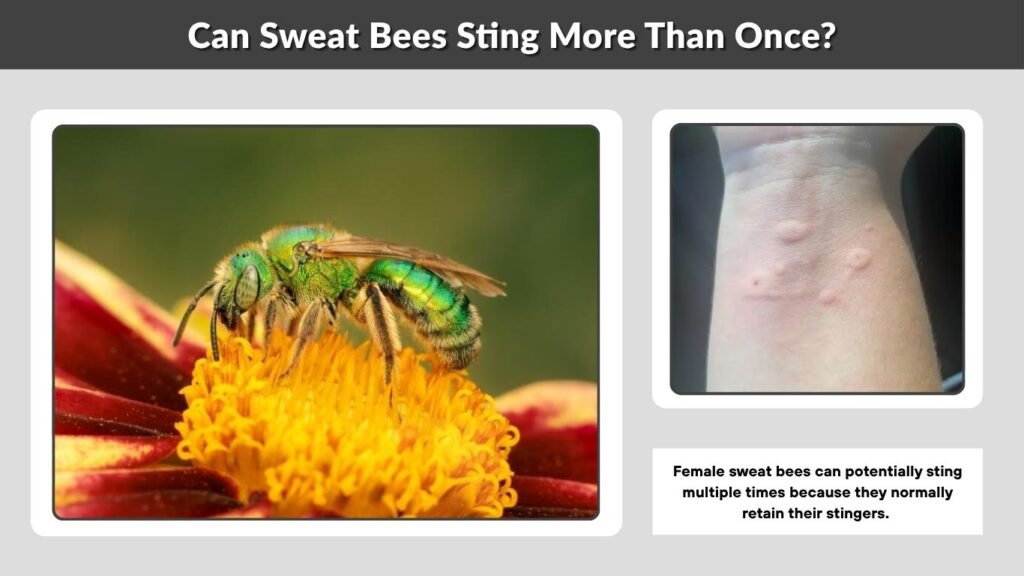
Female sweat bees can potentially sting multiple times because they normally retain their stingers. A sweat bee may sting twice or more if it remains trapped against the skin.
In practice, repeated stings from one sweat bee are unusual. It generally attempts to escape after defending itself. Move away calmly and avoid crushing it against your body.
Do Sweat Bees Die After They Sting?
Sweat bees do not normally die after stinging. Their stingers usually remain attached, allowing them to fly away and potentially sting again.
Worker honeybees are different. Their barbed stingers can become embedded in human skin, damaging the bee fatally when it pulls away. Sweat bees generally lack this one-sting limitation.
Are Sweat Bee Stings Dangerous?
For most people, a single sweat bee sting causes only a mild local reaction. However, the small size of the bee does not guarantee that an allergic person will have a mild response.
Multiple stings and stings involving the eye, mouth, tongue, or throat deserve additional caution. Children, older adults, and people with known insect-venom allergies should be monitored carefully.
Signs of a Severe Allergic Reaction
Call emergency services immediately if the affected person develops:
- Trouble breathing, wheezing, or throat tightness
- Swelling of the tongue, lips, face, or throat
- Widespread hives or intense itching
- Dizziness, confusion, weakness, or fainting
- A rapid or weak pulse
- Repeated vomiting or severe abdominal symptoms
These can be signs of anaphylaxis. If the person has a prescribed epinephrine auto-injector, use it according to their emergency plan and seek immediate medical care. Epinephrine is the first-line treatment for anaphylaxis; an antihistamine is not a substitute. Poison Control
How to Treat a Sweat Bee Sting
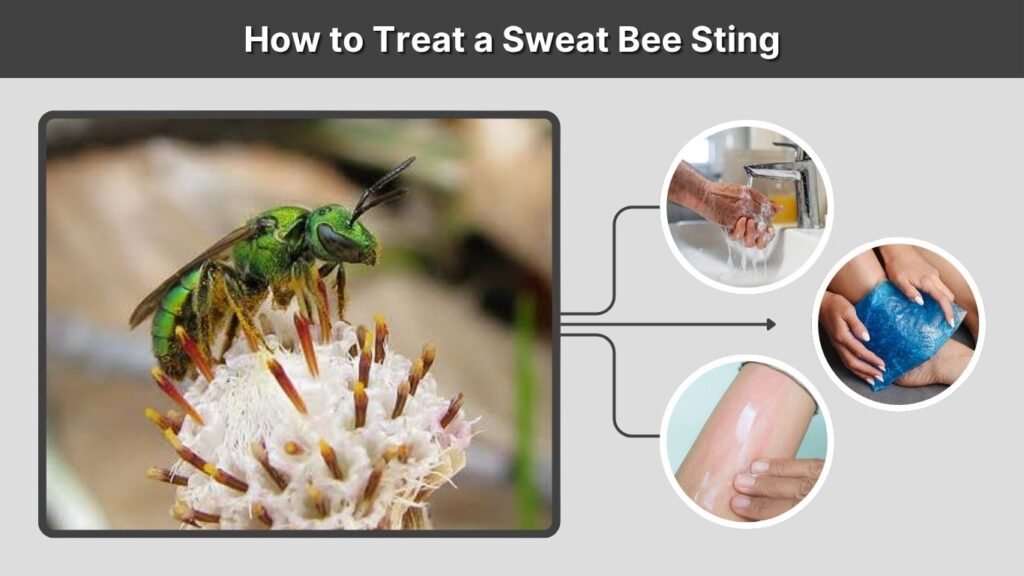
Most mild sweat bee stings can be managed at home. Begin treatment as soon as possible and continue watching for symptoms of an allergic reaction.
Step 1: Move Away From the Area
Walk away calmly, particularly if the sting happened near holes in the ground. Several sweat bees may nest in the same patch of soil, even though each female may maintain her own nest.
Step 2: Check for a Stinger
A sweat bee usually does not leave a stinger. Nevertheless, inspect the area because the insect may have been misidentified.
If you see a stinger, remove it promptly. Do not spend excessive time worrying about the method—the priority is getting it out quickly.
Step 3: Wash the Sting
Wash the skin gently with soap and water. Remove rings, bracelets, or tight items if the sting is on a hand or limb that may swell.
Step 4: Apply a Cold Compress
Place a cold pack wrapped in a cloth over the sting for about 10 to 20 minutes. This can reduce pain, itching, and swelling. Never apply ice directly to the skin.
Step 5: Manage Itching and Pain
Calamine lotion or an over-the-counter hydrocortisone cream may help mild itching. An oral antihistamine or pain reliever may also be appropriate for some people, but follow the product label and ask a healthcare professional if you have medical conditions, take other medicines, are pregnant, or are treating a child.
Do not scratch or squeeze the area. Poison Control’s bee-sting guidance also recommends washing the site and using ice for localized symptoms.
How to Keep Sweat Bees From Stinging You
Avoiding close contact is usually easier than controlling these beneficial pollinators.
- Wear shoes over areas containing ground nests.
- Do not swat bees that land on sweaty skin.
- Wipe away perspiration during outdoor activities.
- Wear lightweight clothing that covers exposed skin.
- Keep sweet drinks and fruit covered.
- Repair leaking faucets and remove standing water.
- Use an outdoor fan around patios and pool seating.
- Keep children and pets away from active nesting areas.
- Avoid digging or mowing directly over nests when bees are active.
If one lands on you, remain calm and gently brush it away with a piece of paper or clothing. Sweat bees are more likely to sting when squeezed than when allowed to leave.
Frequently Asked Questions
Will sweat bees sting you for no reason?
No. Sweat bees usually sting only after being trapped, squeezed, stepped on, swatted, or disturbed near a nest. Landing on sweaty skin is feeding behavior, not an attack.
Can tiny sweat bees sting?
Yes. Even very small adult females may sting, although their sting is normally mild. Male sweat bees and immature larvae cannot sting.
Can a sweat bee sting twice?
Yes. A female sweat bee normally retains her stinger and can potentially sting more than once. It does not usually die after stinging.
Are sweat bee stings the same as regular bee stings?
Both involve venom delivered through a stinger, but sweat bee stings are usually milder. Sweat bees also normally keep their stingers, whereas worker honeybees often leave theirs behind.
Can sweat bees sting dogs?
A female can sting a dog if trapped in its fur, stepped on, or snapped at. Contact a veterinarian promptly if the dog develops facial swelling, breathing difficulty, repeated vomiting, weakness, or numerous stings.
