
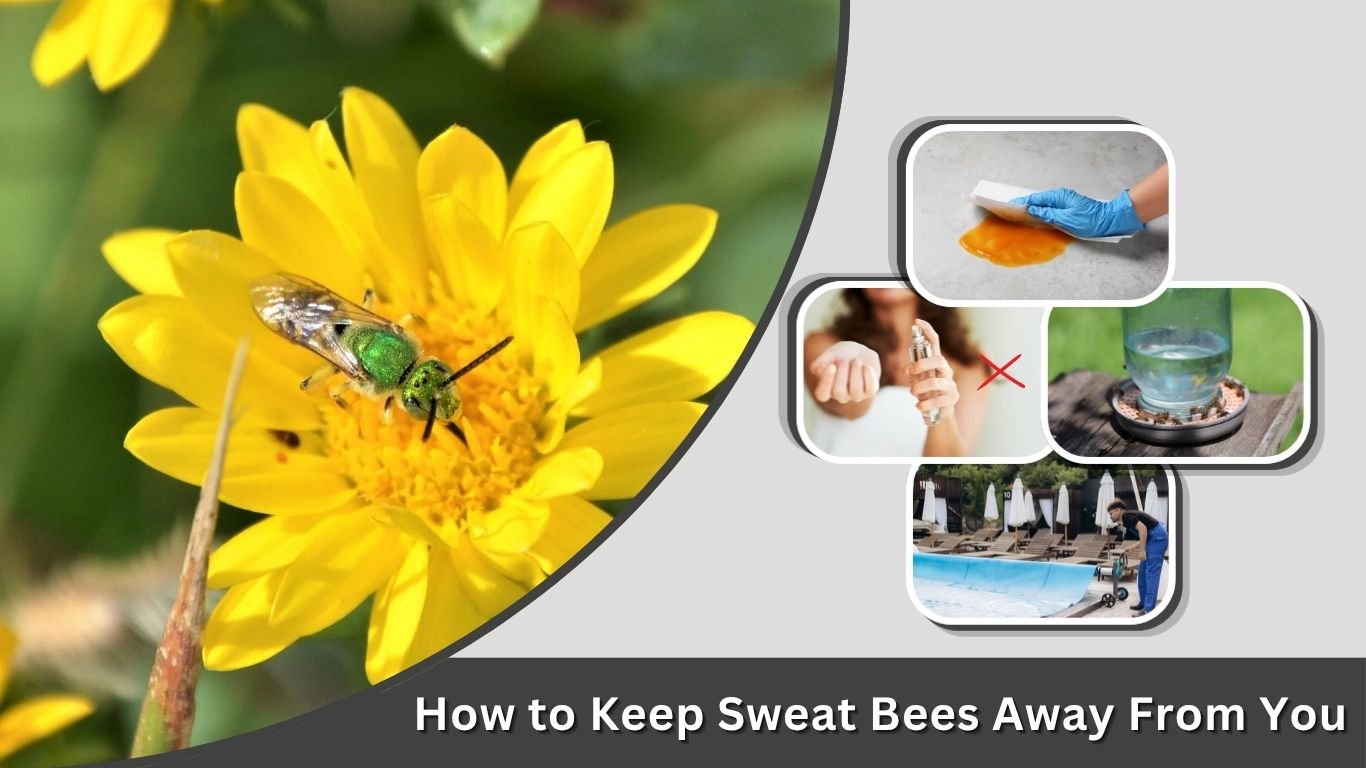
Sweat bees are small pollinators attracted to perspiration because it contains moisture and salt. Although they are usually harmless, their persistent landing can become annoying around pools, gardens, decks, and outdoor dining areas. The best way to keep sweat bees away is to reduce sweat and attractive food sources, use airflow, cover sweet drinks, and remove standing water. Because these bees benefit plants, choose nonlethal prevention methods whenever possible rather than spraying flowers or destroying harmless nests.
Why Do Sweat Bees Keep Landing on Me?
Sweat bees belong mainly to the Halictidae family. Many species are tiny, measuring less than half an inch, and may appear black, brown, or metallic green. They visit flowers for pollen and nectar but sometimes land on people to collect salt from perspiration.
They may be especially active around you when:
- You are sweating heavily.
- The weather is hot and humid.
- You are wearing a floral fragrance.
- Sweet drinks or food are nearby.
- Your clothing is brightly colored.
- Few natural water or mineral sources are available.
A sweat bee landing on you is usually searching for salt rather than attempting to sting. Females can sting if trapped against the skin, squeezed, or swatted, but these bees are not normally aggressive.
How to Keep Sweat Bees Away From You
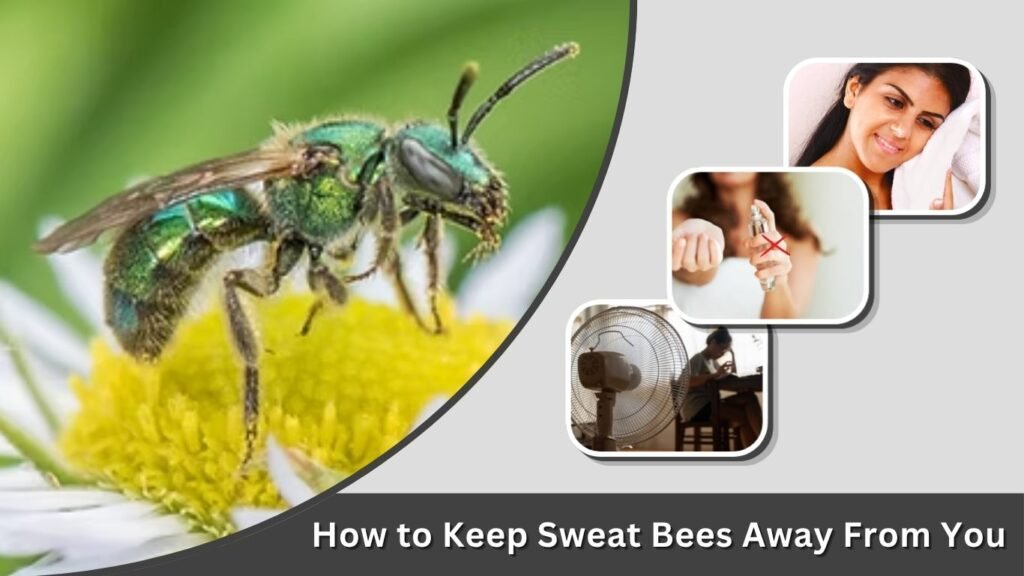
The best personal protection involves reducing perspiration, blocking access to your skin, and making yourself less noticeable.
Keep Your Skin Cool and Dry
Use a clean towel to wipe perspiration from your face, neck, arms, and legs. Spending time in a shaded area or near a fan can reduce sweating and make you less attractive to salt-seeking bees.
If you are working outside, take occasional breaks indoors and change out of heavily sweat-soaked clothing when practical. Showering before an outdoor gathering may also remove lingering sweat and scented personal products.
Wear Protective Clothing
Lightweight, loose-fitting clothing creates a barrier between sweat bees and your skin. Choose long sleeves, full-length pants, socks, and closed shoes when bees are particularly persistent.
Neutral colors such as white, beige, gray, or light green may attract less attention than clothing with bright floral colors or patterns. Avoid walking barefoot where ground-nesting bees are active.
Avoid Strong Fragrances
Floral perfumes, scented lotions, hair sprays, body oils, and strongly fragranced sunscreens can make you more noticeable to bees. Use fragrance-free personal-care products when spending time in a bee-active area.
Deodorant or antiperspirant may help by reducing perspiration, although it should not be treated as a complete bee repellent.
Use a Fan
A strong fan is one of the simplest ways to keep sweat bees off you while sitting on a patio or porch. These small insects do not fly efficiently in powerful, turbulent airflow.
Place an outdoor fan so the breeze passes across your seating or dining area. A fan also keeps you cooler and reduces the amount of sweat that attracts the bees.
Do Not Swat at Them
Remain calm if a sweat bee lands on you. Gently blow it away or brush it off with a slow movement. Slapping or squeezing the bee against your skin increases the chance of being stung.
What Keeps Sweat Bees Away Outdoors?
Sweat bees cannot always be eliminated from a yard because flowers and nesting soil naturally attract them. However, several changes can reduce their activity around frequently used spaces.
Remove Food and Drink Attractions
Cover soda, juice, fruit, desserts, and other sweet foods when eating outside. Use cups with lids and inspect open drink containers before taking a sip.
Clean tables, trash cans, recycling bins, grills, and outdoor counters regularly. Rinse sugary bottles and cans before placing them in recycling containers. Keep waste bins covered with tightly fitting lids.
Reduce Standing Water
Empty unnecessary water from buckets, toys, plant saucers, tarps, wheelbarrows, and clogged gutters. Repair dripping faucets and hoses that keep the soil continuously damp.
Do not remove every water source from your property, especially during extreme heat. Instead, prevent puddles from forming near doors, seating areas, and walkways.
Manage Nesting Areas Carefully
Most sweat bees nest in the ground, often in sunny locations with exposed or lightly covered soil. A group of nest entrances may look like multiple colonies, even though individual females often maintain separate tunnels close together.
You can make high-traffic locations less suitable by:
- Covering bare soil with mulch or dense groundcover.
- Maintaining healthy grass in thin lawn areas.
- Repairing cracks between patio stones.
- Redirecting irrigation away from nesting spots.
- Limiting unnecessary patches of exposed soil near doors.
Do not block an active nest entrance while bees are inside. If nests create a genuine safety problem, contact a qualified local pest professional for identification and treatment options.
How to Keep Sweat Bees Away From a Pool
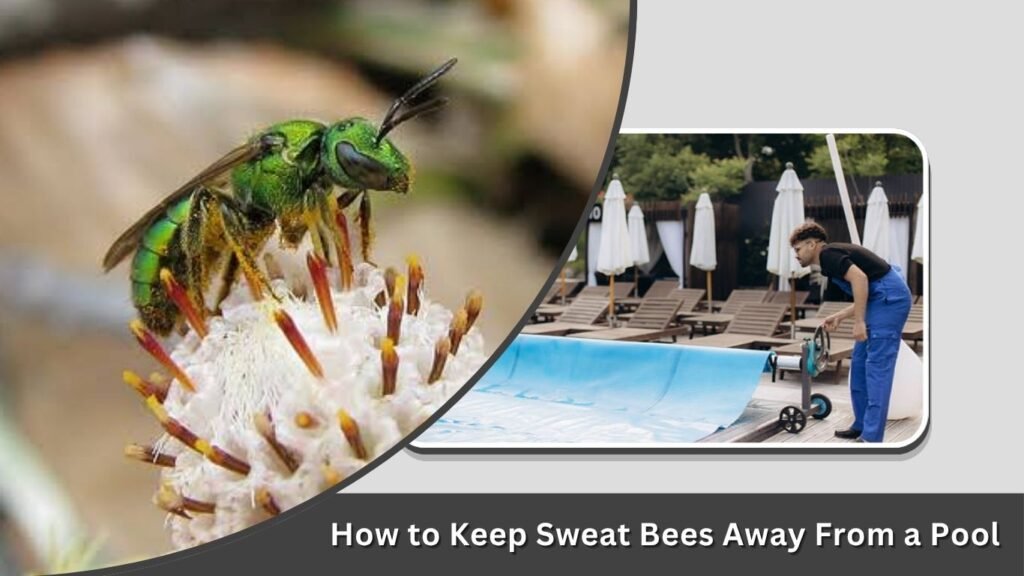
Pools provide moisture, while swimmers supply perspiration and salt. This combination can produce noticeable sweat bee activity during hot weather.
Maintain and Cover the Pool
Keep the water properly filtered and maintain the recommended sanitizer and pH levels. Clean organic debris from the surface and surrounding deck. When the pool is not in use, a fitted cover may reduce access to the water.
Fix plumbing leaks and eliminate puddles around pumps, outdoor showers, hoses, and deck drains.
Create Airflow Around Seating Areas
Position outdoor fans near lounge chairs, tables, and shaded resting places rather than directly over the water. The airflow can discourage bees from hovering around people while also reducing perspiration.
Rinse Before and After Swimming
A quick shower can remove heavy perspiration, perfume, lotions, and sugary residues. Drying off after leaving the water may also make swimmers less attractive to bees.
Keep wet towels and clothing in a closed container instead of leaving them around the pool deck.
Provide Water Away From the Pool
In extremely dry weather, a shallow bee-watering station placed well away from the pool may redirect some pollinators. Use a shallow container filled with pebbles so insects have safe landing surfaces. Replace the water frequently to prevent mosquitoes.
This method will not guarantee that sweat bees stay out of a swimming pool, but it may reduce competition for water when natural sources are scarce.
How to Keep Sweat Bees Away From a Porch or Deck
Start by removing spilled drinks, uncovered food, standing water, and overflowing trash. Wash sticky residue from railings, tables, and deck boards.
Install a strong fan near the main seating area. If bees are entering the house, repair window screens, install door sweeps, and seal small gaps around frames.
Inspect nearby soil, potted plants, and cracks between paving materials for nesting activity. Mulch exposed soil in planters, but avoid disturbing active nests. Moving flowering containers several feet from chairs and doorways may also reduce bee traffic around people without eliminating valuable flowers.
Outdoor lights are not normally the primary reason sweat bees gather during the day, so changing bulbs is unlikely to solve a daytime problem.
How to Keep Sweat Bees Out of Hummingbird Feeders
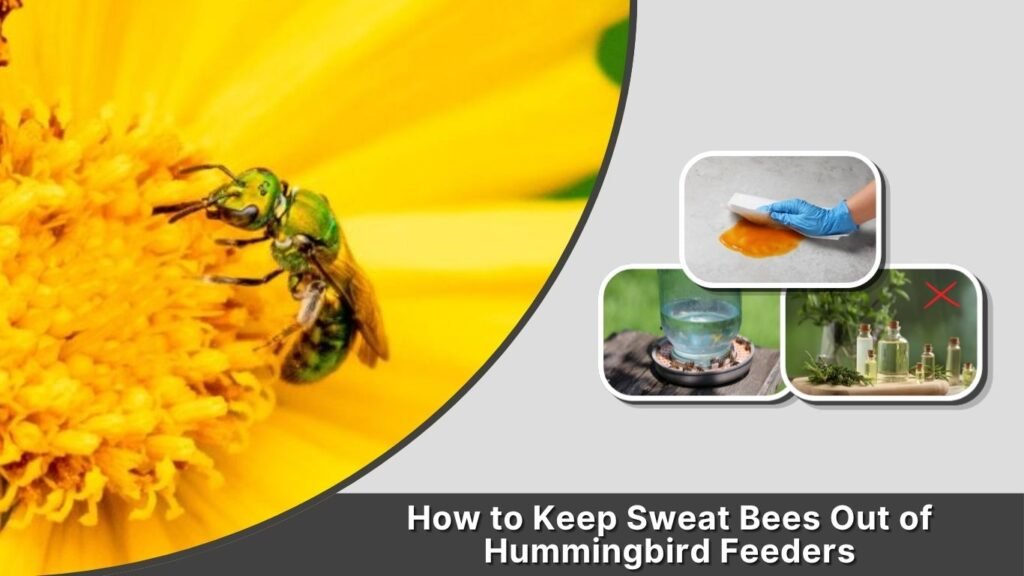
Sweat bees may visit feeders when nectar leaks or collects around feeding ports. Good feeder maintenance is safer and more effective than spraying repellents near hummingbird food.
Take these steps:
- Select a leak-resistant saucer-style feeder.
- Use feeders equipped with bee guards.
- Clean spilled nectar immediately.
- Keep the feeder level and out of intense afternoon heat.
- Replace cracked ports, seals, and containers.
- Move the feeder a short distance if bees repeatedly find it.
- Never apply insecticide, oil, or essential oils to feeding ports.
Do not make the nectar weaker or stronger to deter bees. Prepare hummingbird nectar using the standard ratio of one part plain white sugar to four parts water, without honey, dye, or artificial sweetener.
Do Bug Sprays Keep Sweat Bees Away?
Some personal insect repellents may temporarily discourage insects from landing, but products intended for mosquitoes and ticks are not necessarily proven to repel sweat bees. Results can therefore be inconsistent.
If you use a repellent, choose an EPA-registered product and follow its label precisely. Never spray it directly at bees, flowers, hummingbird feeders, pool water, or active nests.
Broad insecticide treatments are rarely appropriate for occasional sweat bee activity. They can kill beneficial pollinators and other insects without addressing the perspiration, moisture, nectar, or nesting conditions attracting them.
Do Citronella, Peppermint Oil, or Other Remedies Work?
Citronella candles are designed mainly for mosquitoes and are not a dependable solution for sweat bees. Their smoke and scent may cause brief avoidance at close range, but they are unlikely to protect an entire yard or pool.
Peppermint oil and other essential oils are frequently recommended as home remedies, yet there is limited evidence that they provide reliable, lasting control. Concentrated oils can irritate skin, harm pets, damage plants, or contaminate hummingbird feeders.
Likewise, planting mint, marigolds, citronella grass, or other strongly scented plants will not reliably keep sweat bees away. Flowering plants may actually attract bees when they provide nectar or pollen.
What Not to Use Around Sweat Bees
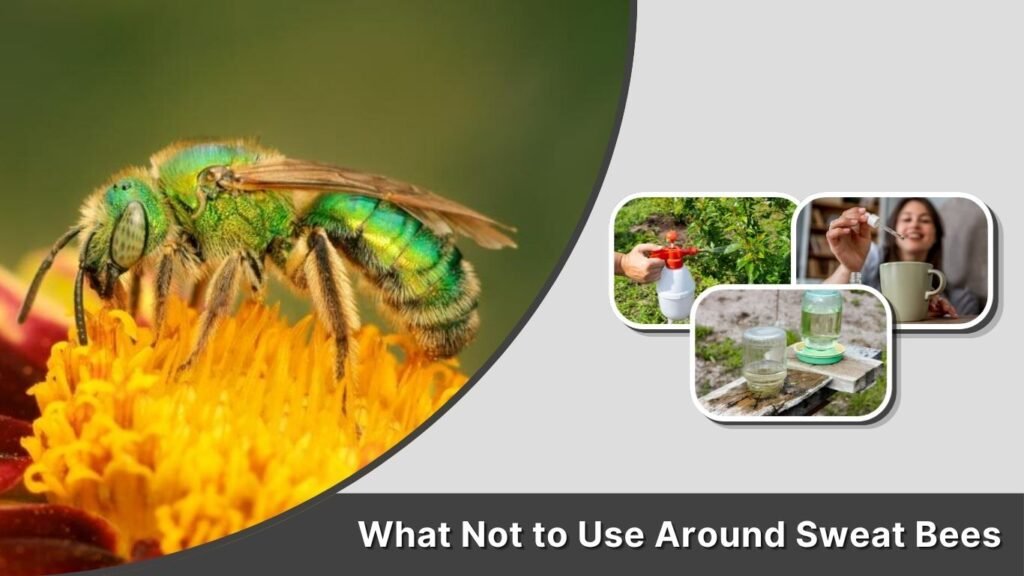
Avoid unsafe or ineffective approaches, including:
- Taking pills or supplements claimed to repel bees.
- Spraying flowers with household insecticide.
- Applying essential oils directly to skin without proper dilution.
- Adding chemicals, oils, or soap to pool water.
- Using honey or sugar water as an outdoor trap.
- Sealing active nest entrances without identifying the insects.
- Pouring gasoline, bleach, or boiling water into ground nests.
There is no approved “best pill” to keep sweat bees off a person. Anyone experiencing unusual insect attraction should focus on environmental prevention rather than consuming an unverified product.
How to Prevent Sweat Bee Stings
Sweat bees rarely sting unless they become trapped or are handled. Wear shoes outdoors, avoid sitting directly beside nesting holes, and gently remove bees from your skin.
If stung, wash the area with soap and water and apply a wrapped cold pack for 10–15 minutes. Mild pain, redness, itching, or swelling can occur. Seek emergency medical care for breathing difficulty, facial or throat swelling, dizziness, widespread hives, or another sign of a serious allergic reaction.
Frequently Asked Questions
What is the best way to keep sweat bees away?
Stay cool, wipe away perspiration, wear light protective clothing, avoid floral fragrances, and use a fan. Around the property, clean sugary spills and reduce unnecessary standing water.
Will OFF keep sweat bees away?
OFF products are primarily formulated and labeled for pests such as mosquitoes and ticks. They may discourage some sweat bees temporarily, but reliable protection is not guaranteed. Follow the specific product label.
Does peppermint oil keep sweat bees away?
Peppermint oil is not a proven long-term sweat bee repellent. Its smell may briefly discourage some insects, but concentrated oil can irritate people, affect pets, and damage plants.
Why are sweat bees attracted to my pool?
Pool water provides moisture, while swimmers provide salt through perspiration. Leaks, wet towels, puddles, flowering landscaping, and exposed nesting soil can further increase activity.
How can I keep sweat bees away without killing them?
Use fans, wipe off sweat, cover food and drinks, clean nectar spills, manage standing water, and move seating away from flowers or nests. These methods reduce encounters while protecting beneficial pollinators.
