
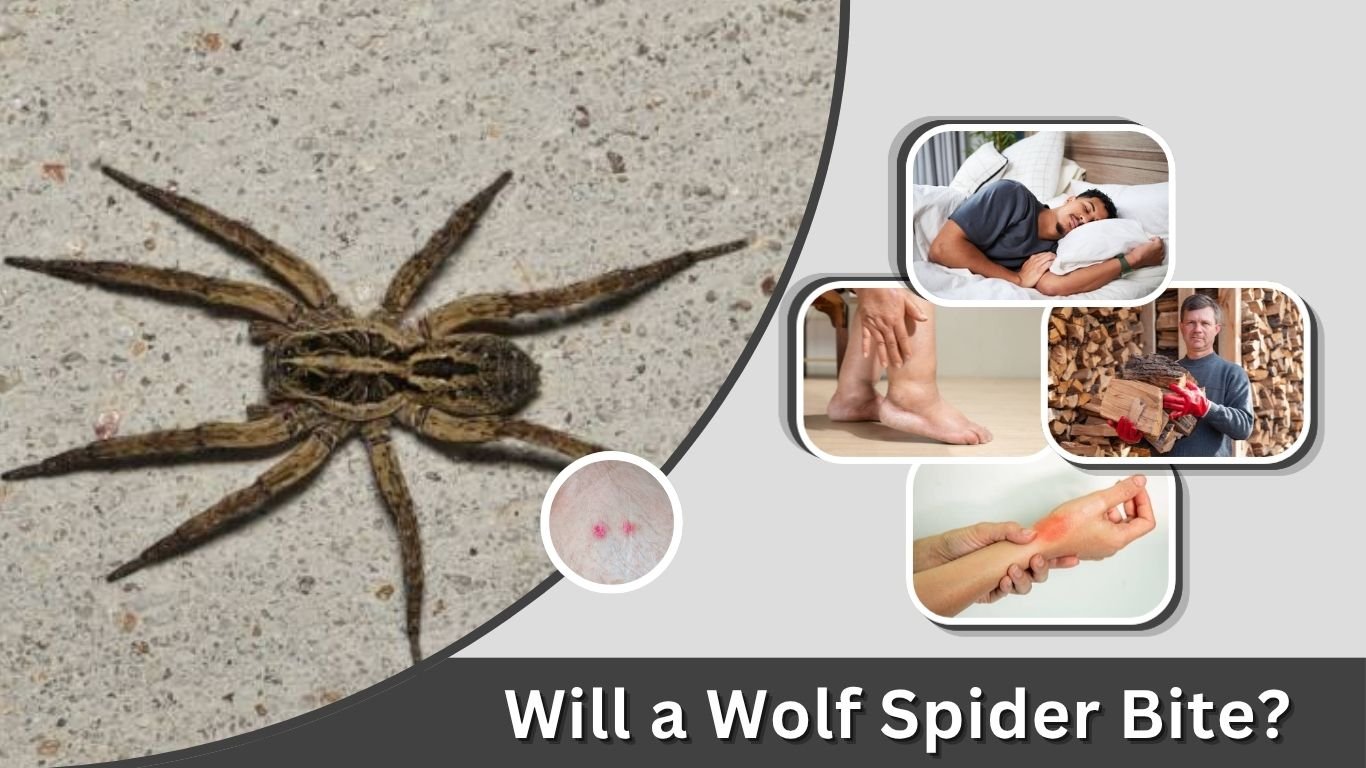
Wolf spiders are large, fast-moving hunters, and their appearance can make them seem more dangerous than they really are. Yes, a wolf spider can bite a human, but bites are uncommon and usually happen when the spider is handled, squeezed, or trapped against the skin. Wolf spiders generally try to escape rather than confront people. When a bite does occur, it most often causes temporary pain, redness, or swelling rather than a serious medical problem.
Will a Wolf Spider Bite Humans?
Wolf spiders possess fangs and venom because they need them to capture insect prey. Those same fangs are capable of penetrating human skin.
However, humans are not prey for wolf spiders. A wolf spider normally bites only as a defensive response when it feels trapped or threatened. Penn State Extension notes that wolf spiders may bite when mishandled or trapped next to the skin.
Why Would a Wolf Spider Bite You?
Situations that could lead to a bite include:
- Picking up a wolf spider with bare hands
- Accidentally squeezing one
- Trapping a spider between your body and clothing
- Stepping on one with bare feet
- Reaching into an area where a spider is hiding
- Rolling onto a spider that has accidentally entered bedding
Even in these situations, the spider may attempt to escape before biting.
Are Wolf Spiders Aggressive?
Wolf spiders are active hunters, but their hunting behavior is directed toward insects and other small prey—not people.
Their speed sometimes gives the impression that they are chasing humans. In reality, a disturbed wolf spider usually runs toward shelter or away from the threat.
A bite is therefore much more likely to be defensive than aggressive.
Will a Wolf Spider Bite You in Your Sleep?
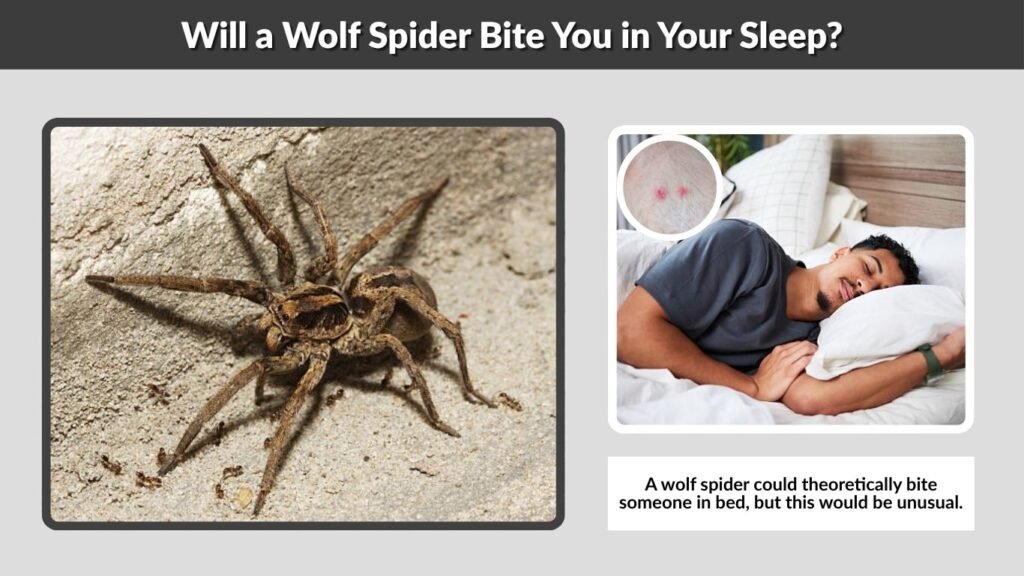
A wolf spider could theoretically bite someone in bed, but this would be unusual. Wolf spiders do not normally seek humans out while they sleep.
Unlike parasites such as bed bugs, wolf spiders have no reason to feed on humans. An accidental bite would be more likely if a spider wandered into bedding and became trapped against the skin.
Why Wolf Spiders May Enter a Bedroom
Wolf spiders sometimes wander indoors while searching for prey or shelter. Once inside, they may hide around:
- Baseboards
- Closets
- Furniture
- Shoes
- Boxes
- Dark corners
- Floor-level cracks
Finding a wolf spider in your bedroom does not mean it is trying to get into your bed.
Shaking out clothing or bedding that has been stored on the floor can reduce the already small chance of accidentally trapping a spider against your skin.
What Happens If a Wolf Spider Bites You?
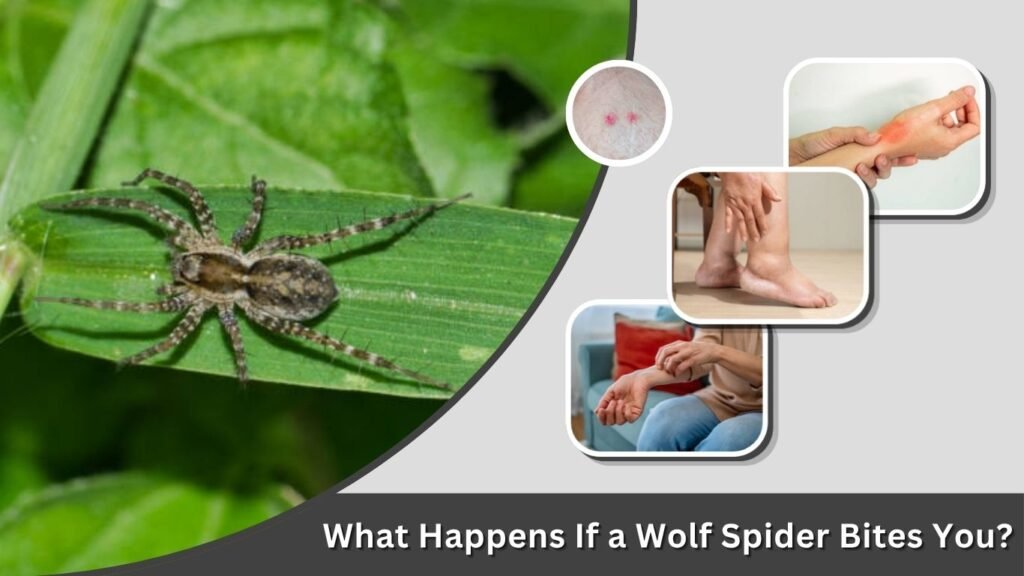
Most wolf spider bites cause localized symptoms rather than serious systemic illness. Penn State Extension reports that typical reactions can include initial pain and redness, with swelling also possible.
Common Wolf Spider Bite Symptoms
Possible symptoms include:
- Immediate pain or stinging
- Redness around the bite
- Mild swelling
- Tenderness
- Itching or irritation
These symptoms can overlap with bites or stings from many other insects and arthropods, so a skin mark alone usually cannot identify the responsible spider.
What Does a Wolf Spider Bite Look Like?
A bite may appear as a small red or swollen area. Two tiny puncture marks are sometimes associated with spider bites, but they may be difficult or impossible to see.
Appearance alone should not be used to determine which spider caused a wound. Many skin irritations, infections, and insect bites can look similar.
If possible, identifying the spider that actually caused the bite is much more useful than trying to diagnose it from the skin lesion.
Will a Wolf Spider Bite Kill You?
For most healthy people, a wolf spider bite is not considered life-threatening. Wolf spiders are venomous, but their venom is primarily adapted for subduing small prey.
Penn State Extension describes typical wolf spider bites as causing localized reactions and notes no serious medical consequences for ordinary bites.
This differs from spiders such as black widows and brown recluses, which are recognized for greater medical significance. Veterinary guidance similarly identifies widow and brown spiders as the primary groups of medically important spiders in the United States.
Can a Wolf Spider Bite Make You Sick?
Significant illness from a correctly identified wolf spider bite is uncommon. However, individual reactions vary, and any bite can potentially become irritated or infected.
Seek medical attention if you experience severe or rapidly worsening pain, extensive swelling, difficulty breathing, dizziness, spreading redness, fever, or other concerning symptoms.
If the spider was not positively identified, do not automatically assume the wound came from a wolf spider.
Wolf Spider Bite vs Brown Recluse Bite
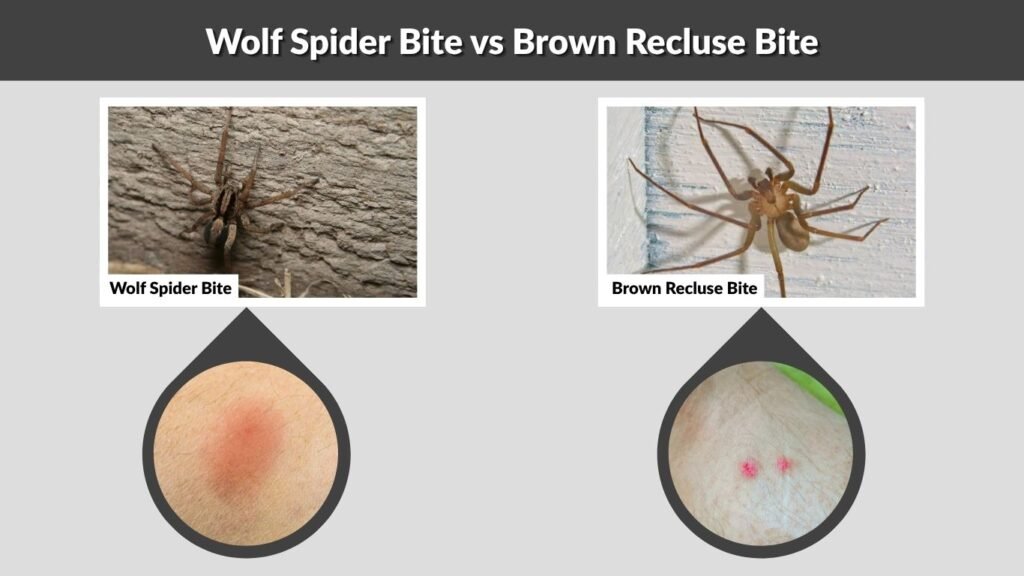
Wolf spiders are sometimes confused with brown recluses because both can be brown. Their bites, however, have different levels of medical concern.
Wolf Spider Bite
A wolf spider bite generally causes temporary localized pain, redness, or swelling. Serious reactions are not typical.
Brown Recluse Bite
Brown recluse bites have the potential to cause greater tissue injury. Some bites can develop blistering and slow-healing skin lesions, although not every brown recluse bite becomes severe.
Because suspected spider bites are easy to misidentify, worsening skin damage should be evaluated medically rather than diagnosed from appearance alone.
Will a Wolf Spider Bite a Dog?
A wolf spider may defensively bite a dog if the dog paws at, bites, or investigates it closely. However, wolf spiders are not among the spider groups considered most medically important to pets in the United States.
The Merck Veterinary Manual identifies widow spiders and brown spiders as the main medically significant spider groups for companion animals.
What to Do If Your Dog Is Bitten
If you actually witness a spider biting your dog, monitor the animal closely.
Contact a veterinarian if your dog develops significant swelling, persistent pain, weakness, vomiting, unusual behavior, difficulty breathing, or other concerning symptoms. Correct identification matters because different spider species carry very different risks.
Can a Wolf Spider Bite Kill a Cat?
A typical wolf spider bite is not generally regarded as one of the major spider-envenomation threats to cats. More serious veterinary concern is associated with spiders such as widows and brown recluses.
Still, cats may play with or attack spiders and potentially be bitten. If a cat develops significant symptoms following a suspected spider encounter, veterinary evaluation is appropriate, especially when the spider species is unknown.
How to Avoid Wolf Spider Bites
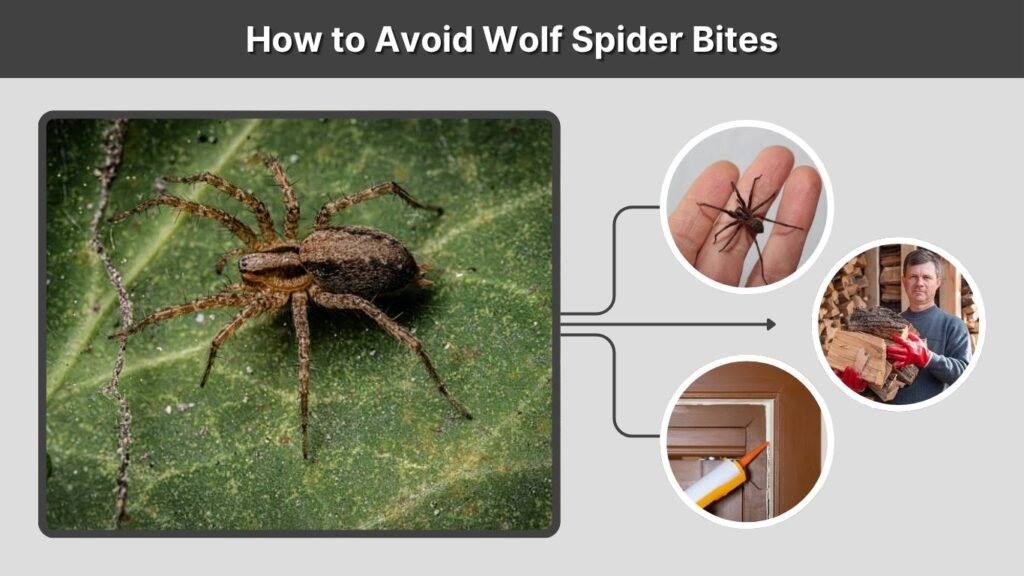
You normally do not need to fear wolf spiders, but simple precautions can prevent accidental contact.
Safe Prevention Tips
- Do not handle wolf spiders with bare hands.
- Shake out shoes stored in garages or basements.
- Wear gloves when moving firewood or outdoor materials.
- Reduce clutter where spiders can hide.
- Seal gaps around doors and windows.
- Keep bedding and clothing off basement or garage floors.
- Use a container to move an indoor spider outside rather than grabbing it.
Wolf spiders also prey on insects, so reducing insect activity around the home can make the area less attractive to them.
FAQs
Will a wolf spider bite you?
Yes, wolf spiders can bite, particularly if they are handled or trapped against the skin. However, they generally avoid people and prefer escaping to biting. Most confirmed bites cause localized symptoms such as pain, redness, or swelling.
Do wolf spiders bite while you sleep?
It is possible but unlikely. Wolf spiders do not seek sleeping humans as prey. An accidental bite could occur if a spider wandered into bedding and became trapped or pressed against the person’s skin.
Does a wolf spider bite hurt?
A wolf spider bite can cause immediate pain or stinging followed by redness and possible swelling. Symptoms are usually localized and temporary rather than medically serious.
Can you die from a wolf spider bite?
Death from a typical wolf spider bite is not expected. Wolf spiders are not considered among the major medically dangerous spider groups. However, severe or unusual symptoms after any suspected bite deserve medical evaluation.
Are wolf spiders poisonous?
Wolf spiders are technically venomous, not poisonous. They inject venom through their fangs to immobilize prey. Their venom is generally not considered medically significant to humans, although a defensive bite can still cause temporary pain and irritation.
