
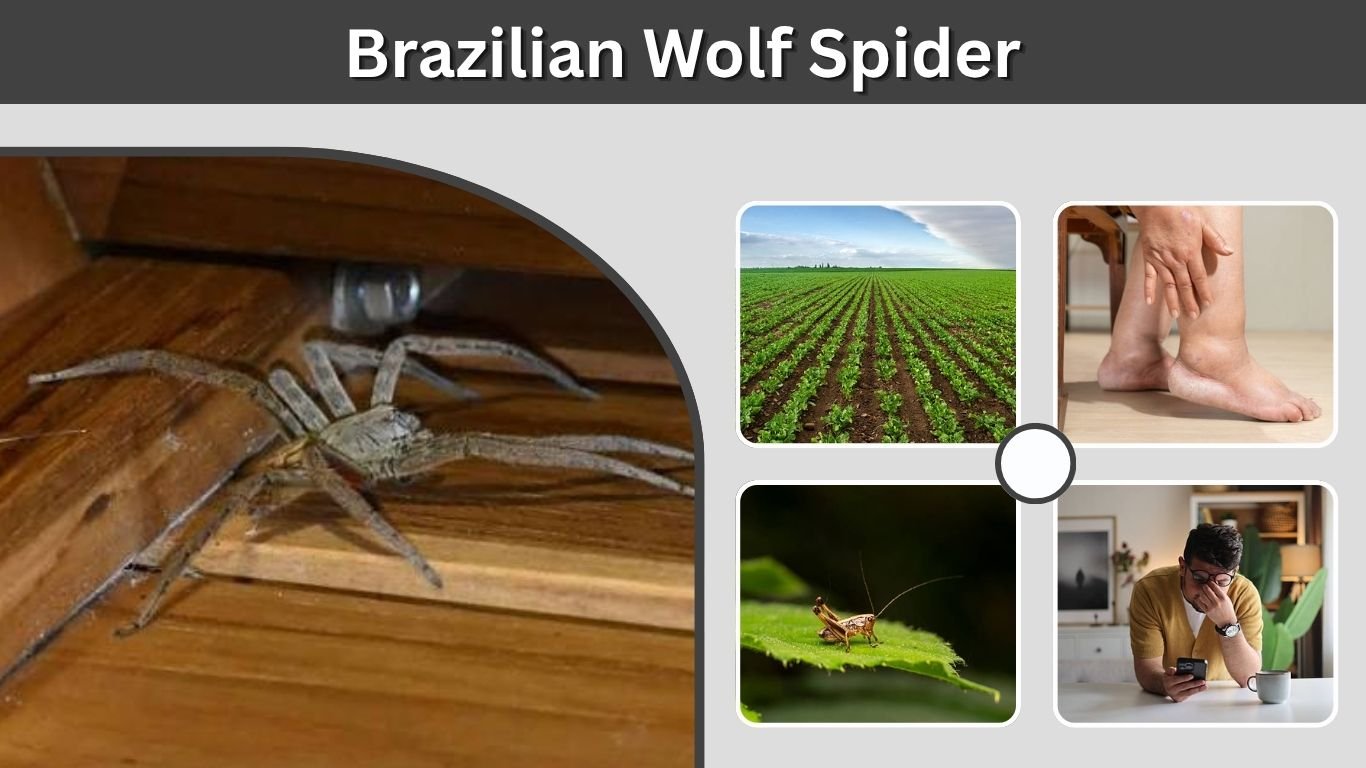
The Brazilian wolf spider is a large ground-hunting spider that can look intimidating because of its hairy body, powerful legs, and fast movements. The name is commonly associated with Lycosa erythrognatha, a wolf spider native to South America, although Brazil is home to many species in the wolf spider family. Unlike the medically important Brazilian wandering spider, a true wolf spider is not generally considered dangerous to humans. Understanding its appearance, behavior, habitat, and bite risk makes identification much easier.
What Is a Brazilian Wolf Spider?
The spider frequently referred to as the Brazilian wolf spider is Lycosa erythrognatha, a member of the family Lycosidae. The World Spider Catalog currently recognizes this species and records it from Brazil, Uruguay, Paraguay, and Argentina.
It is important to remember that “Brazilian wolf spider” is not a name for every large brown spider found in Brazil. Numerous wolf spider species occur in South America, and large wandering spiders from other families can sometimes look superficially similar.
Brazilian Wolf Spider Identification
A Brazilian wolf spider may be recognized by several characteristics:
- Large, robust body
- Brown, gray, and dark mottled coloration
- Hair covering the body and legs
- Eight eyes typical of wolf spiders
- Two particularly noticeable large eyes
- Strong legs suited to running
- Reddish or orange coloration around the chelicerae in Lycosa erythrognatha
- Ground-dwelling rather than web-dependent hunting behavior
The reddish mouthparts are especially noticeable in L. erythrognatha and help explain the species name, which refers to its red-colored jaw area.
However, identification from color alone can be unreliable. Several unrelated spiders have similar brown patterns, so eye arrangement, body structure, geographic location, and other features should also be considered.
How Big Is a Brazilian Wolf Spider?
Brazilian wolf spiders are relatively large compared with many common household spiders, although their apparent size is increased considerably by their long legs.
Size also varies with age and sex. A mature specimen may appear especially impressive when its legs are fully extended, but size alone should never be used to distinguish a wolf spider from a wandering spider or another large ground-hunting species.
Brazilian Wolf Spider Habitat
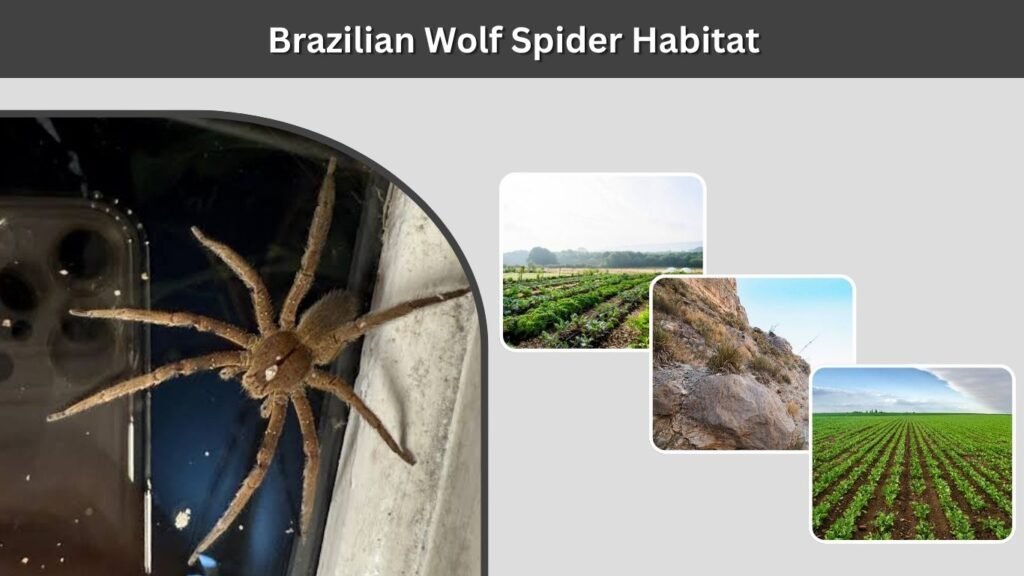
Lycosa erythrognatha has a confirmed South American range that includes Brazil as well as neighboring Uruguay, Paraguay, and Argentina.
Wolf spiders are primarily terrestrial hunters. Instead of relying on an elaborate prey-catching web, they typically move across the ground searching for insects and other small animals.
Where Can You Find Them?
Brazilian wolf spiders may be encountered around ground-level environments such as:
- Grass
- Gardens
- Leaf litter
- Areas beneath rocks
- Soil
- Fields
- Vegetated areas
- Outdoor structures
Their brown and gray coloration provides useful camouflage against soil, dry vegetation, and other ground material.
Wolf spiders may occasionally enter buildings, but seeing one indoors does not necessarily indicate an infestation. Ground-hunting spiders can simply wander inside while looking for prey or shelter.
What Do Brazilian Wolf Spiders Eat?
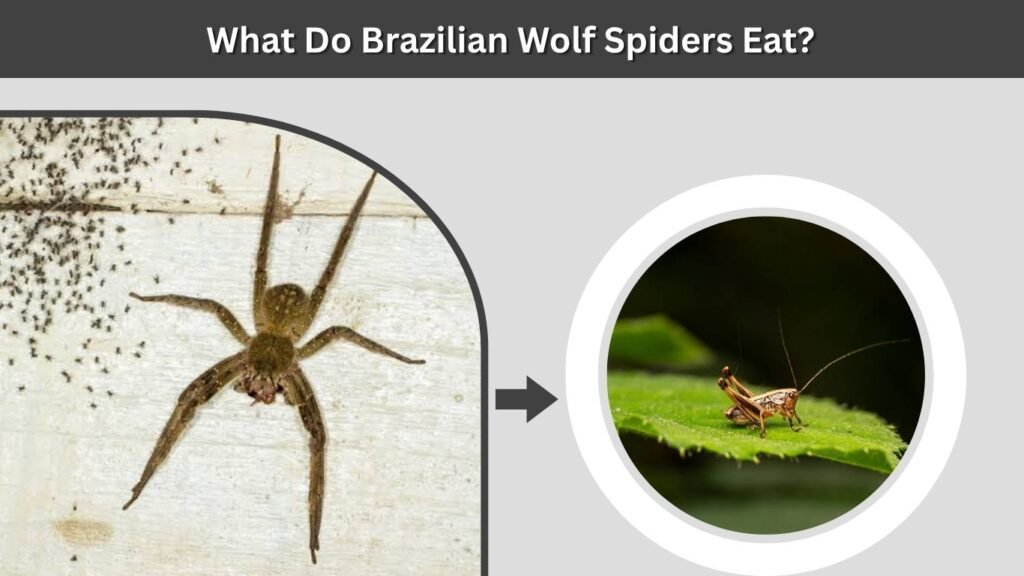
Like other wolf spiders, Brazilian wolf spiders are predators. Their hunting strategy differs from that of familiar orb-weaving spiders because they generally search for and capture prey rather than waiting for insects to become trapped in a large web.
They primarily prey on small animals they can overpower, especially insects and other arthropods.
How Do They Hunt?
Wolf spiders rely heavily on movement, vision, and speed. Their prominent eyes are one of the family’s most recognizable characteristics and help them locate prey while moving across the ground.
Once suitable prey comes within reach, the spider uses its legs to capture it and its fangs to deliver venom.
This hunting behavior is also one reason people sometimes interpret a rapidly running wolf spider as aggressive. Fast movement does not mean the spider is intentionally chasing a person.
Is the Brazilian Wolf Spider Dangerous?
Brazilian wolf spiders possess venom, as they need it to subdue prey. However, their venom should not be confused with that of medically important Brazilian wandering spiders.
A major clinical study examined 515 wolf spider bite cases in São Paulo, Brazil. The research provides strong evidence that wolf spider bites generally produce relatively limited effects rather than the severe envenomation associated with more medically important Brazilian spiders.
Are Brazilian Wolf Spiders Aggressive?
Wolf spiders do not normally regard humans as prey. A bite is most likely when a spider is trapped against the skin, stepped on, picked up, or otherwise placed in a situation where it cannot escape.
Their large bodies, speed, and defensive posture can make them appear threatening, but appearance should not be confused with a tendency to attack people.
Handling any unidentified large spider with bare hands is nevertheless unnecessary, particularly in regions where medically important species also occur.
Brazilian Wolf Spider Bite
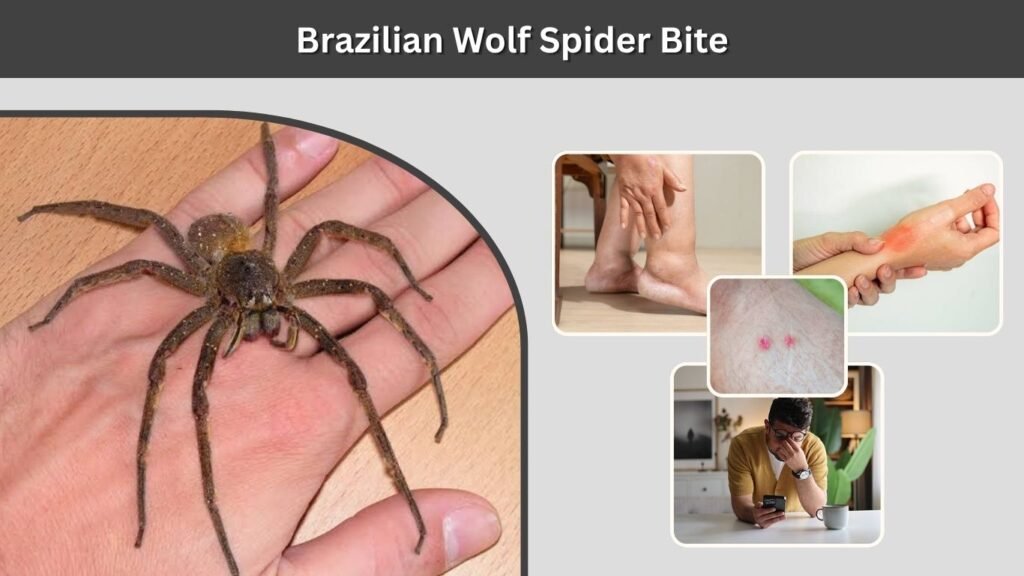
A Brazilian wolf spider can bite if sufficiently disturbed or trapped. However, documented wolf spider bites are generally associated with local symptoms rather than severe systemic poisoning.
What Does a Brazilian Wolf Spider Bite Feel Like?
Possible effects of a wolf spider bite can include:
- Local pain
- Redness
- Mild swelling
- Tenderness around the bite
- Temporary irritation
Evidence from wolf spider bite studies does not support the old reputation of these spiders as a typical cause of severe tissue necrosis. Research on wolf spider bites has instead found mostly localized effects.
Any unidentified spider bite that produces severe pain, rapidly worsening swelling, spreading symptoms, breathing problems, or other significant illness should receive medical attention rather than being assumed to come from a harmless wolf spider.
Brazilian Wolf Spider vs Brazilian Wandering Spider
These names sound similar, but they describe spiders from completely different families.
Brazilian wolf spiders belong to Lycosidae, whereas Brazilian wandering spiders belong to the genus Phoneutria in the family Ctenidae. The World Spider Catalog recognizes Phoneutria nigriventer separately from wolf spiders and records it from Brazil and neighboring parts of South America.
Key Differences
Brazilian wolf spider:
- Belongs to family Lycosidae
- Often strongly hairy
- Characteristic wolf spider eye arrangement
- Usually a ground hunter
- Bites generally cause localized effects
- Not considered among Brazil’s major medically important spiders
Brazilian wandering spider:
- Belongs to family Ctenidae
- Includes species of the genus Phoneutria
- Can adopt a distinctive defensive posture
- Also hunts actively rather than relying on a prey-catching web
- Venom can cause medically significant envenomation
Clinical research in Brazil shows that Phoneutria bites can range from mild cases to more significant systemic effects, particularly in vulnerable patients.
Because large brown ground spiders can resemble one another, avoid identifying an unfamiliar Brazilian spider solely by size or color.
Brazilian Wolf Spider Behavior
Brazilian wolf spiders are active predators rather than passive web hunters. Much of their behavior revolves around locating food, avoiding predators, reproducing, and finding suitable shelter.
Female Wolf Spiders Carry Their Young
One of the most distinctive behaviors of wolf spiders is maternal care. Female wolf spiders carry their egg sacs and later allow newly hatched spiderlings to ride on their abdomen.
This can make a female look unusually textured or covered with tiny dots. The small spiders are her offspring rather than parasites.
If disturbed, the spiderlings may scatter temporarily, creating the appearance of dozens of tiny spiders suddenly appearing around the mother.
Should You Kill a Brazilian Wolf Spider?
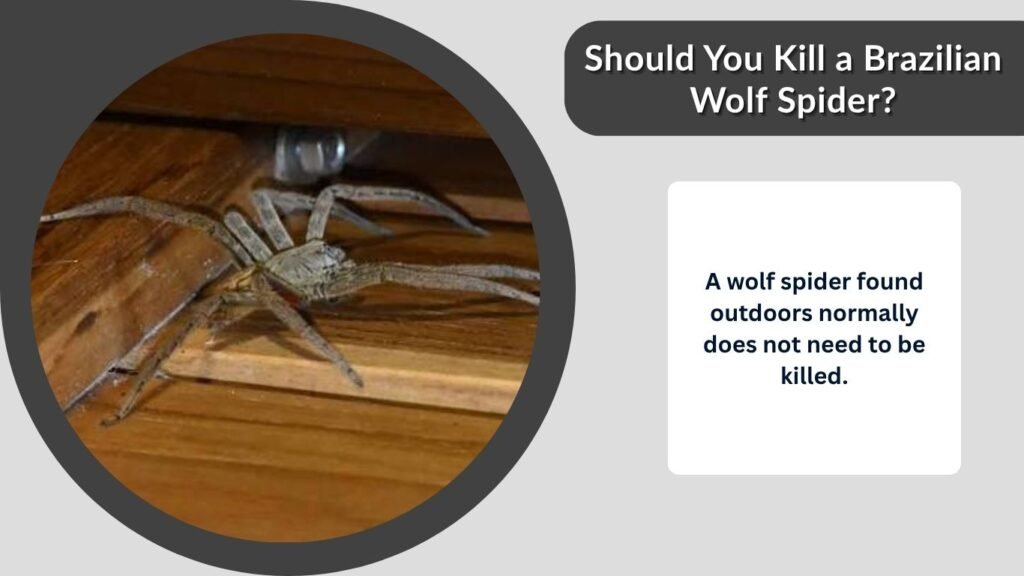
A wolf spider found outdoors normally does not need to be killed. As a predator, it consumes insects and other small arthropods.
If one enters a home, it can usually be moved outdoors without direct handling. A container placed over the spider with a stiff piece of paper underneath provides a simple way to relocate it.
Extra caution is appropriate in Brazil and other parts of South America because an unidentified large spider could belong to another family. If you cannot confidently identify it, avoiding bare-handed contact is the safest approach.
FAQs
Is a Brazilian wolf spider poisonous?
Brazilian wolf spiders are venomous rather than poisonous because they inject venom through their fangs. Their venom is primarily used to capture prey, and documented wolf spider bites generally cause relatively minor localized effects in humans.
Can a Brazilian wolf spider kill you?
Wolf spiders are not generally regarded as spiders that cause life-threatening human envenomation. A Brazilian study involving 515 wolf spider bite cases supports their comparatively low medical significance.
Is a Brazilian wolf spider the same as a Brazilian wandering spider?
No. Wolf spiders belong to Lycosidae, while Brazilian wandering spiders belong to the genus Phoneutria in Ctenidae. Phoneutria includes medically important spiders and should not be confused with ordinary wolf spiders.
Where are Brazilian wolf spiders found?
Lycosa erythrognatha, a species commonly associated with the Brazilian wolf spider name, has a documented distribution in Brazil, Uruguay, Paraguay, and Argentina.
What should I do if a Brazilian wolf spider bites me?
Wash the area and monitor your symptoms. Because large South American spiders can be difficult to identify, seek medical care if pain becomes severe, symptoms spread beyond the bite site, or you develop significant swelling, breathing difficulty, vomiting, weakness, or other concerning symptoms.
