
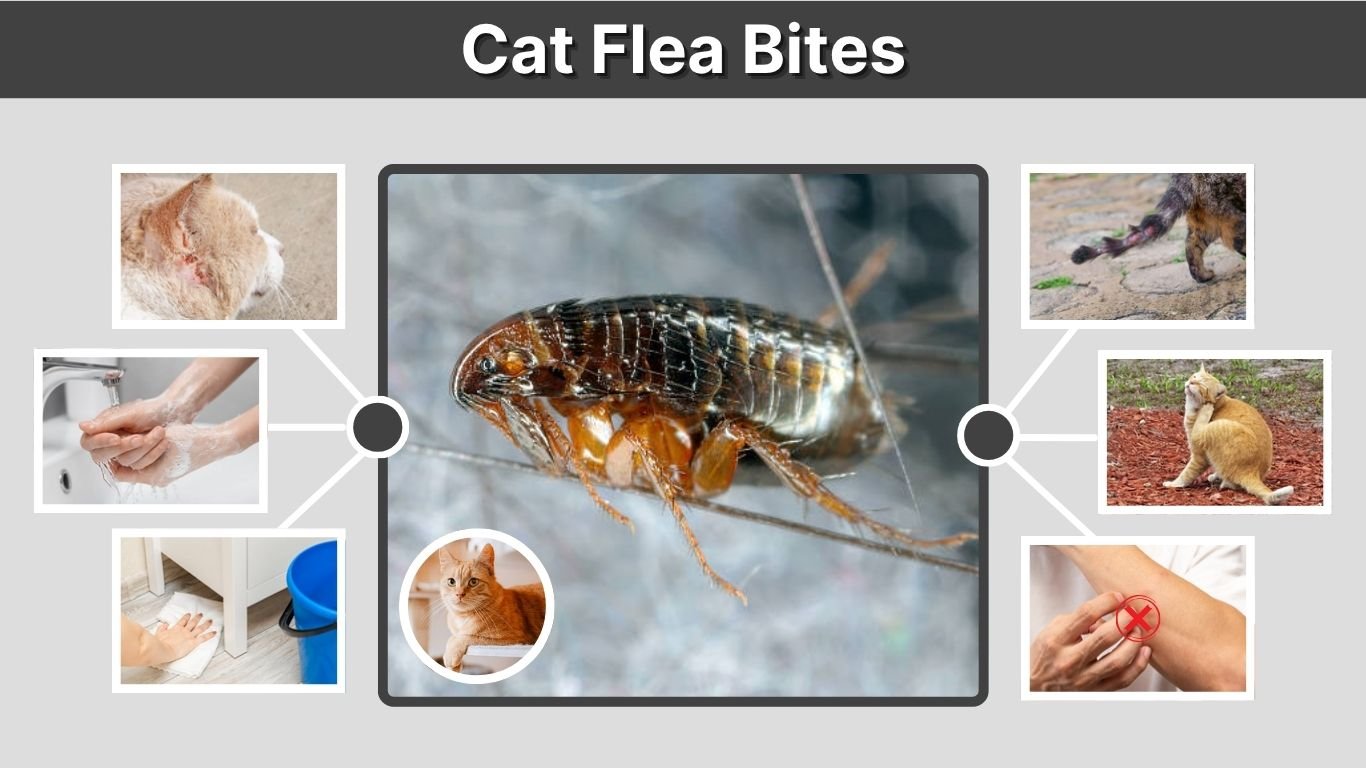
Cat flea bites can cause itching, scabs, hair loss, skin inflammation, and allergic reactions. Although cat fleas prefer animal hosts, they can also bite people, especially when an infestation becomes established inside a home. Effective treatment requires more than soothing the bites: the cat, other pets, bedding, carpets, and surrounding environment must all be addressed. This guide covers flea bites on cats and humans, their appearance, flea-allergy dermatitis, treatment, and warning signs requiring professional care.
What Are Cat Flea Bites?
Cat fleas, scientifically known as Ctenocephalides felis, are small blood-feeding insects. They commonly live in the coats of cats but can also infest dogs and bite humans. Adult fleas detect potential hosts through heat, movement, vibration, and breathing.
A flea pierces the skin and deposits saliva while feeding. Most cats experience irritation, but cats allergic to flea saliva can develop severe inflammation after only a few bites. This condition is called flea-allergy dermatitis.
What Do Flea Bites Look Like on Cats?
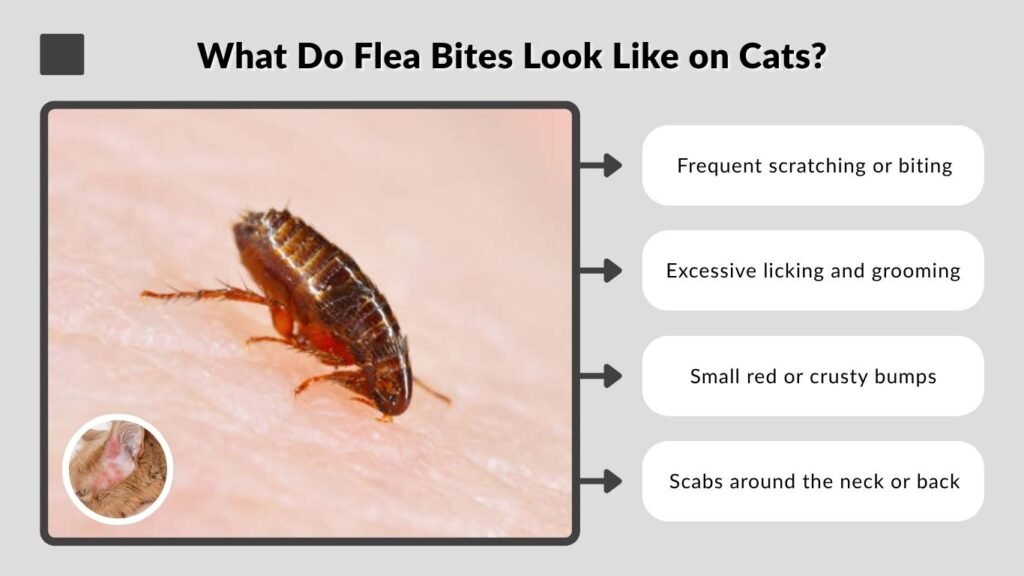
Individual punctures may be difficult to see beneath a cat’s fur. Owners are more likely to notice the skin reaction, flea dirt, or behavioral changes.
Common signs include:
- Frequent scratching or biting
- Excessive licking and grooming
- Small red or crusty bumps
- Scabs around the neck or back
- Red, irritated skin
- Hair thinning or bald patches
- Sores caused by scratching
- Dark specks resembling black pepper
The neck, lower back, abdomen, thighs, head, and area above the tail are commonly affected. Fleas may remain around the back of the neck and tail base because these areas are harder for a cat to reach while grooming.
How to Check Your Cat for Fleas
Run a fine-toothed flea comb through the coat, concentrating on the neck, belly, back, and tail base. Place anything collected onto damp white paper.
Flea dirt consists of digested blood. When moistened, the dark specks may dissolve into reddish-brown marks. Live fleas appear as tiny brown insects moving quickly through the fur.
Flea-Bite Dermatitis in Cats
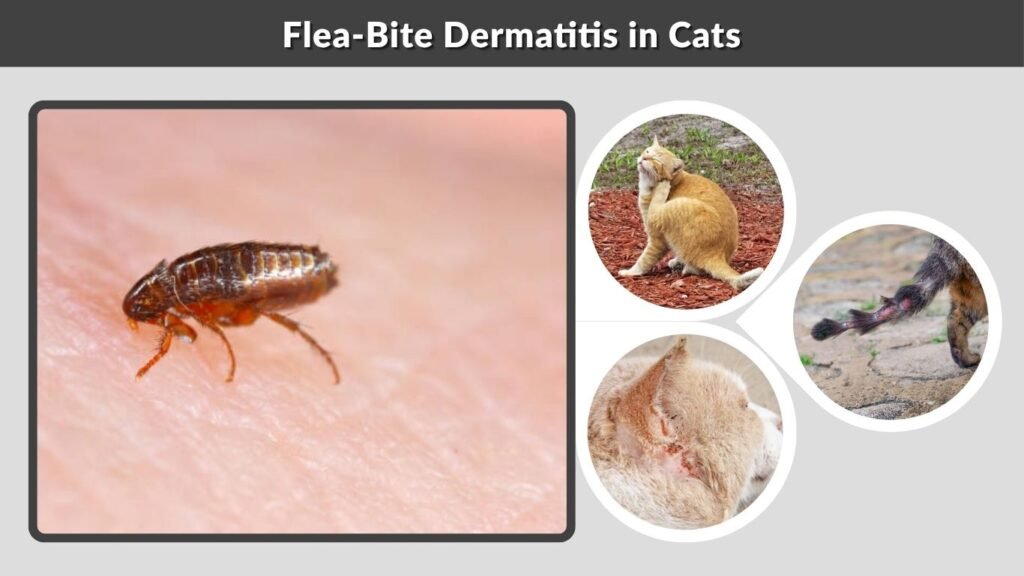
Flea-allergy dermatitis is an allergic reaction to proteins in flea saliva. A non-allergic cat may tolerate numerous bites before developing major skin damage, while an allergic cat can experience severe itching and inflammation after very limited exposure.
Possible symptoms include:
- Intense or obsessive scratching
- Reddish, crusty bumps
- Widespread scabs
- Hair loss from overgrooming
- Raw or bleeding skin
- Thickened skin after repeated irritation
- Bacterial infection caused by scratching
The number of visible fleas does not indicate how severe the allergy is. An allergic cat may have substantial skin disease even when owners cannot find a live flea.
How to Treat Flea Bites on Cats
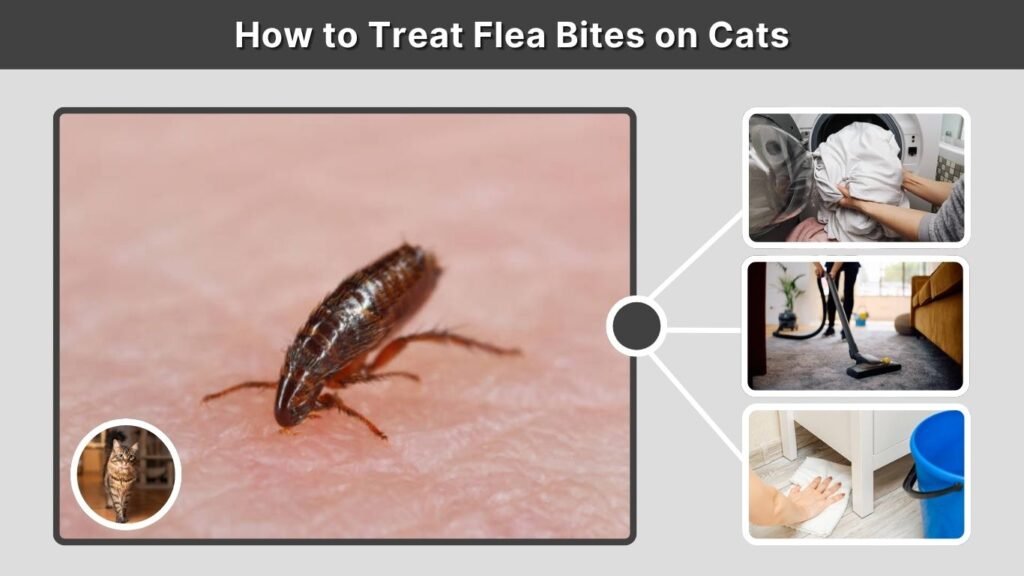
Treatment must eliminate the fleas, relieve the cat’s discomfort, manage complications, and stop new fleas from emerging.
Use a Cat-Safe Flea Treatment
Ask a veterinarian to recommend a product appropriate for the cat’s age, weight, health, and lifestyle. Available options may include topical treatments, oral medication, sprays, shampoos, or collars.
Read the entire label and apply only the stated amount. Never apply a dog flea product to a cat, as some pesticides tolerated by dogs can be dangerously toxic to cats. Products should not be used on kittens unless the label specifically permits their age and weight.
Treat Skin Inflammation
Eliminating fleas may not immediately resolve severe dermatitis. A veterinarian may prescribe anti-inflammatory medicine, antihistamines, corticosteroids, or antibiotics when the skin has developed a secondary bacterial infection.
Do not put human hydrocortisone cream, antibiotic ointment, essential oils, or other household remedies on a cat unless a veterinarian specifically approves them. Cats may lick the treated skin and swallow the substance. Veterinary medication is not a substitute for controlling the infestation itself.
Clean the Home
Much of an infestation develops away from the animal. Eggs, larvae, and pupae may be present in carpets, furniture, bedding, floor cracks, and resting areas.
A practical control plan includes:
- Treating every cat and dog in the home
- Washing pet bedding regularly
- Vacuuming carpets and upholstered furniture
- Cleaning beneath furniture and along wall edges
- Emptying the vacuum outdoors
- Following the treatment’s repeat schedule
- Continuing veterinarian-approved prevention
Treating only the visible bites will not prevent new fleas from emerging. The pet and environment must be managed together.
Can Cat Fleas Bite Humans?
Yes. Cat fleas can bite humans, although they generally prefer furry animal hosts. People may receive bites when fleas are numerous, when an infested animal sleeps nearby, or when the usual animal host has been removed.
Cat flea bites on humans commonly appear as small, itchy, raised bumps. They are often found around the ankles, feet, and lower legs, although they can occur elsewhere.
| Feature | Flea bites | Bedbug bites |
| Common area | Ankles and lower legs | Exposed skin during sleep |
| Appearance | Small, itchy bumps | Larger itchy welts |
| Pattern | Clusters or irregular groups | Lines, clusters, or scattered |
| Source | Pets, carpets, bedding | Beds, furniture, wall cracks |
| Movement | Fleas jump | Bedbugs crawl |
Appearance alone cannot always identify the insect. Finding flea dirt on pets or live fleas in the environment provides stronger evidence.
Treating Cat Flea Bites on Humans
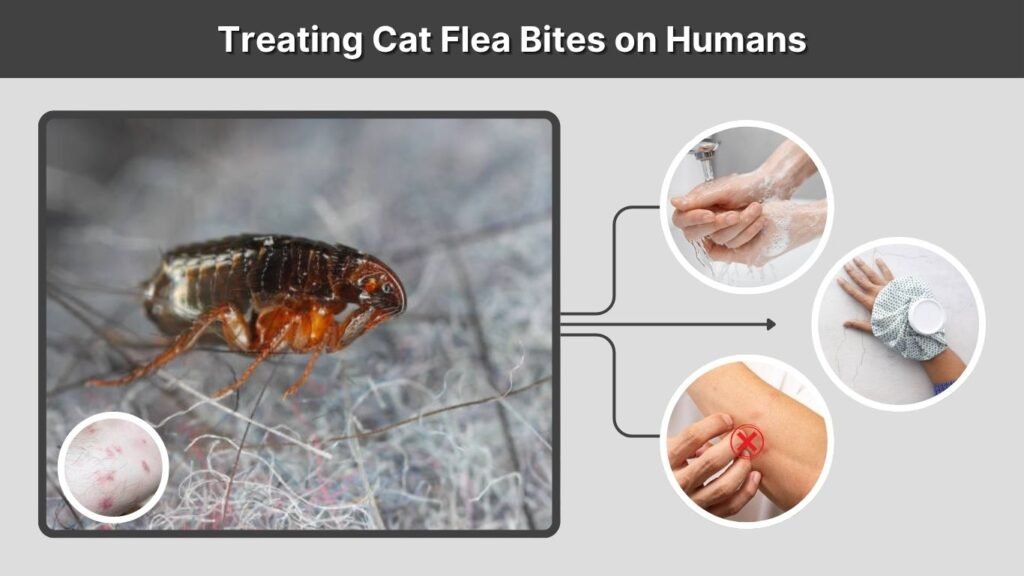
Most uncomplicated bites improve with basic home care:
- Wash the skin gently with soap and water.
- Apply a cold compress for about 20 minutes.
- Avoid scratching the bumps.
- Ask a pharmacist about an antihistamine for itching.
- Use hydrocortisone cream when appropriate and according to its directions.
Children, pregnant people, those taking other medications, and anyone applying treatment near the eyes or broken skin should seek professional advice first. Increasing redness, heat, pain, pus, or swelling may indicate infection.
Fleas can occasionally carry disease-causing organisms. Seek medical care when flea exposure is followed by fever, headache, swollen lymph nodes, spreading rash, or significant illness.
Are Cat Flea Bites Dangerous?
Most bites cause temporary irritation, but an uncontrolled infestation can create serious problems. Persistent scratching may produce open wounds and bacterial infection. Fleas may also contribute to tapeworm transmission when a cat swallows an infected flea.
Heavy infestations can cause substantial blood loss. Kittens, elderly cats, sick cats, and very small animals are particularly vulnerable and may become weak or dangerously anemic. Pale gums, unusual tiredness, rapid breathing, collapse, or refusal to eat requires urgent veterinary assessment.
How Long Do Flea Bites Last on Cats?
There is no single healing time. Mild irritation may begin improving after effective flea control, while allergic dermatitis, open sores, and secondary infections can take longer to resolve.
A cat may continue scratching after the adult fleas have been killed because inflammation remains or new fleas are still emerging from the home. Veterinary attention is appropriate when symptoms worsen, bleeding continues, bald areas spread, or the skin fails to improve.
FAQs
Can cats be allergic to flea bites?
Yes. Cats can develop flea-allergy dermatitis, an exaggerated immune reaction to flea saliva. An allergic cat may develop intense itching, red crusty bumps, scabs, and hair loss after only a few bites. Complete flea control is essential even when no live fleas are visible.
How do I treat cat flea bites naturally?
Flea combing, washing bedding, vacuuming, and cleaning resting areas can reduce fleas and provide useful support. However, these measures may not eliminate an established infestation. A veterinarian-approved flea preventive is normally needed to break the life cycle and protect the cat from continued biting.
Can cat flea bites kill a cat?
A few bites rarely threaten a healthy adult cat. However, a severe infestation can remove enough blood to cause dangerous anemia, particularly in kittens, elderly cats, or medically fragile animals. Pale gums, weakness, rapid breathing, poor appetite, or collapse requires urgent veterinary care.
Can flea bites cause seizures in cats?
Seizures are not a normal reaction to ordinary flea bites. They require emergency veterinary attention, particularly when they begin after applying a flea-control product. Incorrect products, excessive doses, or dog treatments used on cats can produce serious nervous-system reactions.
Why is my cat still scratching after flea treatment?
Skin inflammation may remain after fleas die, and immature fleas can continue emerging from carpets, furniture, and bedding. The treatment may also be unsuitable or incorrectly applied. Continue environmental control and contact a veterinarian when scratching is severe, persistent, or accompanied by sores.
