
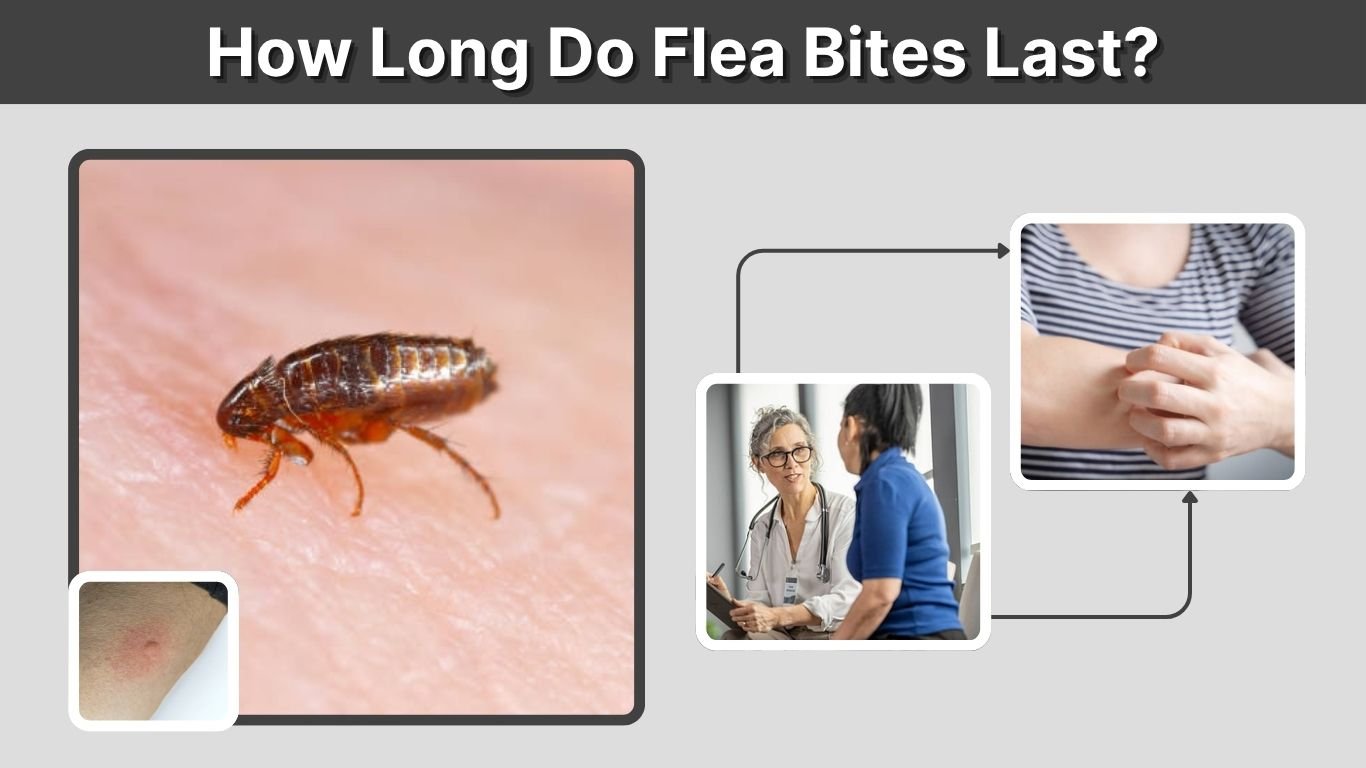
Most uncomplicated flea bites last a few days. The itching and swelling usually begin improving as the skin’s reaction settles, although sensitive people may experience symptoms for longer. Bite marks can remain visible after the itching stops, especially when the skin has been scratched or repeatedly exposed to fleas. Ongoing new bumps often indicate continued flea activity rather than old bites returning.
How Long Do Flea Bites Last on Humans?
A typical flea bite should begin improving within several days. The exact healing time varies with the number of bites, the person’s sensitivity to flea saliva, scratching, and whether additional bites are still occurring.
| Type of reaction | General duration |
| Mild redness and itching | Usually a few days |
| Strong local reaction | May last longer than several days |
| Scratched or broken skin | Longer healing period |
| Allergic rash | May persist until treated |
| Infected bite | May worsen without medical care |
| Dark marks after healing | Can remain after the bump disappears |
Flea bites cause itching because the immune system reacts to substances introduced into the skin while the flea feeds. People with stronger sensitivity may develop larger bumps, blisters, or prolonged irritation.
How Long Does the Itching Last?
The strongest itching commonly occurs during the first few days. It should gradually become less noticeable as the inflammation settles.
Itching may continue longer when:
- Numerous fleas have bitten the same area
- The person has an allergic reaction
- Clothing repeatedly rubs against the bumps
- The skin is dry or irritated
- Scratching repeatedly reopens the skin
- New fleas continue biting
Bites that appear every morning or continue developing in new places probably represent fresh exposure. Fleas may remain in pet bedding, carpets, furniture, floor gaps, and areas where animals rest.
How Long Do Flea-Bite Marks Last?
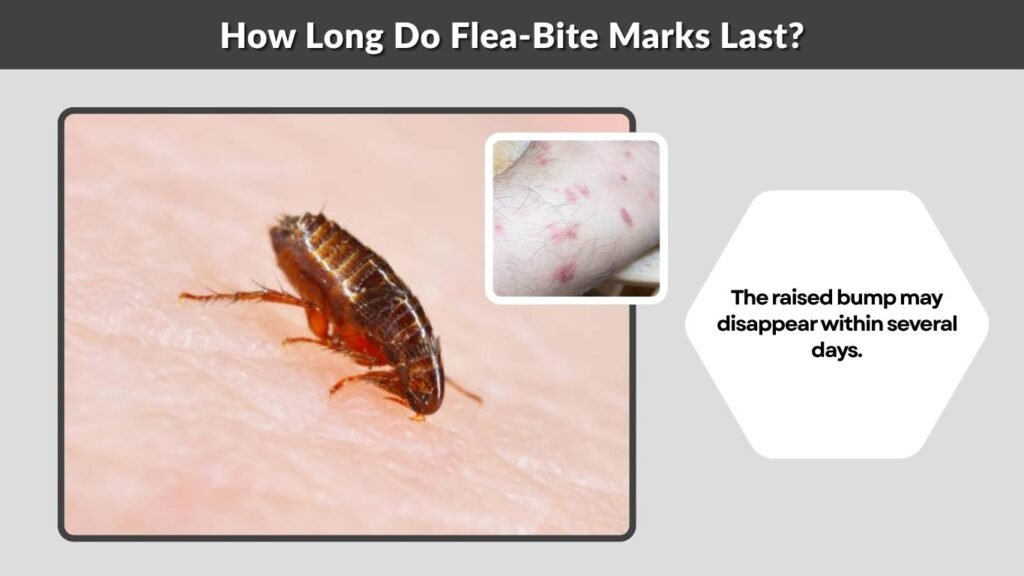
The raised bump may disappear within several days, but discoloration can remain after the active reaction has ended. Red, brown, or darker marks may be more noticeable in people who scratch the bites or naturally develop post-inflammatory pigmentation.
Marks usually fade gradually. Their duration depends on skin tone, sun exposure, inflammation, and whether the bite developed a scab or infection.
How Long Do Flea-Bite Scars Last?
Most flea bites do not create permanent scars. Lasting marks are more likely when bites are:
- Scratched until they bleed
- Picked repeatedly
- Complicated by infection
- Associated with large blisters
- Exposed to sunlight while healing
Avoid picking scabs, keep the skin clean, and protect healing areas from unnecessary sun exposure. A dermatologist can assess marks that remain raised, painful, or unchanged for an extended period.
How Long Do Sand Flea Bites Last?
The term “sand flea” can refer to different organisms, so the expected duration depends on what caused the skin problem.
Ordinary itchy bumps acquired near a beach may clear within days or weeks. However, tungiasis is different. It is caused by a female chigoe flea that embeds itself in the skin, commonly around the feet and toes. This condition can cause prolonged itching, pain, inflammation, ulcers, and secondary infection.
An embedded sand flea may appear as a round whitish lesion with a dark central point. Do not dig it out using a needle, knife, or other unsterile instrument. Tungiasis should be assessed and treated by a healthcare professional because improper removal can damage the skin and introduce bacteria.
Why Are My Flea Bites Not Going Away?
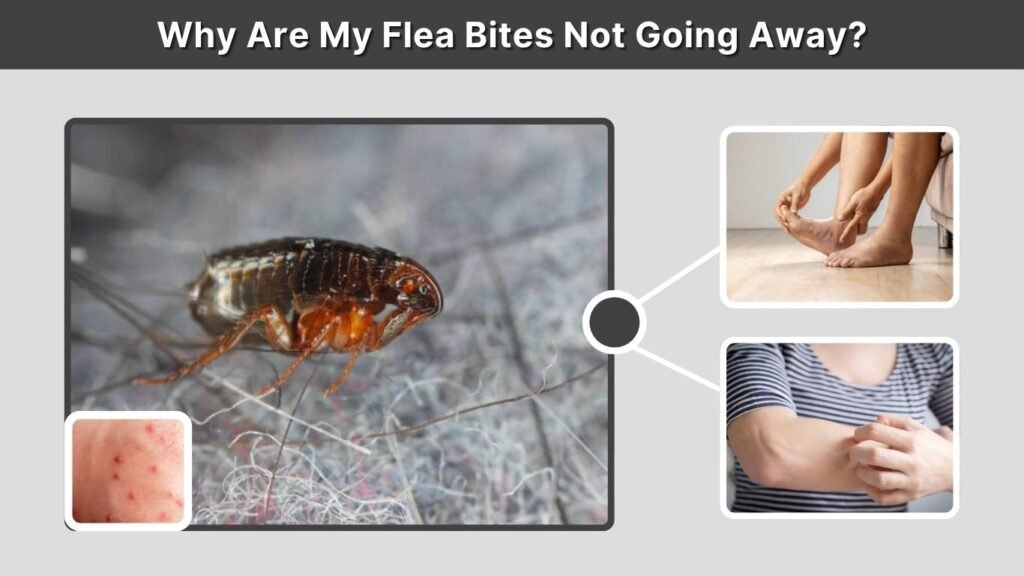
Persistent bumps do not always mean the original bites are failing to heal. New fleas may be biting while older marks are fading.
Other possible reasons include:
Continued Flea Exposure
Adult fleas may be killed during treatment while eggs, larvae, and pupae remain in the environment. Newly emerged adults can then bite people or animals.
Managing an infestation usually requires treating every pet, washing bedding, and regularly vacuuming furniture, floors, carpets, and edges around walls.
Allergic Reaction
Some people develop a more intense reaction to flea saliva. This can cause larger bumps, significant swelling, blisters, or an itchy rash that remains longer than an ordinary bite.
Scratching
Scratching damages the protective surface of the skin. The resulting wound takes longer to heal and can allow bacteria to enter.
Incorrect Identification
Flea bites can resemble bites from bedbugs, mosquitoes, mites, or other insects. Bedbug bites, for example, may also cause red, swollen, itchy areas in clusters or lines. Appearance alone may not identify the cause reliably.
How to Help Flea Bites Heal Faster
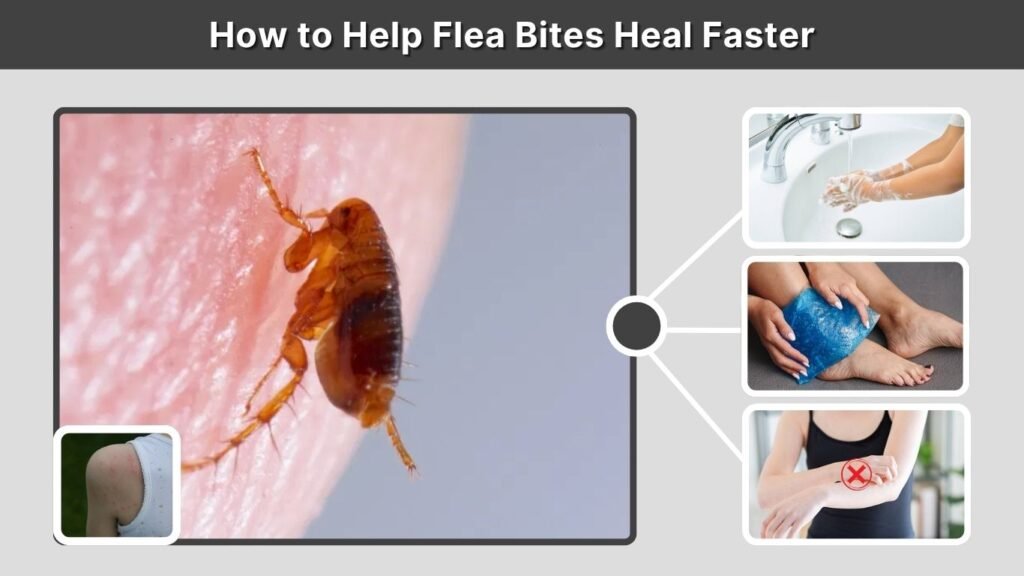
Most mild flea bites can be managed at home. Treatment reduces discomfort but does not instantly remove the bumps.
Wash the Skin
Gently clean the affected area with soap and water. Pat it dry without rubbing.
Apply a Cold Compress
Wrap ice or a cold pack in a clean cloth and apply it for about 10 minutes. Remove it for 10 minutes before repeating. This may reduce itching, pain, and swelling.
Control the Itching
Over-the-counter 1% hydrocortisone cream may help relieve inflammation and itching. An oral antihistamine may also be useful. Follow the product directions and consult a pharmacist before treating babies, children, pregnant people, or anyone taking other medications.
Avoid Scratching
Keep fingernails short and cover heavily scratched areas with clean, loose clothing. Do not deliberately pop blisters.
Avoid applying bleach, undiluted essential oils, household disinfectants, or other harsh substances. These may cause additional irritation or chemical burns.
How Long Do Flea Bites Last on Dogs?
There is no single healing time for flea bites on dogs. Mild irritation may improve after effective flea control, but itching can continue when the dog has flea-allergy dermatitis, damaged skin, or a secondary infection.
Dogs allergic to flea saliva can react severely to very limited exposure. Eliminating existing fleas usually decreases symptoms, but some animals need veterinary medication to control inflammation, itching, and infection.
Contact a veterinarian when a dog has spreading hair loss, bleeding, open sores, thick scabs, foul-smelling skin, constant scratching, weakness, or pale gums.
How Long Do Flea Bites Last on Cats?
The duration also varies in cats. A mild reaction may settle once fleas are controlled, while flea-allergy dermatitis can continue after the original bite and cause persistent grooming, crusty bumps, hair loss, and broken skin.
Use only flea products specifically labelled for cats and suitable for the cat’s weight and age. Never apply a dog-only flea treatment to a cat. Severe itching, wounds, poor appetite, weakness, or pale gums requires veterinary attention.
When to Seek Medical Attention
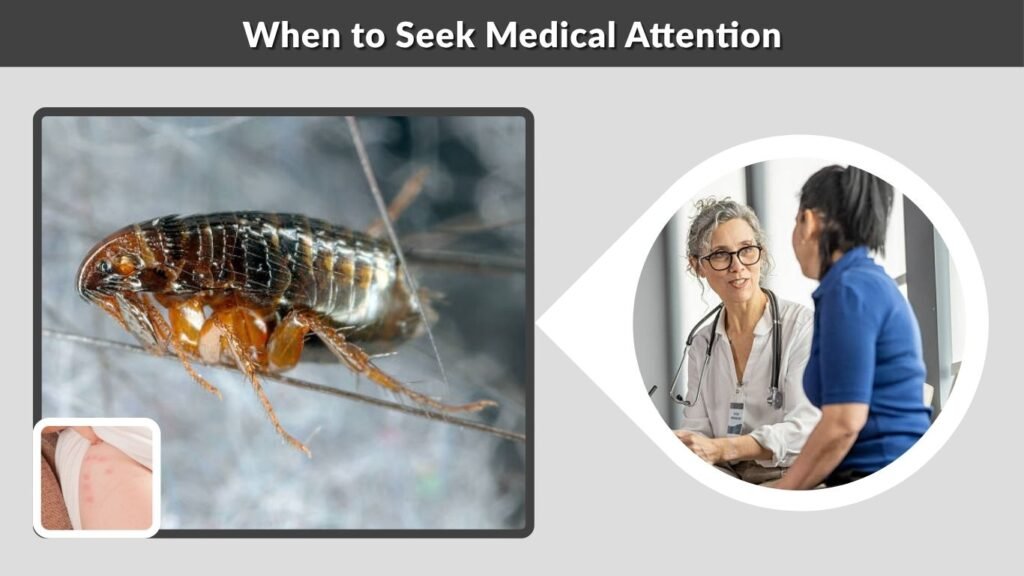
Obtain medical advice when a suspected flea bite develops:
- Increasing redness, warmth, pain, or swelling
- Pus, drainage, or red streaks
- Fever or swollen lymph nodes
- Extensive blistering
- A lesion that does not begin improving
- Severe symptoms after travel to an area with flea-borne disease
Difficulty breathing, throat tightness, facial swelling, confusion, severe dizziness, or fainting may indicate a serious allergic reaction and requires immediate emergency assistance. Fleas can also transmit disease-causing organisms, so fever, headache, chills, body aches, or a spreading rash after flea exposure should be medically evaluated.
FAQs
How long do cat flea bites last on humans?
Cat flea bites on humans generally improve within a few days. Itching or visible marks may remain longer in sensitive people, particularly when bites are scratched. New bumps appearing after treatment may indicate that immature fleas are still emerging inside the home.
Why do old flea bites start itching again?
Healing skin may itch intermittently, especially when it becomes dry, warm, or irritated by clothing. However, fresh flea bites near the same area can make it seem that old bites have returned. Check pets, bedding, carpets, and furniture for continued flea activity.
How long do flea bites last on babies?
There is no exact duration, but mild bites should generally begin improving within several days. Babies may have stronger-looking reactions and cannot avoid scratching. A pediatric healthcare professional should assess widespread bumps, blistering, fever, swelling, broken skin, or uncertain bite identification.
Can flea bites last for weeks?
Ordinary flea bites usually last only a few days, but allergic reactions, scratching, infection, repeated exposure, and lingering discoloration can extend the apparent healing time. Bumps that remain unchanged, continue spreading, or repeatedly reappear should be assessed by a healthcare professional.
How can I tell whether the bites are new?
New bites are usually brighter, more raised, and itchier than fading marks. They may appear in fresh clusters around the ankles, feet, legs, or waist. Continued new bumps suggest that fleas remain on pets or within carpeting, furniture, or bedding.
