
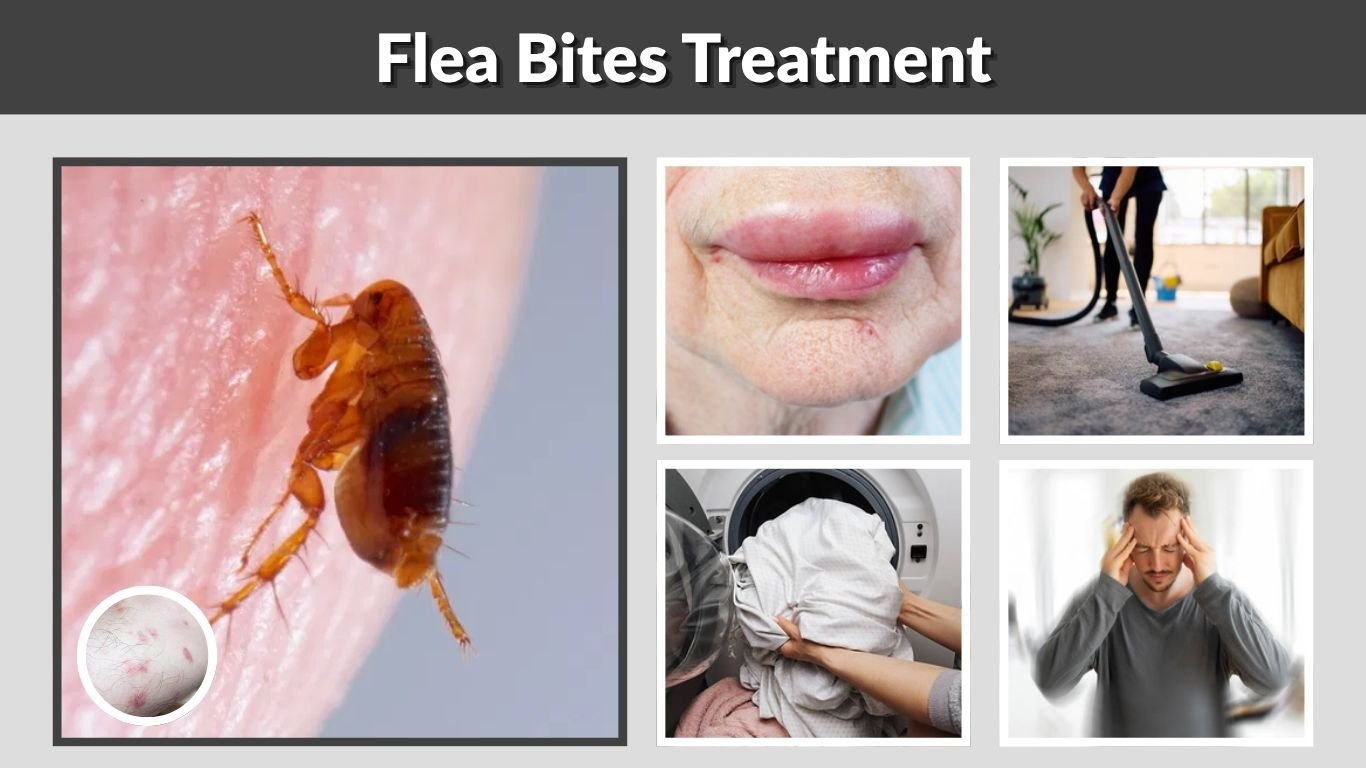
Flea bites usually cause small, intensely itchy bumps, often around the ankles, feet, or lower legs. Most mild bites can be treated at home with washing, cold compresses, anti-itch treatments, and careful avoidance of scratching. However, severe swelling, infection, allergic reactions, or illness after a flea bite requires medical attention. Successful flea bite treatment must also include removing fleas from pets and the home; otherwise, new bites may continue even while older ones heal.
What Do Flea Bites Look Like?
Flea bites commonly appear as small red or skin-colored bumps. They may occur in clusters or short groups, and the center may have a tiny puncture mark. Common locations include the ankles, feet, legs, waist, thighs, and other areas where clothing fits closely.
Typical symptoms include:
- Intense itching
- Small, raised bumps
- Redness around the bite
- Mild swelling
- Tender or irritated skin
- Blisters in people with stronger allergic reactions
Flea bites are commonly grouped below the knees, although bites can occur elsewhere. Scratching can damage the skin and increase the risk of bacterial infection.
Best Treatment for Flea Bites on Humans
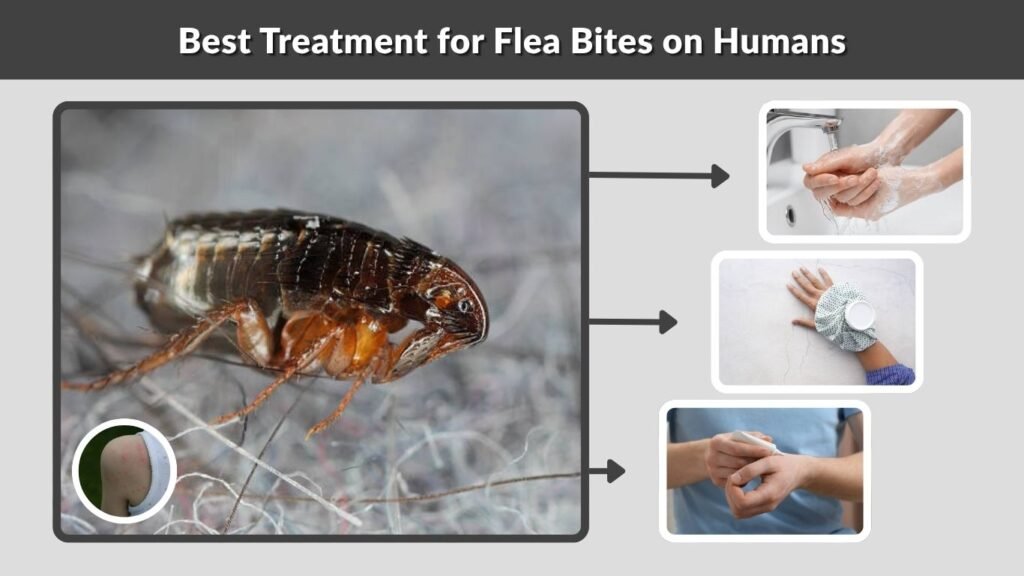
Most uncomplicated flea bites improve within several days. Treatment focuses on controlling itching, swelling, and irritation while protecting the skin from infection.
1. Wash the Bites
Gently wash the affected skin with soap and water. This removes surface dirt and may reduce the chance of infection.
Pat the skin dry rather than rubbing it. Avoid strongly scented soaps, alcohol, bleach, disinfectants, or harsh cleaning products because they may worsen irritation.
2. Apply a Cold Compress
Place an ice pack wrapped in a clean cloth over the bites for approximately 10–20 minutes. A clean cloth soaked in cold water can also be used.
Cold treatment may help reduce itching, pain, and swelling. Never place ice directly against the skin because it may cause cold injury.
3. Use an Anti-Itch Treatment
Over-the-counter 1% hydrocortisone cream may help relieve flea-bite itching and inflammation. An oral antihistamine may also help when itching is persistent or affects several areas. Use medicines only as directed on the label.
Speak with a pharmacist or healthcare professional before treating babies, young children, pregnant or breastfeeding people, or anyone taking other medicines. Do not apply steroid cream to broken, infected, or severely blistered skin unless a professional recommends it.
4. Avoid Scratching
Scratching provides temporary relief but may break the skin, cause bleeding, and introduce bacteria. Keep fingernails short and cover the bites loosely when scratching during sleep is a problem.
| Symptom | Treatment option |
|---|---|
| Mild itching | Cold compress and anti-itch lotion |
| Strong itching | Oral antihistamine or hydrocortisone cream |
| Mild swelling | Cold compress and elevation |
| Broken skin | Gentle washing and protection from scratching |
| Pus, increasing pain or warmth | Medical assessment |
| Breathing trouble or facial swelling | Emergency treatment |
Home Treatment for Flea Bites
Simple home care can make mild bites more comfortable. Useful options include a cool shower, cold compresses, loose clothing, fragrance-free moisturizer, and keeping the affected area clean.
Avoid applying vinegar, baking soda, toothpaste, essential oils, household chemicals, or undiluted alcohol. These remedies have limited evidence and may cause irritation, burns, or allergic reactions. NHS guidance specifically advises against using bicarbonate of soda for insect bites.
Blisters should not be deliberately popped. Opening them may delay healing and increase the risk of infection.
Flea-Bite Allergy Treatment
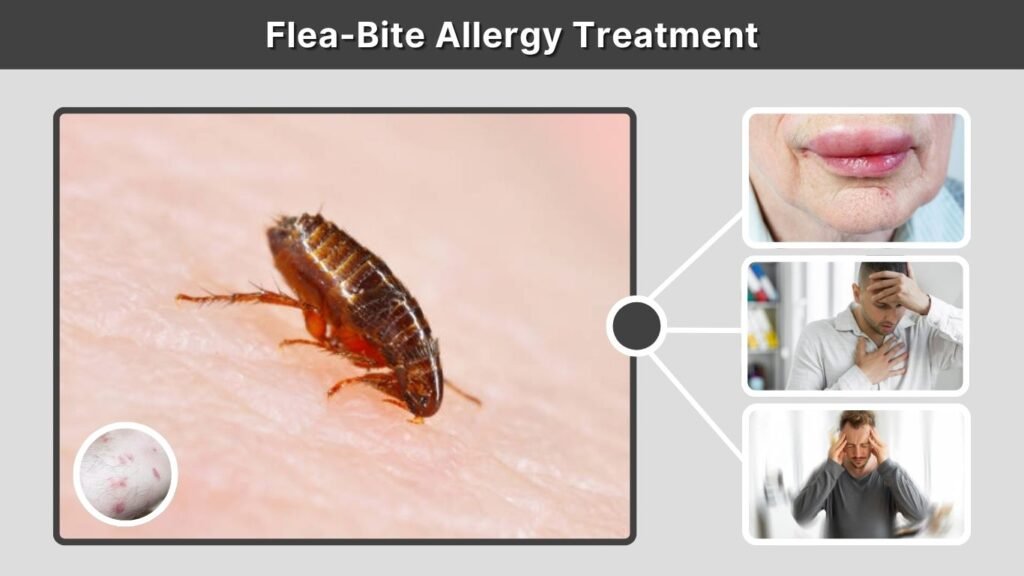
Some people develop flea-bite hypersensitivity, sometimes called papular urticaria. The reaction may cause larger bumps, blisters, widespread itching, or symptoms that remain after the original bite.
Mild allergic reactions may improve with cold compresses, oral antihistamines, and topical steroid cream. A doctor may recommend stronger treatment when swelling or inflammation is extensive.
Seek emergency assistance when a bite is followed by:
- Swelling of the lips, tongue, mouth, or throat
- Difficulty breathing or swallowing
- Wheezing or a tight throat
- Severe dizziness, confusion, or fainting
- Pale, blue, or gray lips or skin
These may indicate a serious allergic reaction requiring immediate hospital treatment.
Treatment for Infected Flea Bites
A flea bite may become infected after repeated scratching. Warning signs include increasing pain, warmth, swelling, spreading redness, pus, fluid, red streaks, fever, or swollen glands.
Do not apply leftover antibiotics or repeatedly squeeze the area. A pharmacist or doctor should assess suspected infection and determine whether antiseptic care, topical treatment, or prescription antibiotics are necessary.
Fleas can occasionally transmit infections. Contact a healthcare professional after flea exposure when a rash is accompanied by fever, headache, chills, weakness, or swollen and painful lymph nodes.
Sand Flea Bites Treatment
“Sand flea” can describe ordinary biting pests near beaches, but it may also refer to the chigoe flea that causes tungiasis.
Ordinary itchy bites can usually be managed like other mild insect bites: wash the area, apply a cold compress, avoid scratching, and use an appropriate anti-itch treatment.
Tungiasis is different. A female sand flea burrows into the skin, usually around the toes, soles, or heels. It may appear as a round whitish lesion with a dark central point and can cause severe itching, pain, swelling, ulcers, or infection.
Do not attempt to dig out an embedded flea with a needle, pin, knife, or other household instrument. The World Health Organization recommends that mechanical removal be performed under sterile conditions by an experienced healthcare worker. The wound may need proper dressing and evaluation of tetanus vaccination status.
Flea Bites on Dogs Treatment
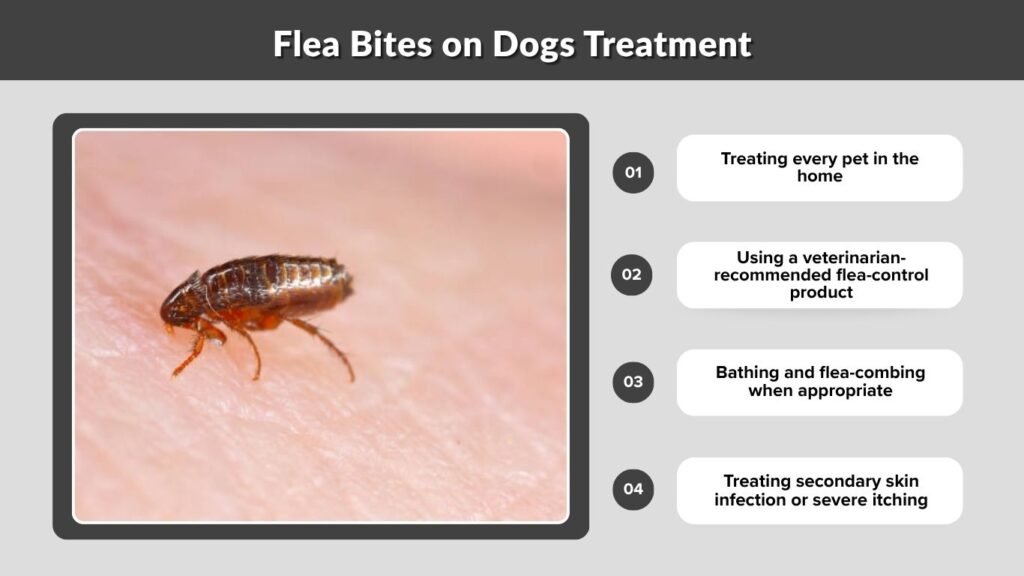
Flea bites can cause intense itching, chewing, hair loss, irritated skin, scabs, and infections in dogs. Some dogs are allergic to flea saliva and can develop flea allergy dermatitis after only a small number of bites.
Effective treatment generally includes:
- Treating every pet in the home
- Using a veterinarian-recommended flea-control product
- Bathing and flea-combing when appropriate
- Treating secondary skin infection or severe itching
- Cleaning bedding and the home environment
- Continuing preventive flea control
Anti-inflammatory or antibiotic treatment may be needed when a dog has severe dermatitis or secondary infection, but these medicines should be prescribed by a veterinarian. They are not substitutes for eliminating the fleas.
Flea Bites on Cats Treatment
Cats with flea allergy may overgroom, scratch, develop scabs, lose fur, or develop sores around the neck, back, abdomen, and base of the tail.
A veterinarian should select a flea product appropriate for the cat’s age, weight, and health. Every pet in the household usually needs treatment because untreated animals can maintain the infestation.
Never apply a product labeled for dogs to a cat. Flea products must only be used on the animal species and weight range listed on the label because ingredients safe for dogs may be dangerously toxic to cats.
Why Do Fleas Still Bite After Treatment?
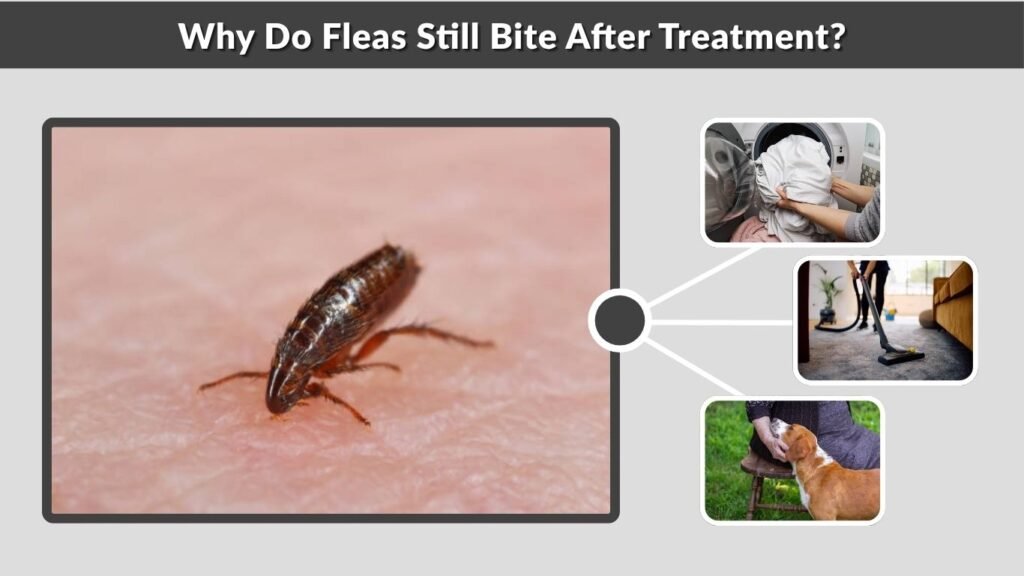
Seeing fleas or receiving new bites shortly after treatment does not always mean the treatment has failed. Flea eggs, larvae, and pupae may remain in carpets, furniture, floor cracks, pet bedding, and shaded outdoor areas.
Complete control may require:
- Washing human and pet bedding
- Vacuuming carpets, furniture, and wall edges
- Treating every household pet
- Using an appropriate home treatment
- Performing follow-up treatment according to the label
- Continuing regular vacuuming and sanitation
Moderate or severe infestations can take months to eliminate because some flea life stages resist initial treatments.
FAQs
How long do flea bites take to heal?
Mild flea bites commonly improve within several days, although itching may last longer in sensitive people. Healing can be delayed by scratching, repeated exposure, allergic reactions, or infection. Seek medical advice when the bites worsen or do not begin improving.
What cream is best for flea bites?
Over-the-counter 1% hydrocortisone cream may reduce itching and inflammation. A pharmacist can recommend the safest option based on age, pregnancy, other medicines, and the location of the bites. Avoid applying steroid cream to infected or open skin without professional advice.
Can flea bites leave scars?
Most flea bites heal without permanent scarring. Dark marks or small scars are more likely when bites are repeatedly scratched, infected, or picked. Avoid scratching, protect broken skin, and seek treatment promptly when infection develops.
Do fleas bite more after treatment?
New bites may continue temporarily because immature fleas in the environment can emerge after pets or rooms are treated. Flea control must address household pets, bedding, carpets, furniture, floors, and follow-up treatment rather than relying on one application.
When should I see a doctor for flea bites?
Seek medical care for spreading redness, increasing pain, pus, fever, swollen glands, severe blistering, or symptoms that continue worsening. Facial swelling, breathing difficulty, throat tightness, severe dizziness, or fainting requires immediate emergency assistance.
