
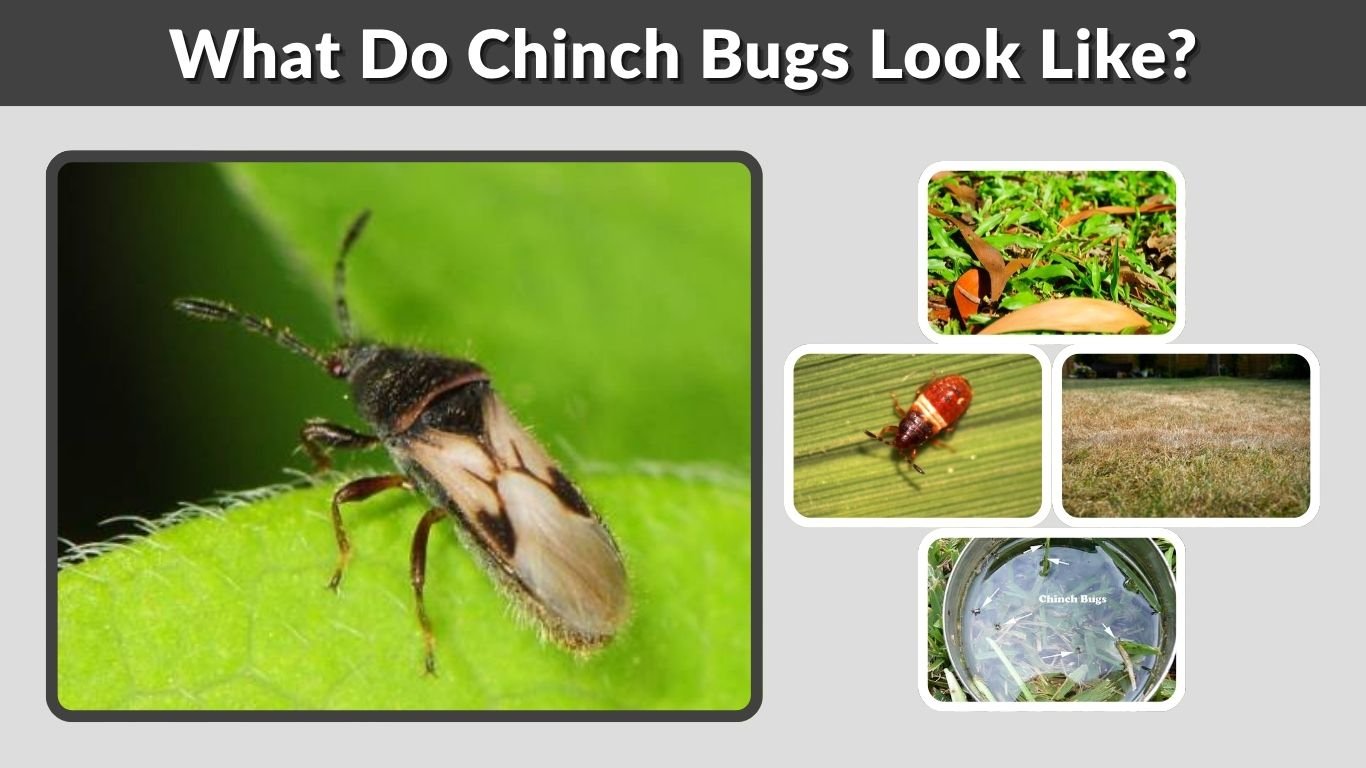
Chinch bugs are tiny, oval-shaped insects that live deep within grass near the soil surface. Adult chinch bugs are usually black with white wings folded across their backs, while young chinch bugs are red or pink with a pale band across the abdomen. Most adults measure only about 1/8 to 3/16 inch long, making them easy to overlook without close inspection.
Their appearance changes considerably as they develop. Understanding what the adults, nymphs, eggs, and lawn damage look like can help you distinguish chinch bugs from beneficial insects, grubs, lawn diseases, and simple drought stress.
What Does an Adult Chinch Bug Look Like?
An adult chinch bug has a small, narrow-to-oval body with six legs and two antennae. Mature southern chinch bugs are generally black or very dark brown.
Their most recognizable feature is a pair of pale or white wings folded flat across the back. The dark markings and overlapping wings may create an X-shaped pattern when viewed from above.
Adult Chinch Bug Identification
Look for these characteristics:
- Approximately 1/8 to 3/16 inch long
- Black or dark-brown body
- White or pale wings
- Dark triangular markings on the wings
- Wings forming an X-like pattern across the back
- Six relatively slender legs
- Two noticeable antennae
- Narrow, oval body
- Quick movement through grass and thatch
Some adult chinch bugs have fully developed wings, while others have shorter wings that do not cover the entire abdomen. Both forms may occur within the same population. Southern chinch bugs rarely exceed 1/4 inch in length.
Because of their small size, adults may initially resemble tiny seeds or pieces of dark debris moving through the grass.
What Do Baby Chinch Bugs Look Like?
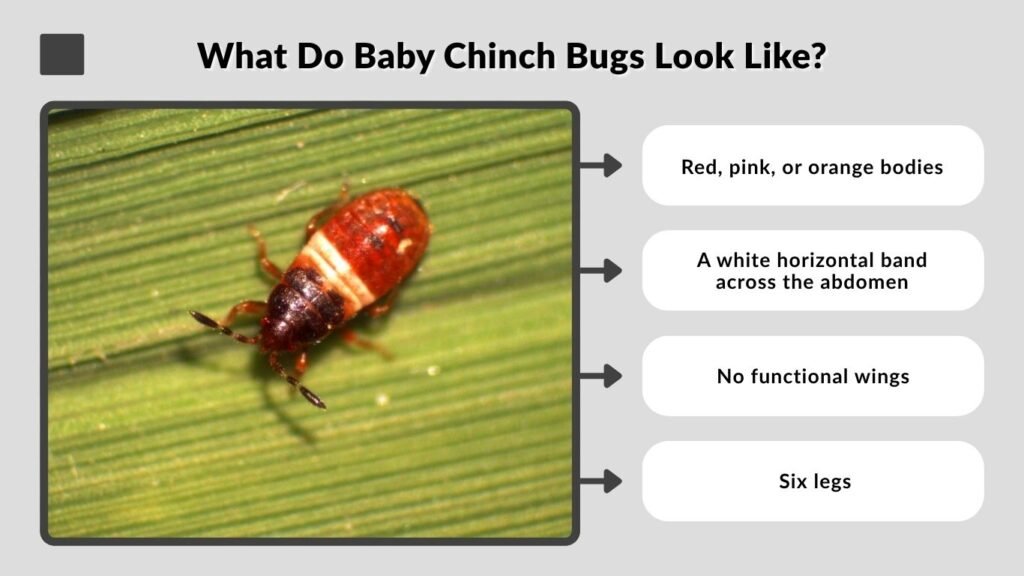
Young chinch bugs are called nymphs, not larvae. Chinch bugs undergo gradual metamorphosis, moving through egg, nymph, and adult stages without forming a larva or pupa.
Newly hatched nymphs are tiny and may initially look yellowish. They soon become bright red, pink, or orange-red. A pale white or cream-colored band crosses the middle of the abdomen.
Young Nymphs
The youngest nymphs usually have:
- Red, pink, or orange bodies
- A white horizontal band across the abdomen
- No functional wings
- Six legs
- Dark eyes
- A small oval shape
- A length close to 1/16 inch
Their bright color makes them easier to recognize against green grass, although they remain extremely small.
Older Nymphs
As nymphs grow and molt, their bodies become darker. Older nymphs may appear brown, gray, or nearly black, but they usually retain a pale band across the back.
Developing wing pads become visible along the sides of the body, although the insects cannot yet fly. By the final nymphal stage, they resemble small wingless adults.
| Life stage | Typical color | Wings | Approximate appearance |
| Newly hatched nymph | Yellowish | None | Extremely small and pale |
| Young nymph | Red or pink | None | White band across abdomen |
| Older nymph | Brown to black | Wing pads | Darker body with pale band |
| Adult | Black or dark brown | White wings | X-shaped wing pattern |
What Do Chinch Bug Eggs Look Like?
Chinch bug eggs are extremely small and difficult to locate without magnification. Females deposit them around grass blades, leaf sheaths, roots, stolons, thatch, and protected areas close to the soil.
The eggs are elongated rather than round. They may appear pale white when first laid and become more orange or reddish as the developing nymph approaches hatching.
Finding eggs is not normally the easiest way to confirm an infestation. Homeowners are much more likely to notice red nymphs or black-and-white adults moving around the base of damaged grass.
Where Should You Look for Chinch Bugs?
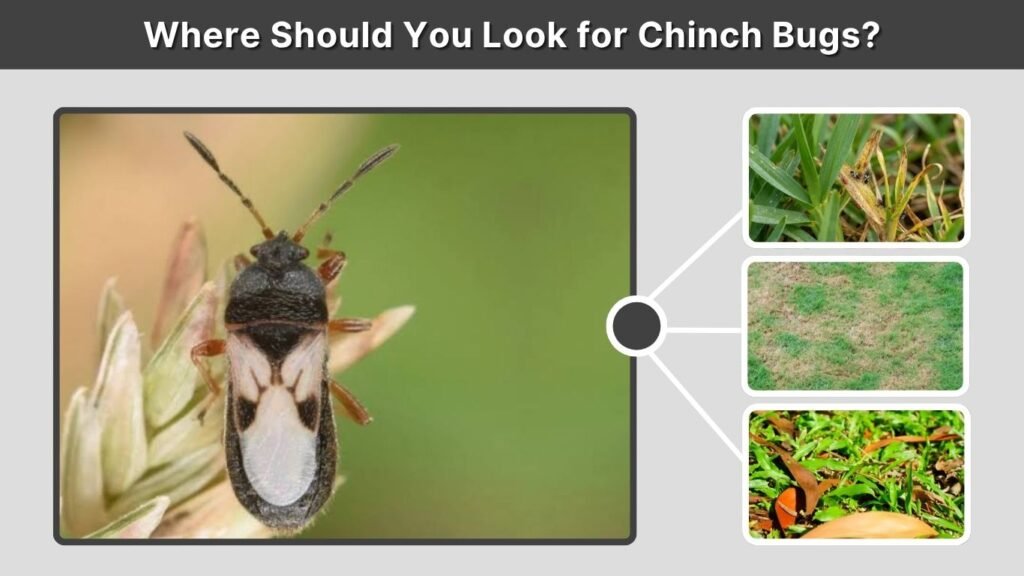
Chinch bugs spend most of their time below the visible grass canopy. They gather around crowns, stems, stolons, thatch, and the upper soil surface rather than sitting openly on top of the lawn.
The best place to inspect is the boundary where healthy green grass meets yellowing or brown turf. Bugs often leave completely dead grass and move into neighboring living areas to continue feeding.
Areas Most Likely to Contain Them
Inspect grass near:
- Sunny sections of the lawn
- Driveways and sidewalks
- Curbs and patios
- South-facing walls
- Heat-reflecting surfaces
- Dry or poorly irrigated patches
- Edges of spreading brown areas
- Thick thatch
Southern chinch bugs are strongly associated with St. Augustine grass, while hairy chinch bugs are more commonly found in northern turf species.
What Does Chinch Bug Damage Look Like?
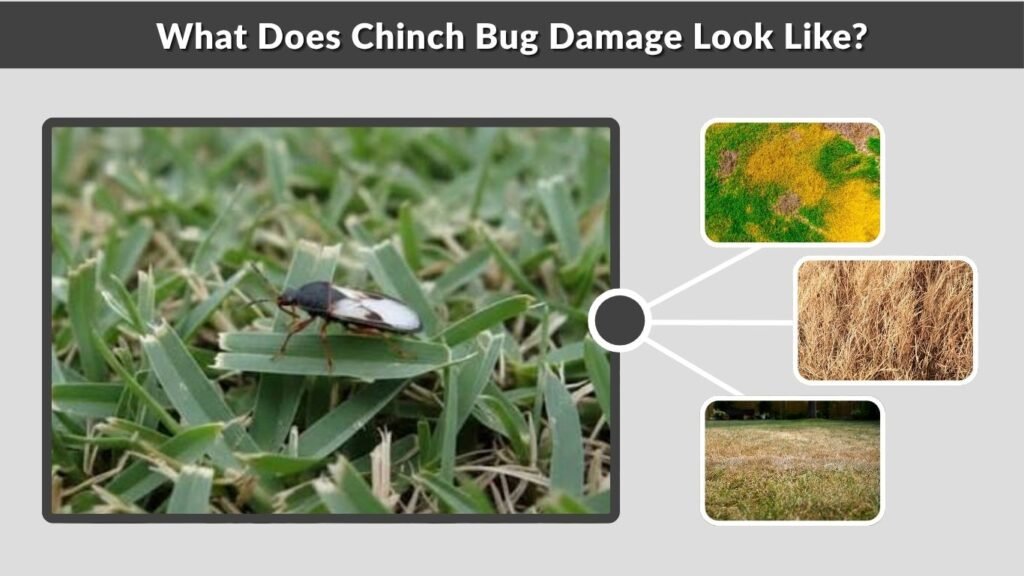
Chinch bug damage normally begins as small, irregular areas of yellow or wilted grass. The grass may then turn reddish-brown, straw-colored, and eventually die.
The affected area often continues expanding because the insects move from damaged turf into surrounding healthy grass.
Common Lawn Symptoms
A lawn with chinch bugs may show:
- Irregular yellow patches
- Reddish-brown grass
- Dry, straw-like blades
- Expanding dead areas
- Damage concentrated in full sun
- Brown turf beside concrete or pavement
- Grass that does not improve after watering
- Active insects at the green-to-brown boundary
Both adults and nymphs feed on stems and stolons using piercing-sucking mouthparts. Their feeding damages plant tissue and can cause heavily infested sections to turn yellow and die.
Chinch Bug Damage vs. Drought
Chinch bug injury is frequently mistaken for drought because both problems produce dry-looking yellow or brown grass.
Drought stress is usually more evenly distributed in areas receiving insufficient water. Chinch bug damage often begins in irregular patches and spreads outward despite adequate irrigation.
Watering drought-stressed turf should produce some improvement. Grass suffering from an active chinch bug infestation normally continues declining because the insects remain in the lawn.
Finding multiple adults and nymphs at the edge of the damaged area provides stronger evidence than judging the lawn by color alone.
Chinch Bugs vs. Big-Eyed Bugs
Big-eyed bugs are beneficial predators that may be mistaken for chinch bugs. Spraying them unnecessarily can remove insects that naturally feed on lawn pests.
As their name suggests, big-eyed bugs have very large, prominent eyes. Their heads appear wider and more rounded than those of chinch bugs.
Chinch bugs have a more triangular head and less prominent eyes. Adult chinch bugs also show the familiar pale wing markings across a dark body. UF/IFAS warns that confusing these insects can result in unnecessary pesticide applications and the loss of beneficial predators.
| Feature | Chinch bug | Big-eyed bug |
| Main role | Grass-feeding pest | Beneficial predator |
| Eyes | Relatively small | Large and prominent |
| Head shape | More triangular | Broad and rounded |
| Adult wings | White with dark markings | Usually gray or pale |
| Lawn effect | Causes yellow and brown patches | Helps control pests |
What Does a False Chinch Bug Look Like?
False chinch bugs are small, grayish insects that may gather in large groups. Their nymphs are wingless and oval, often with a reddish marking on the back.
Unlike turf-damaging chinch bugs, false chinch bugs primarily feed on mustard-family plants, weeds, and various crops. They may migrate toward buildings during hot, dry weather but do not bite or reproduce indoors.
A large group of small gray bugs around weeds, seed heads, walls, or windows may therefore be false chinch bugs rather than a lawn infestation.
Best Ways to Look for Chinch Bugs
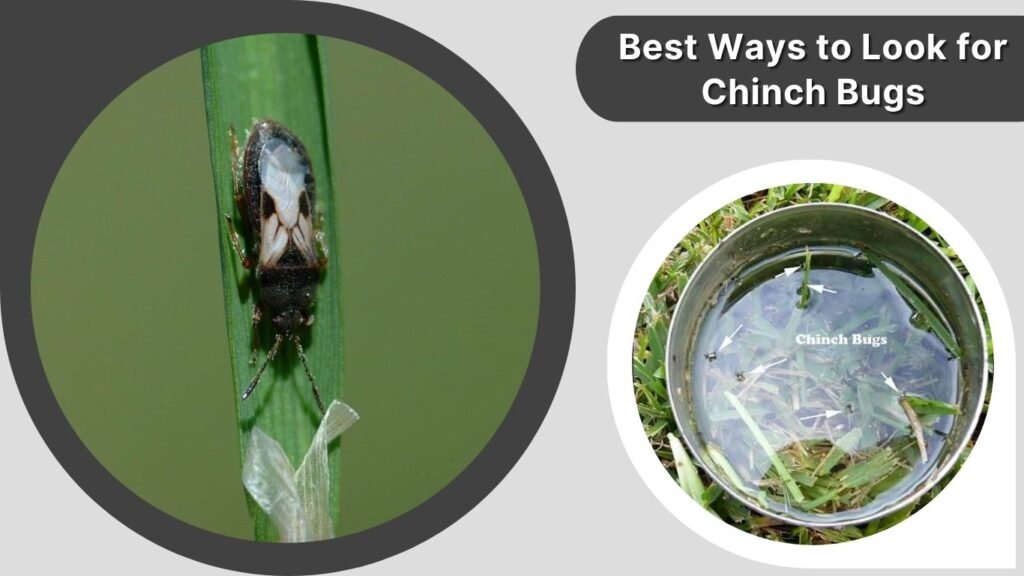
Because these insects are tiny and hide deep in turf, use a deliberate inspection method.
Part the Grass
Kneel beside the edge of the damaged patch and spread the grass blades with your fingers. Look closely around the crowns, stolons, soil surface, and thatch.
Watch for fast-moving red nymphs or black insects with white wings. Inspecting on a bright, sunny day may make movement easier to detect.
Use the Flotation Test
Remove both ends from a large metal can and push one end two to three inches into the turf at the yellow-to-green boundary.
Fill the can with water and maintain the water level for several minutes. Chinch bugs trapped inside should float to the surface. Repeat the test at several locations because populations may be unevenly distributed.
Collect a Sample
Place several insects in a clear container or sealed plastic bag. A local extension office, lawn professional, or pest-identification service may be able to confirm the species.
Avoid treating the lawn until chinch bugs have been identified. Lawn diseases, irrigation problems, fertilizer damage, and other insects can produce similar symptoms.
Do Chinch Bug Bites Have a Specific Appearance?
Chinch bugs are plant-feeding insects and are not recognized as pests that normally bite people or pets. Their mouthparts are adapted for piercing grass tissue and extracting plant fluids.
Therefore, unexplained red or itchy marks on the skin are unlikely to be chinch bug bites. Mosquitoes, fleas, chiggers, mites, or other arthropods are more probable causes.
FAQs
How Small Is a Chinch Bug?
Adult chinch bugs are usually approximately 1/8 to 3/16 inch long. Young nymphs may be close to 1/16 inch, making them difficult to see without kneeling close to the grass or using magnification.
Are Chinch Bugs Red or Black?
They can be both. Young nymphs are typically red, pink, or orange with a pale abdominal band. Older nymphs become darker, while adults are usually black or dark brown with white wings.
Do Chinch Bugs Have Wings?
Adult chinch bugs have wings, although some individuals may have short wings. Nymphs do not have developed wings; older nymphs show small wing pads before reaching adulthood.
What Does St. Augustine Grass With Chinch Bugs Look Like?
Infested St. Augustine grass develops irregular yellow areas that become reddish-brown and straw-colored. Damage commonly appears in sunny locations near pavement and continues spreading into surrounding green turf.
Can You See Chinch Bugs Without Magnification?
Yes, but they are very small. Adults and larger nymphs can be seen with the naked eye when the grass is parted carefully. A magnifying glass makes their colors, wing markings, and body shape much easier to recognize.
