
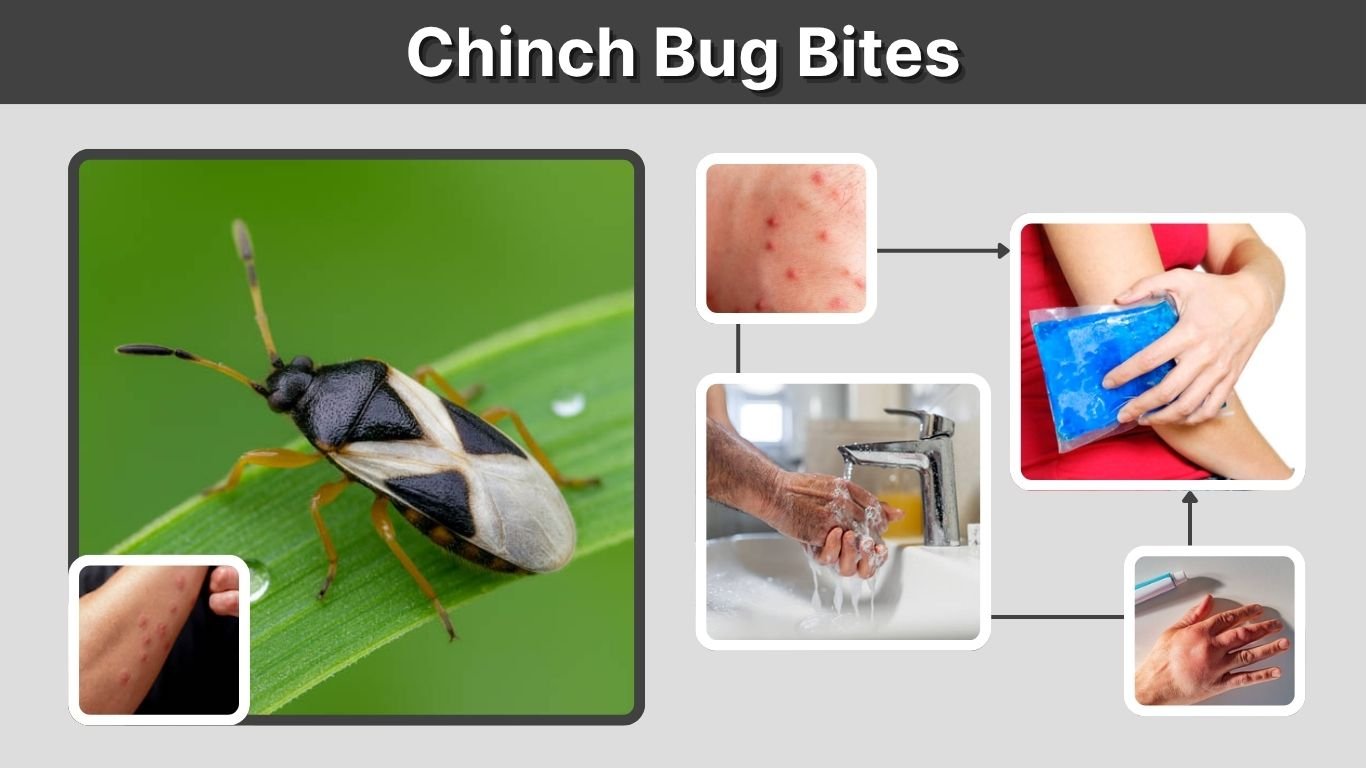
Chinch bugs are not considered biting pests of humans or pets. The chinch bugs found in lawns are plant-feeding insects that use piercing mouthparts to extract fluids from grass crowns, stems, and stolons. They do not seek blood or depend on people and animals for food. Public-health guidance also notes that chinch bugs do not normally bite or sting humans.
Therefore, there is no typical “chinch bug bite” appearance. When red, swollen, painful, or itchy marks develop after spending time on an infested lawn, mosquitoes, chiggers, fleas, biting midges, or another small insect are more likely responsible.
Do Chinch Bugs Bite Humans?
Lawn chinch bugs do not normally bite people. Although they possess needle-like mouthparts, those structures are adapted for penetrating grass tissue and drinking plant fluids. Southern chinch bugs primarily damage St. Augustine grass, while hairy and common chinch bugs feed on other grasses and crops.
A chinch bug may crawl across a person’s shoes, legs, or clothing while they are walking or working in an infested lawn. Its presence on the body does not mean it is feeding.
Chinch bugs also do not sting. They have no stinger and do not inject venom into people.
Can Chinch Bugs Accidentally Pinch the Skin?
Chinch bugs are not recognized as insects that regularly defend themselves by biting people. If you experience a sharp sensation outdoors, another small true bug may have been responsible.
Minute pirate bugs, for example, are beneficial predators that sometimes probe human skin and produce an irritating bite. Masked hunters can also bite defensively when handled, causing pain and swelling. These insects may be mistaken for other small dark bugs.
What Do Chinch Bug Bites Look Like?
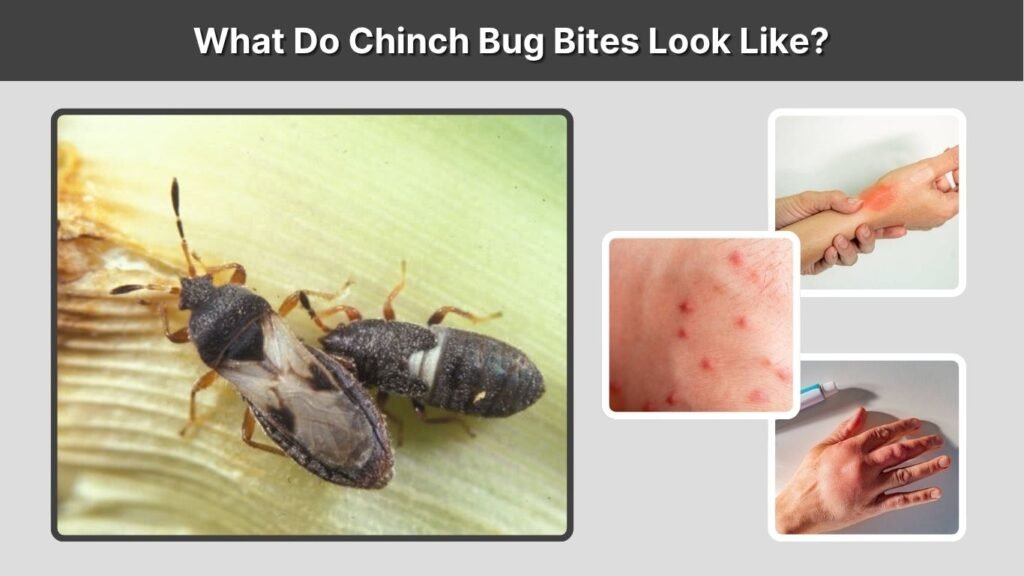
There is no reliable picture or symptom pattern for a chinch bug bite because ordinary lawn chinch bugs are not human-biting pests.
Marks incorrectly blamed on chinch bugs may look like:
- Small red or pink bumps
- Raised itchy welts
- Localized redness
- Mild swelling
- Several spots around the ankles
- Clusters or lines of irritated skin
- A rash after working outdoors
These symptoms are not enough to identify the responsible insect. Even bed bug bites cannot be confirmed from skin marks alone; the insect itself or other evidence must be found.
Likely Causes of Marks After Lawn Exposure
Chiggers are a common possibility when intense itching and small reddish welts develop several hours after walking, sitting, or working in grass. Chigger larvae attach to the skin and inject digestive fluid, with itching often becoming noticeable four to eight hours later.
Mosquito bites can create itchy reddish-brown bumps, small blisters, or areas of swelling. Scratching increases the risk of secondary skin infection.
Other possible causes include fleas, biting midges, ticks, ants, mites, contact with irritating plants, or reactions to lawn chemicals.
Chinch Bugs vs. Bed Bugs
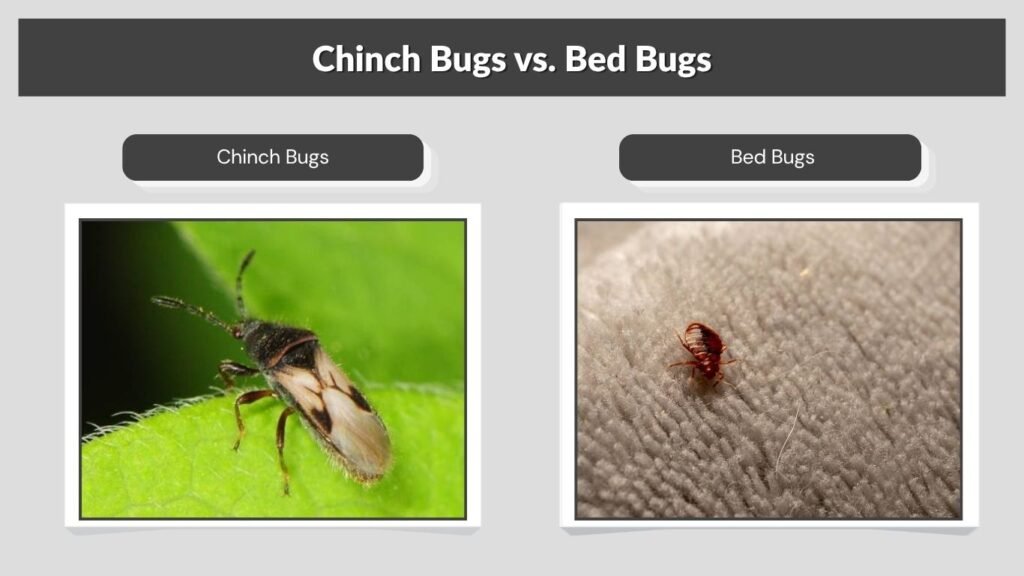
The words chinch bug and bed bug are sometimes confused. In Spanish, the word chinches commonly refers to bed bugs, but bed bugs and lawn chinch bugs are very different insects.
| Feature | Lawn chinch bug | Bed bug |
| Primary habitat | Grass and lawn thatch | Beds, furniture, and indoor cracks |
| Food | Plant fluids | Human or animal blood |
| Human bites | Not normally | Yes |
| Adult appearance | Small, dark, with pale wings | Flat, oval, brown, and wingless |
| Typical activity | In turf during warm weather | Often feeds indoors at night |
| Primary damage | Yellow and dead grass | Itchy skin reactions and indoor infestation |
Bed bugs are wingless blood-feeding parasites that commonly feed while people sleep. Reactions can range from no visible mark to red spots, itching, rashes, or hives. Lawn chinch bugs have wings as adults and remain mainly in grass, where they cause expanding yellow or brown patches.
Finding small insects indoors near a bed does not automatically confirm either species. Collecting a specimen for professional identification is more dependable than relying on bite marks.
Do False Chinch Bugs Bite?
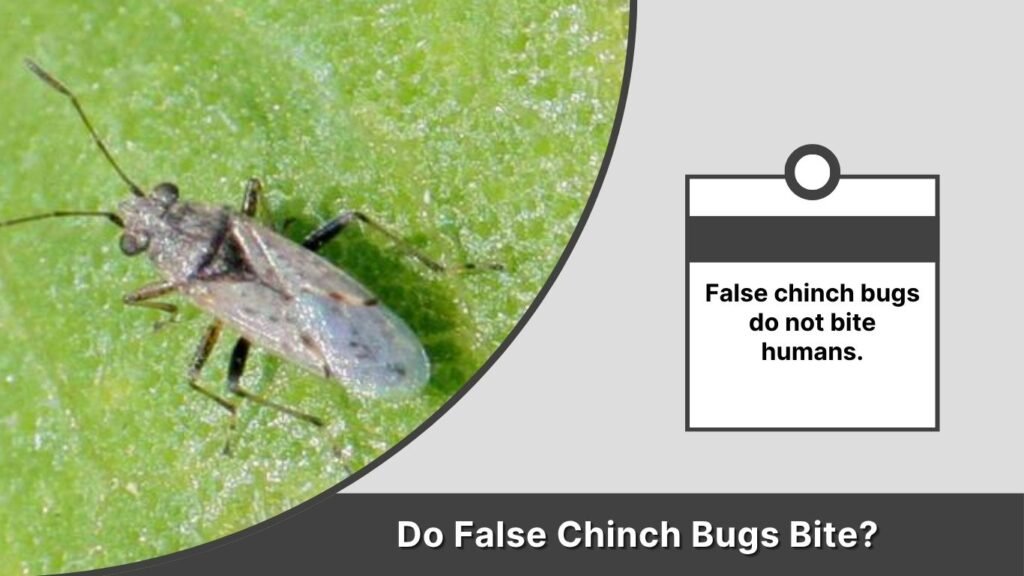
False chinch bugs do not bite humans. They are small, grayish plant-feeding insects that often gather around mustard-family plants, weeds, seeds, and agricultural crops.
During hot, dry weather, large groups may leave dying plants and move toward irrigated landscapes or buildings. They can enter through doors, windows, and small exterior gaps, but they do not feed, reproduce, or damage household materials indoors. They usually die after becoming trapped inside.
False chinch bugs can be removed with a vacuum. Sealing entry gaps and managing weeds near the building usually provides more benefit than spraying indoor surfaces.
Do Chinch Bugs Bite Dogs or Cats?
Chinch bugs do not normally bite dogs, cats, or other pets. They may crawl onto an animal resting or walking across an infested lawn, but their target is the grass rather than the animal.
A pet scratching after spending time outdoors may have been exposed to fleas, ticks, mites, ants, mosquitoes, irritating vegetation, or lawn products. Chinch bugs should not be assumed to be the cause simply because brown turf or small insects are present nearby.
Check the pet’s skin and coat carefully. Persistent scratching, hair loss, sores, swelling, weakness, or unusual behavior should be evaluated by a veterinarian.
Are Chinch Bugs Dangerous?
Chinch bugs are dangerous to susceptible grass, not to human health. They feed in groups and can cause grass to turn yellow, reddish-brown, and eventually die. Damage is often most severe in sunny, hot, water-stressed areas near sidewalks, driveways, and buildings.
They are not known as disease vectors for people, and ordinary contact with an infested lawn does not create the type of health risk associated with mosquitoes, ticks, or blood-feeding bed bugs.
The greater household risk may come from unnecessary pesticide use. Confirm chinch bugs before applying a lawn treatment, follow the entire product label, and keep people and pets away for the specified reentry period.
How to Identify Chinch Bugs Correctly
Adult chinch bugs are generally about 1/8 to 3/16 inch long. They have dark bodies and pale wings that may create an X-like pattern across the back. Young nymphs are wingless and often red or orange with a white band across the abdomen.
They usually hide around grass crowns, stems, stolons, and thatch. Inspect the boundary where damaged brown grass meets healthy green turf rather than searching only in the center of a dead patch.
Flotation Test
Remove both ends from a large metal can and push it several inches into the soil at the edge of the damaged area. Fill the can with water and maintain the water level for approximately five minutes.
Chinch bugs present in the turf should float to the surface. Repeat the test in several locations because their distribution may be uneven.
How to Treat a Suspected Insect Bite
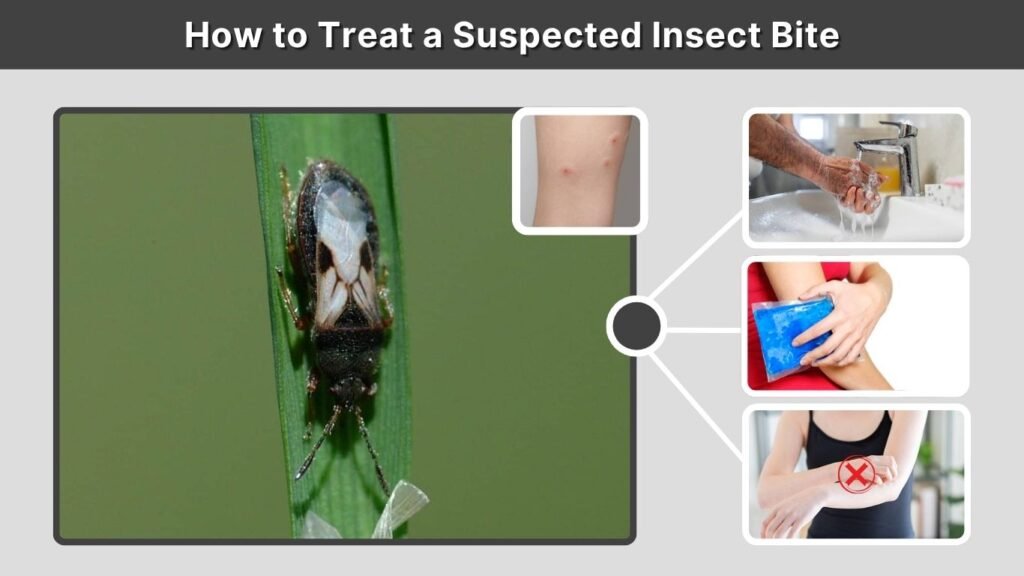
Because a skin mark is unlikely to be from a chinch bug, treat it as an unidentified minor insect bite unless the actual pest has been confirmed.
For mild irritation:
- Wash the area gently with soap and water.
- Apply a cold, damp cloth or wrapped ice pack for 10 to 20 minutes.
- Avoid scratching the skin.
- Ask a pharmacist about an appropriate anti-itch product when needed.
- Watch for increasing redness, pain, warmth, swelling, or discharge.
Most mild insect reactions can be managed at home. Medical evaluation is appropriate when symptoms worsen, the area appears infected, or the person feels unwell.
Seek emergency assistance for trouble breathing, fainting, widespread hives, or swelling of the face, lips, tongue, or throat, as these can indicate a severe allergic reaction.
How to Avoid Bugs While Working on the Lawn
Wear closed shoes, socks, long pants, and gloves when inspecting heavily infested grass. After finishing, change clothing and check the skin for ticks or other attached pests.
Avoid sitting directly in tall grass, weeds, or leaf litter, particularly where chiggers and ticks may be present. Wash exposed skin after outdoor work and keep pets on appropriate veterinarian-recommended flea and tick prevention.
Do not spray the lawn solely because unexplained skin marks appeared. Identify both the lawn insect and the likely biting pest before selecting a treatment.
FAQs
Can Chinch Bugs Bite Through Clothing?
Chinch bugs do not normally bite people through clothing or exposed skin. They feed on grass rather than blood. An irritating bite experienced through thin clothing is more likely to come from mosquitoes, biting midges, fleas, or another pest.
Do Chinch Bug Bites Itch?
There is no typical itchy chinch bug bite. Itchy bumps after lawn exposure may be caused by chiggers, mosquitoes, fleas, mites, or contact irritation. Chigger-related itching often begins several hours after outdoor exposure.
Can False Chinch Bugs Bite Pets?
False chinch bugs are plant feeders and do not bite humans or pets. They may gather around homes in very large numbers during hot, dry weather, but they are considered temporary nuisance invaders.
Why Are Chinch Bugs Crawling on Me?
You may have disturbed insects living in turf while mowing, gardening, or walking through the lawn. They can crawl onto shoes or clothing accidentally, but they are not seeking a blood meal.
Should I Treat My Lawn Because of Skin Bites?
Not without confirming a chinch bug infestation. Skin bites and chinch bug lawn damage may occur at the same time but have different causes. Use a flotation test or obtain professional identification before applying insecticide.
