
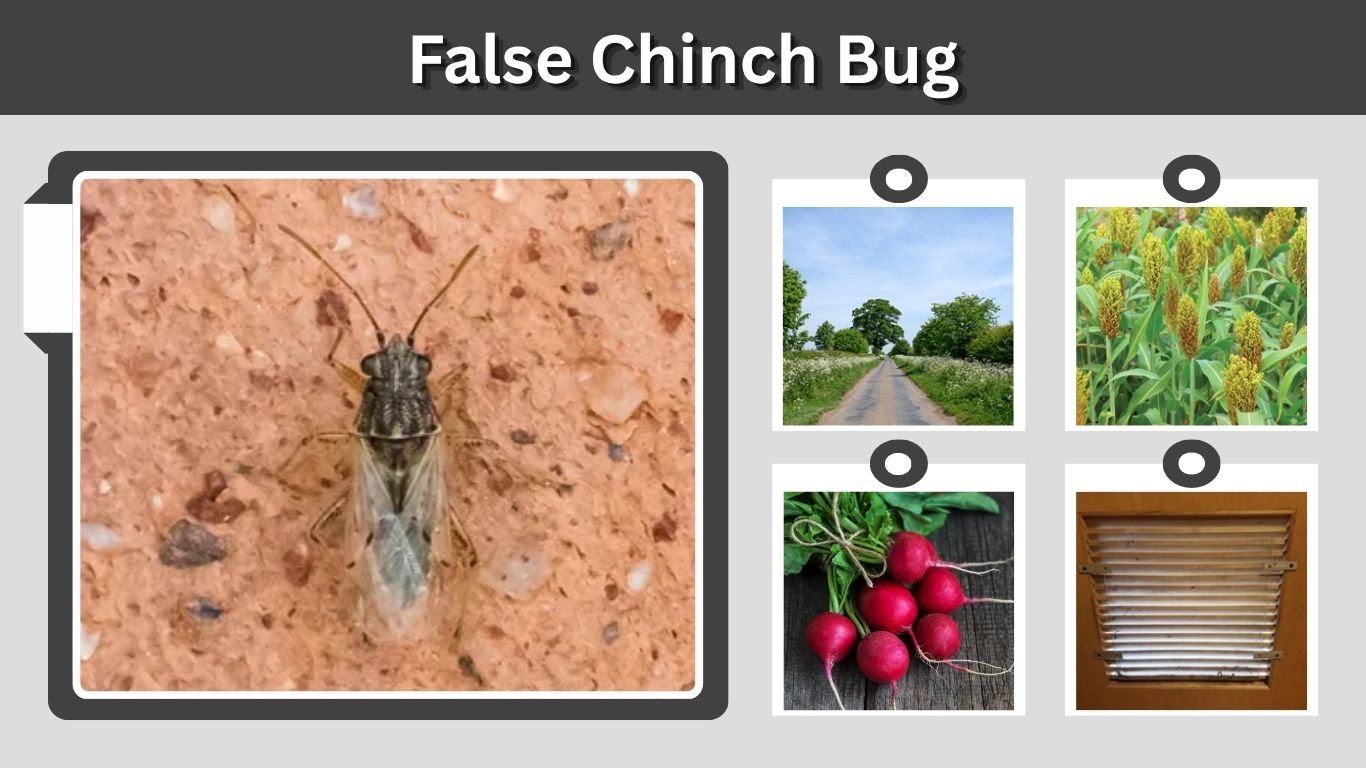
False chinch bugs are tiny gray-brown insects that often gather in enormous numbers around weeds, gardens, agricultural fields, walls, and homes. Although they resemble true chinch bugs, they belong to a different group and usually feed on seeds, weeds, and tender plant tissue rather than causing widespread lawn destruction. Problems commonly begin when wild mustard and other host plants dry out, are mowed, or are treated with herbicide. The insects then migrate together in search of fresh vegetation and moisture. False chinch bugs are harmless to people and buildings, but exceptionally large populations may weaken seedlings, vegetables, and field crops.
What Is a False Chinch Bug?
The false chinch bug, commonly identified as Nysius raphanus, is a small seed bug with piercing-sucking mouthparts. It is found in weedy fields, pastures, gardens, roadsides, agricultural land, and dry landscapes across much of North America.
False chinch bugs are particularly noticeable in dry western regions, including California, Arizona, Nevada, New Mexico, Utah, Colorado, and Texas. They may appear suddenly when large groups leave drying weeds and move toward irrigated landscapes or buildings.
What Do False Chinch Bugs Look Like?
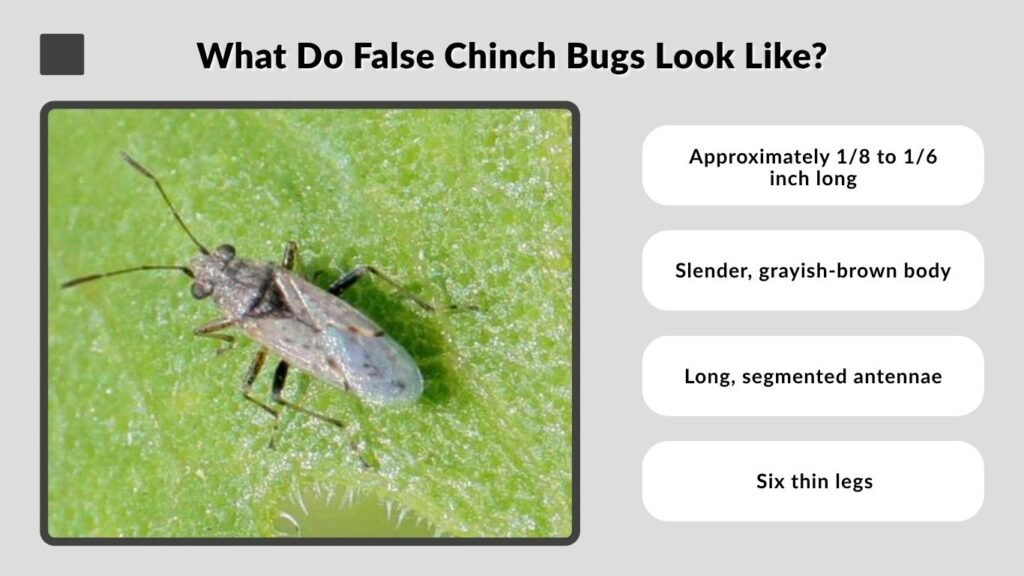
Adult false chinch bugs have slender, elongated bodies rather than the wide, rounded shape associated with many beetles. Their overlapping wings create a faint X-shaped pattern across the back.
Identification
- Approximately 1/8 to 1/6 inch long
- Slender, grayish-brown body
- Long, segmented antennae
- Six thin legs
- Transparent or whitish wing tips
- Wings folded flat over the back
- Faint X-shaped wing pattern
- Small, dark, rounded eyes
- Needle-like mouthparts beneath the head
- Frequently found in dense groups
Adults may have a slight yellow or silvery tint. Their subdued coloration allows them to blend into dry soil, dead weeds, plant stems, and other brown vegetation.
False Chinch Bug Size
Most adults measure approximately 3–4 millimeters long, making them about the size of a small grain of rice. Nymphs are smaller and may be mistaken for ticks, aphids, or other immature true bugs.
| Life stage | Typical appearance |
| Egg | Tiny, elongated, pale pink or white |
| Young nymph | Small, wingless, gray with reddish markings |
| Older nymph | Gray-brown with developing wing pads |
| Adult | Slender, gray-brown, with transparent wings |
What Do False Chinch Bug Nymphs Look Like?
False chinch bug nymphs resemble miniature adults but lack fully developed wings. Young nymphs are commonly mottled gray or brown with red, orange, or reddish-brown markings across the abdomen.
As they mature, wing pads appear and gradually become larger. Their colors also become more subdued, making older nymphs resemble adults.
Nymphs sometimes cause alarm because their small size and rounded, wingless bodies can resemble ticks. However, false chinch bug nymphs have six legs and long antennae, while ticks have eight legs as nymphs and adults and do not have antennae.
Where Do False Chinch Bugs Live?
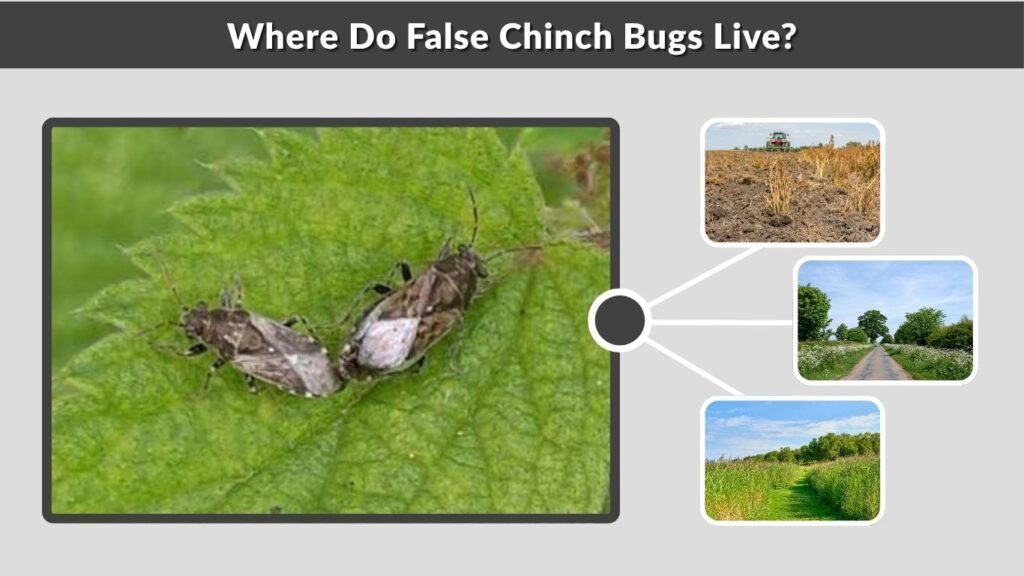
False chinch bugs prefer open areas containing grasses, weeds, mustard-family plants, and dry plant debris. They often spend the winter under leaf litter, crop residue, weeds, and other protected material.
Natural and Agricultural Habitats
Common habitats include:
- Weedy fields
- Pastures
- Roadsides
- Vacant lots
- Agricultural field margins
- Vegetable gardens
- Lawns containing broadleaf weeds
- Dry foothills
- Areas with Russian thistle or kochia
- Mustard and canola fields
During spring, adults become active, mate, and lay eggs in loose soil or cracks around host plants. Several generations may develop during one growing season.
Why They Migrate
Mass movement usually occurs when the insects’ original food plants become unsuitable. This may happen when weeds:
- Dry naturally during hot weather
- Are cut or mowed
- Are removed during cultivation
- Are treated with herbicide
- Become overcrowded
- Stop producing suitable seeds
The bugs then travel toward irrigated gardens, green crops, shaded structures, or buildings. Thousands may move at once, creating what appears to be a sudden invasion.
What Do False Chinch Bugs Eat?
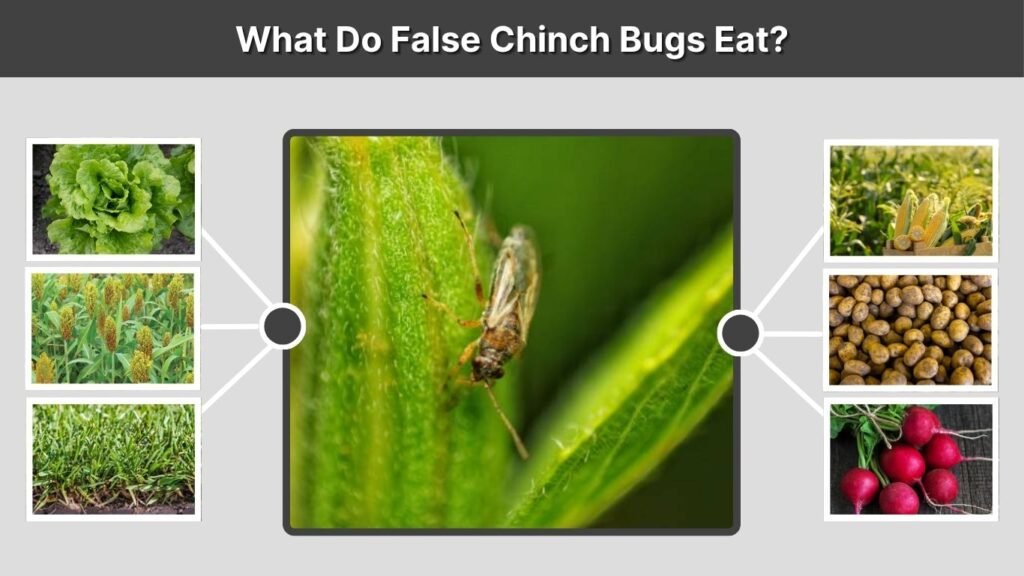
False chinch bugs feed by inserting their straw-like mouthparts into plants and withdrawing fluids. They commonly consume developing seeds, seed heads, tender stems, leaves, and other soft plant tissue.
Common Host Plants
Their diet may include:
- Wild mustard
- Canola
- Radish
- Cabbage-family vegetables
- Kochia
- Pigweed
- Russian thistle
- Flixweed
- Alfalfa
- Lettuce
- Potatoes
- Quinoa
- Corn
- Sorghum
- Hemp
- Cotton
- Turfgrass
Mustard-family weeds are particularly important hosts. When these plants dry out, nearby vegetables and crops may receive a sudden influx of migrating bugs.
Do False Chinch Bugs Damage Plants?
Small populations usually cause little noticeable injury. Plants that receive adequate water can often tolerate limited feeding without permanent damage.
Large aggregations are more concerning. Hundreds or thousands of adults and nymphs may feed on one plant, reducing its fluids and causing it to wilt. Young seedlings and drought-stressed plants are especially vulnerable.
Signs of Damage
Possible symptoms include:
- Wilting despite moist soil
- Yellow or pale foliage
- Dry, scorched-looking leaves
- Brown feeding spots
- Collapsed seedlings
- Reduced plant growth
- Damaged developing seeds
- Plant death during severe infestations
In sorghum, the insects may feed on developing kernels. In gardens, heavy populations can damage tender vegetables, although serious injury is sporadic rather than routine.
False Chinch Bug vs. Chinch Bug
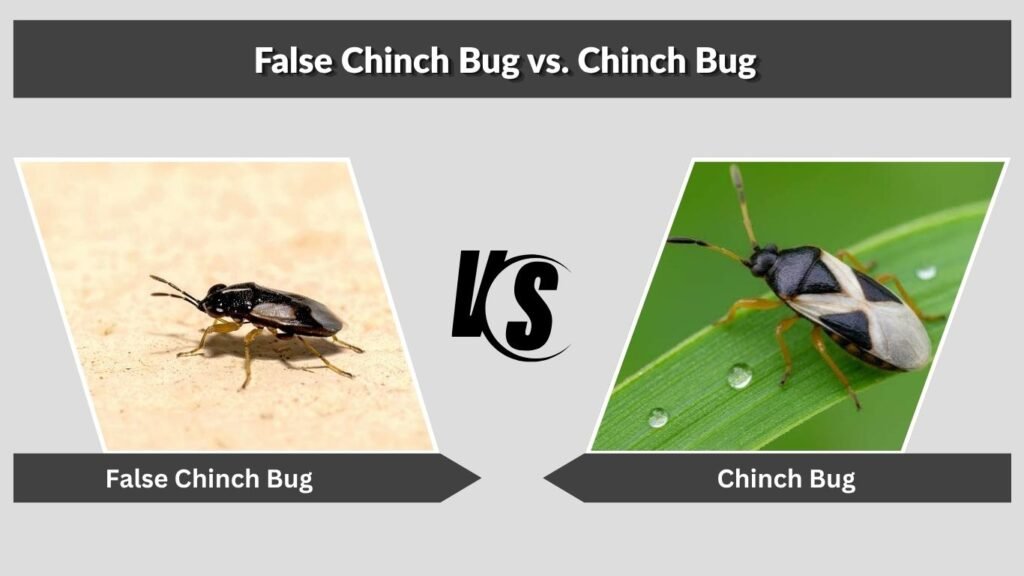
False chinch bugs and true chinch bugs are separate insects with different appearances and preferred foods.
| Feature | False chinch bug | True chinch bug |
| Adult color | Gray or brown | Mostly black |
| Wings | Transparent or whitish | White with dark triangular marks |
| Body | Slender | Broader and more compact |
| Size | Usually 1/8–1/6 inch | Often slightly larger |
| Main hosts | Weeds, seeds, vegetables and crops | Turfgrass and cereal grasses |
| Lawn damage | Usually limited | Can kill large turf sections |
| Migration | May form enormous moving groups | Usually remains within host grass |
True chinch bugs commonly create spreading brown patches in lawns. False chinch bugs are more often associated with weeds, dry fields, gardens, and seasonal migrations.
Are False Chinch Bugs Harmful to People?
False chinch bugs are not considered dangerous. They do not drink blood, infest people, spread human diseases, or normally bite.
Their piercing mouthparts are adapted for feeding on plants. A bug crawling on someone may cause discomfort or concern, but it is not attempting to feed on human skin.
They are also harmless to furniture, wood, clothing, stored food, and building materials. Their presence indoors is a temporary nuisance rather than evidence of a structural infestation.
Why Are False Chinch Bugs in the House?
False chinch bugs may enter homes accidentally during a mass migration. They can crawl through small openings around doors, windows, vents, foundations, and utility lines.
Indoor invasions are especially likely when:
- Nearby weeds have recently dried
- A vacant lot has been mowed
- Roadside vegetation has been cleared
- Herbicide was applied nearby
- Hot, dry weather follows spring plant growth
- Large outdoor populations are searching for moisture
The insects cannot reproduce successfully inside an ordinary house because they need suitable plants and outdoor soil conditions. Most die naturally or attempt to return outdoors.
How Long Do False Chinch Bug Infestations Last?
A migration may last several days or continue for a few weeks, depending on weather, food availability, and the size of the surrounding population.
Individual infestations usually decline once the insects disperse, find new host plants, or die. Continued arrivals may occur when nearby vegetation remains dry and large outdoor populations are still moving.
False chinch bugs can produce up to approximately three generations per year in suitable climates, so outdoor activity may return later in the season.
How to Get Rid of False Chinch Bugs
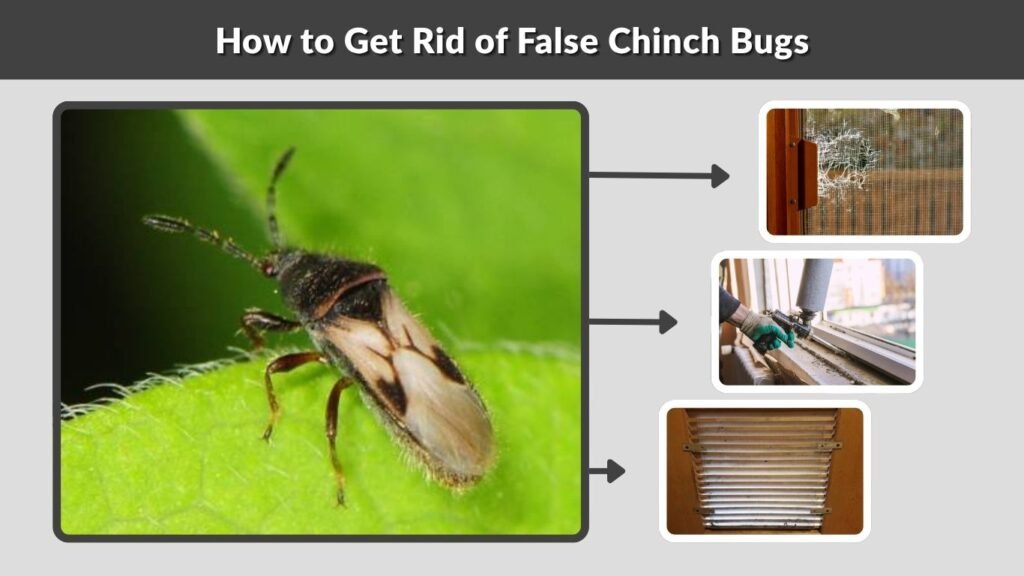
Control should begin with physical exclusion, vegetation management, and protection of vulnerable plants. Treating every outdoor bug is rarely practical during a mass migration.
Remove Bugs From the House
Vacuum insects from floors, walls, windowsills, and doorways. Empty the vacuum outside in a sealed bag.
Avoid crushing large numbers against indoor surfaces because their bodies may leave stains. Do not use indoor foggers; the insects are not breeding inside and usually disappear once entry points are corrected.
Seal Entry Points
Inspect and repair:
- Torn window screens
- Gaps beneath doors
- Cracks around window frames
- Foundation openings
- Unscreened vents
- Gaps around cables and pipes
- Worn weather stripping
A properly fitted door sweep can prevent thousands of crawling insects from entering beneath an exterior door.
Manage Outdoor Host Plants
Remove weeds before they mature and support large populations. However, avoid mowing or killing heavily infested weeds all at once beside a garden or house, as this can trigger immediate migration.
When possible, remove vegetation gradually and monitor nearby plants. Maintain a clean, vegetation-free strip beside the foundation.
Protect Garden Plants
Keep vulnerable plants adequately irrigated because water-stressed vegetation is less able to tolerate heavy feeding. Lightweight row covers can protect seedlings and vegetables near weedy areas.
A strong spray of water may dislodge small groups. Extremely large, damaging populations may require a pesticide labeled for false chinch bugs and the affected plant. Follow the label carefully, as some treatments provide only temporary suppression.
FAQs
Do false chinch bugs fly?
Adult false chinch bugs have functional wings and can fly, but large groups may also migrate by crawling across soil, pavement, walls, and plants. Nymphs cannot fly because they do not yet have developed wings.
Do false chinch bugs bite?
False chinch bugs are not known to bite people. Their mouthparts are designed to pierce plant tissue and consume plant fluids. They may crawl onto clothing or skin during a swarm but pose no medical threat.
Can false chinch bugs damage a lawn?
They may feed on turfgrass or lawn weeds, but they are generally less destructive to lawns than true chinch bugs. Severe damage is more likely when enormous populations gather on drought-stressed plants.
What attracts false chinch bugs to a house?
They are usually searching for moisture, shade, or new plants after nearby weeds dry out or are removed. Buildings may simply stand in the path of a mass migration rather than actively attracting the insects.
Will false chinch bugs go away naturally?
Most household invasions end naturally because the insects cannot establish permanent indoor populations. Vacuum visible bugs, seal entry points, manage nearby weeds, and protect irrigated plants while waiting for the outdoor migration to decline.
