
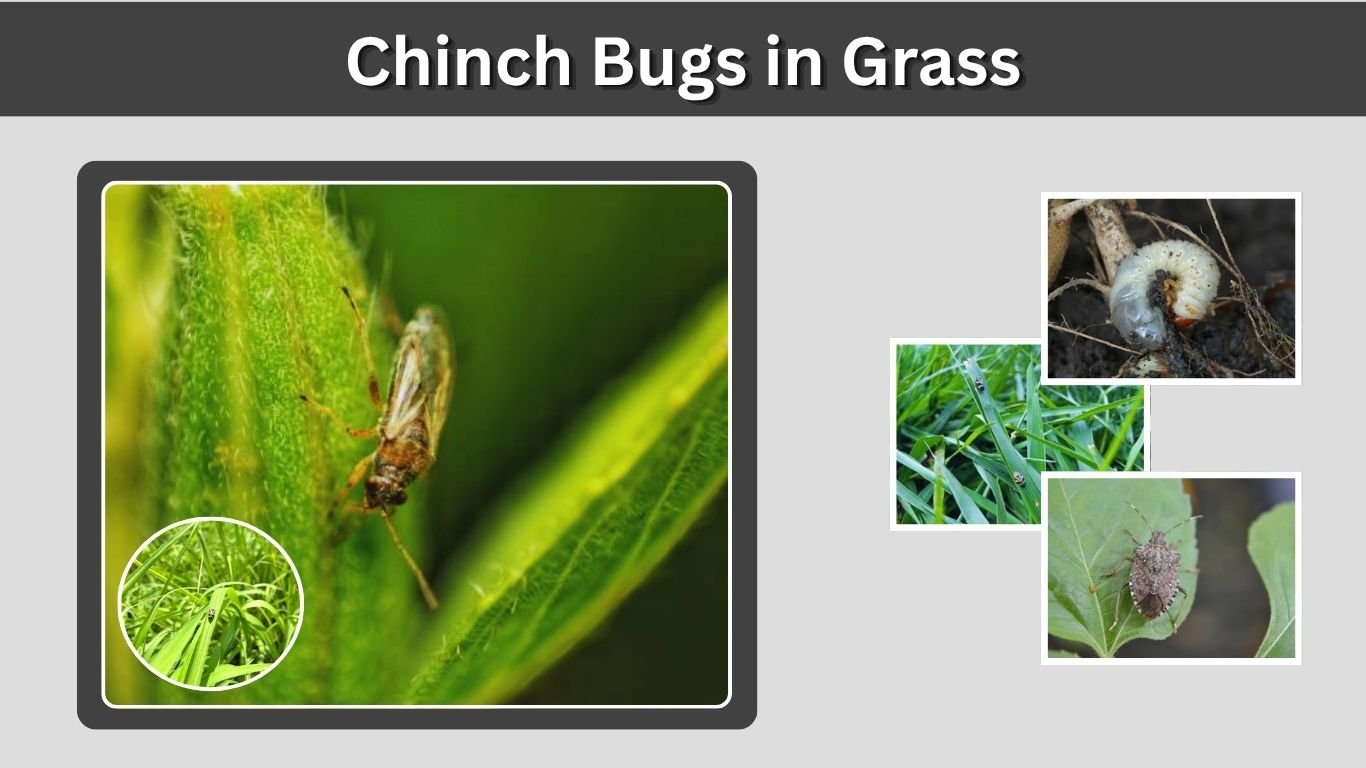
Chinch bugs are tiny lawn pests that feed near the base of grass plants, causing yellow, reddish-brown, or dead patches that often resemble drought damage. They are especially destructive in hot, sunny areas and can spread quickly through St. Augustine grass, Bermudagrass, zoysiagrass, and some cool-season lawns. Watering alone will not solve an active infestation because the insects continue feeding on healthy turf around damaged patches. Correct identification is essential before treatment. This guide explains how to find chinch bugs in grass, recognize their damage, treat affected lawns, and prevent future infestations.
What Are Chinch Bugs in Grass?
Chinch bugs are small, sap-feeding insects that live within the thatch layer and around the lower stems of grass. Both adults and immature nymphs use piercing mouthparts to remove plant fluids.
Their feeding weakens grass and interferes with its ability to move water. As the affected plants become stressed, the lawn may turn yellow, bronze, brown, and eventually die.
Chinch Bug Identification
- Adults are approximately 1/6 to 1/5 inch long
- Adult bodies are mostly black
- White wings have dark triangular markings
- Young nymphs are red, orange, or yellowish
- Nymphs have a pale band across the abdomen
- Older nymphs become darker as they mature
- Six legs and short antennae are visible
- Bugs move quickly through thatch and grass stems
- Most are found near the edge of damaged turf
Chinch bugs are easiest to find where brown grass meets healthy green grass. The center of an old dead patch may contain few insects because they have already moved outward.
Signs of Chinch Bugs in Grass
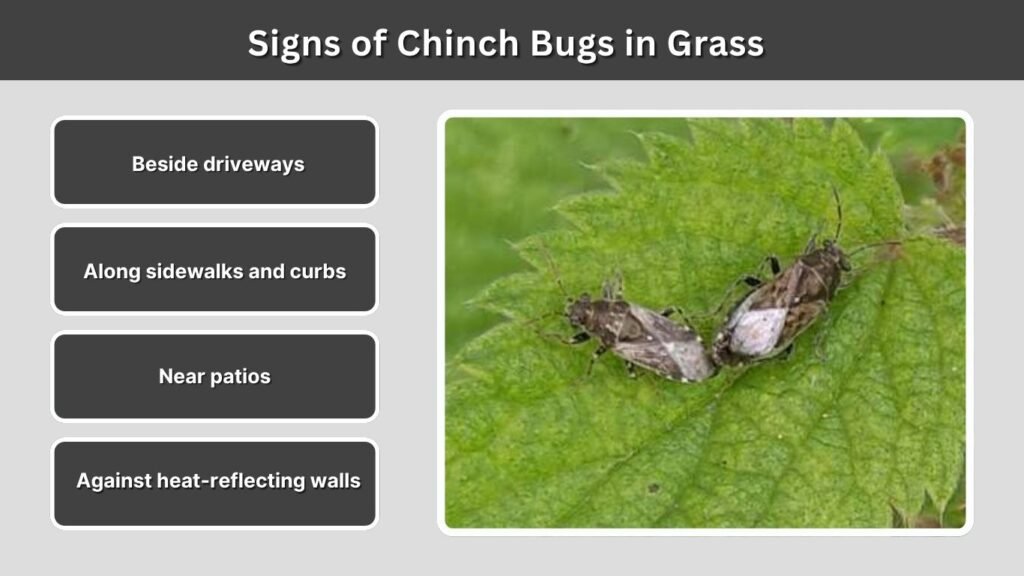
Chinch bug damage usually begins as a small area of stressed grass. The patch gradually spreads as the insects move into nearby healthy turf.
The damage is often most noticeable during hot, dry weather because heat-stressed grass cannot tolerate continued feeding.
Common Lawn Symptoms
Early symptoms include pale green or yellow grass that appears dry despite regular watering. The blades may later develop reddish, orange, or bronze coloring before becoming straw-brown.
Affected patches commonly have irregular shapes rather than perfect circles. Their centers may be completely dead while the outer edges remain yellow or reddish.
Other signs include grass that does not recover after irrigation, thinning turf near pavement, and numerous small insects moving close to the soil surface.
Where Damage Usually Begins
Chinch bugs prefer warm, sunny areas. Damage commonly starts:
- Beside driveways
- Along sidewalks and curbs
- Near patios
- Against heat-reflecting walls
- On sunny slopes
- In dry lawn corners
- Where irrigation coverage is weak
- In areas with thick thatch
Concrete absorbs heat and dries the neighboring turf, creating favorable conditions for chinch bugs.
How to Check Grass for Chinch Bugs
Do not apply an insecticide based only on brown grass. Drought, fungal disease, grubs, poor irrigation, pet urine, and soil problems can produce similar symptoms.
Confirming the presence of chinch bugs prevents unnecessary treatment.
Visual Inspection
Kneel beside the outer edge of a damaged patch and separate the grass with your fingers. Examine the lower stems, runners, thatch, and soil surface.
Look for red or orange nymphs and black adults with white wings. A magnifying glass can make them easier to identify.
Check several sections because chinch bugs are not always distributed evenly.
Flotation Test
A flotation test can bring hidden chinch bugs to the surface.
- Remove both ends of a metal can.
- Push the can several inches into the soil.
- Choose a spot where damaged grass meets healthy turf.
- Fill the can with water.
- Maintain the water level for five to ten minutes.
- Watch for insects floating to the surface.
Repeat the test in several locations. Finding multiple chinch bugs confirms that treatment may be necessary.
Chinch Bugs in St. Augustine Grass
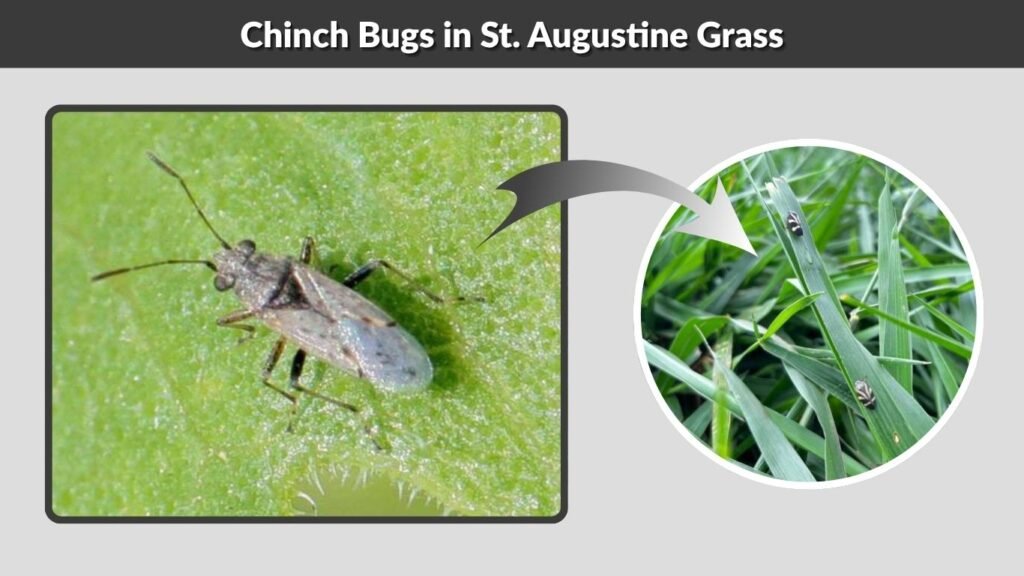
St. Augustine grass is highly vulnerable to southern chinch bugs, especially in Florida, Texas, and other warm regions. Infestations can develop throughout much of the growing season.
Damage may spread rapidly during hot, dry weather. Grass initially turns yellow before becoming reddish-brown and finally gray or straw-colored.
Signs in St. Augustine Grass
St. Augustine grass grows through aboveground runners called stolons. Chinch bugs commonly feed around these runners, leaf sheaths, and plant crowns.
Look for widening patches in full sun, especially near pavement. The grass may remain firmly attached to the soil but appear dry and lifeless.
If the stolons are still green and flexible, the grass may recover after treatment. Brown, brittle, dead stolons usually require replacement with plugs or sod.
Treating St. Augustine Grass
Begin by correcting irrigation problems and mowing at the proper height. Avoid scalping the lawn because short mowing places additional stress on the grass.
For a confirmed infestation, use a product labeled for chinch bugs and St. Augustine grass. Treat the active border and nearby healthy grass rather than applying treatment only to the dead center.
Follow the application rate and watering directions on the label. Applying too much product may damage the lawn without improving control.
Chinch Bugs in Bermudagrass and Zoysiagrass
Bermudagrass and zoysiagrass can also be affected by chinch bugs, although the specific pest and severity vary by region.
These grasses may tolerate limited feeding when healthy, but drought, compacted soil, excessive thatch, and improper mowing increase the risk of visible damage.
Bermudagrass Damage
Chinch bug injury in Bermudagrass may appear as thinning, yellowing, or irregular brown patches. Damage is more likely in hot, dry areas receiving strong sunlight.
Bermudagrass can spread quickly when growing conditions are favorable, so lightly damaged sections may recover after the insects are controlled.
Zoysiagrass Damage
Zoysiagrass may develop yellow or brown patches similar to drought stress. Its dense growth can create a heavy thatch layer that shelters chinch bugs.
Improving thatch management, irrigation, and airflow can make the lawn less favorable to future infestations.
Chinch Bug Damage vs. Other Lawn Problems
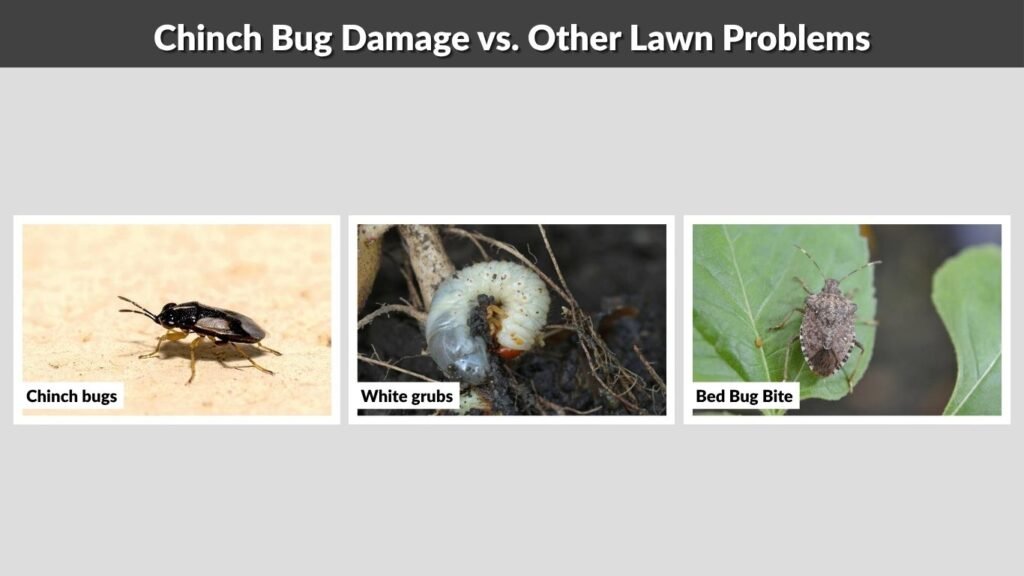
Several common lawn issues resemble chinch bug damage. Comparing the pattern and inspecting the turf closely can help identify the correct cause.
| Lawn problem | Main signs |
| Chinch bugs | Irregular expanding patches with insects at the edges |
| Drought | Grass improves after deep watering |
| White grubs | Turf lifts easily because roots are damaged |
| Fungal disease | Blade spots, rings, or mold-like growth may appear |
| Pet urine | Small concentrated patches, sometimes with dark green edges |
| Poor irrigation | Damage follows sprinkler coverage patterns |
Chinch Bugs vs. Drought
Both conditions cause wilted, brown grass. However, drought-stressed grass should begin improving after proper irrigation if the crowns remain alive.
Chinch bug damage continues spreading even when the soil has enough moisture. The insects are usually visible near the edge of the affected patch.
Chinch Bugs vs. Grubs
White grubs feed on roots below the soil. Grub-damaged grass may feel loose and lift like carpet.
Chinch bugs feed above the soil line. Their damaged grass often remains attached because the roots may still be present.
How to Get Rid of Chinch Bugs in Grass
Successful control requires more than spraying the visible brown areas. The goal is to stop active insects, reduce lawn stress, and correct conditions that encourage recurring infestations.
Improve Watering
Water deeply enough to moisten the root zone, but avoid keeping the lawn constantly wet. Frequent shallow watering produces weak, shallow roots.
Check sprinkler coverage near driveways, sidewalks, and lawn edges. These areas often dry faster than the center of the yard.
Mow Correctly
Maintain the recommended mowing height for your grass species. Removing too much leaf growth at once weakens the lawn and increases heat stress.
Use a sharp mower blade because dull blades tear the grass, causing additional moisture loss and disease risk.
Manage Excessive Thatch
Chinch bugs hide and reproduce within thick thatch. A moderate layer is normal, but excessive buildup can prevent water from reaching the soil and protect pests from treatments.
Dethatch or aerate only when necessary and when the grass is actively growing. Avoid aggressive lawn renovation during severe heat.
Apply a Labeled Insecticide
When testing confirms a damaging population, choose a pesticide specifically labeled for chinch bugs and the grass being treated.
Apply the product to:
- The active edge of the damaged patch
- Several feet of surrounding healthy grass
- Nearby hot and dry lawn sections
- Thatch and lower grass stems
Do not repeatedly apply the same active ingredient when control fails. Some chinch bug populations can be difficult to control, and repeated unnecessary applications may harm beneficial insects.
Can Soap Kill Chinch Bugs in Grass?
A diluted soap solution may kill chinch bugs through direct contact, but it is not always safe for turf. Strong mixtures or repeated applications can burn grass, especially during hot weather.
Soap is more useful as a detection method than as a complete treatment. A mild solution poured over a small test area may cause insects to move upward, making them easier to see.
Test any homemade mixture on a small area first. Never assume household products are harmless simply because they are natural or commonly available.
How to Repair Grass After Chinch Bugs
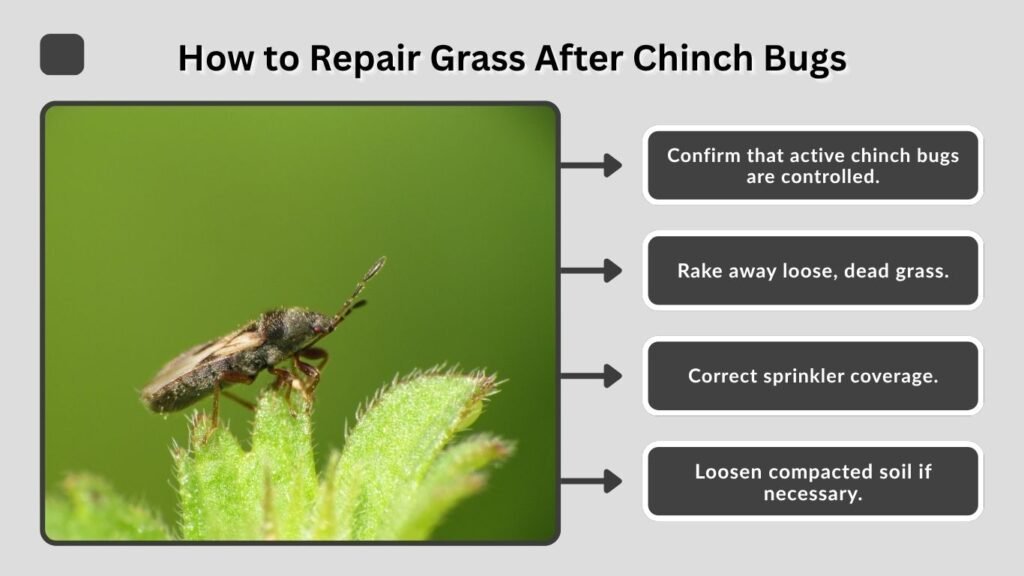
Grass recovery depends on whether the crowns, roots, runners, and growing points remain alive. Yellow or lightly browned turf may recover, while fully dead sections need replacement.
Repair Steps
- Confirm that active chinch bugs are controlled.
- Rake away loose, dead grass.
- Correct sprinkler coverage.
- Loosen compacted soil if necessary.
- Add a light layer of suitable topsoil where needed.
- Reseed, plug, or install sod based on the grass species.
- Keep repaired sections evenly moist during establishment.
- Avoid heavy fertilization during extreme heat.
St. Augustine grass is usually repaired with plugs or sod because it is not commonly established from seed. Bermudagrass may be reseeded or allowed to spread into small bare sections.
How to Prevent Chinch Bugs in Grass
A healthy lawn is better able to tolerate limited chinch bug feeding. Prevention focuses on reducing stress and making the turf less favorable to large populations.
Long-Term Prevention
Water deeply and only when needed. Maintain the correct mowing height, use sharp mower blades, and avoid excessive nitrogen fertilizer.
Monitor thatch and improve compacted soil through aeration when appropriate. Inspect hot, sunny lawn edges regularly during summer.
Avoid routine broad-spectrum pesticide applications. These products can kill big-eyed bugs, spiders, and other natural predators that help keep chinch bug populations under control.
FAQs
What kills chinch bugs in grass?
Products labeled specifically for chinch bug control can kill adults and nymphs when applied correctly. Physical lawn care, proper watering, thatch management, and natural predators also help. Always confirm the infestation before using an insecticide.
Will chinch bugs go away on their own?
Small populations may be controlled by weather, predators, and healthy turf. Large infestations usually continue damaging grass until conditions change or treatment is applied. Waiting may allow the affected patch to expand.
Can chinch bugs completely destroy a lawn?
Severe infestations can kill large areas, especially when the grass is already stressed by heat or drought. Early detection greatly reduces the risk of widespread damage.
How often should I check for chinch bugs?
Inspect sunny lawn edges every one or two weeks during hot weather. Check immediately when grass remains wilted after watering or when a yellow patch begins expanding.
Will grass grow back after chinch bugs are killed?
Grass can recover if the crowns, roots, and runners remain alive. Completely dead turf will not return and must be replaced with seed, plugs, or sod appropriate for the lawn.
