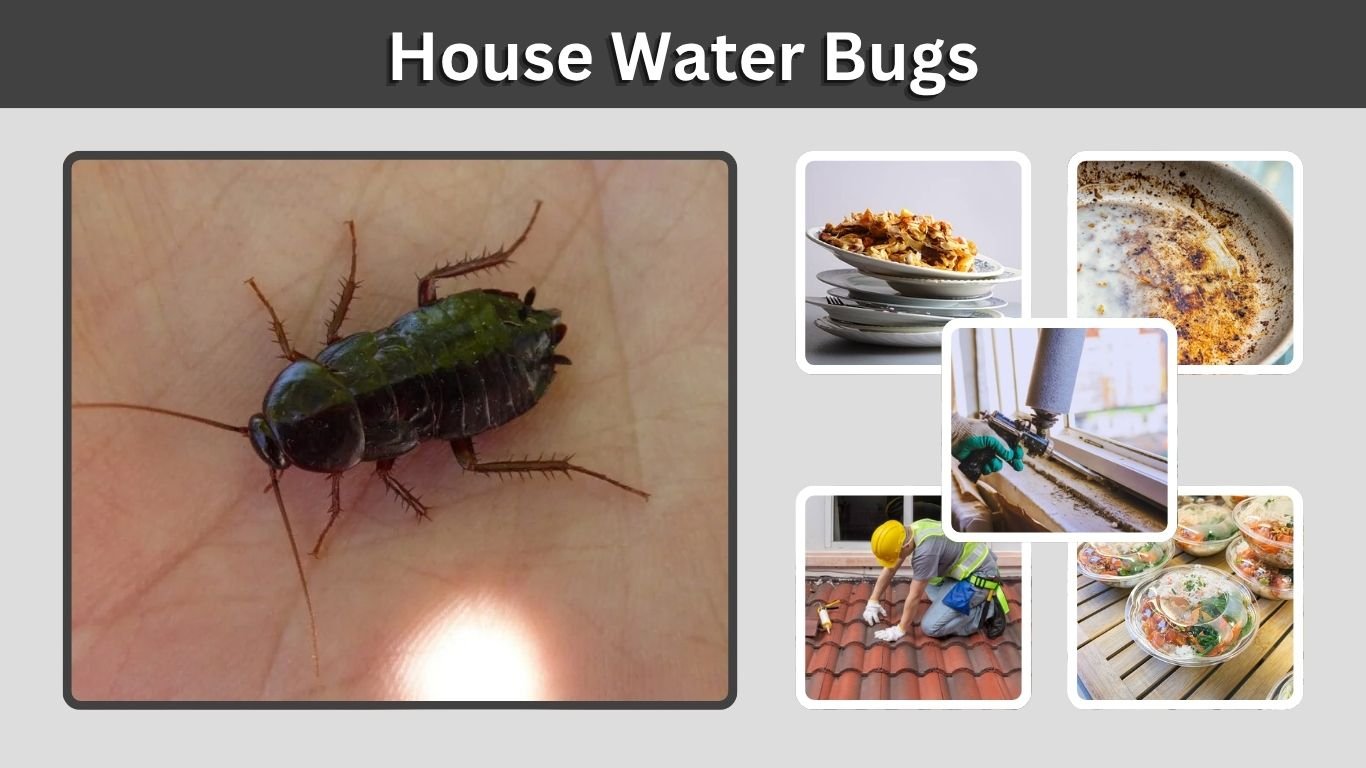
Finding a large, dark insect near a sink, bathtub, basement drain, or laundry room can be alarming. Many people call these insects house water bugs, but the name is often used incorrectly. In most homes, the insect is actually a cockroach, especially an American cockroach or Oriental cockroach.
True water bugs live mainly in ponds, marshes, streams, and other aquatic habitats. They may occasionally enter a house by accident, but they normally do not establish indoor infestations. Cockroaches, on the other hand, can live and reproduce inside buildings where they find moisture, food, and shelter.
Correct identification is the first step toward removing the problem.
What Is a House Water Bug?
“Water bug” is a common name that may refer to several different insects. Around homes, people often use it for large cockroaches found in damp places.
The insects most commonly called house water bugs include:
- American cockroaches
- Oriental cockroaches
- Smokybrown cockroaches
- Giant water bugs
- Water scavenger beetles
American and Oriental cockroaches are the most likely insects to repeatedly appear inside a home.
True aquatic water bugs generally enter accidentally, often after being attracted to outdoor lights. They usually cannot survive long indoors unless they have access to suitable water.
What Do House Water Bugs Look Like?
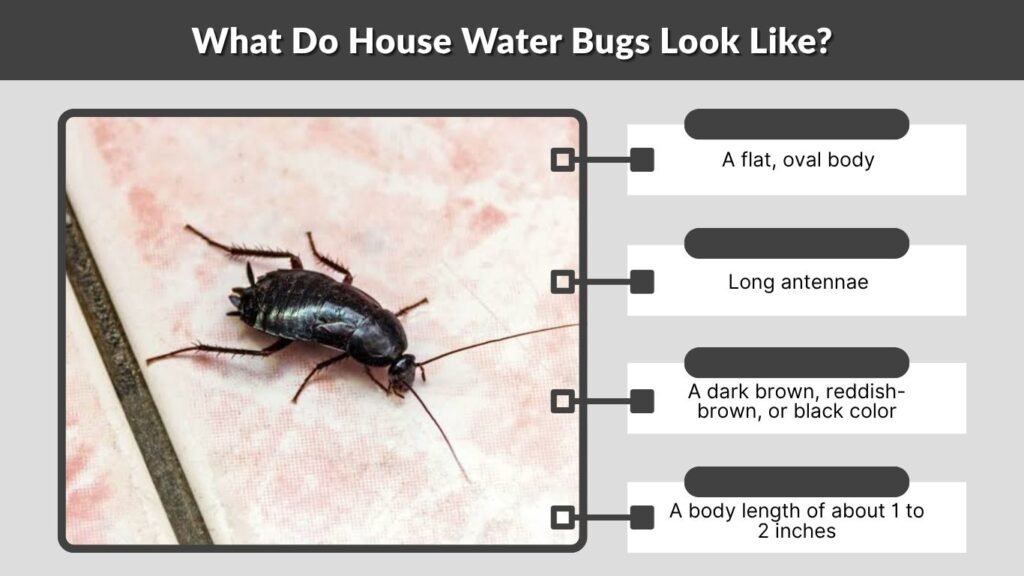
Appearance depends on the insect being described. Most household “water bugs” are large, brown or black, and have flattened bodies.
Common Identification Features
A cockroach commonly called a water bug may have:
- A flat, oval body
- Long antennae
- Six spiny legs
- A dark brown, reddish-brown, or black color
- A body length of about 1 to 2 inches
- Wings in some adults
- Rapid running behavior
True giant water bugs have broader, more oval bodies and shorter antennae. Their front legs are thick and adapted for catching prey. They look less slender than cockroaches and are usually found outdoors near water.
House Water Bug vs. Cockroach
The main difference is that true water bugs are aquatic predators, while cockroaches are land-dwelling scavengers.
| Feature | True water bug | Cockroach |
| Main habitat | Ponds, streams, marshes | Buildings, sewers, mulch, basements |
| Antennae | Short and less noticeable | Very long |
| Body shape | Broad and oval | Flat and elongated |
| Diet | Insects, tadpoles, small aquatic animals | Food scraps, waste, organic material |
| Indoor infestation | Uncommon | Possible |
| Movement | Swims and may fly | Runs quickly and may fly |
| Bite risk | Can bite defensively | Rarely bites people |
If several insects are appearing indoors, especially at night, cockroaches are the more likely explanation.
Common Types of House Water Bugs
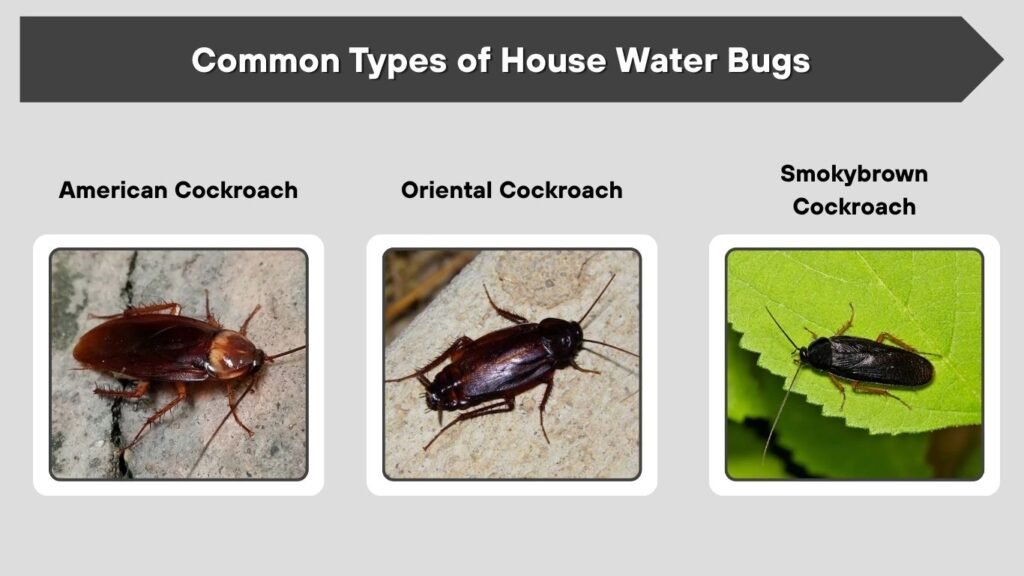
Different species may be found in damp parts of a home. Their size, color, and behavior can help with identification.
American Cockroach
The American cockroach is one of the largest cockroaches commonly found inside buildings. Adults are reddish-brown and may reach about 1½ inches long.
They often have a pale yellow border behind the head. Both sexes have wings, and adults may fly short distances in warm conditions.
American cockroaches commonly live in:
- Sewers
- Basements
- Boiler rooms
- Commercial kitchens
- Utility tunnels
- Floor drains
They prefer warm, damp environments and may enter homes through plumbing or structural openings.
Oriental Cockroach
The Oriental cockroach is often directly called a black water bug. It has a dark brown or almost black body with a shiny appearance.
Adults are usually about 1 inch long. Males have shortened wings, while females have very small wing pads and cannot fly.
Oriental cockroaches prefer cooler, moist locations, including:
- Crawl spaces
- Basements
- Drains
- Garbage areas
- Damp foundations
- Areas beneath sinks
They move more slowly than American cockroaches but can establish indoor populations when moisture is available.
Smokybrown Cockroach
Smokybrown cockroaches are uniformly dark brown and have fully developed wings. They are strong fliers and may enter through windows, doors, vents, or attic openings.
They normally live outdoors in:
- Tree holes
- Roof gutters
- Mulch
- Woodpiles
- Sheds
- Leaf litter
They are more likely to enter homes during hot, dry weather or after heavy rainfall.
Giant Water Bug
A giant water bug is a true aquatic insect rather than a cockroach. It has a broad, flattened body and powerful front legs.
These insects live near ponds, canals, lakes, and wetlands. Adults may fly toward porch lights and accidentally enter through an open window or door.
A single giant water bug inside a house does not usually indicate an infestation.
Why Are Water Bugs in My House?
Household water bugs enter because the building provides moisture, food, protection, or warmth. Their presence may also indicate an accessible route from outdoors or a plumbing system.
Excess Moisture
Moisture is one of the biggest attractions. Leaking pipes, condensation, wet basements, clogged gutters, and poorly ventilated bathrooms can provide favorable conditions.
Cockroaches can survive longer without food than without water. Even a small drip beneath a sink may support them.
Easy Food Sources
Cockroaches eat a wide variety of materials, including:
- Grease
- Crumbs
- Pet food
- Garbage
- Cardboard glue
- Soap residue
- Decaying organic matter
- Food beneath appliances
A clean-looking kitchen may still provide food behind refrigerators, beneath stoves, or inside cabinets.
Cracks and Gaps
Water bugs may enter through:
- Gaps beneath doors
- Torn window screens
- Foundation cracks
- Utility openings
- Plumbing penetrations
- Floor drains
- Attic vents
- Open windows
Large cockroaches can flatten their bodies and fit through surprisingly narrow gaps.
Weather Changes
Heavy rain can flood outdoor hiding places and sewer systems, pushing insects toward buildings. Extremely hot or dry weather may also drive them indoors in search of water.
This explains why water bugs sometimes appear suddenly after storms or seasonal changes.
How Do Water Bugs Get Into the House?
Water bugs and cockroaches can enter at ground level, through plumbing, or from higher parts of a building.
Common entry routes include:
- Sewer and drain lines
- Gaps around pipes
- Cracks near foundations
- Garage doors
- Packages and cardboard boxes
- Firewood
- Grocery bags
- Shared walls in apartment buildings
- Roof and attic openings
Cockroaches may also be carried indoors inside used appliances, storage boxes, furniture, or deliveries.
Where Do Water Bugs Hide?
House water bugs are usually nocturnal. They hide during the day and become active when the home is quiet and dark.
Common hiding places include:
- Beneath sinks
- Behind refrigerators
- Under washing machines
- Around water heaters
- Inside cabinets
- Near floor drains
- Beneath bathroom fixtures
- Inside wall gaps
- In damp cardboard
- Around basement pipes
Seeing one during the day may indicate that hiding spaces are crowded or that the insect has been disturbed.
What Do Water Bugs Eat in the House?
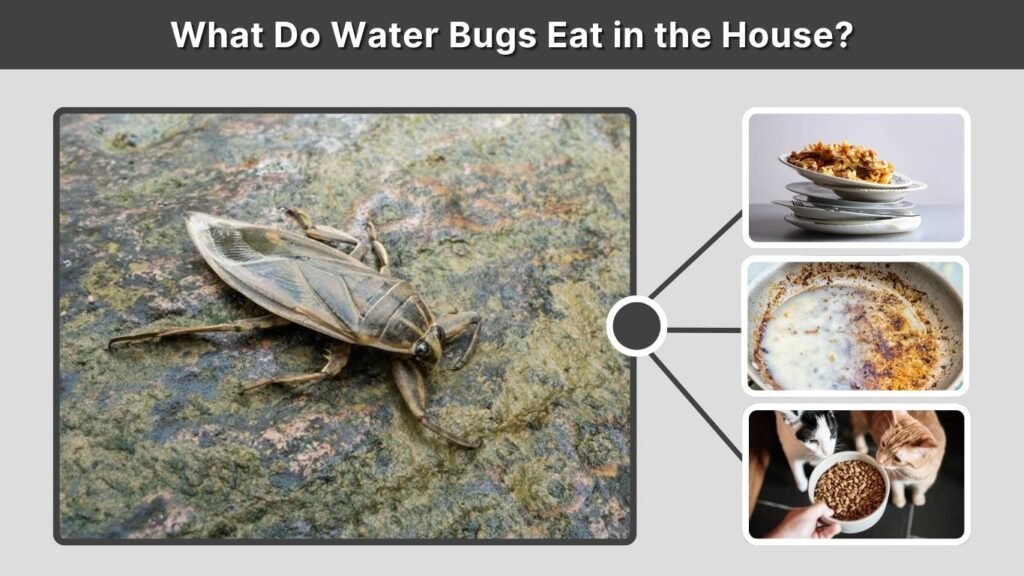
Cockroaches called water bugs are scavengers. They can consume almost any available organic material.
Their indoor diet may include:
- Leftover food
- Cooking grease
- Pet food
- Garbage
- Dead insects
- Paper
- Cardboard
- Hair
- Soap
- Toothpaste residue
- Sewage material
True aquatic water bugs are predators that eat insects and small aquatic animals. They do not normally find suitable food inside a dry house.
Do Water Bugs Fly?
Some insects called water bugs can fly.
American cockroaches have wings and may glide or fly short distances, particularly in warm climates. Smokybrown cockroaches are stronger fliers and are often attracted to lights.
Oriental cockroaches do not fly effectively. Giant water bugs can fly well and may travel at night between bodies of water.
A flying insect entering through an open window may be an accidental visitor rather than evidence of an infestation.
Do House Water Bugs Bite?
Cockroaches rarely bite people. They normally avoid human contact and flee when disturbed.
True giant water bugs can deliver a painful defensive bite if handled or stepped on. Their mouthparts are designed to inject saliva into prey, so a bite may cause pain and swelling.
Do not pick up an unknown large water bug with bare hands. Use a container, thick gloves, or a tool to move it safely.
How to Get Rid of Water Bugs in the House
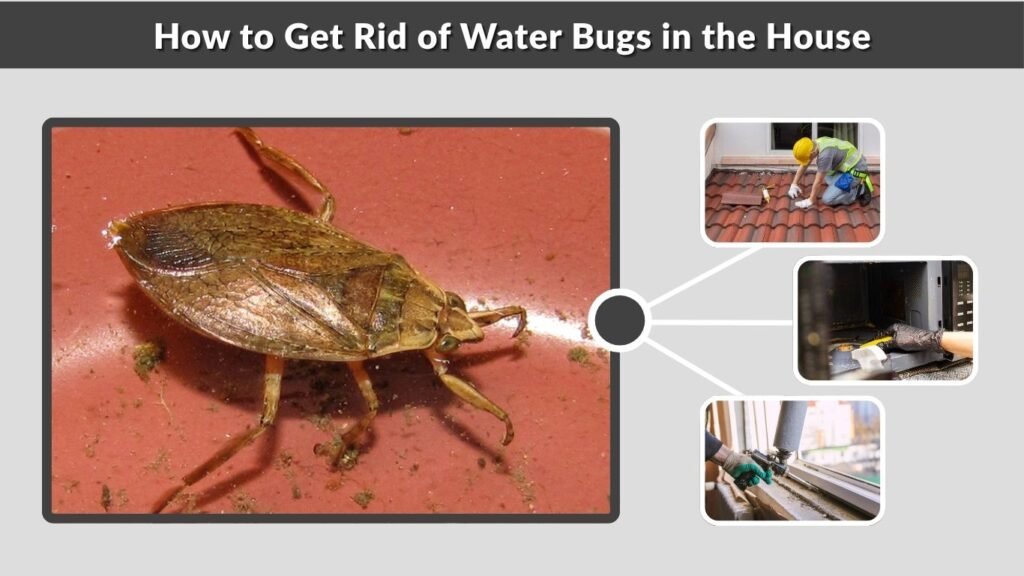
Removing water bugs requires more than killing the insects you can see. You must reduce moisture, block entry points, eliminate food, and treat hiding areas.
Identify the Insect
First determine whether the insect is a cockroach, beetle, or true water bug. Capture a specimen in a sealed container or take a clear photograph.
The correct treatment depends on the species. A single aquatic insect needs removal, while repeated cockroach sightings require broader control.
Repair Moisture Problems
Fix leaking faucets, pipes, toilets, water heaters, and appliance connections. Dry wet cabinets and improve ventilation in bathrooms and basements.
You should also:
- Empty standing water
- Clean clogged drains
- Repair roof leaks
- Use a dehumidifier where needed
- Improve crawl-space drainage
Reducing water makes the home less suitable for cockroaches.
Remove Food Sources
Store food in sealed containers and clean kitchen surfaces each night.
Pay particular attention to:
- Grease around stoves
- Food under appliances
- Pet bowls
- Open garbage
- Recycling containers
- Crumbs inside cabinets
Do not leave pet food and water out overnight when cockroach activity is present.
Use Bait Stations or Gel Baits
Cockroach baits are generally more effective than randomly spraying visible insects. Baits attract cockroaches, which consume the active ingredient and return to hiding areas.
Place small amounts near:
- Cabinet corners
- Plumbing openings
- Refrigerators
- Stoves
- Baseboards
- Bathroom fixtures
Follow the product label. Avoid applying repellent sprays directly around bait, since sprays may prevent cockroaches from approaching it.
Use Sticky Traps
Sticky traps help reveal where insects are traveling. Place them along walls, beneath sinks, behind appliances, and near drains.
Check them regularly to identify the most active locations. Traps alone may not eliminate an established infestation, but they are useful for monitoring progress.
Seal Entry Points
Close openings using suitable caulk, mesh, door sweeps, or repair materials.
Seal gaps around:
- Water pipes
- Electrical lines
- Doors
- Windows
- Baseboards
- Foundation walls
- Dryer vents
Drain covers and properly maintained plumbing traps may also reduce movement from sewer lines.
Home Remedies for House Water Bugs
Some home remedies may kill individual insects but rarely solve the underlying problem.
Soapy water can kill a directly sprayed cockroach by coating its body, but it provides no lasting control. Vacuuming is useful for quickly removing adults, nymphs, egg cases, and debris.
Avoid mixing household chemicals or using unapproved pesticide combinations. Dangerous fumes or residues may result.
Long-term control depends on sanitation, moisture repair, exclusion, and properly placed treatment products.
How to Keep Water Bugs Out of Your House
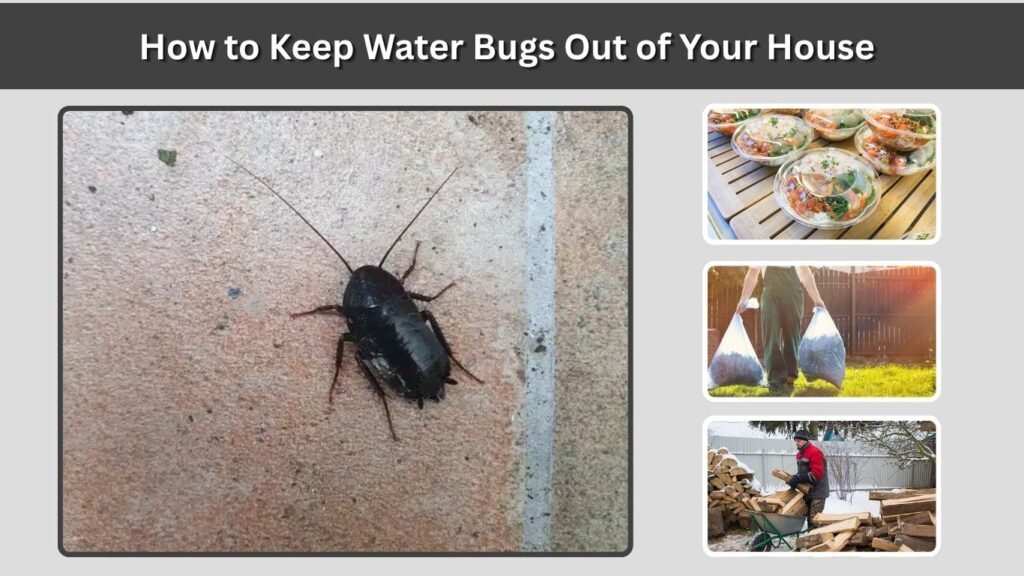
Prevention is easier than managing a large indoor population.
Use the following steps:
- Repair plumbing leaks promptly.
- Keep drains clean and covered when appropriate.
- Seal cracks around doors, windows, and pipes.
- Store food in airtight containers.
- Remove garbage regularly.
- Keep mulch and leaf litter away from the foundation.
- Move firewood away from the house.
- Repair damaged screens.
- Reduce basement and crawl-space humidity.
- Inspect boxes and used appliances before bringing them inside.
Outdoor lights can attract flying water bugs and cockroaches. Reduce unnecessary lighting near doors and use fixtures that direct light downward.
When to Call Pest Control
Professional treatment may be necessary when water bugs appear regularly despite cleaning and repairs.
Consider calling a licensed pest professional when:
- You see cockroaches during daylight
- Nymphs or egg cases are present
- Multiple rooms are affected
- The problem returns after treatment
- You live in a connected apartment building
- Insects are emerging from walls or drains
- You cannot identify the species
A professional can inspect hidden areas, identify entry points, and develop a targeted treatment plan.
FAQs
Are house water bugs actually cockroaches?
In many cases, yes. The term “house water bug” is commonly used for American or Oriental cockroaches found in damp areas. True water bugs are aquatic insects and usually enter homes only by accident.
Why do water bugs suddenly appear in a house?
Sudden sightings may follow heavy rain, extreme heat, sewer disturbance, plumbing problems, or seasonal changes. Insects may also become more visible when food, water, or hiding spaces are disturbed.
Can water bugs infest a house?
Cockroaches called water bugs can reproduce and establish indoor infestations. True aquatic water bugs generally cannot infest a dry home because they need aquatic habitats and suitable prey.
How can I permanently get rid of water bugs?
Combine moisture control, food removal, sealing, monitoring traps, and targeted cockroach baits. Killing visible insects alone is not permanent because hidden adults, nymphs, or egg cases may remain.
Are black water bugs dangerous?
Black insects called water bugs are often Oriental cockroaches. They do not normally attack people, but they may contaminate surfaces and food. A true giant water bug may bite defensively if handled.