
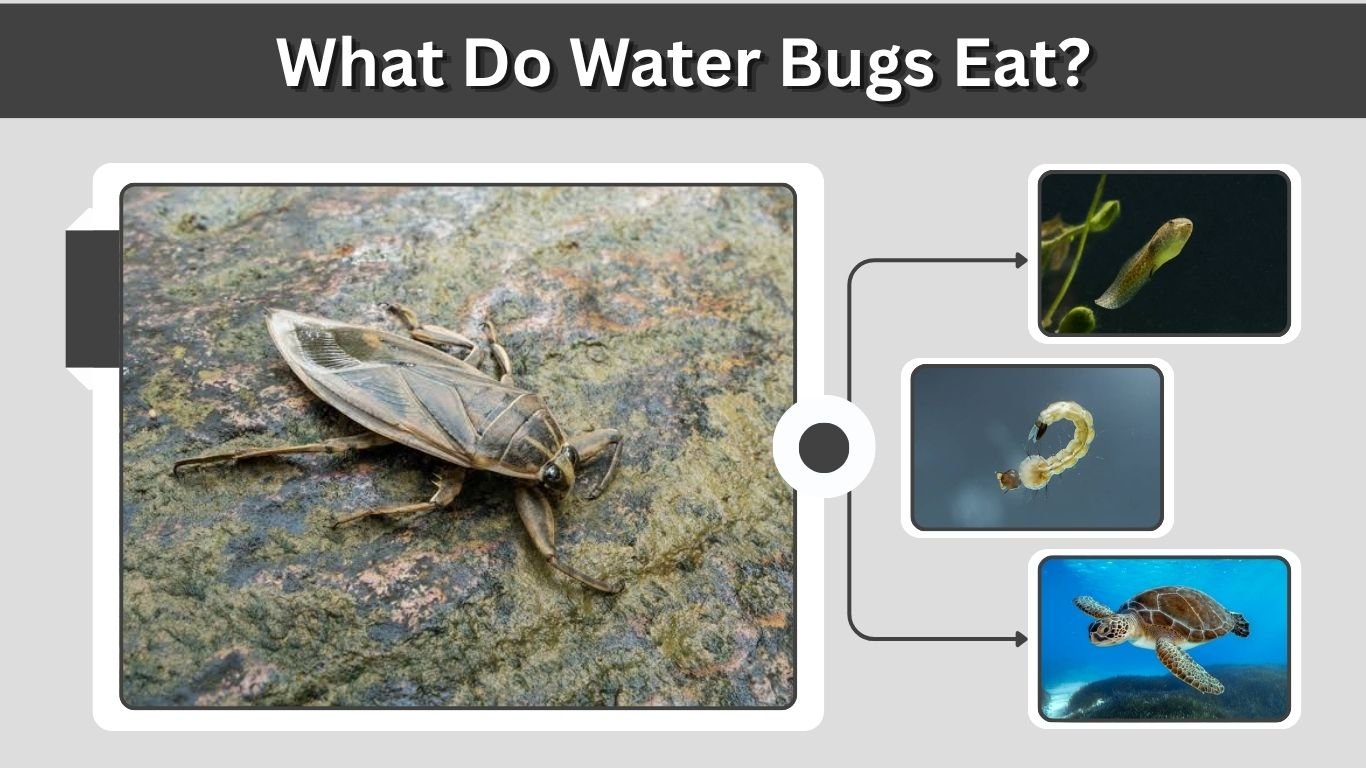
Water bugs are opportunistic predators that eat insects, small fish, tadpoles, snails, and other animals found in freshwater habitats. However, the name “water bug” is also commonly used for cockroaches that enter damp homes. True water bugs hunt living prey in ponds and streams, while cockroaches eat crumbs, grease, garbage, and decaying organic matter. Understanding which insect you found is important because their diets, habitats, and control methods are completely different.
What Do True Water Bugs Eat?
True water bugs are aquatic insects belonging to the order Hemiptera. The term often refers to giant water bugs in the family Belostomatidae. These insects live in ponds, marshes, slow-moving streams, drainage ditches, and other freshwater habitats.
They are predators equipped with strong front legs and piercing mouthparts. A water bug grabs its prey, injects digestive saliva, and then drinks the liquefied tissues.
10 Foods Water Bugs Commonly Eat
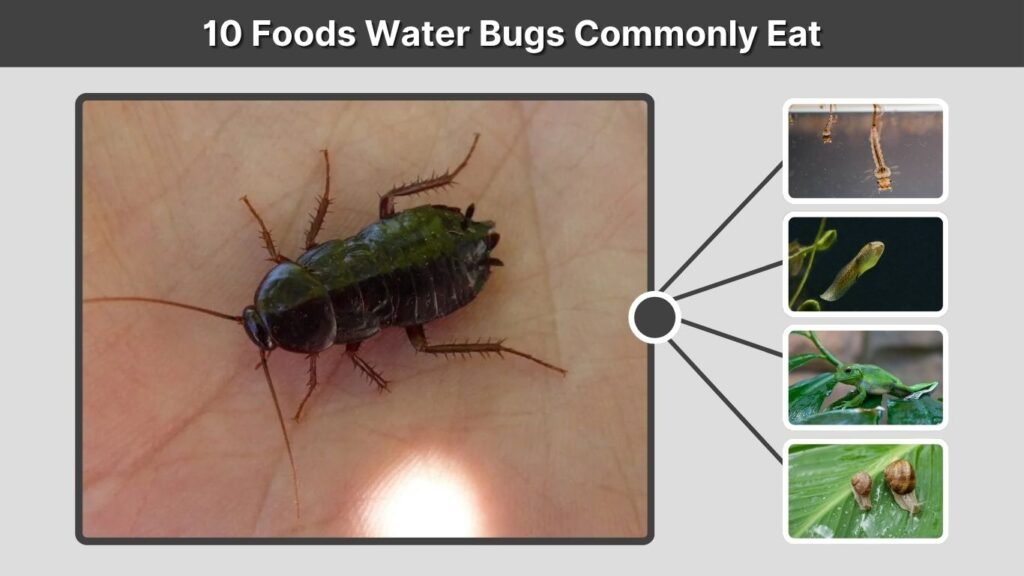
Water bugs are skilled aquatic predators that eat a wide variety of small animals found in ponds, marshes, streams, and other freshwater habitats. Their diet changes according to their size, age, species, and available prey. Young water bugs usually hunt tiny larvae and aquatic organisms, while larger adults can overpower fish, tadpoles, frogs, snails, and even smaller water bugs. They use powerful front legs to grab prey and piercing mouthparts to consume its liquefied tissues.
- Aquatic insect larvae: Water bugs commonly capture mosquito larvae, midge larvae, dragonfly nymphs, and other immature insects living underwater.
- Small fish: Large giant water bugs can overpower tiny fish and fish fry. They usually attack animals that are small enough to hold securely with their front legs.
- Tadpoles: Tadpoles are common prey in shallow ponds and wetlands. A water bug may remain motionless among plants before striking when a tadpole swims nearby.
- Frogs: The largest species can occasionally attack very small frogs or newly transformed froglets. Adult frogs are generally too large for most water bugs.
- Snails: Some water bugs feed on small aquatic snails, especially when other prey is limited.
- Crustaceans: Small shrimp, amphipods, water fleas, and juvenile crayfish may become prey when they share the same habitat.
- Other water bugs: These insects may eat smaller members of their own species or other aquatic true bugs. Cannibalism is more likely when food is scarce or many individuals share a confined area.
- Worms: Aquatic worms and small terrestrial worms that fall into the water can be captured and eaten.
- Beetle larvae: Water bugs may prey on the larvae of aquatic beetles and other insects developing in ponds or streams.
- Small salamanders: Very large water bugs may occasionally capture young salamanders or other small amphibians, although this is not everyday prey.
How Do Water Bugs Catch Their Food?
Water bugs do not chew their prey like beetles or grasshoppers. They use an ambush-hunting strategy that allows them to attack quickly without chasing animals over long distances.
Ambush Hunting
A giant water bug often hides among submerged vegetation, mud, rocks, or floating debris. Its brown, flat body blends into the surroundings while it waits for prey.
When a fish, tadpole, or insect moves close enough, the water bug grabs it with powerful front legs. These legs are adapted for holding struggling animals.
Piercing Mouthparts
After securing the prey, the water bug inserts its short, pointed beak. Digestive saliva begins breaking down the animal’s internal tissues, allowing the bug to consume the food in liquid form.
The same mouthparts can deliver a painful defensive bite to a person. Water bugs do not normally hunt humans, but they may bite when handled, stepped on, or trapped against the skin.
Do Water Bugs Eat Mosquitoes?
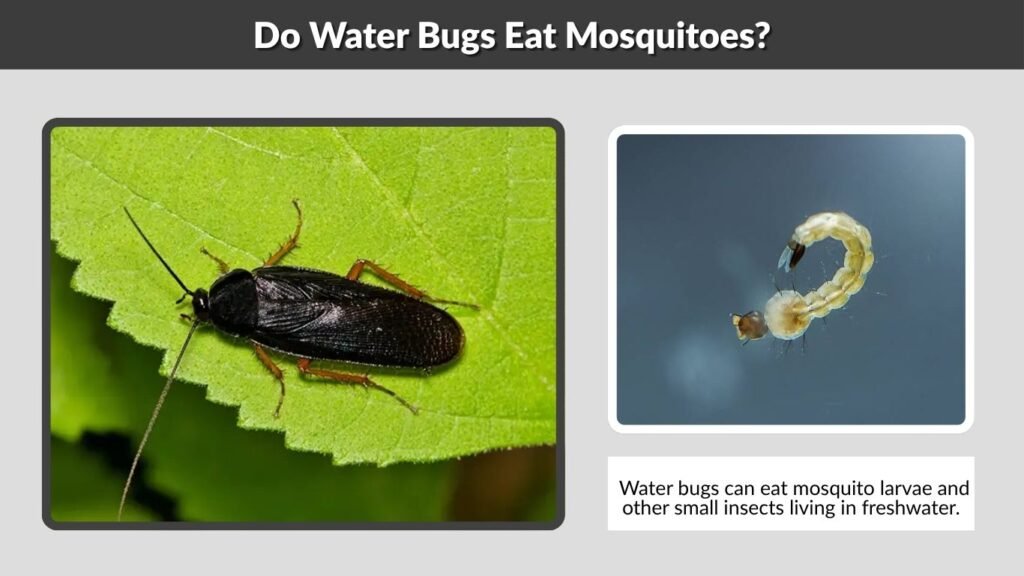
Water bugs can eat mosquito larvae and other small insects living in freshwater. Because mosquito larvae remain near the water’s surface, they may be available to young water bugs and smaller aquatic predators.
However, giant water bugs should not be viewed as a complete form of mosquito control. Fish, dragonfly nymphs, backswimmers, predatory beetles, and other aquatic animals also consume mosquito larvae.
Removing stagnant water from buckets, tires, plant saucers, and clogged gutters is a more reliable way to prevent mosquitoes from breeding around a home.
Do Water Bugs Eat Fish?
Large water bugs can eat small fish, particularly young fish, weak individuals, and small species. Their strong front legs allow them to hold fish while feeding.
Can They Harm Pond Fish?
A few water bugs are unlikely to threaten healthy adult pond fish. However, they may eat fish fry, tiny minnows, and newly hatched ornamental fish.
A pond containing dense vegetation and abundant aquatic insects may support water bugs naturally. Removing excessive weeds and reducing outdoor lighting near the pond can make the habitat less attractive when their numbers become concerning.
Do Water Bugs Eat Goldfish?
A large giant water bug could potentially attack a very small goldfish, but an established adult goldfish is usually too large. Young goldfish and newly hatched fry are more vulnerable.
What Do Baby Water Bugs Eat?
Young water bugs are called nymphs. They resemble smaller versions of adults but do not have fully developed wings.
Nymphs begin hunting small prey soon after hatching. Their diet may include:
- Mosquito larvae
- Tiny aquatic worms
- Water fleas
- Small insect larvae
- Very small tadpoles
- Other water bug nymphs
As they grow and molt, they become capable of capturing larger prey. Nymphs use the same basic feeding method as adults: grabbing an animal, piercing it, and drinking its liquefied tissues.
What Do Water Bugs Eat in a House?
True giant water bugs do not normally live or reproduce inside houses. They may accidentally fly indoors after being attracted to porch lights, windows, or other bright sources at night.
An aquatic water bug trapped indoors is unlikely to find suitable food. It may survive briefly but needs access to freshwater habitat and living prey.
Remove an Aquatic Water Bug Safely
Do not pick it up with bare hands because it can deliver a painful bite. Place a container over the insect, slide stiff paper beneath it, and release it near an appropriate freshwater area.
Turning off unnecessary outdoor lights and repairing window screens can reduce accidental entry.
Are Cockroaches Water Bugs?
The term “water bug” is frequently used for large cockroaches, especially American, Oriental, and smokybrown cockroaches. These insects prefer dark, humid places, but they are not true aquatic water bugs.
| Feature | Giant water bug | Cockroach called a water bug |
| Habitat | Ponds, streams and wetlands | Drains, basements and buildings |
| Diet | Living aquatic animals | Organic waste and household food |
| Front legs | Thick and adapted for grabbing | Designed mainly for running |
| Body shape | Flat and oval | Flat with very long antennae |
| Behavior | Aquatic predator | Fast-moving scavenger |
| Household infestation | Unlikely | Possible |
What Do Cockroach “Water Bugs” Eat?
Cockroaches are scavengers rather than aquatic predators. They can eat almost any organic material, including:
- Food crumbs
- Grease
- Garbage
- Pet food
- Decaying plants
- Paper and cardboard glue
- Soap residue
- Dead insects
- Sewage material
- Fermenting food
Cockroaches need moisture and may gather beneath sinks, around leaking pipes, in basements, near floor drains, and behind appliances.
What Eats Water Bugs?
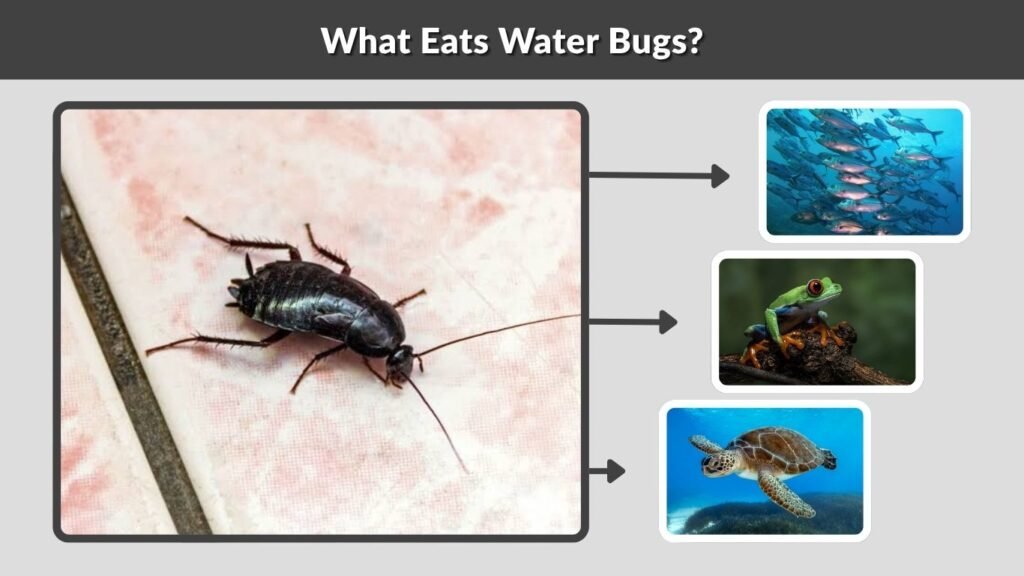
Although water bugs are capable predators, they are also eaten by many larger animals. Their main predators depend on the species and habitat.
Common Water Bug Predators
Fish, frogs, turtles, snakes, birds, and larger aquatic insects may eat water bugs. Young nymphs are especially vulnerable because they are smaller and have softer bodies.
Adult giant water bugs may avoid some predators by remaining motionless, hiding among plants, or releasing defensive fluids. Their powerful bite can also discourage animals that attempt to swallow them.
Do Water Bugs Eat Plants?
True giant water bugs do not normally feed on living plants. They may rest on vegetation or use plant stems to reach the surface, but they are primarily carnivorous.
Some other aquatic true bugs may occasionally consume plant material, but fish, tadpoles, insects, and other small animals form the main diet of giant water bugs.
Cockroaches called water bugs may eat decaying plant matter, fruit, vegetables, and other organic materials found indoors or around garbage.
Are Water Bugs Dangerous?
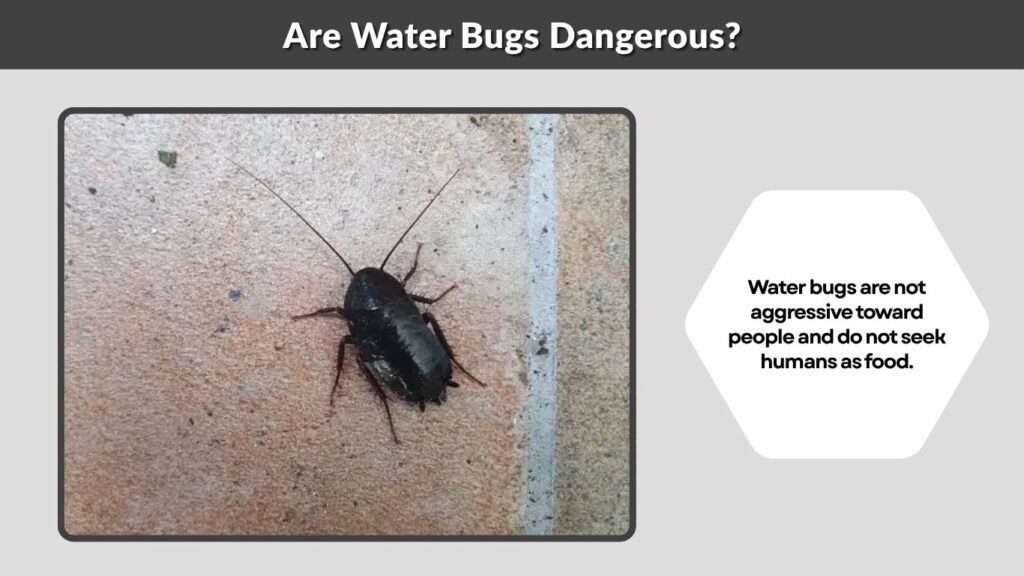
Water bugs are not aggressive toward people and do not seek humans as food. However, giant water bugs can bite defensively. The bite may cause immediate pain, redness, and swelling.
Avoid touching one directly. Wash a bite with soap and water, apply a cold compress, and avoid scratching the area. Seek medical care if swelling becomes severe, pain continues, or symptoms of an allergic reaction develop.
Cockroaches do not usually bite, but their droppings and shed body parts can contaminate surfaces and aggravate allergies or asthma in sensitive people.
FAQs
What is a water bug’s favorite food?
True water bugs commonly eat aquatic insects, tadpoles, and small fish. Their preferred prey depends on their size and what is available in the habitat. Larger species can capture bigger animals than young nymphs.
Do water bugs eat other bugs?
Yes. Aquatic insect larvae, beetle larvae, mosquito larvae, and smaller true bugs are important parts of their diet. Large individuals may also eat smaller members of their own species.
Do water bugs eat cockroaches?
A giant water bug could potentially capture a small insect that falls into the water, but cockroaches are not a normal part of its diet. The two usually occupy very different habitats.
How long can water bugs live without food?
Their survival depends on species, temperature, age, moisture, and previous feeding. They may tolerate short periods without prey, but an aquatic water bug cannot live normally in a dry house without freshwater habitat.
Why do water bugs come inside the house?
True water bugs usually enter accidentally after being attracted to lights. Cockroaches called water bugs enter in search of moisture, warmth, shelter, and food. Correct identification is necessary before choosing a treatment.
