
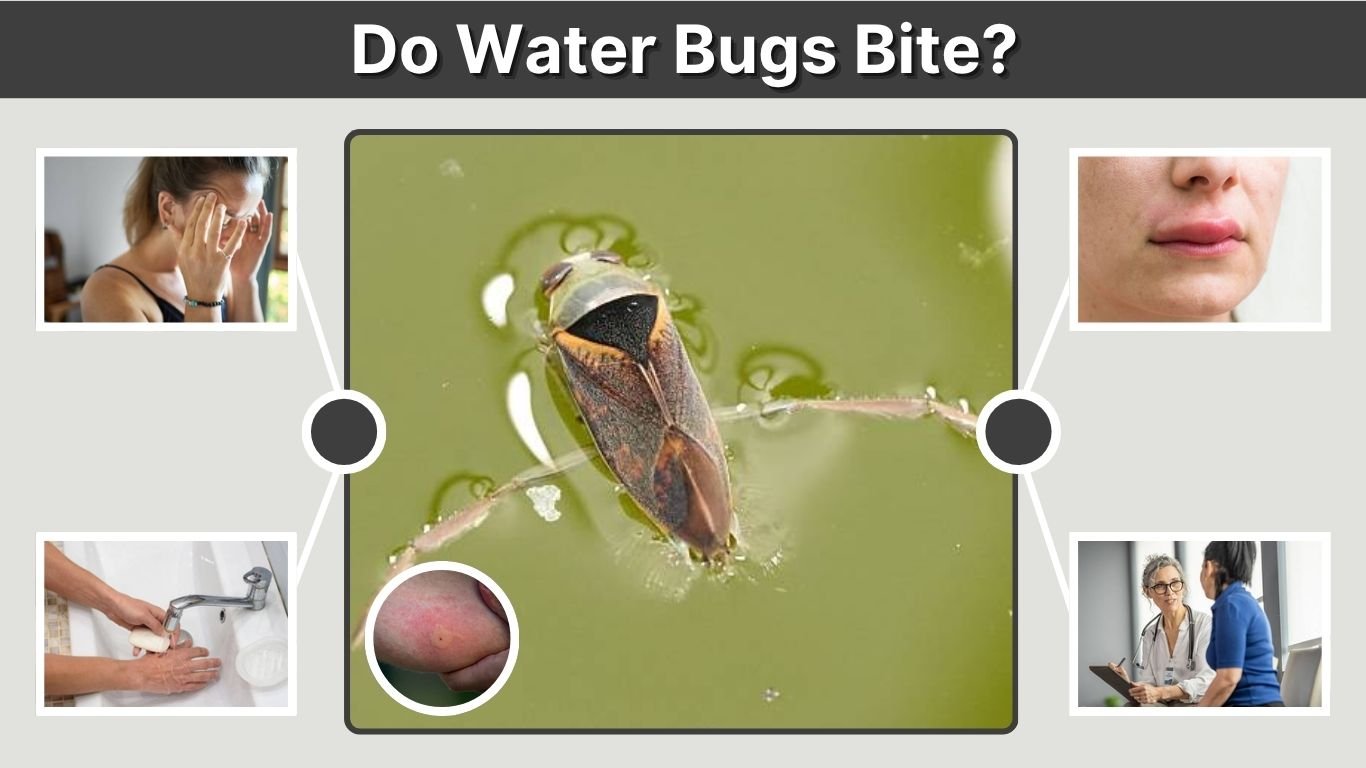
Yes, some water bugs can bite humans. Giant water bugs, also called toe-biters, can deliver an intensely painful defensive bite when handled, stepped on, or trapped against the skin. However, they do not hunt people or feed on human blood. Cockroaches commonly called water bugs are different: they may theoretically bite, but such incidents are extremely rare. Knowing which insect you encountered can help you evaluate the risk, treat the affected area, and prevent another unpleasant encounter.
Which Water Bugs Can Bite?
“Water bug” is a broad common name used for several aquatic insects and moisture-loving cockroaches. Their biting behavior differs considerably.
| Insect | Can it bite? | Risk to people |
| Giant water bug | Yes | Extremely painful defensive bite |
| Backswimmer | Yes | Painful bite when handled or disturbed |
| Water boatman | Unlikely | Generally considered harmless |
| Water scorpion | Yes | May pierce skin defensively |
| Oriental cockroach | Extremely rare | Not normally aggressive |
| American cockroach | Extremely rare | More associated with contamination |
Giant Water Bugs
Giant water bugs belong to the family Belostomatidae. They are large, flattened aquatic predators with powerful front legs and a piercing mouthpart.
These insects capture tadpoles, minnows, aquatic insects, and other small animals. They inject saliva that immobilizes prey and begins breaking down its tissues. The same mouthpart can pierce human skin when the insect defends itself. Mississippi State University Extension describes the resulting bite as extremely painful but generally short-lived, with no expected long-term effects in typical cases.
Backswimmers
Backswimmers are smaller aquatic insects that swim upside down near the water’s surface. They can pierce the skin if caught, squeezed, or handled carelessly. Their bite has been compared to a bee sting.
Backswimmers sometimes enter poorly maintained swimming pools, especially when algae and other small aquatic organisms provide food.
Cockroaches Called Water Bugs
Oriental and American cockroaches are often called water bugs because they inhabit drains, sewers, basements, bathrooms, and other damp areas.
These cockroaches are not blood-feeding insects and do not normally bite people. Their primary health concern is their ability to carry allergens and contaminants from garbage, drains, and unsanitary areas onto household surfaces.
Why Are Giant Water Bugs Called Toe-Biters?
Giant water bugs earned the nickname toe-biters because barefoot swimmers or people wading in shallow water may accidentally step near one. The insect can respond by piercing the skin with its beak-like mouthpart.
Despite the nickname, giant water bugs do not deliberately search for human toes. Most bites occur when someone:
- Picks up the insect with bare hands
- Steps on it while wading
- Traps it between clothing and skin
- Mistakes it for a dead insect
- Handles one found near an outdoor light
Adults can fly and are attracted to lights at night, so they may appear in parking lots, on patios, or near porch lights far from visible water.
What Does a Water Bug Bite Look Like?
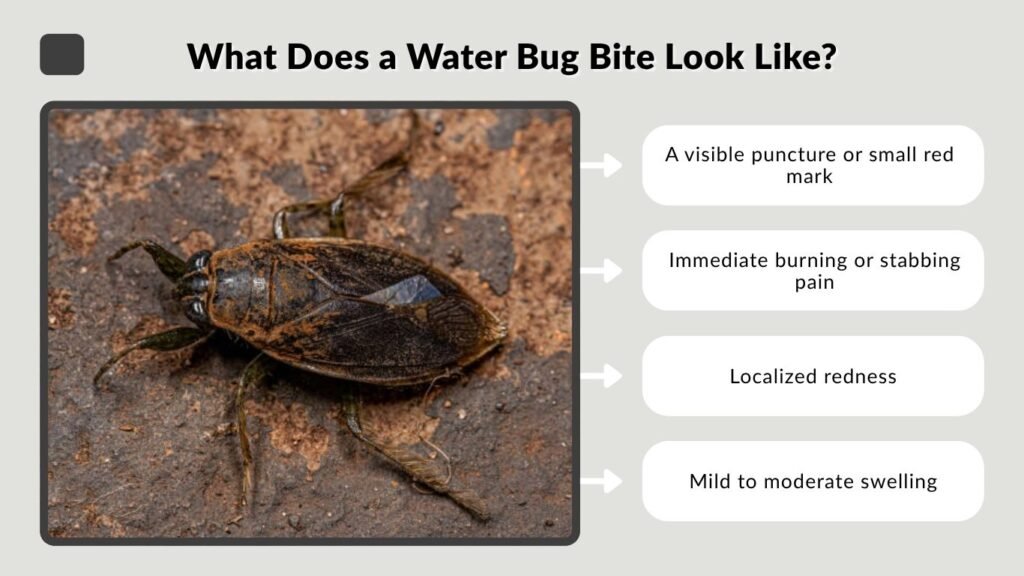
A giant water bug bite may leave a small puncture surrounded by redness and swelling. However, the appearance varies depending on the location of the bite and the person’s reaction.
Possible signs include:
- A visible puncture or small red mark
- Immediate burning or stabbing pain
- Localized redness
- Mild to moderate swelling
- Tenderness around the affected area
- Itching as the area heals
A bite cannot be reliably identified from its appearance alone. Mosquitoes, ants, spiders, fleas, mites, and several other insects can produce similar red bumps or swollen areas. Even skin irritation unrelated to insects may resemble a bite.
Does a Water Bug Bite Leave Two Holes?
A giant water bug uses one piercing mouthpart rather than two separate fangs. Therefore, a clearly defined pair of puncture holes is not a dependable sign of a water bug bite.
The mark may be difficult to see once redness and swelling develop. Identification is more reliable when the insect was seen during the incident.
Can Water Bug Bites Cause Blisters?
A small blister can develop after many types of insect bites because people react differently to insect saliva or other substances. Blistering alone does not prove that a water bug caused the injury.
Do not intentionally break a blister. Opening it may increase the risk of infection. Seek medical advice if it becomes unusually large, very painful, warm, cloudy, or surrounded by spreading redness.
What Are the Symptoms of a Giant Water Bug Bite?
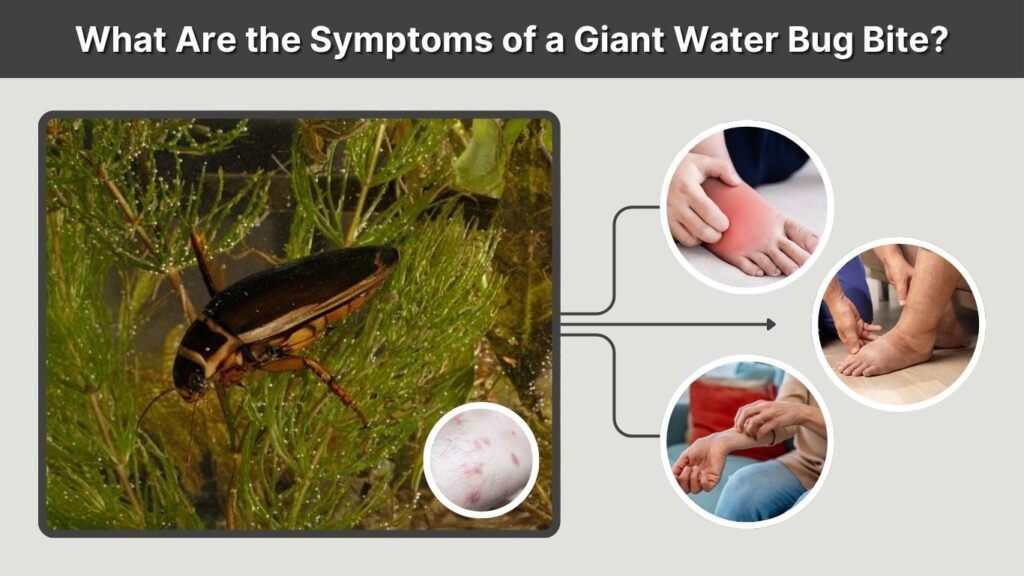
The most noticeable symptom is usually immediate, intense pain. Giant water bug bites are defensive and often occur while the insect is being handled or accidentally pressed against the skin.
Common localized symptoms may include:
- Sharp or burning pain
- Redness around the puncture
- Swelling and tenderness
- Temporary throbbing
- Itching during healing
There is no official universal pain-scale rating for a giant water bug bite. Personal descriptions vary, although many people report that it is more painful than an ordinary insect bite. Extension specialists note that the severe pain is generally temporary.
Are Water Bug Bites Poisonous or Dangerous?
Giant water bugs are not poisonous to touch or be near. They use toxic saliva against prey and can inject it through a defensive bite, but typical human encounters cause localized pain rather than poisoning or lasting injury.
Serious complications appear uncommon. Nevertheless, any insect bite can occasionally cause an allergic reaction or become infected after scratching. Signs of a severe allergic reaction can include widespread hives, facial or throat swelling, breathing difficulty, dizziness, or fainting. These symptoms require immediate emergency care.
How to Treat a Water Bug Bite
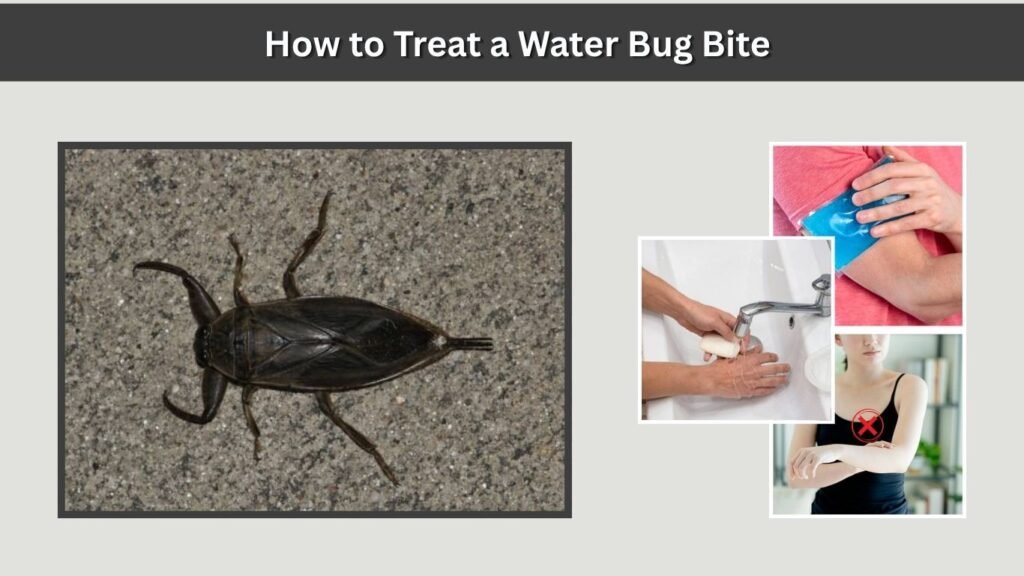
Most uncomplicated bites can initially be managed with basic first aid.
Clean the Area
Wash the bite gently with soap and clean water. This helps remove dirt and reduce the chance of a secondary skin infection.
Apply a Cold Compress
Place a cold, damp cloth or wrapped ice pack over the affected area for 10 to 20 minutes. Do not put ice directly on bare skin. Cold treatment may reduce pain and swelling.
Control Pain and Itching
An over-the-counter pain reliever, antihistamine, calamine lotion, or low-strength hydrocortisone cream may help some people. Follow the product label and check with a healthcare professional or pharmacist when treating a child, taking other medications, or managing an existing condition.
Avoid Scratching
Scratching can damage the skin and introduce bacteria. Keep the area clean and monitor it over the following days.
Do not pour hot water, bleach, alcohol, insecticide, or harsh cleaning products onto the skin. These remedies can cause burns or additional irritation.
When Should You Seek Medical Attention?
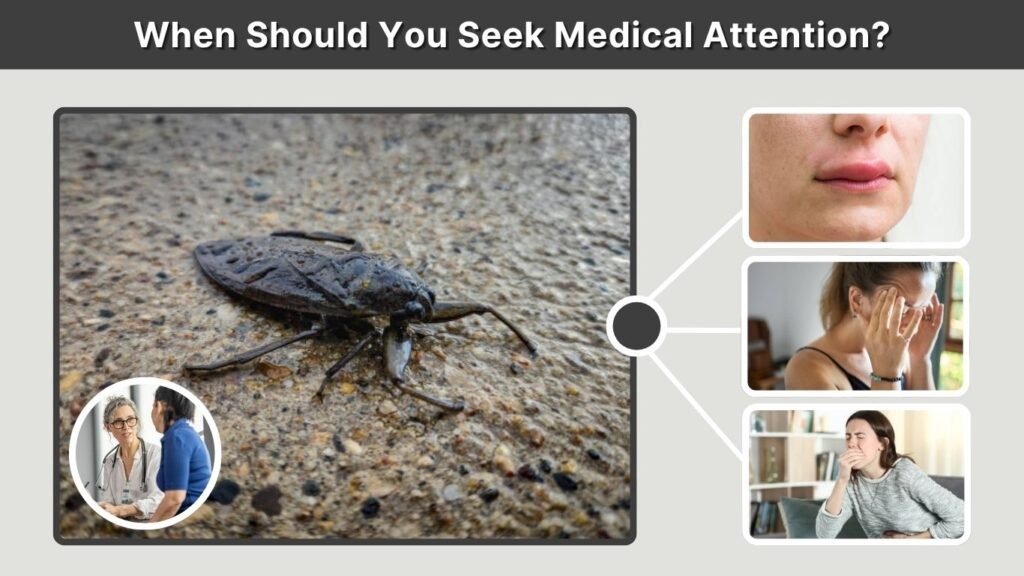
Seek urgent medical help if the person develops:
- Trouble breathing or swallowing
- Swelling of the tongue, lips, face, or throat
- Widespread hives
- Severe dizziness, weakness, or fainting
- Repeated vomiting
- Rapidly increasing swelling
Contact a healthcare professional if pain remains severe, the wound does not improve, or infection signs appear. Possible infection signs include pus, increasing warmth, worsening pain, swollen glands, red streaks, or redness that continues spreading.
Do Water Bugs in Swimming Pools Bite?
Some pool insects can bite, but others are harmless. Backswimmers and giant water bugs may defend themselves when touched. Water boatmen look similar to backswimmers but are generally less likely to bite.
Pool insects do not normally enter the water specifically to attack swimmers. They are usually attracted by algae, lights, stagnant conditions, or small organisms they can eat.
Remove them with a long-handled skimmer rather than your hands. Regularly brush and vacuum the pool, maintain filtration, manage algae, and keep the water chemistry within the pool manufacturer’s recommended range.
How to Prevent Water Bug Bites
Avoid handling aquatic insects, even when they appear motionless. Giant water bugs sometimes remain still as a defensive behavior and can suddenly pierce the skin.
Wear water shoes when walking through muddy shallows, vegetation, or pond edges. Use a net or container to remove insects from pools and buildings. Reducing bright exterior lighting near doors and pools can also limit nighttime visits from flying giant water bugs.
FAQs
Do house water bugs bite humans?
Cockroaches called water bugs are physically capable of chewing, but bites on humans are extremely uncommon. Repeated unexplained marks indoors are more likely to have another cause, such as mosquitoes, fleas, bed bugs, mites, or skin irritation.
Do small water bugs bite?
Some small aquatic bugs, particularly backswimmers, can pierce human skin defensively. Water boatmen are usually considered harmless. Avoid picking up an unidentified aquatic insect with your bare hands.
Do water bug bites hurt?
A giant water bug bite can be intensely painful because its piercing mouthpart and saliva are designed to subdue prey. Pain is generally localized and temporary, although swelling or tenderness may persist longer.
Can a water bug bite kill you?
A typical giant water bug bite is not expected to be fatal. A rare severe allergic reaction to any insect bite can become an emergency, particularly when it causes breathing difficulty, throat swelling, widespread hives, dizziness, or fainting.
Does baking soda help water bug bites?
A baking soda paste may provide temporary itch relief for some insect bites, but evidence is limited and it does not neutralize the bite. Washing the area and applying a cold compress are more important first steps. Stop using any remedy that increases irritation.
This article covers the principal subjects in the supplied topic list, including giant water bug bites, toe-biters, bite appearance, symptoms, treatment, and pool insects.
