
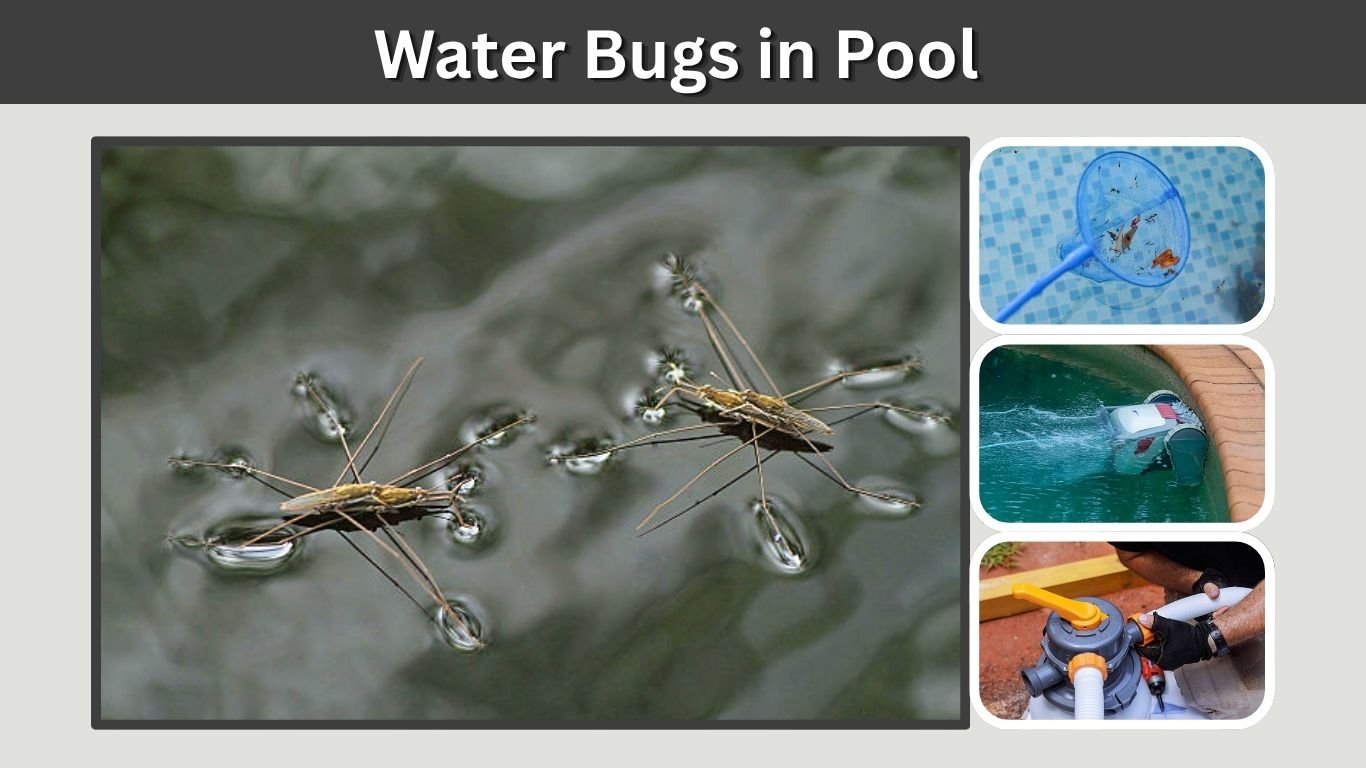
Water bugs in a pool are usually aquatic insects such as water boatmen or backswimmers. They may fly into the pool at night and remain because the water provides shelter or food. Although most are more annoying than dangerous, backswimmers and giant water bugs can deliver painful defensive bites. You can remove them safely by skimming, cleaning the pool, correcting the water chemistry, eliminating algae, and maintaining good circulation. Never pour household insecticide, dish soap, bleach, or cooking oil into swimming water.
What Are the Water Bugs in My Pool?
“Water bug” is a general name that may describe several aquatic insects. Water boatmen and backswimmers are the most frequent visitors, while giant water bugs occasionally enter outdoor pools.
Water boatmen and backswimmers naturally inhabit still water, including ponds, birdbaths, lake edges, and swimming pools. Both have long, paddle-shaped legs that allow them to row through the water, and adults can fly between water sources.
| Pool insect | Identification | Does it bite? |
| Water boatman | Swims right-side up; dark back; oar-like legs | Not known to bite people |
| Backswimmer | Swims upside down; lighter back; long hind legs | Can deliver a painful bite |
| Giant water bug | Large, flat body with strong front legs | Can bite painfully when disturbed |
| Water strider | Moves across the surface on long legs | Generally harmless |
| Mosquito larva | Small, wriggling body near the surface | Larvae do not bite, but adults do |
Water Boatmen
Water boatmen are small, oval insects that usually swim right-side up. They often search the bottom and sides of a pool for algae, microorganisms, and organic debris.
Their mouthparts are not suited to piercing human skin, so water boatmen are not known to bite people. They can fly, however, which allows them to appear suddenly even in a recently cleaned pool.
Backswimmers
Backswimmers resemble water boatmen but swim with their bellies facing upward. They are predators that feed on mosquito larvae, small insects, tadpoles, and other aquatic animals.
A backswimmer can pierce human skin with its mouthpart if it is picked up, pressed against the body, or disturbed while someone is swimming. The bite may cause sharp, burning pain similar to a bee sting, although biting incidents are uncommon.
Giant Water Bugs
A giant water bug is much larger than the other common pool insects. Depending on the species, it may grow two to four inches long and have strong, claw-like front legs.
Giant water bugs are also called toe-biters because they can inflict a painful defensive bite. Adults fly and are attracted to outdoor lights, so one may accidentally land in a pool while moving between ponds or other bodies of water.
Why Are There Water Bugs in My Pool?
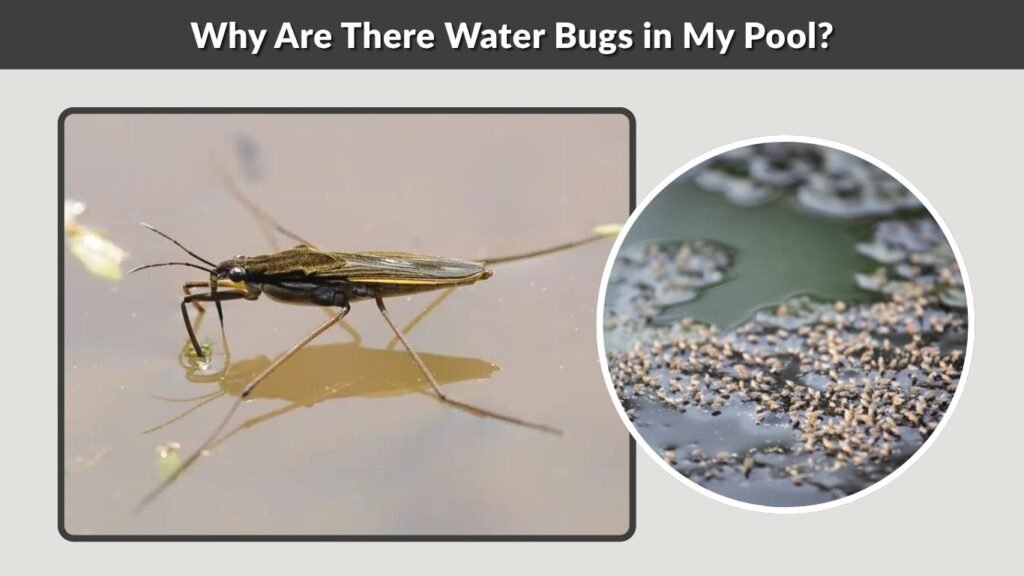
Water bugs do not necessarily indicate that the pool is dangerously dirty. A few insects can fly into even a well-maintained pool. However, repeated or increasing activity may indicate that the water is becoming attractive as a habitat.
Algae and Organic Material
Water boatmen eat algae, microorganisms, and organic particles. Leaves, pollen, dirt, and other debris can also support the tiny organisms that aquatic insects use as food.
Backswimmers may arrive after water boatmen, mosquito larvae, or other prey become established. Therefore, removing algae and debris can disrupt the food supply for both groups.
Poor Circulation
Water boatmen and backswimmers naturally prefer calm or slow-moving water. A pool with inadequate circulation, a clogged filter, or long periods without pump operation can begin to resemble their natural habitat.
The filtration and recirculation systems should be maintained according to the equipment manufacturer’s recommendations. Effective filtration removes particles and insects, while circulation helps prevent stagnant areas.
Outdoor Lights
Aquatic insects can fly and may mistake the shiny surface of a swimming pool for a natural pond. Bright pool, patio, landscape, and security lights can make the area especially noticeable at night.
Giant water bugs are commonly called electric-light bugs because flying adults are strongly attracted to nighttime lighting.
How to Get Rid of Water Bugs in a Pool
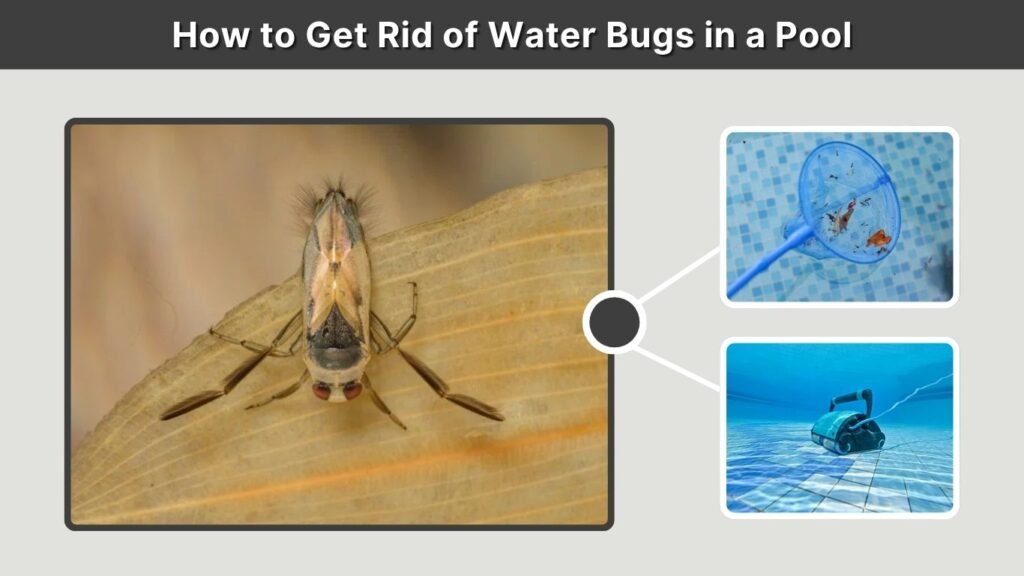
Killing individual insects is not enough when the conditions attracting them remain unchanged. The most effective approach combines physical removal with cleaning, filtration, circulation, and balanced water chemistry.
1. Remove the Bugs With a Pool Net
Use a long-handled skimmer to collect visible insects from the surface and walls. Avoid removing backswimmers or giant water bugs with your hands because they may bite when trapped or handled.
Empty the skimmer away from the pool. Check baskets, steps, ladders, floating toys, pool covers, and areas around lights for additional insects.
2. Brush and Vacuum the Pool
Brush the walls, steps, corners, and floor to loosen algae and organic buildup. Vacuum the pool afterward so the loosened material does not remain available as food.
Clean leaves and debris from the surface daily while the problem continues. Local public-health guidance recommends regular skimming and a properly operating filtration system to limit algae, contaminants, and insects.
3. Clean the Filter and Skimmer Baskets
Empty the pump and skimmer baskets, check the filter pressure, and clean or backwash the filter according to its instructions. Also inspect the return jets to confirm that water is circulating throughout the pool.
A poorly performing filter allows debris to accumulate and can contribute to cloudy water and algae growth.
4. Test the Water
Test the free chlorine and pH instead of judging water quality only by appearance. The CDC recommends maintaining a pool pH of 7.0–7.8 and at least 1 ppm free chlorine, or at least 2 ppm when using cyanuric acid or stabilized chlorine. Follow the requirements for your pool system and chemical labels.
Correct low sanitizer levels and treat visible algae using products specifically labeled for swimming pools. Do not add more chemicals than directed.
5. Address an Algae Problem
Green water, slippery surfaces, or visible patches on walls indicate that algae control is needed. Brush and vacuum the surfaces, correct the water chemistry, and follow the pool-product manufacturer’s treatment instructions.
Keep swimmers out until the treatment is complete and the water has returned to the safe ranges specified by the chemical and pool-equipment manufacturers.
What Should You Never Put in a Pool?
Do not add household insect spray, garden pesticide, bleach mixtures, dish soap, detergent, alcohol, or cooking oil to kill pool bugs. These substances may irritate swimmers, damage equipment, disrupt filtration, or make the water unsafe.
Never mix pool chemicals with one another or with household cleaners. Pool chemicals can cause serious injuries when handled or combined incorrectly, so use only pool-approved products and follow every label direction.
How to Keep Water Bugs Out of Your Pool
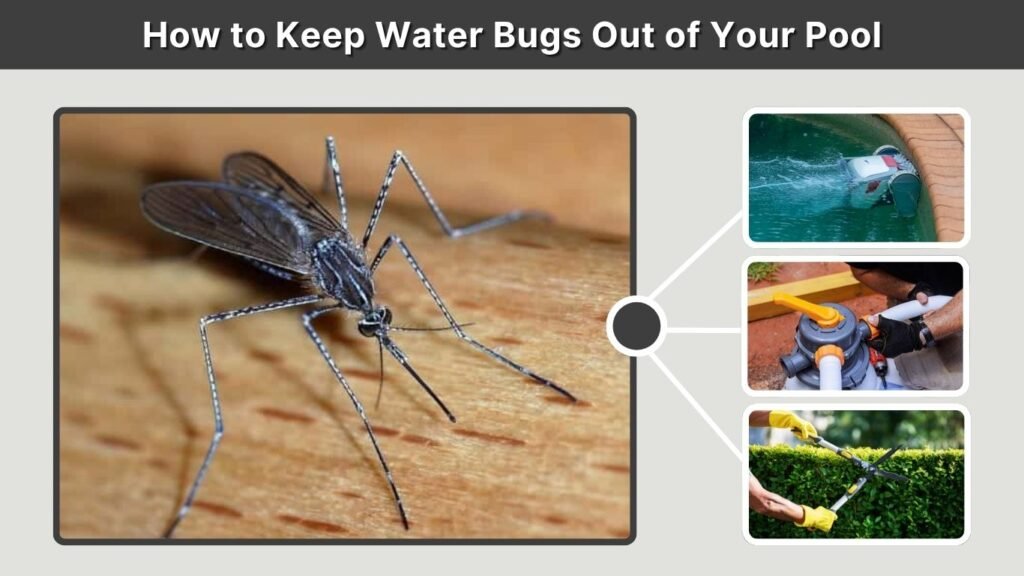
After removing the insects, reduce the conditions that encourage them to return:
- Run the pump and filtration system on an appropriate schedule.
- Brush, skim, and vacuum the pool regularly.
- Maintain the recommended sanitizer and pH levels.
- Repair weak circulation and clogged filtration components.
- Use a fitted pool cover when the pool is not being used.
- Remove standing water from the top of the cover.
- Turn off unnecessary lights near the pool at night.
- Move essential lights farther from the water.
- Trim excessive vegetation around the pool area.
- Remove leaves and other organic debris promptly.
A pool cover can reduce insects and debris, but rainwater collected on top can become a separate breeding area for mosquitoes. Remove that standing water regularly.
Can Water Bugs Live in a Saltwater Pool?
Water bugs can appear in saltwater pools. A saltwater system is not the same as ocean water and does not automatically repel aquatic insects. The system generates chlorine from dissolved salt, so the pool still depends on correct sanitizer levels, circulation, cleaning, and filtration.
Some water boatmen can tolerate water with varying salinity. Consequently, a saltwater pool can still attract them when algae, debris, calm water, or nighttime lighting provides favorable conditions.
Are Water Bugs in a Pool Dangerous?
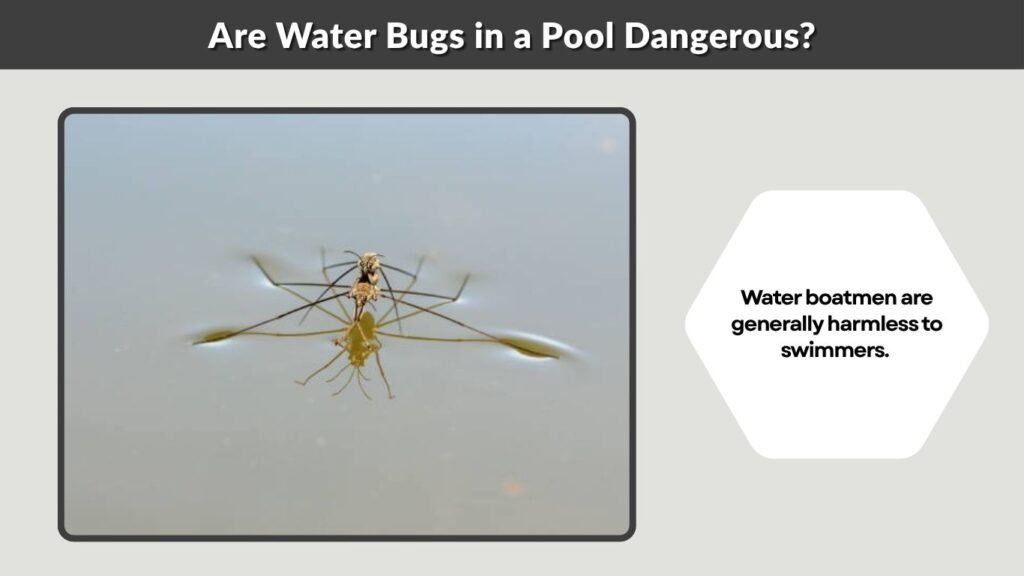
Water boatmen are generally harmless to swimmers. Backswimmers can bite, but they normally do so only when handled or trapped against the skin. Giant water bugs may also deliver a painful defensive bite and should be removed with a net.
A single water bug does not necessarily make the pool unsafe. However, visible algae, cloudy water, poor circulation, or incorrect sanitizer levels should be corrected before swimming because these conditions involve broader water-quality concerns.
FAQs
Do pool water bugs bite?
Backswimmers and giant water bugs can bite when disturbed, squeezed, or handled. Water boatmen are not known to bite humans. Use a long-handled skimmer instead of touching an unidentified aquatic insect with bare hands.
How do water bugs get into a swimming pool?
Most adult aquatic water bugs fly into pools from nearby ponds, wetlands, ditches, or other standing water. Reflections from the pool surface and bright nighttime lights may help attract them.
Does chlorine kill water bugs?
Direct exposure to properly treated water may eventually kill or discourage some insects, but chlorine should not be increased solely to kill bugs. Maintain the concentration recommended for safe swimming and address algae, debris, and circulation problems.
Can I swim with water bugs in the pool?
Remove the insects before swimming, especially when backswimmers or giant water bugs may be present. Also test the sanitizer and pH. Avoid swimming when the pool is cloudy, green, poorly circulated, or outside the recommended chemical ranges.
Why do water bugs keep returning?
Recurring water bugs usually indicate an ongoing attraction such as algae, organic debris, available prey, still water, or bright outdoor lighting. Regular cleaning, balanced water chemistry, effective circulation, nighttime light reduction, and a fitted cover can reduce repeated visits.
