
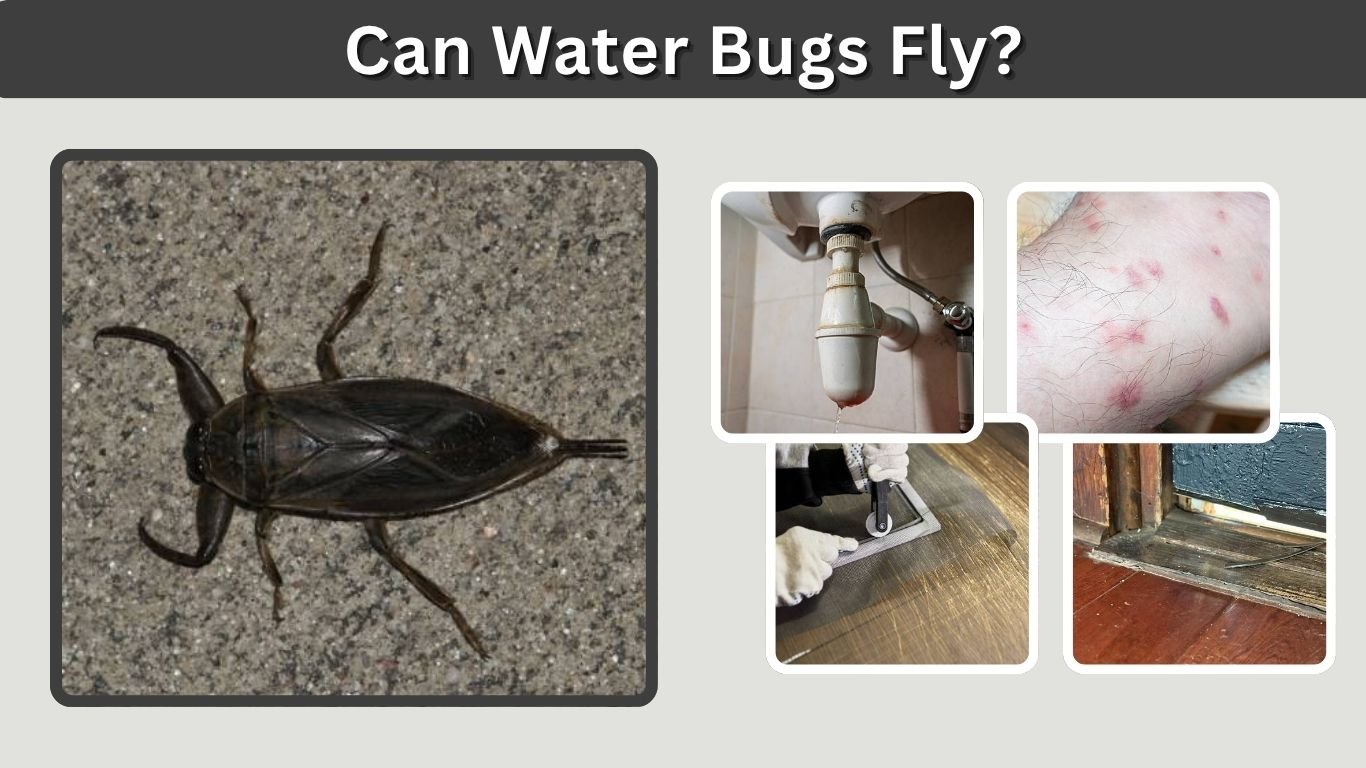
Yes, some water bugs can fly, but the answer depends on which insect you are calling a water bug. True aquatic water bugs, including giant water bugs, have functional wings and may fly between ponds or toward outdoor lights at night. However, the Oriental cockroach—often nicknamed a water bug because it prefers damp places—cannot fly. American cockroaches may make short flights or glide, although they usually escape by running. Identifying the insect is therefore the first step in understanding its behavior and controlling it.
What Is Considered a Water Bug?
“Water bug” is an informal name rather than one precise species. People commonly use it for both aquatic insects and moisture-loving cockroaches.
True Water Bugs
True water bugs belong to the insect order Hemiptera. This group includes:
- Giant water bugs
- Water boatmen
- Backswimmers
- Water scorpions
- Creeping water bugs
These insects spend much of their lives in ponds, marshes, streams, drainage areas, and swimming pools. Their bodies and legs are adapted for moving through water.
Cockroaches Called Water Bugs
The name is also commonly applied to Oriental and American cockroaches. These roaches are associated with drains, sewers, basements, bathrooms, crawl spaces, and other damp environments.
The Oriental cockroach is particularly likely to be called a water bug because it prefers dark, cool, and moist locations. However, it is a cockroach rather than a true aquatic insect.
Can Water Bugs Fly?
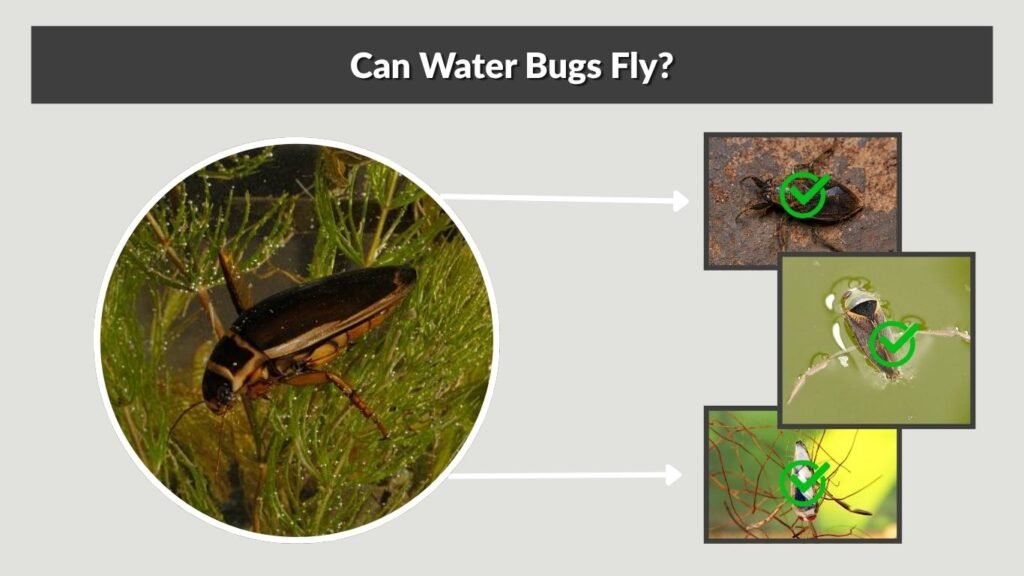
Some species can fly well, some can only fly or glide short distances, and others cannot fly at all.
| Insect commonly called a water bug | Can it fly? | Typical behavior |
| Giant water bug | Yes | Flies between water sources and toward lights |
| American cockroach | Sometimes | Usually runs but may glide or fly briefly |
| Oriental cockroach | No | Crawls along floors and damp surfaces |
| Water boatman | Yes | Flies between ponds and pools |
| Backswimmer | Yes | May fly to find new water |
| Water scorpion | Some adults can fly | Usually remains in shallow water |
Can Giant Water Bugs Fly?
Adult giant water bugs have wings and can fly. They may leave a pond when conditions become unsuitable, when searching for mates, or when locating another body of water.
They are also attracted to bright lights at night. For this reason, giant water bugs are sometimes called electric-light bugs. They may appear around porch lights, parking lots, garages, and buildings located near ponds or wetlands.
Their flight can look awkward because of their large, heavy bodies. A giant water bug may produce a noticeable buzzing sound while flying.
Can Oriental Water Bugs Fly?
No. Oriental cockroaches cannot fly. Males have shortened wings, while females have very small wing pads, but neither sex uses them for flight.
Oriental cockroaches generally stay close to the ground. They crawl through basements, utility rooms, floor drains, sewer openings, landscaping, and spaces beneath buildings. They are also poor at climbing clean, smooth vertical surfaces and may become trapped in sinks or bathtubs.
Can American Water Bugs Fly?
American cockroaches have fully developed wings. They may fly or glide for a short distance, particularly in warm and humid conditions, but they usually prefer running.
An American cockroach might appear to fly directly at a person when it is actually gliding toward a nearby surface or trying to escape. These large, reddish-brown cockroaches are commonly found in sewers, boiler rooms, basements, commercial kitchens, bathrooms, and other warm, damp places. Only a few household cockroach species regularly use their wings for short flights.
Why Do Water Bugs Fly Toward Lights?
Many adult aquatic insects use natural light sources to orient themselves while traveling at night. Artificial lighting can interfere with this behavior and draw them away from water.
Bright porch lights, streetlights, illuminated signs, and pool lights may attract giant water bugs and other aquatic insects. Finding one beside a light does not necessarily mean your home is infested. A single true water bug may simply have flown from a nearby pond, ditch, or wetland. Giant water bugs are widely recognized for appearing around bright outdoor lights.
To reduce nighttime visitors:
- Turn off unnecessary exterior lights.
- Replace bright white bulbs with less attractive warm-toned lighting.
- Move lights away from doors and windows.
- Close curtains after dark.
- Repair damaged window screens.
- Keep doors closed when outdoor lights are on.
Can Water Bugs Fly Inside the House?
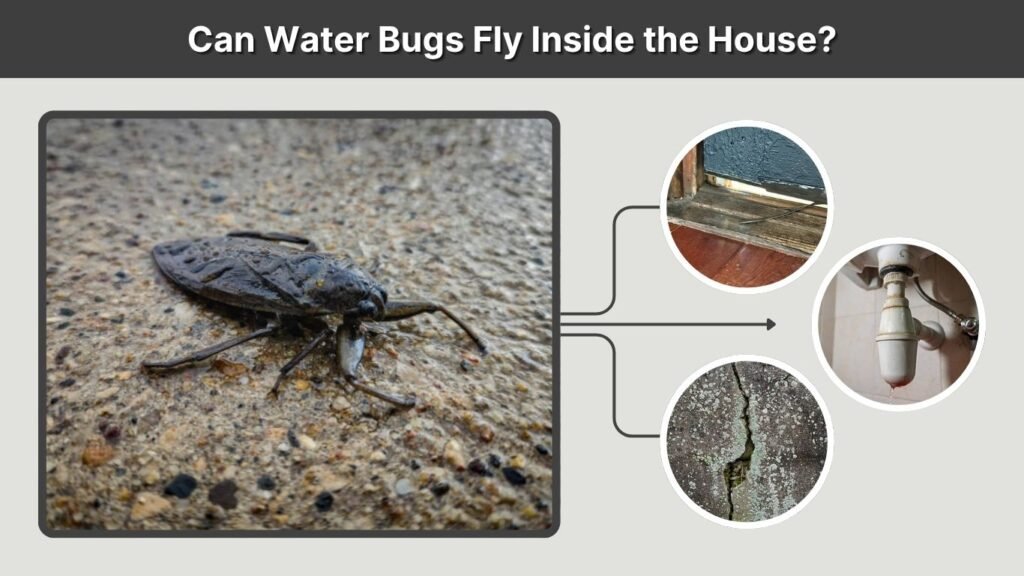
A true aquatic water bug can accidentally fly indoors through an open door, window, damaged screen, or garage entrance. However, it normally cannot establish a household infestation because it needs an aquatic environment.
Cockroaches called water bugs are more likely to enter by crawling. They may come through:
- Gaps beneath doors
- Cracks around plumbing
- Floor drains
- Utility openings
- Foundation gaps
- Shared walls in apartment buildings
- Cardboard boxes and stored materials
American and Oriental cockroaches commonly invade indoor spaces from outdoor areas, sewers, or damp structural locations.
Can Water Bugs Swim?
True water bugs are excellent swimmers. Many have flattened, paddle-like hind legs that push them through the water. Giant water bugs often hide among aquatic plants and wait for prey to approach.
Cockroaches called water bugs do not live underwater, but they may survive temporary contact with water. Oriental cockroaches prefer damp environments and frequently travel near drains, yet they are not aquatic swimmers like giant water bugs, backswimmers, or water boatmen.
Can Water Bugs Climb Walls?
The answer again depends on the species.
American cockroaches can climb many rough walls, pipes, wood surfaces, curtains, and structural materials. This ability allows them to reach elevated cabinets, ceilings, and upper floors.
Oriental cockroaches are weaker climbers. They generally cannot climb smooth, polished surfaces, although they can move over brick, unfinished wood, concrete, and other textured materials. Finding one in a bathtub does not always mean it came through the drain; it may have climbed a rough nearby surface and then fallen into the tub.
Can Water Bugs Bite Humans?
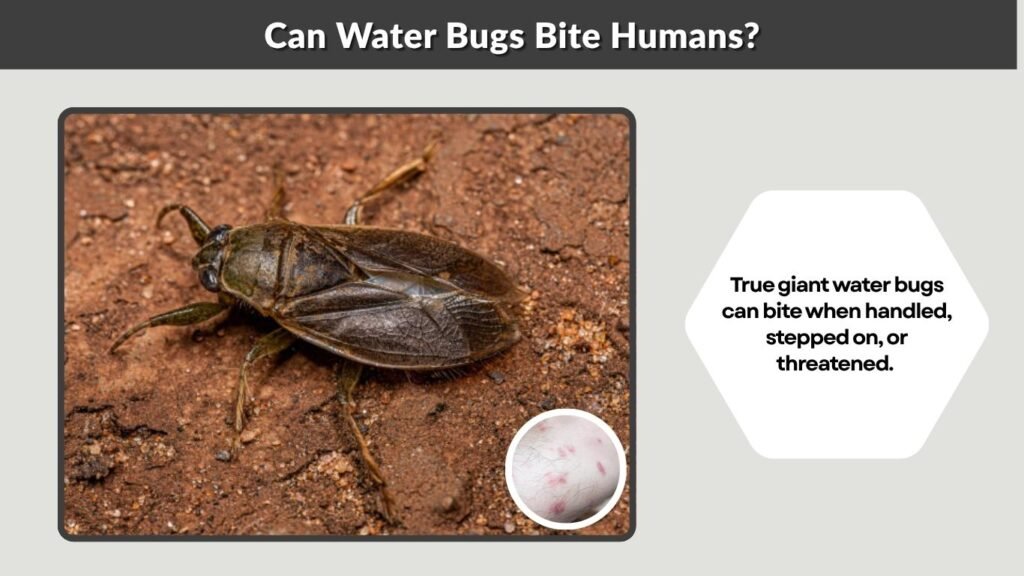
True giant water bugs can bite when handled, stepped on, or threatened. They use a sharp, piercing mouthpart to capture prey. Their defensive bite can be very painful, which explains the nickname toe-biter.
They do not normally pursue people or feed on human blood. Avoid picking one up with bare hands. Use a net, container, or long-handled tool to move it.
Household cockroaches rarely bite people. Their greater concern is contamination because they may travel through sewers, garbage, drains, and other unsanitary environments before crossing food or kitchen surfaces.
How Big Can Water Bugs Get?
Giant water bugs are among the largest true bugs. Depending on the species, adults may measure approximately two to four inches long.
American cockroaches can grow close to two inches long, while Oriental cockroaches are usually smaller and have a dark brown or nearly black appearance. Size alone is not enough for identification, but a broad, oval insect with claw-like front legs is more likely to be a giant water bug. A slender insect with very long antennae is more likely to be a cockroach.
How to Stop Flying Water Bugs From Entering
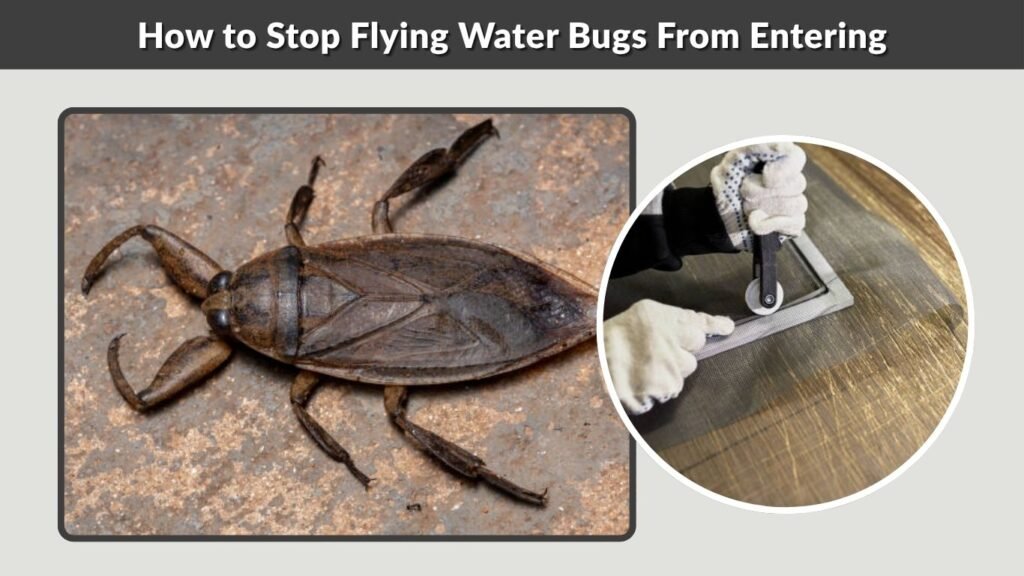
Preventing entry is usually more effective than repeatedly killing individual insects.
Reduce Outdoor Attraction
Turn off unnecessary lighting near doors, windows, and pools. Position essential lights away from entrances so insects gather farther from the building.
Seal Openings
Repair screens and seal gaps around windows, pipes, utility cables, vents, and doors. Install weather stripping and door sweeps where light is visible around closed doors.
Control Indoor Moisture
Repair leaking pipes, dry wet floors, ventilate bathrooms, and address basement humidity. Removing food, water, and shelter is an essential part of cockroach prevention.
Monitor for Cockroaches
Place sticky traps behind appliances, beneath sinks, near basement walls, and around plumbing. Multiple captures, small nymphs, droppings, or egg cases can indicate an indoor cockroach infestation rather than an accidental aquatic visitor.
FAQs
Do water bugs have wings?
Adult giant water bugs and several other aquatic species have wings hidden beneath protective forewings. American cockroaches also have developed wings. Oriental cockroaches have reduced wings but cannot fly, so the presence of wings does not always mean the insect is capable of flight.
Do water bugs jump?
Most insects called water bugs do not truly jump. Backswimmers and water boatmen may push forcefully from the water and appear to jump. Cockroaches can move extremely quickly, which may also create the impression that they jumped when startled.
Can water bugs come through air vents?
Cockroaches may crawl through gaps around ventilation systems, but they do not normally originate inside sealed air ducts. Check for openings around vent frames, condensation, nearby plumbing, and wall penetrations. True aquatic water bugs are more likely to enter through an open door or window.
Can water bugs live out of water?
Adult giant water bugs can survive temporarily out of water and fly between aquatic habitats, but they depend on watery environments for feeding and reproduction. Cockroaches called water bugs live mainly on land and merely prefer damp surroundings.
Does one flying water bug mean an infestation?
Not necessarily. A single giant water bug near a porch light probably flew from an outdoor water source. Repeated sightings of cockroaches, especially small nymphs, droppings, shed skins, or egg cases, are stronger evidence that insects are living and reproducing indoors.
