
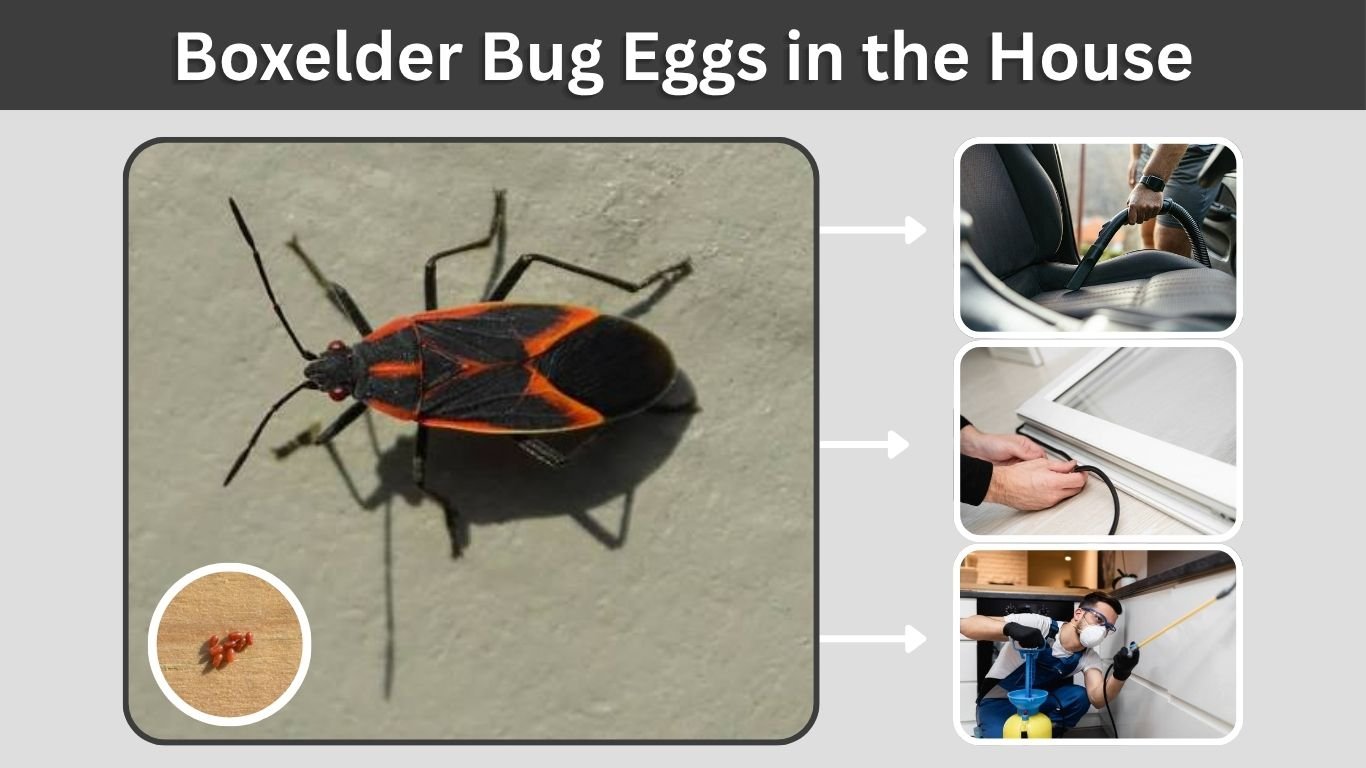
Finding tiny reddish eggs inside your house can be concerning, especially when boxelder bugs have already appeared around windows or walls. However, boxelder bugs normally enter buildings as fully grown adults to survive winter; they do not typically reproduce indoors. Genuine boxelder bug eggs are usually deposited outdoors on host trees, bark, leaves, stones, or occasionally exterior building surfaces. The best response is to identify the eggs, remove them safely, inspect for adult bugs, and seal possible entrances.
Do Boxelder Bugs Lay Eggs Inside Houses?
Boxelder bugs generally do not lay eggs or complete their life cycle inside homes. Adults enter buildings during fall and hide in wall voids, attics, siding gaps, and other protected spaces. Warm winter or spring weather may cause them to emerge into living areas, but these indoor adults do not normally reproduce there.
Female boxelder bugs usually lay eggs outdoors during spring and summer. Common locations include:
- Boxelder tree trunks and branches
- Leaves of female boxelder trees
- Cracks in tree bark
- Stones near host trees
- Ground-level vegetation
- Outdoor walls and other exterior surfaces
Eggs found on the outside of siding or around an exterior window may therefore be genuine boxelder bug eggs. Eggs discovered deep inside a bedroom, kitchen, closet, or wall cavity are more likely to belong to another insect.
What Do Boxelder Bug Eggs Look Like?
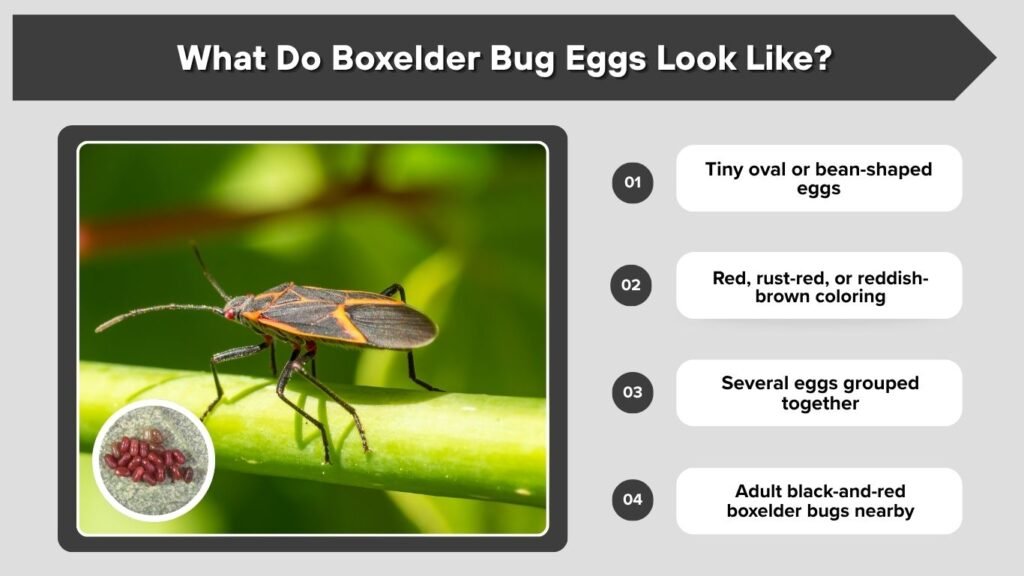
Boxelder bug eggs are tiny, oval, and reddish to reddish-brown. Females normally deposit them together in small groups rather than producing a large enclosed egg sac. After hatching, the eggs release small, wingless nymphs that are bright red with darker legs and markings.
Signs They May Be Boxelder Bug Eggs
Look for the following combination of features:
- Tiny oval or bean-shaped eggs
- Red, rust-red, or reddish-brown coloring
- Several eggs grouped together
- Adult black-and-red boxelder bugs nearby
- Bright-red nymphs around windows or exterior walls
- A nearby boxelder or maple tree
Do not identify eggs by color alone. Many insects produce small eggs, and debris, seeds, insect droppings, and dried plant material can resemble eggs.
| What you find | Likely meaning |
| Reddish eggs on outdoor siding | Possibly boxelder bug eggs |
| Eggs on boxelder bark or leaves | Stronger evidence of boxelder bugs |
| Bright-red crawling nymphs | Eggs may have recently hatched |
| White or cream-colored indoor eggs | Probably another insect |
| Adults indoors during winter | Overwintering bugs, not indoor breeding |
What Should You Do With Boxelder Bug Eggs?
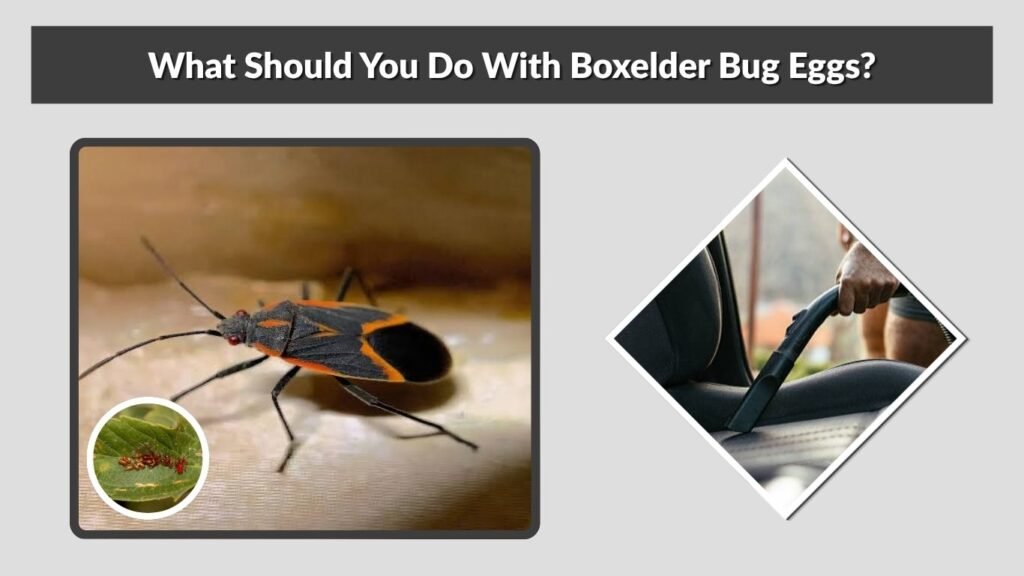
Eggs found indoors should be physically removed. There is usually no need to apply a broad indoor pesticide treatment.
1. Vacuum the Eggs
Use a vacuum hose to collect eggs from durable surfaces, window tracks, baseboards, and cracks. Vacuum any adult bugs and nymphs in the same area.
Empty the vacuum outdoors immediately. Place the contents in a sealed trash bag so surviving insects cannot crawl back into the house. University of Minnesota Extension recommends physical removal as the most practical method once boxelder bugs are indoors.
2. Wipe Eggs From Hard Surfaces
For washable surfaces, gently loosen the eggs using a damp paper towel or soft cloth. Place the eggs in a sealed bag before throwing them away.
Test cleaning products on a hidden area before treating painted walls, wallpaper, wood, curtains, or upholstery. Boxelder bugs and their waste can leave reddish or brown marks on light-colored materials.
3. Avoid Crushing Adult Bugs
Adult boxelder bugs can release an unpleasant odor when crushed. Their bodies and droppings may also stain walls, curtains, furniture, and carpeting.
Vacuum or gently collect them rather than smashing them against indoor surfaces.
4. Inspect the Area Carefully
After removing the eggs, check nearby locations for adult insects, nymphs, or entry gaps. Pay particular attention to:
- Window tracks and frames
- Door frames
- Baseboards
- Curtains and blinds
- Attic access points
- Wall vents
- Utility openings
- Houseplants
- Firewood brought indoors
A few suspected eggs do not necessarily indicate an indoor infestation. The presence of many different-sized nymphs would provide stronger evidence of recent hatching, although true indoor reproduction remains unusual.
Should You Spray Boxelder Bug Eggs Indoors?
Indoor pesticide spraying is usually unnecessary. Boxelder bugs do not establish permanent indoor colonies, and sprays applied to visible insects will not reach adults hidden inside walls or beneath siding.
Insecticides are also unlikely to prevent more overwintering adults from emerging. Physical removal is cleaner and more practical for insects already inside the home.
Never apply an outdoor pesticide indoors unless the product label specifically permits that use. Avoid spraying mattresses, food-preparation areas, children’s toys, pet bedding, electrical outlets, or heating equipment.
How to Prevent Boxelder Bugs From Entering Again
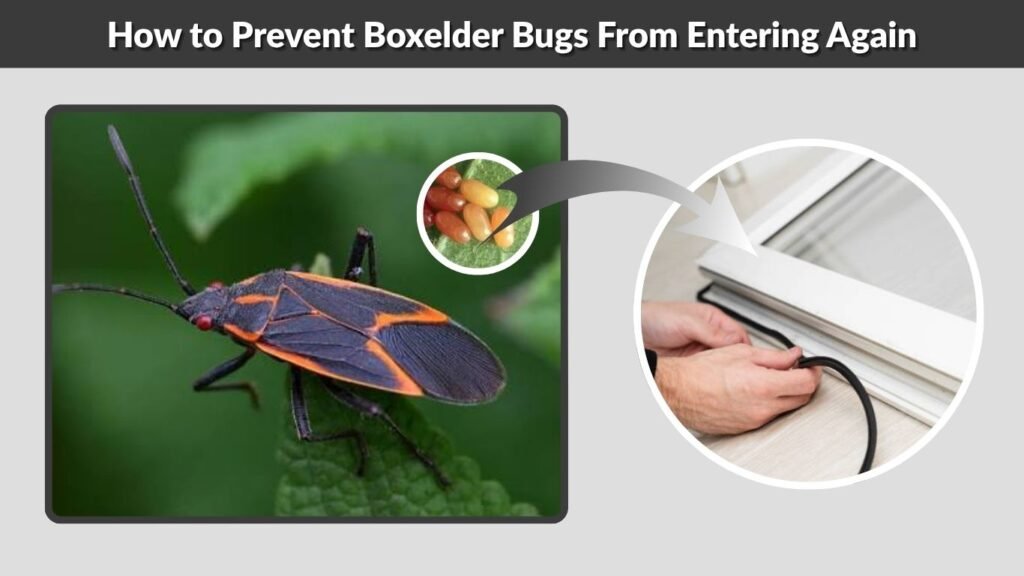
Removing eggs solves only the immediate problem. Long-term control depends on preventing adult bugs from entering during late summer and fall.
Seal Exterior Openings
Inspect the outside of your house and seal gaps around:
- Windows and exterior doors
- Pipes, cables, and utility lines
- Dryer and bathroom vents
- Air-conditioning lines
- Roof edges and soffits
- Siding joints
- Foundations
- Garage doors
Repair damaged screens and install door sweeps. Openings approximately 1/8 inch or larger should receive particular attention, although sealing smaller visible gaps can also help. Do not block essential ventilation or masonry weep holes.
Inspect Sunny Exterior Walls
Boxelder bugs often gather on warm south- and west-facing walls before entering buildings. Check these surfaces regularly during late summer and fall.
Vacuum, sweep, or wash away outdoor clusters before they move through cracks. Exterior insecticide treatments may help during severe annual invasions, but the product must be labeled for boxelder bugs and building-exterior use.
Check Nearby Host Trees
Female boxelder trees produce the seeds boxelder bugs prefer. The insects may also use maple and ash trees. A seed-bearing boxelder tree near the house can support a substantial local population.
Tree removal is not always necessary or effective because adult bugs can travel considerable distances. Sealing the building usually provides more dependable protection without sacrificing a valuable shade tree.
When Should You Contact Pest Control?
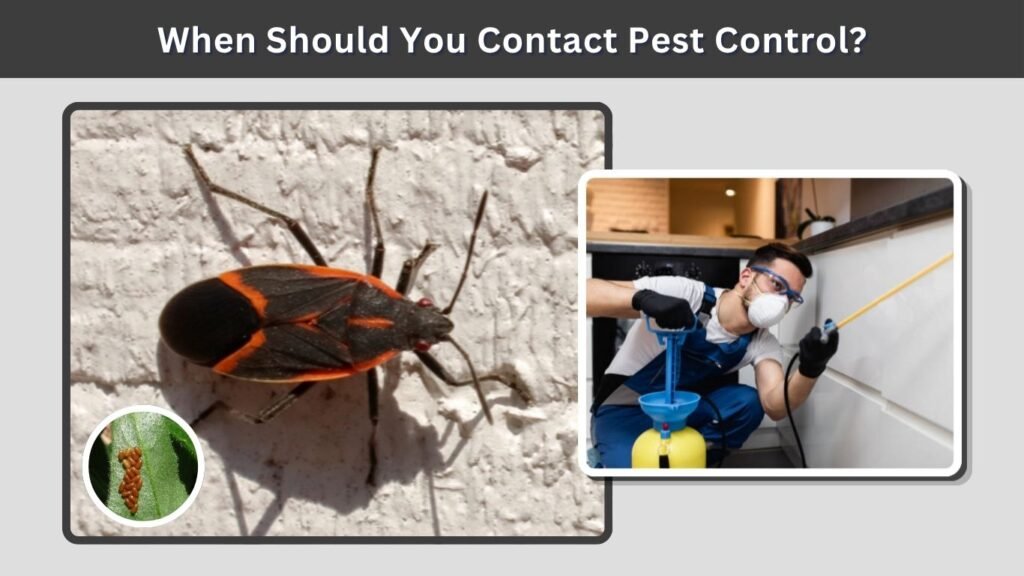
Consider contacting a licensed pest-control professional when:
- Hundreds of adults enter every year
- Bugs are emerging from several rooms
- Exterior clusters are located above safe reach
- You cannot identify the suspected eggs
- Sealing and vacuuming have not reduced the problem
- Bugs appear to be reproducing indoors
Indoor breeding may indicate that the insects have been misidentified. A professional or local extension office can examine a clear photograph or physical sample and determine whether you are dealing with boxelder bugs, bed bugs, carpet beetles, stink bugs, or another household pest.
FAQs
Can boxelder bug eggs hatch inside a house?
An occasional egg brought inside on firewood, plants, or another object could potentially hatch under suitable conditions. However, boxelder bugs do not normally breed or maintain a reproducing population indoors. Adults seen inside generally entered the building during the previous fall.
How many eggs do boxelder bugs lay?
Females can lay multiple groups of eggs during the outdoor breeding season. The number varies with weather, food, location, and the female’s condition. Eggs are commonly placed in clusters on leaves, bark, stones, and other protected outdoor surfaces.
Will vacuuming kill boxelder bug eggs?
Vacuuming removes the eggs, but it may not destroy every one. Empty the vacuum promptly into a sealed outdoor trash bag. This prevents any surviving eggs or insects from remaining inside the machine and later returning to the house.
Are boxelder bug eggs dangerous?
No. The eggs are not poisonous and do not bite, sting, or damage household materials. The main concern is that they may hatch into nuisance insects. Removing them and cleaning the affected surface is normally sufficient.
Why are tiny red bugs appearing near my windows?
Tiny bright-red insects near windows may be newly hatched boxelder bug nymphs, especially when black-and-red adults are also present. However, clover mites and other small arthropods can look similar. Clear photographs or professional identification can prevent unnecessary treatment.
