
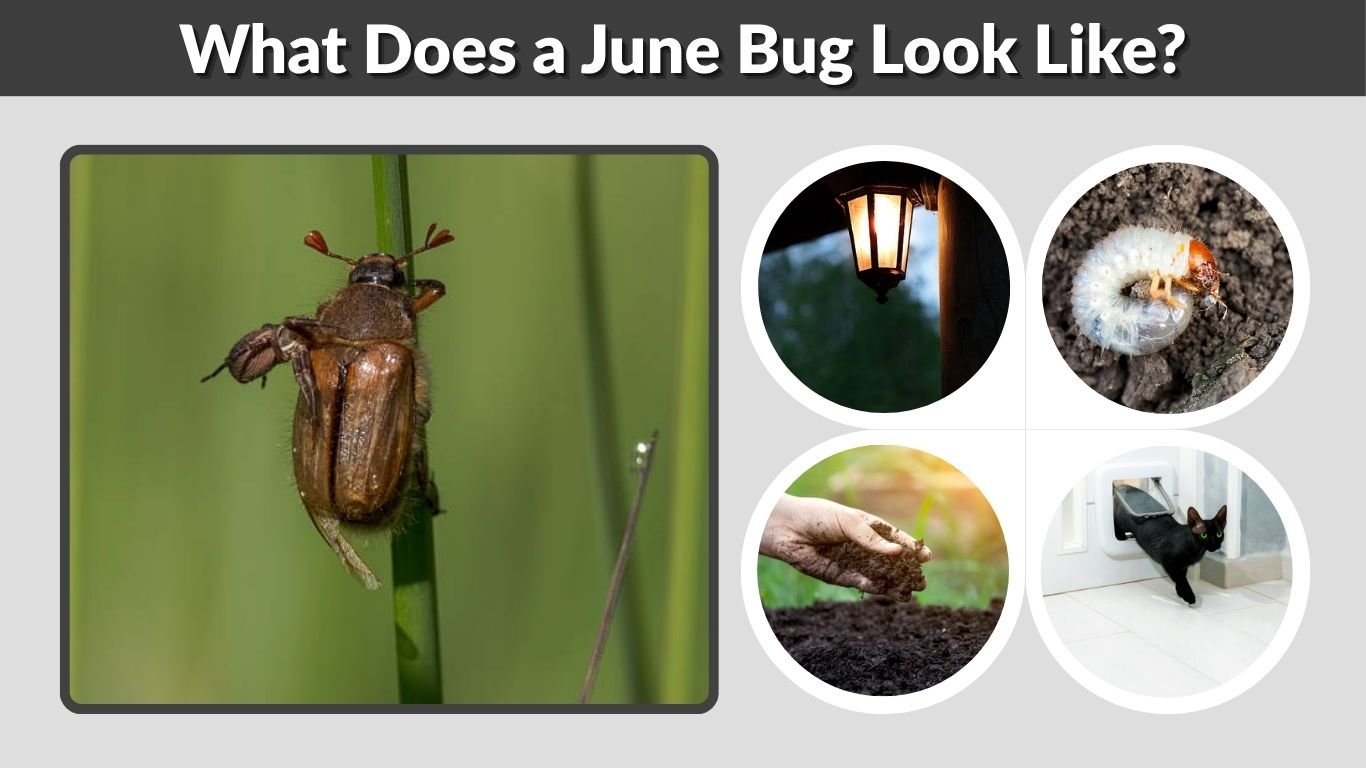
June bugs are common beetles that often appear around porch lights, lawns, gardens, and windows in late spring or early summer. Many people recognize them by their loud buzzing flight and hard, rounded bodies, but their appearance can vary by species. Some June bugs are brown and oval, while others are shiny green. Knowing what June bugs look like helps you tell them apart from cockroaches, Japanese beetles, cicadas, and other similar insects.
What Does a June Bug Look Like?
A June bug usually looks like a medium-sized, oval beetle with a hard shell, strong legs, and short antennae. Most adult June bugs are brown, reddish-brown, tan, or green. They often look bulky compared with smaller garden beetles.
Most June bugs have:
- Oval or rounded body shape
- Hard outer shell
- Brown, reddish-brown, tan, or green color
- Six spiny legs
- Short antennae
- Hard wing covers
- No narrow waist
- Clumsy flying behavior
- Strong attraction to lights at night
Adult June bugs usually measure about ½ inch to 1 inch long, depending on the species.
June Bug Identification Table
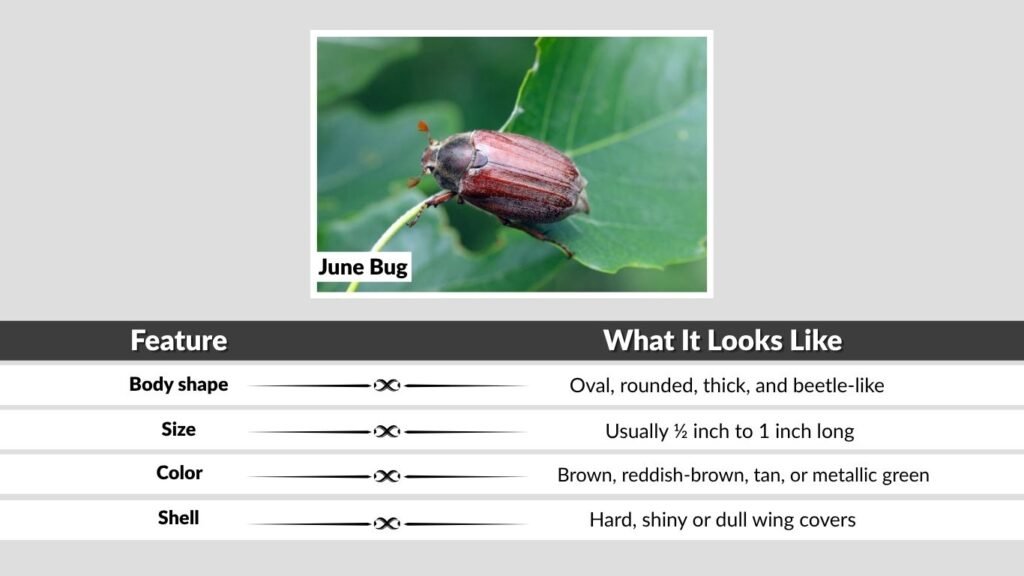
June bugs can look slightly different depending on whether they are brown June beetles, green June beetles, or related May beetles. Still, they share many basic features.
| Feature | What It Looks Like |
|---|---|
| Body shape | Oval, rounded, thick, and beetle-like |
| Size | Usually ½ inch to 1 inch long |
| Color | Brown, reddish-brown, tan, or metallic green |
| Shell | Hard, shiny or dull wing covers |
| Legs | Six legs, often spiny or strong-looking |
| Wings | Hidden under hard wing covers |
| Antennae | Short, sometimes clubbed at the ends |
| Behavior | Flies clumsily, often bumps into lights |
Brown June Bug Appearance
Brown June bugs are the type many people see around porch lights at night. They are usually reddish-brown to dark brown and have a smooth, hard shell. Their bodies are oval and thick, giving them a heavy beetle-like look.
Brown June bugs often appear clumsy when flying. They may bump into windows, screen doors, walls, lights, or people. They do not fly gracefully like flies or wasps.
Common Brown June Bug Features
Brown June bugs usually have:
- Brown or reddish-brown shell
- Rounded oval body
- Shiny or slightly dull wing covers
- Strong legs
- Short antennae
- No bright markings
- Nighttime activity
They may look similar to some cockroaches at first glance, but their hard beetle shell and clumsy flight help separate them.
Green June Bug Appearance
Green June bugs are larger, shinier, and more colorful than brown June bugs. They usually have a metallic green body with bronze, gold, or yellowish edges. Some people call them green June beetles or fig beetles, depending on the region and species.
Green June bugs are often seen around fruit trees, lawns, gardens, and compost-like areas. They may fly during the day more often than brown June bugs.
Green June Bug Features
Green June bugs may have:
- Metallic green body
- Bronze or gold highlights
- Shiny wing covers
- Larger body size
- Loud flying sound
- Strong attraction to ripe fruit
- Oval beetle shape
If you see a large shiny green beetle flying around fruit, figs, peaches, grapes, or a garden, it may be a green June bug or a related figeater beetle.
What Do June Bug Larvae Look Like?
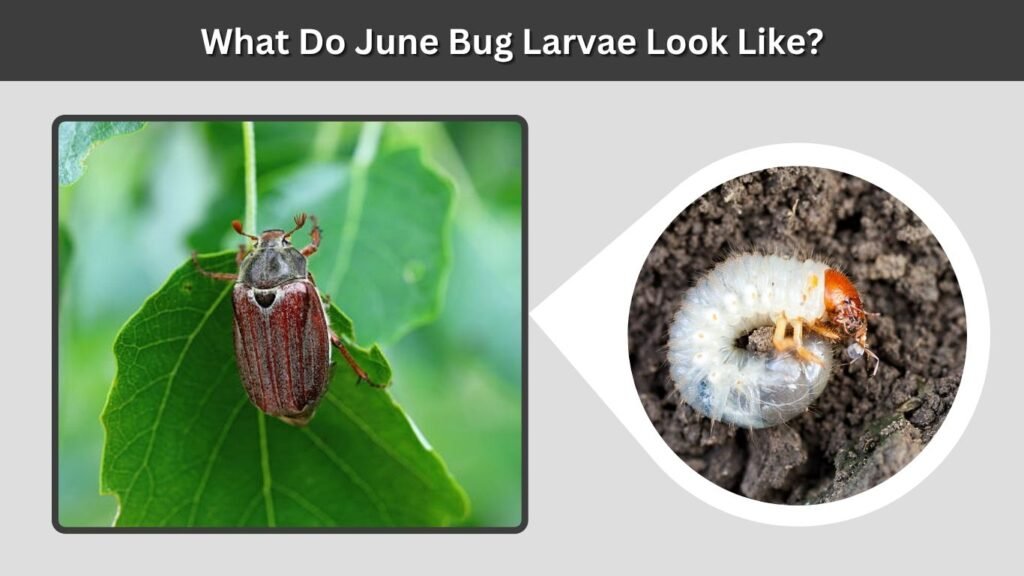
June bug larvae are called grubs. They look very different from adult June bugs because they live underground in the soil. Instead of having a hard beetle shell, June bug larvae are soft, white, and curled.
June bug grubs usually look like:
- White or cream-colored larvae
- C-shaped body
- Brown or orange-brown head
- Soft, wrinkled body
- Six small legs near the head
- Thick, curved shape
- Found in soil, lawns, or garden beds
They are commonly found under grass, near roots, or in loose soil. If your lawn has brown patches and the grass pulls up easily, white grubs may be feeding on the roots.
What Do June Bug Eggs Look Like?
June bug eggs are small, round to oval, and usually white or off-white. They are laid in soil, so most people never see them unless they are digging in a lawn or garden.
Fresh eggs may be tiny and pale, then become slightly larger as they develop. Because they are hidden underground, people are more likely to notice the grub stage than the egg stage.
What Does a Baby June Bug Look Like?
A “baby June bug” is not a tiny winged beetle. It is usually a grub. June bugs go through complete metamorphosis, which means they develop from egg to larva, then pupa, then adult beetle.
The young stage is the white C-shaped grub found in soil. It does not look like the adult beetle until it finishes developing underground.
What Does a June Bug Look Like in the House?
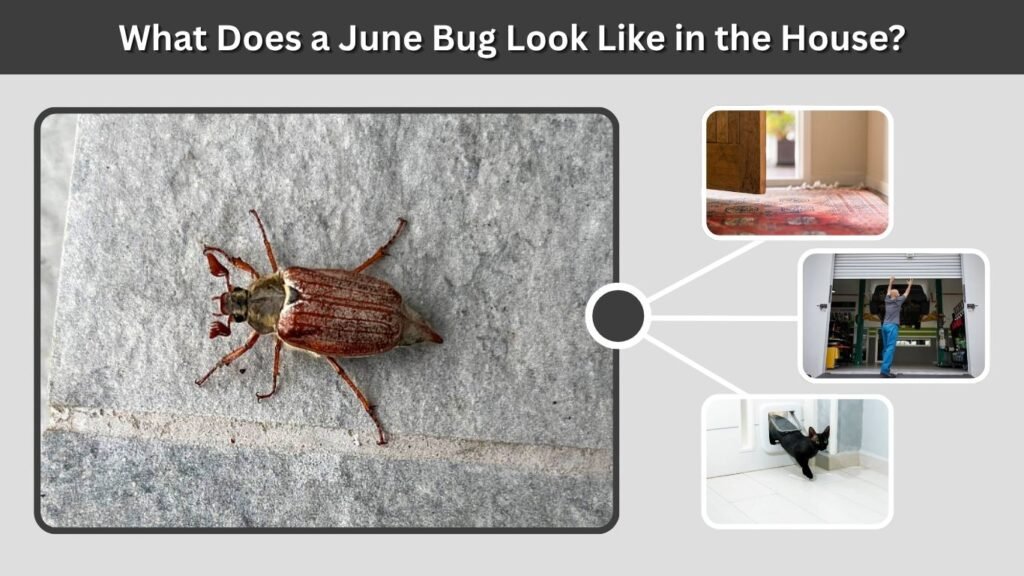
A June bug inside the house looks the same as one outside: a hard-bodied, oval beetle. It may crawl on the floor, fly toward lamps, or bump into windows.
June bugs do not usually infest houses. If one gets indoors, it probably entered by accident through:
- Open doors
- Torn window screens
- Garage doors
- Pet doors
- Gaps near lights
- Windows left open at night
They do not reproduce indoors like cockroaches. Finding one June bug in the house usually means it was attracted by light and flew inside.
Do June Bugs Look Like Cockroaches?
June bugs can look a little like cockroaches because both may be brown and similar in size. However, they are very different insects.
| Feature | June Bug | Cockroach |
|---|---|---|
| Body shape | Rounded, oval, thick | Flatter and longer |
| Shell | Hard beetle wing covers | Leathery-looking body |
| Movement | Clumsy crawling and flying | Fast running |
| Light behavior | Attracted to lights | Usually avoids light |
| Home concern | Accidental visitor | Can infest homes |
| Food | Plants, roots, fruit | Food scraps, waste, grease |
If the insect is flying into a porch light or window at night, it is more likely a June bug. If it runs quickly into dark cracks in the kitchen or bathroom, it may be a cockroach.
Beetles That Look Like June Bugs
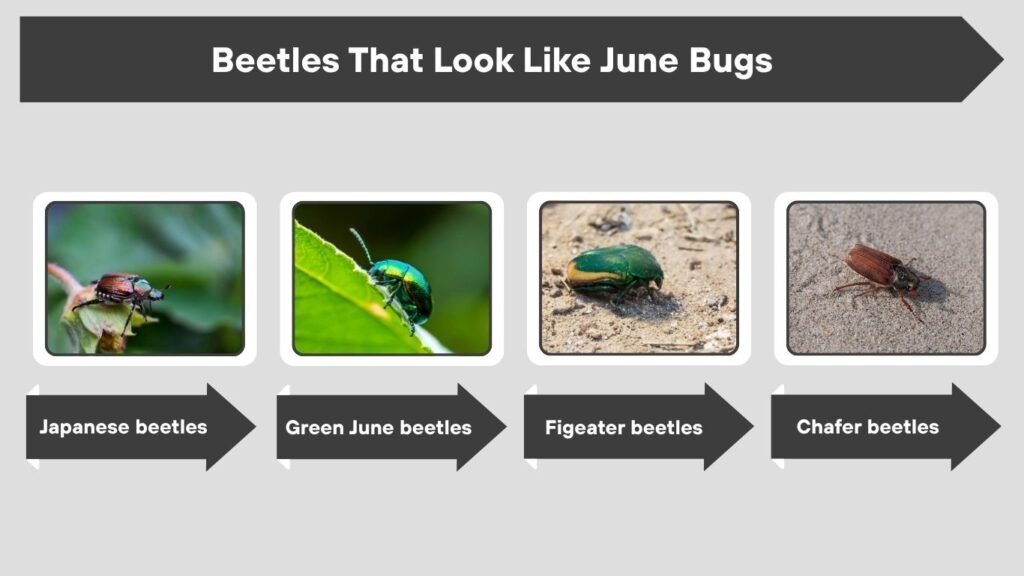
Many beetles can look like June bugs because June bugs are part of the scarab beetle family. Some are close relatives, while others only look similar from a distance.
Common bugs that look like June bugs include:
- Japanese beetles
- May beetles
- Green June beetles
- Figeater beetles
- Chafer beetles
- Asiatic garden beetles
- Grapevine beetles
- Christmas beetles
- Scarab beetles
- Some small brown beetles
Japanese Beetle vs June Bug
Japanese beetles are smaller than most June bugs. They have metallic green bodies, copper wing covers, and small white hair tufts along the sides. June bugs are usually larger and may be brown, reddish-brown, or green.
Japanese beetles often feed during the day, while many brown June bugs are active at night.
May Beetle vs June Bug
May beetles and June bugs are often the same or closely related beetles. The name depends on when they appear. If they show up in May, people may call them May beetles. If they appear in June, people call them June bugs.
Figeater Beetle vs June Bug
Figeater beetles are large green beetles that look similar to green June bugs. They are often found near ripe or damaged fruit. Their shiny green color makes them easier to separate from brown June bugs.
What Does a June Bug Sound Like?
June bugs make a low buzzing or humming sound when they fly. The sound comes from their wings beating as they move through the air. Because they are heavy-bodied beetles, their flight may sound louder and rougher than smaller insects.
At night, you may hear June bugs:
- Buzzing near porch lights
- Tapping against windows
- Hitting screens
- Bumping into walls
- Fluttering near lamps
They do not make a loud call like cicadas. If you hear a strong, steady summer insect sound coming from trees, that is more likely a cicada, not a June bug.
Why Do June Bugs Like Light?
June bugs are attracted to light at night. This behavior is common in many night-flying insects. Porch lights, garage lights, patio lights, and bright windows can all draw June bugs closer to homes.
This is why people often find June bugs:
- Around porch lights
- On screen doors
- Near windows
- In garages
- On patios
- Floating in pools
- Near outdoor lamps
Turning off unnecessary lights or switching to yellow bug bulbs can reduce how many June bugs gather near the house.
Do June Bugs Like Water or Rain?
June bugs do not live in water, but they may be found near pools, wet grass, or damp soil. Their larvae live underground, where soil moisture matters. Adults may accidentally fall into swimming pools while flying around lights.
Rain and warm weather can also make adult beetles more noticeable during their active season.
What Do June Bugs Like?
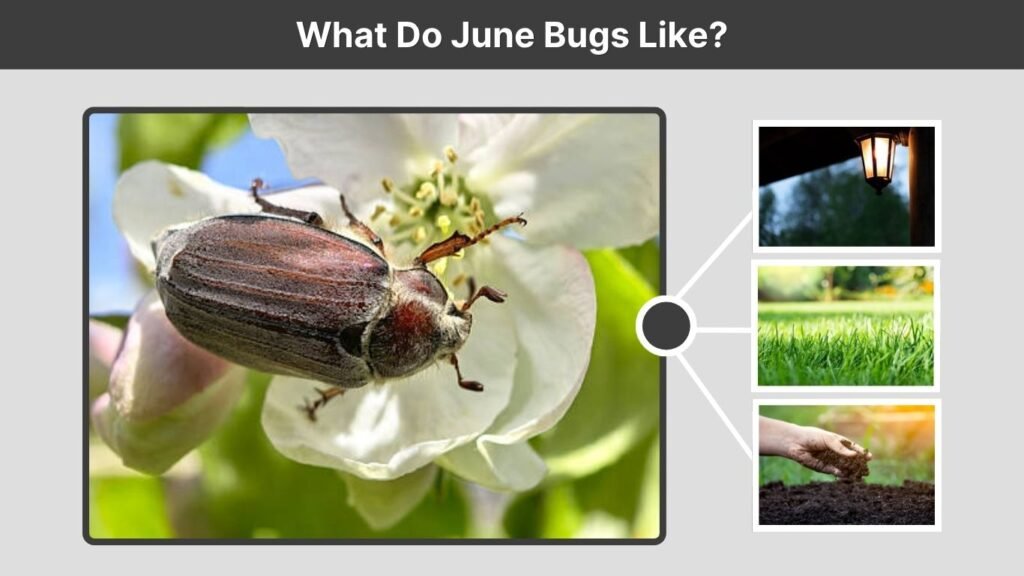
June bugs are mainly attracted to food, shelter, soil, and light. Adult beetles are often drawn to trees, shrubs, flowers, fruit, and outdoor lighting. Larvae are drawn to soil where they can feed on roots.
June bugs commonly like:
- Porch lights
- Warm nights
- Grass lawns
- Tree leaves
- Rose bushes
- Ripe fruit
- Damp soil
- Garden plants
- Shrubs and flowers
They do not like people, hair, or houses specifically. They usually end up near people because lights and plants attract them.
What Does a June Bug Bite Look Like?
June bugs do not bite people in a harmful way. They do not sting, inject venom, or attack humans. Their legs may feel scratchy if they crawl on your skin, but they are not dangerous.
If you notice a red bump after seeing a June bug, it was probably caused by another insect, skin irritation, or scratching, not a June bug bite.
What Does June Bug Poop Look Like?
June bug droppings are usually tiny dark specks. Most people do not notice them because June bugs are outdoor insects and do not usually stay in one place indoors. If beetles are feeding heavily on plants, small droppings may appear near damaged leaves, but they are not a major identification clue.
Male vs Female June Bug Appearance
Male and female June bugs can look very similar. In some species, males may have slightly larger antennae or different body proportions, but these differences are hard to see without close inspection.
For most homeowners and gardeners, it is not necessary to identify male vs female June bugs. Body shape, color, size, and behavior are more useful for basic identification.
FAQs
What do June bugs look like?
June bugs usually look like oval, hard-shelled beetles with brown, reddish-brown, tan, or green bodies. They have six legs, short antennae, and hard wing covers. Most are about ½ inch to 1 inch long and fly clumsily at night.
What do June bug larvae look like?
June bug larvae look like white or cream-colored C-shaped grubs. They have soft bodies, brownish heads, and small legs near the front. They live in soil and often feed on grass roots or plant roots.
What bugs look like June bugs?
Bugs that look like June bugs include May beetles, Japanese beetles, green June beetles, figeater beetles, chafer beetles, Asiatic garden beetles, and grapevine beetles. Some cockroaches may also be confused with brown June bugs indoors.
What does a June bug sound like at night?
A June bug makes a buzzing or humming sound when it flies. You may also hear it tapping against windows, screens, porch lights, or walls. It does not make a loud calling sound like a cicada.
Why do June bugs like light?
June bugs are nocturnal beetles that are attracted to lights at night. Porch lights, garage lights, patio lights, and bright windows can draw them toward homes. Reducing outdoor lighting can help keep them away.
