
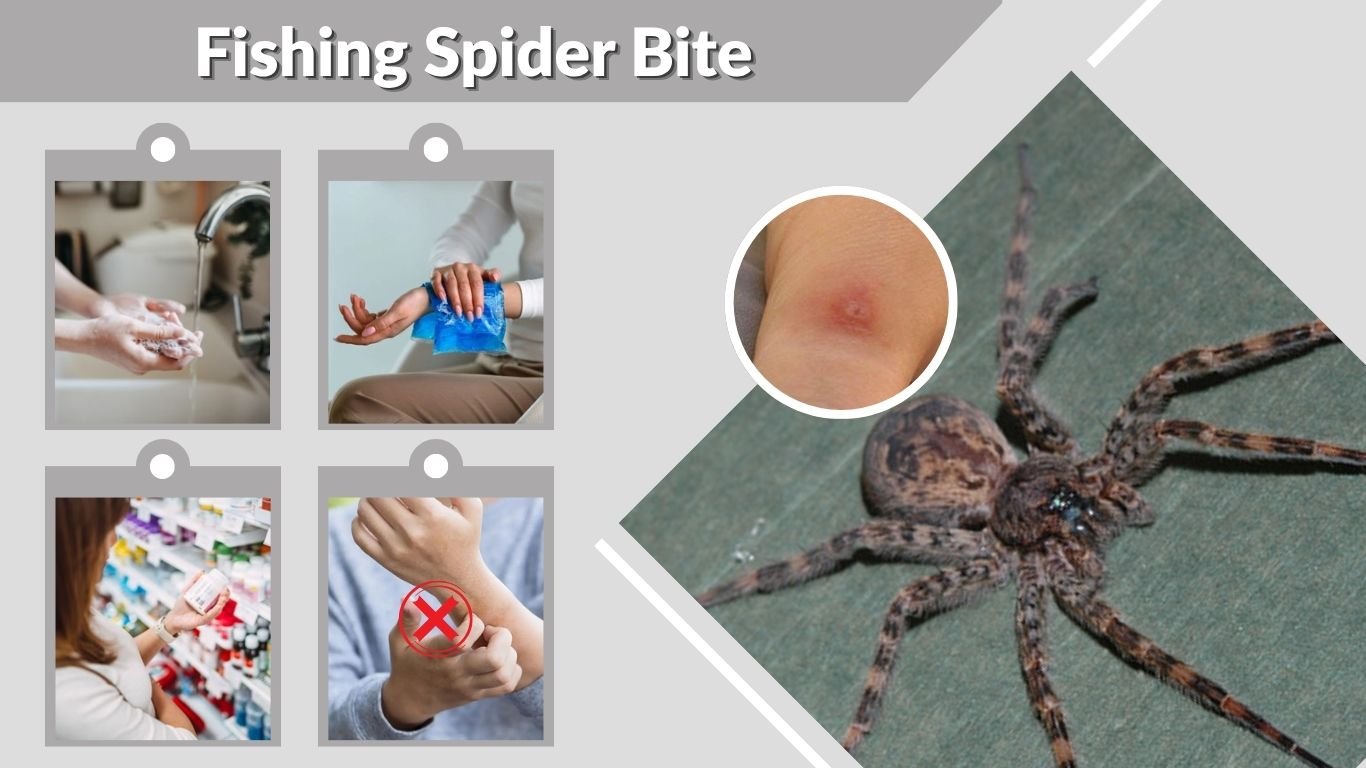
A fishing spider bite can sound scary because fishing spiders are large, fast, and often mistaken for dangerous spiders. However, fishing spiders are not aggressive toward people, and bites are uncommon. Most bites happen when the spider is trapped, handled, or pressed against the skin. In most cases, symptoms are mild and limited to the bite area.
What Is a Fishing Spider Bite?
A fishing spider bite is a defensive bite from a spider in the genus Dolomedes. Fishing spiders are active hunters, not web-trapping spiders. They are usually found near water, wetlands, wooded areas, docks, tree trunks, walls, and sometimes inside homes.
Penn State Extension says fishing spiders are similar in size and color to larger wolf spiders, but despite their size and quick movement, they are harmless and rarely bite even when grabbed.
Quick Bite Facts
- Fishing spiders can bite, but bites are rare.
- They usually bite only when trapped or handled.
- Their venom is mainly used to subdue prey.
- They are not considered medically dangerous to most people.
- A bite may cause mild pain, redness, swelling, or itching.
- Serious reactions are uncommon but possible in sensitive people.
- A bite should be cleaned and monitored like any minor skin wound.
Do Fishing Spiders Bite Humans?
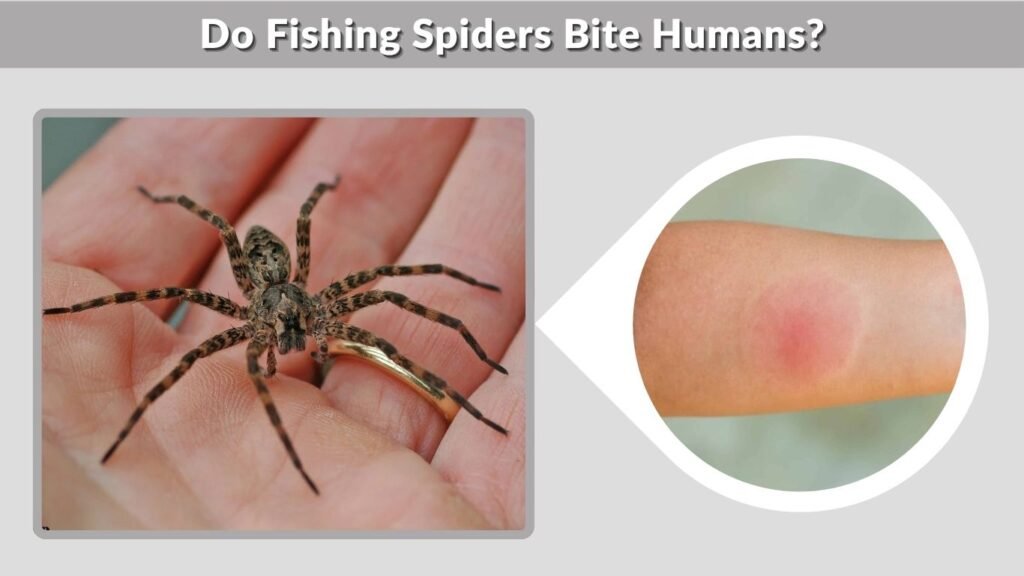
Yes, fishing spiders can bite humans, but they usually do not. These spiders prefer to run away when disturbed. They are not blood-feeding pests like mosquitoes, ticks, or bed bugs. A fishing spider has no reason to seek out humans.
Bites usually happen by accident. For example, someone may pick up firewood, move outdoor furniture, put on stored clothing, or press against a spider hiding in a garage, basement, or shed. If the spider feels trapped, it may bite in self-defense.
When Bites May Happen
A fishing spider bite is more likely when:
- The spider is grabbed by hand.
- It is trapped inside clothing or bedding.
- Someone steps on it barefoot.
- A pet paws at or bites the spider.
- A person moves wood, boxes, or outdoor equipment.
- The spider is pressed against skin while hiding indoors.
Even then, many fishing spiders choose escape first. Their large size makes them noticeable, but size does not mean aggression.
What Does a Fishing Spider Bite Look Like?
A fishing spider bite may look like a small red bump, mild swelling, or a tender spot on the skin. Some people may notice two tiny puncture marks, but this is not always visible. Many spider bites are difficult to confirm unless the spider is seen biting.
A bite may resemble a mosquito bite, ant bite, mild bee sting, or irritated skin bump. Because many skin marks look similar, it is not safe to identify a fishing spider bite from a picture alone.
| Possible Appearance | What It May Mean |
| Small red bump | Mild local skin reaction |
| Slight swelling | Common irritation after a bite |
| Itching | Mild inflammatory response |
| Tender spot | Local pain from the bite |
| Two tiny marks | Possible fang punctures, but not always visible |
| Growing redness | Possible irritation or infection risk |
| Severe wound | Not typical; seek medical advice |
About Fishing Spider Bite Pictures
People often search for fishing spider bite pictures, but photos can be misleading. A red bump, rash, blister, or swollen mark can come from many causes, including mosquitoes, fleas, ants, skin infections, allergic reactions, or irritation.
If the bite becomes worse instead of better, do not rely only on pictures online. A healthcare professional can check whether it is a simple bite, infection, allergic reaction, or another skin problem.
Fishing Spider Bite Symptoms
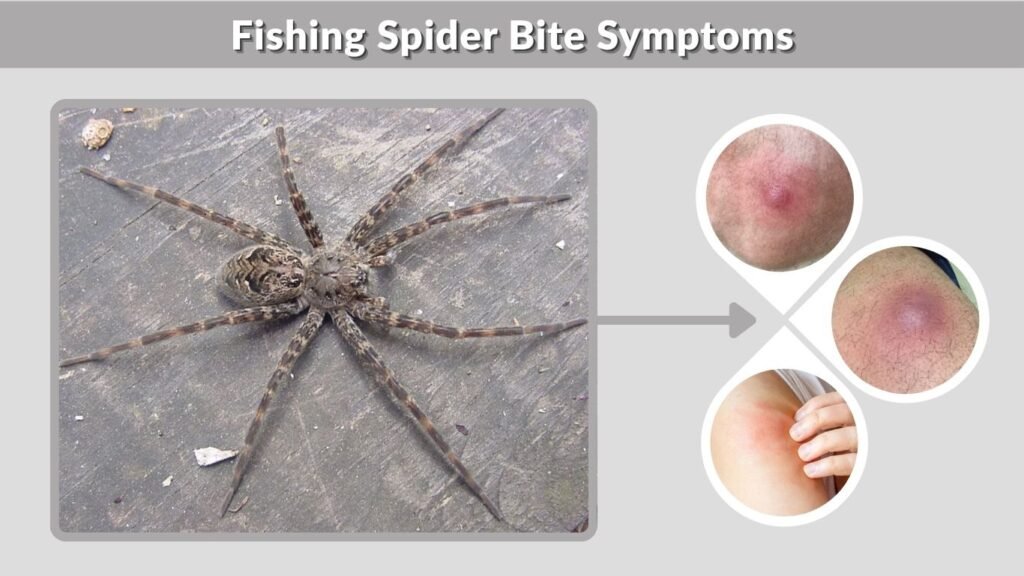
Most fishing spider bite symptoms are local and mild. They usually affect only the area around the bite. Symptoms can vary depending on the person’s skin sensitivity, where the bite happened, and whether the bite was scratched or irritated.
General spider-bite guidance notes that most spider bites are not dangerous and often cause mild symptoms such as redness, itching, swelling, and pain. Only a small number of spiders, such as black widows and brown recluses in North America, are considered medically significant.
Common Symptoms
- Mild sharp pain at the bite moment
- Redness around the bite
- Small swollen bump
- Itching or irritation
- Warmth around the area
- Tenderness when touched
- Minor soreness for a short time
Less Common Symptoms
Some people may have a stronger local reaction. Less common symptoms may include larger swelling, a rash near the bite, mild blistering, or longer-lasting itching. These symptoms are not always caused by venom; they may also come from scratching, bacteria, or skin sensitivity.
Are Fishing Spider Bites Dangerous?
Fishing spider bites are usually not dangerous to healthy adults. The spider’s venom is designed for prey such as insects and small animals, not humans. A bite may be uncomfortable, but it is not usually a medical emergency.
NC State Extension explains that spiders are often feared more than they deserve and are beneficial because they prey on insects considered pests in homes and gardens.
When to Seek Medical Help
Get medical advice quickly if you notice:
- Trouble breathing
- Dizziness or fainting
- Severe swelling
- Swelling of the lips, face, or throat
- Fever or chills
- Red streaks spreading from the bite
- Pus, increasing warmth, or signs of infection
- Severe pain that gets worse
- A wound that opens or turns dark
- Symptoms in a small child, elderly person, or allergic individual
These signs are not typical for a simple fishing spider bite and should be checked.
Fishing Spider Bite Treatment
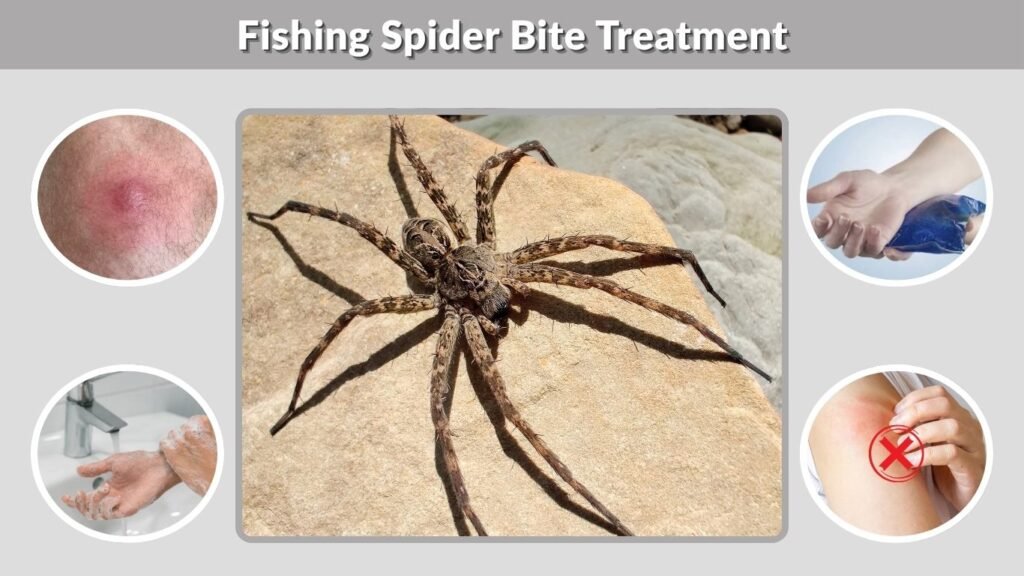
Most mild fishing spider bites can be handled with basic first aid. The main goal is to clean the area, reduce swelling, and prevent infection. Avoid harsh home remedies, cutting the bite, or squeezing the skin.
First Aid Steps
- Wash the bite with soap and clean water.
- Apply a cold compress for 10–15 minutes.
- Keep the area clean and dry.
- Avoid scratching the bite.
- Use an over-the-counter pain reliever if needed.
- Use an antihistamine or anti-itch cream if recommended.
- Cover the area with a clean bandage if it is irritated.
- Watch the bite for 24–48 hours.
If symptoms improve, no further action may be needed. If redness spreads, pain increases, or the bite looks infected, contact a healthcare provider.
Dark Fishing Spider Bite
The dark fishing spider, Dolomedes tenebrosus, is one of the species most often involved in bite searches. It is large, brown, and commonly found on walls, tree trunks, wooded houses, garages, and basements.
A dark fishing spider bite is possible, but it is uncommon. Like other fishing spiders, it usually avoids people. The bite may cause mild pain, redness, and swelling. It is not considered dangerous for most people.
Dark Fishing Spider Bite Symptoms
- Mild pain or pinch
- Redness around the bite
- Local swelling
- Itching
- Tenderness
- Short-term irritation
Dark fishing spiders may look alarming because of their size. Penn State Extension notes that fishing spiders are harmless and rarely bite, even when grabbed.
Six-Spotted Fishing Spider Bite
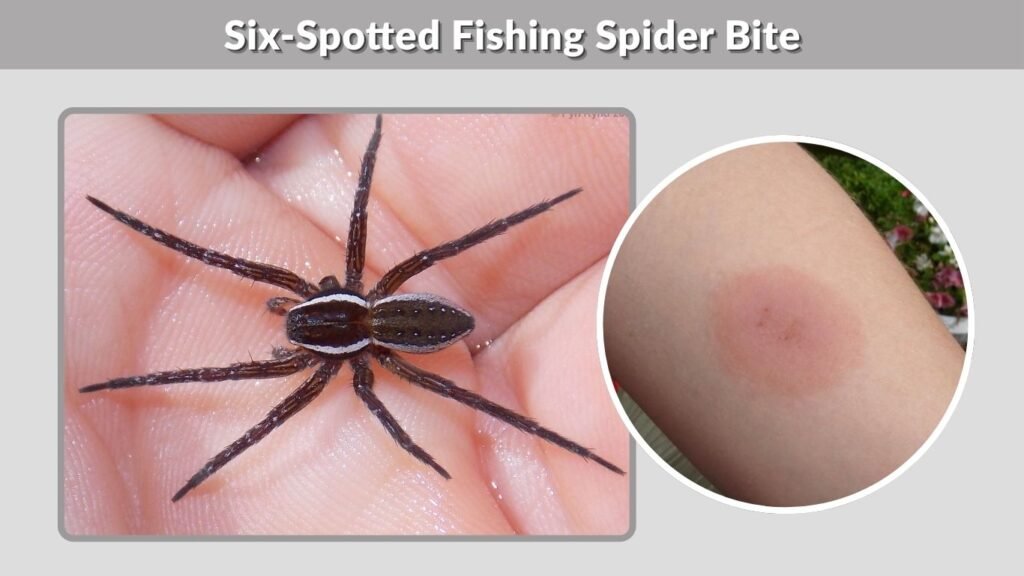
The six-spotted fishing spider is often found near ponds, streams, lakes, wetlands, and slow-moving water. It is known for hunting near the water surface and may capture aquatic insects or small prey.
A six-spotted fishing spider can bite if handled, but bites are not common. Symptoms would usually be similar to other fishing spider bites: local pain, redness, and swelling. The spider is not considered medically dangerous to most people.
Six-Spotted Fishing Spider Safety
If you see one near water, leave it alone. These spiders are beneficial predators and do not want contact with humans. Avoid grabbing them, especially if they are resting on vegetation, rocks, docks, or pond edges.
White Banded Fishing Spider Bite
The white banded fishing spider, Dolomedes albineus, is another large fishing spider. It is often recognized by a pale band along the front of the face. The Missouri Department of Conservation says this species is associated with wet habitats but is also commonly seen away from water on tree trunks and walls.
A white banded fishing spider bite is not usually serious. The spider may bite defensively if trapped or handled. Symptoms may include mild pain, swelling, redness, or itching. People with allergies or unusual symptoms should seek medical advice.
Striped Fishing Spider Bite
The striped fishing spider is another Dolomedes species often associated with water and damp habitats. Like other fishing spiders, it is a hunter and does not rely on a sticky web to catch prey.
A striped fishing spider bite is possible but uncommon. It is not known as a medically important spider for most people. If bitten, clean the area, apply a cold compress, and monitor symptoms. Avoid handling the spider to prevent defensive bites.
Fishing Spider Bite on Dogs
Dogs may get bitten if they paw at, sniff, or bite a fishing spider. Most healthy dogs may only develop mild irritation, but it is wise to watch them closely. A small dog, puppy, senior dog, or allergic dog may react more strongly.
Signs to Watch in Dogs
- Pawing at the face or mouth
- Local swelling
- Redness or tenderness
- Limping if bitten on the paw
- Whining or discomfort
- Vomiting
- Weakness
- Trouble breathing
- Facial swelling
Call a veterinarian if your dog has severe swelling, vomiting, weakness, breathing trouble, or unusual behavior. If your dog ate the spider but seems normal, monitor it and call a vet if symptoms appear.
Fishing Spider Bite vs Brown Recluse Bite
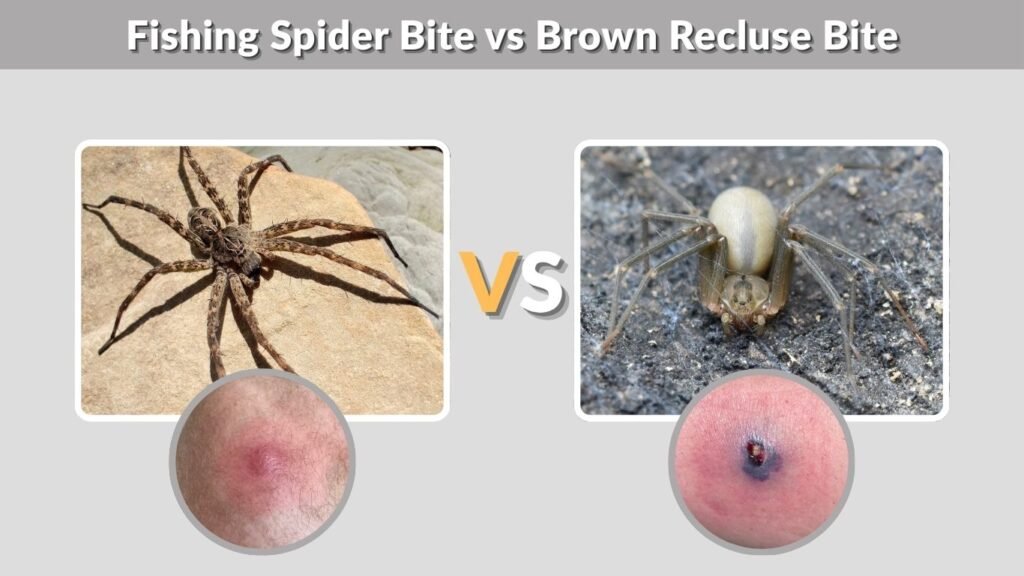
Fishing spider bites are often confused with brown recluse bites because both may be blamed for red or swollen skin marks. However, brown recluse bites are medically more serious and can sometimes cause tissue damage. Fishing spider bites are usually mild and local.
| Feature | Fishing Spider Bite | Brown Recluse Bite |
| Typical severity | Usually mild | Can be medically serious |
| Pain | Mild to moderate | May be mild at first, then worse |
| Skin damage | Not typical | Possible tissue damage |
| Common symptoms | Redness, swelling, itching | Pain, blistering, possible necrosis |
| Medical concern | Low for most people | Higher concern |
| Action | Clean and monitor | Seek medical advice if suspected |
If a bite develops a dark center, open sore, severe pain, spreading redness, fever, or worsening symptoms, do not assume it is a fishing spider bite. Get medical help.
Fishing Spider Bite vs Wolf Spider Bite
Fishing spider bites and wolf spider bites are similar in that both are usually defensive and not medically serious for most people. Both spiders are large, fast, and often feared because of their appearance.
Wolf spider bites are also generally mild, causing local pain, swelling, and itching, though rare allergic reactions can happen. The same practical first aid applies: clean the area, reduce swelling, and watch for worsening symptoms.
Main Similarities
- Both spiders can bite if trapped.
- Both usually avoid people.
- Both bites may cause local pain and redness.
- Both are unlikely to cause serious harm to most healthy adults.
- Both are often confused with more dangerous spiders.
How to Prevent Fishing Spider Bites
The best way to prevent a bite is to avoid handling fishing spiders. They are not aggressive, but they may defend themselves when trapped. Prevention is especially useful around lakeside homes, cabins, basements, garages, sheds, docks, and wooded properties.
Prevention Tips
- Do not pick up fishing spiders with bare hands.
- Shake out shoes, gloves, and stored clothing.
- Wear gloves when moving firewood or outdoor items.
- Seal gaps around doors, windows, and foundations.
- Repair torn screens.
- Reduce clutter in garages, sheds, and basements.
- Keep firewood away from the house.
- Turn off unnecessary outdoor lights that attract insects.
- Use a cup and paper to move spiders outside.
- Teach children not to touch large spiders.
Are Fishing Spiders Helpful?
Yes, fishing spiders are helpful predators. They eat insects and other small arthropods, including pests around water, yards, and outdoor structures. Even if they look intimidating, they play a useful role in the environment.
Missouri Department of Conservation notes that Missouri has several fishing spider species in genus Dolomedes, including striped, whitebanded, and dark fishing spiders, and describes them as non-web-building spiders. Their hunting behavior helps control prey populations naturally.
FAQs
Do fishing spiders bite?
Yes, fishing spiders can bite, but bites are rare. They usually bite only when trapped, handled, or pressed against skin. Most fishing spiders prefer to run away from people. If a bite happens, symptoms are usually mild and may include redness, swelling, itching, and local pain.
What does a fishing spider bite look like?
A fishing spider bite may look like a small red bump with mild swelling or tenderness. Sometimes two tiny puncture marks may be visible, but not always. Many bites and skin irritations look similar, so a picture alone cannot confirm that a fishing spider caused the mark.
Are fishing spider bites poisonous?
Fishing spiders have venom, but their bites are not considered dangerous to most people. Their venom is mainly used to catch prey. A bite may be painful or itchy, but serious reactions are uncommon. Seek medical help if symptoms spread, worsen, or include breathing problems.
What should I do if a fishing spider bites me?
Wash the bite with soap and water, apply a cold compress, and keep the area clean. Avoid scratching because that can increase infection risk. Monitor the bite for worsening redness, swelling, pain, or pus. Contact a healthcare provider if symptoms become severe or unusual.
Can a dark fishing spider bite hurt humans?
A dark fishing spider bite can hurt, but it is usually not serious. The bite may feel like a sharp pinch or mild sting, followed by redness, swelling, or itching. Dark fishing spiders are large but not aggressive, and bites usually happen only when they are handled or trapped.
