
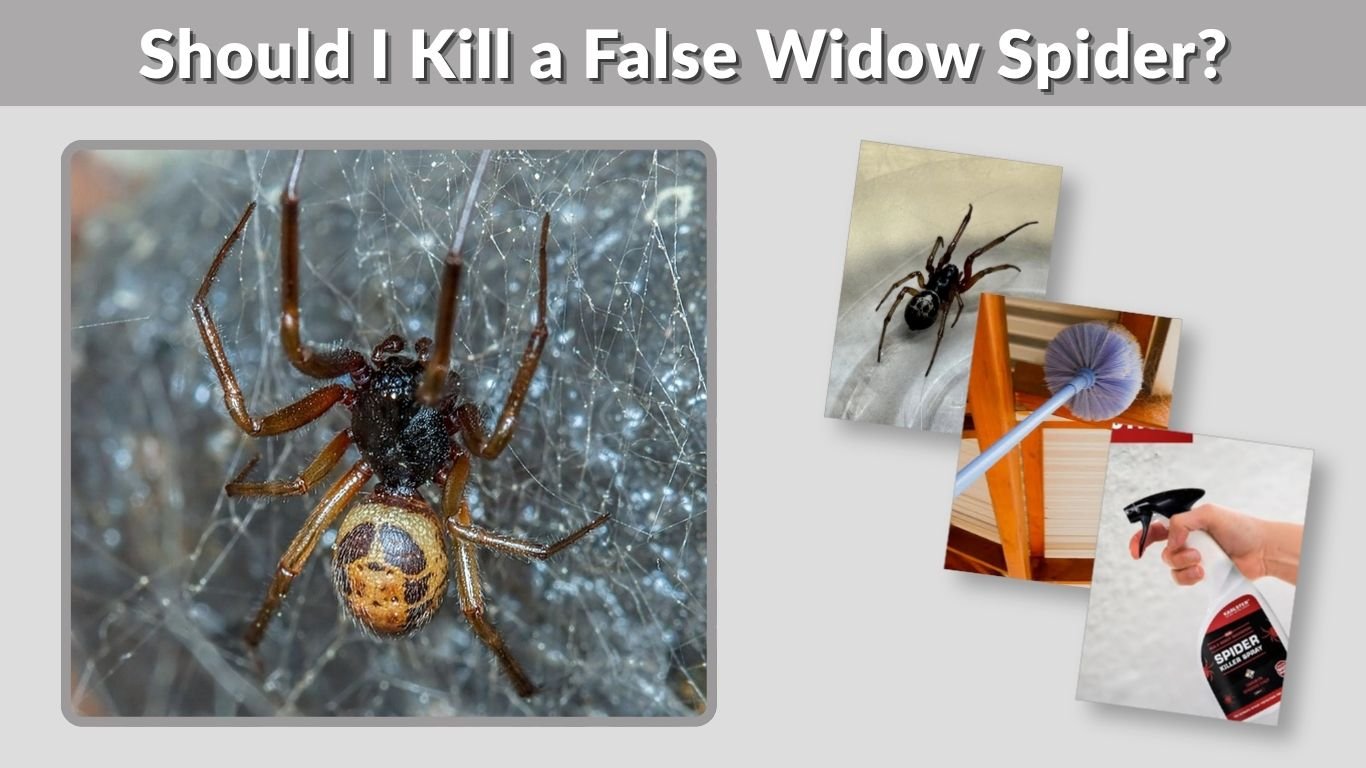
You usually do not need to kill a false widow spider unless there is a direct safety concern, repeated indoor sightings, or someone vulnerable in the home. False widow spiders can bite if trapped or handled, but they are not aggressive toward people. In most cases, safe removal, cleaning, and prevention are better options than panic killing or heavy chemical spraying.
Should You Kill a False Widow Spider?
A false widow spider in your house can feel alarming, especially because this spider is often described as venomous. However, killing it is not always necessary. Most false widow spiders hide in quiet corners and only bite when squeezed, trapped, or roughly handled.
If the spider is in a low-risk place, such as a shed corner, garage wall, or outdoor web, it may be best to leave it alone. Spiders help reduce flies, mosquitoes, moths, and other insects. If it is inside a bedroom, child’s room, bathroom, or clothing area, removal is the safer choice.
The best answer depends on location, household risk, and how often you are seeing them. One spider is usually not an infestation. Several spiders, egg sacs, or repeated sightings may mean you need stronger control steps.
Are False Widow Spiders Dangerous?
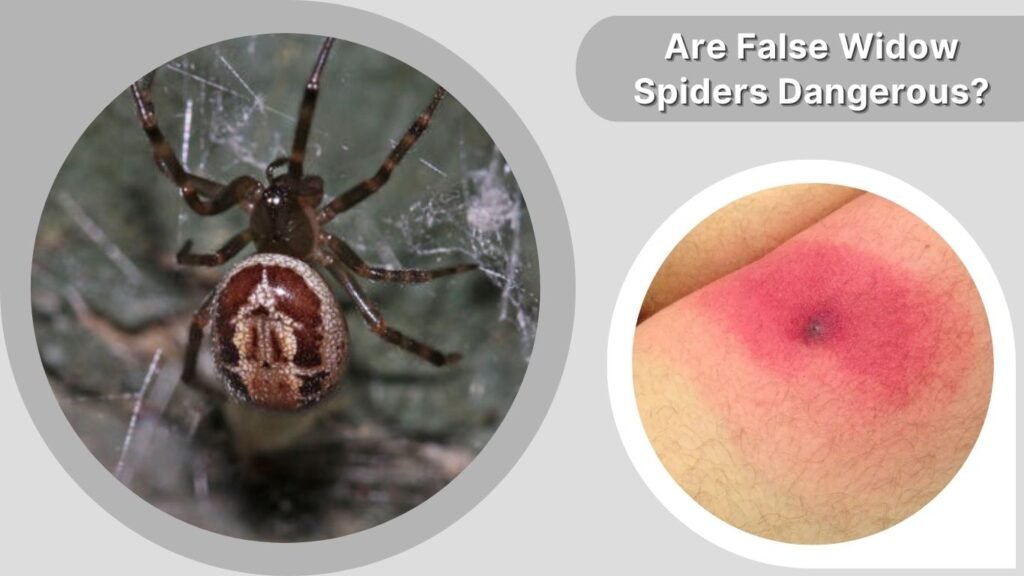
False widow spiders are venomous, but that does not mean they are highly dangerous to humans. Their bite is usually compared to a bee or wasp sting. Some people may get local pain, redness, swelling, itching, or a small puncture mark. More serious problems are usually linked to infection, allergic reaction, or a stronger individual response.
They do not chase people. They are shy spiders that prefer hidden, sheltered areas. Most bites happen when someone accidentally presses against one, puts on clothing where a spider is hiding, or handles the spider directly.
Children, older adults, pregnant people, people with allergies, and people with weakened immune systems should be more cautious. If a false widow is found near beds, towels, shoes, gloves, or baby items, remove it safely.
Can a False Widow Spider Kill You?
A false widow spider bite is very unlikely to kill a person. Reports of serious reactions are rare, and most bites are mild. The bite can still be painful, and it should not be ignored if symptoms become worse.
The main danger is not usually the venom itself. The bigger concern is an infected wound, severe allergic reaction, or delayed treatment when swelling and redness spread. If someone has trouble breathing, facial swelling, dizziness, fever, red streaks, or severe pain after a bite, they should seek urgent medical help.
So, the spider deserves caution, but not panic. Treat it as a small risk, not a deadly household emergency.
When You Should Remove a False Widow Spider
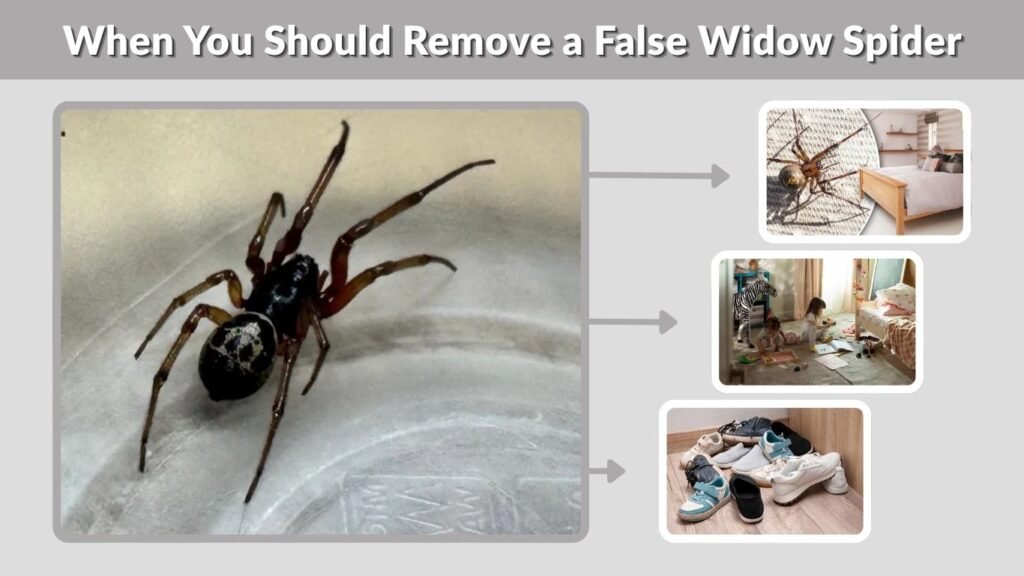
Removing a false widow spider is often better than killing it, especially if you can do it safely. The goal is to reduce human contact without using unnecessary chemicals.
High-Risk Places
You should remove a false widow spider if it is found in:
- A bedroom
- A child’s room
- Near a baby cot
- Inside shoes or clothing
- Around towels or laundry
- On a bed frame
- Inside gloves or garden tools
- In a bathroom corner
- Near pet bedding
- In a frequently used cupboard
These are places where accidental contact is more likely. A spider in a rarely used shed corner is a lower risk than one beside your bed.
When Leaving It Alone Is Okay
Not every false widow spider needs to be removed. If the spider is outdoors, in a garden wall, on a fence, or in a shed corner that people rarely touch, it can often be left alone. It will help control small insects and usually avoid people.
Leaving it alone is more reasonable when the spider is not near children, pets, beds, clothes, or high-contact areas. If you are nervous, you can still remove it without killing it.
A calm approach is better than spraying every corner. Heavy pesticide use can expose people and pets to chemicals and may also kill harmless spiders and insects that help control pests naturally.
Kill, Remove, or Leave Alone?
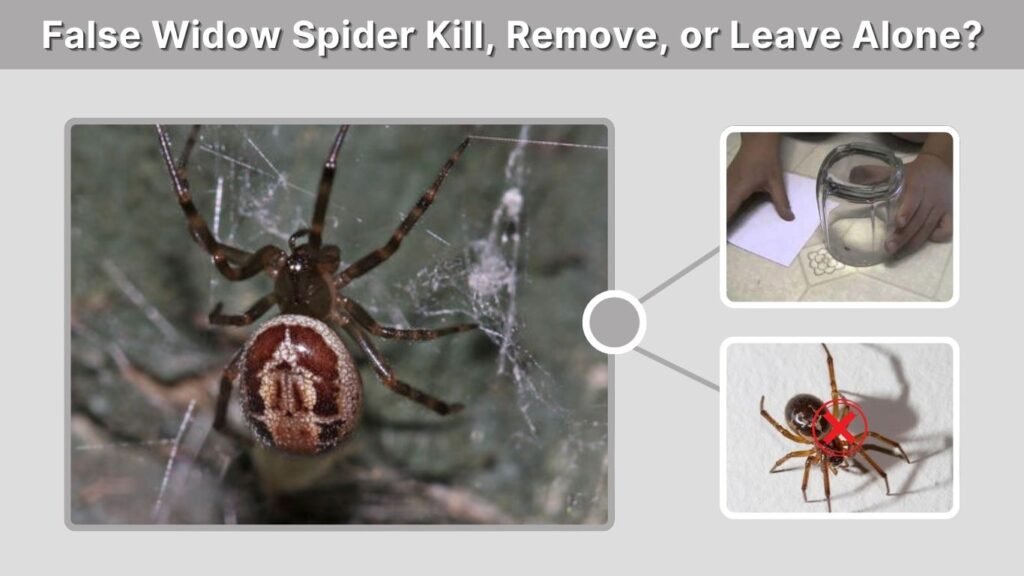
Use this simple guide to decide what to do.
| Situation | Best Action | Why |
| Spider is outside or in a quiet shed corner | Leave it alone | Low chance of contact |
| Spider is in a bedroom or bathroom | Remove it safely | Accidental contact is more likely |
| Spider is inside clothing, shoes, or towels | Remove immediately | Higher bite risk |
| Several spiders are found indoors | Clean and inspect the area | May indicate good hiding conditions |
| Egg sac is found indoors | Remove carefully | Prevents more spiders indoors |
| Someone is allergic or vulnerable | Remove and prevent return | Lower risk is better |
| Spider is hard to reach safely | Use tools or call pest control | Avoid direct handling |
This table helps keep your response practical instead of emotional. The goal is safety, not unnecessary fear.
Best Way to Remove a False Widow Spider Safely
You should not pick up a false widow spider with bare hands. Even if it does not want to bite, it may defend itself if squeezed. Safe removal is simple and does not require dangerous methods.
Safe Removal Steps
Follow these steps:
- Wear gloves if the spider is close.
- Place a glass, jar, or plastic container over it.
- Slide stiff paper or card underneath.
- Keep the container covered.
- Move it away from bedrooms and high-use spaces.
- Release it outside near a wall, hedge, or sheltered area.
- Wash your hands afterward.
- Clean the web area with a vacuum or cloth.
If you are too nervous to remove it, ask someone else or use a long-handled spider catcher. The safest method is the one that avoids direct contact.
Should I Use Spray to Kill a False Widow Spider?
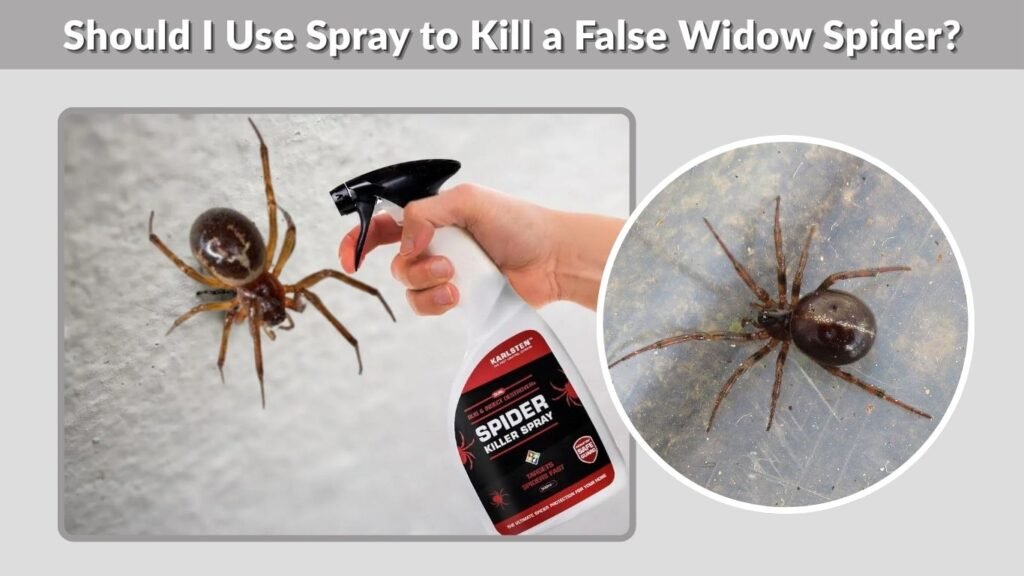
Spider killer spray can kill false widow spiders, but it is not always the best first choice. Sprays may leave chemical residue on walls, floors, bedding areas, pet spaces, or children’s rooms. They can also affect other insects and spiders.
Spray may be considered if there is a repeated indoor problem, an inaccessible web, or a professional pest controller recommends it. Even then, follow the product label carefully and keep children and pets away from treated areas.
For a single spider, physical removal is usually safer and cleaner than spraying. Prevention works better than repeated chemical use.
What Kills a False Widow Spider?
Like most spiders, false widows can be killed by direct crushing, some insecticide sprays, vacuuming, or professional treatments. However, just because something kills them does not mean it is the best choice.
Killing one visible spider may not solve the reason it entered the home. If your home has many insects, cluttered storage, open gaps, or undisturbed corners, more spiders may return. Long-term control depends on removing hiding places and reducing accidental contact.
If you must kill one because it is in a dangerous location and cannot be moved safely, use a method that avoids touching it with your hands. Afterward, clean the area and remove webs.
How to Deal With a False Widow Spider Nest
People often call an egg sac a “nest.” False widow spiders do not have nests like wasps, but they may make web retreats and egg sacs. An egg sac indoors should be removed carefully because it can lead to more spiders.
Egg Sac Removal Tips
Use these steps:
- Wear gloves.
- Avoid squeezing it with bare hands.
- Use a vacuum with a hose attachment.
- Empty the vacuum outside if possible.
- Seal the waste in a bag.
- Wipe the web area clean.
- Check nearby corners for more webs.
- Reduce clutter around the area.
If you see several egg sacs or many spiders, a deeper cleaning and inspection may be needed. In serious cases, professional pest control can help.
False Widow Spiders in the UK and Ireland
False widow spiders are commonly discussed in the UK and Ireland, especially the noble false widow. They are often found around buildings, sheds, garages, fences, and warm indoor spaces. Reports increase when people notice spiders moving indoors or becoming more visible.
In the UK and Ireland, many people ask whether they should kill them because they worry about bites. A balanced answer is best: do not handle them, do not panic, and remove them safely from high-contact areas.
If a spider is outdoors and not bothering anyone, leaving it alone is usually fine. If it is near a bed, clothing, shoes, towels, or children, remove it.
How to Stop False Widow Spiders Coming Back
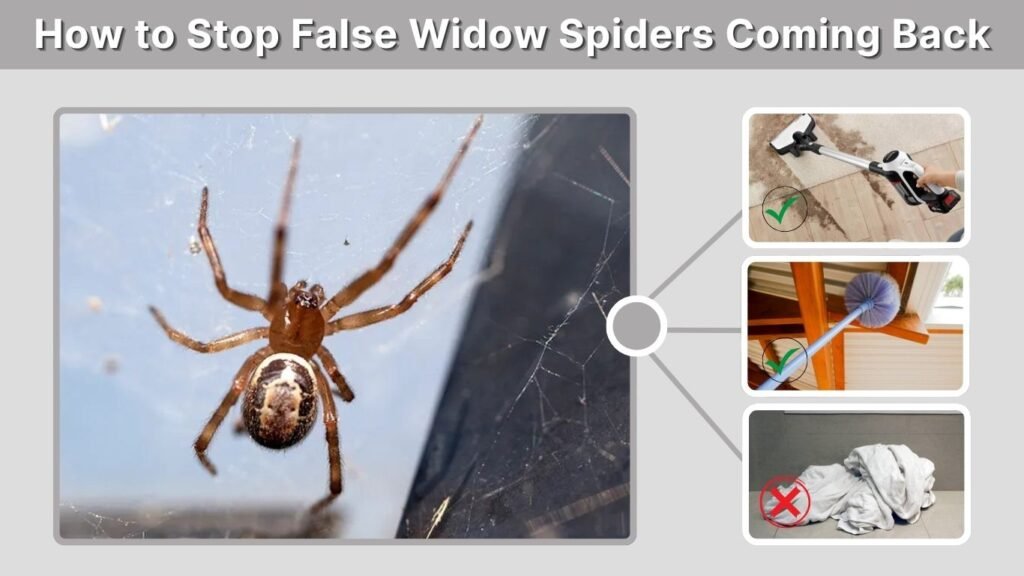
The best control method is prevention. False widow spiders choose quiet, sheltered spaces where they can catch insects. If your home has cluttered corners, open cracks, and plenty of small insects, spiders are more likely to stay.
Prevention Steps
Use these practical steps:
- Vacuum corners, window frames, and skirting boards.
- Remove old webs regularly.
- Shake out shoes, gloves, and stored clothing.
- Keep laundry and towels off the floor.
- Seal gaps around doors and windows.
- Reduce clutter in sheds and garages.
- Store items in sealed plastic boxes.
- Move firewood and garden items away from doors.
- Use screens on windows if possible.
- Reduce flies and moths around lights.
Prevention is more effective than killing one spider at a time. A cleaner, less cluttered space gives spiders fewer hiding places.
What Happens If You Kill a False Widow Spider?
Usually, nothing special happens if you kill a false widow spider. It will not release a signal that attracts more spiders, and other spiders will not come for revenge. However, killing one spider may not fix the conditions that attracted it.
If you crush a spider near an egg sac or web, clean the area afterward. Use gloves or a cloth, then dispose of the remains safely. Avoid touching the spider directly, especially if you are not sure what species it is.
The bigger question is whether killing was necessary. In many cases, removal and prevention are safer, cleaner, and more effective.
What If You Keep Finding False Widow Spiders?
Repeated sightings may mean your home has suitable hiding places. Check sheds, garages, window corners, lofts, outdoor lights, and storage areas. Look for messy tangled webs rather than neat circular webs.
Several spiders do not always mean a dangerous infestation. It may simply mean there are insects to eat and plenty of sheltered corners. Still, if spiders appear in bedrooms, clothing, or children’s spaces, you should take action.
Deep cleaning, sealing gaps, removing webs, and reducing insect activity can help. If the problem continues, professional pest control may be useful.
Safe Control Around Children and Pets
Homes with children and pets need extra care. Avoid leaving spiders in places where children play, sleep, or reach into storage. Also be cautious with sprays, powders, and chemical treatments.
For pets, keep bedding clean and check corners around sleeping areas. Dogs and cats may paw at spiders and get bitten around the face or paws. If a pet develops swelling, weakness, vomiting, or unusual pain after contact with a spider, contact a vet.
Safe control means removing spiders without creating a chemical risk for the household.
FAQs
Should I kill a false widow spider in my house?
You do not usually need to kill a false widow spider. If it is in a bedroom, clothing area, bathroom, or child’s room, remove it safely. If it is outside or in a quiet shed corner, leaving it alone is often fine. Avoid touching it with bare hands.
Can a false widow spider kill you?
A false widow spider bite is very unlikely to kill you. Most bites cause local pain, swelling, redness, or itching. Serious reactions are rare but possible if there is infection or allergy. Seek urgent help for breathing trouble, facial swelling, fever, severe pain, or spreading redness.
What is the best way to kill a false widow spider?
The safer choice is usually removal, not killing. Use a glass and card, spider catcher, or vacuum for hard-to-reach areas. If you must kill one, avoid direct hand contact. Do not use chemical sprays near children, pets, bedding, or food areas unless the label allows it.
Should I use spray for false widow spiders?
Spray is not needed for one spider in most cases. Physical removal and cleaning are usually better. Spray may be considered for repeated sightings or hard-to-reach areas, but it can leave residue and affect pets, children, and harmless insects. Always follow the product label.
How do I stop false widow spiders coming back?
Remove webs, vacuum corners, seal cracks, reduce clutter, and shake out stored clothing, gloves, and shoes. Keep sheds and garages tidy, use sealed boxes, and reduce small insects around lights. Prevention works better than killing single spiders because it removes hiding places and food sources.
