
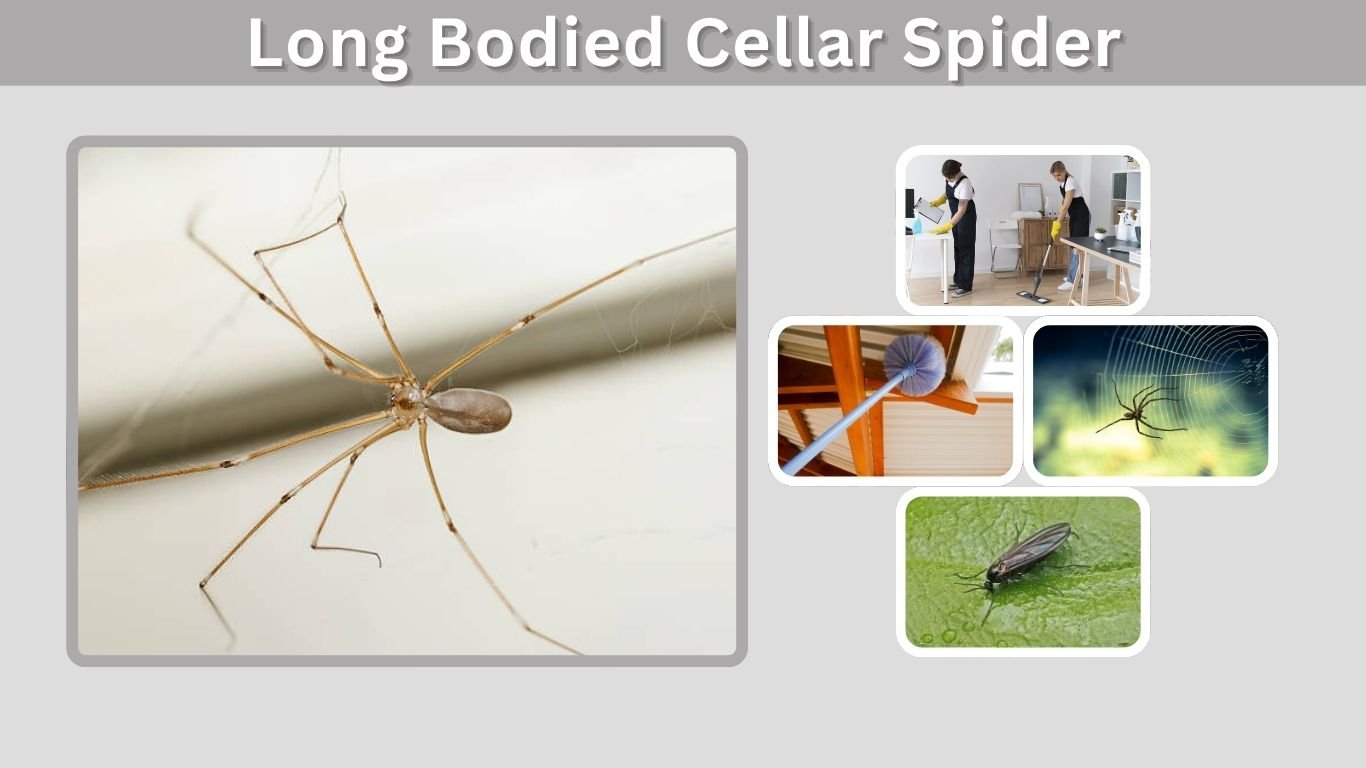
The long bodied cellar spider is one of the most common spiders found inside homes, basements, garages, bathrooms, and quiet ceiling corners. Its tiny body and extremely long legs often make people nervous, especially because it is also called a daddy long legs spider. Despite its creepy appearance, this spider is usually harmless and may even help control small insects indoors.
What Is a Long Bodied Cellar Spider?
The long bodied cellar spider is a true spider commonly known by the scientific name Pholcus phalangioides. It belongs to the family Pholcidae, a group often called cellar spiders or daddy long legs spiders. The name “long bodied” comes from its narrow, stretched body shape, which helps separate it from some round-bodied or short-bodied cellar spiders.
This spider is often found in human-made structures. It prefers quiet, low-light places where it can build a loose web and stay undisturbed. You may see it hanging upside down in a messy web, especially in basements, closets, garages, sheds, and bathrooms.
Although it may look alarming, the long bodied cellar spider is not considered dangerous to humans. It is shy, non-aggressive, and more interested in catching small insects than interacting with people.
How to Identify a Long Bodied Cellar Spider
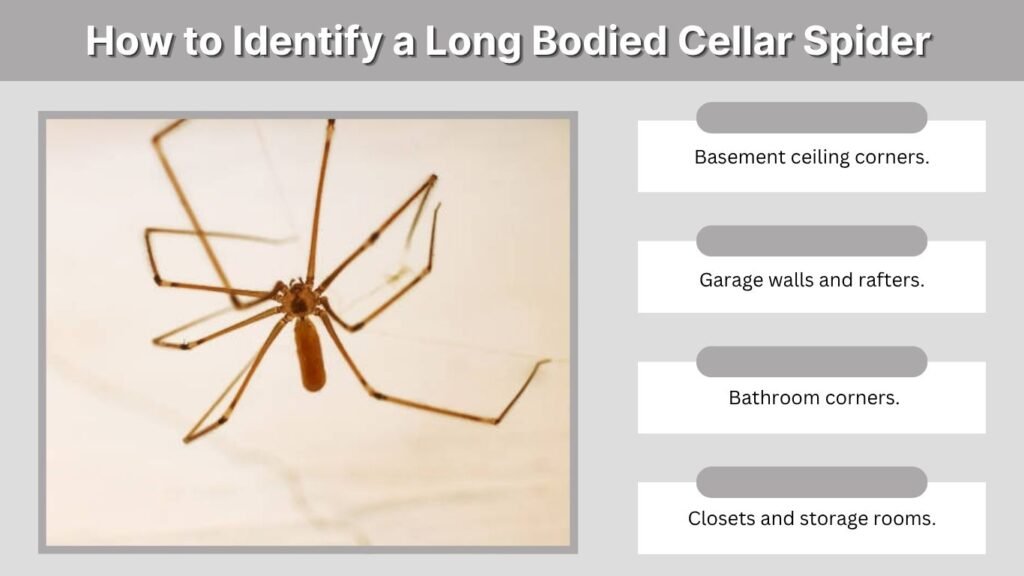
A long bodied cellar spider has a delicate appearance. Its body is small compared with its legs, and the spider often looks fragile. Many people notice the legs first because they are much longer than the body.
Body Shape and Color
The body is usually pale gray, tan, light brown, or yellowish. It looks narrow and elongated rather than round. The abdomen may appear tube-like or oval, depending on the spider’s age, sex, and position.
This body shape is one reason people search for terms like “cellar spider long legs thin body indoors” or “cellar spider with long body.” If the spider has a tiny, slender body and very long legs, it is likely a long bodied cellar spider.
Legs and Size
The legs are extremely long and thin. They may be several times longer than the body, making the spider appear much larger than it really is. The actual body is usually small, but the full leg span can look impressive on a wall or ceiling.
A typical long bodied cellar spider is not heavy or thick like a wolf spider. It has a light, delicate frame and usually moves carefully through its web.
Web Appearance
The web is messy, loose, and irregular. It does not look like a neat circular orb web. Instead, it forms a tangled sheet or loose webbing in corners, ceiling edges, rafters, and storage areas.
Common web sites include:
- Basement ceiling corners
- Garage walls and rafters
- Bathroom corners
- Closets and storage rooms
- Under stairs
- Around boxes or unused furniture
- Sheds, crawl spaces, and attics
If you see a long-legged spider hanging upside down in a messy web, it is probably a cellar spider.
Long Bodied Cellar Spider Facts
The long bodied cellar spider is common in many homes because indoor spaces provide shelter, warmth, and prey. It does not need much room to survive and can live in corners that people rarely disturb.
| Feature | Long Bodied Cellar Spider |
| Scientific name | Pholcus phalangioides |
| Family | Pholcidae |
| Common nickname | Daddy long legs spider |
| Body shape | Small, narrow, elongated body |
| Web type | Loose, messy, tangled web |
| Common habitat | Basements, garages, ceilings, bathrooms, caves, sheds |
| Human risk | Very low |
| Main benefit | Eats small insects and other tiny pests |
This spider is often more useful than harmful. Its webs may catch mosquitoes, flies, gnats, moths, ants, and other small insects. The main downside is that the webs collect dust and make corners look dirty.
Long Bodied Cellar Spider Habitat
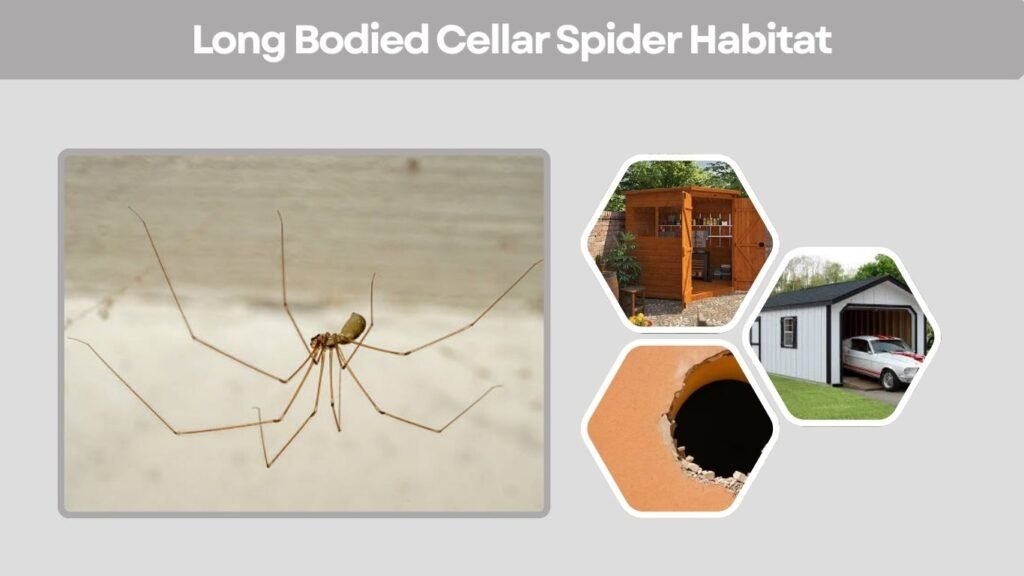
The long bodied cellar spider prefers quiet places where its web will not be disturbed. It is strongly associated with buildings, but it can also live in natural sheltered areas.
Indoor Habitat
Inside homes, it often appears in low-traffic rooms. Basements are especially common because they are dark, quiet, and may have insects. Garages and sheds are also ideal because they offer corners, rafters, stored items, and gaps where insects enter.
Bathrooms can also attract cellar spiders because of moisture and small flying insects. If the bathroom is not cleaned often in ceiling corners, webs may appear quickly.
Outdoor Habitat
Outside, long bodied cellar spiders may live under ledges, in sheds, in wall corners, around patio covers, and near protected foundation areas. They may build webs near outdoor lights because lights attract insects.
They usually choose sheltered locations rather than exposed open spaces. Their delicate bodies and webs are better suited to protected corners.
Long Bodied Cellar Spider Bite
A long bodied cellar spider bite is possible in theory, but it is very rare. These spiders are not aggressive and do not seek out people. They usually remain in their webs and try to avoid contact.
A bite would most likely happen only if the spider were trapped against skin, handled roughly, or pressed inside clothing. Even then, serious symptoms are not expected from a normal long bodied cellar spider bite.
What Would a Bite Look Like?
If a bite happened, it would likely be mild. A person may notice a tiny red spot, slight itching, or minor irritation. It may look similar to a small mosquito bite or a mild skin bump.
A suspected bite should not usually cause severe pain, spreading tissue damage, major swelling, or an open wound. If those symptoms occur, another cause may be involved.
Basic Bite Care
For a mild bite-like mark:
- Wash the area with soap and water
- Apply a cold compress if it itches or swells
- Avoid scratching the skin
- Keep the area clean and dry
- Watch for worsening symptoms
If redness spreads, pain increases, pus appears, or fever develops, seek medical advice.
Is the Long Bodied Cellar Spider Dangerous?
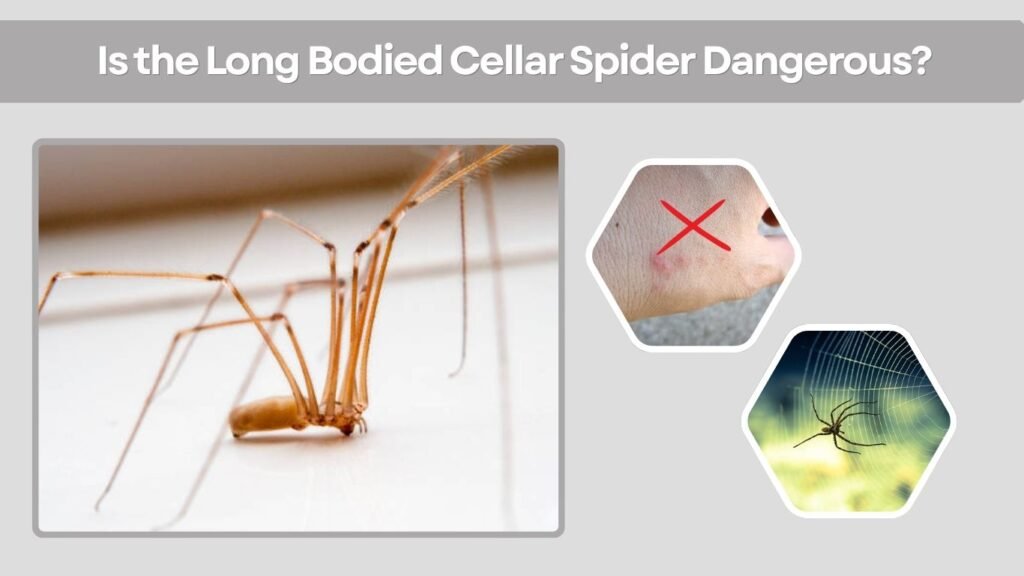
The long bodied cellar spider is not considered dangerous to people. It may look frightening because of its long legs, but appearance does not equal risk. These spiders are shy web builders, not aggressive hunters.
They have venom for catching small prey, but their venom is not considered medically important for humans. The old myth that daddy long legs spiders are extremely poisonous is misleading. They are not known to cause serious harm to people.
If you see one in your home, there is usually no need to panic. You can leave it alone if it is in a basement or garage, or remove it with a vacuum if the web bothers you.
Is the Long Bodied Cellar Spider Poisonous or Venomous?
The word “poisonous” is often used incorrectly. Poisonous means something causes harm when eaten, touched, or absorbed. Venomous means an animal injects venom through a bite or sting.
The long bodied cellar spider is venomous in the technical sense because it uses venom to subdue small prey. However, it is not considered poisonous or dangerous to humans.
A practical way to understand it:
- It has venom for insects
- It is not a serious threat to people
- It is not aggressive
- Bites are rare
- Normal home encounters are low risk
So, if someone asks, “Is a long bodied cellar spider poisonous?” the simple answer is no, not in a way that should worry most homeowners.
Long Bodied Cellar Spider vs Short Bodied Cellar Spider
Long bodied and short bodied cellar spiders belong to the same general cellar spider group, but they can look different. The long bodied cellar spider has a more stretched, narrow body. Short bodied cellar spiders often have a rounder or more compact body.
Both types have long, thin legs and build messy webs. Both are usually harmless to humans. The difference matters mostly for identification, not safety.
Quick Comparison
Long bodied cellar spiders usually have:
- A narrow, elongated body
- Very long, threadlike legs
- Loose webs in corners
- A habit of hanging upside down
- A pale gray, tan, or light brown color
Short bodied cellar spiders usually have:
- A smaller, rounder body
- Long legs, but a more compact look
- Similar messy web-building behavior
- Similar low risk to humans
If your goal is pest control or safety, you can treat both the same way: remove webs, reduce insects, and seal entry points.
Long Bodied Cellar Spider vs Daddy Long Legs
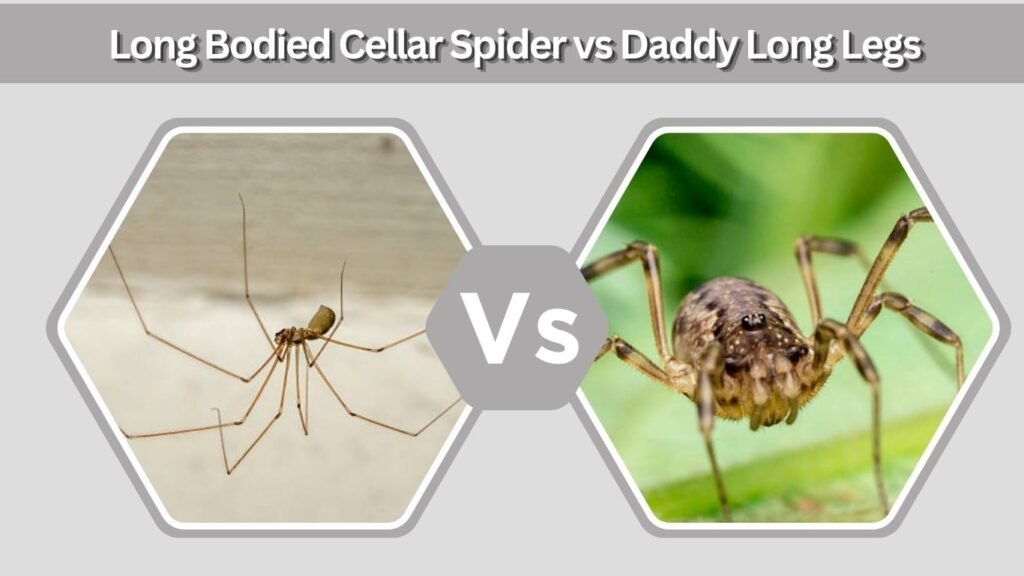
This comparison is confusing because “daddy long legs” can mean different animals. In many homes, people use daddy long legs to describe the long bodied cellar spider. In other cases, daddy long legs refers to harvestmen, which are not true spiders.
A long bodied cellar spider is a true spider. It has two body sections, makes silk, builds webs, and has venom for prey. A harvestman has a single rounded-looking body, does not make silk, and does not build webs.
The easiest clue is the web. If the long-legged creature is hanging in a tangled web indoors, it is probably a cellar spider. If it is walking around outdoors with no web, it may be a harvestman.
Long Bodied Cellar Spider Egg Sac and Reproduction
Female long bodied cellar spiders carry their egg sacs near their mouthparts. The egg sac may look like a small loose bundle of tiny eggs. This is different from spiders that hide egg sacs deep inside webbing or attach them to hidden surfaces.
If you see a cellar spider holding a small cluster, it may be a female carrying eggs. After the eggs hatch, the young spiderlings may stay near the web for a while before spreading out.
Removing egg sacs can help reduce future spider numbers. Vacuuming webs, spiders, and egg sacs together is one of the simplest control methods.
Long Bodied Cellar Spider Diet
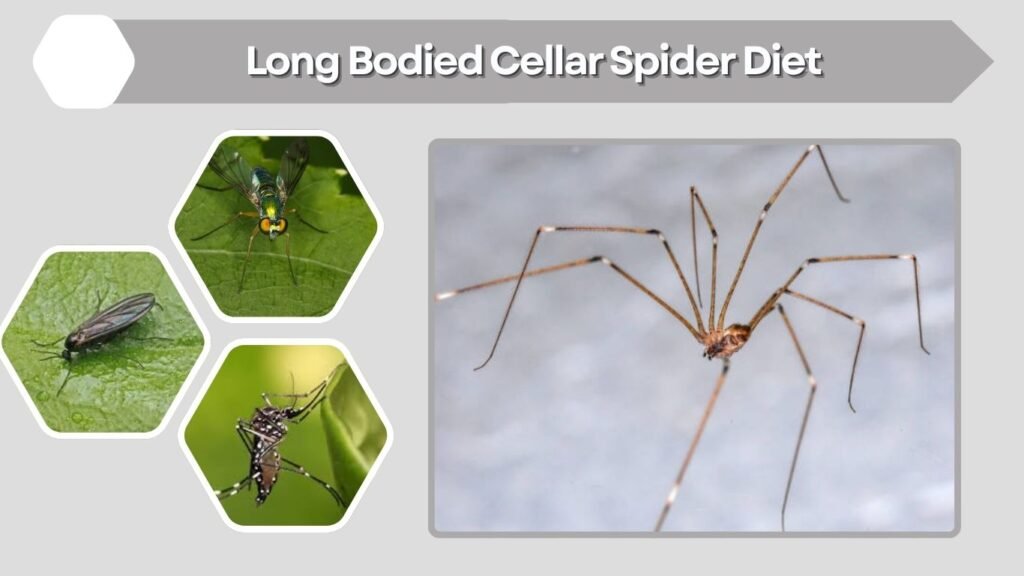
The long bodied cellar spider eats small insects and other tiny arthropods. It waits in its web until prey touches the silk. Then it moves in and wraps or bites the prey.
Its diet may include:
- Flies
- Mosquitoes
- Gnats
- Moths
- Ants
- Small beetles
- Other small spiders
Because it catches household pests, this spider can be beneficial. If you see many cellar spiders, it may mean there are enough insects in the area to support them.
Long Bodied Cellar Spider Lifespan
The lifespan of a long bodied cellar spider can vary depending on conditions such as temperature, food, moisture, and shelter. Indoors, where temperatures are more stable and predators are limited, cellar spiders may survive longer than they would in harsh outdoor conditions.
A home with many insects, quiet corners, and little cleaning may allow cellar spiders to reproduce and remain for long periods. Regular web removal helps interrupt this cycle.
How to Control Long Bodied Cellar Spiders
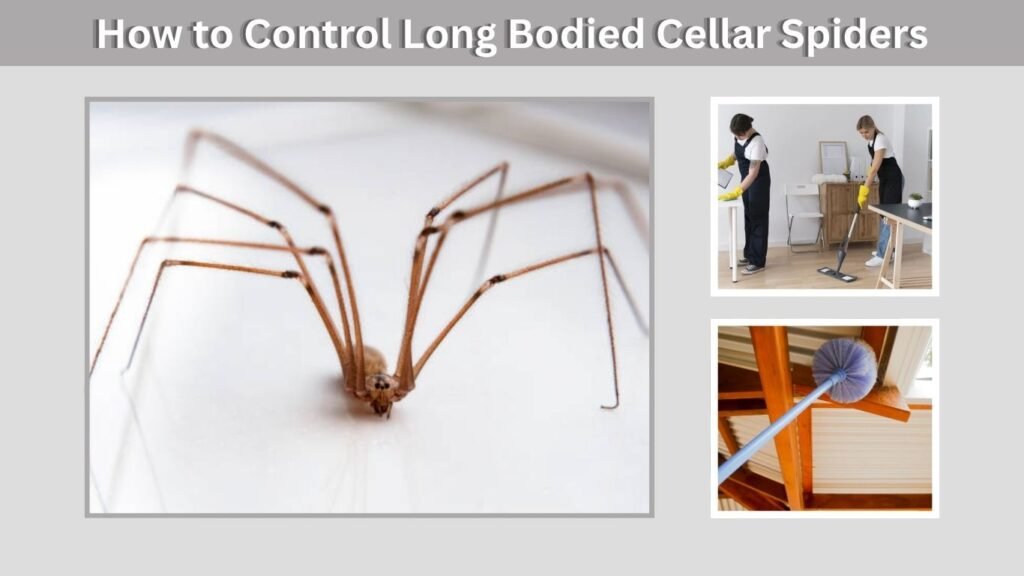
You usually do not need strong pesticides to control long bodied cellar spiders. Cleaning, exclusion, and insect reduction are more practical.
Remove Webs Regularly
Use a vacuum hose or broom to remove webs from corners, ceiling edges, garages, basements, and storage areas. Vacuuming is best because it can remove spiders and egg sacs at the same time.
Reduce Clutter
Stored boxes, old furniture, and unused items create hiding places. Keep storage areas organized and move items away from walls when possible.
Seal Entry Points
Seal cracks around windows, doors, vents, baseboards, and utility openings. Repair damaged screens. This helps keep out both spiders and the insects they eat.
Reduce Indoor Insects
Spiders stay where food is available. Keep trash sealed, clean food crumbs, reduce standing water, and limit flying insects around lights and open doors.
Control Moisture
Fix leaks, improve ventilation, and use a dehumidifier in damp basements. Lower moisture can make the area less attractive to insects and spiders.
When Should You Call Pest Control?
Most long bodied cellar spider problems can be handled with cleaning and prevention. However, professional pest control may help if spider numbers are high, webs return quickly, or you are seeing other pests.
You may also want expert help if you are unsure whether the spider is a harmless cellar spider or a medically important species. A clear photo or captured specimen can help with identification.
FAQs
Is a long bodied cellar spider dangerous?
No, a long bodied cellar spider is not considered dangerous to humans. It may look unsettling because of its long legs, but it is shy and usually stays in its web. It is more likely to help by catching small insects than to cause problems for people.
Can a long bodied cellar spider bite?
Yes, it can technically bite, but bites are very rare. These spiders are not aggressive and do not seek contact with humans. A bite would most likely happen only if the spider were trapped against skin. If symptoms become severe or worsen, medical advice is recommended.
Is a long bodied cellar spider poisonous?
A long bodied cellar spider is not poisonous in a way that should concern homeowners. It has venom for catching tiny prey, but it is not considered medically dangerous to people. The common claim that daddy long legs spiders are extremely poisonous is a myth and should not be treated as fact.
What is the difference between a long bodied and short bodied cellar spider?
A long bodied cellar spider has a narrow, elongated body, while a short bodied cellar spider looks rounder and more compact. Both have long legs, build messy webs, and are usually harmless. The difference is mostly useful for identification, not for judging danger.
How do I get rid of long bodied cellar spiders?
Vacuum webs, spiders, and egg sacs from corners, basements, garages, and storage areas. Reduce clutter, seal cracks, repair screens, and control small insects that serve as food. Pesticides are usually unnecessary unless spider numbers are high or another pest problem is attracting them.
