
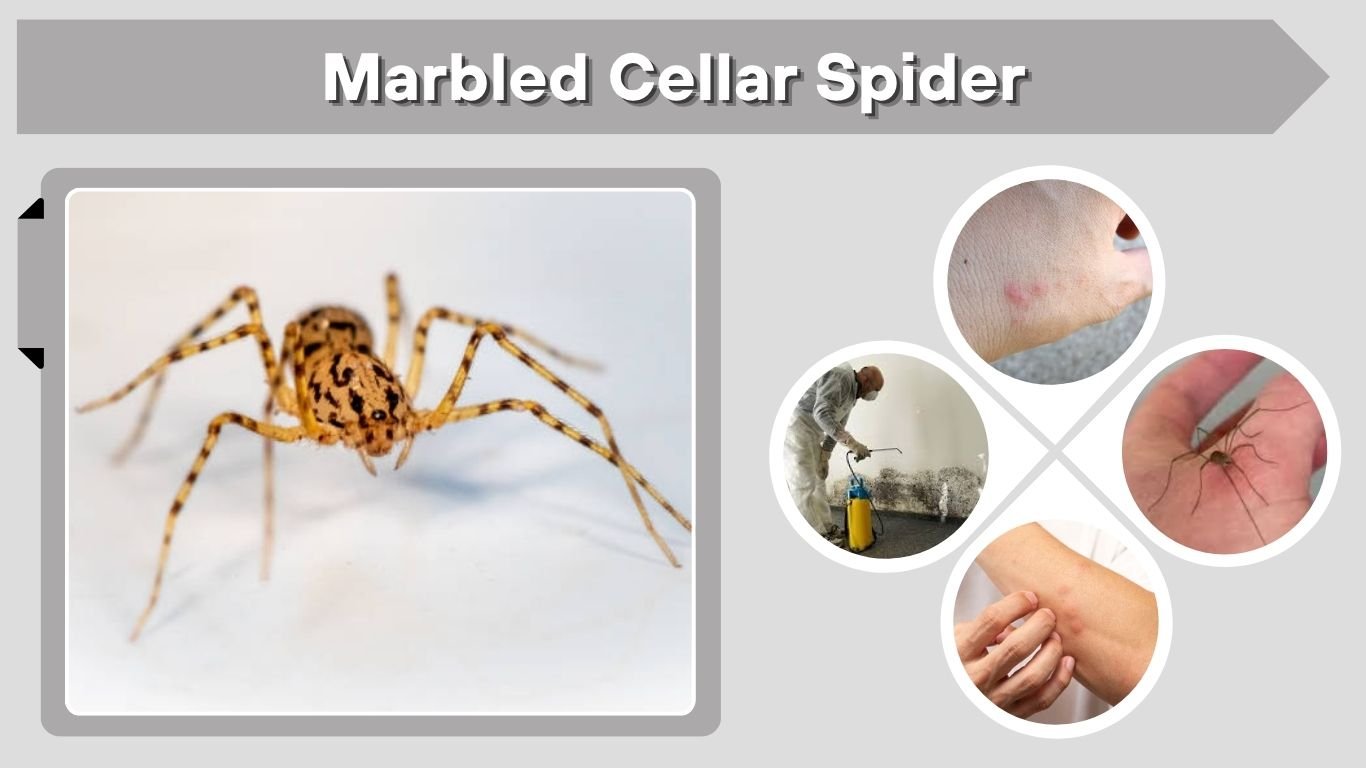
The marbled cellar spider is a long-legged household spider that often appears in garages, basements, outdoor corners, wall edges, and sheltered areas around homes. Because of its thin legs and patterned body, many people confuse it with other long-legged spiders or even worry that it might be a brown recluse. In most cases, this spider is not a threat. It is better understood as a harmless web-building spider that helps catch small insects.
What Is a Marbled Cellar Spider?
The marbled cellar spider is commonly known by the scientific name Holocnemus pluchei. It belongs to the cellar spider family, Pholcidae. Like other cellar spiders, it has a small body, very long legs, and a delicate appearance. Many people also call it a daddy long legs spider, although that common name can be confusing because it is used for several different creatures.
This spider gets the name “marbled” because of the patterning on its body. Instead of looking plain gray or tan, it may show mottled, marbled, or patterned markings on the abdomen. These markings can make it look more unusual than a typical cellar spider, especially when seen up close.
Marbled cellar spiders are often found in warm areas and around human structures. They build loose, tangled webs rather than neat circular webs. If you see a long-legged spider hanging in a messy web near a ceiling corner, garage wall, patio cover, or basement area, it may be a marbled cellar spider.
How to Identify a Marbled Cellar Spider
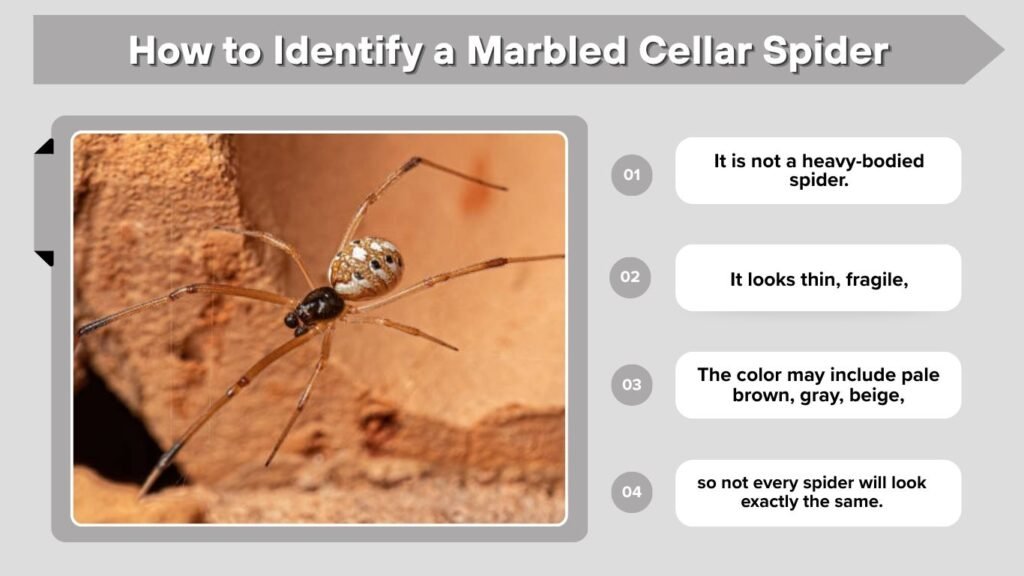
The easiest way to identify a marbled cellar spider is to look at its body shape, legs, web type, and location. It is not a heavy-bodied spider. It looks thin, fragile, and long-legged.
Body and Color
A marbled cellar spider usually has a small body with a patterned or mottled abdomen. The color may include pale brown, gray, beige, tan, or darker marbled markings. The pattern can vary, so not every spider will look exactly the same.
Its body is much smaller than its legs make it appear. Many people think the spider is large because the legs spread widely, but the actual body is usually modest in size.
Long, Thin Legs
The spider’s legs are long, thin, and delicate. This is one of the strongest clues that you are looking at a cellar spider. The legs may appear banded or slightly darker in some individuals, depending on lighting and age.
These legs help the spider move through its web and detect prey. However, the spider is not built like an active hunting spider. It usually waits in or near its web rather than running across floors looking for prey.
Web Shape
Marbled cellar spiders build messy, irregular webs. These webs often appear as loose, tangled silk in corners, under eaves, along walls, in garages, or around storage areas. The web may collect dust over time, making it more noticeable.
Unlike orb-weaver spiders, marbled cellar spiders do not create beautiful wheel-shaped webs. Their webs look disorderly, but they are useful traps for small insects.
Movement and Behavior
When disturbed, a marbled cellar spider may shake or vibrate in its web. This is common among cellar spiders. The movement can make the spider harder for predators to target. It may look strange or alarming, but it is a defensive behavior, not aggression.
The spider usually tries to avoid people. It does not chase humans, jump at people, or seek contact.
Where Do Marbled Cellar Spiders Live?
Marbled cellar spiders are often associated with warm climates and sheltered spaces. They are commonly noticed around buildings, especially in areas where insects are available and webs can remain undisturbed.
Common Indoor Locations
Inside homes, they may appear in:
- Basements
- Garages
- Storage rooms
- Attics
- Bathrooms
- Closets
- Ceiling corners
- Crawl spaces
They prefer quiet areas where their webs are not constantly destroyed. If a room is rarely cleaned or has many insects, cellar spiders may stay there.
Common Outdoor Locations
Outside, marbled cellar spiders may build webs in:
- Eaves
- Patio covers
- Wall corners
- Fences
- Sheds
- Under rocks
- Around outdoor lights
- Near doorways or windows
Outdoor lights can attract flying insects, and spiders may build webs nearby to catch them.
Marbled Cellar Spider in California
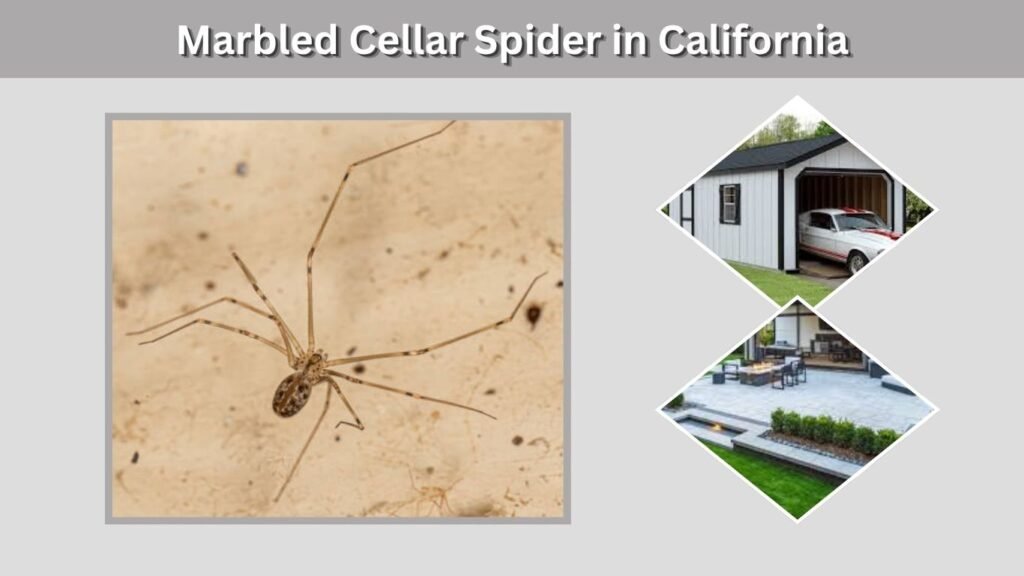
The marbled cellar spider is often reported in California, especially in warmer and urban areas. Around homes, it may appear near exterior walls, garages, eaves, and sheltered corners. In California, people sometimes worry that brown spiders are brown recluses, but many brown or patterned spiders are harmless look-alikes.
If you find a marbled cellar spider in California, it is usually not a reason to panic. Focus on identification clues: long thin legs, a small patterned body, and a messy web. A spider hanging openly in a tangled web is much more likely to be a cellar spider than a brown recluse.
Marbled Cellar Spider in Arizona
Marbled cellar spider searches also appear around Arizona because the state has many long-legged spiders and desert-adapted arthropods. In Arizona homes, garages, patios, and outdoor structures can provide suitable web sites. The dry climate may push many small insects and spiders toward shaded, protected areas.
Because Arizona has a variety of spiders, identification should be careful. A marbled cellar spider will usually look delicate and long-legged and will often be found in a messy web. If you are unsure whether a spider is harmless or medically important, avoid handling it and take a clear photo for identification.
Is the Marbled Cellar Spider Poisonous?
The word “poisonous” is often used incorrectly with spiders. Poisonous usually means something is harmful when eaten or touched. Venomous means an animal injects venom through a bite or sting. Spiders are generally venomous rather than poisonous because they use venom to subdue prey.
A marbled cellar spider does have venom for catching small insects, but it is not considered dangerous to humans. Its venom is meant for tiny prey, not people. There is no good reason to treat this spider as a dangerous household pest.
So, if the question is “Is the marbled cellar spider poisonous?” the practical answer is no, it is not considered poisonous or harmful to people in normal household encounters.
Is the Marbled Cellar Spider Venomous?
Yes, like many spiders, the marbled cellar spider is venomous in the technical sense. It uses venom to control prey caught in its web. However, venomous does not automatically mean dangerous to humans.
Many harmless household spiders have venom, but their venom is not medically significant for people. The marbled cellar spider falls into that low-risk category. It is not known as a dangerous spider, and it is not treated like a black widow or medically important recluse spider.
Marbled Cellar Spider Bite
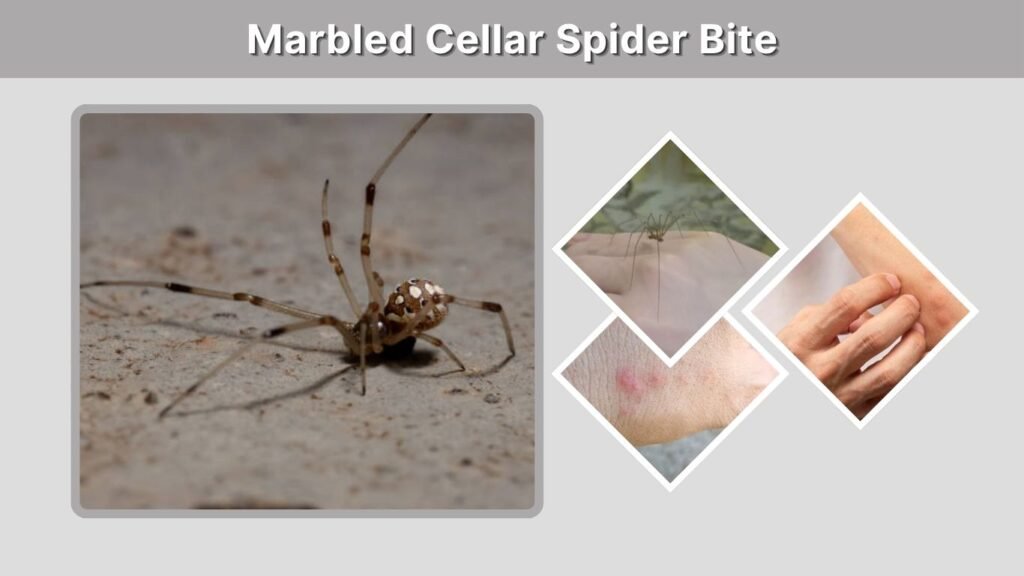
A marbled cellar spider bite is possible in theory, but it is very unlikely. These spiders are not aggressive and do not seek contact with people. Most of the time, they remain in their webs and retreat or vibrate when disturbed.
A bite would most likely happen only if the spider were trapped against the skin, handled roughly, or accidentally pressed. Even then, a serious reaction would not be expected from a normal marbled cellar spider encounter.
What Would a Bite Look Like?
If a marbled cellar spider bite happened, it would likely look mild. Possible signs may include a small red spot, slight itching, or minor irritation. It may resemble a mosquito bite or a small skin bump.
A suspected bite should not usually cause deep wounds, spreading tissue damage, severe pain, or major swelling. If those symptoms occur, another cause may be involved, and medical advice is a better option than guessing.
Basic Bite Care
For a mild bite-like mark, simple care is usually enough:
- Wash the area with soap and water
- Apply a cold compress for mild swelling or itching
- Avoid scratching the skin
- Keep the area clean
- Watch for changes
If redness spreads, pain increases, pus appears, or symptoms become severe, contact a healthcare professional.
Marbled Cellar Spider vs Brown Recluse
Many people search for “marbled cellar spider vs brown recluse” because they find a brownish spider indoors and worry about danger. This comparison is important because the two spiders have different risk levels.
A marbled cellar spider has very long, thin legs and a small patterned body. It usually sits in a tangled web. A brown recluse has a more compact body, does not sit in messy cellar-spider webs, and is more secretive.
Key Differences
Marbled cellar spiders usually have:
- Very long, thin legs
- A delicate body
- Marbled or mottled body markings
- Messy tangled webs
- A habit of hanging in corners or sheltered web sites
Brown recluse spiders usually have:
- A more compact body
- A plain tan to brown appearance
- Six eyes arranged in three pairs
- A violin-like marking on the front body section
- A secretive habit of hiding in dry, undisturbed places
The web is one of the easiest clues. If the spider is hanging in a messy web with long thin legs, it is much more likely to be a cellar spider than a brown recluse.
Do Not Rely Only on Color
Color alone is not enough for identification. Many harmless spiders are brown, tan, or gray. Some people see a dark mark and assume it is a brown recluse, but many spiders have markings that can look similar from a distance.
If you live in an area where brown recluse spiders occur and you are uncertain, do not handle the spider. Capture it safely or take a clear photo and ask a local extension office or pest professional for help.
Marbled Cellar Spider vs Other Daddy Long Legs

The name daddy long legs can refer to cellar spiders, harvestmen, or even crane flies in some regions. A marbled cellar spider is a true spider. It has two main body sections, makes silk, builds webs, and has venom for prey.
Harvestmen, another creature often called daddy long legs, are not true spiders. They have a body that appears more rounded and fused, and they do not build webs. If the long-legged animal is hanging in a tangled web, it is probably a cellar spider rather than a harvestman.
Are Marbled Cellar Spiders Good or Bad?
Marbled cellar spiders can be helpful because they catch small insects. Their webs may trap flies, mosquitoes, gnats, moths, and other tiny pests. In this way, they provide natural pest control.
However, many people dislike the dusty, messy webs. The spider itself is not usually the problem; the web buildup is what makes corners look dirty.
You do not always need to remove them. If they are in a garage, basement, or outdoor corner, they may be helping reduce insects. If they are in living spaces, removing webs is reasonable.
How to Get Rid of Marbled Cellar Spiders
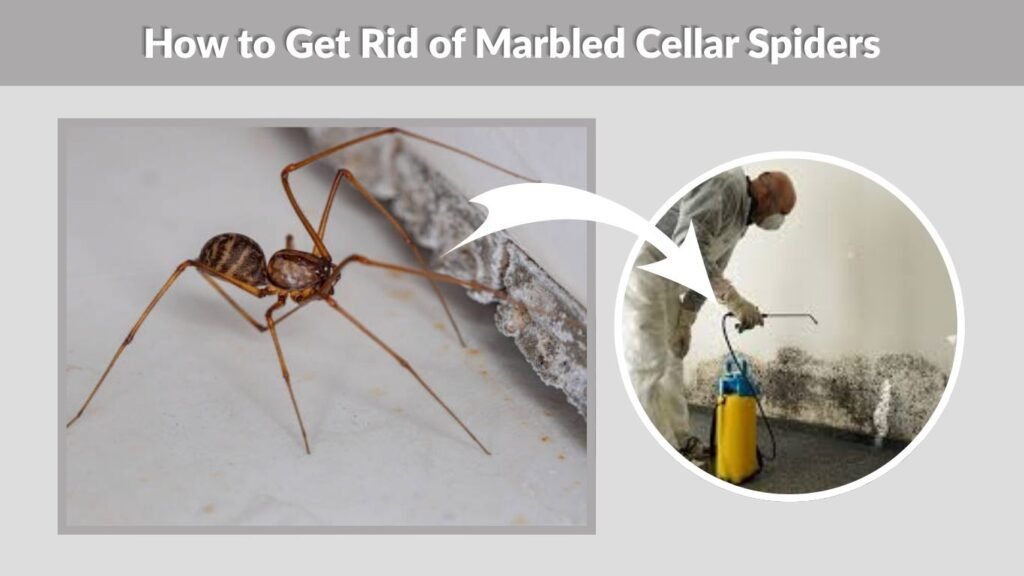
You can control marbled cellar spiders without strong chemicals. The best approach is cleaning, exclusion, and reducing insect prey.
Remove Webs
Use a vacuum or broom to remove webs from corners, eaves, garages, and storage areas. Vacuuming is especially helpful because it can remove spiders, egg sacs, and dusty silk at the same time.
Reduce Clutter
Clutter gives spiders more protected places to build webs. Organize boxes, move stored items away from walls, and clean rarely used spaces. Plastic storage bins with lids are better than open cardboard boxes.
Seal Entry Points
Seal gaps around windows, doors, vents, utility lines, and baseboards. Repair torn screens. This helps reduce both spiders and the insects they eat.
Lower Insect Activity
Spiders stay where food is available. Reduce insects by keeping doors closed, using window screens, cleaning crumbs, managing trash, and reducing bright outdoor lighting near entry points.
Manage Moisture
Some cellar spiders prefer sheltered places with stable humidity. Fix leaks, improve airflow, and use a dehumidifier in damp basements if needed.
Should You Use Pesticides?
Pesticides are usually not needed for marbled cellar spiders. Web removal and prevention are often enough. Spraying corners without fixing the conditions that attract spiders may only provide temporary results.
If you have large numbers of spiders, the real issue may be a larger insect population. In that case, it is better to identify and reduce the insects that are attracting them. A pest professional can help if the problem is persistent or if you suspect a dangerous spider species.
FAQs
Is a marbled cellar spider dangerous?
No, a marbled cellar spider is not considered dangerous to humans. It may look alarming because of its long legs and patterned body, but it is a low-risk household spider. It usually stays in its web and avoids people. Most concerns come from confusion with other spiders.
Can a marbled cellar spider bite?
A marbled cellar spider can technically bite, but bites are very rare. It is not aggressive and usually does not make contact with people. If a bite happened, symptoms would likely be mild, such as slight redness or itching. Serious symptoms should be checked by a medical professional.
Is the marbled cellar spider poisonous or venomous?
The marbled cellar spider is venomous in the technical sense because it uses venom to catch small prey. However, it is not considered poisonous or dangerous to humans. Its venom is not known to cause medically significant problems in normal household encounters.
How do I tell a marbled cellar spider from a brown recluse?
Look for long, thin legs, a small patterned body, and a messy web. Marbled cellar spiders usually hang in tangled webs. Brown recluse spiders are more compact, more secretive, and have six eyes arranged in three pairs. If you are unsure, avoid handling the spider and ask for expert identification.
Should I remove marbled cellar spiders from my home?
You can remove them if their webs bother you, but you do not need to panic. They can help catch small insects. Vacuum webs, reduce clutter, seal entry points, and lower insect activity around the home. Pesticides are usually unnecessary for normal cellar spider control.
