
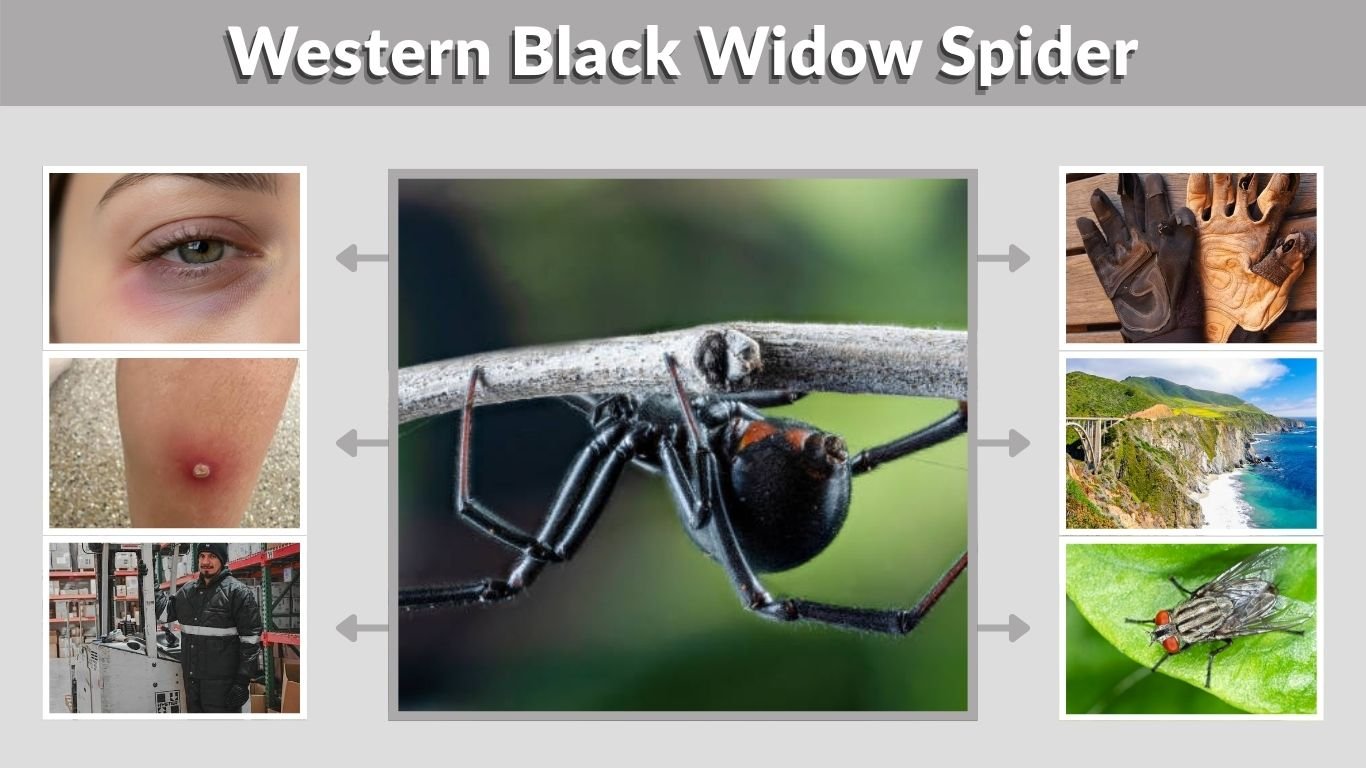
The western black widow spider is one of the best-known venomous spiders in western North America. Its shiny dark body, red hourglass marking, and painful bite make it easy to fear, but this spider is not aggressive by nature. Understanding its appearance, habitat, behavior, and bite symptoms can help you identify it correctly and respond safely if you find one near your home.
What Is a Western Black Widow Spider?
The western black widow spider, scientifically known as Latrodectus hesperus, is a venomous cobweb spider found across much of western North America. It belongs to the same genus as other widow spiders, including the southern black widow, northern black widow, and redback spider.
This spider is famous for the adult female’s glossy black body and red or orange hourglass-shaped marking on the underside of the abdomen. However, not every western black widow looks exactly the same. Males, juveniles, and immature females can have lighter colors, stripes, spots, or less obvious markings.
Scientific Name and Common Names
The scientific name of the western black widow spider is Latrodectus hesperus. It is also called the western widow or western black widow. The word “widow” comes from the old belief that females commonly eat males after mating, though this behavior is not as simple or constant as the name suggests.
This species is medically important because its venom affects the nervous system. Still, it usually avoids humans and bites mainly when disturbed, trapped, or pressed against the skin.
Is the Western Black Widow Spider Poisonous?
The western black widow spider is venomous, not poisonous. A poisonous animal causes harm when touched, eaten, or absorbed. A venomous animal injects toxins through a bite or sting.
The western black widow injects venom through its fangs, so “venomous” is the correct term. Many people search “is the western black widow spider poisonous,” but the better question is whether it is venomous and medically significant. The answer is yes.
Western Black Widow Spider Identification
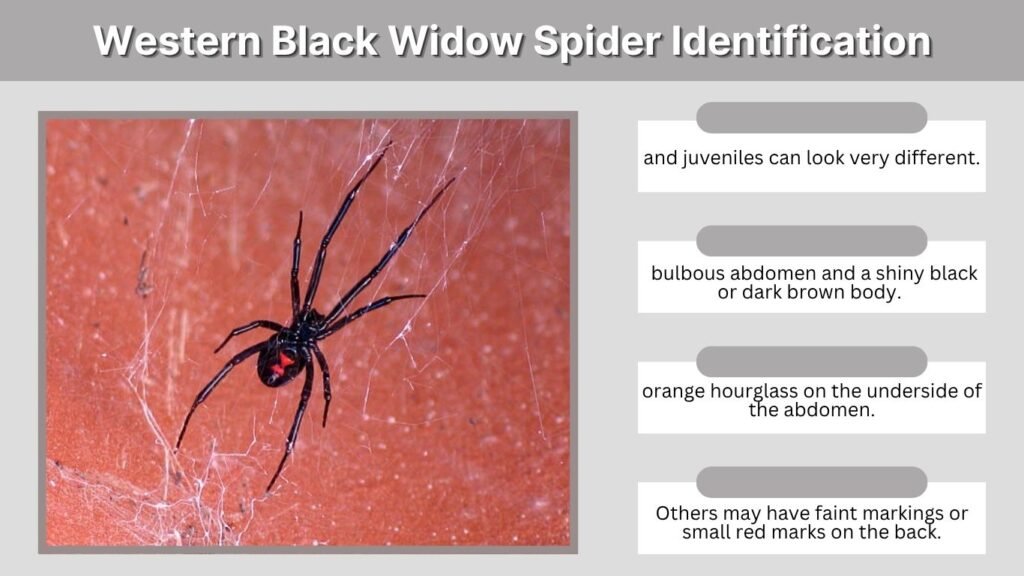
Identifying a western black widow spider requires more than looking for a red hourglass. Females, males, and juveniles can look very different. This is why many people confuse western black widows with false widow spiders or other dark cobweb spiders.
Female Western Black Widow Spider
The female western black widow is the most recognizable and medically important form. She usually has a round, bulbous abdomen and a shiny black or dark brown body. The classic marking is a red or orange hourglass on the underside of the abdomen.
Some females may have an hourglass that looks broken into two spots. Others may have faint markings or small red marks on the back. Because the hourglass is underneath the spider, it may not be visible unless the spider is upside down in its web.
Male Western Black Widow Spider
The male western black widow spider is smaller and less dramatic in appearance. Males are often lighter brown, tan, or grayish, with stripes or pale markings on the abdomen. They are usually much smaller than females and are not considered as medically dangerous.
A male western black widow spider bite is uncommon and generally less concerning than a female bite. However, people should still avoid handling any suspected widow spider because identification can be difficult without experience.
Juvenile Western Black Widow Spider
A juvenile western black widow spider can be confusing because it may not look like the classic adult female. Juveniles often have lighter colors, banding, spots, or patterned abdomens. Immature females may gradually darken as they grow.
This is why image searches for “juvenile western black widow spider” often show spiders that look striped or mottled instead of solid black. Young widows can be mistaken for harmless house spiders, false widows, or other cobweb spiders.
| Type | Common Appearance | Bite Concern |
| Adult female | Shiny black or dark brown, round abdomen, red/orange hourglass | Highest medical concern |
| Adult male | Smaller, lighter, often striped or patterned | Lower concern |
| Juvenile | Mottled, striped, lighter markings | Identification can be difficult |
| Immature female | Patterned at first, darkens with age | Can become medically significant |
Western Black Widow Spider Habitat and Range
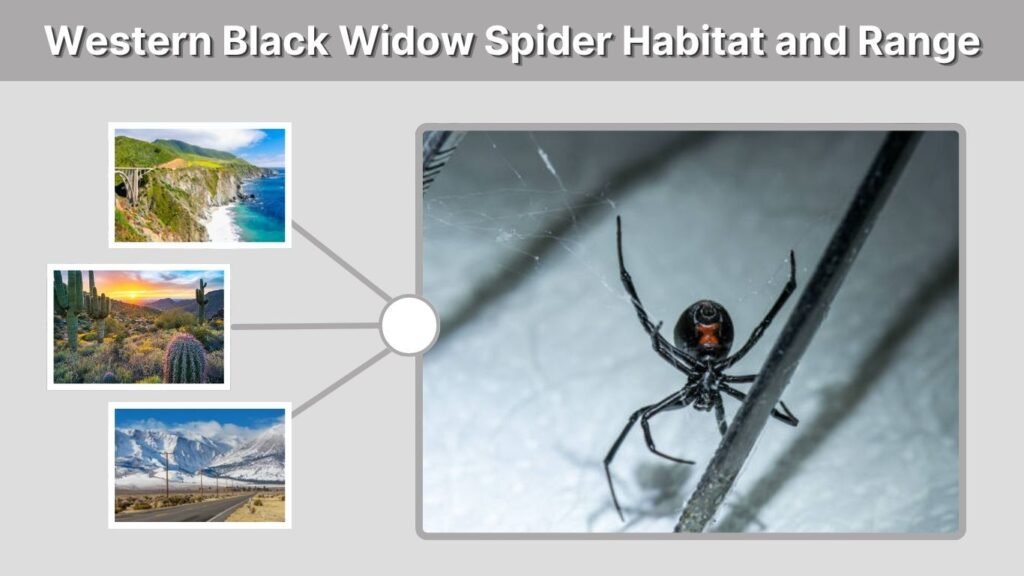
The western black widow spider is strongly associated with warm, dry, sheltered places. It builds irregular, tangled webs rather than neat circular webs. These webs are often close to the ground and placed in protected corners where insects are likely to pass.
Where Western Black Widows Live
Western black widows are found in many parts of western North America. Their range includes areas of the western United States, parts of Canada, and Mexico. They are commonly associated with states and regions such as California, Oregon, Washington, Colorado, Arizona, Nevada, Utah, Idaho, and parts of British Columbia and Alberta.
In Canada, records are especially associated with warmer southern regions. In British Columbia, the species is known from southern areas and dry localities. In Alberta, it is more likely to be associated with warmer, suitable habitats rather than cold, exposed areas.
Common Hiding Places
Western black widow spiders prefer places where they are protected from weather, predators, and disturbance. Around homes, they may be found in quiet outdoor or semi-outdoor spaces.
Common hiding places include:
- Woodpiles, stacked lumber, and firewood
- Garages, sheds, barns, and storage rooms
- Crawl spaces and basements
- Rock piles, retaining walls, and garden edges
- Outdoor furniture and stored equipment
- Water meter boxes and utility areas
- Trash cans, buckets, and cluttered corners
They are not usually wandering spiders. Instead, they stay near their web and wait for prey.
Western Black Widow Spider Web
A western black widow spider web looks messy, tangled, and irregular. It does not look like the round, symmetrical web people often imagine. The web is usually strong and sticky, designed to catch crawling insects and other small prey.
The spider often hangs upside down in or near the web. This position may reveal the red hourglass marking on the underside of the female’s abdomen. If you see a tangled web in a dark, sheltered place, avoid reaching into it with bare hands.
Western Black Widow Spider Bite
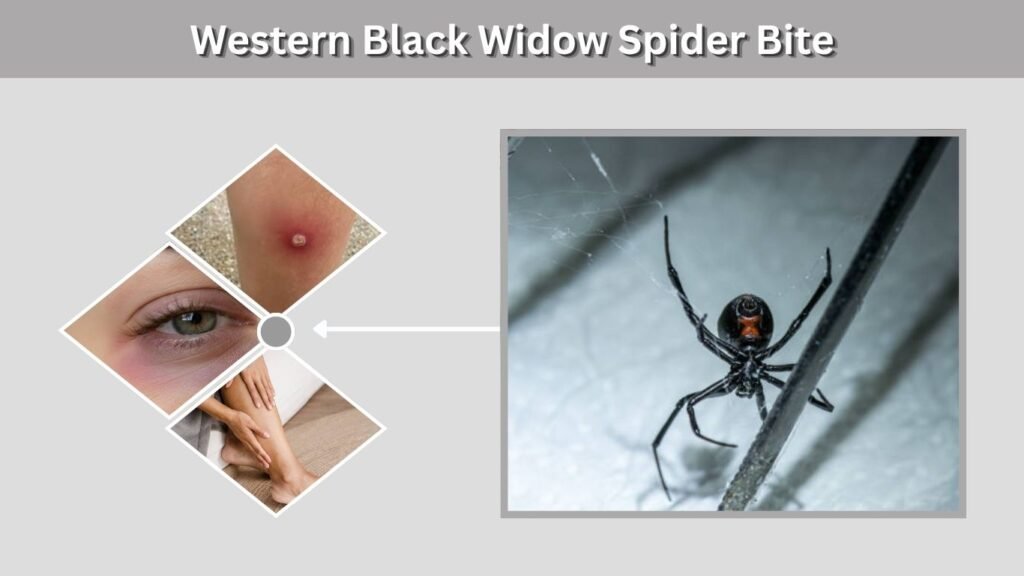
A western black widow spider bite can be painful and medically important. The spider is not aggressive, but it may bite if squeezed, trapped in clothing, disturbed in a web, or accidentally pressed by a hand or foot.
What a Bite May Feel Like
Some people feel a sharp pinprick at the time of the bite. Others may not notice it immediately. The bite area may develop redness, swelling, or mild pain. In more serious cases, pain can spread from the bite site to nearby muscles and then to larger areas of the body.
The venom affects nerve signaling, which is why symptoms can involve muscles, sweating, nausea, and body-wide discomfort rather than only skin irritation.
Western Black Widow Spider Bite Symptoms
Symptoms can vary from mild to severe. Some bites cause only local pain, while others cause systemic symptoms known as latrodectism.
Possible symptoms include:
- Sharp pain or burning at the bite site
- Redness or mild swelling
- Muscle cramps or spasms
- Abdominal, back, shoulder, or chest pain
- Sweating, nausea, or vomiting
- Headache, weakness, or restlessness
- High blood pressure or fast heart rate in some cases
Severe abdominal pain may sometimes mimic other medical problems. Chest pain or breathing difficulty should always be treated seriously.
When to Get Medical Help
Seek medical care if symptoms spread beyond the bite area or become intense. Medical attention is especially important for children, older adults, pregnant people, and anyone with heart disease, breathing problems, or a serious health condition.
Emergency care may be needed if there is severe muscle cramping, chest pain, trouble breathing, repeated vomiting, faintness, or rapidly worsening symptoms. Treatment may include pain control, muscle spasm relief, monitoring, and in selected severe cases, antivenom.
Are Western Black Widows Dangerous?
Western black widows are dangerous enough to respect, but they are not aggressive hunters of humans. Their venom is potent, yet most encounters do not result in bites. Many bites improve with medical care, and fatal outcomes are rare.
Why the Venom Matters
Western black widow venom is neurotoxic, meaning it affects the nervous system. It can cause excessive release of chemical messengers from nerve endings. This can lead to muscle cramps, pain, sweating, and other systemic symptoms.
The danger is not usually from skin destruction. Instead, the main concern is the body-wide reaction caused by nerve overstimulation.
Do Western Black Widows Chase People?
No. Western black widows do not chase people. They prefer to stay hidden in their webs and avoid disturbance. Bites usually happen by accident when a person reaches into a hidden web, puts on clothing or gloves containing a spider, or presses against the spider without seeing it.
This behavior matters because prevention is mostly about avoiding accidental contact, not fighting an aggressive animal.
Western Black Widow Spider Facts
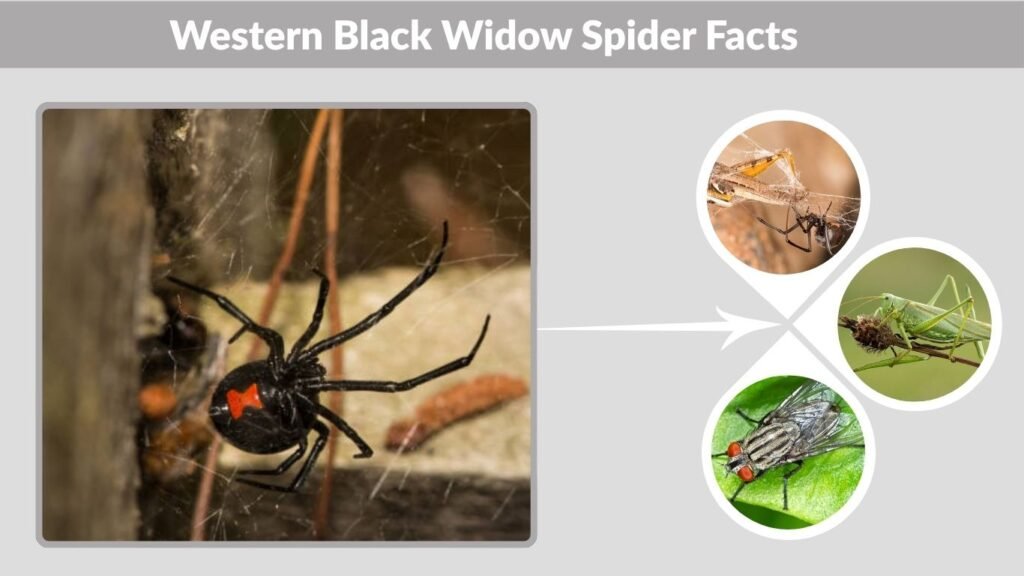
The western black widow spider plays an ecological role by feeding on insects and other small arthropods. Although it is feared, it is also part of the natural food web.
Diet and Prey
Western black widows eat many small animals that become trapped in their webs. Their prey may include flies, beetles, ants, grasshoppers, moths, and other insects. Once prey is caught, the spider bites it, injects venom, wraps it in silk, and feeds later.
This hunting method helps explain why the spider prefers cluttered, insect-rich places such as sheds, woodpiles, and outdoor corners.
Behavior Around Homes
Western black widows are secretive. They are most likely to be noticed when people move stored objects, clean garages, work in gardens, or disturb outdoor clutter. They may also appear near porch steps, patio furniture, irrigation boxes, or foundation gaps.
They are more common in areas where there is shelter, prey, and limited disturbance.
Largest Western Black Widow Spider
Adult female western black widows are larger than males and have the most recognizable body shape. Claims about the “largest western black widow spider record” are often unreliable because spider size varies, and many online claims are not based on formal records.
In general, females are the larger sex, with a rounded abdomen that makes them appear bigger than males.
How to Prevent Western Black Widow Bites
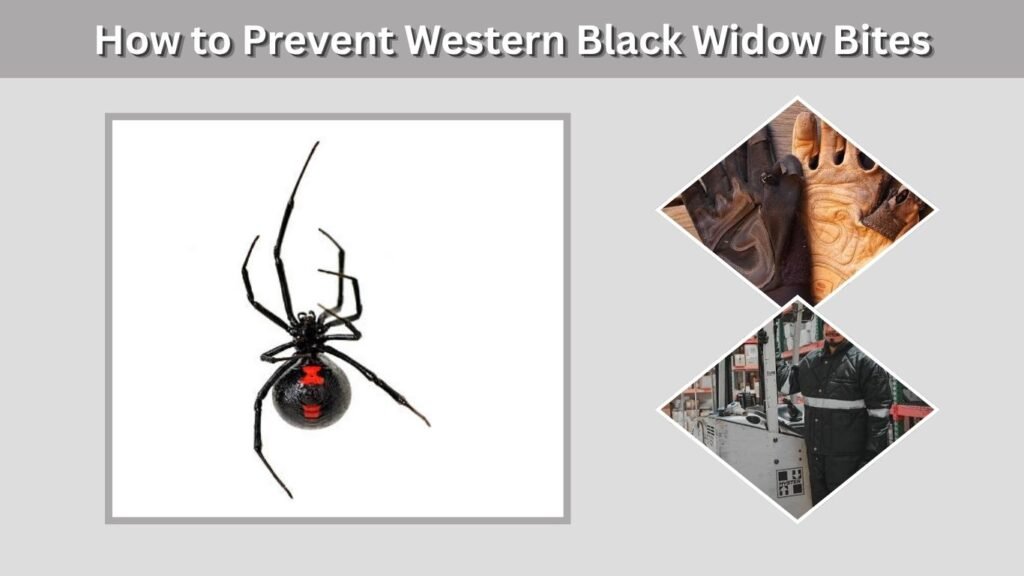
Preventing bites is mostly about reducing accidental contact. You do not need to panic if western black widows live in your region, but you should be careful in places where they may hide.
Safety Tips for Outdoor Work
Use caution when working around cluttered or sheltered spaces. Gloves and careful inspection can greatly reduce risk.
Helpful steps include:
- Wear gloves when moving wood, rocks, boxes, or outdoor equipment
- Shake out gloves, shoes, and clothing stored in garages or sheds
- Avoid reaching blindly into dark corners or web-filled areas
- Use tools instead of bare hands when moving debris
- Teach children not to touch unfamiliar spiders or webs
These habits are especially useful for gardeners, outdoor workers, homeowners, campers, and people living in dry western regions.
Reducing Spiders Around the Home
You can make your property less attractive by removing shelter and prey. Focus on clutter control and careful maintenance.
Useful prevention steps include:
- Move firewood away from the house
- Clear debris, boards, and unused containers
- Seal cracks around doors, windows, and foundations
- Keep garages and sheds organized
- Vacuum indoor webs carefully
- Wear gloves when cleaning storage areas
If many widow spiders are present near living spaces, a licensed pest control professional may be helpful.
Western Black Widow Spider in Different Regions
Searches for western black widow spiders often include locations such as California, Oregon, Washington, BC, Alberta, and Colorado. The species is widely associated with western North America, but local abundance depends on climate, habitat, and shelter.
Western Black Widow Spider in California
California has suitable habitat for western black widows in many areas. They may be found in yards, garages, sheds, gardens, and dry outdoor spaces. Homeowners should be especially careful around stored items, woodpiles, and utility boxes.
Western Black Widow Spider in Oregon and Washington
Western black widows can occur in parts of Oregon and Washington, especially warmer or drier areas. They are not equally common everywhere. In cooler, wetter coastal areas, encounters may be less frequent than in dry inland regions.
Western Black Widow Spider in Canada
In Canada, the western black widow is associated with southern parts of British Columbia, Alberta, and nearby regions where conditions are suitable. It is more likely to be found in warm, dry, sheltered spots than in cold or exposed environments.
FAQs
Is the western black widow spider poisonous?
The western black widow spider is venomous, not poisonous. It injects venom through its fangs when it bites. The venom affects the nervous system and can cause pain, muscle cramps, sweating, nausea, and other symptoms. It should be respected, but the spider usually bites only when disturbed or trapped.
What does a western black widow spider bite feel like?
A bite may feel like a sharp pinprick, burning pain, or sudden sting. Some people notice redness or swelling, while others develop spreading pain and muscle cramps. More serious symptoms can include abdominal tightness, sweating, nausea, back pain, chest discomfort, or high blood pressure. Medical care is needed for severe symptoms.
How can I identify a juvenile western black widow spider?
A juvenile western black widow spider may look lighter, striped, spotted, or mottled rather than shiny black. Young spiders often lack the classic adult female appearance. Because juveniles can resemble other cobweb spiders, identification can be difficult from color alone. Avoid handling any suspected widow spider.
Are male western black widow spiders dangerous?
Male western black widow spiders are much smaller than females and are generally less medically concerning. They may have lighter coloring and patterned abdomens. Female bites are the main concern because adult females are larger and can deliver a more significant venom dose. Still, suspected widow spiders should not be handled.
Where do western black widow spiders live?
Western black widow spiders live in sheltered, quiet places such as woodpiles, sheds, garages, crawl spaces, rock piles, outdoor furniture, and utility boxes. Their range covers much of western North America, including parts of the western United States, Mexico, and southern regions of Canada such as British Columbia and Alberta.
