

Black widow spider venom is one of the most discussed spider venoms because of its powerful effect on the nervous system. Many people search for whether a black widow is poisonous or venomous, how dangerous the bite is, and what the venom does inside the body. This guide explains the venom, its mechanism, symptoms, toxicity, and treatment in clear, simple language.
What Is Black Widow Spider Venom?
Black widow spider venom is a toxic mixture produced by spiders in the Latrodectus genus. These spiders use venom mainly to capture prey, not to attack humans. A bite can happen when the spider is accidentally pressed, trapped, or disturbed in places such as woodpiles, garages, sheds, outdoor equipment, or dark corners.
The correct word is venomous, not poisonous. A poisonous animal causes harm when it is eaten, touched, or absorbed. A venomous animal injects toxins through a bite or sting. Black widow spiders are venomous because they inject venom through their fangs.
Why the Venom Is So Powerful
The venom of black widow spider species is medically important because it acts on nerves. Instead of damaging skin tissue like some other spider venoms, black widow spider venom affects communication between nerve cells and muscles. This is why the symptoms often feel body-wide rather than only local.
Its best-known active toxin is alpha-latrotoxin, a neurotoxin that affects nerve endings. This toxin can trigger excessive release of chemical messengers, which explains the intense pain, cramps, sweating, and muscle rigidity seen in some bites.
Is Every Black Widow Bite Dangerous?
Not every bite causes severe illness. Some bites may inject little or no venom. Others can cause mild pain and redness. The risk becomes more serious when symptoms spread beyond the bite area, especially when muscle cramps, abdominal pain, chest tightness, nausea, sweating, or high blood pressure develop.
Children, older adults, pregnant people, and people with underlying health problems may be more vulnerable to serious symptoms.
How Black Widow Spider Venom Works in the Body

Black widow spider venom works mainly by disturbing the nervous system. The toxin does not simply “burn” the skin. It changes how nerves release signals.
Black Widow Spider Venom Mechanism of Action
The main mechanism involves alpha-latrotoxin binding to nerve endings. Once attached, it causes nerve cells to release large amounts of neurotransmitters. These neurotransmitters are chemical messengers that allow nerves to communicate with muscles, glands, and other nerves.
This excessive chemical release can overstimulate the body. Muscles may tighten or cramp. Sweat glands may become overactive. Blood pressure and heart rate may rise. Pain signals may become intense.
Neurotransmitters Affected by the Venom
Many search queries ask whether black widow spider venom affects acetylcholine. The answer is yes, but acetylcholine is not the only neurotransmitter involved.
Black widow venom can influence the release of:
- Acetylcholine, which helps nerves communicate with muscles
- Norepinephrine, which affects stress responses, blood pressure, and heart rate
- Other neurotransmitters, depending on the type of nerve ending affected
This is why black widow spider venom effects can involve muscle cramps, sweating, pain, nausea, and changes in heart rate or blood pressure.
Is Black Widow Venom an Agonist or Antagonist?
Black widow spider venom is not best described as a simple agonist or antagonist. An agonist activates a receptor, while an antagonist blocks a receptor. Alpha-latrotoxin mainly acts by causing excessive neurotransmitter release from nerve endings. So, instead of directly mimicking or blocking acetylcholine, it causes nerves to release too much chemical signal.
Black Widow Spider Venom Effects and Symptoms
Symptoms vary depending on how much venom is injected, the person’s size and health, and how quickly treatment begins. Some people feel immediate sharp pain, while others notice symptoms developing over the next hour.
| Symptom Area | Common Effects |
| Bite site | Sharp pain, redness, swelling, two small puncture marks, sweating near the bite |
| Muscles | Cramping, spasms, stiffness, abdominal tightness, back or chest pain |
| Nervous system | Restlessness, anxiety, headache, dizziness, weakness |
| Digestive system | Nausea, vomiting, abdominal discomfort |
| Circulation | High blood pressure, fast heart rate, sweating |
| Severe cases | Widespread cramps, breathing difficulty, intense pain, latrodectism |
Early Bite Symptoms
A black widow bite may feel like a pinprick at first. Some people see two tiny puncture marks, although they may be hard to notice. Redness, swelling, and local pain can follow.
Early symptoms may include:
- Sudden sharp pain or burning at the bite site
- Mild swelling or redness
- Local sweating or goosebumps
- Numbness or tingling near the bite
- Pain that begins to spread
These signs do not always mean the case will become severe, but they should be watched carefully.
Systemic Symptoms
Systemic symptoms happen when the venom affects the body beyond the bite area. This condition is often called latrodectism, a syndrome linked to widow spider envenomation.
Possible systemic symptoms include:
- Severe muscle cramps
- Abdominal rigidity
- Back, chest, or shoulder pain
- Sweating
- Nausea or vomiting
- Headache
- Anxiety or restlessness
- High blood pressure
- Fast heart rate
The abdominal pain can be strong enough to mimic appendicitis or other serious medical conditions. Chest tightness may also be alarming, especially in older adults or people with heart problems.
How Long Do Symptoms Last?
Many people improve within one to three days with proper care. Pain and muscle soreness may last longer in some cases. Severe bites require medical evaluation, especially when symptoms spread, pain becomes intense, or the person belongs to a high-risk group.
How Venomous Is a Black Widow Spider?
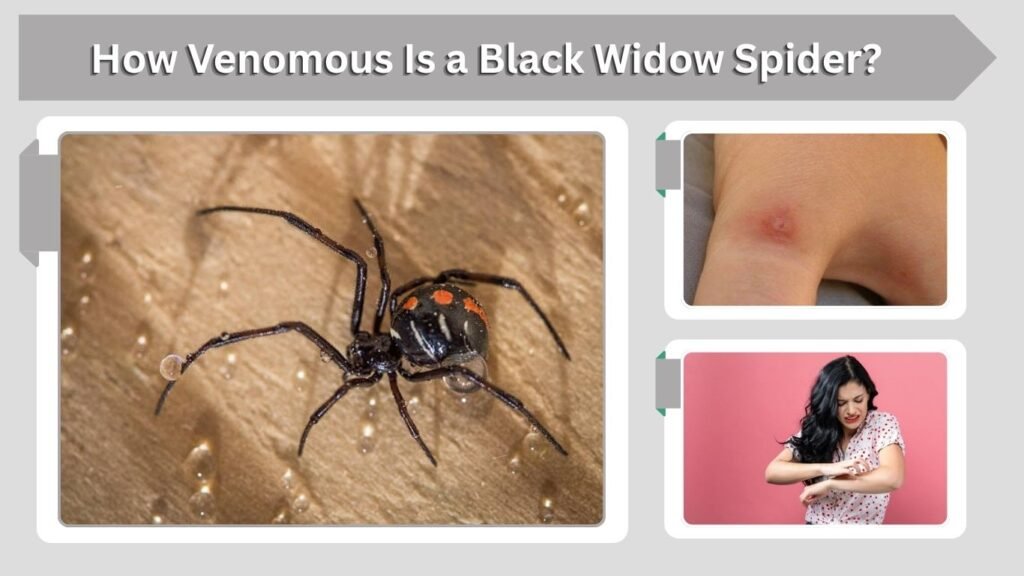
Black widows are highly venomous compared with many common spiders. However, “highly venomous” does not mean every bite is fatal. Death from black widow bites is rare with modern medical care, but the bite can still cause severe pain and dangerous symptoms.
Is the Black Widow the Most Venomous Spider?
The black widow is among the most medically significant spiders, especially in North America, but calling it “the most venomous spider” is too broad. Venom strength depends on how toxicity is measured, the species being compared, the amount of venom injected, and the effect on humans.
Some spiders may have venom that is highly toxic in laboratory settings but rarely bite humans. Others may cause more serious medical outcomes because they live closer to people or inject more venom. Black widows are dangerous because their venom strongly affects the nervous system and because bites can happen around homes, sheds, garages, and outdoor work areas.
Black Widow Venom Strength vs Rattlesnake Venom
You may see claims that black widow spider venom is many times stronger than rattlesnake venom. These comparisons can be misleading. Venom strength depends on dose, delivery, species, test method, and the victim’s body size. A rattlesnake can inject far more venom than a spider, so real-world danger is not based on toxicity alone.
The more useful question is not which venom is “stronger,” but what symptoms the venom causes and how quickly medical care is needed.
Black Widow, Redback, and Brown Widow Venom Compared
Black widow spiders belong to the Latrodectus genus. The redback spider is also in this group and is closely related. Brown widows are related too, but their bites are often reported as less severe than black widow bites.
Redback Spider vs Black Widow Venom
The redback spider, common in Australia, has venom that acts in a similar way because it also contains latrotoxins. Like black widow venom, redback venom can cause pain, sweating, and muscle symptoms. Both can produce latrodectism.
The main difference is geographic and clinical context. Redbacks are more associated with Australia, while black widows are widely discussed in North America. Both should be treated seriously if symptoms develop.
Brown Widow vs Black Widow Venom
Brown widow spiders may have venom with similar toxic components, but many reported bites are milder than black widow bites. One reason may be that brown widows inject less venom during a bite. Still, a brown widow bite can be painful and should be monitored, especially if symptoms spread.
False Black Widow Spider Venom
False widow spiders are different from true black widows. Some false widow bites can cause pain, swelling, or mild systemic symptoms, but they are generally not the same as true black widow envenomation. Confusion happens because their appearance can be similar to people who are not trained in spider identification.
Black Widow Spider Bite Treatment
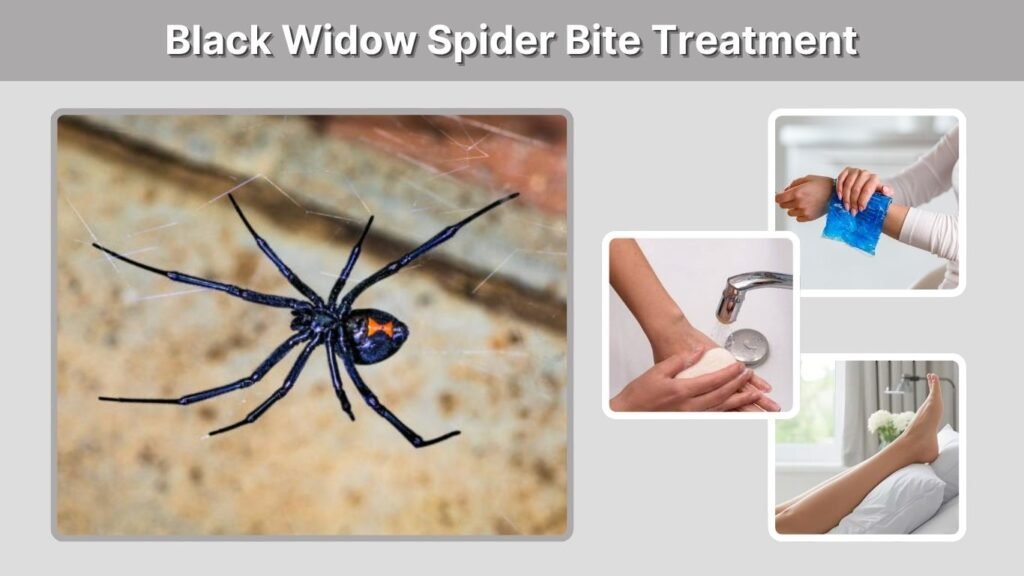
A suspected black widow bite should be taken seriously, especially if symptoms are more than mild. Treatment depends on severity.
What to Do After a Suspected Bite
Basic first aid can help while you arrange medical advice:
- Wash the bite area with soap and water
- Apply a cold pack wrapped in cloth
- Keep the affected limb elevated if possible
- Avoid cutting the wound or trying to suck out venom
- Seek medical help if pain spreads or systemic symptoms appear
Do not rely on home remedies if the person develops severe pain, muscle cramps, sweating, vomiting, chest pain, breathing trouble, or high blood pressure symptoms.
When to Seek Emergency Care
Get urgent medical care if the bitten person is a child, older adult, pregnant, or has heart disease, breathing problems, or a serious medical condition. Also seek care if symptoms become intense or spread beyond the bite.
Emergency care may include pain control, muscle spasm treatment, monitoring of blood pressure and breathing, and in selected cases, antivenom. Antivenom is generally reserved for more serious cases and must be given under medical supervision because allergic reactions are possible.
Is There Black Widow Antivenom?
Yes, black widow antivenom exists in some regions. It is designed to neutralize venom effects, but doctors decide whether it is appropriate based on symptom severity, medical history, risk of reaction, and local availability. Many cases are treated with supportive care rather than antivenom.
Black Widow Spider Venom and Humans
Black widow spider venom is toxic to humans because it affects nerve signaling. It is not usually a tissue-destroying venom like some necrotic spider bite myths suggest. The major concern is nervous system overstimulation.
Why the Venom Causes Muscle Cramps
Muscles contract when nerves release chemical signals. Because black widow venom can trigger excessive neurotransmitter release, muscles may contract too strongly or for too long. This can cause cramping, spasms, and rigid abdominal muscles.
That is why some people describe the pain as deep, squeezing, or spreading across the back, chest, abdomen, or shoulders.
Can Black Widow Venom Cause Death?
Fatalities are rare, especially with modern medical care. However, rare does not mean harmless. Severe envenomation can be extremely painful and may be dangerous for vulnerable people. The best response is to treat a suspected serious bite as a medical issue, not as a minor skin irritation.
Black Widow Spider Male Venomous Facts
Male black widow spiders are venomous in the biological sense, but they are much less medically significant than females. Females are larger and more likely to deliver a bite that matters medically. The classic shiny black spider with a red hourglass marking is usually the female.
Prevention: How to Avoid Black Widow Bites
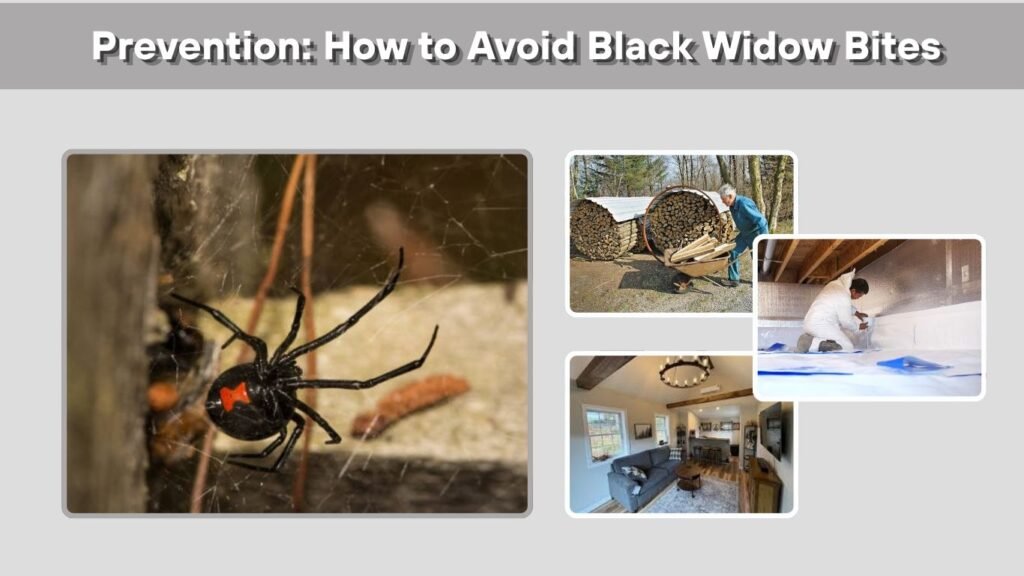
Most black widow bites happen when people accidentally disturb the spider or its web. Prevention is practical and simple.
Common Hiding Places
Black widows prefer quiet, dark, undisturbed areas. Be careful around:
- Woodpiles and stacked lumber
- Garages, sheds, and basements
- Outdoor furniture
- Storage boxes
- Crawl spaces
- Rock piles
- Water meter boxes
- Shoes, gloves, and clothing stored outside
Safety Tips
To reduce bite risk:
- Wear gloves when moving wood, rocks, or stored items
- Shake out shoes, gloves, and clothing before use
- Keep storage areas clean and uncluttered
- Seal cracks and gaps around doors and windows
- Use caution when reaching into dark spaces
- Teach children not to touch unfamiliar spiders
These steps are especially helpful for gardeners, outdoor workers, campers, and people who store equipment in sheds or garages.
FAQs
What does black widow spider venom do?
Black widow spider venom affects the nervous system. Its main toxin, alpha-latrotoxin, causes nerve endings to release excessive neurotransmitters. This can lead to sharp pain, sweating, muscle cramps, abdominal tightness, nausea, high blood pressure, and restlessness. The bite may start locally but can become a body-wide reaction.
Is a black widow spider poisonous or venomous?
A black widow spider is venomous, not poisonous. Venomous animals inject toxins through a bite or sting, while poisonous organisms cause harm when touched, eaten, or absorbed. Black widows use fangs to inject venom, which is why “venomous” is the correct term.
How venomous is a black widow spider?
A black widow is highly venomous compared with many common spiders, but most bites are not fatal. The venom is medically important because it acts on nerves and can cause severe pain and muscle cramping. Serious symptoms need medical care, especially in children, older adults, and vulnerable people.
Does black widow venom affect acetylcholine?
Yes, black widow venom can affect acetylcholine release. Alpha-latrotoxin acts at nerve endings and causes excessive release of neurotransmitters, including acetylcholine. This overstimulation helps explain muscle cramps, spasms, and pain. It is not simply an acetylcholine agonist; it mainly triggers abnormal neurotransmitter release.
Is the black widow the most venomous spider?
The black widow is one of the most medically significant venomous spiders, but it is not always accurate to call it the most venomous spider. Toxicity depends on species, dose, test method, venom delivery, and human exposure. Its real danger comes from its strong neurotoxic effects and painful symptoms.
